He Chose Joy After a Stage-4 Cancer Diagnosis - Roland Wang’s Story of Faith & Rebuild
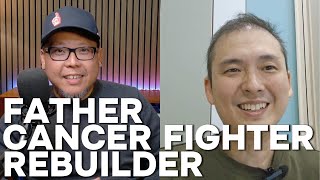
Roland Wang left a casino analytics job in the U.S. to support his wife in Thailand through viral meningitis, then faced his own stage-4 pancreatic cancer diagnosis. He documents his treatment on YouTube for his son and others, using tools like daily affirmations and a framework called Accept-Adapt-Rebuild to choose joy despite the uncertainty.
Chapters
So today I'm sitting down with someone I've known since he was a kid, Roland Wang. Over the years, I've watched him grow into a man who faced more than most people will ever. He walked away from a high-profile career in the US to move halfway across the world to Thailand. He stood by his wife through the years of depression. He watched his father battle Parkinson's. And just a few months ago, before Rebuild Dad even started, Roland was fighting pancreatic cancer, but in the middle of that battle, he did something extraordinary. He started a YouTube channel documenting his fight, not for attention, but to leave a legacy for his son and help others facing the same pain. Before we dive in, wherever you're listening, find the subscribe button, the heart, or the like icon and click it. It tells the platform this is good content, and that's my promise to you to deliver something real, something that helps you start again stronger. As Asians, we're not raised to talk about pain. We stay quiet, we don't disturb the peace, we don't air our dirty laundry. But today, Roland opens up about what happens when silence turns to survival and how finding your voice might be the first step to healing. So if you've ever been through something that broke you mentally, physically, or spiritually, stay with us because Roland's story is proof that no matter how dark it gets, you can start again. Stronger. So Roland joins me from Thailand just weeks after finishing treatment. His body is still healing as we record this episode, but his faith and his focus on being a dad were stronger than ever. He opened up about the fight for his life, the legacy he's building, and what rebuilding really looks like when the odds are stacked against you. So let's dive in.
So hey Roland, how are you?
Doing pretty good. Doing pretty good. Good.
So Roland, I know I've known you since you were a kid. I still remember almost 20 years ago you helped me hang some drywall and mud the drywall for the dog training center, right? Back in Houston. You've always been like that guy who quietly showed up and get things done. And you were working on a pretty good job out here in the United States before moving to Thailand, your wife's hometown. So About what, 7 or 8 years ago that was? Maybe 9 now, huh?
Yeah. Yeah.
So what made you—
coming up on 9? Yeah, go ahead.
Coming up on 9.
Okay.
So what made you take that leap?
Yeah. So, um, like you said, it's, it was a pretty decent job working for casinos and stuff in Vegas. Um, I had actually just started a new job and at the time my wife was working at the Wynn Casino dealing cards and, uh, you know, she came down with the case of viral meningitis and viral meningitis. Is inflammation in the lining of the brain, and it causes like chronic migraines, like 24 hours a day. Like, she was miserable. And, uh, like, me having a headache a little bit is already annoying, but just imagining what a migraine feels like and having it 24 hours a day, it's just like, it's ridiculous. But that pain led to things like anxiety because she was— she thought she was gonna die. It was just so bad. I think we had a standing date night, which was like every Friday night around 11 or 12 in the evening at night, we would end up at the hospital emergency room. I remember when she got it, I think we spent Christmas and New Year's in the hospital because just, she was just having terrible migraines and we were trying to find a way to fix it and they just couldn't. It was like we went to all sorts of specialists and We're at the hospital constantly and I think we racked up close to $1 million in hospital bills. So it was just insane. Wow. But, uh, yeah, anxiety, depression, and I had just started a new job and I had to tell them like, hey, I gotta take care of my wife. So my job at the time let me work from home for 6 months and it was just like, you know, my wife was just miserable and I was just there working next to her. And you know, that was sustainable for a while, but after 6 months I was like, okay, I think I need to go back to the office. And I remember like the first day back in the office, she literally called me and said, come home now, I think I'm gonna die. And I was like, well, okay, I guess I gotta go home. Just called my boss and went home. But, uh, that went on like off and on for a while and it was just in and out of the hospital and all these all these really urgent calls. And, uh, you know, for me at the time, like, I probably wasn't the most conscientious or empathetic spouse. Mm. You know, thinking back on and reflecting on it, I got to the point where I was like, hey, you're not gonna die, right? Like, um, you have anxiety, you have depression, it's all in your head. You need to just toughen up and stuff like that. And thinking back and reflecting, that definitely wasn't the way to handle it. But, uh, I was a different person at that time and we all evolve and grow as as we, as we age. But, um, but yeah, that's literally why we ended up in Thailand is because my wife was just like, I'm gonna go to Thailand and seek treatment there. I want to be closer to family. I want to be able to speak my own language with the doctors and feel more comfortable because she didn't feel like the standard of care in the US was, uh, was comparable to Thailand. Like, in fact, she just didn't feel like they cared at all. And after living in Thailand for 9 years and seeing the medical treatment here, it's night and day. The, the level of service and the level of care is much higher. So she was right. No, she was right. But like, I'm not saying like the, the, the treatment is better. It may or may not be, maybe on par, but like the, the, the service is 100 times better.
Yeah.
But yeah, it was like, uh, I'm moving to Thailand. That's it. So she came first and I started applying for jobs right away and I was like, okay. And did a couple interviews and, uh, ended up landing at a travel company based in Bangkok. And working in HR and doing analytics because I've been doing data and analytics pretty much my whole career. And, you know, just, I guess, got— was blessed and got lucky and, you know, got a decent job working in Bangkok that has sustained us for 9 years. So Jib is much better now. Like, the migraines, they're not as bad as they were before. 9 years later, I have a 2-year-old son. Mhm. It's been a, a crazy ride. I never thought about even visiting Thailand, but, uh, ended up living and working here. It's been pretty insane.
And how has living there reshaped kind of who you are now today?
I think living in Bangkok is kind of like living in San Francisco but hotter, but I think living in the US, I always felt like a minority. And no matter where I lived, where living in an Asian country, I don't feel like a minority anymore. It's like—
even not speaking the language?
I do speak the language a bit so I can communicate. But like, there's a lot of Thai Chinese. I think I read some statistic that outside of China, like, the most Chinese people are in Thailand, just because of the Thai Chinese heritage. Looking like me, they all think I'm Thai. Uh, they're like, oh, you look so Thai. And I'm just like, I'm pretty sure I don't. But there's a lot of Thai-Chinese people in Thailand, so, you know, you can't really tell the difference. So everybody just automatically assumes I'm Thai. But I think, um, growing up, like, at the time when I grew up, where there was like racism, there was gangs, there was all those types of things, and it was just like, it kind of made me who I am. Right. But living in Bangkok in Thailand kind of washes a lot of that away because, you know, I think even at the time I probably carried even a little bit of a chip on my shoulder, right? It's kind of like the way you grew up, the things you encountered, the prejudice and all that stuff. And then when you come here, it vanishes. And in fact, like, you know, you're like everybody else. And Thai-Chinese is actually almost like being white in the US or anywhere in the world or most places in the world actually. But it's like, there's no— yeah, in the Western world. Yeah. Other parts too. I think there's, there's benefits everywhere working as an expat, but like, yeah, it's just, it's completely different night and day. So, you know, I got to let go a lot of that baggage that I carried in the past and felt like I was on even footing with everybody and I was able to, I would say, do pretty well in my career here, which has led to, you know, being able to do, have access to more things and like education for Silas. And, you know, in order to have Silas, we actually went through 11 rounds of IVF, I think. Yeah, because we just couldn't conceive and it would have been impossible in the US just because the cost would have been much higher, 3, 4x. And then At the end, we actually had to use a surrogate, just because it just wasn't possible. Right. So, uh, so yeah.
So the, the amount of money— Did the manageritis have anything to do with that?
No, it didn't actually. It was, it was more of, um, like, I guess the internal mechanics, the organs and stuff like that. And it just, it just wasn't working. But yeah, it was like 11 IVF rounds over 5 years, I think. And, uh, you know, That has its own problems, all the hormones and, you know, the, the cycles, the up and down roller coaster ride. Seriously, on the last round, I was like, you know, Jib, do you still want to have kids? Like, I think we've been trying to do this for 5 years, so we keep on doing it, but do we actually still want to have kids? And she was just, yeah, she was determined and, you know, pulled us through and ended up using a surrogate and No, thank God we have Silas now.
Uh-huh. And so when you think back to the transition, kind of leaving the comfort and security of the US, your career, you know, how did you rebuild or restart stronger once you got there to Thailand?
Yeah, I think I've been pretty resilient in that respect because from Houston I went to Las Vegas, from Las Vegas I went to San Francisco, from San Francisco went back to Las Vegas, Las Vegas to Thailand. So it's like I've had to kind of rebuild at different companies multiple times. So I kind of am used to it to a certain extent. I had no idea what to expect when I got here. Like I was thinking hangover movies, but like when I got here, I was like, oh, it's like any major city without that chip on my shoulder or not thinking, thinking minority. It actually made it easier and made me more free to kind of excel to a certain extent. And I had good mentors and good bosses, thankfully, as well, that kind of shaped me in a way. I think just giving me the skills, teaching me, you know, how to work in the corporate environment in Thailand and those types of things that really just equipped me to be on the right track to get to where I ended up. So yeah, I think it was really— I would say there's luck to it in that, you know, you have the right people at the right time and, you know, it's a bit serendipitous at times because, you know, I feel like God kind of brings people into my life at the right times when I need them. And, you know, he's always shaping or molding me to develop in the right ways. And I've been blessed in that, you know, I've always had the right people come into my life at the, at seemingly the right times. Maybe I didn't know at the time, but like looking back, you see that pattern of people entering your life and, you know, helping to shape you.
Absolutely. Yeah. I mean, being grateful for what's around us, right? And what you're provided when you don't realize you're being provided is a great thing. Need to, you know, A lot of these folks that are listening to this podcast are in need of this hope, right? They just need to open their eyes and realize some— a lot of things are happening for you, not to you, right? And when you're in the mindset of things are happening to you, then you get stuck, right? You're going to talk about more of your fair share of the difficulties in life. And part of what we need to do is to remember that life happens for us. And a lot of these things make us grow stronger, gives us more experience, and makes you stronger, right? What doesn't kill you makes you stronger. And when it kills you, it kills you. And that's kind of the point. So, you talked about your wife's struggle with the depression and anxiety, and you stood by her through all of that. And that kind of loyalty takes a lot of strength. You said you weren't quite prepared for it at first, right? And so, what was that season like for you emotionally when you're doing that transition or And after you figured out that you were kind of a jerk at the time?
When you say your wedding vows, you say, "In sickness and in health, till death do us part." You're usually not asked to prove it right away. It was kind of like, I think we were married for maybe a year, and then that happened. And it was just like, okay. So I think in times of crisis, in times of need, in times of doubt, it's what I do, or what has gotten me through a lot of things, is I end up leaning into my faith more. And I think that my faith has carried me through a lot of difficulties, whether it's heartbreak or sickness or really anything in life where there's like a serious challenge. And sometimes I feel guilty about it because I like, at those times, I'm not like the most faithful person. I'm not like thinking about God every day, going to church every day. But in times of need, I can always lean into my faith. Because I guess the way I think about it is God is like, the father, right? And as a father, you love your children. And I think about it with my son, is like, if my son needed something from me, came to me and asked me for help, there's very few instances where I wouldn't do it, right? Like, or I would reject them and say, hey, you haven't been doing your part, I'm not going to help you, or something like that. It's just like, my son's my, my life, and, you know, I would definitely do anything for him. But yeah, I think leaning into my faith is really what happens when I've always come across things. And at that time it was just like, okay, my wife is sick. I made a vow. God is testing me, molding me. This is a, this is a test and I will do what I need to do to get through it. But I think in, in practical terms, you can lean into your faith when it gets really bad, but on a day-to-day basis, it's, it's difficult, right? Like I'm trying to focus on work, I'm trying to be a provider for my family. And growing up the way that I did, I had some ideas about what a man is, what a provider is, right? And like, it's basically, I provide so that you guys love me. That's my job, right? I make money so that we can have a good life, so that thing— I enable things to happen, right? Right, right. That may— and that may come at a sacrifice of, you know, my time with you that may come at a sacrifice of my own health, but those types of things. So it was just like, it's understood that as a provider, I don't complain. I just provide and my family benefits from it and they should love me as a result. Right. And that's kind of like my idea of a man growing up and how I treated my wife is like, hey, I'm trying to provide for our family. And I get that you're, you're in pain. I get it that you have anxiety. I get that you have depression, but I'm trying to do my job. And you're keeping me from doing my job and supporting and providing for this family. And at times that caused me stress because the, the conflict between the man I'm supposed to be and the man that she needed, right?
Yeah.
I didn't come to realize it till later. It's like, okay, yeah, I'm a provider, but it's not a, it's not a transactional world. Like, it's not that I provide so my family loves me. My family loves me regardless, right? And at that time, I should have showed more empathy. I should have really understood her pain more. And, and then been more emotionally supportive. I was, I was a different person then, right?
So how did you come to this realization?
I think probably more, more around now. Um, okay. You know, after, after facing this type of challenge where you have near death or are facing mortality, you start reflecting and thinking about these types of things. Mm-hmm. Or maybe even before that, I think working and, you know, leading large teams at work probably also made me be more empathetic as well, just because at my work I was leading operational teams, which operational teams require a different set of skills, right? If you have a high-performing, high-achieving team, a lot of the ambition and motivation is there. It's inherently built into them because they're hungry. When you have a highly operational team, they need more empathy, they need need more engagement with the work. They need more meaning tied to what they're doing. And it made me think more from their perspective and be more empathetic to their needs, which I think helped me.
Yeah. So, so that carried over from, from your HR work. Yeah.
Interesting. HR made me have more of a heart, I guess. Because, you know, I guess when you think about HR, it's about thinking about, it's about protecting the company, but it's, it's it's also about having a heart and thinking about the employees more and thinking from their perspective, right? Which made me become more empathetic as a result, I think. And then, you know, upon reflection, after facing mortality, you start thinking about these things even more and it compounds and it snowballs and you start having regrets and guilt and all that type of stuff, which I had to deal with and go through also. But I think, uh, Yeah, empathy. I wasn't necessarily born with a strong empathetic streak, and even now I wouldn't say that I'm like an empath or something like that, but I think about it more. I'm more conscious of it in terms of like when I'm talking to my wife or interacting with people.
So did you ever apologize to her?
I— not for that time, actually. I have apologized for— I've definitely apologized to my wife. For numerous things, but not specifically that. I need to make a note of that to do that because I think, yeah, that's not an easy thing to realize, right?
I mean, looking back, that, that's not an easy thing to look. I mean, that's, that's straight up staring into a mirror, right? And say, and picking yourself apart, right? So let's go back again real quick. Like when you first moved to Thailand, how'd you build your circle of friends or your network, your tribe that you can sit down and have nachos with or whatever, just, just decompress a little bit? And, you know, because you had to deal with your wife's situation at the time, and you're in this completely new land, right, where, where you didn't have this tribe.
Yeah, I think, um, one good thing about being an expat, working in an international company and being an expat, is that all of the expats there are in the same situation, right? They all came from some other country, they're all trying to make friends, they're all trying to build that that tribe, that village that, you know, can sort of support and sustain them. So it actually wasn't that hard because it was just kind of like, and even in HR, there was already groups of people where they hung out, went out together, and it was just like adding another person to the group and, um, and evolving to friends outside of work and all that stuff. I think a lot of, most of the people I know are still with the company that I was working with. Right. Cause I don't really, because I have a wife now, I have a child. When I'm outside of that, I'm just spending time with my wife or just family.
Right. Right.
So, uh, but I think just the expat community in an international company tends to make it easier to interact and the company facilitates events and activities and being in HR, you're actually facilitating those events. So it's like, it's really easy to come in contact with most of the company. Whether I'm like facilitating onboarding for people joining the company or hosting one of the engagement activities or those types of things, you just, you're, you're just connected to more people, like from by the nature of the job I was doing.
I see. I see. The reason I asked this question is a lot of these men out here dealing with, you know, whether it's a separation or divorce or some kind of loss. And what happens with men is they do exactly what you just did, right? Mentioned, which is. Their only circle was their family, where the wives had the network of friends that they have coffee with and, you know, go hiking and that type of stuff where they're much more social. So a lot of the men here end up alone, especially after a divorce, because they never kept in touch with that network. And as well as a lot are, you know, they're, they're considered themselves introverts, right? Or don't even remember how to make new friends, right? Because they just haven't had to do it in a long time besides for business, right? Yeah. I mean, Of course, business-wise, if you're working and if you're— you always have those people, but you know, you don't get your— the truth teller, right? Who will tell you right in your face, hey, you screwed up and you need to get this XYZ fixed. And they'll— or that person that you could just hang out with, you know, to decompress a little bit. So, you know, one of the things that we're teaching on this channel is how to recreate that tribe, how to create that network. And it's great that you had that opportunity when you got there that you found like-minded people or people who were stuck in kind of the same situation, but You know, a suggestion would always be your family is absolutely important, but you also need your own tribe that you're able to have your own circle of friends because, you know, a lot of these men also after the divorce, they pretty much lose half of their friends and half of their family, if not all, because you don't know what type of, you know, people look at you slightly different and there's their lies and stories that get told about many of these men. So that That kind of took you on a little loop on that one, but, but that's kind of one of the reasons why I was asking how you built that network. So looking back, do you think walking through her darkness prepared you for your own storm later?
I think it did. I mean, I think there's learnings there because I guess there's, there's always two sides, right? There's the person taking care of the sick person and then there's the sick person and being, having experienced what it's like on the other side and knowing like the, how difficult it can be to be the caretaker. And at the time, I was just taking— I was just working and taking care of my wife. My wife is like taking care of me and my son. And like, uh, so it's, it's a little bit different, but it's just, it's very difficult to take care of a sick person because when you're, when you're sick, there, there's different, there's different stages, right? There's, uh, before you accept it, and while you're going through those stages, you can be a pretty mean, unforgiving, unempathetic, for lack of a better term, jerk. Fuck you. And being the person that has to absorb that and be, I guess, empathetic enough to be like, hey, I know it's because of the sickness. It's not you. You're not, you know, well, maybe I can be a jerk, but like, you're sick, you're lashing out, you know, you hate the world because You're like, why me? You're angry at everybody and you just need a way to vent it. And unfortunately, I'm the target of that venting, right? And to be able to understand that that's what she's going to have to deal with and potentially even regulating myself not to do it so much or trying to catch myself as much as I can so that I'm not doing that. I think that's, that's the benefit of really seeing both sides because as a sick person, yeah, it sucks, right? Like you, you got something that you probably were very unlikely to get and you're just like, why me? Why now? And you're just angry, but you always have to remember that there's somebody on the other side of that too that has to take care of you. And, uh, being able to be empathetic towards that and being able to appreciate that is pretty important. And I think having been on the other side, it gives me the ability to do that. I've never been on the other side of that. Could just be lashing out and just being grumpy like you said all the time.
Yeah, yeah. So what's the biggest takeaway you learned about love during that chapter?
I think probably that love isn't transactional. It's not, I do this for you so you love me. It's more like, I love you and, um, this is how I show it. Like, yeah, I think that's probably the biggest thing. I think, and probably about life in general, like, I think thinking about life in a transactional way is probably I thought about everything before. It's like, how do I get the value that I'm gonna get for the work that I'm doing? Or if I give something, I should get something of equal value or something like that. Whether it's love, whether it's money, whether it's, yeah, some type of value, right? And it's like a trade, but life is much more, uh, than just the transactional world, right? Right. Um, a lot of times you will give more than you receive and that's okay. And sometimes you'll receive more than you get, uh, more than you give. And that's okay too. It's just like, I think the things that matter are really more around like the connection, the deepening of relationships, um, that you're able to build in life rather than thinking more about even trades, I guess.
And your, your faith is Christian, right? Is that correct?
Yep.
Yeah. Yeah. Okay. So growing up in a Buddhist household, right, our thoughts were very very similar in a way that, you know, a lot of what you're giving is you're giving to give. It's your choice to give, right? You're not giving for their sake. You're giving for your sake, right? More, more than anything. And so if you're looking at it from a standpoint that you're giving it to them, however they receive it, that's, that's on their part. And if they choose to give you something, that's their choice to give to you. So it's not so much a transaction cuz we're not in a business, right? I mean, it even in business actually, a lot of transactions that we do, you know, a lot of it isn't a transaction per se, right? Of course, your standard sales cycle or whatever, that's normal. But I mean, a lot of the things we do for our customers, a lot of it provides clearly way more value than what you're returning back in terms of a financial compensation. But that also brings other opportunities as well. So it's great that you brought that up, that a lot of— there are a lot of folks stuck in the habit where they're saying, it's very transactional, very conditional, more so than it's, it's your choice whether or not this is something that you want to do. And so Roland, you come from a family built on grit, right? Your dad, Uncle Sam, has been battling Parkinson's for what, more than a decade now? And your mom's been right there beside him through it all. And your brother Timmy too, also, right? A two-time Olympian in table tennis. And with that kind of discipline and perseverance, it clearly runs through the family, right? But as Asians, we're not usually open about tragedy, right? We stay quiet. We don't disturb the peace. We kind of, you know, keep it in the closet, right? What happens in these walls stays within these walls. So what made the change for you, the decision to start talking about the tough times?
So I think of with the whole cancer thing, initially when I started the channel, it was more about just keeping like friends and family updated because I didn't want to explain to everybody what was happening over and over and over and over and over again. Like it, okay. Kind of reliving it every single time I said it, cause I was still processing it, dealing with it emotionally and it just, I couldn't. So I started the channel and started sharing the channel and just updating every day so everybody could just see what was happening.
I see, I see.
And then people that I didn't know started consuming the channel and started commenting. And, you know, some of the comments were like, I'm inspired by your story. Like, um, it's really helped me. And I was like, oh wow, like I can actually help people just by sharing what I'm going through. And that's really why I continue to do it at this point, because, you know, there's other people going through tragedy. Or maybe even a similar circumstance that benefit from just, you know, hearing about how we're dealing with it, how we stay strong, how we stay positive, and even though it hurts. And, uh, if I can help even 1 or 2 people, that's great, you know, that's, that's, that's already enough. But like, the channel has kind of taken off a little bit, and a lot, a lot of people are watching, and I just feel like It's, it's a bit of a calling to be able to share my story and my pain and how I'm getting through it so that others can benefit from the same. Mm-hmm. There were times where I was just like, in the morning, I'm just like, I'm tired. I don't know if I want to keep on doing this. And at times like that, it was weird too, because again, I leaned into my faith. I was like, okay, God, you know, is this really what you want me to keep on doing? You know, do you want me to keep on trying to help people in this way? And it was really weird because like for, I think it was a week. So every day there's a daily devotional in the Bible app that I use. And I swear it was like having a conversation with God because I would say one thing like, I don't know if I should keep on doing this. I'm tired. I think it's starting to make me a little bit anxious. And then the next day the devotional would be like, you know, being a Christian, you have to take up your cross every day and, you know, be a and, and then fight, fight the good fight. I'm just like, what? It's like the next day, and it, and it continued and persisted for like a week to like, every time I had a question, I got an answer. And I was like, okay, this is, this is scary, right? I know it could, you know, logically and being analytical, I'm like, okay, it's all random, it's all coincidence. But like, the older I get, when I look back at things, It seems less and less random, right? It's just, I don't know, you start seeing all these patterns, the people coming into your life, the, the, the, the miracles that the odds, and then you're just like, how can all of this be random?
Right. So that's why they call it faith, right?
Yeah, exactly. And, uh, that's, that's really why I keep on doing it and, you know, why I'm passionate about sharing, um, more of what I've learned in life and, uh, really trying to help as many people as I can. I even had like crisis, crises of faith. It's just like, hey man, what am I trying to do? Am I trying to become a YouTuber or am I just trying to tell my story? I think it's difficult because like, should I be, should I be advertising? What should I be doing? I have no idea. It's like, if it does it, does it dilute my message or the reason why I'm doing this? And I had to wrestle with all of that. And it's just kind of like the reason that I do it is to help others. I don't really advertise or anything. Too much, I guess, not traditional types of marketing. I just keep telling my story each day and people can choose to watch it if they or not. And I'm just okay with the fact that if I'm helping people, then it's good. I don't know how many people I help. I don't know, like, you know, how I'm helping them. But every once in a while I get these comments that are like, this really helped me today, and that makes it all worth it.
Well, it's very interesting that you bring that up because one of the reasons why I started Rebuild Dad was because I went through a lot of different, you know, different things, and that'll be in different episodes. And part of seeing your video pop up reminded me like, I need to get on this thing because, um, you know, that, you know, getting it out there in public, especially, you know, our exposure now is at 100,000 people. Uh, it was, you know, To say the least, right? Because my personal background, right, is I always did businesses where I could hide in the back, right? Like, we help cities with the smart city stuff. Why? Because you don't know who Jerry is, right? I don't need to sit in public and tell people who I am, right? I drove cars that, you know, like Audi S4 twin turbo at 600 horsepower, but when you looked at it, it looked like a regular car because I didn't need people to know, right? I didn't want people to know, right? And so it's such a different thing to do this on YouTube or TikTok or wherever else this podcast is going to end up on. But what you're doing now is also helping folks who run into this situation, right? And of course, we're going to link your channel later. But, you know, a lot of folks and you're— I know you're slightly younger than me. How old are you now? 40-ish? No. 42 now. 42. Okay. Yeah. So, so because I remember your A bit younger, but, uh, you know, a lot of folks are facing it, especially at this age, right? Between the 40s and 50s, because now you have to deal with your parents as well, right? You're, you're in Thailand, but parents start aging. You need to know what to do with them, right? Your dad's got Parkinson's. I mean, your mom's able to take care of him now. 5 years from now, what happens when she needs to be taken care of too, right? Um, you know, these, these are all very tough decisions that everybody needs to make. Um, and then, I mean, you went from And now you're a dad of 2 years, right? And then you went through your cancer scare, and now you're still going through recovery. And then it's like, oh, what about this kid? What do we do with this kid that we just spent 5 years trying to have, right? So through a surrogate, right? So I mean, it's like one thing after the next. And it's how to remember that you can start again stronger and have that faith that something's there, whether it's faith in God or faith in the universe or whatever you want to have your faith in. You just have to have faith that everything happens for you and not to you. And so another question I had was, did you have anyone you could lean on or someone you could sit with those nachos or coffee with to work the rough parts out and kind of handle it? Or did you have to handle it alone and it was just you and your wife during all of this?
Yeah, I think, well, family was primarily number one because I think as soon as I found out, because, well, let me rewind a little bit. The way that I found out is that we were doing a liver biopsy biopsy. And the reason was because I was feeling like bloating and discomfort, and I had fallen off of a mechanical surfboard at a company event and like got a little bit of whiplash. And shortly after, I felt like this expanding of my liver. So went to the hospital and, you know, I grew up Asian and I'm the last person that would ever go to a hospital, even if like, unless my leg was missing or something like that. But this time it got so bad to where Yeah, I waited 2 weeks, then went to the hospital. But, uh, after going to the hospital, they did some scans and they were like, uh, well, they did some scans and then they were like, we need to do a liver biopsy. And then, so the way that I found out was I was lying in bed one day watching TV and Jib walks into the room and she has a phone with her with my brother on, on FaceTime. And then like, she's crying. My brother's also crying. And I'm just like, what the hell's going on? And I had done an MRI probably a day or two prior, but I thought that I didn't know at the time, but an MRI was already like 99+ percent conclusive if you have cancer or malignant cancer. I didn't know that. So I was, I thought, okay, you know, I'm going to get a biopsy and it's going to tell me I need to exercise, I need to eat right. And the same thing my doctor's been telling me for a long time. And my wife comes in with my brother and goes, I didn't know how to tell you, but I already know you have cancer. And I was just like, what do you mean? I thought we were waiting on the biopsy. Like, how do you know? And she's like, well, the MRI is already 99 point whatever percent conclusive. And I was like, what? And then my brother's like, yeah, man, it's stage 4. And I was just like, is that bad? Is that, is that the top or the bottom? And he was like, no, that's the worst one. They said you're gonna die within 6 months. And I was just, I was, and like I said, I was just laying there watching TV and I was just like, okay. And I was just like kind of laying there just like, okay. So, uh, okay. I don't know what to think about this.
Yeah.
So yeah. And, and, and then that's kind of how I found out. But, um, at the same time they already knew. So I think shortly after, it must have been 2 weeks, my aunt was in Greece at the time. And just flew directly to Bangkok to be with me. And then my brothers, Matthew and Timmy, came over probably, uh, a couple weeks after that. And it was just us holed up in a small condo for probably 4, probably, probably about a month, uh, just spending time with each other and kind of working through some of the emotions, like went to go go see a therapist and, um, yeah, just kind of working through everything. So I had family support almost right off the bat. And then, uh, we asked for help from a therapist that I had been seeing over time, who's an expert in cognitive behavioral therapy. So the whole CBT thing. Uh, so yeah, I had a lot of support in the beginning, right away. And the company was very generous and giving me the time off to, to deal with all of this stuff. So I've been fairly blessed to, um, be able to have family there so quickly, have a company that supports me, and to also not have as many of the symptoms that a lot of people have when they get this type of cancer. Like people with stage 4 cancer, they're like in serious pain and hospice, whatever. And, um, I, I really didn't have too many side effects other than I had digestion problems. And, uh, I was also blessed that I was able to get treatment almost right away. I think like found out and then within 4 weeks I had already gone through 3 rounds of treatment, 2 rounds of chemo and 1 round of targeted therapy, uh, with, uh, it's called PRRT. So it's just targeted therapy for, and, but yeah, this, I got care right away. My family was there. My company was supportive, so I, I'm, I was very blessed and fortunate. Uh, the other thing is, you know, I'm 42, so like I'm also a lot younger than most people. Absolutely. I think the, the average age is probably somewhere in the 60s. Right. So at 42, I can also tolerate treatment a lot better. That's right. And, um, the thing about, um, pancreatic cancer is that you don't really exhibit symptoms or many symptoms. And there's, there's like different parts of the pancreas you can get cancer on and it can be different. But unless you have jaundice, nobody really knows, right?
And the thing is— Or fall off a mechanical surfboard. That's how you find it.
That's exactly it. Yeah. I was blessed to fall off a mechanical surfboard. Like my company was, my team was hosting an event for the company and we were like, I was there doing the security walk and then you were like, okay, let's try some of the activities. And then like I had gotten a foot massage and my feet had lotion on it. And then they're like, let's try the surfboard. And then I didn't think, so got on the surfboard and then like almost immediately slipped off. Uh, and then didn't feel anything at the time because, uh, the, the party goes to like 3, 4:00 AM. Then I went home and the next day I was like, a whiplash. My rib cage feels like it's being pushed out. And I was just like, oh man, this is terrible. And then me being me, still waited for 2 weeks and then went to the hospital and then they did the scans. And thank God the doctor at the time was suggested more x-rays and more, more scans. And, you know, we caught this and it's most of the time when they catch this is accidentally when they catch it early, unless you experience jaundice. So been blessed in many ways throughout this entire ordeal to be able to be treated quickly enough and to have family to support me and a company that supports me as well.
So yeah. My situation was slightly different. We were actually moving back from Taiwan and my wife Lisa was packing up with the kids because we were moving back because it's post-COVID, right? 2021. Finally able to move back to the US and And so, you know, they were arguing or screaming or whatever it is, you know, just kind of being noisy. So I was like, I'm going to go out and take a walk. So we're in Taoyuan in Taiwan and, and I'd go out for a walk and about maybe 10 minutes later, all of a sudden I can't see, my eyes go dark, right? See completely black. And then my eyes started tearing and I'm like, hold on, that's not right. I could feel it there, but I can't see anything. Right. It's just like dark and kind of fuzzy. Fortunately, I was probably 3 blocks from the hospital. So I kind of made my way to the hospital. Walked in, they put me in a chair and they're like, do you have your insurance card with you? And I'm like, no, but they got me in the emergency room right away. They got me in an MRI and then they found out I had something called SAH, which is basically a brain aneurysm. So I had a, basically it erupted. And then the doctor looked at me and started speaking to me in Chinese. Basically said, you know, 50% of people who get this die within 10 days. And so my answer to him was like, can you tell me— couldn't you tell me this on the 11th day, right? Like, do I really need to know this right now? So they kept me in the ER for about 10 hours, 8 hours at that time. My wife and the kids never called, never realized— I didn't notice I was gone, you know, because I'm usually gone to the office or whatever. It happened to be a weekend. So anyways, you know, they tell me there's no surgery that can be done, give me some meds to help out because otherwise it's brain surgery, right? You can't really get in there. And they're like, wait it out. And so I made my way home, you know, that I could start seeing again. Everything kind of cooled down. They said I had to control my, you know, blood pressure. I need to hold my stress level down. A lot of that stress had to do with a lot of yelling. And, you know, a lot of Asian families, the moms tend to talk much louder, like 2, 3 times louder than normal families, right? And that's not in the household that I grew up in, right? Our household was not like that, but that's what I married into. And so to me, that created more stress than anything else. And my wife and the youngest daughter were flying out on June 19th, and this was like May 28th or something-ish. So I didn't want to mention anything because if I did, then it would be the typical Asian mom, which wife, whatever, would be, I'm not leaving, and you have to do this and that, and more screaming and more stress. Rather than help, right? So in my case, I had— I didn't go for the support, I went for the silence, which, which was better for my healing, right? That's my case. But, uh, and then I did not tell my parents either because I figured there's nothing they can do about it, right? If it's something that they can help with or something that can be done, it'll only worry them. Again, this is an Asian thing, right? Like, why have other people worry about you if there's nothing that they can do? It's that protector. It's that, how do we You know, we were providers, right? And so how can I provide for my family if I'm dead? So best way is not to die. And how do I not die? Not be around them. It's very strange, right? But not be around my wife at the times. Anyhow, I digress back to your story, but I figure I just chime in and let you know since we haven't talked in quite a while and this has got to be new to you.
Yeah, that's interesting.
Because this actually, I hadn't shown, I actually haven't told told very many people this story. Now there'll be a couple thousand, maybe a couple hundred thousand people know the story, but I haven't told this story very much. And actually, probably more than half my family, cousins, uncles, whatever, don't know this happened, right? So it's, again, it's an Asian thing, right? That you don't air your, your, your problems, especially for people who can't do anything about it, or it doesn't help them, right? So Anyway, back to you. So how did opening up change how you healed?
Yeah, so first of all, that's crazy. Like, I don't know what I would do if all of a sudden I couldn't see, like, and then I was in the hospital for like a really long time and they just didn't tell anybody. That's some real strong Asian upbringing right there.
Yeah, yeah.
Probably, probably just male in general a lot of times, but like, that's one of the messages I try to share. And it's really like people that have this stigma about seeking help, they're the ones that need it the most. Like we should all go see doctors. We should all try to find out these types of things and be open to talking about it because from a, from a medical perspective, it may be an outlier. 99% of the time is probably fine, but that 1% is a life saved, right? So like, we should go to the doctor, we should talk about these things, we should be able to be vulnerable because, you know, there's such a high incidence of depression and uncontrolled anxiety and all these things in the world, and a lot of it is just because we don't want to talk about it, we don't want to share. And, but yeah, thanks for sharing that. Yeah, you're right. I had no idea, and I would have been freaking out.
Well, unfortunately, men don't really— don't get as much support as women do, you know, actually. Not just culturally, I guess across the board, right? Because you gotta— you're supposed to man up, right? And whether it's supposed to or not, you also don't get the same type of compassion. You won't, right? It just depends on, on the situation. Majority of time, you're not the one getting the compassion because You are expected as a society, right, to be the protector, to be the warrior, to just, you know, suck it up, buttercup. Right.
Man up.
Yeah. There's a reason why that term's there.
No, but I mean, like, I think in sharing what I found and part of the reason I did the channel initially too, is there's a lot, it's cathartic to share. Right. Cause like the reason that, or not the reason, but like when we don't talk about it, And when we don't share, we don't process. We kind of just keep pushing it down deeper and deeper until one day it erupts.
Right, right, right.
And I found it cathartic to really just share. Like, as soon as I started sharing, it was just kind of like, I can do this and I feel much better after talking about it.
Right.
You may not get the sympathy. You may not get the, um, you know, oh, I feel so bad for you for whatever reason. But sorry, the act of actually talking about it with someone helps you process these types of emotions so that it's not just bottled and pushed down and, you know, gonna cause you problems one day. Uh, I think, yeah, that's really— as soon as I started doing it, I was like, okay, I can do this. And whether it's with my therapist, whether it's with my wife, whether it's with family, like, we started having these like really uncomfortable, uh, honest conversations. But like after each one, I felt better because it's like each one progressively released this weight or released this pressure. Timmy was being a jerk one day and messing with me because he, when we, he likes to, he likes to tell me he loves me because he knows I won't say it back. Yeah, right. Because, you know, Asian families We don't say I love you, we do something, right? That's right. And it was just like, yeah. And I was just like, I love you. And I'm just like, mm-hmm. You know, uh, and he did that for a while and it was super annoying because it was, it, it, it kind of kept pressing at this pressure point where it's just like, I don't feel comfortable saying this stuff, right? Yeah. Whether it's to my parents, my brothers, my wife. For some reason it's okay with my son, but like, besides that, nowhere else is it okay or do I feel natural saying I love you.
Yeah.
It was just one of those things. And just the way we talked about it, it's just like, why is that? I know I love everybody. I love my parents. I'm like, why can't I just say it?
Right. Yeah.
And lots of conversations like that. And, um, you know, even about faith, like when my brothers were, were in Thailand, um, I decided to get baptized. Because I had just never done it. I was gonna have my grandfather do it because he was a pastor, but he had passed, and it just never was a priority. And then I was just like, well, I got my brothers here, got my aunt here from Canada. I was like, why not? So I just like went to— I called up, or I messaged my church. I was like, hey, can, can you come baptize us? And they're like, yeah, sure. And then, um, so they came and baptized us at the pool of my condo because like, because, uh, I was going through treatment and we're, and it was like a beautiful thing where, you know, we professed our faith and all that stuff. But it was just like, we're having all these deep and honest conversations, a lot of times uncomfortable, but we're like, with each one, I felt better about being able to talk about it. And I felt closer to my family and my brothers and my aunt. And, uh, you know, it's, it's this crazy thing where it's like I had to reshape my idea of what a man is, right? Right. And, you know, they talk about toxic masculinity and, you know, there's different flavors of that. But this aspect of it where men have to be strong, men can't show emotion, a man has— the man is only loved because he can provide those toxic ideals I had to reshape. And it's like, a man can show emotion, a man can show vulnerability, a man, just because, you know, he's not making a million dollars a year doesn't mean his family should love him less. Yeah, it's all these ideas that I've grown up with, like, I gotta do this, I gotta do that, because that's what a man is, right? And now it's just like, no, that's not— I mean, like, we're we're human at the end of the day, and, you know, we have needs, whether they're emotional needs or whatever, but like, we can be human. And the previous idea of what a man is just wasn't really human. It was just like you were this— I don't know, you were just this, this idea that you had where you just provided some value, and outside of that, you That was, that was all you were put on earth to do. Yeah.
Yeah. So when you think about it, think about your parents' strength and, you know, Timmy's discipline and now, you know, how those have shaped you to rebuild yourself after all these hardships. Do you think it helped you kind of shaped you for, for being who you are watching that?
I think so. I think I end up learning a lot from examining how other people's lives have turned out with different choices that they've made, right? With Timmy, it was really kind of the sacrifices, right? Because like, to be a competitive athlete, there's a lot of sacrifices that you have to make. The time, primarily. Your body, because for any professional athlete, they're very seldom going into competition without some type of injury. And then like the experience of, I guess, going to school, having friends, and having lunch together, going out to movies and stuff like that. That he missed out on a lot growing up, right? And those types of things, I'm just like, okay, yes, I learned a lot from that. What— how I would want Silas to be, or what I would want to provide for Silas, what experiences would I want him to have, and how I would think about him making that decision. And would I be as supportive as my dad, or would I have said, hey, no, 'You should go to school and this can wait,' right? I think what I took from that is like, hey, life doesn't need to follow necessarily a planned trajectory that everybody else is doing, right? Because if you want to live an extraordinary life, you can't do it by leading up to that with what everybody else is doing, because you'll end up in the same place as everybody else. That's right. So whatever Silas wants to do I just have to nurture and encourage that.
We'll get into the nitty-gritty, right? Then came the cancer, you know, pancreatic, one of the toughest battles there, you know. Um, take me back to the moment. Well, I guess you, you already told me how you got that diagnosis. That was your brother and, and your wife on, on the phone, right? Um, or your brother on the phone. So how did your wife handle it, you know, especially while she was still fighting her own demons and, you know, finally got the kid now, right? And then in dealing with that.
Yeah. You know, I think, I think having Silas is, is probably the biggest blessing that's helping us both. It helps me in driving meaning and motivation from wanting to beat this because obviously I want to see Silas grow up. And that was one of the, one of the biggest challenges initially because, you know, my son's 2 and the prognosis on something like this isn't great. So I was just like, man, like. I might not see him because initially I thought I only had 6 months to live. And then later to find out that the type of cancer that I have is called neuroendocrine tumors, um, in my pancreas and a large part of my liver actually progresses slower than the more common one. The mine, I think, is only like 5% of cases. So I went from like thinking I had 6 months left to, you know, 3 to 5 years. So I was just like, but still at 3 to 5 years, I'm just like, man, I'm not going to see my son turn 10. Oh, and every time I looked at him, I would break down because like, I felt so bad that I wouldn't be there for him. Right.
Yeah. Yeah.
Yeah. And from my wife's perspective, it was just like, she has something to focus on. That's not just me. Me in, in raising our toddler son. Right. And you know, it's a, it's the terrible twos. So, you know, it's a, it's a lot of work to, you know, chase him around and he's going through all of these emotions and stuff like that, like building that personality. So like it, it takes a lot of effort, but it also makes it so that she doesn't have to focus on me all the time. And yeah, so like, you know, having Silas at 40, we were like, man, we're gonna be tired cuz you know, we're older than most people when they have kids. But then it's just like, it's been a blessing because it's given me the something to hold on to that I can look at every day and my wife, just something else to focus on other than my illness and sickness. So, but yeah, I think the prognosis, you know, this type of thing is 3 to 5 years, but, um, I'm also younger than most people who get this, so that helps and I am able to do some type of targeted therapy that's not just normal chemo. So I don't really have a ton of side effects other than, you know, hair thinning. But, uh, besides that, it's really just, you know, dealing with chronic fatigue and kind of like digestion issues and taste bud issues. So like, you know, it's nothing that I can't get past, although not Everything I eat doesn't taste the same anymore, so that kind of sucks. But besides that, I am— it's very tolerable for my case. So hoping that I can just run out the clock on this one in terms of, yeah, just, just live long enough for science and technology to catch up and cure this thing. And that's part of where the hope comes in. And, uh, each day trying to choose joy rather than to get stuck in the loop of, uh, what am I What am I gonna do before I die? Or, you know, those types of things and getting caught in that, uh, and not being mad at the world. 'Cause, you know, for a while I was running the numbers and I was pretty pissed off because it's like, you know, the, you look at the probabilities and it's like, you know, one in a, you know, several million or millions and you're just like, this is the worst lottery in the world. Why, why the hell does this happening to me? Me out of the millions and millions and millions of people in the world. Why me? And why when I'm like 42 and why my son's 2 and all those things that, you know, you can, you can be bitter about and angry about and try and just letting it go and just focusing on choosing joy every day, building memories with family. Absolutely. When I think about it. Yeah. Um, I did a, uh, an, uh, a video and it was about living with intent, right? And what is a life well lived? And, you know, it took me a while to just kind of break it all down, but like, it's basic. The way I think about it is that people should live with intent and have a set of values that they focus on each day. For me, it's my faith, my health, my family, and service to others. And when I look through that lens, if there's anything in my life that doesn't fit that, I should question whether or not it should be in my life. So in just living with that intent and having those values helps guide me. Um, the second thing is really protecting my heart from comparison, because like, if I look at myself right now and I compare myself to the somebody who has a great life and is successful and has lots of kids and happy family and blah, blah, blah, blah, and yada yada. No, that's, that's no way to live a healthy life to compare with other people all the time. Right. So protecting myself from like saying like, hey, that person's healthy. I'm not healthy. You know, why me? Right.
Yeah.
And you know, to be okay with the impact that I'm able to influence, right? Like, I don't know where the channel is going to go. I don't know if it's going to get big one day or if it stays the way it is forever.
Yeah.
I'm helping people and I should be happy with the fact that I'm able to help the people that I'm helping. If it gets bigger, great. If it doesn't get bigger, doesn't really matter. If I can help just one person, it's already been worth it, right? So being okay with our scope of influence because, you know, it's not saying that you shouldn't be ambitious, but even with ambition, not everybody's gonna be CEO, not everybody's gonna be president, not everybody's gonna be whatever. You can have the ambition, but you should enjoy the journey. If you find yourself suffering every day on the journey, it's probably not the right journey to be on, right? Yeah.
So, yeah.
Yeah, absolutely.
It's so interesting that you brought that up because we have a set of tools that we've put together called AAR, which is accept, adapt, and rebuild. And it's exactly what you're talking about right now, right? You gotta accept the fact that what's happening is happening. Right? And then you need to adapt to it, and, and you've clearly adapted, right? Your mindset shifted where it needs to shift, and then now you're rebuilding, right? Rebuilding yourself with intent, with intent of, of, you know, what, what you're actually looking for. So I mean, these are great tools that, that these men out here, you know, who don't have hope right now— because a lot of the folks watching this channel, I'm assuming, are going through some kind of either crazy breakup, medical condition, some kind of something 'cause the shit hits the fan for everybody, right? And it's the matter of if you're sitting inside that being or not, right? It's just different for other people, but everybody's suffering in some form, right? There's a Chinese saying, right? You're born to suffer, basically. Living is suffering. So it's a matter of what, you know, I, I see it more of we were placed on this planet to experience different things and, and enjoy. And so you can choose to be bitter, compare, and wonder, or you can choose to appreciate and figure out what it is that you want. Part of my background is, yeah, I've been CEO for 6 or 7 companies that made 8, 9 figures, but at the same time, I also went bankrupt. I also lost a lot. More recently, lost connection with my kids, but it's amazing that we all have our hardships to go through, And with tools like AAR and the tools that you've been using, it's something that helped get these people through, right? And get these men to realize that, hey, you know, sometimes you can compare if it helped you, if it helped you move forward, right? Like what— I mean, what you're sharing here, I'm hoping is going to help a lot of folks out there to understand that, you know, we, we all have some— I had brain aneurysm, you had cancer, you know, we're surviving it as far as we know now. We don't know what happens tomorrow, but in the meantime, we can do what we can to help out and also live our own lives to the fullest extent, right, as we can. So you mentioned you did question God at the time, right? And at some times, did that actually deepen your faith, do you think? Or has it— how has that worked for you?
Yeah, I mean, like, questioning God, it happens all the time for me. It can be a lot of things. And a lot of people question God about the state of the the world, the geopolitical environment, all those types of things. And in the micro, like for me, it's just like, why me? Why am I sick? And I think at the end of the day, when, if I, if I look at my faith in totality, the Christian faith is all about a kind of forgiveness, right? So Jesus died to, on the cross to forgive the sins of the world and by believing in that that literally just believing in that, that's your ticket to heaven, right? Uh, because Jesus already paid the price. So I guess there's questioning God in my circumstance and then choosing to focus on joy, uh, in that the price has already been paid and to appreciate what I've been blessed with in my life, right? So I think what it helped me figure out was that there's kind of two things there. There's the There's the circumstance of everyday life that can be up and down and whatever. And then there's the longer-term gratitude and appreciation and choosing joy that gets me through all of the circumstances of life. So the way I talk about it in a video is basically the difference between joy and happiness. Happiness is fleeting. It's something that can vary by the hour, by the day, by the second, depending on what's going on with your life. Joy is something that is more meaningful. That drives you, gives you purpose. Like my son, that drives me and gives me purpose, that helps me get through all of the circumstances of everyday life. Or my faith, same thing, right? So when I question God, it's about my circumstance, and I'm like, why? Why me? Why now? But when I'll try to getting— pulling myself out of that, focusing, and then switching to, no, I should be focused on joy. I should appreciate what I have in life, and I should appreciate all of my blessings and use that to not be stuck in the circumstances that I'm in, right? I, I think, um, the saying is very true in that in life it's like what, 10% what happens to you and 90% on how you react to it, right? So like, absolutely, absolutely. Just having that mindset of, you know, I'm gonna make a conscious choice today, right now, right? Cause it, it really is. Is that you have to choose it and like every second, every day, otherwise you can get stuck. And when you get stuck, it can be hard to pull yourself out of that. I learned that every day I have to choose joy, every hour I have to choose joy, but it is my choice. Interesting.
An interesting tool that we have is the ability to, as humans, we have the ability to choose to zoom out on a situation, right? If you're not so micro and then you go by much macro scale, you zoom out like you're looking down, whether it's from God's perspective or from a different top-down or even on a timeline, because you mentioned earlier geopolitical problems and people in the state of the world. If you really think about it, the world's never been safer than it is today, ever. The world has never been more convenient, right? Like, lives haven't been easier than they are today, ever, right? If you rewind it 10 years, 20 years, 50 years, It's never been easier today. What kings and queens used to have, right? You're able to order anything from Uber, right? If you want to eat anything, you have a chef, right? You can eat anything you want. You just got to put it in your app. Before, you had to be a CEO or a high-ranking, you know, company officer, just filthy rich to have a chauffeur. Now you click Uber and they're at your front door and they pick you up, right? Within 3 minutes. So, I mean, life has never been easier. Here. Um, people just need to remember to zoom out, right? And it goes down to like, are there still a lot of poor people? Absolutely. Are there people starving? Absolutely. Is it as much as it was 10 years ago? Probably not. I mean, unfortunately, you probably see more in Thailand than we see here, right? How poor poor really is. The people here, I don't feel like they're poor at all compared to what I've seen in Thailand, you know. Yes.
And, and another third world country.
Yeah, they never seen real, especially sitting outside of the palace.
Yeah.
Right. They're, they're sitting across the street or, and they're fishing out of a, a bayou, right? Or a sewage thing and they're eating the fish out of it. So I mean, it's, it's, it's bad. Anyway, I digress, but, um, yeah, so it's just one of those things that people have to remember to, to, to zoom out. Right. And it helps you appreciate what's happening and you realize you are that little ant. Right. And you're lucky because you're aware that you're the little ant. Right? You're not your body, you're not your mind, right? You're something else. You're this energy. And when it's our time to go, it's our time to go. But while we're here, we're able to, A, experience it yourself, and B, help those who want to be helped, helped as much as you can. And I know that runs in your philosophy, in your household as well. It always ran in ours, right? Whether it was charity or whatever it was, even though we went through some rough times, rough neighborhoods, like you said, outcasted, or not outcasted, but just being the the different one, Bruce Lee in your schools in Texas, right? Because I ran through the same things, right? Where you just had to fight the being called a ching chong boy, you know? So that, that's just one of those things where, where, yeah, it does feel different when you move into a, where you're the majority, right? People can't tell. And here's the difference. You do actually have an advantage when you're in Thailand because you're an expat from the United States and they, they honor that. In, in, you know, the US does the opposite, right? You come, you learn the language, you do all you can try, and it doesn't, it doesn't make you part of them, right? Where you integrate much faster with the advantages when we go to Asia. So, um, and yeah, let's, let's get back to where we were. What's the biggest takeaway you want someone facing their own diagnosis to hear?
Um, I think it's, uh, life's not over. I mean, I think, um, you know, a lot of times when people get a diagnosis, uh, and a bad one, they, they spin out. And that's the worst thing that you can do, honestly. Like, um, 'cause your mindset is so important to be able to beat any type of disease, any type of illness. The mindset, like, it's kind of like if you have a strong enough mindset, you can overcome most things. Um, and it's It definitely has a major impact on, you know, how quickly and how well you recover. If you give up, that's kind of it, right? Like, 'cause like if you give up and you say, I'm dead, I'm just going to wallow in pity and, you know, just let it happen to me, then, you know, it'll happen. It's kind of like a mind over matter type of scenario. And you have to be mentally strong. You have to think about or find that joy. And choose it every second, every hour, every day, because it's a constant battle. And you will, you will slip up. There will be times where you will spend an afternoon wallowing in pity, and that's okay. You need to process your emotions, right? You need to be able to feel and process these things. But give it the afternoon, and the next day, choose joy. Every morning, choose joy. Remember that there's, there's There's a lot of blessings in this world. There's a lot of things to live for. Like you said, it's one of the best times to be alive. I mean, like, especially if you're in the US, like, we win kind of like the global lottery just by growing up in a, in a West or being born into a Western country, right? Absolutely. So like, there's so many things to be thankful for and to be grateful for. Just don't let the diagnosis become your identity. Just figure out how to choose joy every day, whatever it takes to pull you out of that. If it's your faith, great. If it's your family, great. If it's your dog, great. Whatever it might be, choose joy every day and don't let it cons— don't let the diagnosis consume you.
So now that you've got a baby boy, he's what, 2 years now? New life right after facing death, right? How has becoming a dad changed your outlook on survival and purpose?
If I didn't have Silas, it'd be much harder because I wouldn't have a by-the-minute, by-the-hour reminder of why I'm alive. People always talk about how having kids is a different kind of happiness and how it brings meaning to your life. And you don't really understand what that means until you actually have kids, right? And then all of a sudden, you care about something more than you care about yourself. And that meaning gives you reason to deal with the toughest circumstances that you likely wouldn't have been able to get through as easily without it, right? Like, there's never been a day or a second or an hour where I question, like, do I want to— do I need to live on for my family? The answer is always unequivocally yes, I need to. I have my son. Yeah, I want to be there. I want to be there to guide him. I want to make sure that he grows up with the right values. And it's, and it's Without him, I just don't— it would just be that much more difficult because I would need to be able to figure out what else can be that daily, hourly, by-the-second reminder that I'm choosing every single day. And, uh, so, you know, the only other thing I could think of would be my faith because that'd be the only other constant that I'd be choosing. Oh, and my wife. Sorry, my wife too. If she ever sees this video, yes, my wife. I would choose my wife as well. But I think having my son has really changed my entire perspective. Caring about something more than you care about yourself, it doesn't really come that easily. But as soon as you have a child and you hold it for the first time, you're just like, it's instant. You're just like, oh yeah, it's not even close, right? Like, I think I saw something where it was like the guy that plays Deadpool, he said like, you know, as soon as he had his kid, He's like, oh yeah, I love this kid more than anything. It's like, and he was joking, but half joking. It's like, if there was a shooter, I would use my wife as a human shield to protect my child.
Yeah. Yeah.
It's just like, I don't know.
She's a marble, right?
Yeah. It's like, it's bio. It's, it may be coded into our genetics and biological or whatever, but it's just like, yeah, I would do anything. It's like it wouldn't even be a question. Like if a car was coming, throw my son out of the way, take the hit. Like easy. I don't even need to think about it. It's just like boom, be done, right? And with that, it's just kind of like, I want to be there for this kid. I want to make sure that, you know, he has the best life possible within reason. And having that constant reminder is definitely like the blessing and the thing that helps give me that motivation to just fight on and have the right mindset and continue to be as disciplined as I can be, uh, with my recovery.
So if your son listens to this one day, what do you want him to know about who his dad was when things got hard?
I think probably that he gave me strength to fight on and that, um, his dad was a man of faith and that he was loved, right? If I'm assuming I'm not here, like that he was loved and that it's hard to think about, right? If you're not here one day for your children, it's just like, it's very painful. Like I said, when it first happened, when I first found out, I couldn't look at my son without crying for months. But yeah, I would want him to know that his dad was a man of faith and that that he loved, he was loved and he was wanted. And that, you know, we went as far as, you know, 11 IVF treatments and, you know, surrogacy just to get him into our lives. And that I want him to be able to find the joy in everyday life and to be happy and to, and that I will always support him in anything that he does. And if there's any way I could be watching If over him, I would be.
So what kind of man do you hope he becomes because of how he's seen you rebuild?
I hope he becomes a man that can think of others and show empathy for the world and not be hindered by ideals of toxic masculinity and be more evolved as a human being. Like, I think the person I am now versus the person I was 20 years ago, I would want him to be the person I am now that can show empathy and compassion and is more self-aware and isn't just, you know, grinding every day for an idea of a man that isn't even worth pursuing. Like, like, and is able to do it. And not that I don't want him to be ambitious or successful, That's not it. I just want him to do it in a way that's healthy versus some of the stuff that, or some of the ideals that I started out with. But yeah, I think that that would be it. I would want him to be a healthy, mentally healthy, happy, joyful individual that can help others in the world.
Great. So you lived through more in the past few years than most people face in a lifetime and moving halfway across the world, supporting your wife through youth, depression, surviving cancer, and now raising a baby. What does rebuilding look like for you now?
I think it's that there's a certain amount of what is the future, right? What does the future hold? So it's— the prognosis is 3 to 5 years with treatment and can be longer. And rebuilding is kind of like thinking about what my goals are again at this point, right? Because like when you when you're healthy, it's like you're thinking in terms of like decades and setting ambitious goals because you have time. When it shrinks down to, you know, 6 months, you're like, okay, I gotta cut out all these goals. And then you have to deal with the grief of losing all of this ambition. And then now you have 3 to 5 years or potentially longer, and you're just like, okay, it's a bit uncertain, but how do I set goals goals to achieve to motivate myself in the future? What do I want to achieve? Like the living with intent, yes, that I have my values, but like how do I operationalize them towards a goal I want to achieve? And how do I set that goal? Because the goal could have a timeline that's 6 months, 1 year, 3 years, 5 years, 10 years, whatever it might be. And for It's really trying to think about how I can set up the structure or procedures in place to achieve goals I want to achieve in the future, but really influence rather than think about achieving everything because there's a little bit of uncertainty there. So it's about working towards potentially longer-term goals and figuring out how I can set up the structures to influence how I achieve that. And if I can take them to fruition to allow it so that my family can continue them on without me. Me if I can't be there, right?
Yeah. So it's, so what's interesting is, um, because mine, mine was down to 10 days, right? Like, what are you going to do in the next 10 days to not die, right? Um, not a whole lot of time. What I found out, it's like, do you say something? Do you not? What, what's the deal? And what I learned was, you know, we have, there's a lot of tools that we can use. One is zooming out, of course. The other thing is there's legacy, right? Which is what you want to leave behind versus what you're able to do today. And, and, you know, legacy is definitely important. Although if you look back in history, Pastor Grandfather, what do you know about them? You know, these folks from 100 years ago, you're not going to remember. So how important is legacy really? I don't know. But what you're able to— how you're able to affect the people who are around you now with these tools and not thinking about the time limitation, your own time limitation, right? Because the thing is, only God knows that, right? Nobody else knows when when your time is up. And your time could have been up. My time could have been up already. You know, looking back, I actually know I was just going through, you know, going through mortality recently. Kind of actually part of it was finding people to interview, you know, most recently a couple weeks ago or maybe even a couple days ago. And I realized that maybe 30 people that are my age or younger are no longer here that I completely forgot about. You know, we grieve when it happens. We grieved when it happened and then you forget. And then as you're going through your Facebook and going through your little phone book, and then you're like, "I never deleted him out of here. And holy shit, he's been gone for 6 years. He's been gone for 10. This guy died 2 years ago and I found out." And then you realize that it doesn't matter how you plan. You don't have to plan that far forward. You got to go in a direction. And of course, we have to have our goals, but at the same time, 3 years, 5 years, 10 years, 20 years, you don't know. You don't know. And my father passed away last October, which triggered a lot of things for me, for my mortality as well, right, of learning to enjoy life again, moving forward, what we can do to enjoy ourselves, appreciate what's happening, do what we can. And I realized that my mom and dad were glued at the hip, almost like your parents were, right, or are. And so when dad passed, mom was having a real hard time making decisions, where to stay, and, you know, all those type of things because she's now 80 and, you know, she can't be on her own. So, she's either with me or with my sister. But part of those decision-making, she was also planning a trip like, "Oh, what am I going to do?" I was like, "You know, you plan it 6 months at a time, right? Don't make anything too permanent because you don't know." And in life, that is already the case regardless. So, you could walk outside and get in an accident. The MTR could— or MRT could fall off of the track. You don't know. Anything can happen. Yeah, I mean, we hear stranger things every day, right? So, you know, our suggestion, one of the tools that we have is, yeah, you know, you do got to remember that you have mortality just so you remember to live because what do they say? Oh, the past is past already. The future's not here yet and you're only in the present. That's why they call it, that's your gift, right? It's your present. So, you just got to remember to stay in the present. So, that's great. What kind of tools or habits help you keep your faith when everything was uncertain and still?
I think, you know, just because I grew up in a Christian household, my grandfather was a pastor and his father was actually a Christian too. It's always been natural for me to kind of lean into my faith in times of need. And for me, that's just in really challenging times, it may just be going to church or listening to sermons or on YouTube or reading the Bible and those types of things to look for signs, I guess. You know, when I lean into my faith, it's usually I'm going through something and looking for some type of sign or some type of indication of how I should proceed or, you know, how I should think about it or, you know, those types of things. And, you know, I think whether it's church or scripture or whatever, way I consume it, there's always been something that resonates with me that helps me understand what I should do next. And, or take comfort in the fact that there is a plan, or that this too shall pass, or I can do all things through Christ. Like, there's always something that I can draw on for inspiration. And it's just natural for me to kind of lean into, you know, any of those tools, whether it's, you know, going to church or going to group or reading the Bible. Or watching sermon. But yeah, I think any of those things have helped me in the past. But yeah, I guess it just depends on the person. If you're an introvert, maybe reading scripture. If you're an extrovert, maybe joining a church group and getting support. There's a lot of things that, you know, out there that offer support that we don't always take advantage of.
And what takeaways would you want someone listening to hold on to, especially if they're in their own storm right now?
I think for everybody, the main thing is really kind of find their joy, that thing that's meaningful to them, that gives them purpose, and to choose it every day. What helps me a bit is that I have like daily affirmations and stuff like that that I look at every day. And if you have a daily affirmation that you read every day or, you know, go back to as you need it throughout the day, That can be a way to, you know, continuously keep your mind centered on the right thing and not spin out, right? So, you know, I think something that my boss at work told me is that even personifying and naming it, those negative thoughts can be helpful. And so it's kind of like a mental trick. But basically I have personified my negative thoughts. As like this green kind of blob called Vigo. And anytime that I find myself thinking unhealthy thoughts, like comparing or, you know, again, dying or whatever, I basically tell myself mentally, and I typically don't say it out loud, but it's basically like, shut up, Vigo. Shut up, Vigo. And it's like, Vigo, just get the hell out of here. And for some reason, personifying it and giving it a name and telling it to go away helps kind of flip your mindset a little bit. So it's something that's helped me. So maybe if other people can draw from that, just name it, personify it, and, you know, tell it to go away. Or my main thing is just, shut up, ego. I keep repeating it tons of times in my head until I kind of focus on something else. Mm-hmm.
Mm-hmm. And I think that's a great tool. That's a great tool. So Roland, man, from helping me sling drywall in Houston to building a new life in Thailand, surviving cancer and now becoming a dad. You lived what Rebuild Dad is about— faith, endurance, and heart. And thank you for being here and open for, for opening up. I know your words are going to help a lot of men out there find their footing again. So thank you very much. Thanks, thanks guys.
Roland didn't just survive, he shared his fight while he's still in it. He turned the pain into purpose, fear into faith, and struggles into something something that will outlive him. Here's what I hope you take away from this conversation. One, strength doesn't have to be loud. Sometimes it's a quiet act of courage done in the dark. Two, faith doesn't erase fear. It helps you keep walking through it. And three, leaving a legacy isn't about what you have. It's about who you become while you're rebuilding. And maybe most of all, when life hits you hard, talk about it. Silence might protect your image, but it can't heal your heart. If this episode spoke to you, drop a comment or message me directly. Tell me what topics you want covered next, or if you got a story of your own, reach out because Rebuild Dad isn't just a show, it's a brotherhood, a place where men tell the truth and share their struggles and rise again one story at a time. So wherever you are right now, take a breath, do the next right thing, and remember, you can always start again stronger.
More from Jerry

Just Because It Feels True Doesn’t Mean It Is #5SecondReflex #SelfAwareness #MindsetShift #shorts

You’re Not “Just This Way” #5SecondReflex #SelfAwareness #BreakTheCycle #PersonalGrowth #Min #shorts

The Most Expensive Lie You Tell Yourself #5SecondReflex #Procrastination #BreakTheCycle #Sel #shorts
It’s Not a Willpower Problem #5SecondReflex #SelfAwareness #BreakTheCycle #BehaviorChange #P #shorts

It’s Not a Discipline Problem #5SecondReflex #SelfDiscipline #BreakTheCycle #SelfAwareness # #shorts

Knowing Better Doesn’t Mean You Can Change #5SecondReflex #SelfAwareness #BreakTheCycle #Beh #shorts

You’re Not Weak - You’re Conditioned #5SecondReflex #SelfAwareness #BreakTheCycle #PersonalG #shorts
The Lie You Mistake for Your Personality #5SecondReflex #SelfAwareness #BreakTheCycle #Perso #shorts

Ignoring It Won’t Make It Go Away #5SecondReflex #SelfAwareness #BreakTheCycle #InnerWork #P #shorts