Bringing Indian Snacks Into The Mainstream - Aadit Patel
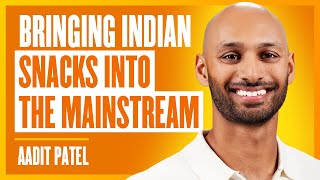
Aadit Patel founded Confusion Snacks in 2021 to bring Indian spice blends to mainstream snacking. The idea came from adding black truffle to his dad's masala popcorn. He's bootstrapped the brand into Whole Foods and Amazon, using clean ingredients and Bollywood-inspired packaging while balancing authentic heat with American tastes.
Chapters
As I got older and I wanted to stay connected to my roots, food was the best way and bite-sized way to do that. I was adding black truffle to everything and it made its way to my dad's recipe. And kind of looking down, that kind of became a natural aha moment of like, hey, this is an organic way of how I'm celebrating this Indian American fusion identity. Why don't we take it out to market and see if other people enjoy it too? We're ready to celebrate and share that Indian American culture.
Saw that you were on the Amazon Prime show, Bite Now. What was it like being a guest on TV and how did the judges react since I know big names were on the panel.
The idea was you pitch to 100 random customers or guest audiences. If enough say yes, you move on to the judges who have tried your snacks. Ours was pretty cool. We have Gwyneth Paltrow, we had Jimmy Siminoff, who's the founder of Ring.com, and then they also had an Amazon exec. So they— it was really cool to see a bunch of non-South Asian judges actually resonate with the brand. Packaging was one of my favorite parts about the brand because it's like tactical, like creativity you can apply. So we're very playful, we're very loud, and we're very family-oriented. The auntie approved as well. Like, I started this business with my mom. She is the stamp of approval of like, hey, this quality meets expectations. You know, the authenticity conversation we had. So we wanted her to be front and center for that.
All right, welcome back everybody to the Duck Pond Podcast. Today we have Aadit Patel, founder and flavor alchemist behind Confusion Snacks. The brand was born from embracing his Indian American identity, hoping to spark a memory of India or to help you discover something new. His snacks fuse bold spice blends with clean, gluten-free recipes using non-GMO peanuts and avocado oil. Since launching in 2021 in LA, he's taken Confusion Snacks all the way to Whole Foods. Aadit, welcome to the show.
Excited to be here.
No, I'm super excited. So I want to jump right in into the beginnings. So explain to me and walk me through, you grew up with Indian spices at home and American snacks in school. When did you first think, this is something that I want to make that more or less brings both worlds together into one?
Yeah, again, it was like very natural and organic for me. After I moved away from home after college, I was just looking for ways to stay connected to my Indian roots. I grew up in America, but we have a lot of family back in India. So growing up and even today, we spend a lot of time between both countries. So always got a taste for both cultures, but when it came to food, it was either American food or Indian food. So there was this duality with identity of how we kind of participated in it. And as I got older and I wanted to stay connected to my roots, food was the best way and bite-sized way to do that. I come from a big snacking and foodie family, so always enjoyed engaging in the culture through food. And for us, like my dad made masala popcorn growing up. As I got older, I was adding black truffle to everything and it made its way to my dad's recipe. And kind of looking down, that kind of became a natural aha moment of like, hey, this is an organic way of how I'm celebrating this Indian American fusion identity. Why don't we take it out to market and see if other people enjoy it too, for a way to celebrate and share that Indian American culture? So it kind of organically started for us.
I love that. I love that. And speaking from experience myself, I'm a Mexican American individual. And yeah, I heavily relate, you know, growing up. It's either Mexican food or American food. And, you know, having that taste of home, it just really solidifies everything.
Absolutely. Absolutely.
Yeah. So I want to dive into the identity and the name of the brand Confusion Snacks. I really like the double entendre there. Walk me through how did you come up with the name? What inspired you? And yeah.
Yeah. So the name actually took some time. We were exploring. So from the jump, we knew we wanted to do something that's related to the fusion. So kind of bridging the gap between Indian American identity. So there was this fusion concept from the beginning, but there was also this concept of telling it from the perspective of like a first-generation American. So I'm sure you can relate to this as well. So we were first exploring names that were like Indian-specific or like South Asian-specific. And then slowly we had this idea, like Diaspora Kid was one of them. Like, I'm a diaspora kid, so sharing the narrative through my lens. And then obviously that doesn't sound that great looking back at it. But then we started thinking, what's our short-term goal and long-term goal with this brand? The short-term goal is definitely bringing together this fusion identity and telling it from my perspective, being an American. But long-term, we also wanted to bring other fusion narratives into the, into the brand, which could be Mexican-American, Thai-American, Vietnamese-American. So we wanted the name to be culturally neutral to allow other types of cultures to come under our brand. So then I was literally camping with my brother-in-law and sister in Yosemite and we're like tossing ideas. I was like, what about Confusion Snacks? And you know, the knee-jerk reaction was that kind of has a negative connotation, etc. But I like the idea of it being kind of like making you think a little bit like, oh, what is that? But our slogan is cultural fusion inspired by cultural confusion. So the name is a play on that as well. And that's kind of how we stuck with it and it worked out for us.
No, yeah, I love that. The double entendre of fusion in the name Confusion. It's Very, very exciting. So I wanna, during my research for this episode, I saw that you were on the Amazon Prime show Buy It Now, which for those of you that are listening and don't know, it's essentially a Shark Tank in front of a live audience. So Aadit, what was that like? Walk me through what was going on through your head at that time and how did that feel and what was it like being a guest on TV and how did the judges react since I know big names were on the panel?
Yeah, we had, we had an amazing time. The whole production team and the judges were like super nice. The idea was you pitch to 100 random customers or guest audiences. You share information about your brand, your product, your price point, and they decide whether they want to buy it now or not. If enough say yes, you move on to the judges who have tried your snacks. Ours was pretty cool. We had Gwyneth Paltrow. We had Jamie Siminoff, who's the founder of Ring.com. And then they also had an Amazon exec. So they, it was really cool to see a bunch of non-South Asian judges actually resonate with the brand and they kind of understood we're trying to champion bringing Indian or ethnic flavors into like mainstream America. So the show went well for us, but I guess behind the scenes, my first time doing TV, like I do not have a TV personality. So it was, it was a fun experience.
No, yeah, definitely. And I think their reaction really plays into what you guys are trying to achieve, you know, that neutral kind of vibe, but also really trying to put into the forefront, you know, the Indian eccentricities and the flavors.
Yeah, absolutely.
So you have taste and jumping into the flavors, you have tasty flavors such as the Black Truffle Masala, the Chili Chaat, and the Original Masala. What flavors have you been experimenting recently in or totally surprised you, and what can we expect more of coming out of your brand?
Yeah, the original masala is actually our newest flavor. So we had basically spicy and mild flavors. We did have a seasonal flavor called mint masala, and that's a, like, that's nostalgic for us because a lot of Indian street food has a lot of mint. A lot of Indian snacks have a lot of mint too. So it's very familiar with us. I think for the American audience, we're still trying to figure out how to bridge like mint to snacks. It's just not common here. So we keep it as a seasonal flavor, but then we introduce original masala to allow folks that are spice sensitive to still engage with our brand and our flavors. So that's like our home blend of an Indian street spice called chaat masala. There's no spice to it. That's our newest one. I am trying to bring like a sweet and salty flavor to it. It's still under the works. It's a little bit tougher to commercialize with the ingredients we're using, and they're all Indian-inspired ingredients, so Hopefully that'll come in the next year or so.
I love that. I love that. Coming from a Mexican background, you know, spice is really big in our culture. And yeah, I love spicy foods, snacks, everything. And I guess that does make me ask, how do the Americans or people who are unfamiliar with spice react to your snacks, you know, in terms of flavor?
Yeah, you know, like the way Indian food and actually a lot of like Chinese food is probably similar is you first had your immigrants that came here and opened up restaurants, right? So for the Indian audience or the American audience, the way they engage with food is going to restaurants. That's why butter chicken, chicken tikka masala, like everyone basically knows that now. It's a household name. Then they engage with it with frozen food. Trader Joe's is a perfect example of this. You go to Trader Joe's, they have so many Indian frozen food or meals. Then the third way to engage with it was condiments. This is probably quite new— simmer sauce, etc. for you to be able to cook Indian food at home. Those all have spice flavors to it. So people are very familiar with it. And I think when even Americans the American palate goes to an Indian restaurant, they're more comfortable with trying spice there. Now, when you put it on a snack application, I think Americans are still trying to understand of how this fits into their daily snack rotation or weekly snack rotation. So there is a little bit more spice sensitivity there, and we're trying to kind of play the balance of how do we stay true to our story and our narrative of the flavors we grew up with, but also allowing the mass American snacking market to engage with it to a point where it's not deterring away due to like spice sensitivity, etc. So to find balance, we're continuing to experiment. Original masala is a good example of how we're trying that and trying to bridge that gap. But work in progress. We'll still have to iterate it.
No, yeah, that definitely does sound like a difficult balance to attain. You mentioned Trader Joe's and Whole Foods and walk me through your process. How did you get into Whole Foods so quick? You know, I understand that getting into retail space, especially in the grocery aisle, it's pretty difficult. We've had a couple of guests explain their process and, you know, each one seems to have taken a different route. There isn't like some cookie-cutter formula of you got to do this and do that. So walk me through your journey of how you got into Whole Foods.
Yeah, definitely. Every brand will have a different journey. I think every founder will tell you that it is easier to get onto shelf than get off the shelf. But I think getting on the shelf, even as an emerging brand, depending on the product we're doing, like we're bringing culture first, which is a little bit new. So the way we got into retail stores, it just takes a lot of persistence and showing up in person, right? So even our first account was Erewhon in LA. We're based out of LA, so it just— you just got to keep showing up. You might get a no, but you got to keep showing up. So it's that persistence. So the way we think is like, you got to plant a bunch of seeds, you got to keep watering them. Some may never grow, some may grow and just like fall off, and some might actually like blossom into like a beautiful plant. Whole Foods has been one of those for us. We joined that through they have a program called Leap, which is for emerging brands. It's kind of like an internal incubator competition they have. And through that, we built a good relationship with the buyers. They were excited about what we were doing. So there's strong synergy there. They championed our products and through that we got into Whole Foods. And each retailer is different though. I would say it's not the same path for each retailer for us.
Right. That's incredible. No, yeah, that's incredible. So diving into the snacks a little bit. Further. Um, I understand that Confucius Snacks has non-GMO avocado oil, no seed oils, and it's gluten-free. So when choosing those cleaner ingredients, was there ever a taste or a cost that you had to eat up? We've had a previous guest on the show. Sometimes it's a hit or miss. Sometimes they had to change the entire formula of their product, and other times they didn't have to touch anything at all. So walk me through your process and How did you go about it?
Using clean ingredients was definitely a conscious decision for us, and that also came organically. Like my mom, when she would make food or snacks at home for us, like she started studying like what's healthy, what's not healthy. She was using avocado oil at home for us. So when I decided to start this brand, it became a natural thing of like, hey, we should use avocado oil too, knowing it's more conscious and mindful for the body, et cetera. Even our spices we use, like we don't use any additives, preservatives. It's like all natural single source spices from India. So we wanted to make sure you could indulge in a snack and like crush a bag without feeling guilty about it. That's kind of what we tell folks, and that's why we were conscious about the ingredients. It's definitely a cost driver. Absolutely. And I think that's where we as a business have to understand, what does the cost mean in regards to getting this out into the market? Does it cap us on a price point that might be too high to get people to get in? Or is there an audience, a niche market there? But over time, as you grow the business, you scale, you find cost opportunities. So that's kind of what we're itching away now. We don't want to compromise on ingredients we're using at all, even if it's us bearing the cost for it right now.
I understand. I love that. And I really love how you're taking a lot of inspiration from your childhood, particularly your mom, and bringing it out into the world. And I also want to dive into the balance of it. Earlier, you did mention balance and How— my question would be, how do you balance the flavor? How do you balance the authenticity without watering it down, essentially?
Yeah, you know, authentic is a fun word because even if you go to India, it's like across the 27 different states, like authenticity means something different, right? Like the perfect example is chai. Like if you come to my house, like the chai you drink here versus like another Indian household will be different. Both are authentic, it is different. The only thing that's not authentic is Starbucks chai, but I think for us, it was really just creating a snack that we enjoyed eating at home. Like, we honestly were not thinking so much about like, how will the American palate respond to this, etc. Over time, once you get into market, you start getting feedback and using it, but it never came from a point of like, how do we make sure that this is compromised, diluted, whatever, just so we can put this out to market. Our thesis was what we're eating at home, can it live outside in the grocery stores or in the snacking market? And we're still leading with that headfirst approach. And then as we get feedback, we'll adapt, but never to a point where we're compromising flavors that we would enjoy, we didn't grow up with, or diluting kind of the brand essence, which is bringing together Indian American cultures together.
I like that. I like that. So essentially The authenticity comes from you. You know, it starts with you, starts with do you like it, do your— does your family like it? And I guess, you know, it's proof, the proof is in the pudding that it can survive and thrive in the world. You know, you appeared in such a big, you know, TV audience by now, which is an enormous accomplishment. I also want to dive into the challenges of, you know, just getting there, just getting on in in the retail space and scaling, you know, how was it like starting off compared to where you are now?
Yeah, no, great question. I think food is a cool thing in the sense that if you want to get started, you go in your kitchen, make something, and then go bring it to like a farmer's market. So it's actually pretty, it's very tactical to get started and pretty easy to get started. I think once you start building momentum, the challenge for small brands, like we're bootstrapping it, we're not, we haven't raised money, it's just through our savings, right? And that was a conscious decision to do that. We wanted to grow like a little bit more responsibly and scale in a way that worked for us. The step function of the capital you need to actually scale and grow, especially in retail, is quite high. So like, for example, you go from needing 5,000 bags and you can make that in-house versus the next step function with a manufacturer might be 10,000, 20,000 bags. So this, you constantly need more working capital to like survive and grow, build off the momentum you're building. I think that's a huge challenge because a lot of us do not have that working capital. A lot of us are still cracking into the market, so we don't have the cash flow coming in to like fund these things. So it's being a little bit more like the decision-making comes like, which channels do we want to hyperfocus on that are funding the business, that product economics are working for us, where we're not losing money on each bag and allowing us to grow in a sustainable way. And then when a point comes where it makes sense to maybe raise money, debt financing, equity financing, whatever it might be, that might be a good way. But it does take time to get to that point. And it is quite challenging to like navigate that process where you're kind of stuck between these things of, hey, we're like a bootstrap brand, we're getting momentum, but we're not just there yet to like invest hundreds of thousands of dollars to scale up.
Right. I love that. So I'm going into the, into the next topic that I wanted to dive into. So you're a founder, you're young, and you're a founder that's blending culture nonetheless, you know, flavor businesses. I wanted to ask you, what's a typical day for you and what rituals or habits do you have to help you stay grounded or creative?
Well, drink chai every morning. Every day for us, well, the consistent thing for us, like on a weekly basis, we're constantly plant, like a seed analogy, we're constantly planting seeds from a sales pipeline of finding stores that would be a good fit for us, we'd be a good fit for them, and kind of kicking off that relationship building. That's happening on a weekly basis. And then there's a lot of it's project-based. So for example, there might be a big like operational change that we're making, whether it's standing up a new manufacturer, 3PL, warehousing, all that stuff. So some projects like that come up and then there's certain launch projects. For example, launching to Whole Foods, there'll be a sprint where we're focused on like making sure that's set up for success. We just launched a collaboration actually with a really famous chai cafe here called Kolkata Chai. So last week that was our project. So we're seeing things come in like different sprints of projects, but consistently we're always focusing on our sales pipeline, our finances, our economics, and customer engagement.
I love that, I love that. So taking a little bit of a turn and diving into your packaging, which I do really like by the way, the bright colors, and I also like the, the Auntie Approved touch.
What was the inspiration behind your packaging and Packaging is one of my favorite parts about the brand because it's like tactical, like creativity you can apply. So I designed all the packaging in-house and I really wanted to do that to one, challenge myself, can I do it? And two, it really helps you rationalize like what's important for your brand to the customer, right? So the idea for the packaging really came about of one, what speaks to our brand ethos and like vibes. So we're very playful, we're very loud. And very family-oriented, right? So it's inviting people with those colors and the fonts, etc. There's a lot of micro decisions we made. For example, the font is a 3D font that was inspired by— if you go to India, the back of a lot of like freight trucks are actually like hand-painted art on them. And you'll see like text that is like very 3D, like 3D font, 3D typography. Old Bollywood movies have like a 3D font. So that was very nostalgic for me, and I wanted to definitely bring that into the packaging, which is why our font has like that 3D, that 3D style to it. The colors, we just picked the colors from the masala. I wanted to show like, this is truly what the spices look like. So all the colors you see are actually the colors of the masala, except the original masala, it's blue. That one's not blue. But the auntie approved as well. Like I started this business with my mom. She is the stamp of approval of like, hey, this quality meets expectations. You know, the authenticity conversation we had. So we wanted her to be front and center for that. And there's some other small things we like add in there. If you look at the bottom of our packaging, it says honk okay please, which is the bumper sticker on all trucks that like are in India. So we had a little fun with it, but then we also, over time, as we changed our packaging and refined it, we added some functional elements that actually spoke to how the consumer was shopping on shelf or in store. But yeah, that's kind of a little bit of our packaging story.
I love it. I love it. I love the creativity that goes behind it and the influences from home, you know, it really stands out and yeah, it just looks very, very vibrant. So I wanted to explore what's next for Confusion Snacks. You know, you've done roasted peanuts, popcorn in a variety of flavors. What's the next thing that you want to build and what can we expect from Confusion Snacks maybe international, more spices from lesser-known regions. What does Confusion Snacks look like in, in a couple years from now?
We're still very young, so we're just staying hyper-focused on what we got right now and building that out. So we have the popcorn SKUs, and then we just launched the dry roasted peanuts. It's about 3, 4 months back, so it's still pretty fresh. Our focus is on making sure that's set up and working. So that's kind of the main focus right now. We don't have like anything in the pipeline that's coming out anytime soon. I'm always tinkering in the kitchen, so if something sparks my interest, maybe I'll bring it to life. I have a really hard time saying no to that. But right now it's really focusing on what we got, this new peanuts launch, and making sure it's successful in the market.
Love that. If you were to have a flavor, you know, that you can just magically make happen right now, what would it be?
Sea salt jaggery. That is our— jaggery is like unrefined cane sugar. And we grew up eating it in so many Indian sweets. And I want to bring like the American salted caramel or kettle corn to life using Indian ingredients. So that's top of mind, very difficult to commercialize, but we'll figure it out.
Ah, that's very interesting. Would you ever dive into the candy space? I know a lot of our guests recently have been in the candy market and I've even thought about caramelized, you know, corn. And is that something that you're looking at or would you ever even consider it?
Yeah, we would consider it maybe down the line. To be honest, I wasn't— we didn't eat that much candy growing up, so it's a little bit unfamiliar to me. So, but maybe I should start eating more candy. I mean, Halloween's around the corner. I should start eating some candy and get some ideas.
It's the first of October. Well, Aadit, where can people find you? Where can people really gorge in your snacks? Honestly, from this conversation alone, I'd want to Wants to run to the store and buy a couple bags.
Yeah, absolutely. So you can definitely find us on our website, confusionsnacks.com. We're also selling on Amazon. In the West Coast, if you're based in California, you can pop into a local Whole Foods and find our black truffle masala and chili masala popcorn there. But yeah, online would be a great channel if you're anywhere around the US. We offer free shipping, so you could give our snacks a try.
Love it. I'm gonna pick some up after this call. Allahu Akbar. It's been a pleasure. This pretty much wraps up our conversation. And yeah, it's been a pleasure talking to you. Thank you for being here.
Perfect. You too, Ronaldo. Thank you.