Aaron Alpeter – Designing an Effective Supply Chain
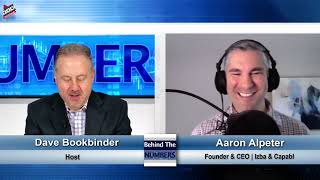
Aaron Alpeter, founder of supply chain consulting firm ISBA and fulfillment platform Capable, explains why supply chains need to balance cost against risk and plan for shocks. He treats inventory as insurance, recommends an 18-month design horizon, and says labor shortages are forcing fulfillment centers toward robotics.
Chapters
Hi everyone and welcome to behind the Numbers. My name is Dave Bookbinder. I'm a managing director at B. Riley Financial. I'm also the author of the new ROI return on individuals. And this is the program where we dig deeper to understand what really matters most in business. If you've been watching the news recently, you've heard the word supply chain a lot. Today we're going to be talking about supply chain with a guy who is super passionate about this topic and knows a lot about it and he's here to share with us. I'm talking about Aaron Alpeter who's the founder of ISBA and Capable. Aaron, welcome to behind the Numbers.
Thank you so much for having me. It's an honor to be here.
That's a pleasure to have you. Why don't you tell the audience a little bit about who you are and then we'll dive in.
Sure. So first and foremost, I'm a father and a husband, but professionally I absolutely love supply chain. I think I've loved supply chain since before I knew what it was. And to me supply chain is really this intersection between good ideas, marketing, the digital economy, geopolitics and the visible world. I studied supply chain at Ohio State University. I was lucky enough to get into a management training program at Unilever where I spent the first five years of my career doing everything from working in the Lipton tea factory to running import export for North America and then ultimately got into the startup ecosystem, was one of the founding members of a company called Hubble Contacts and then from there held a number of C suite positions both full time and part time at several well known startups around the country.
I've got to tell you, you are the first person I've ever met that said the words I love supply chain. So I'm excited to dive into this topic with you and tease out that passion. Why don't we start by actually defining supply chain? Aaron, when folks are listening to the news and they hear that there are supply chain issues and getting chips for cars or whatever the case may be, what is the supply chain that we're talking about? Sure.
So on a broad, high level way to think about things, it's really how things get done, Right? It's how things get done in the physical world and it is everything from planning and understanding how many units of something you need, where you're going to produce those things, how many to order, how you're going to get them to where you need them to be, to distribute them, how you're Going to distribute them, how you're going to do the reverse flow, all those sorts of things. I like to say that if it happens in the physical world, usually it's supply chain.
So where's the distinction between production and the transportation component? Because recently we had an issue where there was a disruption in the supply chain because ships couldn't dock in California, for example. Talk about that distinction between production matter and transportation and logistics.
Sure. So I think the first thing is that supply chain isn't just one thing. It's actually a lot of little things that are put together. And when someone says that their supply chain is broken, that can mean a whole bunch of different things. A lot of the issues that you have in your supply chain come to the design decisions that you made. So, good example with port delays, the decision that was made by the initial company was to put their factory in a place where they needed to import. If they put their factory in North America where they didn't do that, then they wouldn't necessarily have that issue. But the different parts of supply chain basically fall into five pillars. There's planning, which is figuring out how much to make and where to make it. There's the actual production piece of it, there's sourcing or procurement, and then there's the delivery part of actually transporting it and getting it delivered to end consumer. And the fifth underlying pillar is overall quality. And so when you look at supply chain in general, the first question someone may say is I'm having supply chain issues. The next best question you should ask is, okay, what part and where? And it's really about finding out the constraints that you're presented with and figuring out the right way to get around them. Supply chain is a lot like water. If you were to dam up a stream, it's going to pile up for a little bit, but it's going to find a way around. And what you need to do as a supply chain operator is to see what's coming and to the extent, try to avoid those potholes as best you can. And when you do hit them, figure out how to get around them as quickly as you can, ideally faster than your competition.
Yeah. And in your role as leader and founder of Isba, you're working with startup companies to help them with their supply chain challenges.
Yeah, that's right. So Isba is a supply chain consulting, outsourcing technology company mainly focused on venture backed companies. Most of our clients are either just before or, or just after their series A, but we do a lot of work with pre revenue companies as well as public companies. And really what we try to do is to augment their team and help them look around corners. We do everything from thinking through what they need to build, to go to market, how they need to go forward and put things together, to actually running their team. And one thing that's unique with us is the way that we normally work with companies is we'll start with a very defined project and we use this to figure out if it's a good fit for us and for that company. And then we usually move into a retainer basis where we are fractional experts. We're able to bring a team of diverse experts to bear for that company at the particular milestones that they have. And as we grow, we will stabilize and standardize different processes. And what makes us different is we actually work with the client to hire full time people who would be employees of that brand but would report to us. And as we continue to grow, we will eventually hire someone who we would report to. And really our goal is to be there as the thought partner and the leader from a supply chain strategy perspective and to leave very strong internal supply chain teams with that company by the time that we're done.
I saw literally this morning before I came to the studio that 86% of small to medium sized businesses, supply chains, have been or will be affected by the war in Ukraine. So when you talk about supply chain day to day challenges, talk about the shock factor, if you will, of these anomalies like the impact of COVID and the impact of war. How do you plan, prepare and react with that?
Yeah, that's a great question. Geopolitics and broader economic indicators, they will impact you even if you are a local supplier dealing in a local market for the most part. One of the key concepts that we try to build into supply chains is this concept of resiliency. And you can think about that as how many punches can you take and still keep forward. Think of Rocky Balboa. It's not about getting knocked down, it's getting back up. The key thing that you have to think about is, is understanding what could go wrong and what you would do in those situations. And you kind of make this matrix between the likelihood that maybe there's another pandemic or that there's rising fuel costs that are impacting things and then what the impact of your business would be. And so what we try to do is as we are helping to build companies, we try to educate our clients on what the decisions that they're making are ultimately leading to. What are the trade offs to make at the end of the day, supply chain is all about trade offs. A lot of times it's between cost and something else. But understanding that, hey, if you put your factory overseas, you may get a lower cost, but if something happens geopolitically, you've got more risk, you hold more inventory. And just trying to help companies look around the corner and figure out what they need to do. Because by and large, if you're dealing with a supply chain fire today, that's a result of a mistake or a decision that was made six or nine months previously, anything that you're doing today to try to fix it, you may not see fruit for several months afterward because there's such a long tail here.
Aaron, for folks who are watching and listening, want to learn more about you, how they can work with you, maybe tell them how they can connect with you.
Yeah, best way is to connect on LinkedIn, but you can also go to ISVA I z b a co and connect that way.
That's great, Aaron. We have just about four minutes or so to go here before we got to take a commercial break. But I want to sneak in one more topic here on this matter of supply chain and that's a lot of reading around just in time inventory and how that would impact the supply chain. What's the strategy around inventory and maybe even diversifying the suppliers in the supply chain.
Absolutely. So it's interesting because you hear a lot about just in time inventory and a lot of, you know, it seems like today we've gone from just in time to just in case and people are ordering a lot more. But at its foundational level, what it comes down to is the inventory policy and understanding what levers you have to pull and what inventory actually does. Inventory by itself isn't a good thing per se. The only reason you hold inventory is to deal with uncertainty and to make sure you're able to fill your demand. In a perfect world, you'd be paid for your service, your goods, and have exactly the amount of inventory that you need at exactly the right moment. What you have to do when it comes to thinking through inventory is really understand what is it buying you, what's the insurance policy that you're getting by holding inventory. And so some common principles that we will teach companies about will be say, okay, well, let's think about your manufacturing lead time. If it takes 30 days or 60 days for you to produce something and get it into your warehouse, maybe you should think about holding 60 days of inventory or looking at your demand and trying to figure out how many days, if you had no more inventory coming in, how many days could you last before you ran out of materials? But starting from that baseline of saying, okay, here's my base inventory that I need to hold, then you can have conversations and say, you know what? I think that my demand is uncertain. I don't know if this forecast that I had is going to come through. Maybe I want to hold less inventory or I think maybe there's a higher upside. Maybe I want to hold more inventory or I think that there are going to continue to be port delays or issues. Let me hold or adjust my inventory accordingly. And so really, the intelligent way to look at inventory is to think about what it's buying you in the form of an insurance policy and to be buffering on the uncertainties and to have a regular conversation as a business for what you're going to do. I think a lot of companies run into trouble when they just blindly apply this mantra of holding as little inventory as possible because you make something that is so brittle that the first sign of stress allows it to break.
Yeah, thank you. I think that's a good time for us to take a quick pause. Aaron, don't go anywhere. You watching and listening. You stick with us. We'll be right back after we pay a few bills.
Cheesy grooves.
Flavor, flavor, Flavor crunch. See that?
So much flavor. It's a mind crunch.
Let's face it, lawyers get a bad rap. I'm Erin Brusche, host of Legal Breakdown, where we dissect legal topics for the everyday viewer. With a mix of interesting guests to talk about current events and hot legal topics, let's work together to make make the law accessible and relevant to everyone. Catch us every week on RVN Television.
Where are you?
And welcome back to behind the Numbers. I'm Dave Bookbinder and today we're talking Supply Chain with Aaron Alpeter. Aaron, welcome back to round two. I want to continue a little bit more on this topic of supply chain. I'd like to have you give some advice, if you wouldn't mind. You know, you've seen a lot, done a lot. You've got the great background and experience in this. What are the pitfalls that you're seeing and what should folks who are watching and listening be mindful of?
Yeah, this is definitely a turbulent time. I think a few years ago people just thought of supply chain as kind of a necessary evil or a cost center. And it's really starting to be more in focus than it can be. A strategic weapon for you. And the best companies have a supply chain that is unique to them but follows some foundational principles. The first thing that I would suggest that companies look at is to make sure you have some sort of S and P or sales and operations planning process. And what that is is on a monthly basis taking a look out and saying over the next 18 to 36 months, what do we want to have happen and how is that different from what we think is going to happen? And by having that conversation and having the modeling infrastructure in place that allows you to start to understand when you might need cash, or when you might be outgrowing your fulfillment center, or when you might be needing to find a new factory or enter a new market. That basic activity is something that can seem very difficult at the beginning, but will unlock and help you avoid so many pitfalls. The second principle I would share is that you should really be focused on the next 18 months when it comes to supply chain design. I said earlier that 80% of the decisions or 80% of the headaches that you're going to have are a result of the decisions that you make in your design. And I think where a lot of companies can run into problems is they don't know what Horizon will look like to look at. When you're making that investor pitch deck and you've got your graph going up into the right, it can be very easy to say, you know what, we're going to be a billion dollar company one day, so let's build a billion dollar supply chain. But the important thing is that before you're a billion dollar company, you need to be a million dollar company. And so what we would encourage companies to do is to look at this on a rolling 18 month horizon and build what you need to get you through the next 18 months. And if you pair that with your S and P process, then you're able to usually have enough lead time to build out and not let your supply chain throw your growth. And then really the last principle that we would share is make sure that you are treating your supply chain providers as partners. Collaborate with them, be strategic with how you look at things like payment terms so you can leverage their balance sheet to grow, share forecasts with them, try to collaborate and figure out how you can be the best client for them. In that way they'll be there for you when you need to grow.
Yeah, that's really great advice. Building that relationship so that if there's issues, you're top of mind and you're a friend. If you will. Good stuff. Thank you for that. Aaron wanted to shift gears here just a little bit now and move over to Capable. Why don't you tell the audience a little bit about that organization? Sure.
So Capable is a subsidiary of Isbo and it is a fulfillment analytics platform. Really what it was born out of was our experience in E commerce fulfillment. We were working with lots of brands doing lots of fulfillment center RFPs. We've got relationships with over 100 different fulfillment companies. And what we noticed was that during the contract negotiation phase, everybody cared a lot about the service level agreements or the SLAs. And people would really care about the fact that it's 98% shipped on time if orders are received by 2pm versus 95% if received by 12. And there is that level of granularity that people were looking at. What we recognized was that after the contract was signed, there really wasn't an easy way to monitor the overall KPIs and performance of a fulfillment center. And what we found was that there were basically three outcomes here. The first one was that the fulfillment center would have to spend their dev resources or their labor to come up with a scorecard or to run these metrics. Many of the brands that we work with said, that's nice. I don't know if I trust you with your scorecard because you're effectively grading your own test. Even though it was there, there was always this element of distrust. The second outcome was that the brand would spend their labor coming up with a complicated Excel model that they would run every day, every week. And the fulfillment center would have to deal with people who had different levels of skills when it comes to Excel. They'd have to deal with different types of methodologies or issues. And that was just kind of a headache. And so what happened was that most brands and most fulfillment centers didn't measure this or they did it on a very ad hoc basis. And what's interesting about this is that you basically create an ecosystem where brands don't have the full context of a relationship. They basically tolerate performance and fulfillment centers don't get credit for doing a good job. And so Capable is the analytics platform that we put together that effectively monitors the core KPIs of a fulfillment contract and provides daily scorecards to brands and fulfillment centers and allows them to have that collaborative objective. We like to think of ourselves as a referee. We're neutral. We're not here to tell you that 95% compliance is good or bad. We're just here to tell you that it's 95%.
Yeah. And look, over the last couple of years now, during the pandemic, I think everybody has learned to rely on E commerce as a primary source or certainly a very significant source of their consumer activities. Right. So when you place your order online, you expect it to arrive and the right thing is in the box. Right. So fulfillment accuracy and you expect that you're going to be invoiced correctly. How challenging is that on the back end to make those two fundamental pieces work? Aaron.
It depends on the scale and the complexity and how you're doing it. If I am sending you a gift, I'm going to send you a thank you gift for having me on the show. I can do that pretty well. I can do it. It's an end of one effectively. When you start to add in thousands of orders and thousands of SKUs and dozens of different clients and facilities and people changing orders, it can get pretty complicated. What's interesting is that getting it done and getting it done economically and efficiently in a way that makes sense for the brand so that they want to keep coming back to you and where the fulfillment center is making a fair margin is complicated. It's actually quite difficult. And there are lots of venture backed companies and other large conglomerates that are getting into the space, consolidating and doing those sorts of things. And it becomes difficult to figure out the operational complexities. And there's usually a very steep learning curve to figure out how to actually do this at scale profitably. And so it is, you know, you think about just on the scale, if it's just me sending a package to you, that's pretty good, I feel like I can get that right. But if I needed to send things out to thousands of people and I've got different people, different contexts and maybe I'm worried about getting labor or did FedEx pick up on time or is there weather delay? It can become quite complicated quite quickly.
Aaron, tell folks how they can connect with you if they want to learn more about you and ISBA or capable.
Yeah. So LinkedIn is the best way to do so, but you can find more about Capable at Capabl co. Yeah, great.
And while I appreciate the sentiment, you don't need to send me a gift for having you on the program today. But thank you. I want to talk a little bit more about this fulfillment in the context of the great resignation. How has labor shortages and the overall impact of the turnover that we're seeing across the business world impacting fulfillment?
Yeah, that's a great question. I think for context, we should look at where E Commerce has come over the last three years. Before the pandemic, E Commerce was on an upward trajectory. We were buying more and more online. And what the pandemic did is it accelerated that transition by 10, 15 years. And if you look at kind of the exuberance that was there, lots of companies, lots of stocks went up to astronomical valuations because we didn't know how long it was going to be until we got back to some semblance of life as normal or came to terms with what things were going to be. There was a lot of investment made into fulfillment networks, into hiring. You look at Amazon as a great example. They hired somewhere on the magnitude of 100,000 warehouse workers and opened dozens and dozens, if not hundreds of warehouses across the country. They were building toward a forecast. They had a point of view for what the future was going to look like. Now that we're. I don't know if you can say we're coming out of COVID but people are becoming a little bit more used to what life looks like with it. That paradigm is shifting a little bit, and you see it coming back a little bit. Amazon has publicly admitted that they've. They overbuilt. They got the forecast a little bit wrong. They made the call that they'd rather have too much capacity than too less capacity. Now they're looking at potentially leasing out some of the facilities they have and seeing where things are going to point out. So this is kind of this huge bullwhip effect that is happening across all of E Commerce fulfillment in general. And what you're seeing is that the wages for hourly workers who can work in fulfillment centers have doubled in some cases. They used to be $12, $13 not that long ago, and now starting salaries are $22, $24, $25 an hour, and fulfillment centers can't find enough of them. You look at rents and all the fulfillment builds that are happening, and you can't get warehouse space at the price you could. And so will this come back a little bit? Possibly. But I think that the overall trajectory of more fulfillment centers, more people in fulfillment is there. And so what's going to happen next? Well, in the short term, basically any brand could imagine that prices are going to go up. The labor, the rent, as those contracts, as those employees come in, they're going to have to stabilize and recalibrate how much those things cost. But what I think will happen is that it now makes the ROI for robotics much more appealing. And so you're already starting to see lots of adoption in some forms of robotics. The interesting thing about fulfillment is that it is variable, it's flexible. You can't just plan on fulfilling just one type of thing. You have to be able to accommodate all sorts of different types of clients and products and things like that. What you're seeing is that companies are starting to break apart their operation and figure out, okay, how do we be smart about the robotics that we're bringing in? Maybe instead of someone walking to a shelf and picking something up, maybe the shelf comes to us, or maybe the shelf goes to the person who's going to put it in the box and ship it out. And so I think that you'll see continued investment in robotics, in e commerce, fulfillment, and it'll be really there to replace labor that they couldn't fill otherwise.
Yeah, well said. And we've got an operations management team that's involved in helping improve operating efficiencies. And robotics is one of the key components now that I'm hearing about from my colleagues and also some of the other companies that we collaborate with. Aaron, unfortunately, we are out of time. I appreciate you sharing your thoughts with us today on behind the Numbers.
No, my pleasure. This was great.
We've been talking supply chain with Aaron Alpeter, founder and CEO of ISBA Incapable again. My name is Dave Bookbinder and I'm the one that my clients turn to when they want to know what their most important assets are worth. You can feel free to reach out to me. You'll find me on LinkedIn, Facebook and Twitter. Would love to hear from you. And as always, thank you for watching and listening. We can't do the show without you, so thank you again for all of your support. We will see you next time on behind the Numbers. Take care, everybody.
More from Aaron
Unveiling the Future of Fulfillment: A Conversation with Aaron Alpeter and Jonathan Briggs 🤖