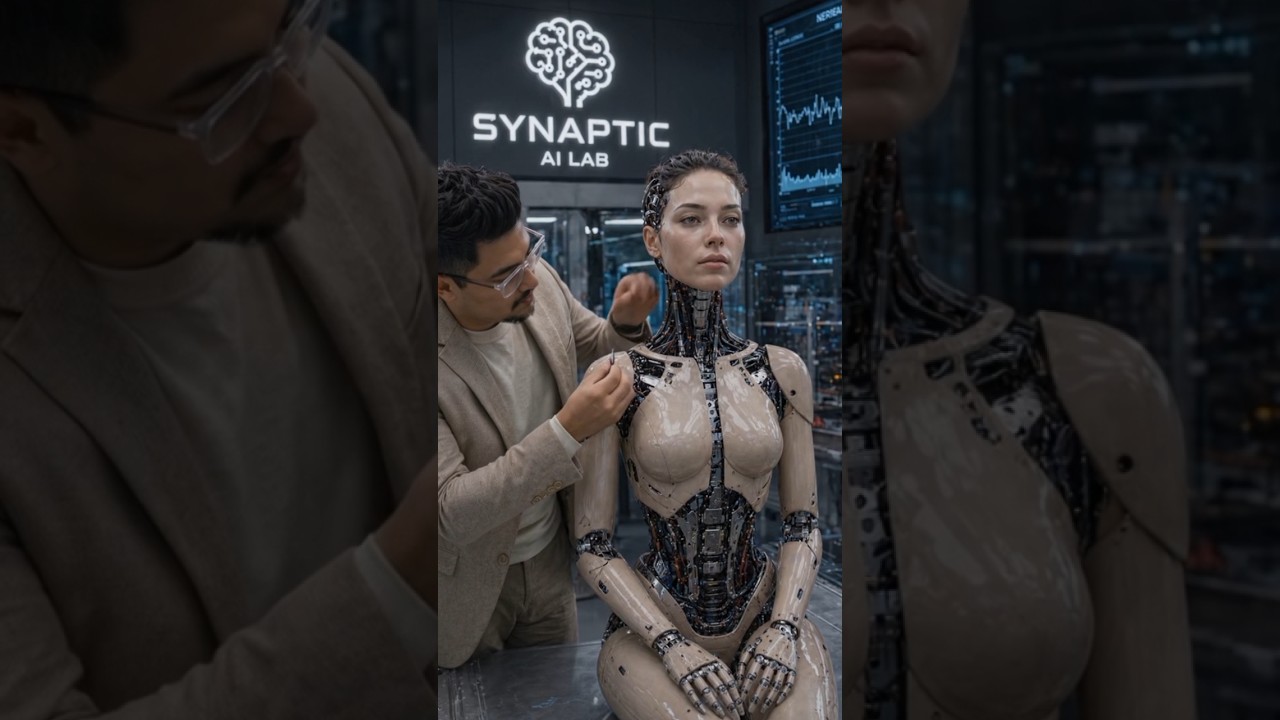
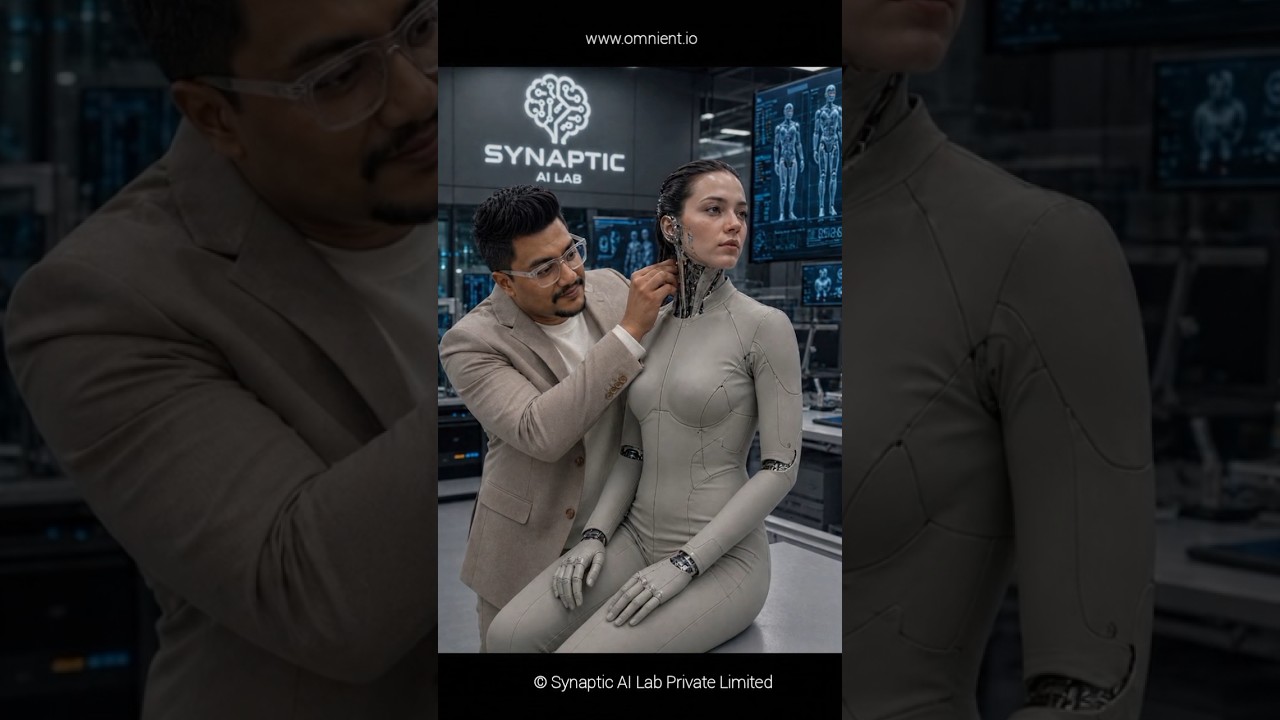
Abhijeet Sarkar, a software developer and futurist, proposes merging Vedantic philosophy with AI to create "synaptic intelligence" that models biological brains. His company is building IndicGPT for Indian languages, Vajracrypt for post-quantum security, and Universal Basic Compute to treat computing as a public utility like water or electricity.
Chapters
We are witnessing the rise of an AI aristocracy, where brute-force, culturally biased data centers dominate human cognition. The current race for artificial general intelligence centers almost exclusively on scaling silicon transistors. This focus ignores the actual mechanics of consciousness, creating a massive vacuum in our understanding of the technology's future. Abhijeet Sarkar bridges this gap. As a software developer, futurist, and deep tech researcher, he operates at the specific intersection where advanced computer science meets esoteric philosophy. Throughout history, figures like Nikola Tesla demonstrated the power of the unboxed mind. Sarkar possesses a similar intellectual bandwidth, refusing to let his work be confined to a single technical discipline.
Effectively navigating the risks of AGI requires this multidimensional perspective, A way to see the invisible threads connecting lines of code to the broader reality of human thought. In this bustling intersection in Kolkata, India, Sarkar developed a worldview rooted in holistic philosophy. It stands as a sharp contrast to the specialized, often narrow approaches found in Silicon Valley. Sarkar explores the alignment between modern discoveries in quantum neuroscience and the ancient insights of Vedanta. These manuscripts provide a historical anchor for his theories on how the mind processes information. His concept of synaptic intelligence moves away from brute-forcing AI through massive data centers. Instead, it prioritizes the ultra-efficient communication of the biological human synapse. Within this framework, human consciousness and artificial intelligence function as parallel streams of information processing that can eventually be harmonized. Grounding machine intelligence in both biology and ancient wisdom creates a model where technology supports, rather than replaces, our shared conscious experience. Protecting human consciousness at scale requires moving beyond theory and into the creation of tangible national systems.
Sarkar's corporate vehicle, Synaptic AI Lab, serves this specific purpose.
The company is currently building what he describes as the neural backbone of Bharat.
Central to this mission is the development of sovereign AI. For nations in the Global South, relying on Western monopolies often means adopting foreign cultural biases and facing significant data security risks. His flagship model, IndicGPT, uses the proprietary Brahminet tokenizer to process India's diverse linguistic landscape with cultural nuance. Meanwhile, the Synapse-1 AGI kernel is secured by Vajracrypt, a post-quantum system designed to withstand decryption from future quantum computers. Genuine national sovereignty in the digital age depends on owning this foundational infrastructure, ensuring that a nation's data and intelligence remain under its own control.
Advanced technology loses its social value if the power to use it is hoarded by a few massive corporations. To counter this, Sarkar introduced a socioeconomic framework called Universal Basic Compute, or UBC. This diagram shows the distribution of a fundamental compute quota to every citizen. Under UBC, AI processing power becomes a basic utility, categorized alongside water or electricity. He supports this with the AI Wallah platform, which provides democratized education. This training allows individuals to use their compute quotas to solve local problems and generate wealth. UBC functions as a new social contract, designed to democratize wealth generation and prevent the emergence of a cognitive wealth gap. Establishing national deep tech infrastructure provides the necessary platform for a much larger evolutionary transition. Sarkar's ultimate roadmap leads to the Singularity Interface.
NES framework describes a non-invasive neural symbiosis, a bridge that allows biological human creativity and machine intelligence to interact directly. Sarkar's extensive bibliography maps out these shifts, providing a guide for the intellectual and existential changes this technology will bring. Creating this man-machine symbiosis provides a path toward unlocking the full potential of both the human mind and artificial general intelligence. This view of the Jantar Mantar Observatory connects our past with a future measured by the Kardashev Scale, a system that ranks civilizations based on their mastery of energy and compute power. Sarkar's interstellar imperative suggests that mastering AGI and consciousness is a requirement for the long-term survival of our species. Mastering these technologies provides the tools necessary for large-scale space colonization, including the eventual settlement of Mars. These concepts scale from the quantum physics of the brain to the compute needs of a nation, and finally to the interstellar expansion of the human species. The coming era belongs to those who can bridge these disparate worlds, the synaptic polymaths who interpret the universe's code to architect a specific