How to Get Clients, 😲 Freelancing, Agencies, and Team Building with Shaun Clark | #AWA 09
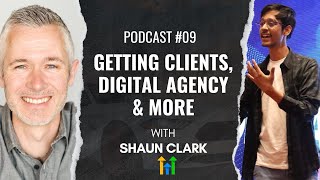
Shaun Clark, CEO of HighLevel, explains how his all-in-one CRM platform evolved from a texting tool into a white-label suite for agencies and freelancers. He advises selling outcomes like 10x ROI instead of features, building remote teams with high pay and flexible policies, and acquiring clients through local networks and free value talks rather than hard pitches.
Chapters
because the nice thing about it is, I'm telling you, the people you're selling to, they're local businesses already. Even if you niche out in something, right? Every dentist is a local business in their own local area. But then, so think about it, they— their customer is local, they buy a lot of their stuff locally. And so here you are coming in from outer space saying like, hey, I want you to buy this thing that's not local. You're really forcing a lot of paradigm shifts there. I'm gonna just say, you look, you know, have confidence, get out there and get out there and do something today. Figure out like, what can I do right now that's going to make What's going to move me forward? Even if it's just one step, half a step, doesn't matter. What are you going to do today to take action?
Hey everyone, my name is Abid Padhya and welcome to this channel. I have a guest with me. His name is Sean Clark. He's the CEO and founder of GoHighLevel. I would like Sean to introduce yourself a little bit because so many people know you, but in case if anyone don't know, I would request you to introduce yourself a little bit.
Yeah, sure. So I am the co-founder and CEO of HighLevel. We're like an all-in-one CRM, marketing automation, community builder, invoice sending, payments. I have no idea. All kinds of stuff. Platform helping a lot of people. And yeah, that's me. Yeah.
So you are founder of HighLevel. It is an all-in-one software for freelancers and SEOs especially. What you have done before HighLevel, what's your background? Can you tell me a little bit about that?
Yeah, so I am technically a software engineer, although I was never the best software engineer. So, but I had, I've always loved how software can help people kind of do real things in the real world. And I also like the fact that on the engineering side, it was the only thing I could figure out where like if you break something, nothing like blows up, you just restart the computer and you're good. So, but prior to this, I had another SaaS company helping small businesses collect past due invoices that I sold. So I had— I sort of have that sort of just a software background in general, just always in SaaS.
Yeah, yeah. Got it. So when you started HighLevel, in which year?
Oh gosh, let's see, about 5 or 6 years ago now. So whatever that is.
2019, I think.
There you go, 2019. Perfect. You can do better math than I.
Yeah, so at that time, I think there were also so many tools. So what motivated you to start HighLevel? Like, you want to make specific agency owners?
Yeah, actually, no, that wasn't initially it at all. So initially, for my last SaaS company, I was working with small businesses and all of them had the same want and need. They said, I want more customers. And I was like, gosh, I wonder if we could create something to do that. So I hooked up with my original co-founder Varun, who's still our CTO and co-founder today. And he and I sort of created HighLevel 1.0. And it was weird because, you know, initially it was really simple. It was like two-way text messaging and reputation management. And we were selling it out to these small business owners and they were like, yay, I love this, this is amazing. And then 2 weeks would go by and then they would call us and they would cancel. And I was like, wait, hold on, what happened? I showed you the demo. It does what it says. You know, like, I don't, I don't understand the problem here. And they were like, well, we don't have the time to learn how to use it. And for two software engineers, that was like the worst thing you could imagine, right? Because it's like, I built the thing you said you wanted, you, I delivered it, and now you say you don't want it even though you said it. It's like, I don't get it, right? Where's the, and so lucky for us, we got a phone call from a digital agency and that digital agency was working with a co-customer of ours and that digital agency kind of came in on a call. We showed them what we were doing. And that they really understood it. And so they were able to implement it for that one customer, but then they bought it for like all 80 of their other customers. And so that person actually turned out to be Robin Alex, who's our third co-founder today. And he's the guy who really introduced us to this idea that, you know, there's these people called the agencies and they're underserved and people that really make kind of all the magic really happen in the background. And they don't get a lot of credit for it. So you don't really know that they're there. And so he was the person who sort of opened our eyes to that. And then we immediately shifted to just focusing on that market. And that's, you know, 5 years and 6 years in climbing. Oh wow.
So like if I ask you what is the USP of HighLevel, so what do you say? What is the unique selling—
I don't know what does USP mean.
USP means unique selling proposition. That means what do you think the best feature—
Well, I mean, it's changed over time, right? So initially it was, all right, we started working with agencies, right? And we sort of saw— so their initial problem was They were generating a lot of leads and their clients were not following up with those leads. So we automated the lead nurture process. So that was the first. And I think this is really interesting because if, if you think about it, I mean, where we are today, I could be like, well, you know, we have every feature ever, you know, like we have all the major features of every major CRM and every major feature and it's all in one, but it's like, how do you start, right? So how did we start? We started with one thing. We said, listen, What's your biggest pain point? And they're saying, hey, you know, we are getting fired. We're like, we're generating all these leads, we're handing them over, we're getting these leads for like pennies a lead. Like we're doing such a great job and then we're getting fired for it and we don't understand. And so a lot of it was just conversations like, well, what's going on here? And they're saying, well, we asked the, you know, we were asking the dentist, you know, do you want more leads? And the dentist said yes. And so we ran this ad, we got leads and we gave them over and I don't get it. So then we're like, okay, well what's the dent— why is the dentist saying they're firing you if you're doing such a great job? And it turned out that these leads weren't walking through the door of the dental office. And it's like, well, wait, what is it? Why? Right? Well, you know, and as you backtrack, what we learned was, well, you'd fill out an ad on Facebook that says, you know, like, come in for your free teeth whitening or something, right? And but then nothing happened. The dentist wouldn't call you or follow up or book an appointment or whatever. And so we're like, okay, there's the missing link. And so we solved that one problem. And we did this with automated texting, and then we did automated emailing. And then from there, you know, a lot of people want to book appointments. So we're like, okay, let's add appointments. And so We just built up from there. And so that was really our original USP. And then, and then it became, okay, wait a second, why don't we replace all the tools that marketers are using and agencies and become like the agency operating system? So then we did that. And then from there, agencies started selling, packaging up what we were doing and selling it to small business. And then we thought, well, gosh, why don't we do that? And so what we did is gradually over time, and today I would argue that Good luck finding any platform with as many features as we have in a multi-tenant white label resalable package anywhere. Doesn't exist. That's our USP today. But for all the people out there, you know, we built up from one USP to where we are today.
Yeah, Sean, I use HighLevel every single day for my business and I can't live without HighLevel because my favorite feature is the automation. For example, like if I have booked the appointment with you, right? And then I get emails, texts, and I just love love that feature because it's so easy to set up. It is super easy to set up. I will ask my all audience to go check out HighLevel and get 30 days free trial if you use my link. And you know what, you will love this. Once you get used to it, you, you can't leave it. I bet you, you will not able to leave it. My next question is, Sean, like, um, in my channel, like, there are a lot of agency owners and freelancers. In fact, 90% people are freelancers and agency owners. So they are Yeah, so the major problem they are facing is to choose, is to become a generalized, like agencies, or to choose a specific niche. So what do you suggest to them?
Do not, do not choose a niche. Well, actually choose one, but the one I would choose is always the same, the one that's right out your front door. Choose local, right? Because what most people, when I look at the vast majority, so couple things, one, Forget high level, like before we had software and this and that and resell and white label. When I would talk to like agencies, I talked— there's two camps. So this is back in the I sell Facebook ads and, you know, and I'm niched down in dentist, blah, blah, blah, blah, blah. The guys who did the niche down in dentist or any niche, their churn rates were horrible. The local digital agency, they had no churn, zero, all the time. Now they both had different challenges, right? So the niche guy, churn all the time. The local guy, he would like ceiling out. He would like, I've sold marketing to everybody in town. Now what? So two different challenges, but churn was not the challenge of the local agency. And so today when you want to start something new, walk out your front door and you also have a lot of, um, things going for you. You know the local politics, you know the local weather, you know the local goings on, you know, you might even know local business owners already. It's easier to— the other huge thing that people just so underestimate is trust. Sales is about trust, right? It's like, do I know, like, and trust you? If I know, like, and trust you, I will buy anything from you. So having a local connection is huge. And so today, if you bring in HighLevel and we say to you, look, don't sell Facebook ads and website design and all this other servicey stuff that doesn't scale, sell SaaS. But when you sell it, sell it local. Because the nice thing about it is, I'm telling you, the people you're selling to, they're local businesses already. Even if you niche out in something, right? Every dentist is a local business in their own local area. But then, so think about it, they— their customer is local, they buy a lot of their stuff locally. And so here you are coming in from outer space saying like, hey, I want you to buy this thing that's not local. You're really forcing a lot of paradigm shift there. And yeah, they just don't create the same connection with you. In fact, there's a— dentistry is actually an interesting example. So almost every dentist in the United States gets their dental supplies from a company called Patterson Dental. Patterson Dental drives a truck up every day and drops stuff off at every local dentist, but it's a national multi-billion-dollar megacorp. But what they realized is that that stupid truck is the connection that they have to their customers, so they never break it. They could send through UPS, they could send through FedEx, they could make it very— they probably save money and make it more efficient and this and that, right? But they don't, they back that truck up every day because they want that local Patterson employee to have that connection to that dentist trust. It's no different than we're starting an agency. Don't niche out in an industry, niche out in local. That is what I would do.
Got you. I mean, uh, first you want to reach out to the local audience near you, right?
Absolutely.
Yeah. So, uh, my next question is similar to kind of this. I think you already answered it, but I will still ask, like, what are the top 3 ways ways to get clients? Because people like in India, if I ask you, Sean, if in India local businesses doesn't have too much capacity to pay, for example, if you want to make a website for them, they will not able to pay even $100 for a website in India because they are not even earning $300, $400 per month. So how they can pay $100? So yes, in this case, what you will recommend that what should they try?
Well, so first of all, you're not selling a website, right? You're selling outcomes. So it's super simple. If you can go to a business owner and you can say, listen, for X dollars that you pay me, I will give you 10x dollars or rupees in return, right? And that is what we're— we're not ever talking about features. You get into features and stuff, you're opening up the dialogue to like debate. Oh, I already have a website, I already have this software, I already have this, I already have That's not what you're doing. You're not selling software, you're not selling tools, you're not selling websites. You're selling outcomes, right? The tools you use to get those outcomes, totally different. So first of all, stay on the outcomes. There's not a country in the world where if you can't 10x my return, I'm not buying from you, right? Mm-hmm. Mm-hmm. From there, how do you get clients? This is easy. So first you start with people you know. So like, do you know any business owners? That kind of thing. And if you're like, oh no, I don't know anybody. I'm like, I have no idea. I couldn't connect with a business owner to save my life. Here's the thing. Every business in every area wants to know how to market their business. Guarantee it. How do I market my business online? Right? And there's lots of free ways to do this. And there's lots of ways you could do this with high-level things like missed call text back, chat widgets on the website, GMB chat, all that stuff. You— what you do is every— in every area, they have local business groups. In United States, they might call it BNI, or they might call it the Chamber of Commerce.
Yeah.
Yeah. But every area has it. Those, those organizations, they need you. To provide content to their members. Now, what they don't want is a pitch. They don't want you walking in the door like, hey, I have something to sell you. That's not what I'm saying. What you're gonna do is you're gonna go in and you're gonna give a free talk on how to market businesses online. You're not gonna sell anything. You're not gonna talk about your product for sale, all this stuff, but you're gonna get up on that stage. You're gonna show them a presentation. You're gonna show them value. You're gonna show that you know what you're talking about, and I'll tell you what's gonna happen at the end of the, the thing. They're gonna come running up to you and say, hey, could you do this for me? Yeah, bam, there you go. That's when you make the close, and that's how you get your clients, and that's how you get started.
Yeah, yeah, amazing. This, this was amazing. I mean, literally, because if you give, uh, value to the people, they will surely run up and will say, I want to work with you, because they, they are not getting any presentation like this in near, uh, locally near them, right?
Especially not for free, you know. And especially not attached to a pitch. And the nice thing is going in through an established organization, you're getting all of the goodwill.
Yeah.
Of that organization, right? They're members of that organization because they know that that organization's not gonna allow them to be pitched to. So they're, and they're already members, right? They pay dues, they attend events from that organization. They're already bought in, right? So you're able to kind of coast in on those, on all of that. And that's how you're going to know that people actually show up to listen to you, because they have this existing group of people.
Yeah, Sean, um, I have seen some of your team members, they are amazing. So I would like to know, like, uh, how should one build a team, right? For example, um, in this case in India, people are like, if they're getting some better job offer, they shift, right? I surely I can see that.
No, that's not true at all. I mean, we have a lot of team members in India, so I can say that for sure.
Yeah.
So first and foremost, I mean, it depends on where you're at in your journey, but in general, like, if you know what we like, what do we do in India? We pay in the 90th percentile. Yeah, we hire people. We hire people based on their skills. You know, we don't want— I think, I mean, from an American perspective and also having been around a very long time, people make a terrible mistake with India. They always say, oh, I just want like a less cost person or something, which is nuts. We like, we do the opposite. We, we want our people to, when they tell their friends how much they get paid, we want their friends to be like, you get paid how much? Oh my God, that's insane, right? Because we want them to never have the option to leave. Yeah, do a ton more than that, right? So like we let our people work at home, which we know, you know, in India And throughout the world, there's this call to come back to the office. So we're like, no, you work at home. And they're thrilled with that. It's huge. Now we have people who are traveling and people who are doing amazing things and we don't care. It doesn't matter to me whether you're at mom and dad's house in the village or you're back in Bangalore in your cool hip apartment. I don't care. Have fun. Go crazy, right? Like, as long as you're showing up and you're doing a great job, we could care less. And I think it's about offering flexibility. Responsibility and trust to the people that you're working with as you build a team and you're paying them what they're worth. You're not trying to nickel and dime them. You know, like in India, I can say just like in the US, you know, it's like we have full benefits, you know, we have full medical, we have full dental, we have full retirement. We have all the things that people really look to, to, to feel like, yeah, I'm getting a really good offer. And so I think what we, what we try to do is treat people super well. And we also have like events that we pay for. We bring people to events, we bring people to both local events so that they can meet like people they work with that are on their team. We have a big nat, like a big whole company event where we bring everybody together for a couple of days and hang out. So we just try to go above and beyond to create the best environment for team members so that if there's, I mean, a better offer, we try to make it so that better offer doesn't look better. You know, it just looks— they're like, why would I want to leave? This is great.
Yeah, my next question is like, if anyone is a freelancer and want to like start the agency, because freelancing is a little bit different from agency business, so what should, what should they, what should they do? For example, like, actually, I don't think it has—
this is the beautiful thing about this, right? So go back, think about what an agency used to be like. An agency actually used to be kind of heavy and hard because you have to be like, yeah, but I got to get designers and programmers and blah blah blah, like build this like crazy little team and all this. I mean, I wouldn't— that's all services. That's like selling SEO. This is why we have SaaS. This is why we have white label SaaS. I would tell people to sell this all day long. You're selling software. You're selling software under your name. It's a 90% profit margin product. It's incredibly scalable. It's— and the work is being done by software, not by a big team. So if you're a freelancer, I would say go do that. If you're an agency, I would say go do that. It's the same advice now. Regardless of who we're talking about.
Awesome, awesome. So, so now my next question is like, what your daily routines look like?
What's my day-to-day look like? Yeah, I like to talk to people. I love to talk to as many people as I can. You know, I focus first on customers. I love talking to customers all the time because, you know, in the good times and in the bad, you learn a lot from your customers, right? And staying connected to your customer, super important. Now, of course You gotta have an infrastructure behind you. So you gotta know, like, on the odd day, like, it's not like I can take every customer call or anywhere near, but if I'm not talking to a customer, like, what am I doing wrong? Like, like, why is my day going wrong? Because we serve our customers, right? And, and, and for me, if I show my team that I am talking to customers about whatever, there is nowhere for them to hide. No one on my team can say I don't talk to the customers. Talks to customers, what the heck are they going to do? They can't say that, right? So for me, it's talk to customers. And I, you know, it's funny, I love it because I mean, even when someone's calling to yell at me about something, which is always unpleasant, I learn something like in the middle of them saying like, I'm so mad, blah, blah, blah. I just ask questions like, hey, so what do you do and who do you serve and how's it going and this and that? And you learn a lot. And when you learn, you can then take that back to people and say, hey, did you know that we don't do this or we made this change that we thought was going to be really great for these reasons. But did you know it caused this big headache for these other people? And so I think it really helps you stay connected to the people that you serve.
Yeah. Sean, I have a very interesting question. Like in India, I have also interviewed so many people, right? So I have seen like when I talk to them, talk to founders, they are like they show off a little bit and then I feel a little separated. So how you keep yourself so humble?
Oh, I don't know. I mean, I'm not— I just— I don't know, you just kind of come wired a certain way. I mean, I've been very fortunate, right? So like, I've been to India 7 times in my life, and it's— I will tell you, bar none, my favorite food on planet Earth. In fact, it's terrible. You know what's terrible? It's terrible to eat Indian food in the United States because I've had Indian food in India. So it's always just like a big letdown, you know? And but In fact, I'm coming back to— I'm so excited. I'll be back to India soon. But I think I've been able to just meet so many different people, travel the world, see so many different perspectives. And I don't know, I came from humble beginnings. And so I feel like— I don't know. I'm just kind of wired like this. I don't think of myself as—
It's just natural. It's natural for you.
I'm just a normal dude. I mean, I just feel lucky to be here. I love what I'm doing. And, you know, I've been really fortunate. And I think, you know, I think, I think actually it's funny. I was talking to my CTO, Varun, and one of the questions they actually ask engineers, and I probably shouldn't say this because it'll get out, but I'll say it anyways. He says they always ask, how lucky do you feel in your life as an interview question? And one of the things they find is people who say, I feel like I've been really lucky, they tend to be really a lot better. Because people who see themselves as fortunate tend to have a better outlook on life than people who see themselves as unfortunate, right? Um, and so I, I, you know, I don't know. I think, I think luck is a, is a big part of life, and, um, and we all have our share of good luck and bad luck. But, um, you know, I, I just think I've— I'm just a normal guy, so I— why wouldn't I be excited? And, you know, why wouldn't I be humble?
Uh, guys, I just want to tell you, like, I am in HighLevel Facebook group, so, uh, I have seen one thing. So whenever a new feature or update comes, Sean will be like— Sean will watching a Loom video. Hey guys, Sean coming out from HighLevel and it looks so energetic every single time. And I watched all, all that videos. And there is a doc, like if you go to, I think ideas.highlevel.com, you will able to get all the updates. But I want the Loom video because I, I just love it. So thank you so much, Sean, for— I mean, who, who, like, I don't know any CEO who does that.
Okay, so I don't, I don't think they do. I mean, I, I also, you know, I have spent a lifetime I don't know. I was a software nerd and, you know, all my life. I mean, I mean, I like the idea that we can make life the way we want to be, you know? You know, you know, you kind of have to, like, be the change, right? And so I just think there's, like, all these rules that we all grow up with, and people just tell us, like, you have to be like this, you have to do that. But why? You know, it's like, what's the— you know, who says that's true? And I think that, you know, if you think about everything that is innovative, in the moment, it tends to be put down. It tends to be like seen as odd or weird, but then eventually it sort of becomes normal, right? And so I think, but I think the way that happens is that people are willing to go out and say, hey, I got a new idea and I don't care if you don't like it. I still think it's a great idea. And I think eventually someday you're gonna love it. So I'm just gonna keep being like this and then maybe someday you'll come around to me. And I think that, you know, that's how we change the world and make it a better place. And so if we can all just decide like, I actually just, you know, if you just sort of realize, like, you step out your door today and you say, look, I'm not going to do the status quo. Lots of people are going to come by and tell you you're an idiot for that. That doesn't mean you're wrong. Just because people disagree with you doesn't mean you're wrong. You know, you need to do things that you think make sense because they make sense. And I think if you do it amazingly, you might find that eventually people are like, wait a second, that's not so crazy after all. So, you know, be okay with the fact that, you know, if you're innovative, you're probably also going to get put down quite a bit. But that doesn't mean those people are right. They just haven't figured out that you've got a better idea yet.
Yeah, amazing. So Sean, um, this is the second structure of my podcast that I do rapid fires. So are you ready for that?
Oh, I'm as ready as I'm going to be, man.
So here's the first question: money or fame?
Uh, money.
Your favorite color?
Blue.
What makes you happy?
Uh, ooh, uh, freedom, like choice.
Okay. Books or movies?
Oh, for what? Entertainment or education? Movies for entertainment, books for education.
Okay, so I think I got the answer. Books for education and movies for entertainment. Perfect. No, yeah. Calls or text?
Shah Rukh Khan for, for a fun time, right? Books to learn something new.
Huh, nice. Calls or text?
Text.
Bike or car?
Uh, car to get there faster, bike to live longer. Depends on, depends on what kind of bike. Bicycle, bicycle to live longer. Bike, bike like this More dangerous.
Sean, I have seen like some photos of you, uh, with some cars. So which car do you have?
Uh, oh, electric car. That's my, my thing, always electric.
Electric car. Okay, got it. That's it. That's, that's the end of rapid fire round. Okay, wow, amazing, amazing. So that's it. That's the, um, ending of rapid fire round. Now Here's my one important question, and this is very important. It is also my personal question. So when HighLevel is doing an event in India?
Oh, I hope very soon. So yeah, absolutely. So I think this year we are definitely doing a breakout year in terms of international. Yeah. If it's not this year, it will be next year. Like, we are going to definitely do more international events. The big thing we got to do for India first though, and we're very close to this, is payment provider India. So we'll have Razorpay integration in, I think actually in the next 2 or 3 months at the most, which I think will really help out all the freelancers and entrepreneurs in India, open the platform up locally. So don't worry, we haven't forgotten about Razorpay.
This Razorpay is like open, like if Razorpay integration will be in HighLevel, it will open a new opportunity for all the Indians because It's coming. Yeah, we are, we are like joining everything with Webhook now. We will be using it.
Don't worry, don't worry. Well, the good news is we have a lot of team members in India, so they're very aware of how payments work there.
And Sean, you are telling that you will come India in June, right? Yes. So are you planning for some meetup?
Uh, well, I'm not supposed to say, so, um, but it's part of So, well, I'll do two things. So one, we're going to have a big event there for our entire team. And then two, we are going to— I'm going to stay over because I love India so much. So I'm going to bring my family. I'm going to do my family vacation for the summer there.
Wow. Amazing. Amazing. And Sean, like, you have been in India, I think, 7 times, you told, right?
Yeah. All in Chennai.
Okay. So what do you think? What is the future of India? Because population is huge and now it is growing like anything. So What does the future look like?
Oh my gosh. I mean, the future for India is bright. You know, you're talking about a fairly young population, highly educated, very technology-centric. But also, I mean, interestingly, a lot of really cool economic diversification. So, I mean, even on the manufacturing side, you know, it's interesting because you sort of think about developing economies like starting like China, like starting with manufacturing. But I kind of like India. Is like adding manufacturing. So first it was like IT and technical services, like brain work, right? And then applying that, but having that, that, that those skills and then adding manufacturing. Because I think what's going to end up happening is you guys will manufacture very high-end products just out of the gate, right? Electric cars, you know, whatever, drones, airplanes, I don't know, but stuff that like takes brains to do. Like you skip the t-shirt phase and all that, right? I mean, That's what's great. So I think that you take these highly skilled, highly educated tech people that are native in India. And, you know, I also am old enough to remember, like, if you were super— it used to be like, I'm super smart and I'm Indian. Oh, I guess I'm leaving. I gotta go. Like, I gotta go to the US. I gotta get, you know, I gotta go to Canada. I gotta get out. But now you don't have to do that, right? So I love that there's so many. And then it was, if you're gonna say, okay, you're gonna work for an American company or, you know, a European company or something, But now look at all the amazing homegrown Indian startups. I think India's startup sort of, uh, is gonna start a pop-up because you have all the right ingredients. You have incredibly intelligent people. You're starting to see a lot more funding there. Uh, you have a lot of people honestly who were pioneers who have shown that it could be done there out of the gate very successfully. So you put all that together and, you know, I really think the sky's the limit. I think India is a fantastic place to be right now.
Awesome. So I would like to conclude this podcast. Like Sean, so what message, one last message you want to give to all the freelancers or agency owners?
I'm going to just say, look, you know, have confidence, get out there and get out there and do something today. Figure out like, what can I do right now that's going to make a difference? What's going to move me forward? Even if it's just one step, half a step, doesn't matter. Like, what are you going to do today to take action? To create something down the road for yourself, it's a great time to make that happen. And no need to wait around, no need to listen to more podcasts. Get out there and make something happen.
Yeah, guys, thank you so much for watching this podcast. And I would request you to give HighLevel a try because once you start using this tool, you will cancel all the subscriptions out there because it is just one tool that will do all the magic.
Yeah.
So thank you so much, Sean, for accepting my invite. And I'm really grateful to talk with you.
Well, thanks for having me.
Yeah, thank you so much.
More from Abhit



Launch Your Micro Software Business | Full A-Z Guide | (₹5,00,000/Month Plan Inside)



Nikhil Kamath using Claude, Generate Unlimited AI Videos and More | Abhit Reacts Ep.2