From Pills to Purpose: Telling the Real Story with Anita 'AC' Clinton
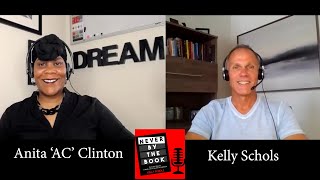
Interview between host Kelly Scholz and Anita "AC" Clinton (recorded Aug 4, 2021) in which Anita recounts her journey from college basketball standout to a career-ending knee injury, a subsequent suicide attempt (she says 'grapes saved my life'), and a 20-year process of discovering and teaching purpose. She describes her Zone of Greatness method (passion + skill + impact), goal-setting and visualization practices, her Be Great Global podcast and book (worked on since 2015, finished during COVID), and offers practical steps for people struggling with addiction or suicidal thoughts to find a why and take action.
Questions this video answers
August 4, 2021.
A bunch of grapes she ate before taking pills ('grapes saved my life').
begreatglobal.com.
Be Great Global podcast.
She began in 2015 and says she worked on it over about 10 years, finishing it during the COVID period.
Chapters
Welcome to Never by the Book podcast. This is your host, Kelly Scholz. At 24, I was debt broke and a full blown alcoholic. By 40, I was debt free and a millionaire. Now I share my secrets of success and transformation with audiences around the world as your podcast host, author, speaker, success, mentor, each Never by the Book episode features a guest who has overcome obstacles to build an incredible life of fulfillment. If you listened to last month, you would have heard Tab Pierce talk about his big lessons he learned from his big business screw ups. Well, back in February, Tab produced a virtual conference where our next guest was a featured presenter. And from what I hear, she knocked it out of the park. Anita A.C. clinton is a speaker, podcaster and entrepreneur who uses her superpowers to work with people to uncover their true passion to pursue their divine purpose. That's a lot of peas. Okay, it's time. Let's dive in to from pills to purpose. More peas. Telling the real story of Anita A.C. clinton. Hi, Anita. It's great to have you here.
Hey, Kelly. Glad to be here and that. It is a lot of peas. I agree.
That's a lot of peas for me. Normally I can't get those out very well.
You did pretty good though.
But we did, yeah, I tried. So you were a speaker for TABS conference a couple months ago, right?
I was, I was. It was a really, really great experience. From there, I went on and did a TEDx talk. So it kind of opened the door. It did. I mean, it was just an amazing opportunity, Amazing response, amazing opportunity. Inside of my story, you know, it's very authentic and I think that people recognize that and they appreciate that.
Well, you know, when I talked to Tab, he was like, you got to talk to Anita. You got to hear Anita's story. And he talked about how you were one of the top speakers at his conference. So I'm very excited to have you here to be able to tell your story to my guest.
I'm excited to be here.
Yeah. So let's talk about your story. You're a basketball player, which I was.
I was. I was.
I'm a big basketball fan. And when you and I talked, you weren't even watching the NBA Finals.
I was not in Milwaukee.
One like your hometown. They won and you don't even watch.
Yeah, I think I have too many. Too much scar tissue.
Too much scar. Well, let's talk about that scar tissue. Let's. Let's take my audience back and tell me, tell me about your story. You know, what happened, how you got to where you are now. And what started the whole process?
Yeah, so, you know, at the age of 10, I was five' 11, wearing a size 11 shoe. And my favorite teacher was my math teacher. I still love math today. Favorite subject. And my teacher's name was Ms. Dunbar. And so Ms. Dunbar also happened to be the girls basketball coach. And so one day I'm leaving out of class, and she look up at me and she says, anita, have you ever thought about playing basketball? And I'm looking back down at her, I'm like, nope. She was like, you should come out and give it a try. And because I loved her and I'm a people pleaser, I said yes, and I came out. And who knew? Well, I guess Ms. Dunbar knew, but I was a natural. And so Ms. Dunbar spent extra time working with me to teach me the fundamentals of the game. And from there, I went on to high school, and I made the varsity team as a freshman. I obtained a full scholarship to the University of Illinois, Champaign, Urbana.
And.
And for me, basketball was my life. My entire identity was wrapped inside the sport. I was neither the basketball player. You drive into Urbana Champaign, there's this huge billboard of me doing my signature finger roll coming into the city, you know, and so I had hopes and dreams, hopes and dreams of playing on a professional level at that time, it was when the WNBA was just getting started, but there was also many opportunities to go overseas and play as well. And so I'm on my path, on my journey, had an opportunity to play with USA Basketball. We went to Taipei, Taiwan, for two weeks. We won a bronze medal there. And I come back that next year, which was my junior year, our second Big Ten season game. My point guy goes to throw me the ball. Everybody else has gone down court. She throws the ball into me. I turn around to run down the court. The top part of my body turns, the bottom does not. And my knee literally goes. Now, I know this because the game was televised. So we were on abc, and my mother and my parents are watching from our home in Illinois. And you literally see my knee just shift. I tore everything, every single thing that could have been torn in my knee. I ripped it to shreds. And I knew we were heading back. We took the bus from Illinois champ to Iowa. And on the bus, my knee had gotten this big, and I knew my career was over. There was no way that I was going to be able to come back from that. Or at least that was the mindset that I had. And so I had constructive surgery a week later, and they gave me A strong medicine cocktail. I took every single pill that they gave me, every pill my desires was never to wake up again. Because without basketball, I didn't even know who I was. I had no plan B. I didn't know what I would do with my life. And so I just decided that it wasn't worth living anymore. So I took all of those pills. And the interesting thing though is I used to love grapes. Can't stand grapes now, but I used to love more scar tissue, right? And so I had a bunch of grapes in the refrigerator and I decided before I took the pills that I didn't want the grapes to go to waste. Now think about that, right? I'm getting ready to take my life and the thought is, I don't want the grapes to go to waste. Really?
Things, huh?
But those grapes were my lifesaver. I ate all of those grapes. And when I woke up four hours later, every pill, along with just about every grape that I ate, came back up. Those grapes formed like a base around my stomach that captured every single pill that I took. And so I get to the hospital a couple hours later and the doctors are looking at what I took, the potency of the medication, how much of it I took. And I overhear one of the doctors say, it's truly a miracle that she's still alive. And from that point on, my question became, why was I saved? I wanted to know why I was still here. And from there I began this 20 year journey to discover my purpose. I wanted to know the purpose for my life. And today, I help other people discover their purpose. Because we all have a reason, a unique assignment to be here on Earth. We have something to bring forth that's going to positively impact our world.
Wow. So grapes saved your life?
Grapes saved my life.
And gave you a why?
They did. They absolutely did. You know, and. But we all have a why, right? We all have a why. We all want to do things that are meaningful, do things that are fulfilling. In life today, so many people work jobs that they hate, right? So I call it Dreadful Mondays, can't wait to Fridays, right? Because you, you gotta work. You have to make money in order to keep a roof over your head, you know, to feed your family. But I think that it's way more fulfilling when you can figure out the thing that you are here to do and then begin to earn a living doing whatever that thing may be. It's no longer work anymore, right?
So were you able to once, once you discovered your why, were you able to turn that into a Job and a passion.
Yeah. So I have many gifts and talents. Right. And so you do.
I've been through your website. I've looked at your stuff. Yes. You are a very, very talented person.
Yeah. So I used to question, like, why? Why can't I do all of these different things? Well, one of the things that I realized is my desire. I've always had a desire to help people. Right. So that even as a kid, if someone was in need, I was the fixer. Right. So I've always been the fixer. And so when I coupled that with all of the gifts and talents that I had, what I realized is that I had what other people needed in order for them to fulfill their dreams, to step out and do that thing that was so heavy on their heart to do or to fulfill that dream or that passion that they had. And so all of those talents and all of the things that I learned along the way. Right. I call it my genius box. So I have all of this stuff in my genius box. Natural gifts and talents, but also skills, knowledge, and expertise that I've learned along the way. I believe that everything that we go through in life is to be used as we step into whatever that thing is that we're called to do. Like, it's all stepping stones preparing us, and it all goes into our genius box.
And so have you had a lot of people help you discover that along the way or if you just. How did you discover that?
I'm inquisitive. Right. So I was telling you before we started that I love to read, but I'm always looking for things, and if I come across something and I don't have an answer, I become like this hunt dog, right. To search out whatever the answer may be. And I remember when WordPress so websites. When WordPress first started, I was in partnership with this guy. We were in real estate, and we wanted to create some websites. And so we literally taught ourselves how to use WordPress. And today I create websites. That's part of one of the things that's in my genius box. But it was all about me being inquisitive, wanting to know more, wanting to understand more. And now I'm on this bitcoin kit, right. So now I'm learning everything that I can learn about bitcoin. Like, I am obsessed.
Okay, when you learn it, let me know.
I will, I will.
So do you think that that came from. I mean, was that something that was, you know, born into you, was taught to you, I mean, from basketball or what was it that. That Gave you that drive and passion to really want to learn and to really want to excel at what you do. Because so many people lack that. They lack that passion and drive and they just. You know, we were talking about it before we got on about just, you know, people just want to, you know, go to work, put in their eight hours and go home, Right?
Yeah, I think it does come from basketball. But even as a kid, like, I always. I like things to be a certain way. I wanted, you know, even my clothes, like, it had to look a certain way with basketball, like, I had to be the best, Right. So I did what I needed to do because I wanted to be the best. You know, I tell people all the time that I am a sore loser. Right. I hate to lose. If I'm doing something and there is no possibility that I can win, I don't want to do it. Yeah, they got at least be an opportunity for me to win in order for me to go for it. And if I'm going for it, I'm giving in my all. Like, I become obsessed like I am with bitcoin right now.
Well, that's the thing. If you. If you're going to do something, why not go all out?
Absolutely. Like, don't waste your time. At least for me, right? My time is valuable. I don't want to waste my time. If I'm going to do it, I'm doing it, period.
Yeah, I agree. I mean, I'm doing some projects around my house. I bought a house and I've been remodeling it to give me something to do, and I enjoy doing that. It's kind of my time to get away and just, you know, forget about life. And just. So I built 165ft of fence.
Oh, wow.
And I did it in four days.
Wow, that's serious.
Some of my buddies come over and they're like, what'd you do that so fast for? I go, I wanted to get it done. They're like, well, you just worked yourself out of a job. Like, love it, get it done, right?
Absolutely.
Why waste time if you set your mind to something? And that's. That's what I love about you is you set your mind to something and you achieve it.
Absolutely. Yeah. I tell my clients, and even when I speak, I use this analogy a lot. Anything done in excellence, people are willing to pay a premium price for it. And I use the example of Apple, right? We pay 1,200, $1400 for iPhones, 2,000 plus for the computers. Why do we do that? Because it's done in excellence. Like even just from the packaging, right. You get the box, it has this nice smooth matte finish. And it's black and white, simple black and white. You open it up and there's these compartments with all of the little pieces that are nicely positioned. It's done in excellence, right? Anything done in excellence, people are willing to pay a premium price for it. And so for me, doing things in excellence is important.
I love that. And you know something that Steve Jobs said, You know, you could take all the Apple products and put them on an 8 by 8 table.
I did not know that.
You know what he said? He said the most important thing he ever did in his whole life and business was the things he said no to.
Oh, that's good. That's good. I just. Not just did. I had a speaking engagement on Sunday, and one of the things that we talked about was when you're fulfilling your purpose and you're stepping out to do it, you have to get good at saying no. Right. Because we all have 24 hours in a day. How do you maximize the 24 hours that you're given? Sometimes you're going to have to say no to make that happen.
Yeah.
And that's a great book. Boundaries. Have you ever read Boundaries?
I have read Boundaries. Yes.
Great book. Yes. I recommended that.
We talked about Dave Ramsey. Right. Because I'm a master financial coach. That's something they ask you to do is read the book Boundaries.
Okay. Yeah, perfect book.
Yeah. And I'll tell you, anybody struggling with anything, you know, my podcasts about people that have overcome stuff, which you definitely have overcome. I mean, my gosh, to go from drinking, eating all those pills and the grape saving you to where you're at now, you know, you got to learn boundaries. You got to learn when to say no.
Absolutely. And, you know, some people are going to get offended. Like, I've had some experiences where, you know, people were really bothered that I just. I just didn't have the capacity. It wasn't that I didn't want to do what they were asking me to do. I just didn't have the capacity. Because if I would have said yes to that, that means that I'm naturally saying no to something else. Right. And that something else is probably something that I'm doing or I need to be doing in order to further inside of my purpose, inside of what I'm doing. So it matters.
And when you're working with people, you said you talk a lot about the why and the purpose. How do you get people to understand what their why and what their purpose is.
Yeah. So I use this process called the Zone of Greatness. Right. So that's what I call it. And I kind of got it from. Have you ever read the Big Leap? And I. Gary somebody, I can't remember his last name. Well, in the Big Leap, he talks about the Zone of Genius. Right. And that's kind of getting to this place where your genius is on full display. Right. So you're getting rid of all of the other stuff that you're not a genius in, and you're focusing on whatever that area may be and maximizing on that. And so I kind of piggyback off of that with the Zone of Greatness. And so it's divided into three components. So it's what are the things that you are passionate about or obsessed with? And then what do you have a skill, talent, experience, knowledge about that you have perfected over time. That's in alignment with that passion, obsession. And then from there, it's about impacting the lives of other people. I believe our purpose is not about us. It's all about using what we have to make life better for other people. Can you imagine what our world would look like if 50% of the people, just 50% of the 7 billion people in the world would begin to walk in their purpose, Meaning doing something that's positively impacting others? Like, how different would the landscape of our world look when that happens?
Oh, yeah. It'd be crazy, wouldn't it?
It would be. It would be. I'm like, that's the answer. That's one solution to the stuff that we see today.
And I'll tell you, every time I'm talking, speaking, coaching, consulting, everything, one thing I talk about is Zig Ziglar's quote. I don't know if you've heard that.
Which one is it?
I'm going to have help more people get what they want.
Yep. And you'll get what you want. Yes.
You'll get more in return.
Absolutely. Yeah. Zig Ziglar. Love him. Love him.
Yeah.
But we talk about getting the Zone of Greatness. So inside of that is what's your why? And typically, your why is the thing that bothers you. Every time you see it, it just irks you. It's like that's typically the thing that you are the answer to. That's the thing that you are equipped to be the solution. Right. It's that thing. And so, you know. Have you ever heard of the seven levels deep? Yeah. So we go through the seven levels deep. Why? Why is that? Why is that? Why is that? And when you do that, if the person takes it seriously, you can really get down to the core of why, whatever it is that they're passionate and skilled to do, why that thing is important to them.
Yeah.
And let me real quick, let me share my story of my why. So. Well, we all know that purpose is my thing, right? I. Helping people achieve their purpose. And so one day, I live in Chicago. I live in Milwaukee now, but I grew up in Illinois. And I'm getting ready to go downtown. And traffic doing rush hour in Chicago is horrible now. Not like California, but it's still horrible. Okay? And so I get off the expressway and I end up on the worst street on the west side of Chicago, just Cicero Avenue. And so I'm on Cicero Avenue, I'm like, okay, Nita, you have to get off the street. You need to get back on the expressway. And so I'm behind this 18 wheeler, and, you know, we're moving out, getting toward the expressway, and then all of a sudden the 18 wheeler starts breaking. And I'm like, what are you doing? And I'm kind of moving over. I can see in front of him. There's nothing in front of the 18 wheelers. I'm like, why are you breaking? Right? And so I'm panicking a little bit, freaking out behind the 18 wheeler. Then he eventually starts to pull over to the right, and I zoom past and I'm looking in the mirror and I noticed that what caught his attention was a woman, and it was a prostitute on the side of the street. So I call her Trina. And so I pull over about a block and a half. Yeah, I gave her a name because I had to. I kept telling this story, she didn't her name. And so I pull over and I'm looking in the rearview mirror as Trina is walking up to the truck, and all of a sudden, tears just start streaming down my eyes. I'm like, what is wrong? What was wrong was when I look at Trina, I know that Trina has a purpose. And I know that prostitution is not Trina's purpose. She was not created to be a prostitute. That is not what she is here to do. And I wanted to run to Trina to tell her, hey, there is something else that you are equipped to do, and it's not this, let's do that thing. But I had nothing at that time to offer Trina. I didn't know how to tell her to get started, how to do Anything. I could give her some money, but how long is that going to last her? Right. And so I watched Trina get up into the truck, and in tears, I pull off. And when I say that thing bothered me for months. And so what I do now with b Gray global, it's the answer to what I saw on Cicero Avenue. If I meet Trina today, I can help Trina figure out what her purpose is and begin to walk in that thing.
You got the tools now, don't you?
Yeah, I do. I do. But it's all about Trina. So even the times when, you know, when I'm overwhelmed, when things aren't going the way that I want them to go and I want to quit, I think about Trina. And that's what keeps me going, keeps me moving.
Wow. And is that what helped you? How? What helped you and got you to write your book back there? Destiny started.
So I've been working on the book for 10 years. Like, for real? For real. So initially in 2015, I said, okay, I want to write this book. And I wrote 13 chapters of the book. I sent it out to about 10 people to review it. The reviews came back and they were great. But for me, the book was incomplete. I didn't have the last component of the book to finish the book, and so I just set it on the bookshelf. Five years later, I pulled it out, I wrote a little bit more, changed the title, created a new outline. I still didn't have what I needed, so I put it back on the shelf. And so then last year, Covid, like, it freed up a whole bunch of time for me. Right. I could still speak and not have to travel. Right. And do all of that stuff. And so I was like, okay, let's use this time to get the book done. And when I sat down to write the book, the part that I was missing, I now had. And I was able to sit down, finish the book, and finally release the book.
Awesome. And I'm looking forward to it. I'm supposed to get the book next week.
I love it. There's a lot in there. Yeah, I'm working on. One of my friends suggested that I do a condensed version, so I'm working on a fast track version of the book. She was like, it's just a lot. Anita is too much. It's too much to take in. But I put everything that I know in the book. Every single thing I know was put into that book.
Well, awesome. I'm looking so forward to reading it. Well. And I can tell You. You know my book, I wrote it. And I use it like you do, you know, with your Tina. When you see that, you know it's a driving force for you. I've met a lot of people, you know, in my travels, and as I start to hear their story, I'll pull out a book and hand it to them.
Oh, that's good. Your book's good, too.
Oh, thank you.
I read it this morning. I read it and listened to it. I did both. It's an amazing book. Even the part about, I think I told you before we got started, you motivated me to set a financial goal of all the goals that I've set. And I set goals every year, and I check them off at the end of the year. I've never set a financial goal. I now have a goal to be a millionaire, thanks to you.
There you go.
Perfect.
I'm sure I'll have a lot more goals after talking to you as well. Well, that's the thing. I mean, talk. Talk a little bit about that for the audience, you know? I mean, so many people go through life, they don't set goals. They think about what they want to do. They do exactly what is on your wall. They dream.
Yeah. And then that's it, Right? And leave it there.
That's it. Yeah.
Yeah. So I have. So my birthday is in October. And like you, I am an introvert. So you will never know that. If you saw me on a platform or on a stage or listen to me on a podcast, you would never know that I'm an introvert. But I am an ultra introvert. Like, for real. For real. COVID 19 was the best thing that happened for me. It was no more pressure to do any social stuff. So for my birthday, one of the things that I decided to do, and I've been doing this for 10 years now, is I get away. So I go on a hiatus. I go somewhere, and for me, it's just. I believe in God. So it's just me and God. And I sit down and I plan my goals for the incoming year. And so I go over what I've done for the current year, and then I plan for the incoming year. And the amazing thing for me about the goals is not only am I creating the goals, but I'm creating the action items. So I'm reverse engineering that big goal to figure out, okay, these are the steps that I need to take in order to get to that end result. And so I'd set that out. And then each year, when the first of the year Starts, I put those goals up somewhere where I can see them and I'm working those action items, those steps to achieve it. And we all know that studies say that we are more likely to achieve our goals if we write them down. Write them down. You got your action items and then go for it. Because at the end of the day, if you know what your goals are and you know at least a path. Now, do I always take the path that I plan to get to, the end result? No. Things change, things shift. And I'm flexible for that. But I at least have an idea of how I'm going to get to that end result or to that destination that I've set for my goals. And it never fails. Like, it just happens.
It happens, doesn't it?
You look up, you're like, dang. Like for you, in the book you talk about, you didn't even realize that you hadn't made the million dollar goal. It was like you went back and was like, oh, 1.2 million.
Yeah. Same thing happened with my business. I went to a business planning strategy in 2012 and sat down and wrote out all these different goals I wanted to accomplish. 2018, when I sold the business, I was going through all my paperwork and I pulled those goals out. I had not looked at them since I got back from that business planning strategy.
Wow.
Pulled them out. I'd accomplished every single one of them. I had wrote down.
Yeah, there's something, it's something with our mind. You know, our mind puts us in position. Opportunities present themselves and we see them. It's really interesting. I was listening to a, years ago, this guy, and he was talking about kind of how the mind works. And one of the things that he talked about was, you know, when we, when we focus on something or zoom in on something, we begin to see things that we didn't see before. And he used the example of when you buy a new car, you buy a new car, you begin to notice that car everywhere.
Everywhere. Yeah.
It's not that the car just showed up. It's always been there, those other cars, but you didn't become zoomed in on it until you actually got the car. And it's the same thing with the goals. You write that stuff down, then you begin to see all of the opportunities, the resources that are there, that have always been there. But now you can actually see them and focus in on them and take advantage of them.
Yeah, you buy the car and you think, oh, yeah, I'm going to buy this car because nobody else has one. Yeah, a Lot of people have them.
Pretty much.
Pretty much, yeah. When I'm. When I'm teaching financial literacy, that's one thing I have people do. Write stuff down.
Yeah.
You know, balance. How many people balance a checkbook nowadays?
Not many. Or how many people have a budget. I didn't have a budget.
Right.
When I sat down and looked at how much money I just wasted, I wanted to cry. What are you doing? So being intentional about it, you know, and with the goal to be a millionaire, I gotta be intentional about looking at my finances, about tracking. Now those become the action steps. Right. To make that happen.
So, yeah, set a goal, take the action steps and make it happen. Right?
Yeah, absolutely. It works. It really does. It's miraculous how it works.
Yeah. Well, you're on my podcast. But you also have a podcast.
I do. The Be Great Global podcast. You're going to be a guest on there as well. So, you know, we're all about. Once again, it's all about purpose. And so it's about bringing people on to tell their stories of how they stepped into the thing that they're. They're meant to do. Right. And you don't have to be. There's nothing special. Right. There's. These are average normal people who started out just like most of us with not much. Right. But they've built something and created something, and they're living a fulfilling life doing the thing that they're excited to do that's positively impacting people.
So what would you tell my guest, somebody who's struggling with addiction or, you know, maybe even considering suicide? I mean, you know, suicide rates are through the roof right now. You know, with COVID and everything that's gone on in the last year, I.
Mean, yeah, you got to have. You got to have a why. Right? Like, you have to. You have to figure out what your why is. And that seven levels deep exercise, you Google that, like, that is the perfect exercise to figure out the why. What's your. What's your. Especially if it's suicide. Right. My desire or interest to commit suicide was based on. I didn't know where I was going. I didn't know what I was going to do, what. What my life was going to be like without basketball anymore. I couldn't see past bouncing the ball because that's. For the last 10 years, that had been my ultra focus, was playing basketball, playing on the next level. And when that was taken away, I was clueless. I had no why. I had no more reason to keep going, because that was my reason. And now that reason was eliminated. And so figuring out, like, what's important to you? What are the things that you really enjoy doing? Like, I asked the question, what's the thing that you would do? Whether you got compensated to do it or not doesn't mean you won't get compensated. What is that thing? Right. And if you don't know, I say start to test out some things. Right. When I first started speaking, you know, I went to a place that I been all my life. Church. I grew up in church. And so I went to the church and was like, hey, if there are any opportunities for me to speak, if I can introduce a guest speaker that we have coming in, if I could teach a Bible study class, I began to test it out to see what parts of it that I really, really enjoy, what parts don't I enjoy. And I've done a lot of stuff, and I'm really good for testing stuff out. And if I figure out it's something I don't like doing, I don't want to do that anymore. So that just gets scratched off the list. And I'm one of those people who. I don't like to continue to do the same thing over and over again. Like, I need some variety. I need to be able to move forward. I say all the time that I am a builder. I'm not a cultivator. I'm really good at helping people build things, But I don't want to help you manage nothing well.
And something I want my audience to realize here is you talked about being a major introvert.
Yeah.
And you and I have talked about that because we're both introverts. Okay. But for you to step up on stage, for you to go to that church, the first time you did that, I could imagine you were probably ready to throw up.
Yeah. But if you think about it, right. So I took some time to think about this a couple years ago. I've been playing basketball since I was 10. Right. And so basketball was my stage. And so I think that basketball, that platform was preparing me for the speaking platform. I can do exceptionally well on a platform, but where I have issues is after the talk, and people want to come talk to me. So now it's like, that's where the introvert. That's where I kind of clam up a little bit now. And I can remember when we played ball in college, we had fan days. I used to dread the fan days because my line was always the longest line, and I had to talk to all these people and all these kids, like that, for me, was scary.
But, you know, sometimes you got to step out of your comfort zone to get where to figure out what you want, where you're going, and what your why is.
You absolutely do. And, you know, even though that social part for me is very uncomfortable, I figured out or trained myself how to maneuver in that space. Right. So I may be sweating a little more than normal. Right. But I feel figured out a way that I could actually get through it and make it work. And you're right. Getting outside your comfort zone, like, is key because you got to test this. You got to test it out. You got to push yourself beyond measures. And then the amazing thing is, once you step outside that comfort zone and you stay out there a little longer, that space for your comfort zone, it gets wider, right?
It's bigger and bigger, doesn't it?
Yeah, yeah, yeah.
Wow. This has been some great stuff, Anita, so love it. Final parting shots. What. What's something you could tell my audience that. That they could really stick to and start today to help them get out of that comfort zone, to help them go after their dreams and their passions and to be great.
Yeah. I would say first start with dreaming. Right. You know, as kids, most of us were some amazing dreamers. Right. But as we become adults, a lot of us no longer dream anymore. Right. Because now we have responsibilities. Right. And those responsibilities tend to be a lot stronger and take up more of our time and takes away from the dreaming. But begin to dream, you know, lay down before you go to sleep at night or when you wake up first thing in the morning before you get up, began to dream, began to think about, you know, what are the things that really excite you? What are those things that you really enjoy and begin to envision yourself doing whatever those things are. And I can tell you another quick story. When I was playing basketball, I had a period where I couldn't hit a basket. I couldn't hit a basket to save my life.
They had cellophane over it, didn't they?
Right. Yes. And my coach hired a psychologist, a sports psychologist, and the one thing that he had me do was to lay down, get comfortable, and begin to see myself visualize shooting layups, see myself catching the ball, shooting jump shots, shooting free throws. And within 30 days, I kid you not, the things that I was envisioning. Envisioning was now manifesting on the court. Right. Because the mind can't tell the difference between a dream and reality. So if you can lay down and begin to envision what it is that you want to do what you want to do, what it is that excites you, what it is that's going to positively impact the world that you are gifted and talented to do. You can begin to see that in your mind. You can begin to manifest that in reality. Dream.
Dream. Wow. And it says it right there. Behind.
Says it right there. Yep.
Dream. And then take it this next step. And write it down.
Yep, write it down and set some action items to achieve whatever that is. And when you're setting goals, don't set 15, 20 goals. I say keep it three to five. Three to five. Work on those three to five until you achieve those and then progress from there.
Yep. Perfect.
Wow.
Awesome. Awesome. So how, how can people get ahold of Anita?
Yeah. So I am@anitaclinton.com everywhere on social media, at AC Clinton and the number one. So AC Clinton and the number one. I'm on Facebook, LinkedIn, Twitter, Pinterest. Now, I don't do the best on any of those. I'm working on getting better. I'm an introvert, so bear with me. Okay. Bear with me. But I'm working on it because I understand the importance of those particular platforms, especially inside of what I do.
Yeah.
I got a question for you really quick, Kelly. Sure. As an introvert, how do you do on the social media sites?
That's why I have Rebecca.
Love it. Maybe I need a Rebecca.
Rebecca, you need a Rebecca? Yes.
I love it because it's important. I'm sure it is. It is important.
It is important.
Unity is important.
And Rebecca gets me to step out of my comfort zone. You know, we're talking about comfort zones. She gets me to step out of it. I mean, if you go look at some of my social media stuff and you see some of the posts on there, it's not stuff I would post. I have help. Yep. And that's what I've always done is, you know, if, if I need help, if I can't figure something out, there's always somebody out there that will help.
Right?
Yeah.
That's good. Good stuff.
Good stuff. Yes. So, yeah, thank you for being on Anita. This was absolutely wonderful. I truly appreciated it. Awesome.
Well, thank you so much for having me. It has been great for me as well. And if you have your, you know, your listeners that are out there, if you're questioning what's my purpose and you're looking to make that happen, if you head on over to my begreatglobal.com site, scroll down to the bottom, there is a ebook that helps you walk through, step by step, how to figure out what your purpose is.
And that's begreatglobal.com and if anybody's not following Anita, I would highly, highly recommend you go follow her and start adopting some of the stuff that Anita's teaching there, because it's phenomenal stuff.
Thank you, sir.
You bet. So thank you for listening to Never by the Book. Share it with someone you care about, and don't forget to subscribe through your favorite podcast app so you'll never miss an episode. As we close today, remember, if you're not doing it by the Book, you might just be on to something great. Until next time, be great.