Adam Berinsky on how to spot misinformation and stop it in its tracks | The InnerView
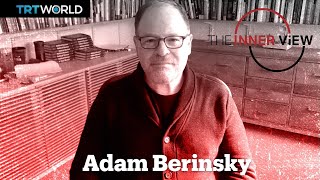
In this interview, MIT political science professor Adam Berinsky explains why ordinary people readily accept misinformation and reject accurate information. He attributes the phenomenon to motivated reasoning—people’s tendency to favor narratives that align with their pre‑existing partisan identities—and to the way modern digital platforms expose users incidentally to false claims. Berinsky distinguishes misinformation (false content shared without intent to deceive) from disinformation (false content deliberately crafted to mislead). He discusses how the scale of the internet, algorithmic feeds, and the “incidental exposure” effect amplify rumors, while also noting that filter bubbles affect only a minority of users; the larger problem is individuals’ selective exposure. The conversation moves to potential regulation, noting that well‑intended rules often miss the target, and to practical mitigation strategies: prompting users to consider accuracy before sharing, using contextual cues (e.g., age warnings, forward counts), and choosing messengers who are trusted by the audience rather than generic fact‑checkers. Berinsky also revisits the “backfire effect,” explaining recent research that debunking a claim does not necessarily reinforce it, but that the messenger matters. Throughout, he provides real‑world examples—Hunter Biden laptop, climate‑change denial, death‑panel rumors, McDonald’s urban legends—to illustrate how false narratives spread and how they can be countered.
Chapters
In this age of fake news and alternative facts, how do you decide what's true and what's false? How would you decide if I was real or an AI generated simulation? These questions seem to be taking on more relevance by the day. I am real, promise. But others you encounter on TV or elsewhere may intentionally try to misinform you. They could be the media or politicians or some powerful tech giant trying to manipulate you. Now, how do you begin to protect yourself? Our next guest studies this problem from the side of the believer, the one who decides what's true for themselves. Adam Barinsky is a professor of political science at MIT who researches why we as the public are so vulnerable to misinformation. Why do we accept claims that may appear obviously false? Why does it sometimes seem as if we want to believe it? Up next, All Things Mis and Disinformation with Adam Barinsky. You're watching the interview. Good to have Professor Brinsky with us on the interview. Thanks so much for joining us. How are you doing?
Great. Good. Thank you for having me.
So in your book title, you question or explain why we accept misinformation. Why do we accept it or why is it so easy for us to accept it on a, on a sort of public mass level?
Yeah, that's great question. I'd say that there's a couple factors there, I think. One is that there's a general tendency for people to want to believe narratives that are in line with their general beliefs. So I study American politics. So in our country, a lot of what happens is Democrats like to believe things that are good for Democrats, Republicans like to believe things that are good for Republicans. So there is this tendency for what we call motivated reasoning. But in addition, there's a difference. Different kinds of people are more or less likely to believe these fanciful stories. So I always think about, you know, thinking about at a holiday, it's just Christmas, Hanukkah here in the US I had friends and family over. And there's always a relative that you try to avoid. They've always got some sort of crazy story. And so think about those on one side, on the other side, people who reject all sorts of stories. And so when these two things come together, motivated reasoning and this willingness to believe stories that it's not all Republicans who think that Obama was not born in the US or that Trump, the 2020 election was stolen from him. But those Republicans who are inclined to believe these kinds of crazy stories, who are have high on this belief in misinformation, are more inclined to accept those Stories.
Yeah. It's interesting that now that you bring up the two binaries and the polarization. I didn't plan to ask you about this, but something that came to mind was the Hunter Biden laptop story.
Right.
Because it's. It's almost like there was such a deluge of misinformation and noise and all of that that came from the Republicans and. And Trump and stuff that I wonder if then liberals and Democrats didn't want to look at something that was actually legitimate at an institutional level as well, like New York Times and stuff. They were like, they were downplaying it because they expected and accepted all the other side stories to be nonsense, and then they didn't want to even engage with it when it actually had a lot of truth in it.
I think you raise a good point here, which is this question of what is the truth? How do we determine what is true and what is false? I'm an academic, so I like to take a very deep dive into these questions. And so I'd like to say not so much things are true or false, but things are supported or unsupported by the balance of publicly available evidence. So you can think about things like Watergate was a rumor until it wasn't. You can same thing with the Hunter Biden laptop, that there's a time of uncertainty, and at the time of uncertainty, people are inclined to believe the things that are consistent with their beliefs. So this is true not just of the acceptance of false stories, but the rejection of true stories. You can think about same thing with how climate change evidence, climate change in this country, how Republicans react to that is kind of a rejection of that. Not on the basis of the evidence per se, but on what they wish that the evidence was. Yeah, and, you know, a lot of the times we're dealing with ambiguous information. You said the Hunter Biden laptop story, you know, questions about the origins of COVID and that there is a desire to jump toward a truth, but as facts emerge, things evolve. And same thing with medicine. One day we read that having a glass of wine is good for your heart health. The next day we read that even a small glass of wine can cause cancer. The facts change, evidence change, and people need to adjust to them.
Yeah, I mean, it seems to be a tale as old as time itself where, you know, our guys, we're willing to easily believe the good things about our guys and easily believe the bad things about the other side and very easily reject the bad things supposedly of our side. And so I guess you take those sort of hardwired tribal aspects of human nature and you catapult it into this information age, it's amplified. Right. I want a little bit of point of clarity from you. What's the difference technically between misinformation and disinformation?
Sure, that misinformation is something that is false or unsupported by the facts. The distinction between misinformation and disinformation gets at the intent of the sender. So as you said, I'm very interested on the reception side. So I think about how ordinary people interact with the political world. And so misinformation and disinformation though gets at the question of the meaning of the sender. Right. So if I tell you something that is false, that I know is false and attempt to deceive you, that's disinformation. The problem though is if you then say that if you believe what I told you and you tell it to someone else, then it becomes misinformation. So it's a distinction that people make, but it's very much about thinking about campaigns, thinking about what, as you said at the beginning, what media, what politicians, what different groups are trying to do with it. But on the reception side, thinking about ordinary people. If I believe you, then your disinformation has worked at me. But then I become an agent that I can spread that as misinformation.
Got it? Got it. How big or bad is the potential for misinformation and disinformation given this marriage of the tech bros and politics now the broligarchy as some people call it. So you have billionaires at the levers of these massive tools that everybody's engaged in and you've got them also vying for political power and wedded to some of the most powerful people in the world. Tell me about the potential for nastiness down the line.
Oh sure. I mean, I think that there, I mean there always has been. It's interesting what you said before that I think you called this a tale as old as time. Sort of people believing what they want to believe. You know, sort of the study of rumors, conspiracy theories, misinformation, you know, goes back to ancient times. But in the US can think about during the Revolutionary War, different actors were trying to get to different stories across. So there's nothing new about that. There's nothing new about actors trying to get their stories into the sort of believed by the mass public. But what's different about the Internet is the scale. And so a lot of what I talk about in my book Is it's not just that I seek out information, but if I'm online, I'm incidentally exposed to information. So it might be that I'm looking at my Facebook feed and I see posts that my friends made. Now I'm seeking this out. But if they're posting about political news, then that is something that can be incidentally transmitted. So think about this, as I call incidental exposure. You just kind of run into it online. The online platforms have really. So what's changed about that is that it's much easier now and much more likely to be exposed to misinformation, not because people are seeking it out, but because there's a bigger platform for that. And to the extent that tech companies are, you know, sort of the actors are vying for political power or you know, sort of wanting to not be regulated, which I think is true of a lot of these tech companies, you know, sort of, they want to sort of be let alone to do what they want to do, not necessarily for nefarious reasons. But as you said, there really is the potential, you know, if there is a bad actor out there, that the tools are there through this incidental exposure, through this wide platform to really get out misinformation. And so back to the disinformation, misinformation distinction. You know, what starts as disinformation by someone who's trying to spread it can quickly become misinformation that a lot of people can be exposed to again, not because they're seeking it, but because they just happen to come across it in their everyday life.
Yeah, it's interesting. Do you want regulation?
Well, I mean, it's very tricky. Sort of, again, sort of being a social scientist, I can sort of say here's the different problems to think about. You know, the question is like who gets to write the regulations there? Now in the European Union, there's been a lot of regulations around privacy. I think the problem with a lot of these regulations is it's not that they're poorly intended, there's good intentions behind them. But as a matter of course, it doesn't necessarily get at the problem. So I was visiting, I was at a conference in France a few months ago and I opened my Internet browser and I was trying to do a little shopping and sort of the warnings about the pop ups and the cookies that just took away from the experience there. And advertisers aren't using cookies these days. So you have chased the old technology. And I think it's a very similar sort of thing is that even if regulations are well intended, they might not do what they. What the people who write them are tend them to do. And you do sort of get this question of who watches the Watchman, right? In the sense that if we don't, it's maybe tech companies shouldn't police themselves, but if the government can write the regulation, who's watching the government to write
these regulations with all the noise and the dishonesty and fake news out there? Is the majority coming from those with malevolent intent or is the majority happening kind of organically where a little rumour gains legs and as you say, misinformation spreads where people just sort of forward on WhatsApp or whatever and others gods are down and they accept it when they should be more critical? Is it being done by more evil people or is it done by innocent slips in a bad system?
Yeah, I mean, I think that it's a little of both. Right. So thinking about where do these stories arise from? You know, sort of thinking that people want to sort of spread stories that aid their cause. So there's. I'm a political scientist, I'm not business school professor, but there's a large literature in marketing that talks about essentially how can companies respond to rumors about their products. So, you know, I remember when I was growing up there were urban legends that McDonald's had worms in their hamburgers and that this was something that was combat. Now I tell my students this today and they say, oh no, no, that's not true, that's about Wendy's. Right? And so stories come again and again. So as me as a middle schooler telling these stories, I was not a bad actor trying to undermine McDonald's, but I was a tool of the people who were trying to undermine that business. So again, it's sort of like the rumors are created and are started at the top by people who have interest in trying to either get you to believe something or get you to disbelieve everything.
Does the medium play a role? So are we more prone to accepting misinformation if we're scrolling through our feed versus formally sitting down and opening, I don't know, the Sunday newspapers and switching on to reading the news?
I've done some work with David Rand and Gord Pennycook, who are some psychologists. And I should say that this is their work, that I've joined their team. But the idea is that people, we want them to focus on accuracy. Right? And the idea is that when you're scrolling through social media, you don't have that Filter up where you're thinking about like, oh, is this true? This is not. You're just trying to be entertained. You're not paying very close attention. And what we found is that we, some intervention thinking about the title of my book is why we Believe Misinformation and How to Fight it on this, how to fight it part is not telling people what is true or false, but reminding them that they want to share accurate information. Because you ask people in an opinion poll, not just in the U.S. but across the world, how important is it for you to share accurate information online? A vast majority of people say it's very important to them. And so if you could just remind them of this, basically take a moment to think, is this true or this is false? Before you share something, then that's something that could have a big effect.
So the Guardian, nowadays, it has a little annotation that says, this article is 15 years old, 20 years old, then WhatsApp will say, forwarded many times. So we're seeing platforms, outlets, trying to install some safeguards. Does any of it work?
Yeah. So these are contextual cues. Right? So again, thinking about, again, sort of thinking about. Whenever I talk to audiences, I talk to groups of students, I talk to different companies. I always tell people, to the audience, I say, you're unusual in that you care about politics. You're listening to me, a political scientist, talk about politics. Most of the people most of the time don't care about politics. They don't pay attention. And so if we can give them these contextual cues, this is like, well, hold on a minute. You know, think, is this accurate? Is this supported by the evidence before they share that information, that, that can be effective there.
So let's set aside media outlets for a second because a lot of the time you sort of know, okay, this outlet is left leaning, right leaning, this one's paid for by this state, that state, and whatever. So you know which way they lean or bend. But when it, when it comes to information on the Internet, how much of blame should we apportion to the algorithm? So the fact that it just funnels all this information into your echo chamber, you're not seeing the other side at all some of the times. And these are on big issues. Climate change, Israel, Palestine, whatever it might be an election. People are just not engaging at all with a, a real version of the other side. And to what extent is it the fault of the actual algorithm?
You know, I think that that's a, that's an interesting question. I think, you know, if we Actually, look at how people interact. There are people who are in these filter bubbles, right? So people who choose to only see information about one side of a political issue will only look at sources about that one side of the issue. But again, you know, so that this is a small portion of the pop. So if we think about what is the danger of filter bubbles for the people in those filter bubbles, it is very dangerous, but it is a small portion of this. This is true again, not just in the U.S. but in other countries as well. So I would say in some cases the danger is overstated in sort of what people are being fed. The bigger danger is on what people choose to see for themselves. So again, thinking about an algorithm can feed you the content from one side or the other politically. But the bigger problem is that people who are very sort of entrenched in their beliefs don't want to see anything else. So again, it's not so much about the Internet per se, but about the individuals interacting with the Internet. So again, sort of thinking about like, what is old is new. Again, it used to be that in the age there were newspapers that were tied to specific political parties, and that's still true. So the partisan press is nothing new. That this is something that existed in the US in the late 19th century, early 20th century. The problem is that the Internet is given that people who want to find that kind of news, that kind of slanted news, that there's a bigger palette that they can choose from in order to get that. I would say it's not so much, you know, sort of. I said, like, we don't want to, you know, sort of we don't want to. Not saying don't blame tech companies, but if we're looking for people to blame, you know, thinking about these hyper partisans, right? These people who are really entrenched in their interest and what the Internet has given them is the ability to find information and also to find other people who are like them. That this is something thinking about different groups and kind of think about how people choose to interact online. That. No, it used to be sort of. I'm of an age where I remember that there was things about rumors about the John F. Kennedy assassination. These were trans AI people who would have conferences and they would send photographed, sorry, xeroxed copies of newsletters to each other. That was an inefficient way to spread information. You can get all that information online at the touch of a fingertip there. So it's not just that you can find information that fits with your belief you can find other people who share your beliefs and kind of creating that community there. So again, I don't want to say that algorithms are not important or that tech companies don't bear some responsibility for the problem. But again, I think a lot of this is about the choices that people make. In an era in which it's much easier to find like minded sources and like minded people.
Is it a good age to live in when you're, if you're a dishonest narcissistic politician who likes to repeat lies?
Yes. Well, you know, I think again, this is. But you know, sort of like what's old is new again, right? This is again, nothing new in terms of the modern era, these kinds of politicians. It's just that the platform is much bigger and the ability to reach people is much larger. So you don't have any particular people in mind? I think there is this general class of populist politicians throughout the world. They're taking advantage of this technology in a way to spread their message and to spread misinformation. But again, you know, sort of that there's nothing, you know, it's not that there's nothing new under the sun, but we've seen this before, just that we're seeing on sort of. I said that it's kind of like it's misinformation on steroids because we have the ability to spread that information in ways that we didn't 30 years ago and at a scale that we couldn't 30 years ago into groups of people who would not have been aware of these issues at all 30 years ago.
Yeah, there's a clip of you on Samantha Bee's show where you say the best way to, I don't know, quell a rumor. No, you said one of the best ways to give a rumor more legs is to try to debunk it because repeating it makes it worse or something like that. And of course they do their funny Daily show sort of reaction from the reporter going, you know, whatever. So tell me more about that. Because this idea of like, even when you're trying to debunk it, the fact that you're mentioning it perpetuates it, makes it worse. So then what do you do?
Yeah, so actually this is a great, this is a great point because actually the science on that conclusion. So that clip is from 2017. The social science on this is move forward back in 2017, we would say don't repeat a lie, even to debunk it because that makes it stronger. What we found is actually that that's not the case, that it's okay to repeat the lie in the act of debunking. Now I said you don't want to repeat it too much, that you don't want it to become too familiar. But what we found is that Brendan Nyhan and Jason Rifler wrote one of the earliest pieces saying this, that basically that there can be a backfire effect. But they co authored a piece recently, they said, well, we've looked at the evidence. It turns out we were wrong as a general rule. So it's not quite as bad as they say. So that's good news. It's to say that we can repeat that. Now, in terms of the kinds of strategies that I think that we should, I think what's very important I focused on is thinking not just about the message, but the messenger, right? So thinking who delivers this fact check or who delivers this correction. And so I'm a big fan of fact checkers as professionals. So thinking that these are the people who are trained to determine whether or not particular claims are supported by the evidence, but they're not the best people to deliver that message. Right. So if I say something to you that you don't like, you can either change what you think about that thing, is that factor, or you can change what you think about me. And we've seen this in the US that fact checkers have become. It's a bad word in any sense in that people don't trust fact checkers because they're saying things that they don't like.
Right. And fact checking itself can be a form of propaganda as well.
Exactly. The thing about that, you want to have properly trained people who are deciding whether or not something's supported by the evidence. Those aren't the best people to deliver that message. Right. So in my book I talk about stuff with death panels. So these rumors that the Affordable Care act that was proposed by Obama, passed by Congress was going to create death panels. So you have government run panels that decide whether or not people should get life saving health care. So, you know, sort of whether grandma lives or dies. Now these were not true, right? This was kind of, this was a distortion of a provision that had end of life counseling which is saying like basically at the end of your life, you know, like what sort of palliative care do you want? Sort of thinking about that sort of thing. But became these death panels. Now you had independent sources. So people from the American Medical association saying this isn't true. Now those checks were somewhat effective. But what's more effective is having Republican politicians saying, like, you might have heard people say this, but this is true. So people speaking against their apparent interest is the best way. So thinking, again, not just about the message, but the messenger. And the example I use is thinking about. So McDonald's. So when they weren't putting worms on their hamburgers back in the 1990s, they sold a product called Super Size Fries that was essentially two large fries put together. And at some point, they stopped selling this. Now, they didn't say, you shouldn't eat so many French fries, but if McDonald's, which is the company that makes its money selling French fries, gets rid of a product, and that's a really good signal that maybe you shouldn't be eating too many French fries.
Yeah, good point. Reminds me of when John McCain sort of intervened when that woman said, I don't like Obama. He's a Muslim. And then McCain said, no, no, ma', am, he's not a Muslim. So on the one hand, he sort of fact checked it because it was his apparent sort of competitor or enemy, but then. And then he became ambiguous because his next line was, he's a very good man. He's not a Muslim. He's a very good man. Anyway, that's another story altogether, but Adam Barinsky, it's been a pleasure talking to you. We're out of time. Thanks. Take care.
More from Adam
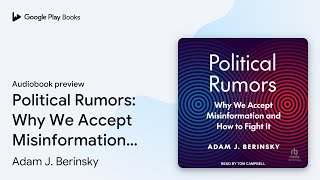
Political Rumors: Why We Accept Misinformation… by Adam J. Berinsky · Audiobook preview