Do You Make These 9 Business Case Mistakes?
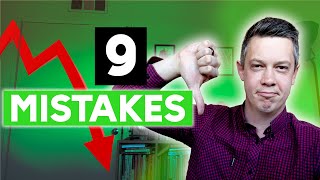
A short instructional YouTube video by Adam Kay (Dec 11, 2023) that lists nine common, deal-killing mistakes salespeople make when writing business cases. The presenter explains why each mistake undermines credibility or executive buy-in (e.g., sending case studies, using industry research as a proxy, jumping to solution, missing root causes, authoring as a salesperson, relying on one champion, projecting a single ROI, making it seem too easy, and overly long documents). The video emphasizes creating concise (1–2 page) business cases that read like internal documents owned by the buyer and offers a downloadable "bulletproof business case" template.
Chapters
Hey, everybody. In this video, you're going to learn nine deal killing mistakes that most salespeople make when they're writing business cases with their customer to help justify the price and close the deal. Okay? Business cases have become incredibly important as a skill for you to get right, because that is what is demanded in the new economy that we sell in, right? Every new project or funding needs to be justified. And so you've got to get really good at writing business cases that sell, or what I call bulletproof business cases. So in this video, we are going to cover nine mistakes that most salespeople make. And each one of these can kill a deal by itself. And then in a future video, we'll start to get prescriptive on what a good business case looks like. Now, in the meantime, before we get started, as you go through these nine things, I want you to write which one of them you're making in the comments in the video. Okay? So if I'm going to present nine business case mistakes, if you make the first one, write one. If you make the second one, write two. If you make all of them, write 1, 2, 3, 4, 5, 6, 7, 8, 9. So do that as you go so you know what to fix for yourself. And then finally, in the comments, I'm going to put a link to a business case template that sells. So go check that out and let's get started. Mistake number one, sending case studies. Most customers at some point in a sales cycle will say something like, I'm going to need a business case to justify this. Or they'll just let you know that a business case is going to be part of the process. And most salespeople say something like, great, I'll send you some of our best case studies. Now, the problem is, a case study is not a business case. At best, it supports a business case. A case study is somebody else's business case. But write this down. A great case or a great business case that sells should look like an internal document to your customer. It should look very unique to them. And if you think about how your buyer is going to use a business case, well, they're probably going to go get in a meeting with their boss or with the CFO or some scary executive, and they're going to use the business case to present their case for why they should buy your solution. In other words, they're putting career capital on the line. They're taking a risk. And if all you do is give them a case study, there's no way they're going to go to Bat for you, okay? They're not going to go into the meeting with the CFO or CEO or whoever they need to get approval from, make their ask and say they have a bunch of case studies. No, they need a specific business case unique to their organization. And a case study by itself is not going to cut it. Number two, mistake number two, using research and industry, industry research and stats as a proxy for a business case. Okay? This is even worse than mistake number one, which is sending case studies where customers will ask for a business case and you say something like, yeah, we've got a good Gartner report, or something like that. A lot of salespeople refer to Gartner reports or Forrester reports or other analyst reports and industry ROI studies and stuff like that and make the case that it's a business case, but it has the same problem as the first mistake. Take it's not specific to the organization, right? If you went into a meeting with an executive and they were asking for a business case and you presented one of those things and that's all you had, they would roll their eyes at you, okay? And if they were nice, they wouldn't roll their eyes, but they'd never meet with you again. Now, industry research like this has a place, but it's better to instigate a conversation, right? Reference it. It's almost a discovery tool. You reference industry research and you ask how it's showing up in your customer's world or something like that. But industry research is not a business case. It probably shouldn't even make its way into your business case document. But if it does, it is a supporting document that shows your customer. Now that we've showed you what a business case could look like in your world, here's how it shows up for other people. Mistake number three, jumping straight into your solution, its projected ROI and all that kind of stuff. Okay? Most business cases, or great business cases that sell, totally ignore the solution in the first half of the business case. Because a business case isn't about your product. A business case is about a customer making good on a problem or an untapped opportunity. And so that's what the first section or two of your business case should be, is defining the problem in a way that resonates with an executive's priorities. If you do this part well, by the way, the rest of creating a business case is much, much easier. Mistake number four, skimming past the root cause of the problem. Okay? You already know that you should spend the majority of your business case defining the problem. But if you don't define the root cause of the problem in the business case, then you have no bridge to your solution. In other words, an executive might read the business case or the problem and agree that they have that problem. But if you haven't outlined the root cause, that doesn't mean they're going to buy your solution, right? That doesn't mean they agree that your solution is the right one. In fact, what you probably did if you didn't outline the root cause is just make an opportunity for another salesperson who sells something completely different, right? You've done all the hard work, and then the exec goes and buys something else because they think that's the solution. Now, when you get clear on the root cause of the problem, it starts to create a bridge to your solution. Because your solution should address the root causes, right? People buy products to address root causes of problems. Now, I'm not saying talk about your solution in this part of the business case, you're still not there yet. But you should be outlining a few perceived root causes of the problem you just defined in a way that lends itself to your solution when you get to that part. Otherwise, all you've done is created an opportunity for another salesperson to get a commission check based on the work that you've done so far. Mistake number five, authoring the business case as a salesperson. Okay? The author of a business case should be your champion or set of champions. Why? Because, like I said, a business case is an internal document. If I'm a CFO or I'm a CEO and a business case slides across my deck for a potential project for us to fund, and I see it's written by a salesperson, that business case just lost 50% or more of its credibility because I know it's being written from the perspective of a vendor who just wants my money. Now, if I take the same business case or I look at the same business case and it's authored by a direct report of mine that I respect, or several of them, I'm going to read it. And I know it probably has credibility, assuming those people have credibility. Okay? So what I'm not telling you is to not write the business case yourself. You're probably going to have to do about half of that, right? You want your customer contributing to it or your champion contributing to it so that they feel ownership over the. Over the business case and they own it. And you can do a lot of the work writing it, but as far as whose name you stick on that thing, that shouldn't be yours or if you're on it, you should be like a sub author. There should be like two or three other people that are more prominently displayed than you and you simply helped inform part of it. Okay, so don't be the star of the business case, so to speak. Mistake number six, only getting one champion's perspective as you create your business case. This is most business cases. Most business cases are written through the lens of you having done discovery with one person. And the problem with that is if you then present that business case to an executive, even if it's good, there's a good chance you're going to get pushback because you're only presenting one person's perspective and they probably don't see the forest, they probably see the trees. Instead. You should strive to talk to two, three, maybe even four people and bring their perspectives into a single coherent story. When you do that, you're far more likely to craft a business case that speaks to the forest instead of the trees, which is what execs need. They need to see the big picture. And that's how you get the big picture. Mistake number seven. This one is almost always true and it's easy to fix. Projecting only one ROI scenario. Okay, Projecting one return on investment scenario. Write this down. I know I say that a lot, but these things are worth writing down. Executives think in terms of ranges and scenarios, right? An example is worst case, base case, best case. You should write the return on investment part of your business case to lend itself to all three of those scenarios, because that's how executives think. They don't think in terms of a single possibility because that's not how business works. They think in terms of multiple possibilities, multiple ranges and multiple scenarios. And you should write your business case accordingly, especially the ROI section, right? Here's, here's the worst thing that could happen, here's the most likely thing that could happen, and here's the absolute upside. Here's the best thing that could happen. It's very similar to sales forecasting, where you typically have three ranges of a forecast. Mistake number eight, making it seem too easy. This one is super counterintuitive because we all want to position our solution as the easy button. It doesn't take a lot of work, doesn't take a lot of resources, doesn't take a lot of headcount to get, right? But if you're selling decent sized deals, if you're a mid market or enterprise seller or beyond, executives know better, right? They know these projects are going to take significant work and significant Resources to make good on and to realize value. And if you're beating around the bush or it seems like you're hiding that, or you're trying to position this as the easy button, you'll lose so much credibility with these executives because they know better. So it's counterintuitive, but instead you should actually call that out. In the business case, you should have a section on required resources or dependencies or something like that where you talk about what kind of headcount they would need to dedicate to this or what kind of people, like the product marketing department would they need to take over ownership over this and what kind of time commitment it's going to take for each, you know, group of these people. Name all the resources and requirements, in other words, to deliver on the promise you're making in your business case. And that's all a business case is, is it's a sophisticated business promise. And you need to make it clear what you need from the customer to be able to deliver on the promise you're making that is, you know, your business case. So make sure you're upfront and clear about that. It's counterintuitive, but it actually earns you credibility. And frankly, if you lose a deal over the fact that it's going to take work from your customer, your company was better off not closing that deal because that's just an unhappy customer waiting to happen, right? If it actually takes work and they don't think it's going to take work and they sign a contract and now they got to do all this work, now they got shelfware, now they're sharing bad word of mouth and they're probably just going to churn mistake number nine, making your business case too long. The best business cases are one to two pages of like a Google Doc or something like that. But most business cases are 10, 15, 20 slide decks. And not only is an executive not going to read that because they don't have time, but it also indicates sloppy thinking. Okay, there's that famous. I think it was like a Mark Twain quote or something like that where he said, sorry, I'm writing you such a long letter, I didn't have time to write. Write a short one. That's because short, concise, condensed documents and material take a lot of critical thinking because you've got to cut out the trivial many and only talk about the vital few. So don't make your business cases too long. Now we're reaching the end of the video and I want you to do a couple of things Number one in the comments, I have a link to our bulletproof business case template, right? I told you a lot of what not to do in this video. If you go download that template, you'll start to see what you should do. You'll get a template, you'll get an example, and there's even a 10 or 11 minute training video that teaches you how and why this works. So go download that right now. The other thing I want you to do is write down how many of these mistakes you were making in the comments, which is your first step toward fixing them. Write Awareness is the first step in solving a problem. So write which mistake you make the most. Was it mistake one? Was it mistake two? Was it all of them? And what are you going to do to commit to solving it? Just write a number in the comments. That's a good first step. And then finally, if you liked this video, if you got value from it, make sure you hit the like button so that other sales professionals can find it. And if you're truly ambitious, share it out with your network on LinkedIn or social media and I will see you in the next video.
More from Adam


Introducing the Outbound Objection Navigation System | Kyle Norton, CRO at Owner.com





Salespeople: Most trainers preach “SELL VALUE!” I’ll show you exactly HOW in 3 steps. #sales

Salespeople: here’s how to ask deal closing sales questions to C-SUITE executives.