The Biggest Podcast 001 | Tristan D. Lalla
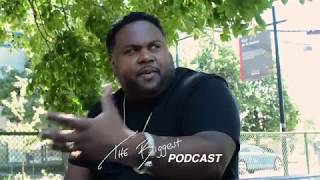
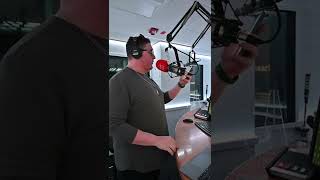
In the inaugural episode of "The Biggest Podcast," host Adam Greenberg (creator of the One Bone big‑and‑tall clothing brand) interviews actor Tristan D. Lalla. Tristan shares his 20‑year acting journey—from teenage theater school to film, TV, theater, video‑game motion capture, and recent roles that defy typecasting. He describes the tight‑knit Canadian acting ecosystem, the hurdles of paying dues, and how size, race, and intersectionality affect casting. Tristan highlights the industry's growing, though still trend‑driven, focus on diversity and the importance of seeing big‑and‑tall men in varied roles (e.g., doctors, lovers) to shift stereotypes. The conversation pivots to the lack of quality clothing for big‑and‑tall men, leading Adam to explain One Bone’s mission: a size‑system (1‑5) that treats bodies as bodies, not afterthoughts. Tristan tries a One Bone t‑shirt on‑camera, describing the fit as comfort‑like “grandmother’s cooking” and praising the fabric’s feel. Both discuss body‑shame, the need for representation, and invite listeners to share their stories. The episode ends with contact information for One Bone and Tristan’s social handles.
Chapters
My name is Adam Greenberg, creator of One Bone. I'm so pumped to have Tristan D. Lalla on the first episode of what I think is going to be called the biggest podcast.
Biggest podcast.
The biggest podcast. Tristan, tell them a little bit about yourself.
What's up? I'm Tristan.
Uh, yeah, whatever, you know.
Cool. Um, Tristan D. Lalla, uh, born in Montreal, designed in Trinidad, stolen from Africa. Uh, I am an actor, actor, performer, recording artist based up here in Canada. I work everywhere. I do a lot of film, TV, theater, video games, and motion capture, and I just kind of go where the work is.
How'd you get into acting?
I started acting when I was about 15, so I've been going about 20 years, which is crazy to say.
Yeah, that's unreal.
But, uh, Right after high school, I went to theater school. Right out of theater school, started working. Then I stopped working, and then I cried, and I just— I've been working ever since. So it's all I've ever wanted to do. I come from a family of performers and musicians, and it was kind of in my blood to do it. So I, I listened to the calling.
And yeah, yeah, you just went where the wind called you.
Yeah, and I kind of had to because it was I'm not passionate about anything else, right? Or I wasn't when I was younger anyway. So I was stubborn and I put my foot down. They said get a real job. I said no. Yeah, this is my real job.
And in doing that and sort of like going off the beaten path, what were some of like the major hurdles in terms of, you know, building this own career for yourself and trying to like you know, get to that next step and get to that next step.
The industry has changed so much over the years, ever since I started anyway, it's changed a lot, and that's not even that long ago. So there's a very small pool of actors, artists up here in Canada, and a lot of times you'll run into the same people, friends, and you become friends even auditioning for the same same roles or working with the same or for the same people, but it becomes like this little ecosystem that you learn your place and you learn, oh, let me eat this because I'm the shark.
Yeah.
And then, oh, I'm being swallowed because I'm the— and then you just kind of— it's a, it's an ecosystem. So you learn what's for you is for you, what's not is not, and nothing can change that.
Yeah.
And then you learn to create and you learn to to be part of conversations and projects that are for you.
And I guess it's a balance between, you know, your own ego versus everybody else's and understanding your position at the time and understanding your potential and how you need to just keep moving forward to access that potential.
You gotta pay your dues, right?
Yeah.
When you're starting out, a lot of young actors now especially they're in it for like 2, 3 years and they think that, you know, they've done, they paid their dues, and it's like, you just started. Yeah, just got here. We've been doing this for a long time. I got a lot of gray hairs that I dye regularly.
But didn't you feel like that in the beginning?
Yeah, no, actually, no, no, no.
You like, you knew you were gonna—
I was that kid. I knew my place and I knew like, okay, I respect so-and-so and I like so-and-so, and him and I are going in for the same roles, but he's like 10 years older than me, so let me learn from him instead of like, you know, puff up my chest. Yeah, like I'm better.
So did you ever get those roles over the guys with more experience? Yeah. And how did— like, was there any interaction with the more experienced afterwards?
Yeah, sometimes it wasn't like a preferable interaction, right? But, uh, but yeah, I always learned from that, especially when it was favorable on my side because sometimes the newer face will get hired because you're the newer face. Yeah. Or sometimes, or hopefully most times, it's based off of merit and talent, right? So it's not just a, oh, you're the hot name right now, let's try you out, or whatever. But they get to know you, they know your talent and what you can actually do, and they, you know, they open their minds and you don't get pigeonholed held into stereotypical type of roles anymore. I play a lot of characters now that are— for example, I used to play a lot of characters that were like two-liners or certain types of roles. Now I play a lot of characters that speak a lot because I'm verbose.
That's right.
I play a lot of security guards and police officers. I play a lot of drug dealers.
Yeah.
So both sides of the spectrum and everything between, I can do it now and they know I can do it too. Yeah, so I've proven that my versatility can speak for itself.
I guess coming into like the world of acting and really like, you know, any industry, the second somebody sees you, you're profiled a certain way, you're typecast a certain way, you are presented a certain way. Have you noticed or realized any change in terms of, you know, opening doors for people who A) are bigger, B) of color, C) any kind of just difference?
Totally.
Have they started adapting and evolving to—
Totally. I think especially right now, like this topic of diversity or this notion of intersectionality is almost a trend in the industry.
Yeah.
And sometimes people will attack that first because it's a trend, but the ones who are doing the real work, they realize that that is actually a strength, right? And that's casting me because I might look like a bouncer will help you get a bouncer, but also casting me as a doctor will help because I know something about medicine and I can speak and say big words. So when the conversation is open to all options and not just, hmm, he looks like this and checks off these boxes, but open to, well, what can you do? It's always a better conversation. Yeah, conversations are important. So they're not just like, like we were saying upstairs, this t-shirt is a conversation with my body instead of an argument, right? It's like when it's an argument in the room or in the project or in the art, it feels like that. But when it's a conversation, sensation. It feels like growth, and it feels like comfort, and it feels like, okay, we're actually evolving into something that's not just like serving a purpose, but everybody wins.
Yeah, I mean, so I think, I think, you know, the point that you said, you know, like stereotypically you look more like the bouncer, but the fact that you're getting, you know, casted into doing roles like a doctor, I think it's also important Because until you see someone doing something that you don't think they could or should be doing, you don't think it could actually happen, you know. So the more the acting world gets into that nature of someone like Tristan being a doctor, that just— especially for the younger kids and everybody watching, just growing up, it's like, like for example with me, like getting into this whole world of like big and tall, you know, you never think that somebody who looks like me could be standing in front of a photographer and taking pictures.
And why not? Ever.
Yeah, and why not, right? But until somebody does it, right? And you know, for a long time I've been, you know, watching this big and tall movement happening on social media and the plus-size world in terms of women they've been strong, like they've been really going at it, and there's a lot of great movements and a lot of great brands that are getting on board. But for the big and tall community, I found like for men specifically, we're a bit behind, right? And there's a, there's a great community online that's building that notion of like, okay, we're big, we don't look like you, but guess what? We're beautiful, we're sexy, we're strong, we're all those things where, you You know, maybe a kid, like if I'm just trying to imagine my 12-year-old self and seeing these guys on social media, you know, obviously we didn't have social media at the time.
Right, thank God.
Yeah, but I'm just imagining seeing those guys and just feeling more comfortable in myself.
Seeing yourself reflected in them and having some type of self-confidence because, oh, they can do it, maybe I can do it too.
Exactly.
And it's, it's, yeah, it's No words.
Yeah, and so in terms of being a big man in your line of work, was that another hurdle? Was that something that made you unique? Was it— did it affect you? Did you not even think about it?
Oh, I definitely thought about it. I still think about it. Yeah. I think it made me unique because like on stage I would play like kings and emperors and people that were older than me, right? I never played my age on stage until I was like 30. But also all of my 20s, I played people in their 40s, 50s, 60s, 70s. Sometimes I played a 72-year-old one time. They made me up and I'm like— but because I get on stage and you're a presence, I look stocky and I have a voice and I can talk like whatever. Yeah, it's like, oh, he's an old man. I'm like, damn, like I'm 29. I just want to be 29. And then somebody one day said, do you want to play this young lover in the Shakespeare play? And it was Gillian Kiley at the National Arts Centre of Canada, and I was like, yeah, I do actually. And I never thought— I always knew that I could, but I never actually thought that I would be cast as the young lover in a play.
Right.
She was like, well, you're young, you've been in love. Yeah. I said, yeah, that's me. Me actually. Yeah, I know that life and I could actually play that because I've been there. But to have— the only way I could describe it is like if there's a needle, society eventually goes with the needle, but sometimes we have to physically push it. Yeah, so that you pass where society is gonna be and it might come back. Like if something's stuck, you push it farther than where it needs to be and then it'll still come back, but at least further past. But you have to physically move the needle. You can't just wait for it to move, right? And so in, in the industry, I feel like sometimes I'm physically moving the needle as well as the needle has been moving. And in what you're doing, like, you're moving the needle. Because if we wait and wait and wait, we're gonna keep getting these like boxy, yeah, off-the-rack things that aren't flattering. They're not sexy. They're not comfortable. And it's I'm just like, it's almost an afterthought. Yeah. And I'm— I don't like—
you're done being the afterthought. Well, I mean, that was even— that was why One Bone, reason behind the name, I wanted to put one in the name, right? Because I wanted us to finally come first. I didn't want to be the afterthought anymore. And, you know, looking at the big and tall industry so heavily, I realized that there aren't very many people who who are specifically designing and curating clothing that accents our strengths. And, you know, I don't want to call them weaknesses, but like, but hides what we don't want to share.
There's a shame attached to it, right? There's a shame of like, oh, you are this size, so you must be unhealthy, or you are this size, so you must be lazy, or whatever. When I know a lot of thinner people than me, or smaller people, that are very out of shape.
Yeah.
But size doesn't necessarily equate to that.
Yeah.
And but that's how we're taught, that big equals XYZ and lazy. And it's like, I can still do a backflip if I need to. I'm a dancer.
Craziest dancer, by the way.
It's like, it's— we gotta change that mentality. And so it's definitely starting that or continuing that conversation that's been around. And it's good to not feel like an afterthought. Absolutely.
And so generally when you're shopping for t-shirts, let's call it for now, because that's where we're starting with One Bone. What have you found? What are your solutions? What's your best bet?
Right.
And now you tried on One Bone for the first time today. I'm sorry.
I'm just so pumped. You're pumped? Yeah. This is so comfortable. Like, it's honestly— it feels like— it feels like my grandmother's cooking. It feels like a kiss from my wife. It feels like Miguel, India Arie did a duet. It feels like— it just feels like what it should always have felt like.
I mean, like, I just want to make something very clear, like I'm a poet too. Yeah, like, we go way back. Yeah. When I bounced back into the music industry, you were even one of my first music videos.
Oh, shit, that's true.
You know, but I forgot about that. But I'm not paying you to be here. I don't know. I'm not anything. I just posted about the fact that I launched this Big and Tall clothing line. You hit me up and you're like, man, like, I need you.
And then so you came in today, tried on the t-shirt, and this is what I've learned in my small time on this planet has been what you're looking for is looking for you, right? So I've always been looking for something like this, and bam, there it is, pops up, a double tap. I'm like, oh, there's Adam, let me hit him up. And it's like, and I hit you up because one, I believe in what you're doing, but it's of quality that will actually, like we were talking about, bring joy to people's faces. Yeah, just effortlessly, because you saw what happened.
Yeah, well, I'm gonna post the reaction. It was just trying it on for the first time, and you even tried on the tan color. Yeah, which for a big man is like the biggest faux pas. We would never go anywhere.
You don't want to see all the whatever, all of that.
And literally, yo, so upstairs when you try it on for the first time. At first he was tugging at it, pulling the big man move, like trying to rearrange it. You haven't done— I, I mean, we're gonna check the tape after, but like, I don't think you've done it once since you've been wearing it.
Really?
Yeah, just like comfortable.
Yeah, it's hard to find stuff. So to answer your question, you asked me, I won't name other brands because we're not here for that, but, uh, it's like in the past everything else that I've worn. Some things have been comfortable at certain times or under certain outfits or whatever. Sometimes I like to put like a blazer over a nice t-shirt or whatever to not be too dressy, but sometimes— most times it's always not good enough. It's just right. It's this feeling of, how do I make this work? Yeah. And you gotta like be MacGyver. Yeah.
And Man, I had somebody who messaged me on One Bone Brand on Instagram, and this past week was a heat wave. It was, it was like 45 degrees and up Celsius, so Fahrenheit, that's like 95 degrees or something like that.
Horrible.
The guy messaged me on Instagram, he said all this week I was still wearing a sweater because I, I have never worn just a t-shirt. I was like, yo, let me, let me help you. Like, but he's never worn a t-shirt, never worn just a t-shirt because like he's a straight dude.
That hurts my brain.
I know.
And my heart.
I know.
To know that like this whole notion of all your summer body, get ready for your summer body. Your summer body is the body you have.
It's your body in the summer.
Yeah, period. Go to the beach. Yeah. Do whatever you have to do because that's your body. And the fact that a lot of—
it's tough though, man.
A lot of people feel shame to take off, especially men, to take off their shirts. Yeah, when they're swimming or whatever. Every time I see a guy swimming in a t-shirt, it hurts you.
It hurts you inside.
I get it, but I know he doesn't want to be doing that.
There's no way, because the water's wet. But you know, like, like, it hurts on the end, and Man, as a kid, I was always swimming with the fishes.
Were you always a big kid?
Always a big kid.
I was a small kid.
Oh yeah?
And then I got bigger and then I had like the athlete's body.
Right.
And then I got bigger as I got older, but I was never like a big kid like that.
Right.
At least I think I felt it, but I never—
And you never thought to yourself like, oh man, like I need to wear a double XL t-shirt. Forget that.
If you told 12-year-old me that I'll be wearing a 2X or a 3X one day, never.
Yeah, and that's, that's the other reason why in the sizing of One Bone I wanted to keep it 1, 2, 3, 4, 5, right? Because I didn't want to give that— like, it's for us. This t-shirt is for us. So we're one, we're a two, we're not an XL, we're not a triple XL, we're not a 4XL. Like, that's, that's the whole thought process behind the whole thing is like just We're different sizes. We're not a different, like, stereotype. We're just our body and that's it.
Um, it's that thing, I think I've learned that watching like What Not to Wear back in the day on TLC. It was like, it's not about the size of the clothes, it's how the clothes fit your body, right? But you're wearing a 1 right now. Yeah, I'm wearing a 2.
Yeah, and, and actually we both wear a double XL, right? Sometimes triple, something like I actually, I've never worn a single XL in my life, but I could also put on the 2 and feel like a little more room. But the 1 right now just fits me at this moment.
You're much taller than me.
Yeah, I'm 6'3".
I'm like 5'9" with good shoes. So yeah, I find it adapts to my body.
Yeah.
You know, I don't want to say that. You know when you melt cheese?
Yeah, well, the thing about food again, the thing that I found was the big difference was put it on another shirt, it clings and it hugs and it like wraps around and it grabs and it doesn't. But this, it just, it's so crazy to think because it's just a t-shirt, right?
But it really does all those things and like You can quote me on this. I'm tired of having arguments with my clothes. Yeah. One bone is a conversation.
Quoted. Love it. That's how we're gonna wrap it up. Tristan D. Lala. You can follow him on Instagram, TD.
Instagram and Twitter and all this stuff. TD Lala, TD L-A-L-A on all platforms. Yeah.
Honestly, biggest sweetheart of a guy. He's He's an amazing actor. He's got a lot of cool things on the come up that can't be revealed yet, but if you follow him on Instagram, you will see all these things popping. And, uh, my name is Adam Greenberg. I'm the creator of One Bone. Follow us on Instagram @onebonebrand, on Twitter @onebonebrand. onebonebrand.com is where you could shop, see the t-shirts. I posted a bunch of reactions of people trying it on. You're going to see Tristan's reaction of him trying it on for the first time. And if you have any questions at all, send me a message on Instagram. I'd love to hear from you. I want to know about your issues, about what your struggles have been. And if you have a story that you want to share, just like Tristan, I'd love to hear from you. Thank you. This is the Biggest Podcast, episode 1. Love it. Go! Yes!