1 Word to Beat "They'll Eat My Deductible"
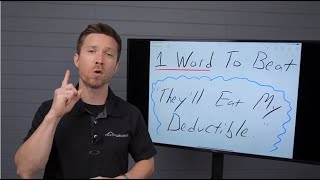
Adam Bensman teaches roofing sales reps to respond to "They'll eat my deductible" with one word: "How?" Ask it confused, let them explain, then walk through the numbers. Show them a contractor eating the deductible is insurance fraud.
Questions this video answers
Ask the question "How?" with a perplexed/concerned tone.
Example: $20,000 roof with a $1,000 deductible (insurer initial ACV payout $9,000 in the illustration).
Text the word "FREE" (F R E E) to 303-222-7133.
Chapters
This one word will help you defeat the objection. They'll eat my deductible. When you got another contractor who's claiming to the homeowner that they're going to eat the deductible. So even if you're really seasoned, you have many years of sales experience in roofing, you explain it away, you tell them it's illegal, that it's fraud, but you still lose deals because, well, the other guy can do it. If they're willing to do it, I don't care because it's happening everywhere, right? So people look around. It happened to my neighbors. So in this video, I'm going to be teaching you how to how this one simple word can defeat this objection for good. Now, if you want more, because that's why we have different angles of attack, different tools in our tool belt, so to speak, is because there's not just one magic phrase or one magic way to overcome the same objection when you were talking about different types of people. So if you want more videos on how to overcome the deductible, I highly recommend you pop over to theroofstrategist.com right now and download a free copy of the Pitch Like a Pro Roofing sales training video library. It is 100% free. And guess what? We have a new text opt in. So if you're driving, pull over safely and you can text this word free F r e e to 303-222-7133 and there's a link in the description as well along with that phone number. And we'll pop you a free copy once you're in there. It's going to bring you to our brand new free training center. So we just built this. This is a ton of free training available for you. So you'll have a welcome video to watch. You'll be able to access the Pitch Like a Pro Roofing sales training video library right in here. You can click on the objections playlist. It'll bring you down. There's a on deductibles inside. You're also going to get our roof claims crash course. My recommended reading list, a webinar I've done the replay on 10 closing techniques for every situation and more. And again, it's available 100% free. If you already have a copy. We're working really hard to get everyone set up, but if you just want to like skip the line, just head on over to the roofstrategist.com and go through that website. You'll get your account configured automatically. All right, so the one word to beat the deductible. Objection. Before we get started, just a quick welcome or welcome back. My name is Adam Bensman, the roof strategist, and everything I do here is designed to help you, your team, smash your income goal and give every customer an amazing experience. And oftentimes, they'll eat my deductible is the obstacle in the way. So let's learn how to defeat it with this magic one word. First, we want to avoid the mistake is explaining it away all the time. So sometimes it does make sense to explain it away. And in fact, in my sales system, the in home process I teach, we're actually overcoming the deductible and price objection before we pitch. So that's our opener. When we get permission to pitch from the homeowner, we're using this opportunity to educate and explain it away. But I do know that there are times this might come up at the door before you present, or maybe you didn't do that, or you're not doing it yet in your presentation, which I would encourage you to. It does come up. So instead of explaining it away, what we want to do instead is ask a question. Now, the big difference here is when we explain it away, we are educating someone, right? We are trying to earn their business. And after all, what's the say on her shirt? Oh, you sell roofs, so of course you're going to try to get as much money as you can. That's what the homeowner's thinking. So instead, what we want to do is kind of allow the homeowner to talk him or herself into a corner for them to then realize, oh, wait, this isn't right. I should go about this the legal, improper way. And we need to do that by getting the homeowner talking, which is why we want to ask a question. So the big question is, Adam, you promised me one word. So what is it? You ready? How? It's this simple. I'm going to show you right now, and then I'm going to show you how to make this even more powerful in just a moment. How? So if I have a homeowner says, hey, Adam, the other contractor said he'll eat my deductible, I can say, hmm. Did they explain to you how they were going to eat your deductible? Because guess what's going to happen at this exact moment? The answer is going to be no. They just said they could. And then you can respond with, I'm really sorry, Mr. Homeowner. They didn't explain to you how they were going to eat your deductible. So when I add in these two elements of being a little perplexed and concerned, like, huh, Mr. Homeowner, did they explain to you how they were going to eat your deductible? That homeowner now senses your concern. And instead of you being like, whoa, whoa, whoa, that's illegal. You can't do that. You say, huh? Did they explain how? Then they say, well, no, not really. And say, well, let me explain. Can I explain to you and show you how they're going to eat your deductible? And the homeowner is going to say, yeah, absolutely. And that's when I get out my trusty pen and a pad of paper and I sketch this out. And I'm going to shift into some role play here and I'm going to give you a bit of the longer version so you can pick and choose what parts of this make sense for you in the home. Sometimes you can do a short, fast version, other times you got to slow down. And here's exactly how I do this in the house. Once the homeowner tells me, you know, they didn't explain how, they just said they could. Here's what we do, Mr. Homeowner, let's assume, and I'm going to show you how they said they can eat your deductible, that your roof is $20,000. So may I ask first, what is your deductible? And they say, oh, my deductible is $1,000. And I'm going to say, okay, great, Mr. Homeowner, this deductible is a contractual obligation between you and the insurance company. I have nothing to do it. So I'm trying to distance myself. And I said, Mr. Homeowner, I want you to think of this like a copay for a surgery. Let's say you needed a knee surgery and they expected it was going to be $30,000. And then they get in there and they realize that the procedure they thought they could do, they can't. And it became a little more complicated and the procedure is now $60,000. What changes on your copay? And they say, nothing. It's still $1,000. Say, exactly. And likewise, let's say the surgeon goes in there and instead of 30,000, the surgery comes out at 25,000. Do they write you a check for the $5,000 they saved? And the homeowner says, no, say, and your contribution remains what, the thousand dollar copay? Right. And it's the same on the roof. It's Your deductible, whether someone does it for more or less. Now, the insurance company, they're not going to pay for the full roof up front. They give you what we call our used car prices. So what that roof is worth today, so let's just assume that your roof is about halfway through its lifespan. So they're going to pay you $9,000 now, which is the actual cash value, what the roof is worth today. Now, of course, as this math shakes out, that leaves $10,000 left on the table because you say, well, if they're giving me this first payment and I owe my deductible, that's the deposit generally in most places and again, work within your state laws, local laws, and how you operate as a company. But this is generally the deposit to get the work started. Once that work is complete, we invoice the insurance company and say, hey, Mr. Insurance Company, we did $20,000. And they go ahead and release this final check of 10,000 bucks. But what ends up happening, Mr. Homeowner, is the roofer that said, hey, we can eat your deductible. What they don't explain to you is the fact that they're going behind your back to the insurance company and saying, we did it for 20, and then turning to you and saying, hey, we really only did it for 17 or 18 or whatever the number is. And then what ends up happening, Mr. Homeowner, is that contractor has put you as a willing participant of insurance fraud. Now, I love you, I like you, I want to earn your business, but not enough to become your cellmate. And I can't imagine you'd want to be wrapped up in insurance fraud, now would you? And they say no, say, now how does that make you feel about a company who's willing to do that behind your back? And what's that homeowner going to say? You notice that one word I used again? How, huh? Did they explain how they were going to do that? Huh? How does that make you feel about a company who's willing to do that behind your back? There you have it. You sketch it out and explain how this whole process works. And if you want two more potent pieces of information to help, you can grab a scope from nationwide. Now, I don't know if they've updated it since then or the time of this video. Things have evolved. But on that scope, it says on there, providing false or misleading information to an insurance carrier for the purpose of defrauding them is punishable by financial penalty, imprisonment, loss of insurance, and more scary language. And on the other side, many common scopes, like maybe the the company with a red logo on their front cover page, they'll say, we will pay off the lowest estimate. Which means, Mr. Homeowner, if this became 18,000, they're not going to say, oh well, you got it done cheaper, so you, the policyholder, get to save the money. They mean, hey, if we find someone to do it cheaper, your contribution doesn't change because that's your deductible. Alright? So those two scopes can be very helpful if you keep them with you to communicate this to a homeowner should it come up. And there you have it, the one simple word. Hmm, Mr. Homeowner, sounding a little perplexed and concerned, did the other contractor explain how they were gonna do that for you when the answer is no, we don't know. We sketch this out, educate them, explain the fraud, we showcase the examples and the written language from the insurance carriers. We say, now how does that make you feel about a company that's willing to do that behind your back? And chances are they're not gonna feel very good about it and they are gonna kick down your door to do business with you. You. Hey, thanks so much for suggesting today's video. By the way, thank you for joining me on the road at the Owens Corning events. And what I do ask of you is just one favor. If you know anyone on your team who needs to see this, or even maybe a homeowner who needs a bit of help and education on how to make an informed decision how to choose a contractor that's best for them, feel free to share this video and spread the love. Appreciate it. If you like this video, give it a thumbs up and subscribe so you can never miss a thing. I'm putting up two videos every week and I am just so glad to have you here. So that's all for this video. And just because our time here is about to wrap up does not mean your in my time has to. So if you haven't done it, click right here to download a free copy of my pitch like a pro roofing sales training video library or hang with me right here on YouTube and jump right into this video. We'll see you soon.









