$177,000 in His FIRST Year In Roofing Sales | Interview With Mitch D.
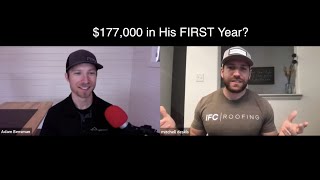
Mitch Deskas made $177,000 in his first year of roofing sales, working less than 40 hours a week in the Dallas-Fort Worth area. He went full-time in November 2019, signed nine deals in his first month, and credits disciplined mornings (up at 5am), nightly planning, and door-to-door neighborhood harvesting for his rapid success.
Chapters
All right, today I am joined with Mitch Deskas, who reached out to me with an email that I'm going to let him share the details of. And Mitch, first year in roof pink sales, right?
Yes, sir. Yeah, first year.
Thank you for joining me here and welcome to the channel.
Yeah, I appreciate it, man. Thank you again. Thank you again for everything you do and all the content you put out. You know, it's not only me that takes value from this and actually puts it to work, but obviously you've changed, you know, hundreds if not thousands of lives and we appreciate what you do out there.
Awesome. Well, thank you. It's an honor to serve. I love what I do and it's super awesome hearing folks like you. Do you mind sharing the details? I think I might have a screenshot of it. Tell me about that. Tell everyone about the email you sent me that led to this whole thing.
Yeah, so I just sent you an email because I just felt compelled to since I've watched a lot of your videos when I first got into roofing and you know, we can touch base on how I got in. But essentially, you know, probably everybody watching this, you type in YouTube and you type in roofing sales, you know, you're like number one that pops up. So automatically started watching your videos and just wanted to pay homage to, you know, what I was able to do. So I made 177,000 my first year in roofing in the DFW area. Like we talked about in the email. The toughest market for sure. I think there's like 2500 either contractors or roofing companies. Like, it's just crazy out here. So. So yeah, that's what I did first year, 2020 and in the, in the COVID quarantine, you know, people scared for, you know, to answer the door kind of thing.
Yeah, man, that is awesome. When you, when I got your email, I, I was like, this is, this is it. This is why I do what I do. And, and I'm so excited. You deserve every bit of success. You earned it, man. There's. It's funny, you know, there's so many resources out there for personal development, for growth, for helping. And the difference is doing something with it. And you did something with it. And look at this. So, by the way, for fun, how many hours a week are you working? How many hours a day? What's your schedule like? Let's talk that.
Yeah, my schedule. So I have an 18 month old daughter and so my wife stays at home, but for like sanity purposes, she trains clients and Stuff like that in the morning. So I actually don't leave my house until about 10:30. And family is really important to me. So I always get home before dinner, usually 5, 5:30. So you know, anywhere from six to seven hours I work a day and sometimes I work Saturday, sometimes I don't, I don't work Sundays. So I mean I work less than 40 hours a week to make the money that I did.
That's insane. That is insane. And to do that I want to just jump in. We're going to, we're going to be all over the place here. How do you structure your time? Because I know that most people don't realize that when they're new selling they will get so busy that it is hard to keep up with everything. And time management is important and I'd love to hear what you're doing to be able to produce that high volume while also taking care of your customers and selling. So what does your average day look like?
So every day I wake up around 5 o' clock in the morning. So first thing I do is I get up, I drink some coffee and I go work out. My, my wife's already gone, so I'm working out in the garage like a dungeon. So I'm working out and then after I'm done, I get ready, shower, all that, you know, all that jazz. Then I read. I read a book. Either 10 to 15 pages just depends. Like right now I'm reading the one thing.
Gary Keller.
Yeah, yeah, so I've already read it before, but I'm going back and reading it again. So I'll read that. And then I have a planner that basically shows like my top three things I need to do for the day. So it's like, what can I do today that's really going to make me successful and be able to look back and be like, okay, obviously it was a successful day. So whether that's following up with somebody, making sure I get in touch with somebody, sign a contract, have an install, and then obviously one thing always is like family. So it's like, it could be silly like getting my wife some flowers or just something to where I know I'm putting family first because with what we do it's tough. So I always want to make sure that I'm doing that because how I'm wired, it's like if I'm geared towards something which is work, like that's all I'm focused on. So if I don't focus on whether that's being present when I get home, so I always make sure that's a thing that I do. So then my wife gets home and then I already know where I'm going, whether that's an install, whether that's an adjuster meeting. I'm always trying to line up the day before. So like if I'm setting appointments the night before, the day before, I already know where I'm going. So it's not like this, where am I going to go today? Am I going to this neighborhood? That neighborhood? I already know the night before where I'm going to go. And then right when my wife gets home, that's where I go. So then I'm out in the field, like I said, four to five hours. I think the biggest thing, the way you can really structure your time to be most effective. And you know, it's tough what we do because you can go in a neighborhood and no one's answering things like this. So I think it's really important to always set appointments the night before if you can't get on a roof. So my thing is like I know I can't stay out till 7 or 8. I know that's a fact because I want to get home and have dinner with my family. It's important. So what I'll do is I will literally I'll knock till like say 4:35 and I'm scheduling the appointment for tomorrow. Like hey miss so and so I'm actually, you know, heading to another appointment. I saw you have the same damage so and so had. You know, I've got some time tomorrow between you know, 12 and 1. How about I just go and put you on the schedule? So it's very like organic. I'm not trying to get up there now and I take the information and I just make sure I set the appointment. So that way I already know going to the next day. I already have things lined up. So I'm not out there like scavenging, trying to knock tons of doors. Because I think when people think of roofing they think door knocking. And we don't think that, you know, I think it's mainly taken advantage of if you have an install. I mean you're looking at, you know, know certain roofs that are old. You're not going to knock, you know, a brand new roof, you know, so it's, it's understanding. Like I'm literally selective of who I talk to. You know what I mean?
Yeah, I do.
So that's how we, that's how we run the business is like how can I be most productive talking to the people who I want to get on the roof. If I can't get in touch with them now, you know, can I get them home at this time so I can go back tomorrow and check the roof out? So I would say that's how my day structured. When I get home, put the phones away and spend time with the family.
That's awesome, man. Those boundaries are so huge. They're so, so hard to implement. And everybody listening should read the book the One Thing by Gary Keller. I love that you brought that up. I actually just put that in one of my far snapshots, the email, the fast action results snapshot that goes out with an email for each episode recommending to read it. It talks about knocking down the domino. You also mentioned being present when you got home when. Which is something I think all of us struggle with. And it's funny, after I read that book, I actually have it. You can't see it. I have. So after reading that book, I wrote my one thing for different categories in my life and in my personal life, the word present was there. And anyway, that's awesome. So you mentioned setting the appointments for the inspection if they are home. If you show up, let's say it's 2 o' clock and you have time, do you do the inspection then? Or are you, are you okay?
Sure? Yeah, yeah. So what I'm trying to do in that time frame, if I can get on a roof, then obviously the best thing is, you know, the emotion's high. You're in the area for sure, get on the roof then. But I really try to schedule, I would say, like I said, you know, anywhere between 4:30 to 5 if I can find some people home. Because, you know, that's when people are getting home from work. You know, even though people working from home, that's typically when they'll answer because they don't want to, you know, be throughout their workday answering the, the door. But yeah, so that's when I find people home. And it's that kind of the takeaway, you know, like, hey, honestly, I can't do right now, so. But I can be by tomorrow. And I'm looking at my watch, I can be by tomorrow at this day and this time, no worries.
Awesome. I want to recap this for anyone who's listening or watching, planning your night, your day, the night before. You will sleep better. You will wake up knowing exactly what you need to do. Brian Tracy says, I think, and I might butcher the quote, but the concept, if I remember, was for every one minute planning, we save 10 minutes in execution. And if you just have your day planned out and you wake up, you're just going into it, as opposed to, like, where do I start? What do I do? What email do I have to get back to? And then you're just. You don't have a plan. So that's awesome. That's way cool. Tell me about what you were doing before stumbling your way into this industry that no one gets into on purpose.
I mean, it's really crazy. I mean, I've seen interviews that you've done, and, you know, people I've talked to, who I work with, it's like you just stumble into it. It's not something that you just. I don't want to be a roofer. Like, it's not something you do. So what I was doing before I was a trainer, I've been a trainer for almost a decade. So that's what I did. I owned a gym for about three years, a personal training gym. So that's what I did. But in 2019, my wife and I, we were going to move to Colorado. We were going to move to Littleton. She was going to work up there, and she got a job. Literally, two days before we signed our lease, we found out she was pregnant.
Wow.
So we're like, well, screw it. Like, we want to go do it anyway. Like, everyone's telling us to stay home. Like, nah, dude, you don't know what you're talking about. We can do this. So anyways, we go to Colorado, we're working there, and we end up moving back because it's like, hey, you know, we probably can't make this happen working here, you know? So anyways, we ended up moving back. And at the time when we moved back, I was like, I want to say I was 27 or 28. I was doing online coaching for dads. Like, I was coaching dads online, personal training and helping them build habits to actually lose weight and, you know, be present and be able to play with their kids. I was doing that for almost two years, and I spent about 20, $25,000 in advertising on Facebook, and I really wasn't making a profit. You know, as you run a business, you're like, dude, I just like doing this. But you're like, no money's coming in. So I was like, my bank account was depleting. So whenever we got back, I legitimately had, like, $200 to my name. When I got home to Texas, I got a job at 24 Hour Fitness as a fitness manager, and you know, I'm working these crazy hours. You know, I leave at 8 in the morning, I get home at 8:30 at night. I was just like, I can't do this forever. My daughter's born in August, so we moved here in May. My daughter was born in August, and I had paternity leave for a week. And I was just thinking, I was like, I can't do this for the money I make and for my wife to be able to stay at home, I can't do this forever. I've got to look somewhere else. So literally, as we're in the room with my wife, she's resting, my daughter's not there. I'm literally looking and seeing what sales jobs are out there that I can make a good amount of money, right? And roofing was popping up. So I was like, well, you know what? I'll just. I'll just see what this is about. So I find I get an interview from this company to actually the one I'm wearing right now. And with this, these guys are super cool. Really loved it. So I start part time in September. I'm only working Saturdays. I'm like, you know what? One foot in, one foot out. I don't know if I can make this happen, but I'm going to try. I want the security of my job. And it just wasn't happening. Like, working a couple hours on a Saturday, you're not really going to make traction. So what happened was in November 15th of 2019, I was like, screw it. I'm going all in. Quit my job. I was like, all right, this is what I'm going to do full time. And just know in the back of my mind, like, when you put yourself in a corner, like, you have to make it happen. You know what I mean? Like, there wasn't going back to my old job, and I had this idea of wanting my wife to stay at home to build a great life for my family. And I was like, you know, I've got to make this happen. I know I'm good at sales. It's just putting myself in the right vehicle. So literally, like, I would say the first. My first month when I was by myself, I signed nine deals. And I was like, you know what? I think I can do this. But I will tell you, my first day, when I was pitching, my first homeowner I ever talked to, I said something I don't even really remember, but he basically just cussed me out. And I was like, this is how this is going to go. I'm glad I already got my teeth kicked in the first door, so I know what to expect. So that's how I got into it. And just over time, building the momentum, reaching out to people I knew, just saying, hey, this is what I do. And I think a lot of people getting into this probably need to reach out to their warm market, say, hey, this is what I do. If you ever need your roof, look dead or if it's leaking, give me a call, let me come take a look. It's completely free doing that. I got my first two deals which led to more and you're in the neighborhood, you're working the neighborhood, things like that. So I would say that's what got me started and that's what continues to push me is obviously having a family, having a daughter. And to be completely frank, if I didn't have my daughter and knowing I had to do this, I probably wouldn't be as successful as I am because I would have been a laxadaisical. I wouldn't have taken this seriously. I would have been like, you know what, I can make a couple thousand here and there. But knowing like, okay, I have to make this work obviously made me take action right away.
Man, that's an amazing story. And this hearing you go from Matt, I bet you people listening are like, that's exactly how I fell into it. Substitute the job, the financial pressure, the hours realizing, where is this going? I hate to say the word, but I'm a dead end job. You know, it's like, okay, cool, I'll get a $2 an hour promotion and then maybe $2 next year and then I'm at the top, you know, whatever it is. And it's funny to think bigger, man. This industry has a way of being the rock bottom for people. It. We don't find it till we're desperate. And I love that you took the leap. I mean, so many people, I get emails all the time. I was straddling to one foot in, one foot out. And then I was like, this ain't going to work. I can't just dabble. You got to like take the leap, build the parachute on the way down, and have a fire under your butt to make it happen. And when you do, if you don't, good luck. So what I'd love to ask you. Let me pull up. I have two questions I want to ask you. I want to know what your biggest struggle was when you got started. Everyone's is different. What was yours?
I would say my biggest struggle was patience. I would say, and this is what I tell people who come in at our company. And if they want to ride with me or whatever, I just say they're like, what's your biggest struggle? I say it was patience. It was knowing, like, it's gonna take time. Even if you're signing deals, you're not gonna get paid for six, maybe eight, depending upon supplements and things like that. So whenever I heard that from guys who I went out, they're like, yeah, I'm not gonna get paid for like six weeks. I'm like, what? You're not gonna get paid for that long? So I think it was understanding that it's gonna take time, but not getting so reliant on those deals. And I think if I were to get paid right away, I wouldn't be as hungry to sign more people up and to help them. Because if you're not getting paid for six to eight weeks on a deal, it's like, well, what are you gonna do? What if that one deal doesn't turn, it gets denied and you got to go to appraisal or something like that and you're just hoping this happens? It's like, so my biggest thing was patience. Just understanding it's going to take time. You have to go out there and just make it happen day in and day out, regardless of how you feel. And I would say the other struggle was just getting out of the truck. It was just like pulling up to a neighborhood and just getting out of the truck. And I think most door to door guys are like, dude, that was the hardest thing, literally just getting out, knowing I'm going to get no's. But then I was listening to a podcast or I was reading a book or something and they were talking about if you change the way you look at a no and understand that you're actually getting paid for that no. So my average commission is about five grand. So if I was thinking like, okay, let's say it takes me 10 doors to knock and I talk to the person to get a yes. And I know it's an old roof, I'm gonna get it, I'm gonna close them, whatever. Really just got paid $500 every time somebody said no. So when I thought of that, you know, when I thought like, every time I'm getting a no, I'm actually getting paid, it's like, dude, keep bringing on the no's Because I know I'm eventually going to get the yes to where I'm going to land 5, 8, 10, 15 grand on a job. You know, I had to look at it that way.
That's awesome. That's a really great mindset shift. People ask all the time about mindset. I hadn't heard that one about getting paid for no's. That's a really cool way to reframe it. So what did you do to get yourself past the door? I mean, a lot of people share the same thing. They pull up and it's like the hardest. The worst door to get past is the first one. Your own car door, truck door. So what have you done to help kind of just break through that resistance and just get out there?
I would say the biggest thing that got me to just be out there was honestly just sometimes what I would do and it sounds really silly. I would drive into, say, like, say I'm working a neighborhood, right? And you know, that's the importance. Don't drive everywhere to find people home. Just go work a neighborhood and harvest it. I would literally go drive and knock on a door of somebody's roof I've already done and just talk with them. As silly as that sounds.
No, that's not. That's getting that momentum off.
I would say, hey, hey, John. Just, you know, I'm in the neighborhood, I'm helping a couple of the neighbors, you know, just, you know, seeing how you and the family are so having a conversation, knowing I'm not going to get rejected right away, that's what I would do at the beginning. Now I'm just like, dude, I'm getting paid for every no, so I don't care. But at the beginning I would go knock and say, hey, just again, how are you doing? How's the family? Man, that's a good. They would answer, that's a good looking roof. Whoever did that did a good job. Just something silly, right? So that's what I would do because that allowed me knowing that I got out of the truck, I've talked to somebody, I knocked the door, okay, let me just go to the neighbor, let me go across the street. Let me now work this area. I think that was the biggest thing was just talking with somebody I've already talked to.
I like that. And back to Gary Keller. In the book, the one thing he talks about the dominoes. Knocking down one domino. And if it's just the first door you need to knock is the first domino, right? Then it becomes easier. Man, that's a good one. I hadn't heard anyone use that approach yet. I've heard of people I've interviewed on the channel that basically curse at themselves being like, don't Be whatever and then fill in whatever curse.
We're going to be a Midge, you know.
Yeah. So all of those things, then they get out and other people, it's just like they'll blast rock music or something to amp them up. And some people are listening to audiobooks and these are all awesome tools. I absolutely love that one. Go talk to someone and it's going to fire you up. Put a smile on your face. You get the easy one as opposed to, okay, here we go. Because it ain't fun. What it was your moving. Moving on just a little bit. I have two more questions for you. What was the. Your first, like, big breakthrough?
Honestly, man, I think the first breakthrough was knowing I could sign nine deals in the first month. That was the company record. Still is now is signing nine deals in one one month. Again, I don't attribute that to myself. It's, you know, your content is the guys. I went out with it. I shadowed like, you know, it's not obviously me, but just doing that, knowing I could do it. I mean, everyone's hardest thing is the first deal. I still remember the day whenever I signed my first deal and they were like, okay, let's call the insurance. I was like, dude, I forgot. Like, how do we do this? But I'm like, I'm playing it cool. Like, yes, my hundredth time to do it, I would say that was the biggest breakthrough is knowing I can do this. When I got the first deal, when I got nine, and when the owners, like we had our Christmas party like a month later and they were saying I got an award for that, but like they were telling me, how many did you do? And I was telling them, like, dude, that's freaking, like not heard of. Like, you don't do that your first month. So I would say when I heard that, I was like, oh, gosh, I guess I'm doing pretty well. I guess I can do this.
For a brand new salesperson, do nine deals in their first month. That is. That is. That's awesome. That's absolutely awesome. I think everybody remembers their first deal like it was yesterday. I mean, all the other ones kind of blend in. I couldn't remember that first one. Oh, man, I'm taken back, man. I gotta share it. We'll do it another time. I have an embarrassing story on my first sale that was just horrendous. But it helps you grow.
It does, yeah.
So what with where you are now and where you want to go for 21, what's the number one strategy or the improvement that you need to get from here at 1:77 in a year to, you know, where you're knocking on. I mean, it's that next it's multi six figures and then up from there. What, what do you think is going to be that breakthrough for you that you need that you don't have now?
So the goal for this year is 300. 300. So I'm on track right now. So I'm doing close to 22amonth. I would say the biggest thing like I'm focused on to do is just continuing to build momentum. And as silly as that sounds, it's like, that's what everyone says, like, just keep the momentum, right? But as you know, like, if you don't take care of it, you know it's gonna go away. And it's so much harder trying to build that back up, go into a new neighborhood, whatever. I think the biggest thing is keeping the momentum going, knowing every day that I have something to do. So my whole week is laid out like, I've got to talk to 50 homeowners, I need to do six inspections, I need to sign three deals, and I need to have X amount of roof spot. Like, that's the goal, right? And I broke it down in the KPIs to where I know I'm gonna hit that amount of money. So I'd say it's now structured and now it's just continued to build the moment. Like, keep the momentum going. Don't let it die. Don't. Even if I'm like raking in big checks, that's great. Like, I don't even care. Put it away. Just keep focused on what I'm doing and just, just being the, the household name in neighborhoods.
That's the one.
That's, that's the one. And that, that's the biggest thing that I've realized is. And that's what our company talks about, like working the neighborhood. This is what you talked about. I watched your webinar the other, I think like two weeks ago, three weeks ago, before we had that crazy snowstorm here, guys are talking about the marketing building in the neighborhood. That's the big focus is it's crazy when you have an install.
People hear.
It, they see it. You're at the door, you're saying, I'm doing it. Literally, this is my pitch. When I talk to them, I'm like, hey, I. I just want to introduce myself. I'm the guy to harass if anything blows into your yard or something, right? And I give them my card and they're kind of giggled by it. And then it's the pitch or whatever. Super simple. Because I'm literally doing the neighbor. Or they can hear it or they can see it. I think it's that. It's just, how many homeowners can I help in this neighborhood? Because I know I'm the best. I know I'm going to take care of people the best. I think the background of training and customer service helps me because I'm not a roofer. Like, I truly care and I want to help you and have the best experience. That's what I tell people right away. Like, I'm gonna make this the easiest thing possible. Smooth sailing. You don't have to worry about anything. So that's what I like to do, is knowing that I'm taking care of homeowners, and that's really why I do it. Obviously you get paid a lot of money, but I think when you come from, that aspect started to ramble. But that's why I do what I do.
Dad is not rambling, man. That was. That was awesome. And I wanted to highlight a couple of key points because sometimes people need to hear it again. You can't teach hard. It's every single watch an interview other people that have interviewed on other channels, podcast, top performing sales reps. Number one thing you're going to hear, I take care of people. You do the right thing. You provide an amazing experience. The money does follow, of course. You need to have the production inside, you know, and the right drive to keep it up. But that is huge. I love the fact that you inject humor. I had an email or Facebook message, literally this morning, this guy saying, hey, what do you think about using some humor at the door? I was like, of course, man. Like mere people. Some people that are really firm, you know, Maybe not. But humor can only help. It softens it. You're not there.
That's what I do at the door.
What was that?
That's literally what I do at the door. I. I'll walk up and I try to find something that's. I'm trying to break somebody's eyes right away. Because think about it. Somebody knocks my door and I'm. I do door to door. I'm like, dude, I didn't invite this person. Who is this? You know, somebody's selling me something. That's the immediate thing I'm thinking, right? So, like, let's say somebody's got an OU sign out front, you know, Oklahoma University.
Yeah.
First thing I say when they open the door I'm like, gosh, I hate to tell you this. And they're like, what? I'm like, texas fan. And they just, like, they'll start laughing. I'm like, you know, will you give me five seconds at least? Or something like that, right? Or like, they have, like, a crazy iron door. I'm just like, gosh, how much does that weigh? Or just something. And again, it's something I think of, like, as I'm walking to the door. It's not planned because I want to break somebody's eyes right away towards, like, okay. I take a deep breath. Like, this guy's not selling me something. We're just having a conversation. Sometimes, like, we're talking for, like, two minutes before I even. I'm like, oh, by the way, like, not take any more your time. The reason why I stopped by is this, you know, just having a casual conversation toward. Then it makes sense what I'm. What I'm doing and why I'm there. But I think when you. When you're not so robotic, and I think everyone's robotic when they first get into this. I always tell people what we do. So crazy. Because you never know who's gonna answer the door. Could, you know, be any sort of person. Like, I, like, literally, like, two weeks ago, I had a guy open the door, and his pants were, like, almost off and, like, unzipped. And, like, it was the weirdest thing. But we kept talking like nothing was going on. Like, it didn't throw me off. I was like, cool, man. Whatever you were doing, like, let me just get on the roof, you know.
Like, did you end up on the roof of his house?
I did get on the gas. Yeah. Yeah.
So key takeaway on that piece, too. That's the S of slap. Say hi, Break the ice. And I even say, almost interrupt yourself. Hey, my name's. Oh, by the way, beautiful. This reference, the flag reference something when you find it. And again, I love what you said. So many people in Door to Door teach this. Like, you're going in with a pitch. I always say, go in. And again, that's the say hi. Break the ice. Let them know why you're there, and make it familiar. Like, you said, you're showing up. I love it. Here's my card. I'm the guy to yell at. I like the humor that you inject. Like, I always just said, hey, if there's anything that comes in your yard, we expect the neighbors or we respect the neighbors.
Call me.
I'll take care of personally, by the way. Right and then asking the question open ended, because that starts a conversation and then you can move to this. But if you just go into it for the kill, it's like people feel like they have a bullseye on their back.
Oh, yeah.
So love that part. Love what you talked about with organization. Love that you talked about the efficiency of working the system. Be in that neighborhood when that job is scheduled, go back out there when you sign a deal, hit the neighbors. When you're doing the install, hit the neighbors. When the install is done, hit the neighbors. And all of a sudden you're there over and over. And it saves you time, you know, driving back and forth.
And that's the thing is like, I want to work in a neighborhood because I don't want to commute, you know, so crazy. But so what I actually do, and this is what I started doing probably a couple months ago, and I just kind of stumbled on it, is like literally having the homeowner walk you to their neighbor who they know. Like, hey, by the way, do you know your neighbor? Like they got old roof? Oh, yeah, that's John. Oh, you know, could you just walk me over there and just introduce us so it's not weird, you know, like, oh, for sure. And then, hey, they walk me over there like, hey, John, this is. This is Mitch.
You're doing my roof.
Did awesome job. All right, cool. Need I say more like it's the easiest thing ever?
Yeah, you're literally, literally handed a job. That's what I teach in the car park. Closing strategy, complete closing strategy to ask for the names of the neighbors. At the very least, even if they won't walk you over there. When you have the names and you walk over, it's, hey, John, is it, sorry, I'm just doing Peggy's roof and bought whatever it is. But, man, that is. That is absolutely awesome.
The other thing, I want to walk over there. I have them just group text me. Hey, can you just group text me like your neighbor, like, so that way it's not weird when I walk over there and then they'll literally say like, hey, John, this is. Whatever this is Mitch. You know, he's gonna stop by, he's doing the roof, and you know, he noticed some damage or he's just gonna stop by, say, hey. So that way they're expecting. It's not this weird, you know, thing.
Yeah, man, that's good. That is good. I haven't done the group text. That's a first for me to hear. So for everyone listening, brilliant idea. 100% Mitch, credit here, that's excellent. The other thing I want to recap for everybody is when you talk about staying on the momentum and not getting complacent because you got a big check. And the number one thing when with owners and sales managers, it's that 50 to $70,000 mark of their first earnings of the year. And sales reps will just ease off the gas because your income needs are met, you got a little bit of spending money and now the pressure isn't there. And once that pressure is lifted, performance goes down and then all of a sudden you dry up and then you're. Instead of like a proper sales trajectory, you're riding this roller coaster momentum. And you don't keep the momentum up and that's like a mediocre salesperson, you know, you'll do okay. And for many people that's fine. Like that's their, that's, you know, they're less driven financially. Other people are like, well, if I could do 177, then 300 is cool. And then once you do that, you know, you're going up. And I'm running a training for a company here in a couple weeks and they're, I think, I forget the number. They have three to five people in the company that are doing 500 plus of income and then I think like five to 10 that are doing 250 plus and larger company. And it's not, you know, when you, when you stay on the gas and you don't get complacent and, and don't spend all your money well blowing all your money. Don't do that. But no, that's great. If you were to close with your best advice, let's say you took a brand new salesperson under your wing. They haven't made a sale yet, but they're excited to do what you've done. What do you tell them? What's the best piece of advice you could give them?
I would say the best piece of. That's a good one. I would say the best piece of advice I could give you is find one thing you can do that day. It doesn't matter what it is. All right, I got a knock, 10 doors. They cool. I did it. Alright. Successful day. I would say try to set small attainable goals. Don't make some like, I gotta sign a deal today because like you're not gonna sign a deal. Maybe your first week or your first day or whatever. I'd say set a goal, something small. I'm gonna not, I'm gonna talk to 10 people. I'm just afraid. I'm afraid of talking to people. Okay. I'm gonna just talk to 10 people. Mm. That's what I would say. That's the bare minimum thing I would say, because if you can do that, then you can build on it.
Yeah.
And I think that's the biggest thing is people, they get ahead of their self. So they come in like, man, I'm gonna make 150,000. And it's like, okay, cool. But that's such a big number. And you haven't even gotten, like. You haven't talked to one person. So let's break it down to where it's like, okay, let me just talk to these certain people. Okay, cool. I'm comfortable talking to somebody now. Okay, cool. And how can we get it to where you close? All right, that's the next thing. Let's just close somebody to get on a roof.
Yeah.
I think it's just taken every step of the way, you know, getting on the roof and then coming down, closing them to file the claim. You know, that sort of thing. I think it's just people try to take too many big bites, and they don't chunk it down. And I say that's the biggest thing is like, just what can you focus on today? Not next week, not next month. What? Today will get the ball rolling. That's what I would say would be the biggest thing, is just taking that first initial step to creating what you want is what I would say.
That's awesome. Reminds me of Gary Keller. And the one thing, as he says, goal setting to the now five year.
Oh, yeah.
One year. What is it? One. I might be missing a step. Five year, One year, one week, one month, one day. Yeah, one month. One day. Right now.
Yep.
Did I. Did I miss any?
I think it's one month, one week, one day.
Thank you. I missed.
Yeah, you're good. But, yeah, no, it's literally that.
Yeah. And when you write that down, I actually. I don't have my little digital journal. I've written them for myself, and I redo the now one, and it's really fun, and it's daunting, man. You just. You nailed it so well. And it just goes to show, like, this industry really is personal development in disguise. How to be a better communicator, how to learn how to improve in your communication, how to learn to improve in your goal setting and your planning and your plan of attack, how to get better with time management. And when you make all these improvements, it compounds, and it's daunting. And you're right. Chasing $300,000 is one little bite at a time. And that was brilliant. For everybody listening. What's the one thing you can do right now that's going to move you closer to your goal? Just awesome, man. Mitch, I want to thank you for being here and for reaching out and initiating this and offering to be here for everybody, because I'm. I know for certain you will be inspiring many others, without a doubt. So thanks for being here. Is there anything that you want to close with or wrap up with that we didn't touch on today?
Yeah, man. I appreciate it. I appreciate having me on. I would say that if you're thinking about jumping in, just do it. I mean, this industry will change your life. It'll change the direction of your children. Your children, children. Building generational wealth. It starts here. You know, this. This is the. The move to make. I would say that my wife and I were building a house right now like a dream home.
Congratulations on that, by the way.
I appreciate it. With. Without this opportunity. So I would say just jump in. Just what, you know, the biggest thing is, like, what is there to lose? At least you know that you can't do it or, you know, it may take a little bit longer, but, you know, I say this is the best thing to get into. The best vehicle by far is this.
Love it, man. That's awesome. This industry something special. Mitch, thank you. So know, for me and for everyone else who will be probably posting thank yous and inspirational story, so appreciate you being here, man, and I will see you soon.
All right, man. I appreciate it. Thanks, Adam.









