$250M PER YEAR From Referrals?
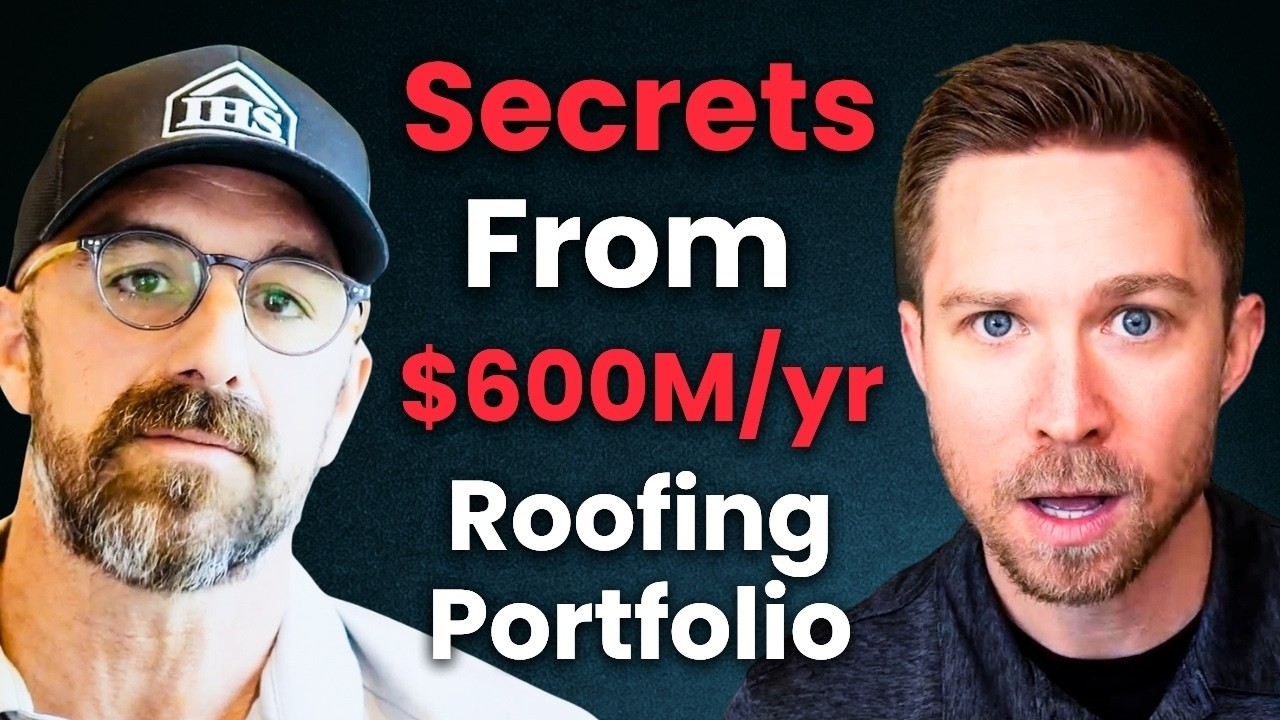
Josh Sparks, chairman of Infinity Home Services, explains how the company pulls $250 million a year from referrals and repeat customers. He breaks down the SMART CX framework that drives it: simple bookings, transparent proposals, real-time updates, and thorough follow-up. Execution, not strategy, is what separates them.
Chapters
40 to 60% of his business is from referrals and repeat customers. Watch this interview. I'm joined with Josh Sparks, chairman of Infinity Home Services, IHS, and you're gonna learn the exact strategy and the acronym SMART of how IHS is bringing in about $250 million worth of revenue just from referrals and repeat business. Thanks for joining me. Let's jump right in. What percentage of IHS's revenue It's from referrals.
Over 40%. Probably close to 50%. Some of our brands are over 60%.
So blended rate near 50, some brands at 60, some at 40. What, uh, in, in it, it only if you're able to, to share this and if it's too much, that's totally fine. But so people can wrap their mind around that from a volume standpoint. If you, can you share portfolio revenue? If you can't, that's I totally respect it.
Yeah, no, man, I'm a pretty, pretty open book. You will not sell it anytime soon, I don't think, so we'll see. Look, we're, we're, uh, I think we're on track to hit over $600 million in revenue this year. Um, you know, mostly organic, so we're just, we're just crushing it. Over 40% of our businesses are for one fee customer. It's— look, I've been doing this for, what is it, 20— how long is it now? 1997. 28 years. Yeah. 29 years. God, I'm getting old, man.
I'm like, I'm 39 and you were doing this for a while.
I just turned 47. Yeah.
Yeah.
It's like 20 years old. But the principles, the principles in which I started, you know, which is go out, you know, be the informed estimator. So I was, you know, I call it master of the building envelope today, but back then it's like I installed roofs. I knew everything about the project. I'd walk around. I was a home inspector. I could tell them what was wrong with the siding, the windows, the decks, the flooring. I basically give them value in the estimate that I provided. I would then give them a fair price for the roof. And of course, we do is talk about what a fair price means. We give them a fair price to the roof, a price such that once we did the job, we did a great job. They were so excited about the value that they got for the product and what I charged them that they just couldn't stop telling their friends and neighbors about us. That's how I built the business from day one. That's how every small entrepreneur builds their business. And then Somewhere along the way, they forget about it. They start building spreadsheets. They start looking at like, how do we, how do we manufacture referrals? I was actually on this, we got to talk about, but I was, I was in this conference with a bunch of CEOs and they're like, how are you getting referrals? Like, how does this happen? And, you know, we did this thing with, I won't say the name of the company, but some marketing company that sends cookies and a letter. And I'm around these really smart people, Adam. And I'm asking, I'm looking at him, I say, no, if you went to a restaurant with your wife, you took the time out of your day to get dressed, get fancy, drove downtown, went to the restaurant and had a terrible experience. Terrible. Like everything was bad. And then you got some stale cookies in the mail 3 days later. Would you be, are you going back? No, you're not going back. You're going back because you got a great experience. You got what, you know, the estimator who came out said they're going to do a good job with this. The chef said he was gonna make a good meal for you, makes a good meal for you. That's where you go back. You go back because you get a great experience. You continue to refer people if you get a great experience, plus you think you got a great value for that. That's where the referrals come from. So yeah, we can shut off our phones tomorrow when we're a $250 million business. That, that, that matters, you know, because our customer acquisition cost then is lower. You know, we don't have to go and buy 90% or 95% of our customers in the future. We have a large referring network of customers because we just do a great job. And that I don't think you can manufacture. And that's the moat. That's the execution moat that we live on that can't be bought. I can give you my playbook. It doesn't mean you can go execute it, you know?
Right. I love what you said about the execution moat. I've used that a lot, that concept, you know, the defensible moat around your strategy that no one else can compete with. And if they want to compete with it, it's like, good luck. You know, you better get started today because this wasn't an overnight success.
I'm writing a book right now, and I think the placeholder title is Everybody Has Your Strategy, Nobody Has Your Execution. That's the placeholder for the title, but it's true. It's like people think that, you know, you get around, you just strategize. Everybody's got your playbook. Everybody knows, hey, keep going. You know, you do SEO for the website, you know, you do your pay-per-click marketing, you do, you know, you do wrapped letter vehicles. Um, you do nice leave-behinds or whatever you're gonna do, but can you execute? Can you show up every day? Because that's what the work is. Can you show up every day, do a great job, deliver on what your promises are, and do that repeatedly time and time again? That, that's how you, that's how you build a great business.
Yeah. So what would you say, because you mentioned the service piece, and by the way, I know that there are folks watching this right now and they're like, dude, Adam, you've offered, you like have all these videos and teachings on a referral program and incentives, which I do. And they can be effective. However, they're never effective if your service sucks. That is crystal clear. 100%. And I also just want to say for the record, I actually really appreciate when I look back at old videos, I'm like, I was wrong. And if you can't look back at how you did business and think of ways you could have done better or that you change your views, it means you're not growing. Now I just, so anyway, and I'll talk about the stuff that I share, but for Forget that for a minute.
No, let me just, let me, let me test before you, before you ask more questions. Sure. Because you're not wrong, Adam Bensman. You're not wrong in that you have to have good follow-up. You have to have good experience that leads past the sale as well. Nothing would strike me in the heart more. I just heard punch me in the gut more when I would go back out to a customer's house and see that they had new windows installed. And I'd be like, you didn't call me. And they're like, oh, we didn't know you installed windows. We definitely would have called you. That I learned early on. I was like, I had to make sure that everybody knew the products and service that we have. But, but the non-starter, the very beginning is you've gotta deliver a great customer experience. After that, all those referral things that you probably teach are good. Stay in touch with the customer, send the Christmas cards, do all those things are important, but you've gotta land that first, you know, great job. That, that's the key.
Yeah. It's got, you know, it's, it's funny. I have this philosophy with Google reviews. I don't write bad reviews. Very, you got it. Like if you looked at my Google review history, you'd be like, wow, this guy's written like 2 1-star reviews. I love to support great companies, but I'm not normal. Like, I don't remember the exact stat and I couldn't cite it, so I'll paraphrase it, but a sizable amount more people in general are likely to share a bad experience than a good one. So like your anti-referral base is larger than your referral base.
Correct.
And I love that you talked about a good experience. So if you were, if I had hired Josh, 'cause I know that you're available to consult with everybody, that's a joke by the way, for those that don't know and you missed the intro, go listen to who you get the privilege to learn from. So if you were to come in and consult for one of the brands of IHS as an example, and you said, here's how you deliver great service. These are the pillars. What would those pillars be? Let's say the top 5. And if we don't fill 'em or we go over, it's totally fine. But what would you say, like, are the, are the markers that a manager could look at, measure, and, and implement from a tactical standpoint?
That's a great question. So it depends on the business. I mean, if you're talking about my brands and my specific industry, you know, there's certain things that we do that I think are, Again, I don't think they're super unique, but I think they're consistent over time. We have this process we call the SMART CX, which is the way we want to present our customer experience, if you will. So the S is basically simple bookings. We want to make it simple for our customer to come to our website, to call us, to enter a chatbot and be able to meet us if they want to meet us and have an appointment with us. We never— I never played the game where it was, you know, it's got to be 7 p.m. at night. I need 4 hours of your time. You got to have both homeowners there. And if your grandparents are in town, make sure they're there too, because I need all decisions makers in front of me. It's like, you know, you know, I never played that game. Look, I'm going to go out, I'm going to give you an estimate, I'm going to do my best job. And for us, it's master the building envelope. I think it's incredibly important in our industry that you bring— and listen, this might be touching the third rail because some people think you got to bring sales professionals and know how to overcome objections. You do a lot of stuff on this and how to do the pre-closing and how to price condition, all those things are important. But to me, if you can't solve the customer's problem because you don't know how to install a roof or how to install a chimney flashing or how siding ties into a roof, you don't know how to identify a leak, that's a problem. So we want to be out there. The first thing is we want to be able to solve your problems. So we got to have mastery of building envelope out there. Accurate and transparent proposals for me are important. So the customer wants to, you know, our industry is pretty notorious for having these you know, piece of paper slides across with a number on it. You're like, you like that number? If you're not, cross it off and tell me what you, what you like. And then this game gets played back and forth. So I never played those shenanigans. For me, it was, listen, I'm going to give the customer a proposal. It's going to have all the products and the pricing. They're going to know what they're getting. It's not going to be ambiguous. It's not going to say, hey, a 30-year shingle or a lifetime shingle. It's going to say exactly the products you're going to get, right? Real-time updates were important. I, when we first, you know, probably back in 2019 when we went fully digital as a company and we started having our CRM be able to send out live updates, like in a portal, just like a pizza tracker at Domino's or Amazon, you would know exactly when your materials were ordered, when they got in, when they were staged, when your production was ready, when your dumpster was ready. So you could just follow your project along without having to call in. And understand that. And then a T is a thorough wrap-up. So warranty inspection, 50-point inspection, all that stuff. So it's a full process start to finish that, hey, we're happy you called us. We want to be out here. We're going to spend some time and energy with you. We're going to show you some value, and then we're going to do a great job at the end. And that's kind of how we run the business. And that basic formula that we put Akron in his mind, and now that basic formula has not changed since the first estimate that I went on almost 30 years ago.
Yeah, dude, I love it. By the way, I was taking notes, uh, and I wanted to just recap this because it was great. SMART, the acronym: S, simple bookings; M, masters of the building envelope; A, accurate and transparent proposals; R, real-time updates. I want to put a pin in that to come back to because I think that's overlooked by many. And then, uh, T is a thorough wrap-up. What a great acronym to summarize a great customer experience. I wanna circle to the real-time updates because this, there's, I know of a few softwares that provide this and it seems that so many roofers, especially right now, uh, it's not a secret, the market's down for some people. It's not, not everybody. Uh, but for some, um, by the way, the reason I said that with a chuckle is I know Josh has shared, you know, growth through these times, which is just awesome. And anyway, real-time updates, as people cut costs, software gets put on the chopping block, right? It's part of our overhead. Before we get into chopping things, I think I would actually like to ask you some of those questions. Talk to me about those real-time updates. What are they? When do you send them? And are you guys, have you built your own in-house solution or is this something that's being done through third parties?
Yeah, we have an in-house solution that we built, but it, it basically is, it's a, stage, stage change updates. And so as stages get changed in the systems, as, as fields get filled out in the system, it automates both text messages and emails. But so this is both internal and external, which is kind of interesting. You know, in our business, if you, if you're doing full exterior portfolios, you're doing full siding or window wraps, sometimes that product takes a while to get in. And the way it works is, you know, you change the stage from, you know, will call to, you know, the manufacturer's delivered it. Then it'll sit in your yard or you got to wait for production queue. You will get internal emails as well that'll say, hey, this customer has not been talked to in 2 weeks, you need to call them, you need to update them. So that's kind of the— those are the real-time updates that we have. You don't need a technology for it, Adam. I mean, it's harder if you don't. Well, there's 2 things with this really. You don't need a technology for it. You can just call customs, let them know, but it becomes hard to do that. Second of all, when you do implement the technology, you have got to be locked in from a production capacity standpoint. And the reason I say that is because if you basically avail your scheduling to your customers before they're scheduled, they're going to know when you move them. So, you know, if you're like, hey, the material's been delivered, well then you better be ready to install within a week because if it's not, the customer's going to call you in 6 weeks and say, hey, where's my project going? And You're gonna think, oh, well, you know, waiting for your material. No, you're not. You know, your system said that I have, you have my material, you know? So that, so you kind of have to kind of both those things buttoned up.
Yeah. You know, it's funny you mentioned this system, like the SMART acronym, like it's from the first day I started. My Marketing Battle Pack, which was like my flagship product that I was known for, included done-for-you marketing, direct, excuse me, direct mail letters, door hanger letters, customer emails, referral emails, review emails, everything. But the customer, I call them the customer project update emails. Now they're available at no additional cost with Tamco EDGE Contractors. And there's a link in the description, RSA.pro. But I had a template for when you signed a new customer as a welcome, when they went from new customer to the project is scheduled, to the day of install, to when it's done, and then for final collections, all ideally to be able to use. You can send these manually or set up your CRM. To automate, you know, email, text, email, not rocket science.
No, it's not.
And at the same time, for a lot of folks, it's one of those things I'm sure you've had. The simplest concepts in business are so obvious now, and the first time you discover it, you're like, wow, it was so simple. How have I not been doing this all along? And I don't remember who I can attribute that, but they say that there's a, even though your nose is right over your mouth, you need someone else to tell you you got bad breath.
I've never heard that before.
No wonder. And it's brilliant. Like, you know, this, sometimes the, the biggest breakthroughs are right there. So, um, on the, I do want to very briefly talk, 'cause I did bring it up. There's a lot of contractors that are struggling right now. What are you seeing in the market? I mean, I know, can you speak to how IHS is, is doing through these, this current market cycle?
I mean, I can, I can tell you that You know, we're doing well. I mean, I'm not gloating by any means. We've got some brands that are struggling. They're in tougher markets and tougher conditions, and we've had some droughts and some interesting weather across the Northeast and the Pacific Northwest. You know, Midwest, you know, is pretty good. But yeah, I mean, we're double-digit growth right now. So I mean, I'm in a down market, so I can't complain. Again, I think a lot of it, Adam, is because, you know, we partner with great entrepreneurs and great businesses. We are very thoughtful in who we decided to partner with. You know, we were looking at companies that had great legacies, that had great employees, that really had a fantastic reputation that wasn't manufactured, been around for a long time. And then we started with the phrase, do no harm. You know, a lot of these very, very smart private equity boardroom people come in and say, you know, we're way smarter running businesses than you are. So they start ripping systems out and they start putting in things and, you know, saying, hey, this will work, this will work. Ignoring, you know, the impact of change management and how that might impact that local brand. And so, you know, I think we were thoughtful in the way we integrated. And again, I think just a testament and tribute to the brands that we acquired, they had great customer experience. You know, we've helped them make it better. We've helped with the marketing engine, we've helped with the production throughput. And I think all that has just led to a great enduring business, which is what we're trying to build.
Yeah, which is phenomenal. The reason I was chuckling before, by the way, when you're like, it's not so bad, double-digit growth in a down market. I was down at FRS, the Florida Roofing Sheet Metal Association annual convention. I cannot tell you how many roofers in Florida came up to me to say they were down 75%. I didn't talk to one roofer in Florida that was up, and I just ran into someone at the grocery store literally yesterday, a roofer who's who's, who I know quite well. And I was, I was like, ah, I was like across the grocery. I was like, dude, what's going on? And, and he just shared with me the challenges that they're going through now in a lot of, especially in the, in the booming years, folks really investing quite heavily into growth and needing to make tough decisions. And I know that it's not a position that you, you guys are in, but what advice would you, would you share with a roofing company that has historically, let's say they're a, an owner that's been around the block for more than 5 years, you know, and they've gone through some ups, they've gone through some downs, but they're in one of the markets that's more challenging than others. Like, what's the strategy to make cuts or moves to either stay afloat or grow through times like this?
It's a good question, Adam, and I'd be presumptuous to be able to give somebody advice in their business that I don't know very well. I'm not in their market. I don't know their people, how their leadership structure is set up, if they're set up growth, if they're set up to be stable. I would say that just across our organization, I really think about like Lean Six Sigma. How do you think about leaning your brand out? What things actually matter to deliver the customer experience that you need to deliver? Can you go in with a scalpel? Can you remove some growth levers that you try to put in place that didn't actually turn into growth levers? And can you kind of slice those things out of your business? Do you need to go in there with a hatchet because you just really overhired and And, you know, thought you were gonna go from $10 million to $20 million and now you're at $7 million. You know, that don't— the human capital stack is not sustainable. The technology, maybe you mentioned earlier, the technology that you, you tried to implement was this SaaS program that's costing you, you know, $5,000, $6,000 a month. Maybe you can't support that because you don't have the growth. What we encourage and teach our brand presidents to do is go through their P&L, understand how each line item in their P&L impacts their business. You know, we look at our business through 3 lenses: people, customers, and prosperity, right? It's like, can you have— do you have engaged people that can create happy customers, which lead to prosperous outcomes? Those, you know, prosperity is for us based on your annual operating plan, but that's the flywheel of growth in a business. And when the flywheel starts to slow down, maybe you don't have the lead gen you thought you might have, you gotta start looking at each area of your business and first of all, start peeling the things out that will be less— the least amount of impact to the culture of the company, you know, to the, to the bottom line of the business, to the people in the company and to your customers. So you guys are looking at all those, all those pieces, but it really is systematic. And you just got to go in there and know your business. If you're not close to your numbers, that's, that's a problem to start. If you've gotten fat and happy and, you know, you had a couple of really booming years come out of COVID and you're like, hey man, I'm, you know, buying Ferraris and doing all kinds of crazy with my money and not going like, wait, what? Wait a second, my bank account's not zero. Well, you know, shitty on you for doing that to your employees. Yeah.
Yeah. Well said. I took a few notes here. The Lean Six Sigma philosophy. There's a lot of people I'm assuming who this is the first time they're hearing that. Will you explain Lean Six Sigma?
That will be probably a little bit too detailed, I think, to get into, but You understand Six Sigma is a management— it's a manufacturing process really, but it is to DMAIC, it was the original framework, but it's a way to look at your business in a way to analyze its ability to run, but through every single piece of your business. And it's a pretty neat framework, probably a bit You gotta study it. There's like, you can get like black belts in it. It's pretty deep detail. But it's basically a way to look at, I think the acronym is, it's DMAIC. So defining the problem inside of your business. So clear, articulate problem that you have. Maybe that's lead gen or maybe that's, you know, too much compensation or your marketing cost of revenue is too high or, The EBITDA dollars aren't there. So defining the problem, and maybe it's like a job progress problem where you're getting problems on siding jobs a lot. So defining the problem, having a way to measure it. So actually having data which says this is the problem, this is how we're going to measure it, do a deep analysis of it. Like this is what we're going to do to try to solve it, which is to improve it. And then the C is for controlling. So ideally it's a continuous flywheel. So you're always looking to find a problem, define it, measure it, analyze it, improve it, and then once it's improved, control it. But this can be through, this can be literally through anything in your business. This can be sales process. This could be your operational process of the business. It could be an individual line item in your P&L. But it's, yeah, there's classes on them. You can find them online. Yes.
I, I, I love it, man. I geek out on this stuff. I got into the theory of constraints first before Six Sigma, very similar philosophy of identifying bottlenecks, also applied originally in manufacturing. But for anyone, I would recommend looking up Six Sigma and the theory of constraints and just see how you can learn to apply those principles in your business. So Josh, back to the referral piece, if you had to, I know on the SMART acronym, one thing that I didn't see on here is anything regarding like production itself. I know you've got the thorough wrap-up and I'm sure there's a lot that you focus on, on incredible production. I remember through previous conversations, some which we've had here on this channel, others that you and I have had, in person was a huge emphasis on doing absolutely great work for people. What would you share as, as your best practices for having a world-class installation experience for the homeowners that you serve?
Well, roofing it— some roofing, siding, windows, or all three of them, Adam. Yeah, it doesn't matter.
With roofing? Is it the widest application?
I mean, roofing is, it's not hard, Adam. I mean, you know this, you know, you tell a customer when you're going to show up, you show up on time, you try to put the material on the roof, you put the dumpster on the right side of the driveway so you don't block them in so they can't leave for the day. You know, you protect the property well. You do the roof in a day, you're off, you clean up and you let the customer know what you did. You take a ton of pictures and share them with the customer, the before and afters. It's It's really not hard. Doing it consistently, day in and day out, finding the right crews, making sure you're paying them on time, making sure you have great project managers who are compensated in a way that makes sure that you have a safe job site, a quality job site. Now that's the nuance. That's the detail. I think that's where we win. Emailing over job details to a sub and expecting them to do a good job, I think, is what a lot of our industry does, and then you create tons of problems. Yeah, that's what we're doing. Instead, we have dedicated— yeah, and we have dedicated project managers that run our job sites. So they're meeting, they're coordinating with the customers, they're on site, they're inspecting, they manage the crews, they check for safety. They are a point person for our customer, or if there's a problem on a job, that's what we did. You know, we have— I've talked to companies that are trying to run global business— not global, they're trying to run national businesses. I'll be careful what to say, but anyhow, I'll just say that they don't have project oversight. When you don't have project oversight, you have a nightmare. But plus, we always go the extra mile. And this is the thing. There's a book I read a long time ago called Unreasonable Hospitality. If you haven't read Unreasonable Hospitality, it's a fantastic book. It's about a New York Michelin-star restaurant, which you think would not fit the roofing business. But how it's, what it does is it treats every customer, every experience like it's like your only customer. And they say, how can we make each one of these individual experiences unique? You know, one of our brands, I think I maybe told you a story about one of our brands, Premier Roofing, a great brand out of Grand Rapids, Michigan. They, our sales rep showed up to the house and they had a dog that was, you know, passing, passed away or was passing away. And, and Somehow snuck a picture of the dog. We did the job and then she had, and then our salesman had a, had a painting made of the dog and gave it to the lady on the, on when you finish the job. That, that type of stuff you only get when you have great cultures and people who really want to work there. Oftentimes people see business and they're like, okay, I've got 5 roofs this week or 10 roofs or 50 roofs this week. And each roof is just a mark on a spreadsheet and it's this, I need a Google review and this percentage of this. They're not treating customers like they're real human beings that are doing this once or twice in their life. And they're not really thinking about these things. And until you get to the point where you have such a strong culture where people like, I want to make that customer, I want to make their day, I want to give them a delightful experience, that's when you start getting these referrals because you can feel that difference. And you've had experience. I mean, we've all had experiences when we deal with service companies where we know somebody wants to be there and we know someone's just hired to be there. And when you create a culture where you know that person is there to make you happy, you win.
Yeah, I love it, dude. I love how you started so simple. Like, people ask me, what's the secret to making millions in roofing? I'm like, answer the phone, show up on time, do what you say you're gonna do. Easy, right? And they're easy. Like, I love the way you described it. Like, install's easy. Well, you deliver the material, you do a good job, you clean up. But the part that I— that really brought this home, and, and it's, it's of no surprise that's how you communicate it because it is that simple. But the, the pieces that I see so many people missing, you said a dedicated project manager on site. That took us, when I was in the business, years to figure out. And they were like, wait a minute, for some reason when you start scaling and adding crews, quality goes down. For some reason when you email the crew over everything and they're like, you know, it's 4 o'clock on a Friday or 4th, whatever it is, like minutes before the man, the distributor's gonna close. They're like, we're on a ridge cap. And then you show up and like, The yard's a total zoo and the neighbors are mad cuz debris is in it. And I remember, gosh, we opened an office in a new market and we, we just, we had, we had, uh, uh, problems that were happening that shouldn't have. Basic 101, roofing 101. And at the end of the day, responsibility flew to one place. That was me. And that was needing to have oversight. So having that dedicated project manager and, and having Hart, man, that Passing the dog, passing away in a painting, like you can't teach that. And that is a top one leadership. So just really beautiful. Thank you. And you're like the 10th person this that recommended Unreasonable Hospitality. I had it brought up so many times from different people in different industries and I wrote it down on my list. So, uh, Josh, if folks are interested in learning more about IHS in your strategy, the platform, or might be interested, who's a good fit? How do they get in touch with you?
InfinityHomeServices.com is our website. Go check it out. We actually just redid it not too long ago, so put a new little flavor on it. Look, we're, we're looking for great companies that care about their customers, care about their people, want to stay invested in roofing, but want the benefit of a platform like IHS can help bring you technology and process and system And we have brands anywhere from $10 million in revenue to, you know, $80 million in revenue. And so we have a wide breadth of brand size, you know, location distribution. We're just looking for good people. We're— my mission statement has not changed in all these years to save our communities from unscrupulous contractors. We're looking for those guys out there who are trying to do the same because we can team up and put them all out of business in my— So it was, if I had my way, especially in the tough times, man, these contractors get, they get, they get more unscrupulous as the times get tougher, you know, as, as their bills come in and, you know, they gotta, they gotta pay for their boats and stuff.
And yeah, I, I love the tagline, by the way. I've got your website pulled up. I actually did see this. I was on it, um, a couple weeks ago. Uh, just keeping an eye on, on, on, uh, what you're doing. And I love that that hasn't changed since the day I met you. Saving our communities. I think one word evolved to be even better, but the saving our communities from unscrupulous contractors.
I take that back. So when I first came up with it back in '05, it was to rid the world of unscrupulous contractors. So to rid the world, some of my team thought I was a little bit aggressive. Like, are we here trying to put people out of business? I'm like, those guys we are, but yeah, I just don't know. Yeah, saving our community is just as strong for me and Yeah. Just so long as, you know, people are getting good work done out there, that's what, that's all that matters. Yeah.
That's awesome. Josh, I really appreciate you just sharing your knowledge so openly and, and how you open this up with, you know, writing your book, which by the way, congratulations on that process, that journey. It's a, it's a huge feat. Do you have a book launch list or anything that we can share for anyone who's interested?
Not yet, but when I do, Adam, I will let you know.
Do that.
Well, I'll come back on and I'll share a little bit more detail about it.
It'd be, it'd be great. And then we can get some folks on the, on the list so they can be notified when it is released. I know I'll be picking up a copy, but being so willing to share all this and you're like, well, here's the strategy. Everyone, like the strategy's not unique to you. What's unique is execution. And my hope with all of this is that this conversation has given the opportunity for one of you spending your valuable time watching or listening, the motivation and the tactics to execute at a really high level. Because at the end of the day, I think we can, we Josh, you and I probably agree, you do amazing work for people, the rest follows. And if there's not any more proof than that, than $250 million a year in referrals and repeat business, I don't know what is.
I agree.
Oh yeah. All right, Josh, thanks for joining me.
Yeah, thanks, Adam.









