5 Essentials For Successful Direct Mail Roofing Sales Leads [LockDown LIVE]
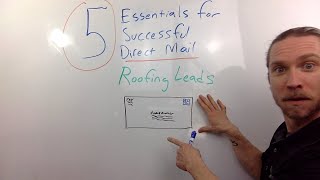
Adam Bensman breaks down five essentials for direct mail roofing leads: hand-addressed envelopes with blue-ink signatures, sending high volume to expect 1-5% response, multiple touches like door hangers and cold calls, targeting homes from assessor records or hail-prone areas, and letters with strong headlines and one clear call-to-action. Direct mail works if you do it right.
Chapters
Hey, everybody, Adam here, the roof strategist. And we are back with another lockdown live. You just get more fun as time goes on. Thanks for joining me. Today we are covering the five essentials to successful direct mail roofing leads. This video today was inspired by a guy named David. David reached out to me. He says, adam, I've been writing my own letters watching your stuff. I sent out a hundred, 100 more. I haven't seen anything come back yet. And I wanted to address what those issues might be because ultimately, direct mail is such an old school technique that has not lost its touch. Let's face it, guys, this industry of roofing and door to door sales has been around as long as people have had homes. We show up, you have a prospect, captive audience, and you have an opportunity to present to them. Direct mail has been around for eons also, and it works. And so many people overlook it. It's something you can do at home. It's fast, it's cheap, it's easy. You can print it on your home computer and you can use direct mail to generate these roofing leads. So I'm going to go over the five essentials today. What I encourage you to do if you've ever had trouble using direct mail, watch these. If you're new to direct mail, I highly recommend you watch my video, the under the radar sales letter. I did another video or two a few weeks ago. If you go on the channel, you click videos and a little search icon. Just search mail, the word mail, all that stuff will come up. So, so I want to jump in. I just want to grab my notes here so I don't forget these things because they're written down in order. Number one, by the way, direct mail. You guys have probably heard me say this. I have had people reaching out left and right. Direct mail is working. I had a guy reach out that made millions off my letters. All the stuff's in the battle pack. There's specific COVID 19 stuff in there as well. This stuff just plain works. The people that have had issues with it not working are, are usually using it wrong. There's a guy that reached out to me. He goes, adam, your letters aren't working. And I asked him what was going on. We made some tweaks. And then he responds to me, throws me the little hang loose emoji goes, your letters are working now. So this stuff is really, really powerful. And especially right now, as we adapt to not being able to go to door to door, it's great to have these tools in your Arsenal to use. So I'm gonna scratch out my beautiful artwork for a minute and set this down. And let's jump right in. Because the first one. Actually. Actually, you know what? I'm gonna leave this letter up. Cause this is gonna come as an example. Cause there's a couple of little nuances. What I want you to do as you learn about direct mail is really start to put your mind in this, like, psychology reading mode. We have to get into the mind of what inspires people to open a letter and think about yourself. When you get letters in the mail, most of the stuff is junk mail these days. You do a very quick snap decision. And that snap decision, snapdecision will do two things, right? We all sort through our mail. We do this decision. One is the trash pile. Trash. And number two is open. Okay? So think about that. That's the first thing we need to do is get to the split the snap decision. So going straight to the trash without getting open. And then. Or is it getting open? If it does get opened, we obviously need to have them read it and then call or email. Okay? Follow the flow. So we need to break this decision from trash to get to open, to read or reading it, to call. And I'm going to walk through this in a quick overview process before I go through these five steps. I just decided to throw that in. I wasn't planning on it, but I think it's really, really important. So the snap decision, let's figure you get this open. Now, how do you get it open? One is the formatting. Okay. And I'm actually jumping ahead to number five. This is actually the fifth one, which is presentation, is a formatting. Hand addressed, hand stamped. Do not cheap out on this. Okay? Hand addressed. Hand stamp, yes. There are machines that do this. There are handwriting machines. Hand addressed. And if you can afford one, which they're really, really expensive, Hand stamped, okay, then you can use that. But for the average sales guy like you and me going out doing this stuff, you can do it at home. You can be effective. You can make a lot of money. So hand address it, hand stamp it. I get this question all the time. What do I put right here where it says the homeowner's name? Okay. I like to use a white envelope in blue ink. Okay. When you do that. And again, I'm going backwards here on tip five. So this is tip five. What the hey? I'll go through these in reverse order instead. Since I got excited. You can use a couple things. One, you can write, dear homeowner, Number two, you can write dear neighborhood or you can do it the best way, which is to write their name. So there's a few ways to do that. You can use the free resources available, which are the county assessor records. You can type in the property and the county tax records. They'll pop up on who that property is registered to. Okay. Where the deed is held. The other way, the fast or easy way, use an app like Spotio, which another reason I'm doing this. Trey with Spotio. Trey Gibson with spotio had me on as a guest to talk about using direct mail to get qualified roofing leads right now. So if you jump on over to spotio's blog, you'll see the video with me and Trey talking and a couple of other experts that were on there as well. Really good people, really good content over there to check out. Highly recommend. But in spotio, just for an example, you can click on a home and it'll give you the homeowner data. Same with, I hear hell Recon. I haven't used Hill Recon personally in a while, but I used to use it all the time. And you can grab that data. So there are apps that are out there that will plug in this data. Hand address, hand hand stamped. Now what about the return address? Return address. You never want to put a company name. Listen this here, if you see Adam the roof strategist or your company name, best roofing company ever. This snap decision, they see that they don't know who it is, what's going to happen on the decision tree, it's going to go straight to the trash. So what we want to do is actually leave this out. Only put your address in this area. Okay. Only put your address here. And the reason for that is you want to intrigue someone to open it. You don't want to give away the goods, right? Same thing like when you're knocking doors, you're not going to show up, knock the door and say, hey, I'm here to sell your roof. You wouldn't do that. And this little piece will make or break things. These are all subtle nuances, but they make a huge difference. So again, on that snap decision tree, okay, just your property address. You can use the office address, your personal address, doesn't matter. Ideally the homeowner name, if not homeowner or neighbor. And then the stamp goes up here. Old school trick, put the stamp on a little crooked. The reason looks personal. It will get open again down to this tree. All right, so that's the general structure again. You can Print these letters out whether you're writing your own, which there are plenty. There's a guy here who emailed me and he says, adam, I watched your videos. I couldn't afford your pack. I wrote my letter, it worked. And he's making money. So if you can write, you want to write your own, do it. If you want to use the stuff that I've developed, and many of you watching already have my battle pack, many of you are already making money. I get letters literally weekly of people. Sorry, not these kind of letters. Email letters of folks using them. So if you want to check them out, grab the stuff in the battle pack. And I've adapted some of these to the COVID 19 stuff as well. So all the ones that are relevant. So this is the main thing on tip number five, which is kind of the right presentation. All right, so tip number five, tip number four. And I'm going to leave this up because we're going to be building on it. Tip number four is volume. All right? Everyone asks, hey, Adam, what do I expect in terms of results on direct mail? All right, it depends on a couple of factors, and it ties into tip one. Look at this. Sorry, I had to use my foot to pick up a marker to tip one, which is the right addresses. So there's two factors to response to response rate. Well, there's more, but I'm going to hit two. One is the quality of your address. How targeted are they? Are they. You could send a million letters out to renters and you're never going to call back. Quality of the address, have they had a claim? Are they in a hail area? All these factors. All right, so that's the number, the number one thing. And then number two is volume. So quality of the addresses and volume out of 100 letters, usually direct mail will lead usually a 1 to 5% response rate. Okay, 5 is on the high side. Remember, it's the laws, what we call in the marketing world of attrition. You send 100 letters, 20 are going to go right into the trash, maybe even 50. And then another 50 get opened. Out of the 50, get that, get open. Let's say 25 get read, and then five people call. So you see that there's different stages. So decision one opened, same with an email, right? Did someone open it? Did they read it and then did they respond? So we have all these steps that need to happen. So volume for response rate, you're looking at 1 to 5% on average. Okay, on average. Are there times that you can flop? Yes, usually it's due to a mistake or it's due to not repetition, which I'm going to get to that. That's one of these tips as well. All right, so 1 to 5%. And you think about it, people are like, wow, so I have to send a hundred letters to get a lead potentially. But how long does it take you to hand sign and write 100 addresses? Not long. An hour. It would take you longer to get in your truck, drive to a neighborhood, get out, start canvassing. And you might hit five doors by then if they're home, right. And then back like round trip. So if you think about in terms of time efficiency, no fuel, no time, There's. You can go way high volume. And if you get creative, if you have children, put them to work. I love. That's what Trey said on the interview. He's like, man, I could put my kid on this right now. You can hire people to do this. It doesn't. They don't have to be skilled laborers. Your admin can do it if you're an office man. Excuse me, if you're running a team or owner of a company. But anyway, 1 to 5% on average. Okay. Now, and the quality of the address, you make sure it's the right home in the right area that has had hail, all that stuff. All right, all right, so that's good addresses, then volume. So the other one, number three here, which by the way, I decided to kind of adjust the order as I got going in. This is the multiple touches. So if you haven't yet, which I'm sure many of you have seen my videos, I always preach multi touch marketing in an ideal world, non Covid world, right? You show up, you knock the door, no one's home. You leave a letter. Okay, That's a separate letter than direct mail. I call them letter leave behinds. The reason I do a leave behind letter is because it piques someone's curiosity. It doesn't scream marketing material. Same thing on the letter left on the door. It's the decision tree. Trash or do I read it? Well, probably go straight to here, right? Trash or read. But if it's overproduced, it's on glossy paper, it's hung on the doorknob, that screams marketing material. Someone showed up and put it on there. But people like Jason, who are, who are always watching the channel Jason was on yesterday. Jason sent me literally pictures in a video. He's taking my direct mail letters, but instead of mailing them as I showed before, he's taping them with painters tape on homes. He says he's hung a lot, but he signs deals. I said, how many goes in his words, a crapload. Okay, he didn't use that exact word, but you get the picture. But the point is, he went out there. How fat? How? Like boom. Tag, door, tag, door, tag, door, tag, door. Even if it was a full day, he got four deals off of it. Okay, four deals in a day is a big deal if you think about it. So anyway, volume and multi touch. Let me get back to multi touch. So ideally, knock, leave a letter. Okay? Then you send the letter in the mail. That's three touches. The same homeowner when you show up again or they see in the neighborhood, that's four or five touches, you can cold call that six. So mail is very similar, right? If you. If no one's ever heard of you, then one letter in the mail, is that enough? So then you send more letters. That's why I have. There's five in the pack, plus the COVID 19 ones, plus I've got a few more. I'm finally releasing, actually quite a bit more that are coming soon. More details to come for different scenarios. Okay, so if you're not out in the neighborhood and people aren't seeing your truck, they haven't seen your yard signs, one impression is not enough. But if you think about it, if you roof three houses in the neighborhood, they've seen your signs, they've seen your trucks, they've seen you in and out, and then they get the letter in the mail, there's a level of familiarity. So volume is important. Multiple touches are important. If you cannot be there door to door, cold call, okay? There's plenty of ways, which I've shared in another video, my cold calling video on how to get homeowner data to start cold calling. It's just door knocking, but without showing up at the house. Letter. Hey, did you get my letter in the mail? And then people are like, well, who are you? What are you talking about? Right? You say, hey, this is Adam Collins. I sent you a letter in the mail about a week ago. I just wanted to follow up, see if you had any questions. And then someone's going to start thinking, right? They're going to be like, what letter? Who are you? And then even if they don't know, it doesn't matter because you started a conversation. Everything I teach about getting that conversation started, all you need is the reply. So you get into a dialogue, and then you can start presenting from there. All right, so we have multiple touches Good addresses, high volume and the right presentation. I'm going to go back to that in a minute. Now, let's just talk about the letter. We're at the point now where we're going to dive into the nitty gritty. So this is the outside, right? We've made it past the decision tree to open, to read and then getting them to call. I want to talk about the actual letter. I love this whiteboard, by the way. I'm very curious to hear if this is helpful for you guys that post this. Just like a talking head or feeling like someone is talking at you. It's visual, right? We're visual people. All of us are. We're tactile learners. So we have our letter. Okay, here's our piece of paper. Now a couple things. Don't overproduce this, guys. When I say overproduce doesn't need to be glossy stuff. What you do not want is like your giant logo. Like, no, don't do that. Because when someone sees that what I think marketing material, right. We want it to feel like it's a personal connection. Personal. You just reaching out like a human being. Okay. So we don't put that up there. If you put on your logo or whatever that's down here. Logo and details. Okay. This is your website signature, all that. Now I want to do something. I've talked with this a bunch. Yeah. Ski Home Improvement says thank you for your insight. Of course, man. I'm glad to have you here. I'd love to hear your results from trying this stuff. Couple of things. I'm going to go bottom up. Okay, Rough. Now let's go top down. That makes more sense. We talked about getting the letter open, then read. So how do you get a letter read? Now? I have studied direct mail for by all the greats, the people that have driven literally billions of dollars in direct mail. Joseph Sugarman is one of my favorite. He's written some phenomenal books. I've had the opportunity of testing this stuff not only in my own, but for companies, lots of roofing companies, lots of you guys seeing results, all that. So let's slide into kind of the element. So one's a headline. Okay? So we want the headline. And when I say headline, I'm not talking news article. I'm talking you want something big and bold so it draws them in. That's easy to read, a punchy statement. The idea is to draw them in where you don't give them enough. So I'll give you an example. I drove by your House and wanted to stop by, but I'm respecting social distancing and I'm sending you this letter and said, okay, so it's big and bold, and that's going to draw them in. And they're like, oh, who's that? Then you have the letter that starts dear and then their name or homeowner. Right. I'm just going to put little brackets because in my letters, by the way, you'll notice that's just habit. In the battle pack, and those of you that have the battle pack, I use these brackets. And everything's in yellow. So when you open them up, that's all you have to change. Like, use the letter as they are. Change just the stuff in yellow. And then, yeah, you can modify them if you want. Some people do. Sometimes you can over modify them where they don't work. And that's one thing I ask when people say, hey, I was using your letter. Didn't work. And then I find out they butchered it. It's like, no, there's like, every single step in there is for a very, very specific reason. Okay, so you've got dear and then their name. And then you go into your presentation. Okay? But you put this information in there in a way that all you're trying to do, if you. If you ask yourself, well, why am I sending this letter? It's for one reason in one reason only. It's to make the phone ring. It's to get them to. To call you. Right? So you don't need to go in. You don't. And so many people do this. Everyone. I can't tell you guys, I get this all the time. People say, hey, Adam, either I wrote my own letter. I can't afford your battle pack yet. Which is which? Totally understand, guys. I am, of course I'd love your business, and at the same time, I want you to succeed. If now's not the time, I'm not going anywhere. All right? If you need to draft your own and test this, do it. If you don't and you want to just buy mine, do that like it doesn't matter. But my point is this. This is a very specific process, right? When you get someone to just call you and you think about that as your primary goal, you skip the fluff. But for some reason, everyone says, like, hey, my name is so and so. Here's my company. I've been in business for 10 years. No one gives a shit yet, right? Like, they want to know, how can you help them? Why are you reaching out? So you Build intrigue, you say. I was driving by your house from leaving a neighbors. I noticed this on your roof. It looks like from the ground that there's some evidence of some hail damage. And your neighbor got hail damage. And I can do X, Y and Z for you. And all you're trying to do is get them to call you. You don't need to pitch. You don't explain everything. Now there are times and like sometimes I call my. My original one that I. That I released first was the end of the radar sales letter. Okay. And that was a more. What I call all encompassing letter. And then the more specific you get, the better. Right? So if I wrote this letter, like leaving a neighbor's house or courtesy for the neighbors on so and so street, which is one of the letters, it's specific. If you saw a headline that said, like courtesy notice for everyone on and then your street name, you'd at least want to know what it is. So again, that's the headline. So. So for production, you'd send a specific letter. I have one of those. You'd send one just as a generic, like, all encompassing, trying to get into a neighborhood. You'd have one for. I just drove by. I have one for. Are you tired of roofers on your doorstep? Right. So there's all these different applications. You want to make them specific. Okay. The more specific the better. All right. And there's all different applications. And by the way, don't be afraid to send a few more. Now I'm gonna take a quick pause and turn my attention in here, so. Comment? I don't have a roofing business. But you have a home improvement business and you can use information for my business. Absolutely. This works for home improvement as well, no doubt. Solar roofing, all that. Any. Any home sale. Another one, Adam's battle pack is worth its weight in gold if you can get it and apply it. Thank you. And yes, it can be applied. Definitely can be applied. Subbing out just some of the information in terms of services and stuff like that. But the general flow will absolutely apply. All right, so we want to be specific. Now the other elements, we have a headline, we have deer. Then we have normal font. Now we want to make it easy to read, so we keep spaces in the formatting. If you get emails from me and you're on the insiders list, guys, I geek out on the psychology of communication because that's what this is. The email that might have told you that I was going live, you'll see there's a line and there's space. And there's another line, because if I sent everything, like, if you get a letter that's like this much, see how dense this is? Like, if you just opened up this whole thing, where would you read it? No, my attention span is that of a squirrel. If I see dense stuff like that, I'm not going to read it because it's overwhelming and intimidating. But if I make the letter like this, and it's really easy to read, and then I break it up with some bullets, and then I say, call me for my inspection, video, inspection, assessment, whatever it is, and then my number, right? So it's much easier to read. You see that? So that's how important the formatting is. Last thing, signature. If I sign this here, black blends in the black print. Use blue. Boom. See how it pops? It's personal. All right? Little subtle touches make a big difference. So let's do a quick recap. And by the way, a couple things. Yeah, let's just do a recap. Let me grab my little notes here. You want good addresses, okay? That's critically important. Quality addresses. You want the right letter at the right time. So when I said specific, you want to be specific. If you can plug in information about the street name that you're working, the neighbors don't. By the way, I've played with this in the past, and I learned the hard way, unfortunately, because I was a dummy. Like, if you're going to use a neighbor's name, get permission. I've used first names, but people don't like that. Like, hey, I'm going to send a letter out to the neighbor. Do you mind if I use your name? If they say yes, you can use. Otherwise, you got to keep it vague. I'm working with a neighbor on so and so street, but be specific, okay? Luckily, they didn't get that upset, but it was just like, oh, duh, moron moment. Slap myself on the wrist, learning moment. All right, the other one's multiple touches. So you can do this by taping letter on the door, which is what Jason's done and other guys are starting to do. And I'm hearing really, really good success about that. You can send multiple letters. Okay? So again, instead of showing up, same thing, think about what you do. Knocking doors, right? You knock the door, and then if no one's home, you're gonna come back again. But if you can't knock the door, send another letter. Okay? I'm gonna be doing some cool stuff on that sequence stuff coming soon. So pay attention. And number Four is the volume, right? How many letters are you sen? You can't send 50 and say, I give up. Okay. And number five is the right presentation. That's the envelope and the formatting. All right. I love this little thing, by the way. Super cool. It's a digital notepad. So when you have the right presentation, which is how it reads, which is the envelope, and then this formatting, by the way, you can, like use bold for things that you really want to jump off the page. Sign in blue ink. You're going to increase your response rate. So I just wanted to share this because there's. I just made this assumption a while back. Sorry about that. I was just setting that down. I made this assumption a while back that people would just use the letters as they are. Then I realized people have a tendency, oh, I want to put my own spin on it. There's nothing wrong with putting your own spin on it. At the same time, you need to recognize that all of this stuff is very subconscious and psychologically driven. Just some tips. If you do start to go on your own. Have a strong headline. Do the envelope formatting the right way sign in blue ink. I call it the one action goal. Right? What is the one action that you want them to take? And that's to call you, by the way, you can, I would encourage you, you can say or text, you know, if you're cool with that. Some people are more comfortable texting, like saying, hey, I got your letter. Just easier. It's on the fly, so you can include it. You can also include your email. But again, just make sure to put your logo and all that. So company owner, specifically, don't over produce this. As a salesperson, my material, whether you use mine or someone else's, mine's in the battle pack below. Link in the description. You can print it on your home printer. What I would recommend doing just to do this fast is drive through the neighborhoods, pick your addresses, find the right addresses that you want to target, pair it with the right letter. Okay. Print them at home. Black ink, it's all you need. Hand sign in blue, stuff them and just write those in addresses on the envelope, handwritten stamp, toss them in the mail. It's beautiful stuff. All right. That is all that I have for today. This is a long one. This was something that I was hesitant to do because I feel like I'm giving out my secrets is a valuable one. This is years and years of trial and error and testing and a lot of study of the psychology of what actually goes into a letter. But I'm, you know, this is a, this whole Lockdown Live thing is super fun and it's challenges and it's, it's exciting and rewarding to be here every day supporting you guys. It says thank you, appreciate. You are very welcome. I appreciate you being here. And again, as always, I am open to hearing your feedback. What do you like about the live? What don't you like? What information am I, are you wanting to hear more of or what should I cover in a future video? Put it in the comments, let me know. Shoot me an email. Adam Strategist.com by the way, I know this. I've seen this come through. So there's no the. It's just AdamStrategist.com okay. So email me if you have any questions and as always, click thumbs up. If you. If you like this video, subscribe to the channel. If you haven't already, feel free to share it with your team. And yeah, check out the podcast. All these are getting the audio scrubbed into a podcast. So if you guys are out driving around, you need a refresher, some motivation. You'll be able to listen while you're cruising around your truck. So thanks a ton. And I'm a little late. I was on a roof that I'll sure watch the replay. That's a great place to be. I'm glad you were late for that reason. I hope that inspection went well, Tristan, and hope you earn the business. So be well. Everybody be safe. We are hopefully going to be starting to open up our country again here pretty soon safely and hopefully things will start to trickle a little bit way back into some normalcy. So you guys are great. Thanks for being here. I will see you tomorrow.









