$653M Giant COLLAPSES: What This Signals for Roofing w/ Josh Sparks
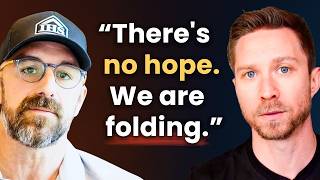
Josh Sparks, CEO of Infinity Home Services, breaks down why Renovo Home Partners collapsed despite $653M in revenue. Heavy private-equity debt, failed integrations, and rising interest rates crushed the company. Contractors need better metrics and leadership to survive the next downturn.
Chapters
Renovo home partners, doing $653 million a year, just folded. Now. They were even backed by BlackRock. I'm joined today with Josh Sparks, the CEO of Infinity Home Services, to talk about what this means for the roofing industry at large. This is a long interview, but I recommend you listen to everything Josh has to say. Listen, he's running one of the largest platforms in the roofing industry. He's doing it right. I can't wait. Now, let's jump into this interview. Josh, I'm really glad to have you here, because we are. Well, first, you are the CEO of ihs. Infinity Home Services is the title CEO. I didn't screw anything up, did I?
That's right. I'm founder CEO. That's right.
Yeah. Founder CEO of Infinity Home Services. One of the largest. If not, do you know where you rank in the. In the. In the realm of these.
Well, when it comes to. Yeah, when it comes to residential roofing businesses, you know, we're up there. We'll call it. We're the top five for sure. Maybe two.
It's. There was an infographic that was created and distributed, I believe, by my boy, Tom Bash. Yeah, I have it pulled up. That's why I'm looking off at my other monitor and looking through. That was really cool, just seeing the portfolio. And I have it pulled up here. By the way, I'll put a link to this in the show notes in the description that shows in that there are. There's actually a friend of mine who's a platform for a company. No, it's not listed here, but this is a pretty robust snapshot of the industry.
In fact, I'll tell you, Adam, it's actually even. It's very cool to look at. When you look at that on the timeline, it's even crazier. So 20, you know, 20. 20, 21, 22. We exited, or we. We partnered with Freeman Spogli. And at the end of 22, and then 23 was like, bam. I was like, just shot up like crazy. So, yeah, the. The private equity world found roofing and. And nothing really crazy has happened since then. Right. Or are we talking about something today?
We sure are. So we're here to talk about Renova Home Partners. You know, they were ranked number eight out of qualified remodelers. Top 500 in 20. I'm. I'm making sure I get this right here. That was 2023. They were ranked number eight. And they did 653 million in sales. And November of this year, 2020, five, they ceased operations and now there's some chapter seven bankruptcy. And for those I know when we talk with Josh, we're going to be getting into some financial conversations. I'm going to make sure to just keep everything really simple. There's chapter 11, which is when a company goes, files for bankruptcy, but they say, hey, we got a chance of making it, we can restructure. Chapter seven. Is there's no hope. We are folding and they filed for chapter seven. And there is. I know Dimitri just did a video recently kind of sharing this news and I wanted to fill in what it was a. I viewed to be a really deep conversation around why and what this might signal to the roofing industry. And Josh, I wanted to bring you in because you have a seat at the table, so to speak, where you're getting insights into financial research and resources that most of us would, would never even be able to get your eyeballs on. And you're seeing this from the inside, running one of the largest platforms in the industry. So what does this signal to the roofing industry at large? But before, you know, before we get there, why do you think they went under?
I think pretty straightforward. Well, let me just, maybe I'll say this, Adam, before, before I get into the financial aspects of the business, I think it's important to note for a lot of people listening that, you know, many of these individual brands and people who worked under the Renovo platform were not bad companies. These guys had solid reputations, they had strong teams. The failure wasn't because, you know, customers stopped needing the products. It is ultimately the capital structure and probably the integration in which that business model failed. I mean, Hart Renova was a private equity backed home improvement company, right? Very quickly through acquisitions. So they rolled up a number of regional brands across siding, roofing, windows, baths, kind of all under this Lenovo umbrella. Good intention. Just like a lot of these other folks you're seeing happen out there. Great intention, consolidated, fragmented industry leverage, scale, professionalize operations and relatively unsophisticated contractors. All this stuff at face value is not bad. But when the pace of that and the structure of that growth is not built on sound foundation, it becomes problematic. And by sound foundation I mean know probably hear high leverage. And so when you saddle a company with an excessive amount of debt and then interest rates go up and your cost of capital doubles and then take, take that and then your lead cost starts to increase as other contractors become more sophisticated, consumer demand starts to soften. You can no longer cover your debt obligation. And that's probably what we saw here. You know, many of these platforms and many of the platforms that are still here right now growing are built for one thing and one thing older, and that is growth at all costs. And they built them on a zero interest rate environment. And when you do that, when you, when you do that and it changes, you're going to see who's swimming without life jackets.
You know, when you mentioned this when we were talking right before hitting record, you said you may have done more homework than me because I'm busy running a company. And I love that. You know, just a side tangent looking back, you and I met, I can't recall if it was two or three years ago. I was speaking at the Owens Corning Platinum conference and it was the very first conference you had ever gone to in your entire roofing career. And I wrote it down. You said there was a poster behind you. It said, work hard in silence and let your success be the noise. And I love that. And your, your mission at IHS is, and I'm going from memory, so you have to correct me, is to rid the world of unscrupulous contractors. Did I get it right?
Yeah, that was my mission that I created back in 2005 at Infinity. We have, we have softened it slightly to save our, save our communities from unscrupulous contractors. We don't want to put homeowners out when companies go out of business, but we want them to survive. Yeah. Yeah.
So you and I connected on kind of shared philosophy and shared mission. But I remember, you know, we went out to lunch with some of the Owens Corning people and you kept me at arm's length. You're like another one of these guys, another one of these sales trainers or gurus or speakers. And it wasn't until after lunch we were sitting at the resort around the, around the fire, really connecting and have stayed in touch since then. And I just, I really appreciate that a lot. And I, I, it's great. I know that looking off at this infographic, I've got a handful of companies I've worked with over the years that are, you know, part of the IHS portfolio, one of which I was actually just texting the other day. So it's really great to see you growing. And that's why I wanted to bring you into someone on the inside because, and as I'm looking down, I have copious amounts of notes doing my homework on this before we, we got on here. But the Renova Home Partners platform, when you talk through debt, they had 150 million in debt. And there's some financial language that I'd love your help kind of articulating in the simplest of ways that their, their debt structure was secured overnight financing rates SOFR plus about 650 to 665 basis points dumbed down. That basically means that their debt was at 12%. Now I don't know what the secured overnight financing rate was, which I should have looked this up prior to this it back in 20, late 2021, early 2022 when this fund originally came to life. But you're talking about $150 million in debt at 12% from a company that did $650 million in 24. And then in 25, even though my understanding they were projecting closer to a billion in sales, they dropped down to 550 million in sales. You're about 150, excuse me, $100 million net loss compared to what they were doing before. And in Q2 of 2025 they were showing 66 million in realized losses. So when you talk about being over leveraged, what I'm seeing through this and by the way, in the, in the bankruptcy that they just filed, Chapter seven, they listed a hundred thousand dollars of assets. Less than, I repeat, a hundred, I mean Josh, most, most roofers, trucks are a hundred thousand dollar assets. Yeah, this is less than a hundred thousand dollar assets. And what's crazy is they're showing 100 to 150, excuse me, 100 to $5 million in live, $500 million in liabilities. Monumental. So what I have gathered, we had this immense roll up starting in 22 crazy acquisition tailing off the ZIRP era. 0% interest growth on this variable liability financing that then turned massive with a unrealized growth trajectory as the market peeled back, which many people are feeling now in an inability to service their debt sprinkling in what I'll call confusion, operational confusion where things didn't sink between the 19, I believe it was 19 different brands and then a loss in leadership where leaders were, were, you know, high, high level leaders, CEOs and founders were no longer part of operations and it seemed to be the perfect storm.
Well, I think you did a fantastic job of right there, Adam, of just laying out what happens when. Exactly what you said. When you have a zero rate interest environment and you have a, a thesis and a strategy bent on built on aggregating businesses buying regional brands using heavy bank debt or heavy levers to do that to the point where the current EBITDA often or the current cash flow can barely Cover the debt service. So if you don't grow, you start going backwards immediately start pulling on a DDTL loan or some, you know, a delayed, delayed term loan. And your interest rates keep going up and up and up. And you get to the point where you just don't have cash flow to service that debt for long periods of time. You bust your covenants with the bank, your leverage covenants with the bank, and then all hell breaks loose. And at that point in time, you either recapitalize the business. And so these partners have to go and put more cash back into the business. And anytime they're going to do that, they're not doing this thinking about their customers and their people. They're doing that based on the actuary tables that go, if I put cash in, do I think I can save this? And there's a point in time where they say this cash is just going to get burnt up. This business is not savable. We're cutting ties. And that seems to be what happened here.
Yeah. So with your view of how the roofing industry is, the trajectory of the roofing industry, does this send signals? Because I know people have seen this news and I'm hearing this semblance of panic. Is this a sign or a signal to the roofing industry or not? I'm curious on your opinion here.
Without sounding hyperbolic, yes, it is a major signal. So let me just take a step back. So there's nothing fundamentally wrong with private equity and how they do business. Private equity adds a lot of value to industries.
It's.
It's proven so. So there's not an issue with private equity. The problem is how some firms operate and how they enter the market. A lot of folks say a lot. Let's just say some PE firms focus heavily on financial engineering instead of operational excellence. So you can't spreadsheet your way to great craftsmanship, great customer experience, and good culture. When I say financial engineering, let me just maybe kind of clarify what some of that means. We all know there's 50,000 active roofing contractors. We all know there's some good companies who deliver good products and services to the homeowners through good culture. And we all know that there are some who don't. Well, a financial engineer could go in and say, we're going to take this asset where they don't do those things, but they're making a million bucks a year. We're going to try to buy them for five times and then add five more of those folks and then sell them right away. And flip them for 10 times or 12 times or whatever the number is and make this multiple arbitrage. Everybody learned what multiple arbitrage, what it means and like, well, I can go buy five separate companies, not integrate them, not do anything with them and then make a bunch of millions of dollars. Well, yeah, you might be able to get away with that, but more often than not you're not going to. And so that, that's a piece of financial engineering. Another way to financial engineer a company is to take a small, a small town business that let's say has been around for 20 or 30 years, that's maybe a lower margin company, you know, 30% margin company or something, and then buy them, raise the prices by 20 or 25%. So immediately start lifting profitability and EBITDA. But being in a market where that's not sustainable long term, they're going to do that, watch that company rise and then they're going to try to sell it. But you create sentiment in that small community where hey, these are not the high priced contractors and you're not building a durable business long term. And so that, that is another way to create financial engineering. So is this a concern? I think this is a reset. I think people should be looking at this and going, how do we separate the operators from the financial engineers? The ones who actually know how to run a roofing business will endure. And those who are just stacking acquisitions for multiple arbitrage are going to struggle. And so that's, that's the bottom line.
Yeah, it's interesting hearing your perspective on this because ultimately what I hear through all this is that this isn't a signal about the roofing industry. It's a signal about a very.
Loud.
And aggressive strategy within one ecosystem of roofing, which is pe. And my understanding, and you please fact check me if this isn't accurate. But currently the market share of all the, excuse me, not all the largest platforms on this sheet that Thomas put together still only makes up about 6% of market share.
I thought that might even be high. That's about a 90 billion dollar TAM right now, just roofing alone. Add siding and windows, you're probably over 200 billion in TAM.
Yeah.
Out of the numbers on these companies you might be, I didn't add them up. You might have, but yeah, by the.
Way, TAM stands for total addressable market. So yeah, my point is even at 6%, which is the number I saw, you're like, that could be high over the next three years. And I've seen statistics, by the way, Which I have to, I have to really examine the source to see the legitimacy of these. But there are rumblings that there's a, the pace of acquisitions in the roofing industry is that there's a deal being done every 48 hours. That to me sounded a little aggressive. I wasn't quite sure about that. But either way, there's my. With the trajectory we're on and the larger platforms taking, you're like, yes, 6% might be generous from my research. And I share this in the 2025-2028 Roofing Market report, there's a link in the description. Josh, that's what I sent you right before this. What I'm seeing is in the next three years it'll make up about 10%. Like, but with the Pac man strategy, the biggest players will make up about 10% of market share.
Now, I think it's important.
Go ahead.
Yeah, I mean, I think it's important to understand is, you know, it the difference between a private equity backed or an investor backed company versus a, versus a, a sole, sole proprietor or just kind of a single owner. You know, if, if I'm building a company and I gotta buy trucks, I gotta spend money in marketing and I, I build a $10 million business, let's just say, and I make 2 million bucks and I'm 20% margin business, I'm, I'm feeling great. The next year I do 10 million, but the market's tougher. I got a bunch of mom and pops that are fighting me on pricing. So I lower my pricing and I make a million bucks instead of 2 instead of 2 million. Well, you know, most entrepreneurs, they don't care.
It's fine.
You know, they're going to keep paying their people, they're going to pay their bonuses or people are working hard, they're going to support their community. But when you, when you buy that business, you have investors now you have debt obligation. And now you're like, hey, I need to make that 2 million. If I don't make that 2 million now, I can't pay my creditors. And if you put too much leverage on the business when you do that, and so it's just a fun. It's a fundamentally different way that the businesses need to be managed. And so then what they often do is go, well, I can't make that 2 million. My volume's down. We'll raise prices. Oh, and then your volume goes down more. Oh, cut costs, cut people. And now you lose people before you know you have an asset that's just Falling apart. When every, when roofs in that community still need to be replaced, they still had a great reputation and you take the business because you've over leveraged it.
Yeah. So in this realm of the consolidation or private equity activity and roofing, it's a different game than a MONPA owned operation because a mon PA owned operation can weather the storm through highs and lows. You know, if you're making a million dollars a year or $2 million a year, your lifestyle really doesn't change. I mean I shouldn't say that for everybody. Someone who's competent at managing their money, your lifestyle doesn't change. Right. I know that there are people that they're spending budget. I was just out to dinner with someone actually this mastermind group and part of them they're like I need at least half a million dollars a year for my, my play spending and you know, and then you have other people that are like that's, that exceeds everything I could ever live on or need to live on. So my point is one to two million dollars a year. If you're, if you're a savvy entrepreneur, nothing changes. But when you have a debt load to service or a bigger strategy, money to pay back, that, that game isn't okay. So there's pressure. And what I'd love to shift this conversation to Josh is how you see the pressure being applied because it's no secret that the roofing industry is feeling pressure. We have interest rates that we still are like unaccustomed to, even though I don't believe they're going to be changing a whole lot. I know the Fed said they're going to make another cut here in December, but we are seeing interest rates that are no longer the pre Covid or excuse me, Covid era, you know, zero percent days. We are seeing ARMA data showing a significant reduction from about 172 million squares to 140 million essentially pre Covid levels, pre boom levels. And we're, we're feeling shifts from. I know finance providers are not writing loans for homeowners with credit scores. Now I've heard some, it's like the floor has been raised to even 700 and we're seeing material prices continue to increase and there's all these changes. So everyone's feeling pressure. Talk to me about the difference in pressure between an independently owned owner operator versus a platform experiencing like what you're experiencing as a, as pressure right now.
Yeah, it's a great question. Well, first I'll just say that a lot of we are facing some headwinds in this industry. There's, there's no doubt about it. But it's funny, I, I've talked to some folks who are in economics and look at the markets and they always tell me, you know, I, I predicted nine out of the last two recessions. And so everybody is thinking that we're going to continue to go into these recessions and like you see how these problems and headwinds. Listen, we are in a wonderful business, Adam. Right. This is a nondiscretionary business. To me wakes up over a cup of coffee and you know, to their wife is like boy, I can't wait to buy a brand new roof. You know, people put roofs on because they leak, because they have to. They reach their end of their serviceable life or their insurance company says that we're not going to reinsure your home unless you put in a roof on it. So we are millions. I think the latest report I looked at was something like three and a half million homes underbuilt. So we're still building houses. These roofs are still going to age. Roofing is going nowhere. And so when it comes to the pressure of going out and finding more work, it really depends. You mentioned earlier so mom and pop versus a private equity back company, both of which generally, as far as I know, are pursuing growth. They both want to go out there and win. They want to get more customers. They want to build their. The way you, the way you way you develop your talent inside your organization and allow people upward mobility as you, you grow, you know, you continue to grow as an organization. The financially back, the financially backed companies have more pressure to grow from time to time, especially if they're over leveraged. And I'm not saying that all PE firms do that. In fact most of them, I would hope ours is certainly conservative. It's, they have tons of capital, they make an investment, they do take on debt. But, but it's a, it's a strong balance and they have the ability to recapitalize the business if we have face an extended period of headwinds, you know. But to your point earlier about your buddy you talked to in the mastermind group, if he needs to make 500,000 bucks a year, she needs to make 500,000 bucks a Year. She's also at all costs going, I need to grow this business to make my money. So I think people put that pressure on themselves is what I would say. And each PE firm has its own thesis and its own expectation of growth and they try to hit Those.
Yeah, yeah, it's true. And when you mentioned we're in a non discretionary industry, the U.S. housing stock, I believe 45. U.S. housing stock is 45 years old. That's, that's on average. And the 2000s had this big housing boom. Well, we're in the year 2025. Who's going to need roofs? So the, the, the market is shifting and it's interesting, I talked to some distributors and they're like, yeah, I know this is like not ideal, but we're going to weather this storm. The industry is not going to collapse. And I'm grateful to be having this conversation to bring some relief because I see a lot of panic in the industry right now. A lot of panic. What's happening? What's happening? And I'm going to give a terrible example, but I'm going to give it anyway. I live in Colorado. Marijuana got legalized in Colorado. There was a dispensary on every single corner. And it reached a point where there were so many options for this new shiny thing that those dispensaries began to go out of business even though it was a cash cow. Everyone was moving into this marijuana industry. And I see the exact same thing that's happened in roofing. We had all of these companies. It's always been competitive, but you had the 0% interest aids in the COVID boom. And then you have how many there are. And Josh, you know these companies, the big names in the markets, and then you look at everyone else and they're all spinoffs of that big name everybody worked for so and so and then left and said, I can do this either better or I can make more money. So now you take a market that spun off 5, 10, 15 competitors, which is not exaggerating. I have two markets that I literally know nearly 10 companies that have spun off from. And then you have this, this bubble that is now burst and companies that were younger companies. And I'll just say in business maturity, maybe not preserving cash flow to say, hey, I need to have enough money in the bank to overwinter or I have to. My lifestyle adjusted a little too comfortably while I was making money. And I predict, and I'm curious, I don't, I haven't shared this with you. I predict that over the next three years, 30% of roofing companies are going to go out of business.
That's, that's interesting. Interesting prediction. I can just tell you from my experience, Adam. You know, I started my business in 97 at 18 years old. And I remember handing out flyers and selling jobs. And even it, when I was 19 years old, I'd go do an estimate for roof and that that customer was getting three other estimates. Now whether they would show up or not. I mean, oftentimes, especially in the early 2000s or sorry, sorry, late 2000s, you know, customer people wouldn't show up. But we've had competition in roofing forever. There's been thousands and thousands of thousands of roofing contractors. And so I don't think competition is changing. In fact, I think with private equity in the space, they're trying to drive margins up. And so you're seeing these folks spend more money in marketing. Actually, from time to time I get, people come to me and say, I've been in business for 40 years and I have to sell the private equity or I'm going to get crushed. I said, what the fuck are you talking. I don't know if you mind if I cuss on this block.
You can, you can be you.
Yeah, what the fuck are you talking about? You know, like no private equity company, no big conglomerate is, no Home Depot is going to put you out of business if you take care of your customers. Full stop. Full stop. Like, if you're running a successful 7,8 million dollar roofing company and you're making money, you're taking care of your family and you get to go golfing on Fridays and you want to keep doing that, nobody's going to stop you from doing that. I would say the only difference between the professionalism now, the industry and the fact that there's investment in the industry is it's going to be much more difficult to scale your business, is what I would say. So when I did, you know, I grew my business from 0 to 40 million into 2019. That will be more difficult because I was pretty unsophisticated when it came to marketing, when it came to sales, you know, but, but I was able to just continue to deliver that experience. It will be harder to get those incremental leads now because you're going to have, you're going to face more competition around the marketing side where you have more sophisticated players. But, but as far as small folks, they're going nowhere.
Yeah, yeah. So with all of this, there's really nothing to be concerned about other than put your head down. Business is business. It is constantly evolving and changing. We're in a cycle of continual change. And that's the only thing that's changing about change, is the speed in which things are changing.
I would say that. Well, let me just Say this. I wouldn't say, put your head down and keep working. If you plan on not selling to private equity or not, you know, not, you know, having a liquidity event for yourself. Keep your head down, keep working. Don't worry about all the noise that's happening out there. Service your customers well. Become a better operator every day. All the stuff that you're teaching your. Your group to do, Adam, which is. Which, by the way, I love the whole. I love exactly what you're doing. You're bringing integrity and quality and the right things to the business that this business really needs. But if you're considering selling your business to private equity, it is. You need to be very careful about that because you don't get to look at the balance sheet of that. Of that investment platform. You don't know if they're highly levered or if they're not, because they're oftentimes not going to tell you that. And the last thing you want to do. Like, it was heartbreaking for me, frankly, and I. And I had this mission to rid the world of unscrupulous contractors. But frankly, it was heartbreaking when I read some of the stories about Renovo and, you know, how his dad started the business 42 years ago and now, you know, promise your employees and everybody's out of a job. Like that would be. That would break my heart if that happened.
Yeah.
To my company.
Yeah.
So I would say you just need to be more. More careful. Yeah.
It. Speaking of that, the. The. The human side of this. I know we're sitting here having this conversation. It might seem, Cal. Especially if an employee was tuning in. It's like that was my livelihood. I believe it was 2,500 employees that were laid off. Qualified remodeler, I believe. In fact, I might even have it still up on my computer right here.
Yeah.
It was Qualified remodeler. And they even shared a screenshot of the. And you know what? I'll even put it up on the screen right. Right here. They shared this. It says, and this was just an email that was sent to Reborn Cabinets. It says it was a relatively stale email. Imagine getting this when you're. When your entire livelihood's banked on it, that the subject says, reborn Cabinets, termination of employment. That's in your inbox. Like what? You know, that's the subject line. And then it says, dear team member. Not even personalized. Dear team member. Okay. We regret to inform you that Reborn Cabinets has made the very difficult decision to immediately cease business operations, resulting in the termination of your employment effective as of today, October 29, which is the separation date. The legalese coming in here, the company intends to pay all final wages earned through the separation date, blah, blah, blah. And then the rest is just. And then it's just we want to thank you for your service as an employee and we wish you good luck in your future endeavors.
And it's a, it's a big middle finger. To me.
It is. And you know, I'm all. When, when I, when I started doing my homework and I have some of these notes up here because I spent hours getting ready for this interview, there was. Let's see if I can pull up to the part I wanted to share. There was no WARN act notices filed. So apparently, and I have to look into this a little bit more, it was immediate termination without notice, no WARN act, which I guess there's some legal notices for mass layoffs that weren't abided by. Health insurance was canceled within three days, which, you know, people didn't even have time to get COBRA or something else. So anyway, there's apparently legal investigations underway for Warren act violations.
Yeah, that's, that's, that's the thing that's sad. You know, it just, it didn't, you know, the collapse didn't just infect investors. You know, it, it left homeowners with unfinished jobs, deposits that people have right now for projects in limbo, employees like, like you had mentioned, without warning, you know, no paychecks. And who knows when those final paychecks are going to come. That's, that's the real tragedy. And it, the ripple effect on families and customers and the community writ large. I think is, is, is sad.
Yeah. And you're see, at least I'm seeing it. And it might be like when you buy a white truck. Everyone has a white truck. But I am seeing more and more news stories of homeowners that have given deposit to roofing company that goes bankrupt or is insolvent. And then now that deposit, you don't get that back. And that happened to us. When I was a contractor, we had a $70,000 deposit for windows for a commercial property. They were damaged in a tornado and, and we went to go pick them up in the spring. And the guy goes, my assets were seized by the IRS. I don't have your 70 grand. I was like, but it was 70 grand. He's like, well, good luck. Now the IRS. We're not going to be like, hey, you know. And he made light of it. He goes, it looks like I wrote off one too many cheeseburgers. I'm like, dude, this is a $70,000 check.
Yeah.
But again, we had no recourse. We lost $70,000. And at least we were a business that could recover from that. But a homeowner who hands over tens of thousands of dollars in deposits, they don't. So what would be your, your like if you could, if you could give advice to the roofing industry at large, to every single roofing company owner to help them be prepared and successful over the next 36 months, what would it.
Be that is be a better leader. Right. Run a better company, Service your customer better? Um, look, I, I, I would say this, you know, I think actually right here, the, the behind me the four virtues of Stoic philosophy w Wisdom. The Stoics believe that wisdom was the ability to see the world clearly without ego, without distortion, without wish thinking. Um, to me that clarity point of, of this, of that virtue is what really you should have an understanding of in your business. You should know exactly why you're winning and exactly why you're not winning. You should know every. I listened to a talk the other day and I think it was the vice chair, a great day, and he talked about breakfast with the numbers every single morning that I woke up. This is true. I was in my CRM. I looked at everything from lead conversion to SAT appointments to demos to closing to job profitability. I look operational efficiency, leverage. I look at every piece of my business every single day. So really, you should know your company. I think the worst advice that has ever come out, I've heard, I've heard it from gurus, talk all the time. Don't work on your business or don't work in your business, work on your business. And I think that was the worst advice you could give any one of these entrepreneurs because what they do is they close their eyes, they say, hey, is everybody doing their job great? Is everybody doing their job great? And then finds out six months later nobody's doing their job and, and you're out of business. So really you need to understand how your business works. And it seems very simple, but it's true. Know your business, know your metrics, know why you're winning, know what you need to do to continue to win. And like I said, if you do that on a day to day basis and you don't partner with a private equity company that over levers their, their assets, then, then you are going to be just fine and you're going to win. You know why? Because there's a lot of people who aren't going to wait, who won't wake up and do that. They don't have the discipline. They just don't have the courage. They're not going to do that. And so if you. If you're willing to put in the hard work and you're willing to be disciplined with how you operate your business and you have the clarity and wisdom to be able to see that what matters and what drives your business forward, nobody can stop you from being successful. They just can't.
So that.
That. That would be my advice. No matter. No matter. Like sid is a CEO of a $500 million company or the CEO of a $5 million company. It's the exact same thing. I. I wake up every morning like I did when my company was 5 million and look at the numbers and understand my business. That's what matters.
Yeah, Josh, thanks for joining me. And if you want to piggyback on Josh's advice of not working on your business, but rather in it, jump into this very next video, because Josh mentioned that philosophy, and I did an entire video about that to help you be a better leader.









