Always Be Closing is TERRIBLE Advice
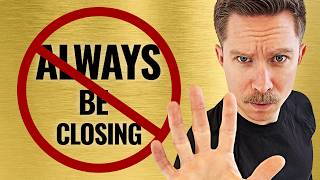
Adam Bensman argues 'always be closing' makes salespeople seem pushy when prospects still have unanswered questions. Instead, surface and answer homeowner concerns upfront, advance incrementally like a football drive, then close only after asking 'Do you have any questions?' and 'Does all of this make sense?'
Chapters
Always be closing is absolutely terrible advice. And in this video, I'm going to prove it to you, starting right now with an experience that you will have, and it will all make sense. And then I'm going to show you what to do instead so you can close deals effortlessly, comfortably, and in a way where you don't have to be afraid that homeowners categorize you as being salesy, sleazy, and aggressive, like the scumbag roofers who. Who we fight so hard against the terrible reputation they've built for us every single time we meet with a homeowner. So let's start off with the experiential exercise. Let's say that you are about to plan a dream vacation. You, my friend, have $30,000, and you are heading to Italy. And because you're a really busy person, you say, you know what? Why would I plan this? I don't know what's going on in Italy. What I'm going to do is I'm going to hire a travel agent, and. And this travel agent is going to book everything for me. But of course, as you know, travel agents, when they see that they can plan a $30,000 vacation, they're thinking of one thing and one thing only, and that's, oh, my gosh, I am going to make a sweet commission off of this vacation. So you speak with the travel agent on the phone, and what they do right out of the gate is they start trying to close you on booking them, but you're like, whoa, whoa, whoa, I still have questions. Because what's running through your mind is this. Your mind is racing. Okay, you've got these questions here. Questions like, what if my travel changes? And you know what, what if I want to upgrade to business class or first class? How much will that be? And, you know, how does it work if I have problems while I'm on vacation? Now, because you have all of these questions and the travel agent is trying to close you, you start saying, no, no, no, no, no. Pump the brakes. Because what's happening now is this travel agent is coming across as being pushy. Very, very pushy. They're aggressive. And because you don't have the questions answered yet that you have, you decide, I don't want to work with them. Why? Because they asked for my business before. The questions that I had were answered. In this, my friend, is where a sales appointment goes from being comfortable to pushy. Now, there's a great way to explain this. There's you, the salesperson, and here's your homeowner and our job in sales is to provide a valuable service and to be of service. And I'm going to write that down. Our job is to be of service when we are of service. And educating homeowners, walking them through the options, understanding their needs, their desires, the situation they're in and selling like a doctor. We are of service. But this, my friend, shifts to being pushy under the circumstances. When your focus is self serving. In other words, you are asking for the business over and over and over again when while the homeowner still has questions. Do you see now? Why always be closing is terrible advice. Now in the next part of this video, I'm going to break down what you should do instead so you can close even more deals before we do. Welcome or welcome back. My name is Adam Bensman and I've completely reinvented what I do on this channel and what I do in my business and in my life. And I'm dedicated to helping great roofing companies make an even bigger impact together. So what you'll see here is content that's going to help you and your team outsell, outgrow and outcompete the rest so we can stomp the scum out. And if you like this training video and others on my channel, go over to adamsfreestuff.com right now and get instant access to my free training bundle. By the way, there's material in there in my sales checklist for owners and managers too. So don't miss out. Roofing sales is personal development in disguise and the reward for growth is life changing. I hope my content helps you create a richer life and bank account. All right, so now after experiencing this walkthrough of what it would be like to be spending $30,000 on this trip to Italy, booking a travel agent who's trying to close you while you still have questions. Realizing that this travel agent went from being of service to being self serving because they want your business but you don't want to buy from them because you still have questions. It's the same thing that your homeowners are going through. So what do we do instead? What we need to do instead of always be closing as in asking for the business is continually advancing the sale. This is a very big difference. Advancing the sale. Now imagine this example for a moment. Let's say that you are playing football. We receive the ball. Let's say it's a, it's a, it's a kick, it's a shallow kick. I receive it on the seven yard line. So I'm going to run the ball. I receive the ball. Here. Here's the end zone. And then we'll just keep this easy. There's the 50, and then we're going to draw the red zone. Okay, we got the red zone right here, right here. Now, let's say I again receive the ball, and I catch it right here on the seven. And I advance the ball down the field. I'm at the 22, and I have my first down right here. Now, who's in control of the ball? I am. So. So my next play, for example, might be opening up the conversation with questions and discovering where the homeowner's at in the process. And I got a running play for this one, and boom, I'm all the way down here. Good run. Second down. Actually, probably another first down, but you get the idea. It doesn't matter the downs, all right? We can't map that out too quick. The idea is that you are in possession of the ball. Now, we then get up on the roof, we do our inspection, we get invited in the house. We. We use the process to get the homeowner to be the one that tells us that their roof is damaged. So we don't make the mistake of telling them it's damaged, which is a great passing play. Boom. We're right here. Okay, then we're going to present. Boom. Got another. We're advancing the ball. Advancing the ball. And then what we need to do is get to the point where we can ask for the business. That's, in other words, like going for a shot to get a touchdown. But if we end up shooting for the end zone too early, I think we'd all agree that's terrible football. Imagine, instead of trying to advance the ball down the field, every single attempt at me, progressing the ball is just throwing a Hail Mary, trying to get it to a touchdown. We don't see that being played because it's a terrible play. Our job is to advance the ball naturally, down the sail. Of course, we may get. Because we've seen incredible runs, we've seen incredible returns, and we've seen those Hail Mary passes, but that's not the norm, by the way, I would consider those a jump close. So remember, our job is to advance the sale down the field, which is what I think some people mean by when they say, hey, always be closing. You're not actually closing. You're advancing the sale. But here's the clincher in the analogy of advancing the sale. What we need to do in our sales role is make sure. That strategically throughout the process, we are answering every single question that the homeowner is going to have. Now, there's two categories of these questions. Category one is conscious questions. They're aware of them. Things like, how much will this cost? What color is the shingle? And then there are things like unconscious questions that the homeowner may not think of asking. Things like, well, how are you going to protect my house? How long will the install take? What kind of mess is going to be made? Now this stuff is kind of dwelling there. But then there's even deeper questions like, wait a minute, are you guys going to pull a permit? And you know, are you licensed and insured? So, so these are the types of questions that they may not have had top of mind, which again, the biggest ones is price. How much is it gonna cost? When can you do it? How long will it take? Beyond that are the unconscious questions. But what happens is if we try to close this sale when these conscious or unconscious questions still exist, we end up having this like, niggling feeling of like, ah, it just doesn't feel right. And that's when homeowners will say things like, thanks for coming out. We really liked everything you had to say. We have to think about it. Or I gotta talk to my wife, or thanks for coming out. Or we'll call you in a few days to let you know what we decide. That is because oftentimes you did not thoroughly answer the both conscious and unconscious questions that came up during the appointment. So what do we do to solve for this? Instead of always be closing, what do we do instead? It is simple. You make a list of all the questions that you get. All questions, okay? All of them that your homeowners ask you. Then you're going to take, let's say, the top 70% of those and make sure that they're built into every single presentation. And when I say presentation, if you're selling retail, you're likely using some sort of presentation from the archaic flipbooks, which still work and is better than nothing to a Engage presentation or a PowerPoint presentation. I personally love Engage and we've built our presentation for the members of the Roofing and Solar Reform alliance on Engage. So you can use our done for you presentation. But either way, all those questions should be listed out so you can address them proactively inside the home. When you do that, you will be continually advancing the sale. So when you get to the end, you can use my closing technique. And I'm going to teach you my very simple closing technique. Right now. Now, the reason that this technique works so well is it can work for storm, it can work for retail, it can work for. If you go in to close the sale and the homeowner kicks you off course with objection, you can use it to come back. Now there are lots of closing techniques. In fact, you could do probably a seven day seminar on closing techniques. And then there are some systems that are like the close list sale, which is an assumptive sale. Walking through next steps. No matter what technique you use, this is a powerful backbone to rely upon. And here is what we are going to do first. But I want to see, were you paying attention? We can't close until the homeowner's what have been answered? They're questions. So what we need to do is ask a series of two questions. Question number one is, do you have any questions for me? Hey, Mr. Homeowner, I know that we covered a lot of ground. Do you have any questions for me? And this is their chance to air them out. Because if you go in for the close before you get these questions answered, they're going to say what again? No, because they're not comfortable. So do you have any questions for me? Then we're going to ask question two. Question two, you're going to tell me, you're like, dude, that's redundant. It is by design. And that is. Does all of this make sense? Okay, Mr. Homeowner, listen, I know we covered a lot. Does everything I shared make sense? Okay, so does all this make sense? And the reason that we ask this question in addition to the first one is how many times have someone said to you, hey, you know, do you have any questions? You're like, nope. And then two seconds later you have a question. This happens frequently, so we want to make sure that there's space for it. The next thing that'll occur is if you say, hey, do you have any questions for me? Some people will say yes. Let's just break down those scenarios. That's scenario one. Do you have any questions for me? Yes, I do. They voice them, you answer them, and then we reset. Great question. Mr. Homeowner, do you have any other questions for me? No. Great. I know we covered a lot. Does all this make sense? Yes. Green light to close. So once we clear both of those, we get the green light to close. Without those, you do not want to close the deal because you will get a no. Okay. Green light to close. We have to check off both of these first. Scenario number two, homeowner is going to come out and you're going to say, hey, do you have any questions for me so far? They're going to say no. Then you say, hey, I know we covered a bunch. Does all this make sense? They're going to say actually in this word actually. They're going to say actually. And actually is usually what's called a buying motivated question. They'll say things like actually, can you explain again how you were going to cover the hot tub? These actually questions that are buying motivated questions regarding timeline, installation, practice, pricing or technical details. These indicate the basically, if you can do this, I'll say yes. All right. And again, you don't. You need to make sure you can fulfill on what you say you can do. Then we reset Mr. Homeowner. It's a great question about the hot tub. Do you have any other questions for me? No, everything's still making sense. Yes, now we have the green light to close. All right, best case scenario, which by the way doesn't usually happen, but hey, it does occasionally, just not all the time. Do you have any questions for me? No. Does all this make sense? Yes, we have the green light to close. So those are the true to life scenarios. And when you do this, you can shift from being that pushy, aggressive salesperson who says always be closing to something far more comfortable, educational, effective, and most importantly, it's going to get you to to the deal. Now that you understand the psychology of closing, now you know why always be closing is terrible advice. And what to do instead by advancing the sale just like you would a football. So you can address all of the questions that come up from the homeowner before you ask for the business using this process. And if you want to learn more about how and why this works in the home, jump into this very next video because it'll show you step by step how to use it in all the scenarios you'll face. Thanks for joining me in this video. And if you want more training videos just like this, jump into my free training center or go to adamsfreestuff.com and get access to my free training bundle, my sales checklist, hiring checklist, pay plan checklist and more and I'll see you in the next one.









