Best Vehicle For Roofing Sales
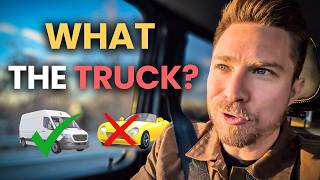
Adam Bensman breaks down three things that matter when picking a vehicle for roofing sales: how it feels to drive, what customers think when they see it, and whether it can actually haul ladders and gear. His bottom line: run what you brung.
Chapters
What's the best vehicle for roofing sales? In this video, I'm going to share with you the three decision making criteria to help you choose the best vehicle for you. So whether you're an owner who's getting a fleet of vehicles for your company or if you're a sales rep just trying to choose the right vehicle for you, this video will help you choose, hands down, the best vehicle. I have had far too many vehicles to count, so I'm going to share my learnings with you. But work what didn't hopefully get you pointed in the right direction. My name is Adam Benjamin. Glad to have you here. Welcome or welcome back. I am actually on my way to the Roofing and Solar Reform Alliance 2025 member planning session and it's been a blast. I woke up this morning, I was like, man, we got to make this video. So here we are. Anyway, let's rock and roll. Roofing sales is personal development in disguise and the reward for growth is life changing. I hope my content helps you create a richer life and bank account. All right, I told you. I'm going to hit three criteria to help you make the best decision. But before I do, I just want to share this. I have run in F150s, I've run tundras, Tacomas, I've run appointments in my old Mercedes CLK500, one of those old two door V8 Mercedes. I've run appointments in a Honda S2000 with a collapsible ladder in the back. So I just want to start off with, you can run anything. You absolutely can run anything. Now this really depends on whether or not you want to have a ladder rack, what size ladder you want to haul and more. But before I get to these criteria, like, I've done it all, does it mean it's the best? No, it's like the folks that say, hey, I took my Subaru Forester off roading. It's like, yeah, your forester can drive on a dirt road, but is that necessarily the best choice for you? You get my drift? All right, so decision criteria number one is how you feel in your vehicle. And I know that this might be an odd one to start with, but we spend in roofing sales so much time in our vehicles or if you're a roofing company owner and you're cruising around like, I was just having dinner with one of our members yesterday and he drives 300 per day. I know that I calculated my time behind the wheel. It's about 20 hours per week. So how you feel in A vehicle is really important and that means a couple things. One's comfort. And two, like oftentimes, you know how some days you, at least for me, we're going to turn right on Broadway. Sometimes based on how we feel, it changes based on what we, what we, what we wear. So if I throw some dress clothes on or a collared shirt, I often just carry myself in a different way than if I rolled out of bed and threw on some pajamas. And our vehicle is kind of an extension of us and how we represent ourselves to the world. So I would recommend driving a vehicle that you feel good about and that you feel comfortable in. And I got rid of my 2008 at that time Toyota Tundra. The seats just did not work for me in my body. Miserably uncomfortable, in fact. So I didn't run with that vehicle super long and it was tough. Same thing. I had a Toyota Tacoma that was a stick shift and that with like being on the phone and driving a stick all the time. Like my hips and back would kill me at the end of the day. So to me, comfort's a big factor. Now. Decision making factor number two is the message that it sends. And this is more important to some people than others. And others, you know, have said, hey, you know what, I should be in a higher level trim. So when I show up at a customer's house, they see that like that were professional. But I also don't want a vehicle that's too nice, that doesn't make too much money. And I think there's some validity to thinking through this. And at some degree, like people care about how you make them feel and they really don't quite care as much about the vehicle you drive. Now that being said, you know, if you were to show up, for example in like a Lamborghini Urus or something, you might send a different message. That's obvious statement. Vehicles like the Cybertruck for example, that is going to carry, you know, its own message based on cost. I'm, I know that I'm like being a hypocrite in the message you sent. I'm in a 2015 Mercedes G Wagon. And this isn't just any G wagon. This is a lifted, purpose built, off road rig G Wagon. I have a, by the way, separate YouTube channel documenting my love and passion for off roading the snot out of these things called G wheeling, which you're welcome to check out. But anyway, this I would have to be aware of, like there's a cachet or, or association with G Wagons. And I know those a lot of us in the auto, excuse me, in the roofing world are into cars. And I was talking to a gentleman, a member yesterday about Porsches and Audi and BMW and Mercedes, and he's like, you know, it's interesting that all of them carry their own, like, little stigma of the type of people who drive them. So does it matter? You just have to decide and know that whatever you drive, there is a signal that's being sent. And the same goes. There was a gentleman that used to sell for us, we called him Cowboy. And he was in this, like 1980s, totally rusted out, like, poop brown Chevy pickup. I don't even remember the model. But obviously pulling up at a job site like that says something about you and about the company. So whatever you do drive does send a message and it's up to you to decide how important that is to you. And now this is going to bring me to decision making factor number three. So again, number one was your comfort, how you feel, and number two is the message it sends. And number three is practicality and usability. So a lot of it's funny, a lot of people end up getting trucks in roofing sales and they're like, oh, I need to have a truck because I'm a roofer and I need a truck. But the truth is that for most roofing salespeople, especially in today's time where they're not running production, you don't need a truck. You're not using your truck bed for anything. Now, again, one would argue, well, I need a truck to have a ladder rack. And yes, a ladder rack. That's a very compelling reason to have a truck. If you want a ladder rack, I would carry two ladders. My one for two stories and my easy one just for a single story. And that, again, is a reason to have a ladder. A ladder rack. Does it look ultra professional to show up in a truck with a ladder rack? Absolutely. Now, do you need a truck? The answer is no. I personally, this is not a popular opinion. If you're not doing production and you don't need a truck bed, an SUV is sufficient if you really want, like, the most practical, which is probably the least glamorous and least sexy. Cargo vans. Cargo vans are amazing. You have workspace, you can securely and safely store everything from tools, equipment and material that won't get stolen. That's another big issue, especially in certain areas, like everything sitting in the bed of your truck, it can get stolen. So having everything just in your enclosed van is a Big deal. For some folks, which I'd love to see this, you can set up a mobile workstation in the back of your van. That's huge. What I did in my F150, the F150 seats. I don't know what model vehicles do this now, but the back seats folding up was a big deal because I could just have all of my stuff there. It was easy to get in and out. I'd flip one seat down and I'd have a mobile office back there. So that's what I mean for usability. So for me, the big nod, the win, like the ultimate in professionalism, in practicality, is actually a cargo van. You can do the small ones like the little mini. Gosh, what's that? Ford. The little mini Transit. Ford Transit, I believe. I forget the model. The Ford Transit, I had a full size transit cargo van. And by the way, that thing was a nightmare for me. But they're practical, so truck, good choice. Second to me, to the van. And then here's my final concluding advice. Run what you brung. Because wherever you start off, it doesn't matter. At some point you may not have a choice, but at the end of the day it really matters a whole lot less. And people put a lot of emphasis. But let's be real, for many of us, we just really love trucks. We love buying cars. Who doesn't? So run what you brung. I got started in a little manual stick shift, a little manual Toyota Tacoma. I was just having dinner with one of our members last night, Boris, who said he was in a rusted beat up old Nissan Sentra that he spent a few thousand dollars on. And a lot of people have a founding story starting on that. So yeah, by the way, like this kind of van right there. I don't know if you saw him drive by, but yeah, cargo van, ladder rack. Look sharp. In summary, the three decision making criteria is number one, how you feel in the vehicle, number two, message it sends, and number three, how practical it is. Remember, run what you brung and don't let that hold you back at all. I cover this in an old video and if you want to see the original click up there, take a peek. Thanks for joining me in this video. If you want to accelerate your journey in roof ownership or roofing sales, jumped into my free training center. They're calling it the golden goose of roofing sales training and owner resources. There's a link in the description. I'll see you.









