Conversational vs. Hard Sales: Roofing Sales Talk: Can You "Hard Close" Without Being Too Hard?
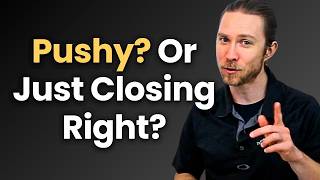
Adam Bensman argues conversational selling builds trust and referrals while hard selling creates resistance. Conversational approaches still allow you to close deals, just without the pushback that kills repeat business.
Chapters
Hey guys, Adam here, the rootstratist, and I have a question for you. How hard is too hard? Nah, we're not talking about that. We're talking about conversational versus hard sales. Now, this video was inspired by Steve. Steve is on the email list, by the way. You can get on that by joining the 30 day sales challenge, Link in the description or downloading my eBook, Three Tricks to the Kitchen table. That's the best way to get notified of upcoming videos for you to submit content and video ideas and ask me any questions you've got. So Steve reached out, replying to an email, which I encourage you all to do, and we ended up on the phone had having a conversation about some of my products and Steve said, hey, I was following a training system that taught hard sales. Steve's the owner of a roofing company, by the way, and this training system is one you've probably heard of. And I will not name names, but here's the backbones of it. You knock on the door, you show up at the house before the homeowner can respond. You turn your back to them, you walk, you get your ladder, you put it up, you do your inspection. This is what we call a hard sale. Now, in my opinion, it's too hard. Now here's the thing. When, when people hear conversational sales versus hard sales, immediately there's objections, especially from sales guys that say, I'm only into hard sales because I only one call close and I'm a closer, and that's me. And I eat steak when I close deals, right? And there's this bro y sensation around hard sales. Well, let me give you a little news flash. No one likes to be on the receiving end of a hard sale. Customers do not like being sold and they hate being manipulated. And they will sniff you out from a mile away. When you show up at the door and you use these hard sales tactics that you've been taught, you will have people racking the shotgun on you. By the way, there was a salesman in Texas that was shot this year at a doorstep of a home. Now, I don't know the whole story of what sales approach he was taking or not, but I will say it's bad news for everybody, okay? And it's a really a big shame. No matter how that person was selling, no one deserves to get shot. My point is this. Be kind to people. So hard sales, are they kind? Not so much. Are they pushy? Yes. Do homeowners like them? No. Conversational sales. Is it easy to get past the gatekeeper and get Invited into the house? Yes. Do customers like you and connect deeper? Yes. Will you get more referrals? Yes. When you take this approach, everything changes. And this channel is teaching conversational sales tactics. Okay. Now if you're wondering, hey, if I'm using conversational sales tactics, what about going in for the close? I'm a one call closer. Great. I try to one call close as many as I can too. But I want to show you something. When you start a conversational sale, this is an easy opener, okay? Easy opener. And the number one focus is starting a conversation. Okay? Starting that conversation. Hard sale, Hard open, Immediate yes or no. Immediate yes or no. All right. Now when you use the conversational method, which by the way, someone on the channel just made a comment that on my ace, the pitch at the door, he memorized my approach. He landed four inspections, that's three, four inspections. On his first day out using that script. He said canvassing was easier, there was less rejection and most importantly, he had more fun with it because all he had to do was start a conversation. Once that conversation has begun, the sale happens naturally. Alright, so that's the difference here. Now again, customers like it. So you're going to have better relationships with your clients or with your clients and customers. So better relationships. And this is kind of a churn and burn approach where you show up, you're going to push on it, you're going to see how far you can get before you get that rejection. So you're kind of, if you think about like any dairy product, right, the cream rises to the top and on the hard sales, you're just skimming just maybe that top layer of cream off. Where in the conversational method you're finding a use for all of it. It's yes, we're going to get the low hanging fruit that's excited to buy off the top, but we're also going to go a little deeper. We're going to have more product yield by taking the conversational approach than we will on the hard sale. Because the hard sale, it's just like going up to a lady at the bar, be like, hey, can I buy you a drink? You want to come back to my place? Like you're going in for the kill way too soon. The women that are going to go home with you are not the ones you want to introduce to your mother, by the way. Now, conversational sale, you're going to have a lot more conversations, get to know people and, and it will go where it needs to go. The chances are you're going to develop a lot more friendships and maybe romances taking this approach than what I consider kind of a sleazy approach of hard sells. Now the other piece about this conversational marketing, besides being easier and better relationships, is you automatically get their guard down when this, and this is the most important point to hit when you start this conversation with a hard sell. We've all walked into a dealership, a car dealership. You've got the guy that walks up like, hey, we got some specials going on. What kind of car can I get you and what's your budget? You looking to buy today? We're, where's your wife? She's a decision maker. I had a security company show up at my door. My wife wasn't home first thing he says, where's your wife? I said, she's at work. Because I work working from home. He says, man, they sent me on a one legger. I almost kicked him off my property. In fact, I should have, I was too kind and I didn't. So when he did that, my guard was up, okay? Guard up. I was like, I do not trust this guy. He is trying to sell me. And homeowners sell. Sniff it out. They're like a little bloodhound, alright? They're going to sniff out these hard sales tactics. No one likes to be sold. But if you start conversational, it is the opposite. Guard down, okay? People, when you show up at their door are instantly have a high guard. You are at their sanctuary, you are at their castle. When you show up, it is natural to be like, I don't trust you, I don't know you yet. I'm not letting you in my home. This is my castle, my sanctuary, where my family lives. Not letting you in, my guard is up. Now the difference when you have a friend come over or let's say a neighbor pops by and there's a conversation, hey, come on in, take your shoes off. Right? So we want to start this conversation. It's all about how that sale starts. How it starts will set the tone for everything else. So conversational. The guard's going to go down. It's going to be very easy to start that dialogue and very easy to navigate from there, okay? The other thing is no one smells a sale. No one smells you, alright? They're not going to feel, yes, they know you're there to earn some business, but they don't feel like they're being sold, okay? So think of it like this. You're their guide here. You're the guide that says, hey, I'm Here to find out what you need. I'm here to find out how the insurance claims process is going for you, and I want to help guide you to the right answer. Now, you've heard this in my videos before. I often say, Mr. Mrs. Homeowner, whether or not we work together, I'm going to tell you what you need, okay? And the reality is, you can choose anyone out there to work with you, because the process goes like this. And then I explain the process, which I'll shorten for this video. I touch on it in other videos, and ultimately, all you owe would be your deductible, your contractual obligation between you and the insurance company. No more, no less. Whether that claim is $3,000 or $300,000, your percentage of what you owe stay the same. Now, I know in Texas, certain states with a percentage of the deductible, that may change, but usually that's a fixed rate anyway, right? So percentage of home value, typically, I know some of them are kind of shifting towards percentage of claim value, but either way, our job is to educate you, Mr. Mrs. Homeowner, and I want you to feel comfortable choosing who you'd like to work with. Now, I do hope that's me, but I want you to be comfortable in the process and to know what to expect. Okay? Whether or not we work together, that will continually put their guard down. So. So you're their guide. You're going to say, hey, so here's the deal. You got a partial claim, so the west side of your roof was covered. Now you're in a bind. You have the insurance companies come out once you get one shot for them to come back out. So if we do work together, that'll be me representing you to make sure we have the best possible outcome. So they already made that working commitment to cover half of your roof. And when that's done, what I'm going to do is facilitate the entire process. Document anything that comes up during the install to make sure there's no surprises out of pocket. Okay? So first, we sign this agreement, you execute it. It's called the contingency. Basically means I'm going to go to bat for you, and I only get paid if we help you get the roof approved and we become a contractor of choice. So there's no harm, no foul, no skin in the game other than, hey, if we get this thing taken care of in your favor, we'll do the work. Sound fair? Cool. All right, so after that, then we meet with the adjuster, we do the install, blah, blah, blah. So we educate. So you're the guide. All right here, you're not the guide. You're a sharpshooter. You're sitting there and you're trying to, you're looking down the scope at a target and the homeowners feel like that. They feel like they're in the crosshairs. So when you take this hard sales approach, they're going to view you as the sharpshooter, they're going to view you as in their crosshairs, that you're a target. And all that they see in you, the homeowner, is a dollar sign. And we don't want them to feel like that. So that's why I am a firm believer. As you watch the video, you watch the channels, watch the ace your pitch at the door channel, watch the breaking the emotional attachment of money. Watch the four stages of the claims process. All of these videos are going to teach you a conversational approach to meet them where they are, show them where they need to go, and put you right in the center as their hero to help them get there. And on this way, you have happy customers and more referrals. Now, if you take the hard sell approach, your customers are not super happy with you and they're hesitant to send referrals because people want to share experiences. That's what a referral is to shared experience. So if you give them a conversational experience, they're like, hey, I loved working with you. I want to introduce you to my neighbor. I've had salesmen literally get walked around and introduced to the neighbors or with the homeowner. Talk about a warm intro. It's a sign up on the spot endorsed by the neighbor. Okay? Whereas on this method they're like, hey, I don't want to share this experience with my neighbor. The guy showed up, it was a hard sell, I need the roof, I'm going to work with him, whatever. Alright, now, one objection I'm sure you're thinking is, hey, well, I'm a salesperson. What about sales tactics? What about one call closes with the conversational approach. This does not mean you lose sight of what you need to do in sales. So this applies to both. Directive, you're going to give directions. Okay? Directive authority. So what does this mean? You're going to tell the homeowner what to do? It's not a matter of commanding in a disrespectful way. People need to know this. A teacher running a school tells their children what to do to keep order so they know what to expect. This is the only way to make sales. So here's what's going to happen, Mr. And Mrs. Homeowner, after we execute this working agreement called the contingency, you're going to call the insurance company to file the claim. Okay? After you do that, you're going to call me with the information so I can follow up to meet the adjusters. That sound good? So again, directive and Authoritative or Hey, Mr. Mrs. Homeowner through the conversation, is this something that you feel comfortable allowing me to represent you to your insurance company, get this process settled and get your roof underway. So again, that yes or no question. You can ask for the close or as you hear in sales training, ask for the order. I'm going to call it ask for the close. Okay? So both these overlaps of the traditional sales tactics and techniques will work in both approaches. The difference is the push. Okay? This is a no push where you're focused on connection and overcoming objections. And this is a big push. Okay? And again, you need to think about how this makes your customers feel. So I want you to do this next, see orders, directives. You're going to do two things. First, drop a comment in the video description. I want to hear what technique has worked best for you. Tell me conversational or hard sales? Your feedback is important for this channel. I like being challenged. I want to hear what's working for you. Okay? So that's the first thing. Second thing, if you like conversational sales and this is what you voted, then I want you to click the link in the video description to my roofing sales accelerator marketing pack. This is not a hard sell. I'm asking for you to look at it. That's it. On that page, you're going to see all my turnkey marketing material that is all conversational in its philosophy. It's designed to open the door to a conversation and to position you as a human connecting with other people as their guide. So take a look at what's all included. The way that it works is after you take a look, if you decide it's something you want, you download it. It'll come to you instantly. When you open it up, there's gonna be things in yellow. You fill in the blanks just for your name, your company name, and you'll click print and you'll be using my material right away. It's printed on traditional printer paper so you don't have to worry about over producing it, sending it off for fancy production and spending a lot of money. It is simple, but most importantly, it's effective. Because it stands apart from the crap that's left on the door. The door hanger that's like, you know, over designed. Someone sees it and it screams marketing material. Goes straight in the trash. We get tons of things in the mail like that. So you want to stand out that a real human showed up with a piece of paper and their business card printed to it and it piques their curiosity and they open it, which is, as we know in sales, a micro commitment. They made a commitment, so now they're curious, they're going to read it. The higher the likelihood of that being consumed, the higher likelihood of you making an authentic connection. So again, those two things. Drop the comment and let me know. Conversational sales or hard sales? What's worked best for you? Tell me. Number two, if you're into conversational sales, click that link. Check out the Roofing Sales accelerator Marketing pack for whatever it's worth. There's a hundred percent money back guarantee, no bs. If you get it and it's not working, let me know. I did have one guy who said, hey, it's not working. And guess what? I gave him feedback. He was using it wrong. Then I get another email. He says, dude, bro, your video, your direct mail letters are killing it. So I'll support you, I'll take care of you. That is all for this video. Thanks for being a part of this channel. Click subscribe if you haven't already. New videos come every Tuesday at 7am Mountain time. Had to remember. Thanks guys. We'll see you next time.









