D2D Sales is Changing | Here’s What’s Working NOW w/ Dashaun Bryant
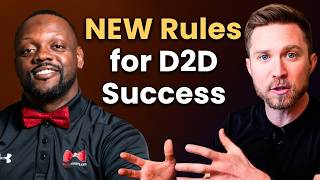
In this interview, Adam Bensman talks with door‑to‑door roofing veteran Da’Shawn Bryant about how the D2D sales landscape has changed over the past 2‑3 years. They compare low‑density markets (e.g., Beckley, WV) where homeowners are still receptive to the traditional “we’ll get your insurance to pay” pitch, to saturated metros (Texas, Georgia, Florida, Arizona) where homeowners distrust door‑knockers, demand online reviews, websites, references, and transparent information. The conversation highlights the rise of social‑media horror stories, the spread of negative viral videos, and the resulting homeowner demand for honesty, transparency, and authenticity. Bryant explains the concept of “damaging admissions” – openly sharing the worst‑case scenarios – and how this builds trust. They contrast old‑school hard‑sell tactics with a modern consultative, gap‑selling approach that focuses on listening, identifying the homeowner’s specific obstacles, and providing tailored value. The interview also includes a live ChatGPT demo that mirrors the advice homeowners are already receiving online. Finally, Bryant offers practical advice for reps in competitive markets: be the “unicorn” who genuinely enjoys the interaction, adopt a no‑agenda mindset, and focus on building trust rather than chasing immediate sales.
Chapters
Door-to-door sales has been changing. Homeowners aren't coming to the door. The economy is different, and let's face it, there's more folks out knocking than ever before. So in this interview with Da'Shawn Bryant, my very good friend and fellow mentor inside RSRA, who is to this day traveling the country and training teams personally in door-to-door sales, he's seeing it from the ground. And, uh, Da'Shawn is here to share with us exactly what's changing in door-to-door sales to get you and your team prepared for the battlefield. Thanks for being here with me. My name's Adam Bensman. Welcome or welcome back, and let's get started. So, Deshaun, you're out like every week, coast to coast. You know, there's a lot of folks that are out knocking doors, but you're seeing it. You have a unique opportunity to see it absolutely everywhere.
Yes.
What's been changing lately? Let's say over the last 24 or 36 months.
Yeah. And, um, it's changed. And this is the interesting part, right? I'm glad you asked that. Like, what has changed? Because it is a market-to-market basis, right? So I was just in West Virginia last week, Beckley, West Virginia. You probably never heard of this place a day in your life.
It's not on my, was not on my map, right?
Nobody's traveling to Beckley, West Virginia. Uh, they don't even got a Target. So I just wanna let you know, that's what it's like being in Beckley, West Virginia. They don't even got a Target. So in a marketplace like Beckley, West Virginia, Nothing has much changed because most people aren't knocking doors. So the receptivity over there was actually rich. Everybody was excited to hear from us. Everybody was open. I tell you no lie, Adam, I've been doing this for 6 and a half years being on the road, 10 years knocking doors. First time in my life, I would probably have to say maybe the first, second time in my life, I've never heard, there's no solicitor. And it's just crazy to hear that out loud, right? Not one homeowner was like, there's no solicitor, get up outta here. I mean, it was so crazy in Beckley, West Virginia, to the point to where like we would knock on people's doors and we would tell them we do roofs. They said, we've been thinking about getting a roof done. Can you come with me please? And they will walk us around their property showing us everything they wanted done at the house. And we was converting them very generously. I don't wanna say easy cuz it does require a certain skillset, but the resistance wasn't as high as— now let's talk about the shifts in the busy marketplaces, Georgia, Texas, Connecticut, uh, Arizona, all of these places where roofing companies are popping up like hotcakes, right? Because you know, in these very saturated markets, Guys get with companies, don't go the way they want it to. Now they wanna start their own company, right? Mm-hmm. So in these marketplaces like Texas, Georgia, now it requires a different skillset where you actually gotta provide some level of education. You gotta actually provide some level of expertise. You gotta provide some backstory. You need some longevity. You need some experience. You need good websites, you need good reviews because knocking on the door, telling people you can help them get a new roof, get their insurance company to pay for it is not getting the people moving like it used to, you know, 5, 6 years ago. So now it's about knocking on the doors, taking time to actually educate your homeowners. We actually running into some situations where homeowners already had an inspection. Somebody told them they have damage and they don't trust the first contractor. Mm. So now they're saying, hey, we already had somebody out here. They told us we had damage. We wondering, can you confirm it?
Interesting.
Can you actually let us know if it's legit?
So why do you think that homeowners aren't trusting the first person?
Well, I think homeowners aren't trusting the first person because what I've been hearing and experiencing from a lot of the people that we've been out there and some of the people that we run into is guys are watering down the process. So They back to the, well, once I get up there, I'll let you know what's going on versus providing actual details, the process, what the next steps look like. Also what it look like if it don't go in your favor. Like what happen if the insurance company don't pay for it or whatever it may be. And a lot of these guys, obviously a lot of them unethical, right? Unfortunately, it's the roofing industry. So I think they not trusting people due to a lack of credibility. They're not providing information at the door. They're not giving them one-pagers, which is, you know, a breakdown of the company, who they are. So I think a lot of companies are trying to water down the process. They're not providing enough education. They're not providing enough information. And they just trying to sell people on the opportunity like we used to do back in the day. Because I remember my first year in roofing, we would just pull up into people's house, people's neighborhood, tell them you got hit by a storm. And we was filing blind claims. We ain't even do inspections. We ain't do nothing. And people were saying yes to that. And now what I'm starting to see is people actually want a little bit of reputation. They want to know who else you've helped in the neighborhood. They want a track record of people they can go talk to before they even make a decision, right? And I think a lot of companies, you got to slow down to speed up. You got to provide a little bit more information. You got to grow to a certain level of professionalism when it comes to working the door, especially from a door-to-door perspective, because You know, like I know the training sucks. Yeah.
So what, why do you think that's happening where homeowners, because I made a couple of notes down here. I said, you said that most companies want, uh, good reviews and a good website. Excuse me, most companies, most, uh, that's my chicken scratch. Cause I was writing fast. Most customers or most homeowners want to see good reviews and a good website. So, and these, you're mentioning that they want to talk to some folks, get references. In the past when, when you and I got started doing this, that didn't happen as often.
Nobody cared.
Yeah. What's changed, do you think?
So I've heard it from Jesse Itzler and like, let's just be real, right? Bad news faster, bad news spreads faster than good news. Mm-hmm. Right? So like they always say, it take 10 to 15 years to build a reputation. It only take one situation to like destroy it. Yeah. You got these videos of, well, first of all, I love 'em to death, right? But you got people like Dmitry Lipinskiy who is putting these people on blast. Mm-hmm. And on social media, these videos going viral, like these aren't just regional videos or neighborhood videos. So you got videos going viral of roofers getting up on roofs and, you know, causing damage. You got homeowners in these, you know, Facebook groups and everything talking about how things went wrong. So I think the horror stories are starting to spread. Like our industry ain't a secret no more. No, I mean, it used to be we pop up to the door, insurance company, they pay for it. What? That's amazing. Now homeowners like, listen, I done heard it. I know the spiel. Insurance company didn't pay for it. Listen, man, we wanna make sure we choosing the right company. So I think the horror stories are spreading and now people are looking for reps with experience, looking for reps that done been through the process. And also one thing we've been teaching is Homeowners actually want to hear the things that can go wrong instead of being sold the perfection story. Mm-hmm. Oh, we gonna get up there, insurance company gonna pay for it, bro. And I think a lot of sales reps are afraid to be transparent and to be honest about what's really happening in the neighborhood. And the homeowner's already aware of what's happening. So as soon as you sell them this like perfection story or how it's gonna go this way, they're like, nope. You lying. Already seen it on social media. Nope. Already know what's going on. And social media is like, forget CNN, forget Channel 13 News. These people seeing this information right in they face, right? And then you gotta think about it. These phones so smart. You might have knocked on a home on the door. They might have had they phone in the pocket. You like, we can help you get a new roof, get their insurance company to pay for it. The phone heard it.
Yeah.
Now they get on social media. All of those things are hitting their algorithm. And it's usually not the positive side of things. It's usually the negative side of things. Like I got a friend, uh, good friend named Jacob Fuchs, live in Georgia, awesome guy. Roofer inspected the roof, told the homeowner they need to file a claim, plenty of damage. They, they heard that he's the guy that you contact if, you know, the process seems quote unquote too good to be true. They brought him back out there. He showed the homeowner that it was 20 crease shingles on a low slope in the front of the house. And the homeowner was like, man, thank you for coming out and saving us the headache. Because it's home— it's roofers out there causing damage on a day-to-day basis, you know?
Yeah, man, you brought up something really interesting, which is the concept known as a damaging admission. You said you have to talk about what doesn't work well.
I learned about this.
This is taught in the direct response copywriting space. And, and some people know, I know you and I have talked about this, but I spent, uh, 5 years as a direct response copywriter, basically being a sales hitman for hire. And when you're selling in writing, uh, you lose the ability to engage on an interpersonal level with visual cues, body language, nonverbal, et cetera. And one of the fastest ways to build trust is to, it's called a damaging admission, share all the things that are the worst about the product or the, or the service. And what I'm finding, especially with newer salespeople and with companies that don't provide real training and it's, you know, watch Tommy, the other good guy, or figure it out on your own like we did. They go out and, and new salespeople just want to, it's great, it's going to be awesome. Everything's going to be perfect and we're amazing. Instead of, hey, Mr. Homeowner, this process, the worst part is it can be a really big headache. The worst part is you might feel like it should go smooth and then you get denied. The worst part is you have roofers slamming on your door that want to earn your business, and some of them are doing damage on your roof. Like all of that in airing out upfront. And then now people are like, hey, this is— now it's, it's authentic. It's real. And when you put people at ease through these damaging admissions upfront, it's, it's significant. It's a palpable difference on how the rest of the conversation goes.
1000%. And obviously you learn so many things through trial and error, but you know, I'm blessed. I got a phenomenal group of friends and phenomenal influences. And I'm reading the book Triggers by Joseph Sugarman.
When I gave you that, our event.
Yeah, I know. And I read that in one of the sections where it's like, you talk about the things that's going wrong or how this product got defects.
Yes.
And then how we fixed it or how we went about making sure you won't experience these things.
Mm-hmm.
And that's what we, you know, you know, full disclosure, I don't deal with the same level of difficulties that most people deal with on the doors. Like I gotta say that 'cause I know people like, well, you been strug— no, I don't struggle when we go knock doors. Like I know how to convert at a very high level, but also I'm aware of the marketplace and what's happening and how to approach homeowners. Like in Texas, Texas is one of the few markets where like the damage is legit. So like you ain't got to force no damage in Texas, but it's like, how do you differentiate yourself from the 13th, 14th roof?
Yeah.
You know, and Texas is probably one of the biggest markets where I see people not answering the door.
Yeah. It's happening a lot in Florida. I hear too. We've had some folks inside RSRA in the Orlando market mentioning quite a few people actually from Orlando up to Jacksonville, which I know is quite a stretch. But, but yeah, it's— I've been hearing this more and more from folks. People just don't answer the door. And, you know, I wrote about this in the 2025 to 2028 Roofing Market Report. You know, the one— let me just step off screen. The report I didn't— I forgot this is actually sitting here by my desk. Let me just jump on full screen here. But this, this report that we brought to the members-only RSRA event is a printed version. We have the journaling exercises of what's changing in the industry here. And one of the key things, one of the key findings is that people are so used to— by the way, this is in Section 2. You can get a copy of this for free in the link in the description. This section of what homeowners want. Homeowners want instant information. They want answers now. And they're used to being able to, you know, now a lot of folks have, as I do, ChatGPT right on your home screen on your phone. I've got Gemini on my other screen. And in the past, you might have buyer's remorse. Someone answers, or excuse me, knocks on your door, you answer, you tell them yes, and then you're like, oh crap, I just told a stranger. And you might have to go and look at their truck and do some research, jump on websites and bounce around. Well, now, you know, a roofer just showed up on my door. What do I do? And then all the news articles that said like, And the all, let's not forget all the lobbyists, the insurance lobbyists with all this.
Yes.
You know, there's been carriers in Florida that have sent out letters to homeowners like, do not trust, basically blanket statements that every single door-to-door salesperson is corrupt, will damage your roof and coerce you, which is just not true. So that's the information that, in fact, you know what, let's do this right now. Let's have some fun. I wasn't planning on doing this, but we're going to jump into ChatGPT. And I'm going to try something here.
And the downside of that is homeowners trust those insurance companies more than they trust a random dude that came to the door.
Yeah.
Hey there.
Hey, a door-to-door salesperson for roofing just showed up at my house and they said that they do a free inspection because I might have storm damage. What should I do?
The classic unexpected door knocker offering a free inspection. Well, here's the general rundown on what to consider. Be cautious, but polite. First off, it's totally normal to be a little skeptical. You're not obligated to say yes on the spot. It's your house. So feel free to ask them for some credentials or a business card. If they can provide references or if they have a website you can check out later, that's a good sign. Do a little homework. Before you agree to anything, you can do a quick bit of research on the company. If they're legitimate, they should have some kind of online presence or reviews you can look up. It never hurts to spend a few minutes just verifying who they are. Consider getting a second opinion. Even if you do let them do an inspection, you're not committing to anything. You can always get a second opinion from another roofing company if they do find something. That way you're not just relying on the word of the first person who knocked on your door. Trust your gut. And finally, trust your instincts. If something feels off, it's perfectly okay to say, "Thanks, but I'll think about it," and close the door. You can always reach out later if you decide you do want an inspection. So, no rush. Take a moment, do a bit of checking, and go with what feels right to you.
They told me that I should sign this thing called a contingency agreement. Should I do that?
That's a really good follow-up question. Let's break it down a little bit. What is a contingency agreement? Basically, a contingency agreement in the roofing world is something that says if they find damage and your insurance company approves a claim, then you agree to let that roofing company do the repairs. It kind of ties you in with them if insurance comes through. Things to consider before signing: read it carefully. Definitely take the time to read through it thoroughly. Make sure you understand what you're committing to. There's no harm in saying, hey, I need a day to look this over. Know your options. You don't have to sign anything on the spot. If they're pressuring you, that's usually a red flag. You can say you want to check with your insurance company or even another contractor for a rate. Understand the commitment. Once you sign, it might mean you're agreeing that if there's a claim approved, you'll use this company and not shop around further. So just be sure you really want to go with them before you commit. In summary, you can absolutely take your time. Feel free to read the fine print, maybe run it by your insurance, or just sleep on it. You're not obligated to sign anything right away. Take it at your own pace.
I like that. The interesting part, she said a lot of things that I already said, and I ain't even asked ChatGPT.
You know, it's funny, the amount of information at our fingertips now, and literally that echoed what you saw happening in the world. And that's why, you know, you and I get to work together in RSRA, and the mission is to help companies build profitable, future-proof companies they love. And this is understanding how consumers, how homeowners shop these days. You brought up in the beginning, they want good reviews, they want websites, They want to talk to people for references. They don't want to sign things on the spot. I mean, this literally echoed exactly what ChatGPT advised homeowners to do. And so it's no secret that homeowners are looking for resources. And this is an amalgamation of the entire internet right in our palm. So pretty wild, man. What—
and again, good that I'm pretty accurate up there with ChatGPT.
I know. Wouldn't that have been hysterical? Like none of that came through. It's like, who is this guy? What does he know? No, no, no, that's, that's, that's awesome. So, uh, and I'm looking at the report here. So homeowners, they, they want instant information. They're used to it. They want transparency. But another thing that I actually didn't include in this report, and I made an expanded version because I'm just finding this overall in the, uh, social media landscape is authenticity. And if you show up, you know, dude, you're like, you are one of the most authentic people I know. You know, I remember the, one of the first times I've told this story when I had you on the channel before, you know, you and I became fast friends after not liking each other. We, we met at RoofCon and we're like, who the hell's this guy? You're like, who the hell's this guy? You know? And we had this like competitor vibe, you know, we're both doing sales training and, and we became quick friends. You know, we had clients that hired both of us, um, for different reasons. Cuz we, we, we teach the same thing from just different perspectives. It's complimentary. And obviously now we work together in, in serving our members in RSRA, but Um, in that, like, uh, where was I going on that whole thing? I just lost my train of thought.
We was talking about in the backstory. Um, hold on. That's how we met.
Authenticity.
Authenticity.
That's it. It's like, well, bro, we'll land this plane. Uh, people, you, that's where I was getting at. Authenticity. I remember I got on the phone with you and you're like, what's up, dude? And I was like, yo. And we're talking, you're like, hold on a second. And you're just like holding the phone, knocking a door, pitching. And I'm sitting here being like, is this freaking guy not literally pitching while he is on the phone with me? And, and like, you know, I remember you were like, you'd like pull up a chair and just like sit down on the front porch while you're talking to someone. And it's just not me. It's not me. You know? And that's what I mean. Like, you are one of the most authentic people. Like, I've seen you on stage. I've seen your social media. It's like you just see Da'Shaun in Da'Shaun Ness. You know, it's your, your essence and your being. And a lot of it, it's something that's really difficult to teach sales reps. And I think one of the reasons that homeowners have distrust is like they're, they're catching the sales rep. And I hired someone once that studied, and I won't say names, but they studied a very popular sales trainer on, on, they've seen on YouTube and they tried to emulate their style and it was very much emulating to a bad degree. Whereas, you know, in this book, which I get, oh, I gave you a copy. I gave you that Joseph Sugarman book and then one of these Austin Kleon books. Well, Austin Kleon wrote Steal Like an Artist. You know, you'll hear musicians like, oh, I was inspired by so-and-so. You weren't inspired. You stole their work. And, and that's what, but you know, if you look at it objectively, everything that we all do, there's nothing really new in the world. You know, it, ideas are, are we, we take influence, we repackage, we polish, we re— we refine, and we deliver to the people we serve. And the real artists take inspiration and you don't know where it's from. But when new sales reps try to emulate the, the YouTube personality, it's like a copycat and it's inauthentic. So I'm curious, what, what would you say about authenticity in door-to-door sales and how would you encourage someone to be authentic?
Well, this is something, first of all, we, we try to, we coach it, teach it, and try to bring it to people awareness. And what I've learned is the 3 reasons why I believe homeowners buy, and this is something I've learned 8 years ago, just going through my own experience.
Mm-hmm.
Honesty, transparency, and then the third one is authenticity. This, this is what I've been teaching for years. And I tell people the difference between honesty and transparency is the two. Honesty is telling your girl that you text other girls. Transparency is letting her read the messages, right? So it's two different things. So I tell guys, you gotta be honest with your homeowners, then pull back the curtains, right? Let 'em see what's happening behind the curtains. And then the authenticity part is what people, is what puts people at ease. And what people fail to realize, the more you show up as your authentic self, the higher chance you gain trust from people. People can see the facade, people can see the fronts, people can hear the language, they can hear the, the tone, your selling voice, whatever that may be. So one of the beautiful things that I teach reps when we go out in outdoors is I show them the same way I talk to you in the office, same way I talk to these homeowners. Mm-hmm. And the problem with y'all is you want to get in front of these homeowners and you want to put on this facade or you want to put on this this act. And I'm like, the only person I know how to be is me. And Adam will tell you this about me, like, I only know how to be me everywhere I go. Uh, you know, I say some off-the-wall things sometimes. Uh, I'm not politically correct. Uh, I like to let a curse word slide out every now and then, but that's me being my authentic self. And that's what people enjoy about me is because I show up as such as my authentic version of myself, it allows the people around me to like I don't gotta be something I'm not right now.
Mm-hmm.
Like I get to just be me. If I like saying this, I get to be this. If I like showing up this way, I get to show up this way. And one thing I've learned when I knock doors and I show up as my authentic self, you know, homeowners, they shoulders relax, the guard goes away, the smiles come out, the, are you comfortable with this? Some of 'em start cursing. Some of them start using a little bit more non-professional words, right? They're a little bit more laid back. You feel me? You know what I'm saying? You know, for the white guys, they love to call me brother. What's up, brother? How you doing, brother? And it's like, I know, I know they only say these things because I made them that comfortable because I showed up as my authentic self. And people ask, how can you learn to be your authentic self? The biggest thing you gotta do is give up this idea of caring about what other people think about you. Mm-hmm. Stop trying to be in the box. Stop trying to fit in with the crowd. Stop trying to people-please people. Stop trying to make people feel comfortable. And when you just say, hey, this is me, and if me being me makes you uncomfortable, I might not be for you. And that's fine.
Yeah.
But maybe you need to find some people to hang around. Find, find different people to hang around. Or different people to be around. So when I show up as the door, as my authentic self at the door, man, the people just eat it up. They love the bow tie. Like the bow tie is me being authentically me. I was wearing the bow tie before I was knocking doors, right? I did a music video wearing the bow tie. And then I just had it in my closet and I'm like, oh, I should wear this knocking doors.
Which is so funny. The first time I saw, I'm like, who the hell's wearing the fricking bow tie? And now, I love it. Like, it's like, it's so— it's you. And it's— I love when people send pictures or post pictures on social media of them wearing a bow tie.
It's funny you say that because, um, now when I don't show up with it on, people feel cheated. Yeah. Like, we'll come to an event and I have on a t-shirt, they're like, where the bow tie at, man? I want the bow tie. Because they've grown so like, that's me. They feel like that's me being my authentic self, which it is. You know, so I, I think guys gotta learn to be who they are when they with their family and friends. Yeah. On the doors, cuz that's your authentic self. Yeah.
It's so important. And when you, when you are your authentic self, it creates a space for other people to feel comfortable.
Mm-hmm.
Because they're their authentic self and self-judgment, you know, when you're not comfortable in your own skin, there is self-judgment and then people feel judged being around those. As Devin Bandison says, it's low-grade thoughts.
Mm-hmm.
And, uh, if they're having low-grade thoughts, like, they feel it. They're like, oh, you know, you're, you're someone that's not comfortable in your own skin. You're clearly judging yourself. Are you judging me?
Absolutely. Phoniness is a trait that can be sensed from a mile away, man. We, we've all been in a room with somebody.
Uh-huh.
And you see him talking or moving a certain type of way, you like, all right, dude doing too much. He doing too much. He phony.
I'm recalling a recent memory at a friend's wedding and it was funny. There was, um, there was just an interaction I had with someone and they, they, they didn't seem genuine at all. And I, do you ever, you know, I had this, these thoughts in my head and I was like, man, huh, there's something, something's off. Anyway, let's move on and focus on loving people. We're at a wedding. And then later on, this was like months later. The, like, there was some people talking, and by the way, I, I, this, I do not condone gossip. I think life is too short to focus on stupid, silly things. I'm sharing this to make a point about authenticity, but this particular individual is not being very authentic in, in my opinion. And I just moved on. Like, I observe it, let the thought go, focus on love. And, uh, all of the folks in their friend group, which I was like newly introduced to, all brought up this strong distaste of this one person based on how they brought themselves to the to the world. And it was interesting. I was like, oh, that's, that is like exactly what I sensed, you know? And I just thought, I don't know, like maybe, maybe it's just me, but you're right. You can smell it a mile away. Um, Deyshaun, I'd love to, I'd love to spend some time on this one question. What's changed in how you pitch at the door in recent times?
Um, What's changed from how I pitch at the door versus recent times? Um, these days versus in the past, I do a lot of, how can I put it? Um, loss aversion. Just like, I like to clean up messes now. And what do I mean by that? Like I hit the door, obviously we enroll them, right? Hey, have you heard about what's been going on in the neighborhood? And a lot of people hit you with the, no, what's been going on? Hey, we just been out here letting people, you know, letting them know we're gonna be out here over the next couple of days doing some free roof inspections. And then depending on the type of market we in, when we in these heavy work markets, we like to address everything that they may be thinking or they gonna say before they say, hey, how you doing? Listen, I'm pretty sure I'm the 13th roof out here. Um, I'm pretty sure everybody been telling you the same thing. If you got damage, insurance company. Pay for, your area was affected by the storm. And some of those things may be true, but the reason why we're back in the neighborhood is we just making sure everybody been taken care of and we've been helping a few people in the area and this is how we've been able to help them. We just want to stop by to see where you may be at in the process or what has stopped you from taking advantage of such a great opportunity if you've seen everything that's been happening in the neighborhood. So we've been steering away from trying to pay pitch and quote unquote persuade and convince people. And now we've been investigating. We want to investigate to see where the gap is that has stopped you from moving forward with the process. And then once we find out what the gap is, we bring value to the gap and then we close it. Mm-hmm. Versus back in the days, we used to just, you know, they give us an objection, we breeze right by it, just keep going, just keep, you know, hammering the conversation. And, you know, just trying to get up on that roof.
Yeah.
And now we're trying to make sure, you know, are you okay? What stopped you? What you've ran into, what you've been experiencing. If you know your neighbor's doing it, why haven't you been doing it? Um, what you've been told, what you've heard. And as we continue to unpack these things, we've noticed homeowners are like, wow, you actually taking time to listen to me. Mm-hmm. Everybody else been trying to tell me if I don't move forward, I'm gonna miss out or They just breezing past whatever I'm saying. And we, since we're one of the few people that teach sales reps how to actually be good listeners versus being good talkers, the homeowners feel a little bit more trust, a little bit more ease with us. And then they start to open up about everything they be experiencing, why they haven't done it, what they've been told. And then we able to close the gaps and show them why we the contractor for the job.
Yeah, dude, I love that. That was beautiful. It's a shift from transaction selling, you know, in the old, the, I call it the old days, the older days, the days that will never come back again. Uh, and, and I'm actually grateful for it because I think that we are seeing this shift towards more human, genuine human connection.
That's my favorite.
Yeah.
Because amateurs don't thrive in this market.
No, no, they, no, they don't. They get chewed up.
No.
Transaction selling, which is like, you know, show up at the door, here's your hard pitch, get the fastest, like, most manipulative persuasion tactic, which by the way, persuasion is a word that I love and hate all at the same time based on context, to a consultative selling approach. And by the way, everyone that's a note-taker, I'd write that down, consultative selling. And even just then you stole like an artist, you know, you, you were talking about gap selling. Keenan wrote the book Gap Selling, phenomenal book, you know, isolating the key objection, taking a consultative sale. There's a million and a half books. On consultative selling where you're actually truly trying to understand what's the situation and how do I solve it? Because, you know, in the, in the world of, of selling, uh, roofs, we have all these different things that we can pull out from our pitch. We've got the, I'll save you time, I'll save you money, I'll work with the insurance. We help through with, um, uh, dealing with partially paid or denied claims. We have, you know, potential, uh, upsells or premium products. And when you, you take a consultative sales approach, you're, you are identifying where they're at. So you get a situational, and this is the A for assess in my CARPARK closing formula, is you assess the situation so you can then present to their answer by saying, okay, I got all these different options. Let me grab this one. And then I'm gonna isolate the one objection that's holding them back. And now I've understood where they're at, where they want to go, the gap, and the one objection, and it's almost like putting together puzzle pieces in a way through conversation in an authentic way to be like, hey, there's really not like, say this, say that, you close the deal. It's say this and then it'll open up this Pandora's box and then grab this and then say, you know, so it's like a, this, this, uh, uh, it's truly a, a puzzle game.
So it really is.
I, I love the way, way you shared that. And I, I am, I'm grateful, you know, you, you have shared your script, you do role play in RSRA. You've taught some of your retail stuff. We'll have you back, um, for another, uh, interview on, on retail and have helped people not only learn the pitch at the door, know what to say at the door, but are bringing just incredible personal development trainings to work on their mindset and interpersonal relationships to be able to observe how people, um, are reacting and how you can react yourself to, to those situations. So what would be, in closing, your best piece of advice for, let's say, a new salesperson who's going out in a competitive market like Dallas or like Orlando or Tampa or the Phoenix metro area, which is like, you know, has other door knockers for solar. So you got not only that and then you got pest control on top. What would be your best advice if someone said, hey, Da'Shawn, man, I'm really struggling out there today. I feel like No one wants to talk to me. They're tired of door knockers. What would your advice be?
Oh, two bits, right? Two bits. The first bit is, cuz we just recently did this at RSRA and, uh, I won't, I don't wanna give y'all too many gems cuz you need to be, but anyways, um, we just did a whole training on 10 ways that you lose trust in a sales process and everybody else talks about How to gain trust. Gotta get trust, gotta get trust. I like, 'cause my brain is wired to look for what's missing. Like something don't make sense. And I was like, why not sit here and study all the ways that you actually lose trust in a conversation? So we took time, we broke that down. So one thing I would tell you guys in a highly metro market, right? First thing I want you to be mindful of is, think about this, right? Um, how do you become a unicorn in a, in a room, in a, in a place full of horses, right? Number of horses in this place. How do you be that one unicorn? So how do you be that unicorn outta all the other roofers? Be the only person that's going door to door that just genuinely enjoys the interactions.
Yeah.
You not trying to sell 'em nothing. But if there's an opportunity to help them, you can. But if they don't want your help, that's fine as well. And I wanna leave you with some information. So if you do change your mind down the road, at least we want you to have somebody you can reach out to, you know, that's genuinely here trying to help you out. And people like, wait, what you mean not trying to sell them nothing? I mean, just genuinely knock on somebody door. If they open it and you have that opportunity, just enjoy the interaction. Have no agenda. When you talk to people with no agenda, the conversations are richer and they go in like the directions that you want them to go into without you having to force it. Cause it could just end up like a, well, the reason why I'm here anyways is cause we've been doing this.
Yeah.
And the problem with most of you guys, you're so result-focused that you don't love the person in front. Yeah. So how do you separate yourself? In these highly worked markets. Be the only person that love talking to people, even if you get nothing from the interaction. And I promise you, you'll have way more opportunities to get to the conversations that you want to have versus as soon as you come to the door, that's the first thing you talking about. As soon as they hear that, oh, you like everybody else, boom, you're done. Yeah. But when you that person that want to have a genuine conversation, find out what's interesting with your homeowner, have, Like they got things and don't talk about the weather. Don't talk about these sports signs. But if you notice that like, you got a haircut, you cut your— they're like, what you talking about? Just saying your hair look nice. Did you do something to it? Oh yeah, I just recently— and I'm telling you the conversation. So be the only person that genuinely enjoys interactions. And the second thing I will encourage you to do, instead of trying to figure out all the things that you need to do, go figure out all the things that you should do. So you don't repeat those things, which stops you from having genuine conversations and closing deals.
Yeah. Da'Shaun, that was absolutely beautiful advice. And if you liked what Da'Shaun said about closing doors or closing more sales, when you have this level of nonchalance, then jump into this very next video because it'll teach you how to close more without caring about the outcome.









