Danny Sells $7M in 6 Months? Story of Pro Wakeboarder w/ Career Ending Injury Turns to Roofing Sales
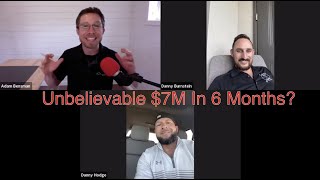
Former pro wakeboarder Danny Bernstein quit snowboarding after a career-ending spinal injury and moved into roofing sales. In six months he closed 123 contracts and hit $7M in sales, starting with months of cold canvassing and no commissions. He shares his closing tactics, daily routines, and what he looks for when hiring.
Chapters
All right. Hey, Danny. Danny. We got two. Danny's in the house. Danny Hodge. Danny Bernstein. Today we have an amazing story to share with you. A story about a gentleman who came from professional wakeboarding to roofing sales and sold an unbelievable $7 million in six months. Mic drop. I have nothing else to say. Interview done. No, I'm just kidding. Hey, guys. Welcome to the channel. I'm really glad to have you here.
Glad to be here. Glad to be here.
Thank you both for the time. Time is valuable and especially when you're earning and selling the kind of sales you're making. So we'll cut right to it. How did this whole thing come to be? Danny? HOJ Hodge. Sorry, Hodge. How did we end up on this call? I wanted to get the little backstory out of the way first.
Well, I guess first we talked a little bit on Facebook, jammed a little bit on Facebook about, about success stories. I, I seen your guy who had done, I think it was two. Two something million at 60 years old, first year in sales. And I thought, that's an awesome story. And I could relate to that because we, you know, we had similar stories. I'm not 60 yet. I'm, I'm getting there eventually. But, you know, just seeing those, those success stories, you know, you know, it, it resonated with me. And you know, my brother, he's, you know, I brought him down as a tow boater. He was, he was pushing coal up and down the river for, for years and had never done anything else. And it was my first stint in sales, and we seen an incredible opportunity. So I talked him into coming down and working underneath me and ended up becoming the number two guy in the nation in residential sales, I think at like 9.7, 9.8 million his first year. Approved.
Unreal.
So on paper, I think he was probably closer to 16 million.
That is, that is. I don't even know what to say. I mean, that is like beyond substantial numbers in life changing income. So I'm going to move to Danny Bernstein for a second. The professional wakeboarder. I want to hear the story, man. How did you end up here? Introduce yourself. How do you fall into roofing sales?
So I kind of just out of luck, went on. Indeed. When my wife said we were done with where we were living and she wanted to move back to her hometown of Naples. So we both started just looking on. Indeed. And I went into the first thing I found, which was roofing sales, and got it right in front of Danny's partner, Brandon. And yeah, that was, Was Amazing. It came two years after my injury that stopped me from riding.
So let's get into that. Injured. Two years ago, you were a professional wakeboarder. I'm assuming, following your passion and your dreams and injury shatters the whole thing. Tell us the story.
So, went out with a bunch of other riders. We went to Colorado or. Well, I was living out there. They came to see me, and we went snowboarding at Keystone. And just one weird fall. I caught my edge, and that was it. Felt my legs go numb and ended up doing a couple herniated discs, bulging disc, a listhesis, and I pinched the S1 nerve.
Gosh, no. I'll tell you, from a fellow back injury guy. I'm fused L4 to S1 and. And had nerve damage in the whole thing. And this was before they had the hardware. Actually, I shouldn't say that. I wasn't eligible for the hardware at the time. So I know the drill. It puts a different perspective on life. So as Bernstein, we're going to use last names today, and Hodge, share your story. Bernstein. Thank you. By the way, Hodge, you told me your story before we started recording. I thought I was struggling. I want to hear your story one more time.
Oh, you know, it's. It's been a journey, obviously, but, yeah, we. We were working. I was working construction right before the hurricane hit. I was actually doing a hardwood floor restoration, basically sanding it down. And my partner Brandon was actually helping me, and this hurricane was coming, and he's like, you know, we should. We should put some cleanup crews together and go down there. Like, you know, there'd be a lot of money, a lot of money to be able to be made. And also we could help a lot of people. And, you know, I was popping in my head. I'm like, you know, I know, you know, I have a friend that's, you know, in roofing, that's, you know, that's what these guys do.
They.
They go around and they chase these storms and, you know, they work. They work storm markets, and Florida would be an incredible market if, you know, that's something we might be able to do. And he's, you know, he's like, yeah, what kind of money? I'm like, I don't know. I was like, I know, I know. I've seen, you know, some. Some of these guys completely change their lives, you know, selling roofs. And so I was like, let's give him a call. And so we called Steve Sule up and. And. And talked to him, and he gave us some numbers and. And you know, he said, oh, you know, on the low end, maybe 300,000. He's like, but you could make a million dollars if, if you work hard. He's like, but green, not knowing anything. He's like, yeah, probably 300,000. So, yeah, that was obvious for me. Making, you know, 65, $70,000 a year, trying to take care of six kids was, was pretty enticing. So talked to the wife and, and she told me to go for it. And we packed up in our little two, 2007 Dodge Grand Caravan with thousand dollars between both of us, not knowing if we were going to have a place to stay, how we were going to eat. Thankfully, you know, Steve and Brian Jones had us a place to stay when we got down there. We did fish for our food at times and ate Roman noodles. Blew through tolls for a lot of months. And then my wife started getting all the tickets and, and raising nine kinds of hell with me over it. Yeah. But, yeah, so we embraced the struggle and you know, it took us about eight months before we got our first commission and, and, and life completely changed after that. But we worked our butts off and, and we seen the amazing opportunity we had in front of us. And I'll tell you, it was, it was an experience like we, we had, I had no sales background really, and we got thrown to the wolves basically, hey, here's some contracts. Figure out how to get them signed. And no training. We, we basically spent the first week selling absolutely nothing. Got on probably 60 roofs, no contracts. Frustrating for me. I, I remember the conversation very well. I, I told Brandon, I was like, look, I was like, the next home we go to, I am not leaving until we get a contract. I was like, they're going to have to kick us out. And I watched YouTube videos. I, every time we went to a door and I got an objection or if I was trying to close one and I got an objection, I wrote those objections down and I asked questions to senior sales reps, watched videos and, and we role played on the way, you know, between running leads. And I remember the first deal we signed and I can remember the very line I used to, to get this thing closed. The guy was, the guy was basically said, you know, hey, we need to think about it. And I just came back with, you know, yeah, well, usually when somebody tells me they need to think about it, they're either, you know, they're interested or they're not interested at all, you know, or which one are you? And the guy's like, well, we're Interested. We just need some time to think about it. And I'm like, okay, this gives me an opportunity to re. Engage with them and see what the issue is. So, you know, I asked him the question, hey, do you feel comfortable with me? Do you feel comfortable with the company? Yeah, we think you guys will do a good job. We looked you up. You guys are reputable. Well, let me ask you this. Nobody likes to talk about it. Is that deductible keeping you from making that decision? And they came right back with, yeah, that's really going to put us out. Well, you know, we have this wonderful program, the referral program, and that's how we can help you. And if I could help you, if you could give me a few names right now and I could. I could knock X amount off. Could we go ahead and get this thing going? And the guy's like, absolutely. He said, if you put that on paper, we'll sign it. So the guy signed it. And I felt like I got this figured out now. Like, we're gonna rock and roll. And after that, it was. It was on. We. We started tearing it up, signing, you know, three, six, eight deals in a day. Like, it just snowballed from there.
That's wild. Thank you for sharing that. I want to highlight a few points for folks who are listening, because all this goes so fast. You use the word, how do you feel? About which I love everyone in sales, not what do you think? Never ask what people think. You always ask how they feel about something. Do you feel comfortable with me? That was golden. I also love how you use the if then close. You said, hey, if we can do this, then would you choose us? He says, yes. And you also did the. So I wrote a note down, and I can't even read my own handwriting. You per. There it is. You purposefully drew out the objections that you knew would come. So many new salespeople, they sit back and they're like, don't.
Don't bring it up.
I hope it doesn't come up.
Oh, man, it came up.
And it's avoiding. And instead it's like you just want to get in there and go after. Just like, pull it out quick. Be like, let's get this over with. I know you're going to. You're thinking this. Can we just get this out of the way? And I love that both of you are nodding your head saying yes. And the last thing I'm going to say, because this interview is about you. I'm just trying to summarize these key points. For folks as they integrate this information so everyone listening can learn from your wisdom. This is a true rags to riches story for both of you. No one comes into roofing sales from a good place. Okay? No one. Everyone finds this broke, starving out of prison, turning their lives around. Addict in recovery, needing to make a financial change after following a passion at failing after. You know, Bernstein, you're not the only one that had an injury and said, I can't do what I was doing. And coming in here. And this is truly inspirational. I don't even know where to start. Bernstein, can I bring it back to you? 7 million in six months. I mean, I've never done that. You're the first person that I'm in conversation with that's had, that's done 7 million in six months independently.
Maybe on paper, some of those jobs have capped out at this point.
Some of them are going, yeah, just wild. So is that how. What percent residential. Everyone in here is thinking, how in the world did you do it? They're going to want the details. That's what I'd love to get into. And I do want to come back because I know, speaking of objections, that Hodge, when you mentioned, you know, 300,000 earning for first year, I'll tell you from experience working with thousands of individual sales reps in communicating with these people, I often hear everyone's lured in with those. And very few people even make it to the six figure mark. That's changing. And that's my mission of this channel. So listening or watching, we're going to get back to that claim and how it's possible. Because every company pays differently. It's easier in some markets than others. We're going to get there. But for right now, Bernstein, what percent residential? What percent commercial?
So I maybe have five jobs that are commercial.
That's still five commercial jobs.
Yeah. Of those, um, most of them are tile jobs. Um, I did quick numbers before I knew I like right when I knew I was on this call 30 minutes prior to, um, and that was. I did 123 contracts in six and a half months. Um, and that was during Hurricane Irma. I also assisted with another team and did 50 contracts with them during that time. And then post irma, I've done 49 contracts.
Wow, man. Those must have been some pretty sizable claims when I'm looking down at a big number like 7 million. And just. And everyone that watches this channel knows that I'm horrible at math, so I'm not even going to try to do it.
Florida market, baby.
Yeah. So for those who are listening and being like that's unreal. I do. And this is not to pull away from the massive victory. Cause that's what it's really about. But as people often do this, it's a problem, the comparing ourselves to others. So I want to just explain some things. We had a hurricane. We got O and P. We got tile roofs. We have great numbers in Florida. All right. Now that doesn't take away the fact that even if that claim value dropped in half, even if it dropped 75%, those are still amazing numbers in a six month period. And that you just can't take away. So Danny, or excuse me, Bernstein, like Hodge. Hodge said he went eight months before that commission, the first sale, which for so many people, it's like I always do this little analogy. It's like trying to push a concrete ball uphill and we struggle until it gets to that top. And then as high Hodge mentioned, you break through and then it's just like the momentum just carries. So Hodge told his story coming up to the tipping point, so to speak. How did yours happen? Or did you even have that struggle out of the gate?
So I got kind of lucky. I was hired two months before COVID really hit everyone. Florida really kind of stayed mellow with COVID But because of it, my wife had a job. She has been in the car industry for years. She was a manager at Dodge, Jeep Chrysler here. So we had a good backing. They were the ones who convinced us to move back to Florida from Colorado. So that was kind of our motivation. And then when I got the job, it was okay, go, go, go. And about two months into the job, my wife lost hers.
Good things, didn't need it back.
You know, it's a great thing. She ended up coming on to CMR and helping us with other files, but made it so that it was an easy transition for me to go into this and start selling immediately. And I was out there, as Danny would say. I was waking up at about 4 or 5am doing emails to old customers that just never signed with another rep, reaching out to anyone and everyone that I could Facebook, Instagram. I was trying everything and anything because I was new and I had no clue what to do, how to build that pipeline. I had no idea. And I'm pretty sure Danny just got annoyed with me at one point because I was calling him four or five times a day saying, hey, look, what do I do here? This is the objective I got. How do I overcome this? What's the next step? I was always Asking and I'm pretty sure Brandon will say the same thing. I was calling them constantly.
Unreal. So Hodge, you brought Bernstein in to the game. I call it a game, by the way, because I think it's personal. It's the personal development game. I just want to clarify for listeners, when I say game, I don't mean taking advantage of or winning. I mean roofing sales is a game of personal development and service. To win business, to earn business, serve people and obviously be rewarded with a very healthy income. So you brought Bernstein into the game. Two questions for you. One, what did. Let's just, I'll just go him in order. First thing. What did you see in him that made you say he's, he's a good.
Fit personality, Had a great personality work ethic above all. The guy was, you know, I, I compared him right off the, the rip to, to my brother just seeing his eagerness to, to want to go out and crush it. Like he, he had lofty goals from the very beginning. He didn't, he didn't want to settle at just making money. It was, it was even competition like he wanted to be, he wants to be the best. And that was his probably his pro wakeboarding, you know, coming out in him. He thrives in competition. So I love that about him right off, right off the bat. And I enjoyed getting the five, six, seven calls a day because I knew the questions I answered, I wasn't going to have to answer them twice with them. He just, he was a sponge and he absorbed everything.
Awesome. Thanks for sharing that. So personality, work ethic, thrives in competition. And did you, did you predict that his results and success would be what it is in the first six months.
You know, out of all of the guys, I think, you know, because I've been wrong about several guys, Wyatt being one. I'll, I'll get back to that one at some point. But no, Danny pretty much performed exactly like I thought he would. And I only wish we would have got him at the beginning of Irma because I think he would have, he would have produced some, probably some record breaking numbers.
Yeah, well, that's pretty, pretty, pretty wild. I just, again, insane results for someone brand new. I want to go back to Bernstein for a minute. You had mentioned waking up at 4 in the morning, Hodge, you talked about the work ethic being truly relentless. But also, which is funny because I just filmed a video on this, the daily schedule. Bernstein, can you share how you structured your day in order to produce that kind of sales numbers?
So during Irmaa I was waking up at 4:00am and until about 8:30, 9:00', clock, I was sending emails to any old customer I could find in the system that told the sales rep, hey, give me some time or I'm not interested. I reached out to everyone.
So you tapped into the old pipeline?
Yep. I did not care if the client wrote an email to us saying, hey, don't ever call me again. I still sent them an email. I reached out to everyone I could and I was asking for referrals. In my emails, I was saying, hey, if you know anyone, we have this great referral program. I was trying to tap into every form of interest that a homeowner could have if it was their roof, their neighbor's roof, their kids room. I was trying to get anything and everything I could. And then I would go out on inspections until about 5 o', clock, 6 o'.
Clock.
And I schedule day, every day. Okay. If I'm working Tampa today, all my inspections were set for Tampa that day, and then Fort Myers and Naples. And I still follow that schedule. I wake up at 4am now it's more emailing customers back and to get new customers, but I still keep that. And the days I go out with my team and inspect and help them, it's the same thing. It's okay. This is where we're going today. This is where we're knocking doors. I plan on being out there from 10:00am until 5:00 clock at night and then I'm driving back answering calls.
Wow. So structure beyond belief. And Hodge, I want to come back to you with a question on this too, but Bernstein, real quick, do you plan your days the night before or the morning of?
So I try to plan my week on Sundays even better. And end of Sunday, around 5 o', clock, I do my team schedule with the canvassers that we work with. So I pair them all off and then I go through all of my jobs or I try to get as many as I can done and then I reach out to the customers that I need to, to get my week done. And I said all out that day or that night. And then that's what I stick to for the week. There is no changing it.
Man, that is absolutely awesome. So I have one more question for you about Hodge. What was the number one most helpful piece of advice that you got from Hodge, who brought you into the industry?
The biggest piece of advice was to go out and just keep going. Don't take no for an answer. The hardest thing for me the first couple weeks was Understanding that the homeowner is going to say no. And you have to rebuttal, you have to come back, you have to keep them engaged. I'm someone, I love cars. So if I see a nice car in the driveway or they have something that I'm interested in, I will start talking to them about that before. Before ever even bringing up the roof or anything else. I always try to connect on a personal level with the homeowners. And that's something that Danny pretty much engraved in me from day one was relate to the homeowner.
I couldn't agree more. Danny Hodge. I absolutely love it, man. That's like the number one thing to do. People buy from people. And I've had the opportunity to be in sales appointments with lots of people all over the place. And it's like the biggest mistake. People just jumping straight into business, especially on set leads from a canvasser, an inbound lead. Cause those are often the ones that I'll be going out on just cause time limitations. And it's wild seeing a rep just go right in like, okay, well you're. You so and so set this.
We're here at 5 o'. Clock. We're gonna.
I'm like, whoa, whoa, whoa, whoa. Pump the brakes.
Yeah.
So Hodge, what's one piece of advice people are sick of hearing from me? What's your advice on like tactical strategies that someone can use to build that rapport and connect with the homeowner?
I think obviously finding common ground, something that you both have interest in, and I've always been able to do that with people relatively easy is find something they're interested in and let them talk. Cause that's, that's just what they want to do. They, they want someone to listen to them. And, and I love hearing their stories. Like I enjoy it and you know, at the same time I get to tell them about myself and, and my family and you know, and that was, that was always something I could connect with people is, you know, family. So I like that a lot. That would be the. Probably my biggest advice is just can connecting with the customer is the most important thing. I told my brother, he was, he went from being the worst sales rep to the. Like I said, the number two. The number two guy in the nation in residential sales. He, he, he got an award at Winter Storm conference a couple of years ago in Vegas. And that's the one thing I told him. I was like, stop trying to sell them. I was like, connect with them. I was like, the reason that you're going to Be good at this is because people genuinely, you know, they like you. So get them to like you. If they like you, they will buy from you. After I said that to him and he stopped putting so much pressure on himself, he was crushing it. It was. He had one guy that probably accounted for 200 of his deals.
Wow.
Just from referrals.
That's insane. That's a well connected human being. That's like a number that's hard to fathom. Just crazy, man. Just crazy. So when you had mentioned like building rapport and connecting with people, I always think that the first step of selling is to stop trying to sell something, but it's really hard. Like, I've never, I don't think I've ever said that on the, on this podcast or this YouTube channel ever out loud. Because when we try to sell something to someone, they feel like they're at target and we're just trying to reach in their pocket, get their wallet out. Versus the mindset I've taken, and I'm curious, I would love to know if you guys agree with this or disagree with this, is I know that I'm their best option and I know that I am the expert to guide them through this process. And I know that in my heart of hearts, their best interest is top priority. And I know that no matter what, I'm going to take care of them. So when I can answer their questions and facilitate this process towards what I believe to be is truly their best interest, I become more of a guide to help them realize what they already know they want. And I just so happen to be the one standing there as opposed to attempting to sell something. Does that resonate with either of you, by the way? I offer disagreements. If you think that's a bunch of hooky, call me out.
No, I 100% agree. I think, you know, educating the customer is, you know, the, the most important thing because they don't know what they don't know and they're. You're giving them every bit of the information they need to make the decision and you are the guy to help them. And, you know, and I've always felt the same way. I felt like we have, we have, you know, great systems, we have, you know, great procedures and we build, we build good roofs.
Yeah. Just a rich conversation of so many gems that I hope people are writing down. And you can find all these in the far snapshot. There'll be a link in the video description if you're not already getting that. So the other question, back to Danny Bernstein. So many people believe that their ability to sell is their ceiling. I've always believed that your ability to manage your time is the true ceiling rather than your ability to sell. Agree or disagree?
I am just learning that right now I've got close to 60 jobs that me and my wife are working on to get completed now that they've been approved. And it's definitely forming more towards the. You've got to prioritize your time over. You have to sell.
Yeah.
Once you get a pipeline, that pipeline never stops. I still get calls every week, hey, my neighbor or, hey, your friend gave me this number, and now I'm calling you. I really don't know why I get everything still. I'm still running about three to four jobs every week that I'm going out, inspecting and signing.
Yeah. Just crazy. That's so wild. And it is true. The one thing I will push back on gently and respectfully, is that a pipeline can dry out when you're not continually proactive. For you, it hasn't because of your work ethic and the relentless filling of the pipeline. But so many people fall into that trap of. And by the way, I've done this too, where you sell, sell, sell, and then you process, process, process, and then you get paid, and then you're like, oh, I can just kind of lay off the gas. And then you go, oh, boy, now you got to fill the pipeline up again. And that little dip is a scary spot. I call it the sales slump. So everyone listening. This pipeline is not automatic. Bernstein has a relentless pursuit to keep it full. But as long as you do keep it full and you work the neighborhoods of your customers, you're going to keep it full.
If you ask, and sorry to barge in if you go ahead. On my team or my wife, I do not do well with not competing with my own team. I've got guys on my team that are doing seven, eight a week, and you'll see me sitting at home doing emails going, okay, I have to go out. I have to get four this week. Like, I cannot be at the bottom. I have to be showing them that I can still sell, and I stick to that.
That's awesome.
I don't like not selling.
Yeah. Way cool. Hey, as we come up on our time, I would love Danny Hodge. I'm going to pull it back to you for a minute. As a leader in a team lead, what advice would you have for people, sales managers or owners looking to hire? Because this is, as we all know, a very challenging thing for people is finding and Spotting talent. What advice would you have that you've learned with real world experience of targeting the right people and spotting the right talent out of the gate?
Oh, boy, that's a tough one. I mean, because we've, you know, we've had our share of mistakes. I mean, you obviously gotta look and see how hungry someone is. I mean, for me, a majority of our guys are Midwestern. So I know that they came from similar, you know, backgrounds as we came from. And I think that when they see the kind of opportunity that we have and what we've accomplished and how it's changed our lives, those type of people that are, you know, from the same backgrounds tend to do a lot better than Floridians. Most of the Floridians we hired didn't do very well, but a lot of the Midwesterns, it seems like that's, that's where we had our best luck. But I mean, you can, you can usually tell right off the bat if, if they've got a strong work, work ethic, if they're well spoken, you know, if those two things are there, generally, if you guide them and give them the keys to success, they're going to be, you know, they're going to do well. But you got to have a good culture with your team as well.
Yeah, yeah, I agree with all of this. I'm a Midwesterner myself, by the way. Maybe that's why we get along so splendidly.
Where are you from?
Born and raised, Chicago. And then I bounced around. I went to college out here in Colorado, lived in New Mexico for a bit, ended up back in Wisconsin where I met my wife before moving back out to Colorado. So, yeah, born and raised there. And my wife's also a Midwesterner, born and raised, Wisconsin. And what's funny, I actually haven't even shared this story publicly. The reason I moved back to Wisconsin was on this crazy premonition, laying in bed in New Mexico, broke, miserable and unhappy. My roommate just broke my lease, our lease, six weeks after we just moved in. And I couldn't afford to stay there. And I just said, I'm paying the cancellation. I need to find myself I a good Midwestern woman to marry. And I visualized exactly who that woman was. I moved to Wisconsin. Four months later, we meet eight months later, a year later, I forget we were engaged. So anyway, Hodge, when you mentioned the Midwest thing, I get it, man, I get it. So one thing I look for, because you mentioned spotting talent and work ethic, which is hard. I've been lied to. Deceived and sold more times than I wish to admit by being wrong on reading people. And it's funny because in sales you're like, we're really good at reading people. So I look for these talents. Hustler, thick skinned, persuasive, persistent and confident. Those to me are the five make or break. And I like to just ask people stories. Tell me about a time when you, whatever it is. And the reason I like them to tell me stories is there. It cuts through the BS when people are going, in their memory they're telling the truth versus like, hey Danny, how would you handle a situation where you had to work really hard to get something you wanted? It's like, you know the right answer. You, you guys are smart guys. So how, how do you, Hodge, how do you spot talent when you said, excuse me, work ethic in an interview?
I obviously, what type of work they do, stuff like that. Those are the kind of things I'm looking at. You know, what's their background? You know, construction worker. Generally if you work construction, those guys have had to work their butt off if they, you know, depending on what they were doing and if they're a piece of equipment all day, it's still hard work. But at the same time that doesn't mean that they're not going to be a good sales rep. But like how many hours were they working a week? Yeah, those types of things. Like, you know, the guys that were working 70, 80 hours a week, you know, and working overtime and wanting to work overtime because they had to take care of their families.
Yeah.
So, you know, I think that's different maker, difference maker. You know, the guys that are willing to put in the time.
Yeah. And it's wild when you mentioned willing to put in the time. This is a very contrasting interview that I did with a gentleman named Mitch. Mitch earned a very, very, very healthy income on his first year. And he worked a strict 10 to six schedule. And everybody's values, priorities, time is different. Right. So Bernstein, you mentioned basically, you know, eyes open to at 4:00am till 10:00 clock at night. These are crazy amounts of hours that many people could burn out from. And people need to make that choice of Brian Tracy says it and I'm sure others do that whatever we want, we have to be willing to pay the price. And for some people, if it is worth it for you and that target and the competition, the drive and the income, you're willing to pay the price on the time. This industry is unlike anything else. And at the same time, you can still do incredibly well and provide for your family if you're not willing to pay that price. And instead you say, hey, this is what's important to me. I'm working this set schedule. And the fun part is there's no wrong answer. And that's what I love about this industry. If that's what you want to create and you can perform, do it. You know, and if you're. If you're like Bernstein, who's a professional wakeboarder and must be on the podium, like. And that is your drive. And look at, man, your smile. That's the other thing. Every top sales rep I interview, every top performer, they all are smiling. They have intoxicating and contagious energy. Enjoy. And I love that. And maybe it's because you're interacting with people all day. Maybe it's because we're earning a good income. Maybe it's because we enjoy what we do. Maybe it's a combination of all the above. But, Bernstein, to wrap it up, what advice would you give yourself, starting six months ago that you know now that could help you do even more if you had that advice when you first got started?
I wish I asked the homeowners more questions. Honestly, the biggest thing now that I've learned is I'll go to a homeowner and I'll even tell them, hey, look, I'm here to answer your questions. What other questions do you have? I always know you can sit there with a homeowner for 20 minutes and talk to them and go over everything, and they're going to tell you they don't have any more questions. And if you throw that at them, they will list off five or six more things, and you build, honestly, a great relationship with the homeowner doing it. And, you know, you've got a solid contract moving forward. Homeowners that I didn't do that with are the homeowners that I've realized that you have to work harder at later on. You have to keep up with them because you're still answering those questions.
Yeah, it's a simple model, isn't it? Like, get to know more questions. And you just won the business. If questions are still present, you will not win the business. And if you do, it will quickly be canceled or there'll be a nightmare or they back out, which I guess is canceling or flipping to someone else. Yeah, that's funny. That's what I teach in the closing strategy. Always pausing. Hey, Mr. Homeowners. All this makes sense. What questions do you have for me? Getting there. Never ask for the business. By the way, Bernstein, last. I've said last thing, like, for the last 10 minutes. We're going to wrap this up here in a minute, I promise. If a homeowner still has questions, can you ask for the agreement?
Yes, you can. You can present it to them and then ask again, what other questions do you have? Get it in front of them, let them look at it and continue to ask what else is there? At some point, they're going to tell you there's nothing more. And that's when you close them. You say, all right, here you go. Here is where you need to sign. Let's get this going.
The perfect close and the perfect close to close on Danny Hodge, Danny Bernstein, thank you both for being here. This was awesome. It fired me up. I very much appreciate you guys sharing the journey with me. And I cannot wait to hear what the next six months brings for both of you.
Thank you.









