ETHICS OBJECTION? Selling Hail Damaged Roofs That Are NOT Leaking? NOT Badly Damaged? Seems Fine?
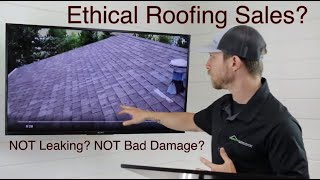
Adam Bensman explains why insurance covers hail damage to roofs that aren't leaking yet. Hail knocks off protective granules, exposing shingles to UV damage and shortening their lifespan. Roof replacement costs $15k–$20k, and homeowners have a limited claims window, usually around 12 months.
Questions this video answers
August 30, 2021.
$15,000 to $20,000.
5% to 7% (per year or during COVID periods).
20 to 30 years.
Varies from about 6 months up to 2 years, generally about 12 months.
Chapters
A question you might be thinking, why replace hail damage roofs if it really doesn't seem like there's anything wrong with it or if it's not leaking? And I hear this a lot from both new sales reps, seasoned sales reps who have these ethical issues, feeling like they're selling roofs that don't need to be replaced, and also from homeowners. This is a common objection. Why should I replace my roof if it's not leaking? So in this video I'm going to break down the reasons that insurance covers hail damage roofs, even if they're minor. And yes, this applies to the monster hail that you see in Texas. And maybe in those fringe areas you're only getting 1 inch hail, or in the northern markets you're working 1 inch hail that might only damage 10 year old roofs or older. But if there's just a little bit of hail damage, why should you replace the roof? And most importantly, what can you say to your homeowners? So they say, I get it. I really feel like I should take action and get this claim filed to get my roof replaced. Well, that's exactly what I'll be covering in today's video. So the next time you you face this question, why replace the hill damage roofs if they're not leaking? Again, whether it's from a customer or an ethical concern of yours, you have all the facts, you can communicate it clearly. But most importantly, you can win the business by providing education and service to your customers. So, hey, right before we jump in, welcome back and if you're new here, my name is Adam Bensman, the roof strategist and everything I do here on this YouTube channel and in the podcast is designed to help you smash your income goal in roofing sales. And speaking of smashing your income goals, if you haven't already done it, I have a free offer for you. Head on over to www.theroofstrategist.com right now there's a link in the podcast and video description and I'm going to send you a free copy of my pitch. Like a pro roofing sales training video library, I have tons of material. Where do you start? Well, this is like a starter pack. You enter your name and email address, I'll send you a copy. We update this bi weekly. You'll be able to pop in and get started wherever you want. Canvassing object roofing sales basics, you name it, it's in there. And this page has tons of testimonials of what real world people are saying about using these strategies in the field. So if you haven't already done it, head over to the roofstrategist.com right now to get a free copy of my pitch like a pro roofing sales training video library. Now let's head back to today's video. Why replace hail damage roofs if they are not leaking and there are no issues? I'm going to turn our attention to a YouTube video I put out in the past. And this was with this is a true to life hail damage roof inspection with subscriber ke we were up in Wyoming and I want to show you this. So in this video which I have muted in the background, you'll see this roof is obliterated. The ridge cap is destroyed. We've got, you know, just, you don't even need to get on this roof to see it is absolutely smoked. But not every roof is going to look like this one. So what do you do when you see some minor hail damage that isn't quite as severe and a homeowner says, oh, you know what, I just don't quite get it. The hail damage looks small. You know, I really don't have problems. My roof isn't. Linking is where things get fun. Let's talk first and foremost, why roofs are replaced by insurance. So why insurance covers it. Okay, Insurance covers your roof. There are a few reasons that are very, very important. Number one, the roof is literally the most expensive maintenance item on the home. Now, when I say most expensive, I am talking 15 to $20,000 for a roof and it depends on the market. So most expensive maintenance items. Okay, now here's the interesting thing. Not only is it the most expensive maintenance item, but we are seeing price increases, both material and labor in the 5 to 7% either per year or through Covid. We saw this quarterly. Which means what? It means that the cost of roofing compounds. So this goes up 5% per year or per quarter. And this compounds. So a roof today, let's say it's $15,000. In 10 years that price could double. And that means that roof instead of 15,000 is going to cost someone $30,000. So if you had spent just for grins, $15,000. Remember, this is maintenance on your home. People don't get excited to say, boy, I can't wait to replace my roof right now. Occasionally, if they're doing cosmetic upgrades, this might be the case. But ultimately, this is an expensive proposition. $15,000 maintenance item. We expect what we expect it to last 20 to 30 years. Okay, now I know in hail markets they may not, but this is what we want out of that roof 20 to 30 years. Realistically, and I know some of you well, we don't get, you know, average roof, seven years here, average roof here. I know that every climate in the US is different on the sun, the temperature swings, but let's just say we're spending 15 grand for 20, 30 years, which is no different than if you bought a car and you expect it to run for 200,000 miles. If you're that person that runs cars or vehicles to ground, or if you're someone who spent 15 grand on a heating and air conditioning system and you want it to last 30 years, you would expect it to last 30 years. Well, here's what happens when it hails. The lifespan of the roof is compromised. Okay, Lifespan is compromised. Now, no one can say for certain what that means, but it means that Instead of this 20 to 30 years, we're not going to get that. We might only end up getting, let's say, 15 years, 20 years, or worst case, maybe even seven or 10 years, depending on how bad it is. And why is that? Well, here's the truth. When hail strikes that roof, whether it's covered by insurance, here are the facts. The manufacturer's warranty is now void and the lifespan is shortened. So even if there's no active problems, this $15,000 investment is now going to last less time, which is no different than buying a brand new vehicle and then you drive it off the lot and they're like, yeah, there were some issues with that one. We only get like 75,000 miles out of that engine instead of the 200 you predicted. But it's cool. You can spend another 50 grand on a truck, you know, 10 years sooner than you expected, you'd be like, what? You'd be irate. So if we realize that it's the most expensive item it compounds, which means almost every 10 years, the price is going to double, by the way. Check my math. You know, I'm horrible at math, but that compound of 5 to 7% per year, per quarter, I don't know what that averages out to, but that price continues to go up and up and up and that the lifespan is shortened. So what we expected to last 20 years is going to last less. That's why insurance covers it. Number three, it's much cheaper to replace a roof before there are problems rather than waiting until after there are problems. And guess what? Insurance companies are in the business of saving money. They, as we very well know, they do not want to pay more than they need to. So it is cheaper to replace now. All right? For a variety of reasons. Everything in the insurance world is based on financial data. So if they know that, there could be a problem because the lifespan is compromised. So let's just say that the roof is struck with hail and it doesn't develop problems now, well, what happens if three years down the road, it does now? There's interior damage, right? Or if something else happens, it becomes more expensive and that price goes up. So they want to get this taken care of right now as opposed to waiting. It's actually in the insurance company's best interest to get this stuff covered before the problems evolve. So a couple things here I want to touch on. I want to bring my attention back to the lifespan being compromised. And I'm sure many of you are saying, well, how is that? Why is that? Here's why. When hail strikes a shingle, and I always use my hand, you know, like that steak check. You know, firm hand is well done. Loose hand is medium. Really loose is medium rare. That's like the feeling. You poke this spot on your hand, it's like the steak test. All right, so think of your shingle. Your shingle has some. The asphalt shingle on the roof has some give to it. So when hail strikes that, just like a peach, it's going to bruise and it's going to drive those asphalt granules into the. Into the shingle. When temperature swings happen from the northern markets, the freeze thaw cycle from the southern markets, you're going to get. You're gonna get still some temperature swing less extreme, but you will have rain, snow, moisture. So all these granules that are driven in are now loosened up. And then as we get this precipitation, as we get the freeze thaw, those granules begin to shed away and come out the downspouts. So what happens is that asphalt shingle is now exposed to the UV rays of the sun and will begin to dry the shingle out. And it's really not protected. It's its shield, right? So that shield is gone. And what I've seen happen is, and this is the true story, I had one of our reps get up on a roof right after a storm in our own backyard. And he did the ethical thing, supposedly turned out not to be sells to the homeowner. Ma', am, good news. Your roof is fine. You have nothing to worry about. Three months later, I get a phone call in the office, and they say, adam, your company was out here three months ago. You said my roof was fine. I just had a roofing company out. They did an inspection, said it was totaled, and my insurance company is replacing my roof. You guys don't know what you're doing. And then she hung up on me. And here's what happened. The rep that was out there didn't see any hail damage. It was a day after the storm. Three months later. We had rain, crazy rain, big temperature swings, because it was really early in the. In the summer. So we were getting those cold mornings, really hot afternoons. So after even just a few months, those granules had shed, making the hail damage far more evident. So even if you get a claim denied now, and let's say the storm happened, you know, right up into the fall, in the spring, it may end up getting approved because that hail damage is more evident. So what happens if people are shortsighted and say, well, I don't have issues now. They must be comfortable spending this extra money down the road. So I asked these questions, and I explained to the homeowner these three points. Remember, Mr. Homeowner, this is the most expensive maintenance item on your home period. You expect it to last 20 to 30 years. Facts are the lifespan's been compromised, even though this isn't substantial damage. And I recognize there's no issues today right now. But the problem isn't right now. It's what happens down the road. And your window of opportunity to get the claim filed and to get this work done is in a set time period, which by the way, varies by state from anywhere from six months. Generally for hail, usually it's 12 months, and in some areas it's out to two years, but generally is about 12 months, some policies at six months. So this says you have this window of opportunity to do something about it. And if you don't, your manufacturer's warranty is compromised, the lifespan of your roof is shortened, and the price of roofing literally compounds, meaning that money put in the stock market is going to grow and grow and grow. This would be better spent in your retirement than on a roof. So if you are comfortable, instead of taking action today and seeing if your insurance will cover the roof at the expense of just your deductible, you need to be comfortable spending 20, $30,000 on your roof down the road. And if that's a choice you wish to make, that is on you. It's not how I would make the choice, but that is entirely up to you. And remember, the insurance company covers this because they're protecting the most expensive maintenance item on your home. They respect the fact that the lifespan has been compromised, and they recognize that they don't want to have issues down the road. And the catch is they give you this short window. Why? So they don't have to pay later. Because if you end up with an issue at 13 months down the road or two years down the road, the insurance company looks back, they say, sorry, you know, you had that window of opportunity to do something and you didn't. And we can't cover this loss because your window of opportunity or the statute of limitations on when you can file that claim has expired. So that is why we replace roofs that have hill damage, even if it is minor. So if you have ever had an ethical concern or a question about replacing roofs or selling people on roofs in marginal hail areas, the reality is we are doing a huge service in providing incredible value in educating homeowners where other people aren't willing to, and the insurance company sure isn't going to because they don't want to pay for this. So it's our job to recognize this on our customer's home, bring it to their attention, save them thousands of dollars, get them into a new roof with a new manufacturer's warranty, protected by your labor warranty, or maybe even new curb appeal. Fix any issues that were that you may have noticed on the roof, like failing pipe jacks or you know, dead end valleys, valleys that weren't installed, failing ridge cap, maybe cutting in ridge vent, give them a better system and keep them protected down for the long run. And best of all, even with some of these insurance companies changing their policies now with their new roof, they can be fully protected from the get go. Because the lifespan of a roof on certain policies, like In Florida, after 10 years can go to an actual cash value policy, which means the roof replacement costs are not covered. It's only what it's worth today, which is a fraction of the percent. So at the end of the day, marginal hail damage is our, in my opinion, ethical responsibility to bring up to a homeowner, educate them on their options and let them make the choice. So next time you face a marginal hail damage issue, or if you find hail damage but the homeowner is not experiencing any leaks or areas of concerns, you have three simple ways to explain what hail damage is. Meaning strikes the shingle and exposes it to the UV rays, why it's covered by the insurance, because it's the most expensive maintenance item on the home and it's cheaper to replace than later. And why homeowners just like them do something about it, which is this combination to get fully protected, to get the new roof to get the manufacturer's warranty, to get the labor warranty, to make sure they're fully protected under their homeowners insurance. So you are armed to tackle this both objection and ethical issue in the field. Thank you for joining me in today's video. And if just because our time here is about to wrap up doesn't mean you're in, my time has to. So if you haven't already done it, you can click this link right here to get a free copy of the pitch like a Pro roofing sales training video library. Or click this link to hop into that video inspection I showed you with subscriber Keith. We'll see you in the next one.









