EXPOSED! Behind The Curtains of Private Equity in The Roofing Industry
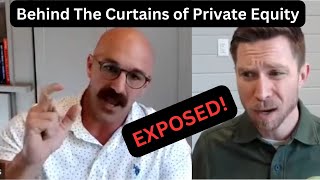
This is a recorded conversation (YouTube) between Adam Bensman and roofer/executive Josh Sparks about private equity's rapid entry into the roofing industry. Sparks tells his origin story (started roofing in 1997, scaled Infinity Exteriors to about $40M revenue), describes partnering with North Branch Capital (Sept 8, 2021) and later moving to a larger PE partner to accelerate growth. The discussion explains why PE is attracted to roofing (fragmentation, steady demand), contrasts ethical vs. unethical PE strategies (long-term value creation vs. cost-cutting, over-leverage, bait-and-switch/retrading), and outlines typical deal structures: cash-free/debt-free acquisitions, partial rollbacks/reinvestment so founders retain upside, and common valuation rough guides (speaker cites 4–6x EBITDA as a typical multiple and notes ~$11T total PE with ~$3T dry powder and an estimated ~50,000 active roofing contractors). Sparks and Bensman give practical advice for owners: ask pointed questions about a PE firm's strategy, centralization plans, corporate team, committed capital, and post-close autonomy; prefer cash buyers and avoid seller financing. IHS emphasizes retaining founders as operating partners, offering centralized resources (HR, marketing, recruiting) and shared equity across the platform.
Questions this video answers
1997
September 8, 2021
About $40 million
About $120 million; achieved in roughly eight months (vs. planned five years) per speaker.
Speaker cites about $11 trillion in private equity with roughly $3 trillion in dry powder.
Chapters
Josh, thanks for joining me today as we get into slime or saints private equity in the roofing space. How you doing, Josh?
Not too bad, not too bad. How about yourself, Adam?
I'm doing well. I'm really excited to have you here. I'm gonna, I'm not gonna get into how we met quite yet and our introduction and how we got to know each other. I want to just introduce why we're talking today. Private equity has. Is no secret. If you own a roofing company, you've probably received at least one a week at this point, is what we're hearing. I know it might not be a week, but we're getting a ton of inquiry and injection and private equity money buying up roofing companies and there's resistance to sell. There's. We're, we're curious. Are these good companies, are these bad companies? Am I going to maintain ownership? Am I going to maintain my own right to make decisions and run my business? Am I getting bought out? So the purpose of this interview is to bring in Josh Sparks, who is, in my opinion, one of the leading experts and with a very proven track record in the private equity space, to share your story, Josh, with, with us and demystify this whole world of private equity. So thank you again for being here. Let's kick things off and can you just share with, with, with, with me your, like, brief story of who you are, how you got into this roofing business? From flipping. Wasn't it flipping burgers or something? Yeah, yeah, you bucks an hour and then to, to what you're doing today, and then I'll let you introduce you and your group.
Well, thanks, Adam. I appreciate it. I wouldn't say. Let me lead off by saying, I wouldn't say that. I am the expert in all things private equity. I'm a roofer through and through a little background myself. I grew up in the Bay Area, Oakland, California, San Jose, Vallejo area. Had kind of a tough childhood. You know, my mom was addicted to heroin. She actually went to prison when I was 10 years old. Didn't really know my dad very well. I ended up moving around a lot as a kid. In fact, I went to. Went to 17 different schools, eventually ended up in Milwaukee and like you said, flipping burgers at McDonald's. And a friend of mine offered me a job roofing. You know, I had no idea roofing was all about. But, you know, I was making four bucks an hour and he told me I was going to make nine cash. And I said, there's no way people make Nine bucks an hour like this is insane. I actually secretly thought to myself, I might retire as a millionaire. I'm like, my God, I'll make a lot of money here. But I found out day one exactly why I make nine bucks an hour roofing. It's incredibly hard work on your body, you know, but anybody, any of the roofers listen and know that. But I was a young strapping kid, so, you know, it didn't bother me too much. In fact, you know, after a couple weeks, I actually began to fall in love with it. I, I love working my hands, I love getting up early, being outside. So over the course of that summer, I learned everything I possibly could about the roofing business. And being an ambitious young man, I decided to start my own company. So I went down to Kinkos and I printed out some flyers. I handed those flyers out in my neighborhood. One single human being found my ad compelling enough, as awful as they were, called me. I sold that roof. And thus began Infinity Exteriors. This is back back in 1997. Now, I was young and dumb and had no idea what I was doing. So the next five years were quite full of adventure. Started with a three month stint in college. Took me that long to realize I didn't want to be an engineer. I ended up joining the Marine Corps as a reservist. I did basic training and weapons company in Camp Pendleton and then headed back to Milwaukee to serve my reserve duty. And that's where I picked up a job subcontracting as a roofer. And you know, I love my life. It was going. Things were going great until 2005 and until I met a very sweet old lady named Betty. I found out. I won't tell the whole story, but I found out after doing this through for her that I was working for a predatory contractor. I was a sub. I didn't realize it. This contractor absolutely ripped off this, this elderly lady. She was in her 80s, her husband was a Marines. We had a lot of good conversations and it just bothered me. And I, I told my. I called my wife that day and I said this. I'm not doing this anymore. I quit that job and I put every single penny that I had into a full page, yellow page ad. And that was 2005. That was the first year I did a million dollars in revenue over the course of the next 15 years, with the help of a lot of great people, you know, some innovative technology, good strength of strong branding and marketing, and most importantly, good culture, you know, we grew that Milwaukee business. The annual revenue of about 40 million. And we're, you know, slowly but surely ridding the Milwaukee community of, of my vision statement, which is to rid the world of unscrupulous contractors. Right.
Deserves a round of applause, by the way. That's when we really connected. But continue.
There's so many, so many bad contractors out there. There's a lot of good ones. There's a lot of bad ones too. But yeah, so that was my mission.
To rid the world.
I want to speak with those contractors. And then just like, like you were saying earlier, you know, I got, I was getting pained, I mean, every single day by these buy side brokers who wanted me to sell my business. And I, I had no intention of selling Infinity at all. I didn't want some financial engineer to come in and tell me what I should be charging my customers, how I should be treating my people or in any way adversely affect my culture. So I, I basically turned them all down. And then a guy that I know in the industry named Paul Collins, Overhead Solutions is a company in Green Bay. He ran a great roofing company in Paulus. He's just assaulted the earth guy and he calls me and says, hey Josh, I talked to this North Branch Capital folks out of Chicago. They're just fantastic. You got to be on the phone with them. I want to, I want to partner with them, but you know, we need some more folks to join. And I said, all right, Paul, I'll get on the phone. And I got on the phone, North Branch Capital and they're, they're incredibly, they're humble people. They are super down to earth. I really like what they had done. They performed really well in the past. They put a nice loi on my desk for a bunch of money, but I wasn't inclined to take it. And then I talked to my wife, who's much smarter than I, and my wife says, Josh, this isn't about money. This is about your vision statement of reading the world of unscrupulous contractors. And it should only come down to one question. Do you have a higher probability of doing that with or without North Branch? And of course I couldn't do it on my own. So I partnered with North Branch Capital September 8, 2021 with the idea of what we had taken, taken what we've done so well in Milwaukee and kind of promulgating that, you know, through organic growth across the rest of the country and also through partnering with other like minded business folks. And we put a five year goal together of a about 120 million in revenue. A strong EBITDA and parting with a small handful of companies. I'm happy to say we, we hit that goal not in five years, but like eight months. So we slowly outgrew or quickly outgrew, I should say North Branch Capital. And then we had to go out to market to find a little larger private equity partner that could help support our growth. And so, yeah, that's, that's kind of, you know, the story of where I came from, what we're doing and where we're at right now.
Yeah. So the name of your, your group, can you share that with us?
Yeah, it's called Infinity Home Services. Ihs.
IHS for short. And Josh to fill in the, in the. In the gap for folks who are, who are new to this. LOI is letter of intent to acquire Josh's business. And just so everyone is clear on that, and Josh, when you and I met, we met at the Owens Corning Platinum conference. And I remember you were, you were very skeptical of me because you had said one thing. I'm gonna take us off course for my, my questions I was gonna hit today, but. Can you repeat that? Qu. Share with me about why you had never gone to any conference. You built a 40 million dollar year business. You never went to any events or anything. What was that quote? You said you had a poster in your office?
Yeah. The quote is, work hard in silence and let your success be the noise.
Work hard in silence and let your success be the noise. I love that. So you didn't know anything about me? I didn't know anything about you. I. When I, when you and I had lunch, I was like private equity people. I just kind of had my guard up. You had your guard up. You shared your mission and your vision of ridding the world of unscrupulous contractors. And the next time we talked, I remembered it word for word and I was like, that's a mission that I can get behind. You actually acquired a client of mine who's incredibly, incredibly happy with the entire process. I'm actually meeting tomorrow to talk about other ways to be able to support. And there was just a lot of synergy, which is why we're here today. As my people know that I'm very, very, very protective of who I bring in into our world. So I appreciate you being here. So I'm going to, I'm going to drill you with some questions. Josh and you as shallow or as deep as you want, but I want to start with the PE landscape and roofing. Why now? Why is this PE First I think we should take a step back and not assume that everyone understands pe. PE is private equity. So private money coming into roofing now. Why is this all coming into roofing right now?
You know, best guesstimate, there's like, believe it or not, there's like $11 trillion in private equity right now, which are alternative investments. About 3 trillion of that trillion with a T, excuse me, is is considered dry powder, which is basically, you know, money sitting on the sidelines that hasn't been deployed yet. You know, private equity space, you know, they love the, the home services space and they got into it quite a few years ago. I think it started with commercial landscaping and just a base of waterproofing. But as of late, you know, a lot of PE firms have had success in the H VAC plumbing space. And so the next logical place to jump would be, you know, on the roof. And you know, roofing is a highly fragmented market there. I think it's estimated about 50,000 active roofing contractors. So at a highly fragmented market, private equity loves consolidation, especially in markets where manufacturing and distribution is consolidated already. Because typically what happens is that when you get a consolidation like manufacturing distribution, they're going to have a little bit more controls or a lot more controls on pricing and a product allocation, things like that. So it basically the space is really just right pickings for pe. So yeah, that's why, that's why they're in it now. Yeah.
And with the economy as unstable as it is, this is a really great place to dump money into an essential service that every roof in the, in the. I mean we'll talk the US market includes Canada. It includes, I'd say everywhere there's a roof. It's going to need to get done at some point. So now with this when you and I met, I know that there's different camps when I, when I, when I titled this episode Slime or saint. There's, there's folks that are interested in this and want for run one reason which is money and growth and it's just all I care about is dollars and cents. And then there's a different angle that like you shared is like a truly portfolio of companies aligned around a strategy as in your words, to rid the world of unscrupulous contract. So can you paint the picture? And I, I don't want to put words in your mouth. So if you don't agree with it, you don't have to to speak to that. But the good versus evil, so to speak in the PE moves into our space like how would you define like a more ethically driven, ethically sound PE firm versus one on the other end of the spectrum?
Yeah, I mean I wouldn't use good versus evil. I'd probably use ethical versus unethical. I mean, look, in any business that's for profit, there are going to be certain out there who just don't, don't act in a, in, in a, in a good fashion, I guess I would say. But you know, private equity businesses, you know, are in business to make money, make no doubt you know, mistake about it, you know, and how they do that is they raise capital from wealthy individuals and institutional investors and you know, they promise a healthy return. They promise to return better than what you're going to get in the public markets. And there's ways to make money as we all know. And so I, you know, if I break it down into ethical and maybe unethical in some, you know, capacity, I would say that the, the unethical ones really going to try to boost returns by you know, cutting all the things you, the bad things. You hear about private equity, cutting salaries, cutting workforce, reducing innovation, reducing investment, long term investments which are going to create a very nice short term bump in EBITDA or profit if you will. But, but that's going to be detrimental to the long term success of the organization. You know, some companies will, will over leverage businesses or apply too much debt, which basically means, you know, when they buy businesses, they don't pay cash for them. Most of them they, they get a loan out. The percentage of your, the loan to what cash they put in the business is your leverage. Roughly it, not so many words but. And if you over leverage your business or you put too much debt on a business and you're in your cash flow, can't pay the debt, then you tank the business. And that's exactly what happened to Toys R Us. You had a very good brand, very good business and it got tanked because there's too much debt on the business. You know, going down the unscrupulous path. I would say that there's also some, a tactic in private equity called retraining, which in the roofing space it's called bait and switch. I'm sure everybody knows it. It's like you sell the job a little less than you should have. And not the good companies, the bad ones. And then they, they slap the homeowner with a bunch of change orders or they swap out products without the homeowner knowing. That's really terrible, you know, business ethics. But the, the private Equity world does it too. They do it in the, in the name, in the term of retraining. And basically what that is is they send out a bunch of Lois and companies and not without doing any real work. And they just loi to loi and they start doing diligence on this, on these companies. They get them all fat and happy, they get these contractors saying they're going to sell their business for millions of dollars. And then right at the very end they go, ah, you know, there's this little thing I didn't like about your business. So I need to make a last minute price adjustment. And that happens. You know, you got a hundred thousand or one hundred fifty thousand of lawyer fees, you're getting ready to get this big check. And it happens. And it happens more often than, than it should in, in my opinion. What else can I say? Maybe just being not, not being truthful in messaging. You know, there's I, I've heard some private equity firms, some, some chatter out there, you know, like a 1 million EBITDA business. It's going to be a platform. I mean that's not true. I've seen Facebook ads. Buy your business for a hundred million dollars. It's like, come, like, come on like. So what's happening in our space is, is really what we're witnessing is a roll up or a buy and build strategy. So it's a strategy that involves, you know, acquiring a bunch of smaller roofing companies, merging them under a larger umbrella, typically a platform 20, 30, 40 million dollar business that has a good leadership team and a good technology, some strong things, you know, and in, in the realm of private equity there's a, there's a saying called, it's a concept called multiple arbitrage, which I don't want to get too deep, but it essentially means that the combined value of the entities is greater than the sum of the individual values. So a, a unscrupulous private equity company will come in and buy a bunch of random businesses, you know, and pay them a certain value, park them underneath this one umbrella and then sell off that umbrella for higher value. That combined kind of like a mortgage back securities like that, you know, like. And so yeah, that happens. But you know, from an ethical standpoint there's a lot of good, there's a lot of good private equity companies out there. They're going to be transparent with their angles and tell you exactly, you know, what they're looking for and what their goals are. They're going to have a, a focused long term. We focus on Long term value creation rather than short term game. They're going to have, you know, a deliberate hyper focused strategy. If the private equity firm is asking you what the strategy is, unless you're the platform, I mean that's probably an issue. I would say going on the ethical line again is, you know, just having a history of creating long term value not just for their shareholders, but for the businesses that they've been a part of and not just when they held the business. So you got to think about that like you can, my friend likes to say, squeeze water out of a rock. Right. Private equity company could take, squeeze as much profitability out of that and then throw that rock off a cliff to the next PE firm. And you, you just did not set that company up well. And that's what maybe a personal plug. That's why I love our, our firms, you know, Light Bay Capital and Freeman's Folkly, I mean Freeman's globally has, has touched brands, been invested in brands that just their household names. I mean mattress firm, floor and decor, batteries, plus Popeyes Chicken, Advanced auto parts. Names that we all know these businesses did extremely well under their tutelage but also long after they left. And so that, that's kind of what you look for in private equity if you care about the long term value of your long term. Yeah. Where your business will be long term.
Gotcha. And that's we, you, you touched on something that I'd love to go deeper is what these private equity firms are looking for. So if you were to describe like an ideal company, I want to get at the end specific to what ihs, what you're looking for. But in general, what are private equity form, excuse me, private equity companies looking for when it comes to acquiring a business?
Yeah, that's a good question, Adam. And I'd really say it just, it really depends on the firm. There's a lot, a lot of different private equity firms that are goals but I mean the better firms, I would say all the firms really are going to be looking for strong cash flow. They're going to be looking for good leaders, leaders that have technical competency, that have good leadership skills, that have, you know, a long term sustained growth in both revenue and ebitda, which EBITDA is basically a proxy for cash flow or net profit roughly.
So can you explain EBITDA to those who are unfamiliar?
It's interest before earnings, tax, depreciation and amortization. It's basically net profit at the end of the day adding back some, you know, interest payments. If you'd have on, on lines of credit and depreciation on assets that you have and a few things like that. So that's roughly what it is. And then there's, there's a lot, it gets very nuanced. There's things called add backs which, which are non reoccurring expenses that you can to get credit for. So there's, there's a whole lot of nuance there, but it's roughly a proxy for profitability.
Gotcha. And there's generally, and that's probably not a fair statement. I've talked to a few folks in the space who are doing similar things as IHs with very different search criteria. Very, very different search criteria. And most of them are looking for in EBITDA earnings before interest taxes and amortization of a certain dollar amount of a million minimum. And I'm, I'm sure there are people that are willing to acquire companies for less. But would you say that that's kind of the starting threshold for a financially healthy established business that would be in a, in a good position to, to sell?
I would say that's probably somewhere in that ballpark I think is where you're going to start creating interest. I mean let's, let's face it for the roofers on the call, you know, you can run a, you can run a $5 million top line revenue business with a million dollars EBITDA with three or four people in our, in our business. And, and if, if you think that business is worth six or seven million dollars, you probably, it's, that's probably going to be a tough cookie to crack for a lot of folks because the, the, the, the liability, the risk that, that, that that private equity firm would have or the platform business would have on, on if you leave you basically everything goes away. So yeah, yeah.
And, and realistically from what I've been hearing general ballpark range is about 4 to 6 times EBITDA. Again variable by a PE firm. We've seen some historically I know there's been a few that were like way higher valuations but for the, for the everyday folks because this, this financial jargon is overwhelming. I just got out actually talk with a, a client of mine who said I just got an offer and he told me the number and I was like that sounds like you're grossly overvalued. And when you'd share with me that strategy of, of the like bait and switch, like here's this amount and then we may find these things. But I said hey, what's your EBITDA and he said what's it, what's ebitda? And stuff is it can be overwhelming. It's new unchartered territory for many, for many people. And we're looking at four to six times earning, let's just say a business that's doing a million a year in EBITDA, simple terms, net profit, they're looking at 4 to 6 million to, to sell for. And I would be shocked if they got the, the higher amounts because on a smaller business your, your multiple is going to be a little lower. Is that, is that a safe over generalization just to scratch the edge of people who are curious about this stuff?
I would, I would say that's a yes, that is a very safe over generalization. You'd be making 2, 3 million in EBITDA. You probably, you could probably get, you're higher than 6. But there's a, any good private equity company is going to have a, you know, an investment thesis. They're going to have a scorecard, you know, so we look at things like how good is their management team, you know, how likely are they to grow? What is their msa, what market are they in? Things like that, how good is their second in command or third in command, fourth in command. How well will they, they synergize with the platform? Will they be good partners? You know, because we look for, we look for good partners. So there's a lot of criteria that go in the, in that range where you think about what, what you'd make. But, and also stability, long term stability. If you see a company going from. And again this, this ranges depending on the type of, and consumer. So if you're an insurance pay business versus a retail business, you know, commercial, it's different. But most companies like historical, you know, steady historical growth for their, for their investors. Right. They don't want to.
That makes sense.
You know, like that's, that's scary because it's like did you buy into the truck? Did you buy it at the top? You know, who knows? So it creates that, that creates a difficult scenario when you're an investment committee to figure out what to value a business at.
Yeah.
So that creates some, a little bit of difficulty there, but absolutely.
And since we can't over generalize what I've done beneath this video or this podcast episode, there's a link if you're interested in getting evaluation of your business and if you're interested to sell and you want to be connected with some good folks. I've got some good folks that I can happily pass along an intro. So fill out the form below. It will ask. So be prepared for some real questions because we need to know some information. And the reason that I say that I'll be just connecting folks that like I know what IHS is looking for, which we'll, we'll touch on. And I'm not going to say, hey, you should get evaluation from IHS if you're in the complete opposite spectrum and there's other folks that are also good people looking for the opposite things because portfolios are in different, maybe have different strategies. So if you're interested, you can fill out the form below. I'll be happy to connect you guys and then let you one determine if it's a good fit to get a realistic valuation based on your infrastructure, your sales and at the end of the day everyone needs to be happy. So there's some info below. But Josh, moving on, what if you were to sit there as a consultant to a roofing company? Like if you were to give yourself advice before this happened, I want you to, to, to be the advisor and say what should you look for in a PE firm if you're considering selling?
Yeah, that's, that's a, that's a great question. And I had to consult myself back in the day to figure this out, what, maybe almost two years ago now. But look, I would, I would specifically ask with, with high specificity, you know, how is your, how is the PE firm or the platform company associate going to help your business, your customers, your team? What do they have in place currently? Do they have technology? Do they have supply chain deals? Do they have learning and development programs? You know, all these things. Ask specific questions. Not money. Money is money, right? Like you'll, you'll get the valuation you need. You need to ask the questions that, what's going to happen to your company? So do they have a hyper focused strategy and does that strategy line up with your long term goals? Like, like are they going in the same direction you're going, you know, specifically about pe? Adam, I would say, you know, do they have committed capital? Are they a cash buyer? We all know, you know, kind of the horror story rbi, it's, it's don't do seller financing. You know, there's, there's small firms out there that are saying, hey, you know, we'll buy you but you gotta finance it back. Don't do seller finance. There's no need to in our space right now. So find a cash buyer. Find a, you know, a cash free, debt free deal is Kind of what the typical structure in this space is.
Yeah.
I would also ask if they have a real corporate team and is their experience in the industry, I mean, is the company run by, you know, a bunch of Harvard graduates? Which is obviously nothing wrong having gone to Harvard, you know, with these typical roofers. Yeah. They're not, they're not entrepreneurs. They're certainly not roofers. They're not like you and I, you know, would be. And I do strongly believe, and so does that, so does our private, so does my private equity firm. And I'm a roofer through and through. I did not go to college and I'm, I'm helming up 250 million dollar business right now. But they believe that there's, there's insight that could be had in the industry that should be had, that I know roughly what I'm doing to make sure that our brand Presidents or our GMs, our companies that come on really get a lot of value from what we're providing. Yeah.
And Josh, when you and I started talking, I remember we went out to lunch at Platinum. There was guards up on both ends. I remember leaving this and just if, if you want to get a, a taste of who I am, go watch some of my videos. You'll know right away whether you love me or you hate me. And we ended up sitting out by a little fire ring there in Scottsdale chatting. And it was, it was one of the highlights of the, of the trip is just connecting with, with people that are doing good work. Because I'd left the business from being burned. I had a bad taste in my mouth. I thought all roofers were, were con artists because I went through stories for another day. Just all the same stuff we've all gone through. Right. And I was, I was, I just felt this synergy there and, and this is still newer for me, this, this world that you're in. And I learned a lot from our conversation. I learned a lot from you. I learned a lot from talking to companies that you've acquired. Some are, you know, or one of them was a client of mine. Still is really good people. And as I begin hearing from, from other roofers, one of the questions they have, the same one I had is like, how are these deals structured? What's the benefit to me as the contractor? And then the, and then the, the we're not going to go too, too deep because I personal for per. Per PE firm, per. Per strategy. But high level. The questions that I get are if they buy my business, am I out or Am I still running it? If they buy my business, how much are they buying? And the third one is the biggest one. Do I still have control? Because that is the number one thing that people say. I'm not going to be listening to some corporate dude in a suit who's going to tell me to do this, this and this. So those are like the three big things, like how much do you buy? What's the, what's, what's the big benefit to me? And then if they are retained in the business, what does that relationship look like?
Those are all good questions. So I guess, you know, in reverse order, you, you do lose control. I mean there's just, there's no if, ands or buts about a private equity. When they invest a big amount of money, when they write you a big check, you no longer have control of your asset. You sold it. Essentially, deals are structured cash free, debt free. Most deals you're going to see the company buys. Unless you're a platform, you're a big business and they're buying partial a piece of your business. Typically they buy 100% of the business. And then every PE firm varies. So there's some firms that like to buy 100% and then just keep you on. It's like a GM and pay you to be a GM and share profits. But they own all the equity. You get none. There's other firms like IHS. We won't buy companies 100%. Let me rephrase that. We buy 100%, but a portion of that proceeds goes back into IHS. So every, all the 11 companies we partner with all own IHS. They all own class A shares. They own the same stock that I do. And so we're generally business partners across, across the platform. So this is, this lends to like, it is incredibly important that you know who you're getting in bed with. Because when you partner with a private equity firm, you know, ostensibly you do lose control. It's what's important that you believe in the people that are running the business from the corporate team and you believe in the strategy they have. And that's why I would just, just talking back on, you know who to partner with is like talk to their CEO. Like if you want to call me, I'll get on a call with you. Talk to the whole C suite team, talk to the brand owners. You know, we have 11 companies in our platform right now. Some joined almost 18 months ago, some joined two weeks ago. You can get a peek behind the curves, talk to the brand presence, say hey, how's your team doing now? Did they really bring value to the long term, you know, to your business? You know, was it disruptive at all? Did they fire your people? You can look at, you should not only talk to the person trying to buy your business, but everybody involved in that. And if they don't open, if they don't open that level of information to you, I would not, I would not even come close to thinking about partnering.
Yeah, that makes a lot of sense. And then in terms of, of autonomy, if the owner is now selling the business, can you share with me? They're now an employee of the business should they wish to stay on board. Is that correct?
Yeah, yeah, so. So the most value you're going to get from your business is if you stay on long term, without a doubt. If you sell, here's the keys and you're done. You know, you'll get companies to buy you, but there's just an inherent risk with that because our businesses are, they're people businesses. These are human capital businesses. And look, I've got folks that work for me for over 20 years and like, if I leave, you know, what is it? What's the relationship like with the next person who comes in? It's, it's, it's just, you just don't know. So, yeah, there's a lot of risk if you're doing that. So I forgot the question.
No, that's all good. So if someone is selling their business, they should know that they will likely, for this proper deal structure for the highest valuation, stay on board. They'll be an employee, they'll receive a salary. Of course there's benefits in perks to add more, but you're exchanging, and please correct me if I'm wrong, they're basically saying, hey, I'm going to take some chips off the table, rake in a whole bunch of money and then I'm going to stay on board with the right strategy, with people who I align with to be able to continue working with them as partners. I'm going to take a percentage of my sale, reinvest it into the entire strategy fund. Knowing that my long game is I've taken chips off, now I'm making enough money to hopefully should, unless you're like living this crazy lavish lifestyle, sustain the lifestyle that you're living, Invest all this, this large sum, have it in your bank if you want cash. And then in the long game, as the fund or strategy continues to grow, there's liquidity events that you can cash out even bigger later. So you get a big win now, sustain the life, huge win on the upside in, in the future. Am I understanding that appropriately or did I just fictionalize this whole process?
You said it very well. What I would say is level of centralization. This is why you got to ask very, very pointed questions. The level of centralization that, that that platinum company wants to do versus the level of autonomy that's really, really important. Like what are you going to centralize? You're going to centralize. It's gonna be national purchasing, you know, is it going to be legion? Is that going to be centralized? What, what level of autonomy at the brand level are we going to give your folks? And I can tell you for us at ihs, talk, you know, talk to our folks like they, they run good businesses, they're good entrepreneurs. That's why we partner with them in the first place. So why would we ever go in there again? I'm a roofer. Why would I ever go in there and tell them hey, you now have to do the, you know, X, Y and Z. This totally antithetical to growing a strong business or just because I say that that's how it has to be. I don't come corporate America. I grew a fifty million dollar location, you know, single location. So I understand the different epochs, the evolutions of a residential roofing business. I know what it takes to be a 10 million dollar company. I know it takes to be a 40. Our goal as a corporate team is to have centralized resources to help our partners grow their businesses more successfully and provide support. Not to tell them what to do.
Yeah, yeah, I love that.
That's not the same for me. You know, that's not the same for every private equity company. Other ones are going to rebrand your name. They're going to have a specific way and then they want the business to be operated and then you have to kind of get lockstep with that and, and they should be hopefully the transparent with that up front. But I can say, you know, some aren't.
Yeah. And that's the, there's so many, there's so many stories both positive and on the other side through surprises after the process. Right. So this, this would be a great time for you to share with, with us. Like what, what are the biggest. Well, two part question and I'll repeat it if you, if you get down the rabbit hole, don't you worry what is IHS looking for and what is. I mean when you share with me what a IHS provides to the brands that are working with You, I was like, I was like, I remember I turned to you. I'm like, you guys looking for a training company? So go ahead and lay it out there, just share with us what you're looking for. And in some of the, what you'd say is the biggest benefits behind strategy.
I would just start by saying we're looking for great people. We're looking for great people with strong cultures, you know, so we're looking people that want to stay involved. That's how our IHS is maybe a little bit different than a lot of platforms. We're not looking to buy your company out, you know, and you said fail unless you have a really strong second person in command has been with you a long time. Yeah, but we want people who care about their customers that want to jump on our vision statement, which is to rid the world of unscrupulous contractors. They want to take their business from wherever they are now, whether it going to be 10 million, 15 million, to grow that business to $50 million. You know, that that's who we want to partner. We want to partner with just, just good, genuine salt of the earth, you know, guys and gals like that, that's who want to partner with. And we do have a focus strategy is hyper focused on, you know, residential retail roofing, you know, limited exposure to storms and new construction. We like that space. It's a space that we've been in since the creation of our business and all of our businesses kind of fall lockstep there. Yeah. So to the extent you fit that criteria, you know, and, and you want to jump on the train of, bring the world of these unscrupulous contractors, I mean, we'd love to hop on a call and talk with you. And the cool thing about it is that, you know, you sign an NDA and, and so we don't share information. You go back and forth, you learn a little bit, you learn what your business is worth today and you take it for what it is. If it's something that's interesting to you, we, you know, we maybe go down that, you know, you said rabbit hole a couple times, you go down a little deeper. If not, hey, at least you learned a little something about the space. And you know, now you're a little more educated after the fact. Yeah. If I give you a 30 second pitch on why I think IHS is the best, because I do, I'm not biased.
You should be biased.
For us. I mean, we've got, you know, you get access to, you know, some unbelievable resources, you know, we have a fully functional HR which is, which is always a pain point for a lot of us entrepreneurs. You know, not sureing whether it's compliance or recruiting, talent management, all that stuff. You know. Our chro, which is chief human resources officer was a former global officer for Patron Liquor, believe it or not, 4,500 employees she managed. She's incredibly sharp and she would take over and basically essentially help with all your recruiting efforts and making sure that you know, you had a team you needed to sustain the growth. We have a seat, we have a chief marketing officer which you'd have access to. She, she was on the leadership team of over a billion dollar home services business. She just came over to us because she wasn't super excited about the culture in her last operation. You get the upside. This is a really important thing. You know, we, we don't buy companies out 100 or should I say it, we don't like companies sell 100 people have to reinvest back into IHS because we want partners. I don't want people to selling their, selling their businesses and, and getting that partnership. You get the upside equity of the growth of our platform. Long term. One of the fastest growing, you know, residential roofing companies in the country right now. When you partner with us, you're an equity holder and you get the upside equity. So it's, it's a really nice, a really nice piece. And I would say also from a human capital side, one thing that was always frustrating me over the years and maybe it is part of my, my saying, you know, work hard and silence, let the success be the noise. But a lot of good business owners, they're always at the peak. You know, when you hit 10 million, it's the first time at 10 million. When you hit 20, it was your first time at 20. And I like to akin it to, you know, you're helming a ship, you're helmet a ship in the, in the Arctic and there's icebergs out there and you got a dim light, you got this, this machine that's cranking out cash. You're making money, things are going well, but you can't go very fast because you just don't know what's out there. And partnering with, you know, an IH us, you know, we brighten that light. Like I, I know what the operational challenges are of a 40 million dollar business. I know what they are. I've been there, I've, I've been in that seat before. So it's really neat that you can reach across the country across the aisle. Talk to other brand presidents who, who have been in your shoes before. Just get advice like, hey, I'm struggling with this employee. I'm struggling with marketing. I'm struggling with this. It's. It's not all coming from corporate. It's coming from collaboration, which I think is just. It's just awesome.
Yeah, I love it. Josh, thank you for all of that and for anyone listening. If you're wondering, what is the value of my business, am I in a position to sell? And who would be a good partner, Fill out the form below. I'll ask you some questions. Do spend. Expect to spend a few moments on there. And if you're a good fit to chat with Josh, um, we'll set up an intro. If you're a good fit for. For someone else, I've got some good people I can introduce you to, and I want everyone just to explore, learn. And you'll either say, hey, this is a great fit and I should do something, or on the other side, you're going to say, hey, selling's not for me. That's also good. And then the other option is maybe you say, hey, now is not the right time, but you're going to know exactly what you need to do to build your business to be ready to grow. If you're like, hey, I really love this group. These guys were great. But. But I don't meet this criteria, but maybe in a year you would. And I think it's really important, if it's even on your. On your mind, to. To know what you're after, to have a clear vision of what needs to happen for that bigger exit or exit phase one. Right. Because I know that folks are generally still involved. So again, that forms below. Josh, thank you for joining me on this. Was you said your first podcast?
Yep, first podcast. You had me better, guy.
You had me fooled. I loved it. I'm like, dude, it's just a conversation that happens to be recorded, and I love it. I really appreciate you being here, and I'm just really grateful that we met. I'm excited to see good people around you. I'm excited to see you so dedicated to helping rebuild the reputation of roofers. And what I didn't share with you at the beginning and since we've talked, is when. When you told me that your vision was to rid the world of inscrupulous contractors, it helped me start to think bigger. And when I say you, you, I believe I've seen this on my videos and my mission statement is to help Roofers smash their income goal and give every customer an amazing experience. And I went back and I started sharpening like, well, what's my why? And my why has been inspired by what you shared with me, which is to create a joyous experience in the home for everybody. That's my real vision. I want homeowners to have an experience in the home when they're going through a roof replacement, which is usually not a fun and exciting process, whether it's retail or storm. And make it joyous where they say, that person in the home was respectful, they liked me, the company did a great job. And to be able to create that experience in the home was like, like the fuel that I was like the aha moment. So I just want to say thank you for giving me that, like, that inspiration to tap deeper into my why, because I've been like, even more invigorated than ever. I'm refilming my entire training program. I'm injecting more of this stuff. I'm refining things. So you kind of re lit my fire through that, thinking bigger. So I didn't share that with you before, but thanks a bunch, man. I appreciate it.
Of course, man. I love it. It was awesome.
Josh, any closing comments for anybody? Anything you want to say at all?
No, I appreciate you having me on, Adam. I think, you know, our industry is evolving and it's evolving extremely rapidly. I think this is a really cool time for roofing companies. Never before have you got an opportunity to sell your business and, and you know, you know, make. Make some money and really help your team. So I think this is a. Hopefully this is somewhat informative and it's going to be. It's a big decision. I mean, it's a huge decision to do it. Yeah. And so certainly not something you want to. You want to take lightly and talk to a few folks and again, peek behind the curtains and make sure you know what you're getting into. Because it's not just you guys, you know, you know, and I know that when we built these businesses over the years, it's not just yourself, it's your entire team. And. And you just don't want to let your team, you don't want to throw them to the wolves and some, you know, for. For money. Because I don't think anybody really wants to do that, so.
No, they don't. I have one surprise question for you that wasn't on the list that I shared with you before. If you were to give yourself advice when you were at $5 million to say, if you do this, this is the most important thing. To go from 5 million to 40 or 50 million. What advice would you have given yourself?
Yeah, read more. Yeah, read more. I'm a big, I read a lot now. You know John Maxwell, he's, you know, five levels of leadership, 21 irrefutable laws of leadership. Jim Collins wrote a book called the Flywheel. The Great Game of Business. There's nothing I could have done in 5 million to the trajectory that I was on was because I got up every morning at 4:30, I went into the office, I solved problems, I took care of people, I took care of my customers like a lot of guys are doing out there these days. And it's, it's a giant mechanical flywheel that you just push every day. And some days you push a little harder than other days and you get a little bit more, more momentum. But if you do the right thing every day and you make little small wins every day and you continue to improve yourself both personally and professionally, you're going to be a winner. You're going to go out there, you're going to get stuff done and you're going to be in a position to, to sell your business for, for a whole lot of money and help a lot of people out.
That's beautiful. I got nothing to add other than read more books.
I love it.
Keep it up.
Well, awesome, man. I appreciate it.
Yeah, thanks again.
Okay, take care.








