Federal Judge Backs Roofers Legal Rights! Gale Force Roofing vs. State of Florida & WINS! Full Story
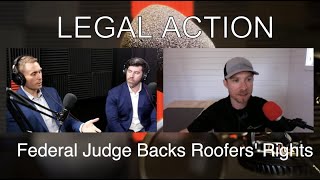
Transcript of a YouTube interview (Adam Bensman with Zach and Alex, co-owners of Lifetime Quality Roofing / Gale Force Roofing) about their federal lawsuit challenging Florida legislation (House Bill 305 / Senate Bill 76). The video explains how the law would have restricted roofers’ ability to communicate with homeowners about storm damage and insurance claims, the filing of a constitutional challenge after the law passed, and a preliminary injunction by a federal judge blocking enforcement of certain sections. The interview also covers the companies’ business practices, growth plans, and advocacy for contractors nationwide.
Chapters
All right, welcome back. Today I'm joined by Zach and Alex, co owners of Lifetime Quality Roofing and Gale Force Roofing, and what I consider to be the current heroes of the roofing industry, a story that we are going to discuss today. So, Zach, Alex, thank you both so much for being here.
Thank you so much for having us, Adam. We really appreciate it.
Yeah, absolutely.
So for those of us who haven't quite heard what's going on, contractors who might not be in Florida, will you share with me what it is you guys did that has been so monumental on this massive legislation and the significance that its impact is going to have on the industry? Briefly, and then we'll get into all the details.
Sure. So there was a bill introduced into Florida legislation, House Bill 305 and Senate Bill 76. And basically its original purpose was to, you know, basically help insurance companies by not having to pay out as much in claims. They were originally using ACV schedules. So for all the insurance roofers out there, you obviously know what depreciation is. For all the retail guys, you probably don't. So basically what it meant was that if a homeowner filed a roof claim that they wouldn't be able to get depreciation on their roof. And then they'd also still be on the hook for their deductible, of course, in any roof over 10 years old in the state of Florida. So if a hurricane would have came through, that would have cost Florida homeowners millions and millions of dollars. It came down to the last day of legislation in the session, legislative session. And what had happened was all of a sudden they had changed the language in the bill to help it get support and push it through, to limit the ability of roofing contractors to communicate to homeowners that they had storm damage on their roofs and had the potential of filing an insurance claim as a route of alternative funding for roof restoration on their homes. And then they added in marketing pieces and some other things that were prohibitive that violated our First Amendment rights here in Florida.
Yeah.
And I think as far as the timeline is concerned, you know, we've seen forms of this bill probably for the past nine to 10 years. It's just this one was more blatantly directed towards contractors and stopping their communication. So on January 25, you know, the bill was proposed. Like Alex said, it moved through the legislative process, changed over time, and eventually when that last day of the legislative session, it turned into or portions of it turned into restricting contractors communication. It made it through the House, through the Senate, all the way up into Governor Santis Des. On June 11, he signed that into law. And that was the day that Gail Forest filed a violation of our constitutional rights lawsuit.
Well, on behalf of every roofer in the country, thank you. I mean, this. I mean, you guys, what you did has shown how important it is to stand up for our rights and for what we believe in. My wife always says that. She goes, you want to get to the bottom of something, follow the money. And this bill was set forth for one specific reason, and that is to protect the best interest of insurance companies at the expense of homeowners. And at the end of the day, the expense of the homeowners is what impacted us. And what you guys have done is phenomenal. Taking this burden, the financial responsibility upon your shoulders to. To do. To do everything you. You've done. And I'm, I'm. I'm floored at. At how many people had shared the injunction with me. So.
Yeah, well, we appreciate the kind words. Thank you so much. And I think we have a. A saying with the company. It's get comfortable being uncomfortable and, you know, at the notion of doing this. We were relatively uncomfortable to sue the state of Florida and the DBPR at first, but, you know, we had to do it for our employees, we had to do it for our homeowners, we had to do it for contractors. And we'll get into kind of, you know, some of the things that we feel like. This may have gone into other states, and there's already been some legislature in other states that have popped up, but we felt so passionately about knocking this down before it got too far that we had no choice but to stand up for what we believe in.
Absolutely. Which is huge. And, you know, I should have said this at the very beginning. Patrick Carr, who's joining us today off camera, is responsible for bringing this interview to life. And I want to thank Patrick Carr of Blue Collar Media Group. You may recognize his studio, and you would recognize Patrick from the last couple of interviews discussing these very significant legislative rulings impacting the roofing industry. And so, Patrick, thank you so much with this. Patrick and I have discussed. I just want to do a short recap for everyone who may not be familiar with Senate Bill 76. In a nutshell, heavily restricted what a roofer could say at the door, that we couldn't entice, encourage, or induce a homeowner to file an insurance claim, which basically, excuse the gravity of this language, basically neuters our ability to serve homeowners to show up and have to Use this backhole way of being like, oh, well, you have, you have damage. And we'd recommend that you, that you file a claim. We can't discuss what's truly in the best interest of that policyholder and basically can't say, hey, by the way, you're paying thousands of dollars a year for the service and I can't tell you to use it, which absolutely.
Actually, our lawyer had taken it a step further and said that we couldn't say the word insurance claim. He just said, for your own liability, do not say the word insurance claim or else we were facing a $10,000 fine, possibility of losing our license, and a third degree felony trying to help somebody. I mean, these homeowners pay. Take a little old lady that's never filed an insurance claim, that's been paying insurance premiums for 50 years, never filed a claim, she's paid so much in insurance premium she could have replaced her roof a dozen times over. And now she actually has damage to her home and doesn't have any of the knowledge to know what storm damage is, to know that her insurance policy even contains language that would cover roof damage to her home or the alternative funding option to use that insurance claim to restore her home back to pre storm condition, which is what she is obligated to do by her insurance policy as a homeowner.
Yeah, I mean, we see it all too often that homeowners that don't have representation don't get taken care of properly. We told a story in a couple other podcasts. When we first made it down to Florida, we interacted with the homeowner relatively quickly. Within the first couple weeks we were down there and they had had a loss, a large loss from a hurricane. And we got up on the roof and they had over 20 tarps and they had a hole in their ridge and there was a plastic bag pushed down in that hole. And we walked up to the homeowner, we said, what's going on with your ridge and the hole with the bag? And he said, well, that's actually what the insurance adjuster told me to put in there to stop the leaking from getting into my house. So by stopping us from being able to provide truthful information about alternative funding options to customers, it really leaves them out in the dark.
Well, and you know, like I said, they're obligated as a homeowner to mitigate any further damage to their home. So they were already missing 100 shingles on that roof or so. And then with all the tarps, you know, nails are Obviously penetrating the shingles and damaging more shingles. They had hundreds and hundreds of shingles. They were damaged on the roof, allowing water into their home. I was physically in that house myself. And in the kitchen, there were huge water spots on the ceiling. There were. That were, you know, due to that. That storm damage that had taken place on their property. And. And I believe that the insurance company had originally paid for 20 shingles to be replaced or repaired. And it was. Yeah, I mean, truly, it's. It's. It's wrong. And, you know, people deserve to get taken care of, especially when they're. They're paying these huge premiums every year. And, you know, look at Florida's premiums. They've never gone down, you know, for. They go up every year. They want to point a new finger and create a new person for. For. Who's the. The problem there. There's the problem right there. And this time around, it was. It was roofing contractors. And, you know, they, like I said, they want to blame the insurance premiums.
Going up on that.
But when the. The storms didn't come through from 2006 to 2015, Florida didn't get it by a major hurricane. Yeah, they were returning premiums to homeowners.
You know, not at all.
Yeah, it's very sad. And, you know, a lot of what we do and what we did in the first place is we were just protecting ourselves. We were protecting ourselves. We're protecting our families. We're protecting our way of life, and we're protecting all those families that our business supports. You know, we buy millions of dollars of material each year from the building supplier. They have families. You know, we have laborers that put the roofs on. They have families. You know, we have families ourselves. We own homes ourselves. And, you know, we were looking at it, and, you know, what if that had happened to my home and that I didn't know how to properly take care of my property or that I could file an insurance claim and get my house fixed. And the only person that could tell me is now legally not allowed to tell me, or else they can go to jail or lose their business. You know, they passed this law, and they gave three weeks for people to change their entire way of doing business. Some of these people have been knocking doors and doing referrals in Florida for 20, 30 years. And now all of a sudden, since a politic hundreds of miles away says, you can't do this anymore, they were faced against, well, do I continue to do business and put food on the. On the table for my Family, or do I. Do I go out and possibly, you know, get a $10,000 fine and then shut my business down? It was wrong. It was just wrong on all accounts.
That's wild. And I'd love. Thank you for sharing that, by the way. Alex and Zach, I have a question for you. We've all heard this story. The psychological principle. If there's a fire going on, everyone assumes someone else called 900. Right. So we're like, it'll get taken care of. There was chatter everywhere about this bill violating our First Amendment rights. Both of you decided to do something about it. Put your own neck on the line, put your name behind it, put your company name behind it, in front, every penny to do it, I'm assuming. Why did you do that? As opposed to waiting for the next person to go do it?
Yeah, I mean, Alex just touched on it. We have families that rely on us to be able to, you know, provide for their family members. And, you know, we have tons of staff. We probably employ, I don't know, over 300 and some people altogether, and that was the most important thing. It was intimidating to think about doing this, but we knew we had to. There was no hesitation. We just went and did it because we wanted to protect the livelihood of the people around us. It wasn't just about Alex and I. Yeah, we want to continue to be able to do business, but we have to think about everybody else that's involved in our.
Our.
Our companies.
You know, it's every. It's every decision that takes place in. Within the business. You know, we've had to fire people in the past, and we don't like firing people. I hate that. But the decision has to be made. You know, every decision you make is you have to do what's right for the business because you have so many other people that depend on the business to. To produce and succeed and continue on so that their lives aren't. Aren't interrupted by it, or they have to go find new jobs or, you know, and our employees love. Love working with us. They love it. You know, our first core value in our business is personal happiness, and we live it every day. We don't want people to come in and focus on money. We want people to come in and be happy. I like going to work. I don't want to go to bed stressed because I feel like we're doing the wrong thing every day. You know, we're out there trying to do the right thing. There are good roofers. There are. And there are good contractors. There are Good people in every walk of life and every, every career path. And there's also bad ones too. And it's the, a lot of the bad ones that get a lot of this pushed on us, and it's terrible.
Well, and I appreciate you kind of giving that analogy where there's a fire. And, you know, I think that, you know, we were the ones running towards the fire and there was people maybe thinking that other people were doing the same thing and it just didn't happen or just didn't want to, you know, make that push towards the state, which it is intimidating and where there's unity, there's victory. And we believe that and we think that, you know, this platform and these different speaking events and things that we can get together, we want to bring awareness towards contractors banding together and standing up for what they believe in. That's extremely important to us.
Yeah, that's, that's really, really powerful, Zach. I appreciate you saying that. And there's, there's. And then, Alex, you had mentioned this, that there's good apples and bad apples. And unfortunately, we all know in the media, I mean, everyone retweets, even what the police department puts up. Know a small town gets hit by a severe weather event and the sheriff is like, watch out for roofing scams. And it's like the one guy who collects an ACV payment and skips town that now all of a sudden every roofer is evil, corrupt and greedy. When at the end of the day, what I found by producing this YouTube channel and podcast after taking a break from the industry because of having a bad taste in my mouth from certain business practices that I witnessed that I wasn't happy about seeing. And then I realized through providing an education based, value based approach to generating business and serving customers, and of course being rewarded financially by doing things the right way, I've begun to realize, wow, the overwhelming majority of people in this industry are honest, hard working people trying to make a better lives for themselves, the families and the ones that rely on them. And it's really unfortunate to be categorized in this light of, you're evil, you're greedy, you're terrible. Where at the end of the day, the folks we serve and most of the highly successful sales reps that I've interviewed here on this channel, everyone reports this. Though it's hard for someone who's getting started and hasn't earned a really high or healthy income yet. But at some point, financial gain stops being the motivator at first when you go from starvation like I did Truly starving to making money. This is the first leap. But once you. Once you've achieved that financial point, the best feeling. Everyone says it the same way. It's the pat on the back. It's the homeowner, the little old lady that didn't know the little old lady that needed a new roof. The person that called you up for a retail deal. Money's tight. And then you're like, you know what? You have a discontinued shingle. If there's three or four shingles blown off, there is an avenue on here that's in your best interest. And all of a sudden, you're literally the one that saved them thousands of dollars. And for the average American, the cost of a roof is. That is a crippling expense. That is not a fun thing no one enjoys. It's not like, I can't wait to go get a new roof today. It's like, no, I'd rather go buy a car, remodel my kitchen. So you got to think, you know.
Only 2%, I believe, is the statistic. 2% of people have $10,000 or more in their bank account at any given time. Well, if you've checked, a roof cost more than $10,000. So that means 98% of people can't fund these roofing projects on their own without having to go into some form of debt through financing or, you know, what have you to get the. Get roof taken care of. You know, the avenue that we. That we're able to give to these homeowners and educate them on the things that they didn't know. Because owning a roofing company, it's not just putting roofs on. It's educating your customers and taking care of them as if it was your own home. And that's how everybody should be dealing with their business in every walk of life. You know, I don't want a doctor operating on me that doesn't feel like, hey, I want somebody to operate on me this way.
Yeah, absolutely. And I think it needs to be said that, you know, Gale Force and the umbrella of lifetime quality companies, you know, strongly and firmly is against any manipulation of the insurance market, insurance fraud, anything like that. In our own business, we have, you know, multiple checks and balances to make sure that those things aren't happening. We do, you know, manager file reviews of photos of inspections, and, you know, we have people wear GoPros and we have, you know, no damage forms left with customers to show that we're not calling in every single roof that we get on. We're doing the Right thing or the contractor that's out there doing it the right way. So insurance fraud is prevalent in what we do, and we're firmly against that, and there's ways to combat that. But limiting communication from contractors to homeowners is not that. It's not.
It's. It's the wrong quote, unquote cure. That's like saying, I have a gaping neck wound and I'm going to bleed out and I'm going to put a band aid on my toe. You know.
The judge said the same thing. He actually was making an analogy originally when the insurance company said, well, hey, you know, there's $40 billion of insurance fraud. If we stop the roofing contractors, you know, it'll stop the insurance fraud or hinder it or reduce it or whatever. And he said, okay, well, where's the, you know, where's the survey? Where's the research? Where's. Where's the study that says that? And they couldn't produce it because they didn't do one. The $40 billion research study that they were using from the Office of Insurance Regulation. It contained auto insurance and health insurance. And we've touched on this in several other podcasts. It wasn't about roofing contractors. And the judge came back and said, well, yeah, that's kind of similar to laying claymores around your entire yard to kill all the animals because you're trying to kill the squirrels. I mean, it just doesn't make any fricking sense. And then, you know, when, you know, you're being targeted, when the opposition's attorney looks at the judge and says, the pillars of the republic will not fall because of this law and the limitation, you know, the limitations of the language that we're imposing on these contractors. And that judge was not having it. He said, in my courtroom, all speech will be respected and the, you know, the First Amendment will be upheld.
Yeah.
And it was.
It was powerful.
There were some big old DC Lawyers. Jaws dropped when he said that.
Yeah. I think another interesting thing that was said in there, too, was that, you know, the lawyers for the state were essentially trying to say that limiting communication would cut down on the amount of claims. Insurance fraud claims, but they meant claims. And the judge was just kind of like, well, we could just stop people from placing claims altogether, and that would solve the issue because it was so ridiculous. For what. For essentially what sections 2, 3, and 4 were. Outlining of the bill.
Yeah. The irony is that homeowners are often the ones responsible for the fraud. And I see this. I was Just down in Texas the other month or two ago and was running some sales appointments after a training, just getting out in the field and I was literally ever. I was in Austin, Houston and dfw. Every single company, despite the legislation in Texas requiring homeowners to pay their deductible, it is openly advertised, will eat your deductible. So I teach way to educate homeowners by sketching it out, how it works. Here's why. You can choose anyone you want. This is the claims process and how it works, how the money's released. And I want you to know what's happening when a contractor says they can eat your deductible. This is insurance fraud and I'm not willing to be your cellmate to earn your business. And I literally sat down with homeowners going through this and they'll sit there and say, well, he'll do it, so I don't care. Yet. We don't see the legislation cracking down on homeowners now, do we? All of a sudden, you know, we're the businesses that are attempting to operate above board and ethically are the ones being penalized, which is.
So Mr. And Mrs. Smith, I'm sure he's going to do a great job on your roof. He's. If he's doing unethical things out there to the insurance company. So that's, that's kind of a position we always take with it. But yeah, I mean, we're, we collect all deductibles and you know, we're against any contractor that's not doing the right way because they're eating to, you know, these laws being trying to be passed. That's essentially they're trying to stop, you know, contractors that are doing fraudulent things and increasing these overall claim amounts of money and pulling these numbers out of the air. So, yeah, I mean, we're firmly against.
All that, you know, and that makes a lot of sense that they're going after the contractors in those contexts about the deductibles, because you're not going to go after one homeowner that, you know, gets a contractor to eat one deductible. You're going to go after the contractor that gets homeowners to eat hundreds of deductibles, that eats hundreds of homeowners deductibles each year.
Yeah, it's true. That's true. Changing gears for just a minute, the most inspiring thing to me about the significance of what both of you and Gale Force have done is that Florida represents only one of your markets so how many states do you guys operate in?
Currently we're in three. So Ohio, Pennsylvania and Florida. We're actually expanding into Dallas, Texas, Denver, Iowa, Nebraska and Kentucky within the next two years. So we're very excited about those expansion plans and we're obviously expanding our operations within the states that we already work in as well. But, you know, touching on that, you know, we see this kind of legislation trying to be passed in every state. He became aware of a bill in Ohio that was supposed to come off as a licensing of roofing contractors bill, which as an upstanding roofing contractor, we were all for, hey, yeah, we'll get some riffraff out of the industry. We won't have these terrible reports of people getting, getting sidelined or, you know, money stolen or, you know, bad work done by these, these bad contractors. And then we started really reading into the bill and we found out, you know, deep in that bill, page six or seven, somewhere around there, there was four paragraphs about limiting the ability of contractors to assist homeowners with insurance claims and speak and communicate to the insurance company. And when we reached out to Owens Corning, Owens Corning, gaf, fantastic companies, great products, do a really great, great job in the market. When we reached out to them and said, hey, are you guys aware of this? They had no idea, they had no idea that that language was in there. So, you know, we actually raised awareness to them and said, you guys gotta help. You are the billion dollar companies. We need help fighting the good fight against other billion dollar companies. And we're just, you know, we're, we're a little family. I mean, if me and Zach have been together, friends, you know, so long and, you know, we're almost like brothers. So I'd say that we're a family run business by this point for sure. You know, and, and, and they're trying to, they're trying to hurt us and our families and our employees and everybody else. And homeowners, homeowners, homeowners don't know anything about the roof. The average homeowner does not know about storm damage, does not know their insurance policy covers. If, you know, a storm hits their house, hail, wind, a hurricane, you name it, tornado, the insurance company in all efforts will cover a lot of that damage. And that's what they're paying for. You don't have to have an insurance license or anything like that to get a mortgage on a home. And they're trying to limit the ability of the people that actually know about these things to communicate that information to them about these alternative funding options and to getting their homes restored. It's absolutely ludicrous. The insurance companies all work together, every single one of them, with statistics, actuaries, you freaking name it. They dump money together to go, you know, change politicians minds and put media out there, you know, to get their, you know, whatever they're trying to resolve through. And they have engineers and lawyers and adjusters. And then on the other side of the equation is a little homeowner that doesn't even know that they have storm damage or can file a claim. And who is supposed to help that person? And the answer is, you know, nobody.
Yeah. And that was one of the most motivating things for us because we saw this expanding into other states. You know, Florida is typically a trendsetter state for their litigation or you know, excuse me, legislature. And they'll adopt that in other areas quickly. So case law is king, you know, for contractors watching or for other people watching and knowing, asking what they should do. They should take the case law that we just won the preliminary injunction and send that to their representative in their state, make sure that, you know, they're raising awareness in that for their representative, will see that and be like, wow, if something like this comes across my table, I'm not going to sign this obviously because it blatantly violates the constitutional rights and there'll be variations of laws and bills come through. But overall we're trying to get contractors to raise awareness in their representatives. What's going on. Call your local representative. Alex called. It took him 15 minutes to get a local representative on the phone just to go over some of the things that they're trying to pass in Ohio. And he listened to him. And when you say anything about constitutional rights or freedom of speech or anything, their ears peak, you know, pop up immediately and they want to know more information about how they can not make this bill go forward.
I sat there and I gave him a 10 minute explanation on here's, here's all the parts of this law and why it's bad, what we do for homeowners, what we do for the community in central Ohio and Florida, in Pittsburgh and why these bills are wrong. And as soon as I said this particular section violates my first amendment rights, he stopped me and he said, what section? Can you email me that? Can you show me that I want something in my hands? And that's what we're doing. We're actually reaching out to every house representative in the state of Ohio and I'll be damn sure I get a hold of every senator, too. And I'm going to get. I'm going to get some people's ears about this. This is wrong. It's wrong.
You know, thank you for doing what you guys are doing. And I want to, I want to recap during these interviews, I like to kind of pull these key points out and the significance of filing this injunction, which essentially, and please correct me if I'm wrong, prohibited. The, the aspect of the bill, which was on prohibitive advertisements from being enforced because it was a violation of First Amendment rights. So you guys went there and said, this is not right. It was upheld by a federal judge. We have case law in place now to be the backbone of future decisions. And Patrick and Tate Law, who was on the channel for an interview, I said this a matter of time till this type of legislation sweeps the US because everybody's looking around what worked here. What do we get away with? You know, I always remember that childhood book. You give a mouse a cookie, you give a mouse a cookie. He asked for a glass of milk, you give him a glass of milk. He asked for a chair to sit on. Then he asked for a table to put the glass of milk on. Then he wants you to build a house around. And it's just give, give, give. Right. You give an inch, they take a mile.
And you're at the giving tree growing up.
Yeah, you're at. I mean, no, you hit the nail on the head with that one. I mean, that's, that's. You're absolutely right. And that preliminary injunction essentially keeps the DBPR from being able to enforce Sections 489, 0.147 of the Florida Statute, which is Sections 2, Section 3 and Section 4. Section 2 has to do with prohibitive advertisement and solicitation. Section 3 has to do with fines for violating. And Section 4 has to do with who violates and how they violate. Now, we're not lawyers, so anybody watching this, please, you know, get with your counsel, get your legal. With your legal counsel and make sure you have a full understanding of what still is in the bill. And the whole bill was not thrown out. We just have a preliminary injunction over those particular sections of the bill.
Yeah.
Part of the reason why it was so discriminatory against roofing contractors. Obviously, the law was set against roofing contractors, but it didn't limit your mechanic or your next door neighbor or your mailman or anybody else to come knock on your door and say, hey, you're missing shingles on your roof. You know, you should file an insurance claim. You have Storm damage. It only limited contract. And that kind of prohibitive speech did not serve the community and did not serve roofing contract. Hard working Americans, blue collar Americans that put money back into the economy, hundreds of millions of dollars back into just the economy in Florida every single year. And they were trying to cut the head off what they believed to be the snake. But we're not the snake. We're your friend, we're your neighbor. You know, we live down the street. We're normal people, we're hard working people, you know, and it's.
Go ahead.
Sorry.
I was going to say they failed to regulate speech within the bounds of the constitution is what the judge said.
Absolutely. Which is just so monumental. And when I brought up before how significant it was as you guys operate, which by the way, congratulations on these super exciting growth plans. I mean from being in three states to then, boom, boom, boom is awesome. So the kudos to you guys. You clearly are exemplary of running a roofing company as a business, which is a newer concept for many because it's just how people fall into it. And that is the key to growth, is systems and processes and organization. You guys have done an amazing job. And the fact that Florida represents only one of your markets. So if, hypothetically for everybody listening, if Florida, if your Florida office shut down, you too are not going to go broke because you have other markets. Meanwhile, I'm sitting here getting bombarded with messages of I'll call small to medium roofing companies the, you know, couple million a year to $10 million a year. Florida is their only market. They have everything riding on this. And the fact that you guys stood up to, to represent the people whose entire livelihood is on the line with this new legislation is absolutely inspirational. And the fact that we now have this case law as again Patrick and Tate Law and I discussed will sweep the nation is huge. So the future of where you guys are going, where do you see yourselves in the next three to five years as an organization? I mean, I know you just mentioned the growth plans, but is there any, is there more behind the scenes that we don't know of? Big moves and big initiatives you're working on.
So, you know, and I think, I think we need to kind of talk about how, how we do things as an organization. Alex and I and our managers and you know, general managers in our company are the most numbers based people in the world. We look at analytics to, you know, discover trends and we're all about scalable processes. And we had, you know, even in the massive growth that we've had over the past six years. You know, last year we did 30 million. This year we're on course to do 40 million. We feel like we took a lot of time to put scalable processes in place for massive growth here in the immediate future. We put together $100 million plan for the next three years of different locations that we're opening up, the locations that Alex named. And we feel very confident that we can get there. And we want to be the first billion dollar roofing company. And that's more from a revenue standpoint of the internal of the company. I mean, Alex and I spent started this business based off of the idea of going in and not just taking part of a market, but taking over a market and dominating within a market and providing exceptional customer service along with superior insurance knowledge to customers. Because we saw that there were big retail players, but there weren't a lot of big restoration players in our market. And there was a lot of really small companies. And we knew with the knowledge that we had together that we could infiltrate those markets that we wanted to get into and become a big player. And we've done that so far. So we're, we're looking. We install over 2000 roofs a year right now. And we've taken over some of the big markets that we're in. Columbus, Ohio, we're the largest residential roofing installer right now. We're working on, you know, catching up in commercial, but residential, we've got it. So I think as far as an organization expanding into, you know, different markets and doing the duplicating the same process that we have inside of our Columbus market or inside of our Tampa market, is something that we're trying to do in the immediate future.
Absolutely. And being, you know, anybody that's getting started in their, their roofing company, or maybe it just haven't, haven't seen the growth that you want, you know, focusing on those processes is it. Well, your processes and your employees is first and foremost above all else. You know, if you actually look at our growth in 2016, which would have been our first full year, we did 1.8 million. Then in, you know, the following year it was 3.2. The following year it was around 4.3. And then the following year was 13 million. You know, that's a pretty big catapult forward. And the reason behind all of that was because we focused on processes and making sure our company was good and making it great before we decided to just grow and then deal with the consequences of that growth. You know, you'll hear it from tons of roofing contractors that have grown large businesses, they say, don't grow too fast, don't. Because if you don't set, have a, have a business plan and a strategy internally for how you're going to do those things, you're just going to end up ruining your company. You get enough bad reviews online and your company's done. Because in the, in the current, in the current landscape we live in, in 2021, you know, a handful of bad reviews can, can wreck you for sure. 4.2. And you've only got, you know, 10 reviews or whatever and you got somebody that's a 4.8 or 5 star on Google or BBB or, you know, whatever rating program you're, you know, you're using with 100 reviews or 200 reviews. People aren't even calling it, you know.
Yeah, I think one of the big things that sets us apart from some of our competitors is our progressive marketing style. You know, we feel that a lot of roofing companies are stuck in the mud. They are still, still doing very archaic processes and things for marketing. And we jump outside the box and we have, you know, a swarm marketing approach to neighborhoods where we have no roof left behind, where we attack those neighborhoods, you know, from a strategic manner of both guerrilla marketing and organized marketing to make sure that we're not leaving any house untouched. And we're making the most of our, you know, of the, of the neighborhoods that we do get into. You can walk through a lifetime neighborhood neighborhood or gale force neighborhood, and you'll see signs all the way down that street. And that's the way we like to have it. So we just recently brought Ryan Serhant into town. He's from Million Dollar Listing, kind of we're thinking outside the box. And we said, well, how can we tap into a great referral network for us? And it's realtors. We deal with realtors all the time. We have a, you know, a massive index of different realtors that continually give us business. So we brought over 350 realtors to an event. We had Ryan come down and we had him speak to those realtors, and we built so many connections from that that it's already paid for the event and so on and so forth. So we were looking to do things like that every year with insurance agents, you know, you name it.
But just because we talk about numbers and revenue and we have all these goals, don't let that get lost on the reason we started doing this and everything behind it is we're there to change people's lives. Not just our employees lives, not just our sales guys lives, but customers lives too. So even though we're a numbers based business, this is all about taking care of people. Your employees, your sales guys, your installers, and especially your homeowners and providing them a better life. I mean, when we show up to a house and are able to insurance carry, almost like Publishers Clearinghouse is showing up with a big check and saying, hey, you know, we just saved you, we just gave you $15,000 to get your roof replaced. And people, people love it, you know, and it's really a great feeling when you can do that for somebody else and paying stuff forward. You know, Zach and I, because of the markets we're in, you know, they've been very, very good to us. And we've actually started a nonprofit, the Lifetime Quality foundation to give back hundreds of thousands of dollars back into the community to dog shelters, underprivileged kids Make a Wish Foundation. We're starting to band together with Ronald McDonald House. Yeah, both Zach and I actually have family members that were helped by the Ronald McDonald House. So that one is very, very big on our list. I lost a 9 year old cousin to a brain tumor about 20 years ago and that is, yeah, that sat with me a very long time. So to have the ability to even help and I know sending them to Disneyland and doing the things like that, it might seem minuscule on the grand scale, scale of things, but it means everything to that kid and it means a hell of a lot to us too.
You know, one thing I think that stands apart, that everybody should can walk away with, whether they're an owner, whether they're a sales rep, is the fact that when you are operating every day on a sound set of principles that mirrors how you truly think and feel, to do right by others and to have a really strong reason why you're doing it is what pulls you through. And correct me if I'm wrong, but the fact this injunction was driven by your moral and ethical code and an obligation that you were essentially pulled to do this in order to protect those that are relying on you for their employment and the customers you serve, the fact that you've built this business based on ethical and moral principles to be of service to others, the fact that you don't eat deductibles and you operate above board, and the fact that you're doing this from a deep sense of why on a charitable foundation to give back to others is a higher calling and a pull to Grow. Because all of the business principles of being numbers focused, you can be both. I'm a numbers guy. Even though I suck at math. I look at all the metrics and decisions need to be made. Being smart, data driven decisions and not guessing. And we need to have strong business principles. But when we blend that with our moral and ethical code and with the true calling as to what it is we do and why we do it, that's what encourages us to get. I mean, is that what pulls you guys to wake up in the morning? Because I know that you're smart business guys. If roofing industry, if the roofing industry disappeared overnight, my guess is you would start another business and it would be a really rich opportunity to give back. But it would all be pulled up towards this. Why.
We wouldn't be where we were today if it wasn't for the people that were within our organization. And we feel so strongly about that. And we had some technical difficulties, so I don't know if we hit on this already, but taking care of our people and watching the people grow inside of our organization is one of the most rewarding things in the world. And it's something that Alex and I are so passionate about. And our managers are passionate about it. And that's how we look for future managers within our company is they want to see people grow and hit personal and professional goals. Not only in the office, but also our salesman as well. And that is one of the main focuses of our company is watching people providing an environment where people can grow and thrive. And like he said, our number one core value is personal happiness. They can have a happy life and enjoy their work and make it almost feel like it's not a job. They get to help people every single day and we get to help people every single day. And that's more rewarding than any money we could ever make.
Yeah, the money is the what. Being able to provide a different life for your family and your kids and give them the things that you never had. That's the why. And one of the things we say at the company is why until you die.
So just to close as we come up on time and again, thank you for doing everything you guys have done. I hope this doesn't come across as me just sitting here tooting your horn. But the significance of this whole thing is so substantial. The purpose of this whole channel, I don't know how familiar you guys are with what it is that I put out in the world is aligned with the same vision. It's to support people using this industry to change their lives. And I was watching, I believe, Zach, it was your Instagram maybe, where you had posted one of your hiring ad videos looking for canvassers, and you showed these testimonials of people on your team holding up big checks and sharing stories of, I've never earned this much before. And they said, one gentleman, I didn't remember his name, I should have written it down, who said, I feel like the people I work with are family and this has changed my life. That's. That's the paraphrased version. That's what this industry is all about. You know, it's. It's providing an opportunity that is there for. For anyone with the right fit. That being said, it clearly did that for you guys. How in the world did both of you end up in roofing?
That's actually kind of a funny story, so. Well, actually starts out as a sad story. So, you know, I heard earlier that you said that you were, you were starving at one point. I wasn't necessarily starving, but there was about a year's time where several months, me and my wife, you know, we went thousands of thousands of dollars into debt, maxed out credit cards, maxed out lines of credit before I found roofing. And I remember spending several months, get to the end of the month, we have to call our parents and ask them for money, which is not something you want to do as a mid-20s person trying to get out on your own.
And.
And we would cry in each other's arms. And I, I have no qualms about saying that. That's exactly what we do. It was, it was a really trying time on our relationship, you know, and we got through it together and that's. That was really important. And I came into roofing and, you know, a few months after that, I became the top sales guy at a roofing company that we had both worked for. Going into the next year. I was supposed to start a, you know, be the sales director or sales manager. I had found Zach over that winter we. I did a Stint working in LA Fitness, found this guy. He was top 10 in the country.
Yeah, wow.
He likes to say. But anyway, we were both, we were both killing it, you know, both top 10 in the country, selling gym memberships, rally fitness for, you know, 10, 11 weeks straight. And, and I had actually received some, some advancement opportunities and I kept turning them down. And when Zach said, hey, man, like, we've never seen it this good here at the gym, you know, we're making all kinds of money. Yeah, you Know, we want to see what you're doing because you're just walking away from this like it's nothing. And I said, yeah, well, you know, selling roofs is. Is you can make a lot more money doing it. And he said, show me. So, kind of like the wolf of wolf.
That's what I was going to say.
Show me your paycheck kind of thing. Well, we didn't show my paycheck, but, you know, I took him out in the field and. And showed him, you know, selling a roof and helping a homeowner, and he saw that as a very rewarding process, and he decided to come out and he worked as a sales guy for me for about six months, where in that time we had realized that we were with the wrong company. They were focused on not taking care of their customers, and, you know, that didn't feel very good.
All.
All I knew was trying to take care of a customer. That's all Zach knew. And we decided to branch out on our own. And it was very rewarding process for us to see a business run so poorly because we basically said, hey, if we just do everything, the exact opposite of what we did, we focus on the customer first, we provide a quality product, and we do the right thing, then money will follow, the revenue to the branch will follow, the growth will follow. And that's what kind of got us both into the industry. And, you know, we originally started a company together and said, hey, we'll. We'll both go sell roofs. We'll. We'll have this company under. Under one name, and, you know, we'll kind of do our own thing. And then going into the next year, we wanted to hire sales guys and. And actually start a company together. And. And we. We took that endeavor on headfirst. And, you know, we. We've grown into. Grown it to what it is today. You know, at the end of every single season, we would sit down with our sales guys and our employees and everybody else, and we'd say, hey, what was wrong with the company this year? You know, what, Things were messed up. You know, what can we fix? And we spent three, four years just focusing on process, process, process, process. Well, hey, you know, if a customer would get sour about this thing, well, hey, how can we alleviate it? Hey, if a sales guy didn't like this, how can we alleviate it? Hey, we didn't want material sitting out for too long in a homeowner's house. How can we alleviate it? And we put these. These big processes and protocols in place, and we focused on Scalability, so that as we grew, we were able to continue to use those same processes. And it's paid dividends in the long run.
I think it's Apple and maybe one other large company, it might be Amazon. Do a customer experience meeting on a regular basis. And it's something that we adopted, that we do is to kind of walk through our entire process from top to bottom, all the time. We do this all the time in our. In a homeowner's shoes and see what they experience and make sure that we can make that the best experience for them. Because if you provide a customer the best experience that you can possibly provide or an exceptional customer experience to them, they'll keep coming back and they'll keep sending business to you and they'll send you their friends and family and everybody they know. And we understand that. And that's a huge portion of our business is referral business. So we preach that to the guys on a regular basis. Make sure you take care of your customer. Make sure you do the right thing, and make sure you say and do exactly what you say you're gonna do.
Hit the nail on the head.
Easy in. In theory and easy when you care. And that is the part that salespeople forget. It's not just the sale. They're not just a number. It's the experience that we provide. I love it, guys. Thank you both so much for being here. As we come to a close, is there any closing comments or messages that you really want all the listeners and viewers to feel to do or to represent our industry? Is there any closing remarks you have before we call it a wrap?
Yeah, I have one. I think that for SB 76 and for future bills speaking directly to contractors, stand up for what you believe in. Unite together. I feel like we're a very divided industry. The contractor doesn't like to talk to another contractor just because they're a roofer. You know, stop all that. You know, we. We are. We have something that's going to expand here and could potentially threaten what we do for a way of life. So we need to band together. And like I said earlier, you know, where there's unity, there's victory.
Let's.
Let's come together. You're not going to stop seeing our face. This isn't the last time you're going to see it. We're going to be all over the place. We're going to be speaking on stages and raising awareness for contractors uniting and stopping these bills before they get any further.
Yeah, yeah.
And for all those doing the right thing. Keep up the good work. Keep doing it for all those that are doing the wrong thing. Stop it. Because you're ruining it for the rest of us.
I'm gonna leave it right there. Gentlemen. Zach, Alex, thank you so much for being here, and you guys are awesome. Appreciate you.
Hey, thanks. I really appreciate it.
Appreciate it.









