From Newbie to #1 Roofing Sales Rep in His First 30 Days! Interview With Adam Jones
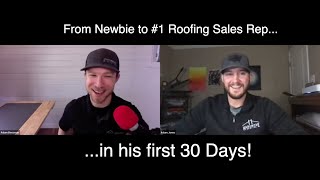
YouTube interview (Adam Bensman interviewing Adam Jones) about Jones’s rapid success in roofing sales after starting in December. Jones—who previously worked as a pipeline surveyor—applied personal-development habits and Bensman’s door-to-door methods to break $100,000 in sales in his first full month (January) and reached roughly $134k year-to-date by early February; he set a February target of $150k. Key themes: shifting from a ‘sell’ mindset to a service/open-questioning approach; tenacity and wide prospecting (knocking more doors); tangible door-script tactics (open-ended questions, “Do you have any objection if I hop up on your roof…”, SLAP-related prompts); objection-handling framework (ask why/repeat, ARO: Acknowledge–Reassure–Overcome); concrete follow-up scheduling to prevent deal leakage; and emphasis on implementing learning (application) and personal development as drivers of sales success.
Questions this video answers
Started at the end of the year (December).
About $100,000 in sales (January).
Approximately $134,000.
$150,000.
About $75,000 per year as a pipeline surveyor.
Chapters
Adam, welcome to the channel. I'm really excited to have you here to share your journey in roofing sales. And before we get started, I want you to jump right in. Where are you right now? Tell me about that email you sent me.
Okay. So, you know, I've been watching you for a few months, definitely taking in, absorbing all the different types of information strategies that you kind of coach and teach.
But, yeah, I haven't been doing this.
But for a few months now. Started at the end of last year, right at December. Didn't have any sales, like, job before.
I come from the working pipeline, and.
It kind of just happened to have a friend, had a friend who was a sales manager at this roofing company. And so it's kind of like me. So before I go into anything, I want to do all the research, all the investigation before I make a decision. So, no, just like anybody else, Google and YouTube and, you know, your stuff pops up. So I start, you know, seeing it, and I start seeing how many videos you have. So I started diving into that more and started following you. Went ahead and took a chance on.
It and started it and ended up just hitting the ground running, per se.
I mean, they said I was doing really good. I didn't really have anything to compare it to because I've never done cells before. But, yeah, I just implemented everything that you've taught. I had really good supervisors, sales managers, to kind of like, just, you know, support me and answer all my questions. But, you know, like, we stayed in.
Contact through email and. Yeah, so my first full month, because.
December had, like, you know, holidays and stuff off, there were gaps where we weren't working. But, yeah, my first full month, January, this year, I broke 100,000. And again, I didn't know if, like, that was normal or typical. They said I was, like, crushing it, but I was just doing what you said to do, just, you know, keep my head down. Just keep on, you know, getting out there doing it.
And so, yeah, right now I'm currently.
I think it's February 5th or something. I'm at 134 for the year, so. And I still have, like, I got another meeting today. I got a build going on right now. I'm just staying busy, man. Just trying to keep my head.
That's awesome. And I'm going to share my screen for everyone just to see because this is what started. Adam and I have exchanged some emails. Adam reached out and he says, adam, I just want to let you know that you were right. I started roofing sales a little More than two months ago, followed your strategies and using the tools inside the battle pack, I have climbed to number one at our company. I broke 100,000 in sales within my first full month. So, dude, this pace that you're on will bring you. And this is the heart. Everyone that's watching, by the way, who's been in roofing sales knows this time of year is the slowest for everybody.
That's what I've been told.
You did over. You're at 135. If you keep that pace, you're going to break well over a million. And that's insane. Do you have any idea what kind of income that'll equate to you at this rate?
I was told that it's going to be easily over 100,000 a year. Yeah.
Depending on the commission structure and all that for sure, without a doubt. What were you earning before you got into this industry? Only if you want to share. I don't mind a profit.
So I have a pretty diverse background. But what I was doing directly before I started roofing sales, I was doing pipeline surveying. And it's good money, but with that you have to travel and stuff. And I didn't really. I don't like being away from the family, but I was probably making 75 a year.
Gotcha.
With the money I'm making now, yeah, good money. But again, just the circumstances and the situation with being away from family and the long days, it's so taxing on, you know, it was just exhausting and I just, I wanted to find a better situation. But with the money I'm making now, it's. It's like, why have I never found this before?
Yeah. How haven't? Yeah. That's awesome. So tell me a little bit. You got into roofing sales. Your friend was the sales manager, did you say?
Well, so when I was doing survey and I was actually working up in North Dakota and I'm from Louisiana, so it was like a total transition. It was a big jump as far as climate and stuff because we ended up going in 2020 in February. So it was like negative degrees. I was, I had to adjust majorly. But a friend of mine, Matt Ramsey, he knew, he knew one of his friends, Gage Lyles, which is who my supervisor is now. Towards the end of our. We ended up getting laid off at that job. But, you know, so we were wondering, like, what are we going to do for work? And I actually do a. Me and my wife, we have an online marketing sales kind of business. It hasn't taken off too much. But the things that I did was I started learning and educating and reading myself and just, you know, spending more time and like, developing myself instead of, like, watching Netflix and stuff. So I wasn't new. I wasn't new to, like, reading and, you know, like that. You talk about, like, Brian Tracy stuff. I was like, tapping into that and.
I have been for a while.
So my buddy Matt said, yeah, I think that you'd kill this roofing sales business. So he got in contact with Gage and said, yeah, let's get him a job. And Gage, like, yeah, sure, bring him on. We'll see what he can do. So, yeah, that's kind of how that transpired. It was just kind of a shot in the dark. I didn't know if I was going to be good at it, but apparently with all my kind of prerequisite reading and self education and stuff, it kind of just tied in together and just naturally start. And then with watching your stuff, I just took everything all together and just kind of went at it.
Put it together. Man, that's awesome. US Adams must have something in common with the personal development. Like, you. Everyone I've talked with know no one has been like, oh, you know, I had this dream to be in roofing sales. Everyone just like, stumbles into it on accident. And I love what you shared about the growth of like, instead of the. And don't get me wrong, I enjoy Netflix, you know, and hanging out and just unwinding. But it has its place. And when you can invest in yourself, all it takes is the one breakthrough to get to that next level to figure out, oh, if I tweak this at the door, oh, if I can do this. And we find it in the craziest places I've been looking down because I have my journal, and I was journaling this morning about my plans for the next three months, and I was just like, oh, man, if I can do that, then this will be, you know, and then it help with whatever it is. So, man, that's so cool. So tell me about your start. Like, did you have success straight out of the gate or were there some kind of hiccups or bobbles along the way?
So it's kind of funny because, like, I remember when I was first starting, like, like I said, you know, Gage, I have Daniel. We have supervisors and managers that really help us and do everything they can to make sure that we have everything we need to be successful. So they definitely set you up for success. It's just, again, I didn't have Anything.
To compare it to.
So I didn't know if I was doing things right or if I was doing things wrong. But, you know, I was just looking for, you know, older roofs around areas where I knew there had been storm damage. That's typically what we should go for, you know, storm damaged roofs. And so I started going around these areas and I noticed that most of them had been done or you know.
The ones that were older already had.
You know, their own situation. They were waiting for things to happen or all this. So I don't really know how to handle, you know, those situations. I. I was at my. In my opinion, I think that I was taking kind of a. More of a. Kind of like I was trying to sell.
But the more I did it, I.
Realized that it wasn't more about. It wasn't so much about selling. It was more about just like understanding where the homeowner is and then kind of like. And kind of like educating them on like how we could help them through the process. So. And a lot of it, you know, came from like after I started to do it more, I was, you know, constantly. I watch your videos, like all the time. So it would just kind of like just accumulate my knowledge and my confidence and my skills.
So yeah, I got to the point.
Like my first few weeks I was like, oh my God, all these houses are done. There's no more houses out there. But then like towards the end of my first month, I had like, or the first month I worked, not my first full month, but that December I realized that there was just like, there's an abundance of houses out there. I just have to tweak kind of like what I'm looking for and then also tweak my approach as well as far as. As far as communicating with the homeowner.
And I started doing that, started asking.
Opening new questions, kind of like keeping the conversation going. And it just, it had a big impact. So yeah, I thought, I thought in the beginning I was like, dude, I don't know if this is going to work because I wasn't making any money and I wasn't closing any sales. But then it just started getting better and better and I became better and better. So yeah, it kind of just like just rolling now, man.
Man, that's such. That's so heartwarming to hear because like you just. I'm sure everybody listening knows they're either in that moment now of wondering, is this for me, is it going to work? Every roof's been done that self doubt, the negative self talk there's easier ways to do this, and then. And then something happens and we find success. And I love that inspiration. So for you, what was the one strategy that you felt helped you make that. That move to go from, hey, every roof's been done losing hope to making it work? What's the one strategy that helped you make that breakthrough?
Well, you know, going back to just.
Tweaking that approach, and as far as communicating with the homeowner, that was a big one. But at the end of the day, I think I have to boil it down just sheer tenacity. You know, I had, you know, like I said, I got over the fear.
Of knocking on houses pretty quick because I had. We had. Like I said, we had an online business.
We do zooms face to face. And, you know, we've gotten rejected before. So that. That's kind of. That was already out of the way, which I know is a big deal for a lot of people coming into, you know, this kind of industry.
But, yeah, man, it just.
It just came down to knocking every single door that I saw that could potentially be a good, you know, have good damage on it. And, you know, I started out with, oh, if it has drip edge, I'm not knocking it. Well, I stopped that, you know, and so I started taking it. Like, I started looking at different things. Like, you know, were you the one.
That emailed me about that, that someone told you to not knock if there was drip edge?
No, no, but I saw that video and I thought, okay, yeah, I didn't.
Think that was you, but. So you had seen this through. It was the first time I had.
Heard that, but, yeah, no, you know, so, you know, it's a good thing for me if I see, like, algae on the roof and then three tab, it's an older roof, if there's any kind of damage that has been in the last few years, but it is an active date. There's different lot of factors. So I started just to, like, you know, enhance my accumulation of different factors, like just looking at everything. And I guess my eyesight kind of just grew a little bit broader as to, like, what, you know, what could be as opposed to. When I started, it was so narrow. I was like, oh, if this isn't. I don't need to knock that door. Well, it just started opening up. And I was like, well, every door technically is knockable, so to a certain degree, of course.
But yeah, I just.
It just.
My discretion, I guess, improved and. And then I just. Just kept getting after it. And so now. Now it's fun. Now I get out and it sucks because you know, like once you like I know you mentioned this and I never thought this would happen, but you said there's going to come a time like after you start, you're going to start getting busy and busy and busy and you're going to have to kind of make adjustments. But you know, I had that self doubt in the beginning so I never knew if that was really going to happen. But now it's happening and I'm like, damn. Like I got all these things going on. I can't really, I don't have time in the afternoon to knock right now because I have so much going on. And it kind of sucks because I started to enjoy knocking now because, you know, the relationships that you build with the homeowners, you're actually helping them. Uh, and it just became more fun to me.
So.
Yeah, it was just. It's, it's been a, it's been a journey and a fun one.
Dude, that's so great. And I. Do you mind if I just ask you a little bit about the open ended questions? So you had mentioned asking open ended questions, starting conversations and discovering how you can help. What kind are you talking about? Just share with me what that, what kind of open ended questions you're asking and how that's been helping. And I'm curious, is that from the slap formula at the door?
Yes.
Yeah, go into that. I want to hear a little bit more about what's been working for you.
So you know, again with coming into going from like a sales, trying to like pitch it to someone as opposed to just like understanding where they're at and kind of like educating and on how you can help them. I knew that I needed to get. And this comes from you too. It's kind of just starting the conversation and just keeping that as long as you can keep that conversation dragging out. You have their attention and you have their interest. So instead of just asking them, you know, are you interested in a roof inspection? It's so easy for them to say no. So I take what you said, you know, damn it, what is it? I'm having a brain.
I know it's because I put you on the spot. I'm sorry about that.
But it's, you know, when was the last time you had your roof looked at? Or how has the process been for you and they don't or, you know, if I wanted, if I want to do a roof inspection, I always ask, do you have any objection if I hop up on your roof and see if I see any damage.
And it's always nine times out of.
10, I'm getting a no. I don't mind because like you said, they get to say no and you get to get on the roof. So it's like a, it's a, it's a bing, bing. So if you just ask, you know, do you want a roof inspection? It's so easy for the homeowner.
Just take the path of least resistance.
And say no, that's okay. I appreciate it though. You have a business card. And a business card in my eyes is just like, get out of, get out, get out of here.
Yeah, on some level.
So yeah, that's the open ended just to me. I just, I just want to create a conversation, kind of like cultivate the relationship and just make them feel like they can know me, trust me, and like me and move forward and do business with me.
Yeah, man.
I love what you mentioned with your.
Direct experience too, about how when you hold that conversation, things go and you have their attention and you put it in a way that I haven't done before, which I love. You're like, I have their attention. And so many people just go in.
Like, people will email me their pitch.
And say, what do you think? And I was like, stop this because it's going in too soon. Someone emailed saying, hey, I've been trained to go out and knock doors and say, hey, I'm just here to generate an inspection and we're going to inspect your roof and if we find damage, we're going to go to bat for you with the insurance company and get it done. And I'm like, whoa, man, you just gave, I don't know who this guy is. Now you want me to file a claim and now I'm committing to you. And I've seen you for four seconds. And when you mentioned that attention thing, I learned it on accident because when I would get rejected, I'm like, man, sometimes if I just keep people talking, it changes because then they realize that I'm actually there to help. And that mindset shift. I'm very curious if this was your experience or if I'm just living in a bubble. But when I started to approach doors that way, I didn't feel like a sleeveball. I didn't feel like I was selling people because I know, like, you know, people see this bullseye, it's like, that's $2,000 commission. That's $2,000 commission. But I just kind of let all that go away. It was my inspiration to not to earn, but it just changed from feeling like I was selling them to just like, I'm going to start that conversation and navigate it into a sale if I can. And if I can, I'm gonna go hit the next store. Did that shift happen to you? Like the internal feeling from being a sleazy salesperson, which some people are gonna drop comments like, you know, we're not sleazy. I know we're not. But so many people, this is their internal dialogue.
Did you have any of that shift.
Occur when you went from a pitch to open ended questions?
Yeah, absolutely. You know, like I was saying before, you know, from how my initial approach was as far as selling, I didn't have much success with that because I was only focused on the sell and I was only focused on trying to make the money. And I feel like subconsciously they could kind of pick up on that. And it's those small little things that really add up. And so when I made that switch to just kind of like, you know, really wanting to help and just coming in with a complete innocent mindset with like, I don't, you know, it doesn't, it doesn't bother me if you slam the door, get out of here. I don't want you. Okay, that's great. And that's that people are going to. Exactly.
People are going to be like that.
And you just, you don't, you can't do anything about that. But you know, if you honestly go in with a very genuine mindset and.
You really want to help, you just.
Want to see if you can. Cause I mean, I say, I say it up front, you know, I'm very honest. If I don't see damage, I'm not taking, you know, I'm not going to come. I'm going to be on, I'm going to take pictures of what I see because I know it's really important for them to visualize because they're not going to go climbing on the roof and nobody expects them to. So, you know, with me, I'm simply just offering, you know, my time right now. It'll take me five or 10 minutes and if I see anything, I'll take pictures of it and show it to you and then we can just go from there. If not, and I'll just give you a clean bill of health and be about my way. So just. That just comes across as being very honest and like just wanting to help them and it just, the dynamic changes drastically. So it just, it just, it helps out a lot.
Dude, it's so great seeing the. The honest approach and the integrity behind it.
And the other thing that's so important with what you said is that mindset shift, because that would. And I'm going to ask this one question first. Do you agree that in this position, the number one enemy is our own head?
100%.
Yeah.
It's how we have to overcome. And there's all this chatter. And what's funny is we're not often aware of it. It's like, I don't want to go knock doors, and we can't figure out why. And it's like, I don't feel right doing it. I feel like I'm trying to be someone I'm not right or I'm trying to sell. And you're right, that unconscious stuff gets picked up. And when we shift into this service mindset and just approach the door of. I don't know if they're a sale yet until I have that conversation, it's just like, there's something. I can't put words to it. And I've been struggling for years to put words to it, but it's like it mutes that voice. And then our confidence builds up, and then it's like, oh, I'm just out in the neighborhood. And then that's when I started to love my job. I remember vividly when I called my dad, I said, dad, this is the first time in my life that I wish I had more time in the day to go to work, because I used to sit there and watch that clock, man. I'm like, oh, hit that number. I'm out, you know? And now is like. It's like 8:30. I'm like, come on, son. Don't set yet. I got three more doors I want to hit, you know? And then I got to do this. And it was like, it becomes so thrilling.
Yes. I know. It's funny that you say that because it happened the other day. I was looking. I was looking behind my shoulder. It was like 5:30. The sun was maybe had like 30 or 40 minutes left. And I'm like, I'm heading home. I look behind like, damn sunset. And I just. Probably just go home. But I couldn't. I was like, I still got sun. I'm gonna go. I'm gonna go hit this area. I did. And I got a contract. And I was literally taking pictures with my night mode on my iPhone of their garage collateral damage. And believe I had to use the night mode to get the. The dings in the garage door. Yeah, but, yeah, we got It. I got it contracted, so yeah, it was worth it.
That's awesome. That's awesome. Adam, how. How has your life been changed? Like, what's been the impact on you? Forget. Forget work for a minute. Personal life. What's changed because of this for you?
So, like I was saying, a lot of. A lot of my prior knowledge and everything came from kind of just like understanding how important it was to like, focus on my personal development and self education and just, you know, investing more in myself than I was at my job before. But now it kind of ties into. It's like all one.
Like you.
I can't remember how you put it, but it's beautiful. It's. Sales is disguised as self development with making money. I can't remember how it is, but that's. And I took that to heart because it's true. And with like a. Like a regular job getting paid an hourly wage, you know, you're only paid for your direct time with this. You're paid for the results that you can produce. So with the shift, I had a little bit more freedom. I had a sense of freedom with this. But, yeah, I'm focusing. I've always started, like, I started focusing more on myself than what I was doing at work for a few years now because of our business. That's what it's based around space about growth and improving, you know, you as a person. And so, yeah, it's just. It's given me that sense of freedom and ability to do that. I kind of just. I kind of get to do it as I want, kind of just like working at my own pace. And it was so new to me, but I appreciated it and I've loved it ever since.
That's awesome, man. Thanks for sharing that. It was sales as personal development in disguise, and I have a confession to make on that. I actually. I've always felt this, and it was live. I do all my videos in one take. I don't edit.
I want.
Everything's in one take. And I was filming it, and this just came to me and I said it. I've had multiple people reach out. It's now in training manuals of different companies. Sales is personal development in disguise. And it was just like it finally materialized. And now I'm glad that it resonates with you, because when we learn, that's the fun thing for anyone watching or listening. Like when you learn something and then you can apply it. And that's why people see I geek out on psychology. Sales is applied psychology. Inward personal development, outward communication, and when you can bridge that gap and take something in new. And then like, your brain gets rewired and all of a sudden you're like.
Oh, man, now I can do this.
And it's the little things, the negative agreement that we talked about. Do you have any objection? It's all this stuff. And it is. Then the reward is more success, which makes you more confident. Then you earn more money, which then fuels your desire to always improve. So it's like next month. What do you want to hit next month, by the way, in sales? I guess this month.
So you've done.
You did 100 in January. You're at 130 now. Do you have a target in mind?
Yeah, my target's 150 for February.
Personal development improve on the previous month.
Exactly.
And it's this. It's. It's a man. That's awesome. If you were. You know what? I'm going to save that question for last. You said Your goal is 150. What one strategy do you either need to learn new or improve upon that's going to take you to that next level?
That's a good question. That's a hard question. For me, personally, I feel like I just need to learn how to improve my communication with the homeowner. I need to take different approaches to overcoming objections because there are. There's still few that get away with the objection. And, you know, I feel like I can't do anything about it, but at the end of the day, it's all me. So I'm responsible for it and I just take responsibility for that and understand that there's always a way, a way around every objection. And it just comes with just understanding them better, making them feel like what they're saying is completely normal. And it's a. I can. I can appreciate where they're at and just kind of like reassuring them that we're just here to help and just kind of like, ease. Because in my mind, you know, with someone saying, oh, it's not that big of a deal, you know, I try to just open up their imagination to what, you know, it could be a little bit worse down the road. So I just, I guess for me to improve to the point where, sorry, my phone's going crazy, that's a good sign. Sorry about that. But anyways, I think it just needs to get better. I need to get better at kind of painting the picture for the homeowner a little bit better. Just in how what we're trying to do now is kind of a more proactive approach as opposed to a more reactive approach where if damage gets worse down the road it's going to be a whole bigger and it's going to be a lot more of a headache and it could be more expensive. So I feel like I just need to kind of paint the picture a little bit better for them.
Awesome. I'm going to respond to that with some advice or tips to help if you'd like. And I want to tell you the reason I asked that question. I found one of and this was relatively recently there's a book I read called the One thing by Shoot. What's his name? Gare Keller. And Gary Keller is the guy that founded co founded Keller Williams Realty and in that book talks about knocking down dominoes. And that when we like how a domino works is a domino can knock down a domino twice its size. So in not a very long distance using physics it can knock down the Sears Tower. And we just need to stay focused on what's the one thing. And for what I've realized is that it's always we're one strategy away. That one strategy that's our roadblock. Like for you, you said it was shifting from going for the inspection to asking an open ended question. The slack formula. That's the strategy that gets you there. Then the next one is getting on the roof. Okay so strategy fill in. Do you have any objection if next strategy, you know, showcase the photos to get invited to the kitchen table, get the deal close. Now your next one is objection. So I always like to get people thinking what is that one strategy you need? Because then it helps you focus on to figure out what's the next personal development objective for me. And when you know that one objective just put blinders on and say I am just going to get real good.
At this one thing.
And then before you know it you're going to master it. And once you do, then you just ask the question again, what's the one strategy? And every time we grow we create new problems and that problem needs a solution, a strategy solution. And I've had the same thing in my personal life. I've had it in business applies to everything. So that's why I ask us to help you narrow. It's like you did the 100. The person that you were to do 100,000 in sales is not the same Adam that's going to be here in February to get to 150. So back to you now on that answer. When it comes to learning to overcome objections and then paint the picture of the Future. I love that you're crystal clear what needs to happen. The number one sales skill that comes with experience is what I call think fast ability. That skill in and of itself you can't really teach. I can't be like, here's this, this and this. But I can help provide a framework because thinking fast comes with time. Sometimes all we need to do is buy time to think. So there's a few ways that we can, that we can do that.
Ask.
So tip number one, when you're faced with an objection is ask why? Repeat back to them, hey, what is it about? And then just whatever they said, you, you know, I need to think about it or I want the insurance. Hey, do you mind me asking, like, what do you mean about getting your deductible or why? Why is that, you know, important to you? Any follow up questions right away? Repeating back gives you time and you can listen. And then they might even give you another gem, you know. And I know Chris Voss. I recently read the or. I'm in the middle of reading that book. Never split the difference because everyone's recommended it. And he and his this is his tip, you know, is to repeat the last three words. I've never used that particular one yet. I'm going to start playing with it. But I've always asked just deeper questions and then it buys time. The other piece is to use that formula, Aro, acknowledge, reassure and overcome. And again, this is a tough thing to learn to do is to be talking and thinking at the same time. But if you can acknowledge what they're saying and say, hey, listen, Peggy, I totally understand. You don't want to pay your deductible. Why would you? No one wants to, right? And then you're feeding her and she's like, he's right, he's right. Yeah. And then they're agreeing with you and say, totally makes sense. And now we're going to reassure. It is incredibly normal. I see this all the time. I talk, I've worked with a lot of people. And then now we overcome and then we can fill in with those different angles, educating them about fraud. By the way, I think I have it here for anyone that hasn't seen this yet. I know I'm going on a small tangent, but. But in Nationwide's actual letter, this language. And by the way, if you're a podcast listener, I'm sharing the scope here and I'll read it. It says it's unlawful to knowingly provide false, incomplete or misleading facts or information to an insurance company for the purpose of defrauding or attempting to defraud the company. Penalties may include imprisonment, fines, denial of insurance and civil damage. And then, by the way, it continues. So if a homeowner has questions about why you can't falsify an invoice, you can let them know that imprisonment is directly on the thing and that you're, you're not willing to go to jail to earn their business.
So.
But at any rate, that framework to ask a deeper question will buy you time acknowledging if you can start to think like, how can I get into this autopilot of starting to acknowledge what they're saying by repeating back to them. But the other side of my brain is starting to think ahead. It's a tough one, but think about it. That will help you develop that think fast ability to overcome those objections. And then the final piece that I want to leave you with is when you are getting busier like this, the hardest thing is to stay on top of your open deals. So if you don't close it and leave, you know, there's these fresh opportunities. But if you can stay on top of those deals by not letting them slip away, get that follow up set, say, hey, totally understand. I know you mentioned you want to think about it. Just the assumption, when's a good time for me to come back and then repeat, you know, help you after you talk with your husband, after the insurance comes out, get it set. And you will find some people will have resistance. They don't want the appointment. Say, that's totally fine. When's a good time for me to call? You have a set date and time. If you say, I'll call you Tuesday, they don't know when Tuesday. And then you're going to end up in voicemail. So a concrete follow up time. Say, listen, I respect your time. I don't want to catch you in the middle of doing something, putting the kids down or whatever. When's a good time? Tuesday. All right, Tuesday morning or afternoon? Afternoon. What time is good for you? Three o'.
Clock. Perfect.
I'll call you at three. That goes in and you call. You will be amazed at how many jobs you land because all of these other objections that we don't know about are often wanting to talk with another roofer who, who is too busy to follow up and you kind of become the default. Yes, I've had this happen a lot. The other guy dropped the ball. So does that stuff, does that make sense?
Oh yeah, that's awesome. I'm writing some notes down too.
So solid, solid Solid. So two more questions for you that I wrote down. Where do you see yourself in two years? Where you had in the future?
Two years, you know, with working on ourselves, me and my wife here in the last few years, you know, our idea of like what could be has expanded.
You know, we've.
Because like you said, you know, I'm not the same person I was last month and I'm not going to be the same person tomorrow as I am today. And so we're really just kind of on a, on a path to just reaching our full potential or at least pursuing our full potential, because I don't think we're ever actually capable of reaching that. But if we can pursue it every single day and just improve every day and just build on that from yesterday, that's really all we really want to do. But as far as where I see myself in two years, I want to get more knowledgeable about, you know, financial education, sales, marketing, business. Because with this introduction, you know, I've gotten a whole different outlook on what's possible as far as business and how we can serve others and, you know, coming back to us. And it's just a, it's a, it's a win, win for everybody because we provide service and we provide help and just mentorship because that, because that's kind of what's helped me, like with you all your education and coaching, your videos. Same thing for like my team. And it's just, it's just like a, it's just a cycle and I want to be able to provide for other people as people have provided for me. So it's. Honestly, I'm not 100%. I don't have a picture of where I want to be in two years, but I know I want to be better than I am today. So. That's a good question. I'll have to think about that one.
Yeah, I love that.
Relentless pursuit. Oh, man, my journal. I have an electronic journal and it's charging. I was going to grab it. I got this exercise from the one thing, that book by Gary Keller, and he said it was goal planning to the future. So five year, one year, one month, one week, today, right now. I love that ladder because five year, it was like, even for me, I was like, man, five years. So much has changed in a year. Where would that be? And it really forced me to get my vision pretty set and then breaking it down into a year and then in the next month, and I repeat this, I actually just redid this exercise myself this morning and then into the week and getting really granular. Like, what is that one thing today that if I do it, it's going to help make everything else easier? And this is Gary Keller's quote, by the way. It's not mine. What one thing, if I can do it now and I'm butchering the exact language, will make everything else easier and. Or unnecessary. And I love that added piece of unnecessary. Like, if you ended up selling, I don't know, let's say, a $3 million commercial deal, it would technically be unnecessary for you to do any other residential. You know, of course you wouldn't. You'd keep going on it. But my point is, like, it would be easier or unnecessary. You know, what would it be? So, oh, if I just knocked down one sale today in this neighborhood, that would be it. If I just got one referral today for this customer, that would be it.
And it really helps.
You just kind of knock a domino down every day, and that's a really nice mindset to get in. It's like, oh, I got to do is knock down the domino right in front of me and keeps you going. So, last two questions for you. And I know I said I had two more before, but I added one.
Question number one. What is your best advice? If you were talking to yourself or anyone that was in your position even a month ago, starting off, what would you tell them that you wish you had now?
I guess I would just kind of, like, explain, like, the teeter totter between fear and confidence. So, you know, at the beginning for me, you know, my fear was high because I didn't have the skills. And so. But the thing is, the more you do it, it's just with anything, you're going to get better. And so just get out there and do it, because it's kind of like riding a bike with anything. You know, you may fall, but that's okay as long as you get back up and just keep on trying to, um. But I realized that the more my confidence and my skills started to go up, my fear started to go down. So it's, you know, those teeter totter. So if your fears really high, it's because your confidence and your skills are low. It's just when you raise those. Those skills, your fear starts to go down. Now, like. Like I said, now I have fun door knocking, and I'm talking to homeowners. You should intimidate the hell out of me because that teeter totter start, that ratio kind of switched on me. So I would just kind of explain that and the only way you can really get through that is just doing it in practice and preparation and education and just focusing on what you need to do and what needs to be done.
So yeah, awesome, that's super helpful. And then the final question is, and I'm switching it because I really liked your answer. And by the way, for anyone watching or listening, Adam asked that I not share these questions with him first. So this is all he's getting. All these blind. And this one wasn't even on my list to ask. But you mentioned that confidence teeter totter and that when the skills went up, the fear went down. What for you, what was the most valuable skill or most inspiring skill, life changing skill that you developed and that when you did help that fear kind of get squashed.
Application of information, implementing what I was learning. You know, it's one thing to read a great book and put it on the shelf and not do anything from what you just learned. So yeah, I'd have to say that's the biggest. Most people, I see them riding around with music, I'm listening to audiobooks or I'm listening to your videos. I'm constantly just feeding information, taking notes, just trying to improve myself on a daily scale, each and every way I possibly can. So that's probably the biggest. Just massive investments into yourself. Because in my mind, like we're not, we're not in so much of an industrial age, more information age. So really the biggest, your ultimate leverage is your mind, your knowledge and your application of what you've learned. So that's probably the biggest. Just don't see a great video from you. Actually implement what you, you know, what I learned from you. And so that, that's really been the biggest difference, I think.
Awesome. That's great to hear and thanks for sharing that. It reminds me of.
There's a lot of different books out.
There on forming good habits.
There's Atomic Habits, I forget the author's name. There's the Power of Habit. There's the book the one thing which kind of leads to it. There's the magic of thinking big. There's a lot of books that talk about getting better and doing the doing as I say. And you'll probably see this on my Instagram posts. I say this a lot, doing the doing and all of them in various ways say the discipline, self discipline is a limited resource. It truly, it's like a battery. It takes discipline to get things started to implement, but it's almost like going into outer space. It takes this incredible amount of propulsion and Energy to get moving. In eight minutes, an astronaut is in outer space. Eight minutes, jets turn off, and they are cruising at thousands of miles an hour because the energy has propelled them into orbit. And with personal development, and when you talked about doing this, I have this mantra. I say, work the system until the system begins working for you. And when you talked about implementing these, they take effort to start. And that's the difference between great salespeople like you and, okay, salespeople, is they do the work. And it's not easy, but once you work the system, all of a sudden this momentum carries you. And I love it. You said, I didn't believe that it would happen, but here I am, and with not enough time to knock doors, I'm like, that's an amazing problem to create. So totally love it, man. Is there anything else that you want to close with or share that has been helpful for you where you're going? Any advice, anything? This is your moment to say whatever you want, and if you don't want to say anything, I won't hold it against you.
Well, I probably had about a hundred.
Things that I could have said, but.
Just kind of all over the place now. I guess what I could really touch on is just, again, you know, just focus. Focus more on investing in yourself. You know, again with the information age. I mean, it's all about knowledge and application of the knowledge. It really does. It's those small little things, like instead of listening to the latest Drake album or something that the latest music that just came out, you know, you just. You put on a Brian Tracy audio or, you know, Grant Cardone or, you know what? Some. Somebody that has some value to give. It's all out there. There's no lack of information. It's just lack of discipline, like you said. So just be disciplined and just understand that it isn't easy in the beginning, but like you said, it starts to work for you if you do the work. So that's pretty much it.
Awesome.
Adam, thank you so much for jumping on to share your story. I know it was great and fun for me to hear. It's awesome to see you doing it, putting in the work and changing your life, creating new opportunities. And you shared some absolute golden nuggets for anyone listening, whether you're brand new or seasoned. There's nuggets in there. So, Adam, thanks for being here, man. Appreciate you a ton.
Absolutely.
Thanks for having me.









