How to Get Landlord Info to Sell Roofs on Rental Properties and HOAs? [LockDown LIVE]
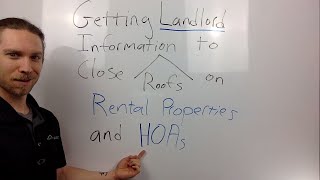
Adam Bensman ("the roof strategist") gives a step-by-step, practical tutorial for finding landlord and HOA decision-maker contact information to sell roofs on rental properties and multi-unit communities. Key tactics: qualify tenants at the door (ask about leaks/issues to create urgency), use county assessor/property lookup to retrieve owner name and mailing address, then apply multi-touch outreach (mail, call, knock, leave letters). For HOAs, ask residents for board member names, Google/lookup those names to find unit/address, secure introductions, and present to the board; prepare to handle objections like deductibles and bundled-property negotiations.
Chapters
Hello. Hello, and welcome back Today's Lockdown Live. I'm Adam the roof strategist, and we are back with another highly requested video, which is how to get landlord information to close roofs on rental properties and even HOAs. Now, this seems to be like a monthly thing. I get comments, by the way, Grady's, I believe is his name was a subscriber on the channel dropped a comment two days ago, says, hey, can do a video on getting landlord information because he's knocking on doors. Turns out there are rental properties and wants to be able to get in touch with the landlord to sell the property. This is coming over email and here's how you do it. I'm going to leave you with a couple of free ways to get this information and then to help you reach out to those landlords to close the property. Now, before we get into the specific details of that information, how to reach out, I want to set a few clear expectations and give you some insights on how to handle the time at the door. See when you end up knocking on the door, see if my dogs start barking. They didn't. When you knock on the door of a rental property and the tenant answers, they don't care about the roof, the home, or anything else. I. Unless there are issues. Now, if the roof's leaking or there's mold or something bad happening in the house, they don't care about the roof. They're likely not going to get you the information you need. So what you need to do is find out while you're there, is ask some questions, say, hey, listen, are you having any leaking or issues at the house that I should know about? Because I can help you out when I chat with the landlord. So that's a great way at the door. So again, you want to ask. This dang thing keeps falling. So you want to ask if there's any issues before getting the landlord info. So now you're armed with a little bit of information to create a sense of urgency. Okay? Urgency to get the work done. Without urgency, that landlord, excuse me, the tenant is not likely to be on your side to help out. All right? So once you have the urgency figured out, you are in good shape. And if you don't, then what you'll need to do is go use these resources that I'm going to share with you. Okay? Now, one other thing real quick. When you speak with tenants, okay, they are. You know what I just realized? Oh, it is backwards because of my screen. I'm like, hey, everything's written and mirrored, but it's because of the mirror. So anyway, tenants won't always play nice with you because again, they don't care you're interrupting their day. So you want them on board. Now one thing with landlords is a landlord is looking at his or her rental property and it's an expense. They have to do the roof. It's not like exciting, right? They don't really care. They want the cheapest solution. So I just want you to be to expect that when you do work with landlords that they're often going to beat you up on price. You have to be prepared to overcome the objection of the deductible. I've done other videos on that. Watch those because you don't want to get beat up. Now, one thing to prepare yourself for, if you find a landlord with multiple rental properties, what you need to be mindful of is they might say, hey, well I'm going to give you three rental properties. What can you do for me? So just be ready to address that objection or question by overcoming the deductible issue and then maybe using any of the items that have been paid for in an actual cash value basis to count towards the deductible to offset their out of pocket. What has happened to me in the past is I find a landlord, I'm like, this land deal, get one approved. They're like, oh well, I've got two or three others. They're going to keep it in their back pocket, right? So they want to see what you can do. First you get them approved and then you turn your attention and you show up, which this happened me get down the roof, off the roof with the adjuster and I say, you know, hey, this looks great, let's talk next steps. And they say, hey, you know what? This is what this landlord said to me. I've got two other properties here and here, what can you do? So I didn't sign the contingency agreement in that circumstance. So I got all of them approved. And then he came back to the table and said, hey, I really want you to work a deal because I'm giving you three roofs. And that's a real Debbie Downer, I'll tell you that. So here's what you want to do. I'm going to show you the tactical side now, okay? This is using a free resource. So let's say the landlord, excuse me, the tenant doesn't give you the landlord info because you can always ask. But if they don't, then you go to the county assessor's website, county assessor and if you Google this, property lookup. Okay, Google this. And I'm just write this in green because Google's green. So county assessor property lookup. If you Google this, what will show up is the county's page, okay? When you go to that page, you enter the property address on there and click look up. What will show you. What it will show you is the owner's name, the registered owner's name. Okay? If it is a rental property, it won't be the address of the property. It will show you that the deed is held or the property's owned by this person. So you'll immediately have their name and address. Well, guess what? Now what can you do? Two things. Three things. Four things. Let's go through them. One, you can send a letter in the mail. Okay? There's a bunch of letters in the marketing Battle Pack that you can use. If you're going to be sending them to an address that's not the property, you'll just want to edit the letters, you know, if you have the battle pack, you'll know exactly what to edit. If you don't, you can grab a link in the description below. Okay? And in that letter, you can say, hey, I drove by, or modify, I talked to Peggy as she answered the door, your tenant and you know, blah, blah, blah, your whole pitch, right? So you can send a letter to the property that the owner is at, actually residing in. Okay? The other thing you can do is you can call, okay? You can get information using any public records. Make sure this is legal. Sometimes whitepages.com you can get it. There are compliance issues in terms of cold calling. Make sure no one's on a do not call list. But you definitely can call if you can get that information. There are apps such as Spotio, which you've heard me mention, where you can click on a house, so far as I know, and get the homeowner's name address. If you enter in the name and address of the landlord, you can call them as well. Next, you can stop by and knock the door, okay? Which I know right now may or may not be possible. And then you can also leave a letter. Now, I have been hearing great success about leaving the letter right now. Taking that letter on the door, okay? Jason on the channel has, by the way, oh, man, I wish I had his email pulled up. He wrote me an email that he's signing three to eight deals a week right now by taping a letter from the Marketing Battle Pack on the door of homeowners instead of Knocking and canvassing right now. So again, Google the county assessor property lookup. You'll get the name and address of the owner. Okay. Which I'm just going to write owner name and address. And then you can layer on what I call the multi touch marketing. You can mail the letter, you can call and then you can knock and then leave a letter behind and show up, and show up and show up and then make it about that property, their the rental property. So this is the easiest, fastest way to find that information, look it up and get after it. When it comes to rental property, be prepared. Always ask up front. Do you own any other properties? I really like to get that aired out early in the process because if you don't and then you do make the mistake that I made where you get one approved and then you go get another approved and then another approved and you're all excited on a handshake deal and they say, show me your best number and you're out of luck. You don't want to go down that road, so ask up front if they have other properties. All right, so that covers rental properties. Now what about HOAs for those of you that don't know what an HOA is? And I've been getting more and more emails lately about homeowners associations. An HOA is a home owner's association. So that's usually hoa, all right. That is usually a multi complex property. They can be large apartment style complexes, condos and or gated communities. Okay. In order to get in with an hoa, an HOA or homeowner association has a board, okay. Which is members that live there that all sit on this board. A president, vice president, usually a chairperson and someone that handles all the money, treasurer. Okay. You need to find out who they are. So you go knock on a door and you ask anyone in that hoa, you can explain why you're there. Start the pitch at the door. Hey, my name is Adam, the roof strategist. You know, I'm here, I've been talking to a few neighbors and I was stopping by to help out with some issues that I think might be occurring on the roof. Now why do we say issues? The reason for that is we want to create a sense of urgency and a reason for this person to talk with you. Because the reality is hail damage is a major issue on a roof. So if you say to them, hey, I'm stopping by to chat and help out with some issues I've identified on the roof and I've been told that it would Be advisable for me to speak with the member of the board. Now, do you happen to have, do you know who the board is or maybe which, which unit they live in? I'm happy to go speak with them to streamline this process for you. So what happens when you do this? And I have a story for you in a minute. What happens when you go about this way where you knock and you highlight an issue and you say that I'm here to represent you, to help you out with an issue that I am seeing on the roof? All of a sudden they're like, holy crap, there's an issue. We don't want a special assessment, we don't want any of those, those things going on. So I want to help get you the name of a board member. Now what will often happen is many of them don't know if they're not engaged, but other ones will know. And what they'll do is they'll, they'll point to the, to the house or they'll drop a name. If they drop the name, you can look up their name in Google. Google the name and then the name of the town and then white pages, one of the little Internet resources will show up and you'll know which unit number they're in. Okay? So all you need is the name and then you can name and then look it up on Google, okay? Or white pages, whatever it is, and, or they'll give you the address or unit number. Okay? Then you can go, once you have the board members name, go knock the door. Now here's how this happened. I gotta, I gotta give full credit because this strategy was taught to me by a very wise man. And we were out together canvassing, knocking doors on an hoa. It was a huge building. We ended up getting the deal, by the way, using this exact strategy. So we go knock doors and of course you're knocking doors on. This was 12 giant, giant buildings, multi units, okay? So there are condos inside. And we befriended an older gentleman who was just a delight. He was so sweet. And we told him, we said, hey, you know, he was actually. Funny story up on the roof. This guy's in his 80s up on the roof, inspecting his own roof after the storm. How in the world is he up there? As he gets down, we offered to help, we hopped up there, we do an inspection, we showed him what we found with him because he was on the roof. And then we say, hey, you know, in order for us to help, do you know who's on the board? And he goes I sure do. He points, gives us the name of the husband and wife and walks us to the door and makes an introduction. After speaking with the president on the board, we then went through the whole process, got the board involved. This was a very long sales process because we had to they were in the middle of some other things, long and short of it. We got the deal using the strategy but luckily we caught the guy while he was out there 80 year old man on the roof and turned out to be our in to introduce us to the board. So ultimately, what's the key takeaway with this whole message? The key takeaway is this. You need to find the decision maker in order to get either landlord information or people on the board and multi unit homeowner association in order to present to them. So use the county assessor's page. You can do a Google look up for the name of the board member and then you can layer on those multi touch marketing pieces that I teach in all of these videos. That is all I have for today. I apologize I didn't get here doing this live until late late late on a Friday and I'm hoping you're going to catch this replay and catch up with these lockdown lives over the weekend and I will see you on Monday. If you liked the video, give it a thumbs up if you're subscribed. If you're not subscribed to the channel, click subscribe below. You'll get notifications when I go live and if you'd like to join the insiders, it's free. You get a copy of my ebook and there's a link in the description below. That's all I have for you today. Before you turn this it to use next time you're out there, use that county assessor's page, ask for the landlord info, put it to use. You'll get in front of the right people and close more deals. That's all I've got for you today. I'll see you Monday.









