"I want to wait to do my roof" How to CLOSE This Objection
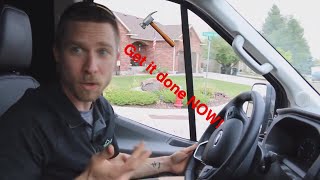
Adam Bensman teaches roofing salespeople three ways to counter "I want to wait." Push the legal duty to prevent further damage, explain how you can work around their schedule, and warn that insurance benefits expire in 6 to 12 months, so waiting risks losing coverage or funds.
Chapters
So you got a roof approved and you're really excited about your commission. And then you hear those dreadful words from the homeowner. I want to wait to do my roof. And all that you're thinking is, when am I going to get paid? Are they going to end up switching contractors? Is someone going to steal this thing from me? And worst of all, what happens if something worse happens to the roof? In this video, I'm going to teach you how to get your homeowners to want to do the roof now because it's in their best interest. Now, if you're new to the channel, I'm Adam, the roof strategist, and I help salespeople and sales teams reach peak performance, have fun doing it, and most importantly, smash their income goals. So here's what you say. When a homeowner tells you that they want to wait, you need to give them a compelling and legitimate reason to do it now and not to put it off. Because so many people want to put it off. And it takes education. Think of your own behavior. We do things now and don't put them off because there's a reason to do it now. Otherwise, the world of perpetual procrastination takes over. It happens to all of us. So what most people realize is that it is a homeowner's legal. Well, legal as in the legal contract between them and the insurance company to prohibit additional loss from occurring. So let's look at this in the angle of, let's say a flood. Let's say a homeowner walks in the house and they see that the faucet is broken and it's pouring water out and there's a shutoff right there, but they don't shut it off. And they call on the claim and they call a plumber. Well, it's their responsibility to take action to create less water from flooding the home. So they need to take action now. Right. So it's prohibiting future loss from happening. Now, what will happen is if a homeowner doesn't take action on the roof repair, and let's say a leak occurs because of the hail damage, even if it's small or wind damage, something silly happens. What will end up occurring is they are going to owe out of pocket, the insurance company is not going to be very happy. Technically, it's not even covered or it's a separate loss. So it's in their best interest and their dutiful obligation. Dutiful duty, I don't know. Dutiful obligation with the insurance company to prohibit future losses from occurring. So if a homeowner tells you that they want to wait, it is your responsibility to educate them and say, listen, I understand you want to wait. And I get it, I get that the kids being here, there's a lot going on. Our company is able to get this project done in and just be honest, how many days now for us, we used to be able to do at least a roof a day if it was 40 square or less. Typically it was a day job. So if you're going to do it in a day or two days and always under promise and over deliver, tell them it's two days, finish it in one. But it's important that you explain that you will do everything you can to provide the least level of disruption to the home. Now the other reason to do it now and not to wait is a couple things. One, that it is their responsibility to prohibit future loss. And even if the hail is small, if a leak does occur and the claim was already filed and that leak was even at the finger pointing of the insurance company linked to that hail claim, they're not going to want to cover it and they're going to either say we're not covering it all or if they do, you run the risk of it being a separate claim and a separate deductible. So it's really in the homeowner's best interest to do it now. So you have the angle of the insurance company and you have the angle of listen, we're going to accommodate your schedule and get this thing done for you in a day or two. You just let me know when we can do it. When you're gone, even whatever is going to be least impactful on your life is how I'd like to help you. Then there's the final element where so many homeowners don't realize that under the law with the insurance company, and it varies by the way, based on state, where you are, what type of claim, but it's anywhere from six months to a few years on average. It's about 12 months from the data loss when that hail storm occurred. And you want to let the homeowner know is if they drag their feet too long, the insurance company might not release the depreciation or the remaining funds that are going to be due when that project is complete. There's another roofer. Man, I'm cruising through Cheyenne right now and left it neighborhood and I'm seeing roofers everywhere even though it was a little storm. So when that homeowner realizes that there's a limited Time for them to get it done. They're more likely to act now. And I know some homeowners are going to say, listen Adam, it's fine. Like, I know we have 12 months or six months, but we're just going to wait three more months or two more months or whatever it is. Now, I have seen fine print on an insurance company policy, without naming names, that after six months the insurance company decided, you know what claims are six months, even though for this company it was a before you can file for depreciation, they change to six months. I've also seen just silly things happen. You don't want to run that risk. Plus what happens, by the way, this has happened. A homeowner drags their feet to the 11th hour and then we have the project done. We want to get everything handled for them and then we get this spell of a freezing, freezing temperatures, which I know you folks down south in Kansas and Texas and Florida, you don't have freezing temperatures. But if there's a like two weeks of rain or something happens that bumps the schedule and you can't get it, then everybody's scrambling for no reason. So it is in everybody's best interest to not put that pressure because the insurance company, even when you file for an extension at times, they don't want to accommodate it. Why? Because why would they? That means they have to pay. So give your homeowner one of these very compelling reasons to get the job done. Now, number one, educate them that there is a limited time window, alright? Number two, that if there are additional damages that happen during the project, that it's not going to be covered because it is their responsibility to prohibit future loss from occurring. They're the ones that need to make sure that there's no more damage that occurs due to the loss. There's a risk. And three, that you can accommodate their schedule the best that you can to get the job done. And no matter what you do, there are homeowners who are going to pump the brakes and they will push back a little. And you know what? You're not going to win them all. But it might help you win a few and those few end up with money in your pocket. Homeowners who are happy, homeowners who are made whole, and homeowners who are protected. Now, for more videos just like this, I recommend checking out the playlist here. I'm going to cover in all these basics, even though it says for new salespeople, I'm going to cover the difference between assessment versus price, how to break the emotional attachment to money and how to communicate this to the homeowner by focusing on what I call assessment and not price, which is going to be game changing for you and help you separate yourself from the other competitors. So just because this video is about to wrap up doesn't mean our time together is over. Click that playlist and we can continue our journey together. And if you're interested in any of my products, including my free Pitch like a Pro Roofing Sales Training Video Library, click the description below for all the links and then check out this playlist. I'll see you on the next one.









