LockDown LIVE: How to Overcome "Contingency Agreement" Objections
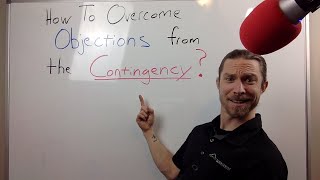
Adam Bensman teaches roof salespeople how to overcome homeowner objections to contingency agreements. The script covers three core points: insurance authorization, price-lock guarantee, and contractor-of-choice. He emphasizes the agreement only works if insurance pays in full, and uses "prizing" to increase perceived value.
Questions this video answers
April 6, 2020
Haven't filed a claim; partial payment; denial; paid in full.
Chapters
Foreign. Hey everybody, Adam here, the roof strategist and welcome to today's Lockdown Live. Appreciate that you guys were here early. I sent out an email not too long ago. If you're on a list, join it. There's a link in the description. Welcome again. I hope everybody is hanging in, doing well. We are in some interesting times right now and things are only getting a little more challenging for us. So I'm glad you're tuning in and using this precious time to invest in yourself and to get ready for when the floodgates open. So today's video is how to overcome objections from the contingency agreement. This was an email. Excuse me. Actually, this was a comment. I have it on my phone here, so I'm going to read it to you. So this entire video is a thank you to Jarrett. So Jarrett posted this comment. I'm going to read it word for word and then everything today is going to be about that. I got a couple other emails after this. So if you haven't done any emails to me, if you haven't shown me an email, adam strategist.com Sorry guys, I'm brain dead today. Anyway, email me your ideas, drop some comments. All of the lockdown lives are going to be built around content that you guys want to hear. So Jarrett, thank you for emailing. I'm going to read this right now. So Jarrett says, great video as always. I've had one question regarding the contingency agreement. If you go through your entire contingency agreement pitch with the customer and they refuse to sign, do you recommend still offering to move forward with them and meet the adjuster? Obviously you would try to find out why they're not comfortable signing it. But if they just don't want to do it, this could be a sign that they have no intentions of working with you. So do you still continue doing all the legwork for them knowing this and meet the adjuster, or do you just walk away from the deal and cut your losses? So Jarrett's question what do you do when a homeowner doesn't want to sign that contingency agreement? How much do you go ahead and meet the adjuster and continue moving forward on their behalf? Here's my answer. With very rare exception. Should you ever do anything and the reason for that? And I'm going to walk you through three ways to explain the contingency overcome the objection and completely flip the script. So they have to. They actually literally want to sign the contingency agreement because all of a sudden they see you as being a really valuable part. They actually need you. So the risk that you run on doing these handshake deals and meeting with an insurance adjuster and doing all this legwork is they have no reason to work with you because you just gave them everything. And you're literally. It's like a kid nagging for candy. It's like, oh, please, please. You're, like, tugging on their pant leg, and they're just going to shake you off because they don't need you anymore. So what you need to do is learn how to use the contingency agreement as a sales tool to get that homeowner to sign the contingency on the spot. When you present it in the way that I'm going to show you, it will get homeowners literally wanting to sign the contingency agreement because it feels valuable to them. Now, high level, I want you to think of this. When we approach the contingency agreement, we want to use it in a way where we prize ourselves. Prizing is a term used for putting yourself on a pedestal without putting yourself on a pedestal. And I'll give you an example of what prizing is. Imagine you're hiring. Excuse me? You're looking for a job as a salesperson with other companies. You want to hear from that company, why should I work with you? And when they explain what they have to do to offer with leads and training and installs and high commissions, that's prizing the company. It's an opportunity to sell for them. So you, as a salesperson, be like, they're cool. I want to sell for that guy. He's a good dude. I believe in them, right? So we need to do the same thing to our homeowners. Why should they? Why do they need you? So our job with the contingency agreement is to establish this need for them to sign it and for us to be part of the process. Most sales guys fumble up and they. They bring up contingency agreement and they freak out, right? It's like, oh, now we just need to get the signature, and then you clam up. Then you lose the deal. So here's the three things you can do, by the way, before we go any further in the battle pack, I get this request all the time. I'm just gonna answer it. Now, I do have a sample contingency agreement in the battle pack, along with a cheat sheet that you guys can print out and use to help use the contingency as a sales tool. So let's begin. Ultimately, the contingency Agreement should not be brought out until you get to yes. Okay, so you want a yes first. What do I mean by that? How do I get to yes? I get to yes by saying, hey, Mr. And Mrs. Homeowner, with everything I've showed you so far from this inspection and everything we've talked about, is this something you're interested in? Learning more about how we can help you or how I might be able to help you? So we want to ask them for permission to pitch. Okay, so first, get to yes by asking for permission. Ask for permission to pitch. This right here. Asking for permission to pitch is the number one mistake that most people make. They immediately slide into, okay, great. So I showed you this, and this is what we can do. And this is how the process works. And all we got to do is go to this paperwork, and you rush into it, and the homeowner goes, whoa, whoa, whoa. Pump the brakes. I'm not ready. That is usually the number one wall of resistance that homeowners come up with when it comes to sign the contingency agreement. So, Jarrett, my advice to you is, if you're getting that. Objection. Are you doing this? Are you getting permission to pitch first? Is this something you'd like to learn more about on how we might be able to help you? You literally want to get them asking you to present to them. Okay, so once you get to yes, before you bring the actual contingency agreement out, you want to say this, and I'm going to role play here. Okay? Let me grab a piece of paper. This is a stack, whatever it is. All right? So I bust out piece of paper. I say, Mr. Homeowner, before we get into all the details, I'm going to go over some paperwork with you, but I want to explain what this says, and then we'll read through it word for word. Does that sound good? Again, we're waiting for an agreement. That's my second yes. So can I present to you yes. Great. Now, I'm going to go through the paperwork, and I'd like to explain what this says, and then we'll. We'll read through it word for word. Does that sound good? Yes. Okay, there's our second yes. Say, excellent. So this is what we call our contingency agreement, and it does three things. Okay. First and foremost, this allows me to go to bat for you with your insurance company. As you know, your insurance information is protected by law. So if it comes to any point where I'm communicating about this claim on your behalf, the insurance company knows that we're working together. Does that make sense? Yes. That's our third. Yes. Excellent. The second thing this does is this is what I call my price lock guarantee. Okay? So it states that if we're able to get this project approved from the insurance company, we are going to lock in the price. So you owe no more or no less than your deductible. Unless there's other things. Right? So that what this does, Mr. Homeowner, is it prevents me from getting your roof approved for, say, $15,000, and me coming to you and saying, it's going to cost you 17. So I'm going to pause from my role play now. You guys are probably watching, being like, what the hell, dude? Like, no one's going to do that. And I know they wouldn't. But the point is to make the homeowner see the value in signing this I've always coined. And you'll see this in my battle pack. I call it the price lock guarantee. It's a sexier way of saying you pay your deductible. What does that mean? You owe your deductible. No more, no less. Okay? Unless there's elective upgrades and then all the fine print. But the idea is price lock guarantee makes the homeowner feel protected. So if I can say, hey, this will protect you, keeps what I call my price lock guarantee. So what's your deductible, by the way? Okay, they tell you, great, so you're going to owe your deductible no more, no less. Okay? That keeps me or anyone else from charging you more than the insurance company does with any surprise bills. And then again, your disclaimer is like, route A decking sheet and this and that, right? So all of a sudden, that's the second item. Does that make sense? And they say, yes. Great. So now you're at your fourth. Yes. The third point is this states that should we get everything approved and handled for you, we. We become the contractor of choice to do the work. Okay? So again, you're letting them know that you're going to do the work, and then they say, does that make sense? Yes. That's our fifth. Yes. Excellent. Now, most importantly, Mr. Homeowner, what this document says is that this is 100% contingent upon the insurance company paying for everything in full. Now, what that means is if we don't get this thing settled the right way in full, this is dust in the wind. You don't owe us a thing. All good. Great. Now let's walk through it. Boom. And then you walk through it so Ray says, game changer. Love it, man. Thank you for that. It took me a while to distill all this because I was never taught it. I had to kind of figure this stuff out on my own. And when I did, and I've since taught multiple teams on how to present this way, it is a game changer. So I want to recap. Number one is always ask for permission to pitch. Is this something you'd like to learn more about on how we might be able to help you through the process? How I can help you through the process? Yes. Excellent. Okay, Mr. Homeowner, I have a document I'm going to walk through. It's called the contingency agreement, and it says three things. I'd like to explain what they are before we read through it word for word. Sound good? Yes. That's another yes. Point one. Point two. Excuse me? Point one. Sound good? Yes. Any questions? Great. Point two? Yes. Any questions? No. Okay, great. So then we get to yes through those three points and then close with this is dust in the wind. You don't want us a dime if we don't get it approved. Sound good? Yes. So now we're at five yeses. Then before we go any further. Okay, it's important, I want to give you a little bonus tip. My bonus tip is this. If you sense some resistance, again, we talked about prizing, it's important for you to say, Listen, Mr. And Mrs. Homeowner, there's a lot of legwork that goes into these claims. Ultimately, not only am I here, I'm going to be showing up multiple times. I'm going to have my eyes on the property right now. I'm going to show up early before the adjuster gets there. I'm going to be there during the adjustment with the adjuster, and then I'm going to be there through the entire process afterwards to get the install done and then a final walkthrough. So at minimum, I'm going to have my eyes with full attention on your property. Meanwhile, the insurance company, they're going to show up one time. By the way, never paint an insurance company in bad light, ever, for any reason. But what you can say is it's not out of ill will, but when that adjuster shows up, he's there one time, they have a really high volume of claims, and they're going to see what they see. It's obvious that anyone who looks at something five times will have a higher likelihood of noticing things than someone who's there one time. Would you agree? And then Again, there's another. Yes. Yeah, I agree. So by having me there through the entire process gives you the most competitive advantage to having your property assessed properly. And remember, Mr. Homeowner, my job is not to sit here and argue dollar amounts. This is off the table. Truthfully, Mr. Homeowner, there's nothing about this process that has anything to do with price. My one and only job is to show up and assess your property damage documented. X number of feet of shingles, X number of feet of drip edge, X number of feet of ice and water shield. And I'm going to input that into the industry standard software, which is called Xactimate. And that is the only thing I'm going to do. Because here's the deal. That price that spits out Mr. Homeowner is updated by zip code every single month by an industry leveling software. And that is the price period. So I'm not here saying, oh, you owe us more. All I care about is making sure that whatever's damaged is documented for appropriately, because whatever comes out, comes out. And Mr. Homeowner, here's the thing. You can ultimately choose any contractor that you like to do this project, even if it's not me. Now, of course, I want it to be me. And the reason I share that with you, Mr. Homeowner, is to help you make an informed decision on how this process works. Because ultimately, price is not a factor. What you need is someone who is an expert and a specialist and not understanding the technicalities of how your roof needs to be installed, but a deep understanding of how the software Xactimate is used to assess the damage of the property. Now, we take that information and put it in there. Does that make sense? Yes. Great. So now we're at seven yeses, by the way. Now, Mr. Homeowner, do you have any other questions before we walk through this together? And then all we need is a quick autograph and I can get started on this right away. Okay, so you'll notice something. I never say signature. I don't call it a contract, say an agreement. I want to ask, do you have any other questions? I slide that paper in, I want to get anything that's looming in the back of his head out. Because the last thing I want to do, sit there starting to present to him when all of a sudden he says, you know what? You know, it's stewing. These questions are stewing. He's like, well, are you guys licensed and insured? It's like, oh, that was it. Yeah, here it is. Boom. Here's the picture. So we want to get all this stuff out of the way first. Do you have any other questions that I can address? Then we come back to the agreement. You can read through it. And it is really important to end with, all I need is an autograph, your John Hancock, whatever it is. Again, signing things people forgot about. And then. And then I can get started on this right away. Okay. Huge words right away. So you'll notice I've done things that a lot of salespeople would tell you never to do. I tell people, you can use anyone you want. Okay, now why do I do that? One, it builds incredible amount of trust. Two, it's factually accurate. And as you've seen on my channel, I really, really preach selling via education, teaching people what their actual options are. And number three, it catches them on their heels and they're like, holy crap. Really? Well, you're here. You just answered all of my questions. You seem like you know what the hell you're talking about. Why wouldn't I move forward with you? So it is incredibly, incredibly powerful. Now, once you squash all those questions, you can then get that agreement signed. You let them know that you can get started right away because everybody wants to know that they're taken care of. And then before you leave that house, two things. Number one, you want to have your next call set. Whether it's you're showing back up for something, you're meeting the adjuster, you're calling a re inspection. Wherever they're at in the four stages of the claims process. Remember, haven't filed a claim, paid in full. Excuse me. Haven't filed a claim, partial payment denial, or paid in full. Those are the four stages. So wherever they're at will dictate what you do next. So you do not leave that house until you have your next either appointment or phone call contact point set. And they know exactly what's coming. The reason you get people that cancel last minute is they didn't know what's coming. So that's another way of kind of overcoming those future objections. All right, thank you for that, Ray. And all right, that was that. Now, in terms of objection handling, when people say they don't want to sign it. And I want to go back to what Jarrett said. And I'm going to pull this up for a minute here because I want to read his. His message. So he says, obviously, you try to find out why they are not comfortable signing it. Yes, for sure. And would you have any. Would you still go forward in meeting the adjuster? I never Will. And the reason for that, Guys, I cannot tell you enough. When people have skin in the game, there's a higher likelihood of a positive outcome. People do not value things that are free when it comes to keeping commitments. And I'll give you an example. If I charged you $500 to show up to this lockdown live, would you agree or disagree that it would increase your likelihood of showing up? It would increase it because you exchanged money. There's meaning behind it. Now, if I said, hey, there's $500 worth of value in this, which I could very arguably say, because this is stuff that I do one on one with companies that fly from all over the country to come meet with me to train their team. I go over this process in detail very similarly to we are now. But you would not show up to a free video when I emailed you 10 minutes ago unless it worked out. And I know many people are going to watch this replay, but you see where I'm going. There is skin in the game. If you pay for it, you will show up. Now, when it comes to homeowners, if you show up to meet the adjuster without any skin in the game from them, what do you think the chances are of it working out? Handshake deals go so far, they collapse all the time. Rare exception is when you need to earn the trust and credibility of a multi party decision maker for commercial property. Okay, I'm going to repeat that. The only time to consider a handshake deal is if you are working with multiple decision makers that you have to win over and it's a massive commercial property with a huge outcome. Okay, again, consider, not do it, but consider it. But generally speaking, here's how you do it. You say, Mr. And Mrs. Homeowner, I understand you're not comfortable signing anything with anyone. Moving forward, what I will tell you is this. It is critically important whether it's me or someone else, that you have a contractor that you like, that you trust and that you're confident with who can help you with this process. Because ultimately you have two opportunities to get your property settled and assessed properly. That first one, if the adjuster's out on his own and it goes south, you're one down and your only other shot then is to call in another contractor and get them brought up to speed. So essentially you want to start this process off to the highest advantage possible that you have. Remember, I'm going to be here five times. I'm here today, I'm going to do my inspection, I'll be Here early. So it's really important that before you start this process, you have someone on your side. I do hope that's me. Now, what questions do you have that I have not answered yet? Okay, so you'll notice that I overcome the objection. I state the urgency for someone, a contractor, to be present through that process. And then I asked what questions, then I would revert back to the contingency. Great. Have I answered all your questions? Is this something you'd like to move forward with? With us, with me, with Adam, the roof strategist. And they get to. Yes, then. Excellent. Bring back the contingency. Get it signed, enroll. All right. I hope that helps cover everything. This is a super powerful video that I highly recommend watching. If you just joined late, I know a few people just popped in. Start from beginning when you can, and check it out. There's a lot in here that's going to apply not just to Covid stuff, what we're dealing with right now, but in general. And today we mix things up because this was a really good comment that Jarrett popped in. So thanks, Jarrett. Dee says stay safe. Thank you. You, too. Everybody here, stay safe. Remember, I'm going to close here and wrap this up. If you guys have any questions, drop them. And I can answer those on the fly. But I want to close with a few things. One, I super value every single person who's showing up live who's watching this replay. My Inbo has never been as full as it is right now. And it is incredibly fulfilling and rewarding to be there for you guys out there on the front lines selling through this, having to try new things to drum up business, to weather the storm, so to speak. So keep it up. Keep your foot on the gas. Remember to keep that pipeline full. Focus on what you can control, and do more of that. Okay? Don't focus on what you can't control. That negativity will bring you into a vortex, into a bad place. We know what you can't control. Let's not even talk about it. All we need to focus on is what you can control in doing more of that. Okay. The other thing, too, if you're not on the insiders list, which is my email list, I just updated it yesterday. I'm super pumped. There's a bunch of content that's going to be going out when you opt in. So you're going to get a free copy of my ebook, some of my best videos, some of my best advice and tips and tricks, and some personal stories that are going to drop right in your inbox again. Those will come from me and you'll get notifications for these lives if you're not on there. Thanks again for joining me. There's links to the Marketing Battle pack below. I've updated it with the COVID 19 specific marketing material, direct mail letters, door hanger, leave behinds only for production. Please don't go out knocking doors right now. Some cold call scripts and a new welcome email for virtual consultation. So thanks a ton for being here guys. I will see you tomorrow. I did have some questions come in via email. Any of the emails I send you. I monitor my inbox personally and I promise to get back to you and integrate those questions into the next lockdown live. So James, thank you again for that. Appreciate every single one of you. Stay safe out there and I will see you tomorrow.









