Mastering Social Media & Personal Branding w/ $3MM + Sales Rep Andrew Itnyre
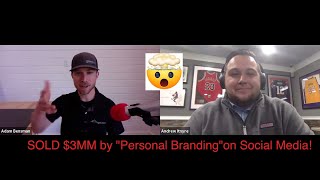
Andrew Itnyre, a sales rep who's generated over $3 million in revenue, talks about building a personal brand on social media to generate leads. He emphasizes authenticity and consistency on Instagram, Facebook, and LinkedIn, and how strong customer relationships drive sales in the roofing industry.
Questions this video answers
October 21, 2020.
About $3 million in a year (from the day the storm hit, across four neighborhoods).
@MasterroofingMemphis (Masterroofing Memphis).
Andrew Itnyre (spelled I T N Y R E).
Chapters
Hey, guys. Adam here. And I am joined by Andrew with Masters roofing out of Tennessee. And there's someone, no one better than him on the personal branding front. And I reached out to him, we communicated over Instagram and shot some messages back and forth. And bring him on the channel today to share with you one of the most widely asked questions, which is how do I use social media to build my own brand, to build my following, and to generate leads? So, Andrew, thank you for being here. I can't wait to jump in.
Yeah, thank you so much for having me. Adam, I love your stuff and so glad to be on. You're such a great individual and to see all the things that you're doing is really inspiring to me as well. So thank you for having me on.
Awesome. Well, thanks for being here. So just to give everyone who's listening and watching an insight into what we're going to cover, this can be a little bit longer of an interview because we have a lot of really great stuff to cover. But we're going to be talking about how Andrew Helps has used social media, specifically Instagram, to generate a serious personal brand and following generate leads. We're also going to talk about the importance of investing into what's important in the community and how that can really pay itself back. We're talking about heart here. This is different than learning a strategy or a tactic that you can use. You know, the things that I teach are very, you know, try this and this will work. And it's really challenging to teach people how to develop heart, is what I'd say. My true heart and true caring. And the last thing we're going to talk about is how building your personal brand helped you do. Did you say 3 million in personal sales?
3 million in a year from the. From the day that the storm hit. But really it was in four different neighborhoods. So that was a really great experience because first of all, the neighborhood is very close to military base, so you're dealing with a lot of people that served your country in a lot of. It was a very successful neighborhood. So you got a lot of colonels and people that are really high up. So to be able to service them and then to get acquaintance with their neighbors and kind of going through the process with them as well, it really was a snowball effect. It's like three or four initial appointments ended up getting me in front of the entire neighborhood to where, you know, now I got about 20 reefs left and it's kind of coming to an end, which I'm kind of Sad about, but it was an absolute wonderful experience. And now it's trickling into other neighborhoods and in the surrounding area. So, you know, that's the thing, building a brand, it doesn't only start on Instagram. It starts what you're doing each and every day. And how you operate and how you take care of people is so important. And I think if you get in certain communities that have been taken advantage of by bad contractors before and you show them that you're trustworthy, it ultimately comes to, you know, for them to trust you and refer you to their friends.
So can you share with us your story of kind of what inspired you to turn to Facebook and Instagram? Because I get it a lot. A lot of people want to start a personal brand or they say, hey, I want to use it for myself. And it's very appointment driven. Call me today, call me today. Call me today, get an appointment. And I noticed your stuff is engaging. You have a ton of reactions and comments on your Instagram. So what led you to doing that? And then if you can share, kind of how you found your unique approach into developing a personal brand as a roofing salesperson.
Yeah. And I think my expectations for it, I completely set a low bar. Begin with where I think that's where people mess up is they'll sit there and set this super high standard of, oh, you're going to post a one post and it's going to get in front of three to 400 people and you're going to get a lead off of it. It doesn't work that way, and I didn't expect it to work that way. So what I did is I just kind of took the approach and I listened to Gary Vee a lot. That's one of my guys that I really, really look up to and just take it one day at a time in documenting what I do each and every day. That's. It started off slow and then it kind of snowballed into. Once that I started seeing results, it was like, hey, I'm getting there. Now I just need to amp it up to where I'm getting in front of more people and making it as engaging as possible. So it's, you know, I had a video testimonial from Jerry the King Lawler and that's when I first got the real juice of what Instagram and Facebook was all about. I posted that video testimonial and my phone started ringing off the hook. I got over 100 profile visits in a day on, on Instagram, and it only got to about 600 views on Instagram, but on Facebook, it completely took off to where it got to over 10,000 people in one day. So that. That also shows you that each platform is different. Whether it's LinkedIn, TikTok, Instagram, Facebook. They're all completely different on what's going to do well and what's not going to do well. So I think it's very important to just get started in documenting and just putting stuff out there. I think people put way too much thought into what they're doing each and every day, rather than just saying, hey, listen, I got these pictures, I'm going to post them no matter what I look like and how it's perceived, and just put it out there. Because. Because there's so many people that sit there and critique it to the point where they waste the whole day on one post when you should have posted six posts that you know are completely different, that maybe one of them might take off and get you more engagement.
Yeah. Analysis, paralysis. Wanting perfection. When you just need to get something out there.
Yeah. And I think that's. That's kind of. Once I started posting five to six times a day, I realized you can't be a perfectionist because you'll drive yourself crazy. So that's when I just said, hey, you know what? I'm going to go take the photos. Instead of doing all the editing and everything, I'm just going to post it the way it is. And then that's when I started getting consistent, you know, 20 or 30 profile visits each and every post, you know, and I started getting in front of 2,3000 people total on the different, you know, on Instagram. And then LinkedIn's a little bit different and Facebook's a little bit different, but you just never know what's going to be successful, so you have to try and put yourself out there.
Yeah. You know, you mentioned being successful, so obviously I follow you on Instagram. I haven't seen. I'm not super active on LinkedIn, so I haven't checked there. But which platform do you find to be the most effective if you had to choose one?
If I had to choose one right now? Well, to be honest with you, they're doing what they did with Facebook, with Instagram right now. So. So when it used to be, everyone used to get all these leads off of Facebook and it was a great platform to be on, and then they killed the organic reach. That's how it works. They suck you in and they get all these people that are emotionally invested because they built this platform and then they cut it off. So that's exactly what they're about to do with Instagram. I just feel it coming because I'm starting to see the numbers drop a little bit. And that's fine, it's just the way it works. But ultimately their goal as Facebook is to get you to spend money on ads. And if people are getting too much organic results, they're not going to spend money on us because they don't need to. So Instagram still my favorite. I still think it's the best place to post and it's the most practical for anyone to use on a day to day basis. LinkedIn, I'm not a huge fan of. I like the setup, but it's just a different crowd that you're, you're talking to. I think articles do very well on there and I'm not a writer, so I'm not super active on there, but I still post the same stuff I post on Instagram, I post on LinkedIn and I'll still get in front of 500 to 1,000 people, which is better than going and knocking 500 to 1,000 doors. You know, I still get leads off of it every once in a while, but it's not a huge focus. But I think the idea is to understand how algorithms work and how engagement works. And then once that you understand that concept, then you can apply it to Facebook, Instagram, LinkedIn and TikTok. That's what I'm learning. TikTok is something that I never thought I would be on or even be good at. And I posted my first video, got to like 2000 people, 3000 people. And then two posts later I posted a drone video that ended up getting to over 150,000 people. So now I'm now that Instagram's. I don't know if it's going through a diploma because of the pandemic and people just being sick and tired of social media. Or it could be Instagram just tightening up the algorithm. But now that I'm seeing that my focus isn't completely on TikTok. I'm still posting every day on Instagram, but I'm working on, okay, I need to start building up my other platforms just in case. If this happens, if everything keeps going well on Instagram, great. But you got to diversify and you can't be, you can't have a singular source of income because at some point they are going to sit there and tighten up that the reins on the algorithm and it's going to shut down everything and then it's going to go back to sponsored ads. And those work great. You know, I'm not against sponsored ads at all. You know, I don't run them as much as I probably should because I just feel I'm not really good at understanding how to run the ads. But. And I get enough organic reach where I'm happy and I'm busy all the time, so that's all that matters. But that's just how the media, social media gets you, is they suck you in. And then once that you're invested, that's when they, you know, say, okay, now it's time for you to pay. So, but I would say Instagram's my favorite. I really like the algorithm. On TikTok you can tell whether a video is a hit or not a hit right off the bat. On TikTok, it's amazing how quick their algorithm reacts. And so that way, you know, you know, it's just great to have, you know, a really good algorithm. But, you know, LinkedIn's great. I gotten several leads off of there that were really good and I think that, you know, every platform has, has its pros and cons, but I think they all get to that state of maturity to where they start to, you know, change things up to make people invest into their, what they worked hard to build in the first place to get that attention.
Yeah. Do you find on LinkedIn are you getting more commercial or large scale type projects from there rather than residential.
LinkedIn? Yeah, so, so I gotten, I gotten several high end properties off of LinkedIn. I got in one commercial build and I just got 120, 123 square Spanish tile roof. Not opportunity to bid on that, which we're mostly residential shingles. But you know, I told my dad, I said it's 123 squares, this guy. And I actually met him at a home show, which I didn't even remember him, but I met him at a home show two years ago and I have my photographer there and that's when I first started documenting. And his wife, some girl came up to me and started talking to me and she noticed me from Instagram. So it's what her wife kind of nudged him and said, hey, you need to talk to that guy. Because evidently someone, which I'm nobody, you know. And so we talked and then, you know, I guess another sales guy sold two roofs for him. And then we had an opportunity to build a, you know, to bid on a 123 square Spanish tile roof, which the material was 90 grand to start out. So, you know, I'm like, we're only doing the labor, you know, but still to have that opportunity, it's, it's nice that people, you know, think of me that way. You know, you're the guy to do it, you know, that's what he said. So, you know, you got to know.
Your audience and where they hang out. LinkedIn is business to business. People use it for business purposes. And more often than not, your average, I'd say blue collar worker, industrial worker, they're not on LinkedIn. It's people that are doing business sales. It's usually a little bit higher income group. It's awesome to hear that. They kind of validated my theory that more high end homes, they're obviously the volume is lower. Is that an accurate statement? Volumes lower on LinkedIn maybe?
Yeah, yeah.
More consistent on the higher, higher end side of things.
Yeah. And that's the thing. I'm open to any, any community, but I really like working in higher end areas just because I like the big projects, I like landing the big projects. My dad hates it because, you know, he's the one that has to worry about stuff getting broken on the outside and how complicated it is. But to be able to land those jobs and to fly up the drone once that we get done, it's a real sense of accomplishment. And then also you're getting paid for your time. You know, you're getting paid very well on those jobs. And to be able to operate and to show people in a neighborhood, not many people can do those high end homes without messing anything up. So to be able to go in there and deliver and to be out and you know, two days at the most, two, three days, that's when you get people, hey, these guys are great, you know, let me give them a call. We did one the other day where the roof, it was first of all, it's two stories, but each story has 20 foot ceilings. So it's a massive mansion and it's a 1412 around the whole entire house. And the tear off goes straight into a pool. There's no, like 3ft or 5ft where you could put the material is literally straight off into a pool. And so we knocked it out of the park, delivered for that customer and sure enough we got three neighbors off of it. So you know that I just like being in those neighborhoods. I like all eyes on what we're doing and the people be in awe about what's going on. So that's where I really enjoy about working in those neighborhoods. But LinkedIn definitely is a segue to get into those people. You know, that's where the lawyers and the doctors and anyone who's someone. Real estate agents, that's where they're going to be on LinkedIn. So I definitely think that there's a market there. I just think right now with the pandemic, I don't think people are as on as much as they were before the pandemic. So I think a lot of the time those business people are on zoom calls now rather than being on LinkedIn and be able to bullshit at the office.
Yeah, for sure. Or Maybe they're on LinkedIn in the background of a zoom call. So, Andrew, I'm curious. Your online presence drives business, but when you meet with people or if you're talking to neighbors, do you ever refer people back to your Instagram for long term, like as a credibility piece?
Yeah. Yeah. And I mean, I had one lady, she was. She was. She referred me to eight people over the course of a year and a half, and I didn't even do a roof. She just saw my stuff on Instagram and she said, hey, I found a good roofer. You know, let me tell all my friends about it. So I tell people all the time, I don't care if you use someone else, if you're liking and commenting on my stuff. That's all that matters to me. Like, you don't even have to purchase anything from me. Just being engaged and if you have any questions, putting them out there for me to answer. I just appreciate that following and someone caring enough to view what I'm doing. But, yeah, I definitely tell people all the time. With my Instagram and my Facebook and LinkedIn, I kind of accepted that I'm the Memphis roofer for the next 15 to 20 years, you know, because I just built such a large following and brand around what I do. So I definitely keep. Terry Jackson, who's a customer that built two years ago, I just commented on her daughter just had a baby and I commented, congratulations, you know, what a wonderful day. And I still keep track of all my customers, even after the fact, because they're important to me. I get emotionally invested. I think most good sales guys get emotionally invested into their customers. I stopped by people's houses that I did five years ago if I'm in the neighborhood, you know, and just check on them to see how they're doing. And a lot of times, though, if you knock on that door and sometimes they don't even remember me, they're like, oh, my God, you gained 60 pounds. You know, but, you know, at the end of the day, they'll sit there and say, well, hey, my grandma or, you know, my daughter or someone just got married, they bought a house and it needs a new roof. So I think keeping those contacts no matter what. And it just has to. It has to be genuine, too. Like, you can't just be sitting there berating people about, hey, I need a referral from you. I need a referral. Just have a genuine conversation with those people and just check on them. And I think that pays off and pays dividends in the long run.
Yeah, huge. Before we transition into this, because that's a great segue into developing a heart. And every single top producer that I either talked to, personally coached or trained, or even that I've seen as guests on other podcasts, they all say the same thing. I take care of my people. And one small side note on that, because it's an entertaining story I've shared. Once we were in the middle of a roof and it was a two story home. It was for sale, by the way, so they were moving internationally. Two story house, steep. It was a wood shake that was getting torn off. And then we were putting shields back on, so we needed a redeck. And freak storm blew in while their guys were working. Right after we tore everything off, so everything's exposed. So they tarp. It starts raining. Wind kicks up, blows their tarp off. So the crew's up there on ladders trying to hold the tarp down. Lightning strikes are like, we're not going to die for this roof. So I get a phone call three and a half hours away, and the homeowners calling. And he says, adam, I think you need to get over here. And I hear alarms going off, all this stuff like, what's going on, man? And he was the one that broke it to me. First salesperson was off, you know, grabbing lunch or something. The crew was doing what they're doing, which is freaking out, trying to solve the situation, not call me. Yeah, we caused over $70,000 worth of damage to that home. It downpoured in that house for 45 minutes, soaked every single wall from the ceiling down to the wall. Wood floor on both levels had to get refinished, repainted, dried out, everything. The attorneys never got involved and got a letter, a testimonial letter, saying we would choose you again for this project because how you handled it, and that's the level most people would be like, how do I avoid this? How do I You know, and then freaking out. It's like, you know what? You just take care of people, and it's. Sometimes it's great lengths, or other times it's not. But before we jump into that, because. Cause that's something that you can't teach. Caring is your heart or it's not. But before we get into there, go ahead.
And I think doing the right thing is always the right thing. I had a customer a couple weeks ago in that neighborhood that I was telling you about that had done $3 million where we had a guy step off the roof to adjust. It's a metal roof. And then they had a metal. Like a section of the roof that was metal on the backhand side that was like a pergola that was attached to the house. Well, the guy stepped off the steep roof to adjust his harness and stepped onto the metal roof, and it completely collapsed. So, you know, come to find out, the person who installed it, who was no longer in business, wasn't licensed, didn't pull permit, he installed it the wrong way. There was no anchors into the house itself, and it collapsed. Well, the guy served our country. He was a colonel in the army or colonel in one of the branches of the military. And he's just out back pacing because he's not mad at us, but he's mad at the situation, you know, and you can just tell he's upset. And I called my dad on the spot and I just said, hey, Dad, I said, I'm your top sales guy. Please bear with me. I know you don't have as kind of a heart as I do, but please, let's just rebuild this job and do it the right way. And sure enough, we did that, and it was a great experience from that. That point on. But you got to take care of people. And that's one thing I always prided myself on, is no matter what, if I go into a house, whether it's retail bid or insurance shop, I don't care about how much money I'm making on it. I just know I'm making money, and I just keep that mindset throughout. So that way, I don't. I think in your head, when you're not focused on the money, you're worried about signing up roost. And you're not saying, hey, well, I made this much money this month, I can kind of get back and relax. So I'm just on to the next one all the time and just keep, keep moving and just keep the customer the focus. Because when you do that, that's when you get a good result.
Absolutely. I couldn't agree more. It's good.
You're in the right boat. You did the right thing. I'm proud of you. You know, and that's the thing. We need more contractors like you in the business because there's so many people that would say, hey, listen, you're gonna have to file another insurance claim, this isn't our fault, you know, or put it back on to the homeowner rather than just dealing with it because one, they're not pricing themselves right. Two, sometimes they're not well established and they're just not able to sit there and say, hey, I need to bite this bullet. Because if they bite that bullet, they're going out of business. You know, so absolutely, you gotta take care of people.
It's that simple. And I'll be frank. My growth, my biggest growth had come when I literally stopped focusing on money. I did everything that like, I stopped even. I said, listen, how do I create the best products? How do I make myself available? Which I didn't because it's time consuming. As you know, when your phone rings. And I avoid, frankly, I only got on Instagram recently, I avoided it because it was one more thing to manage. And I said, you know what? For me to make an impact and to fulfill my mission, which is to help people just like you and anyone watching use this industry to transform your life, that means they need support. And, you know, there's a lot of folks out there that have really good stuff, some people that maybe not have great stuff. I don't know, I haven't tried them all. But my point is that the thing that I think makes made a difference for me is just how do I make myself more available and support people? And if it's calls, if it's text messages, you know, I respond via emails with a personal video replies, and I do what I can to say I am committed to success. And the interesting thing is if you really think about the way that I do this, and I'm curious if this resonates with you when I look at service and exceeding expectations, because you and I talk. We're going to talk on that in a second about over delivering. When you start focusing on the service side of things, everything else just kind of follows and doing it from the right, the right place. So I'm, man, I just lost my train of thought. What were we talking about? I had it all teed up and then.
Yeah, no, you were talking about the, the aspect of over delivering.
Yes.
Being able to over Deliver and exceed expectations on each and every job.
Yeah.
And I think the one thing is finding these simple things that make a difference. So, like going into text messages, texting them the day of the build. Hey, this is exactly what's going to happen. I'll be out there at 4 o' clock to pick up the checks if you need anything. And I tell my homeowners, if they need me to go run and get Chick Fil A for them or Starbucks. It's kind of a little bit different now with Pandemic. Not so many people take me up on that offer, but I've done that several times where I go and get them lunch. I have one day where it states in our contract that we're not responsible for covering up anything in the attic and that the homeowner is responsible for the debris. I had a customer out in Eats, once again, a big mansion. This guy's 86 years old, has an E Commerce business, extremely successful. And so it's him and his wife. Well, I remember going over the day of the contract about the attic being protected and she said to me, she said, hey, I have these dresses that are really expensive in the attic. I'll just move them out the day of the build. Well, she forgot and she threw a fit because I didn't know that they were Chanel dresses. Like they were extremely high end Chanel dresses in the attic. Which I'm thinking in my head, why would you put Chanel dresses in the attic? So they got extremely dirty from the debris. It's just one of those houses where the debris came in and we had to cut enrichments and everything. So I told him it cost me about $400 to dry clean everything. But he was honest about it. That's the way I look at it. He came to me and said, hey, Andrew. He says, my wife is extremely upset. I know you told me and I know you told her that we were responsible for the stuff in the attic, but we forgot. And she's extremely mad at the situation. And I said, hey, listen, I'm going to bail you out one time and one time only. I'm going to dry clean, you know, her dresses and get her, get her in shape. And my dad would look at that and say, well, hey, listen, you know that you didn't have to do that because you remember the conversation she told you she had the dresses, that she was going to move them. But at the end of the day, it's about the customer experience to me and having a good experience throughout the project. I Don't want dresses to come in the way of, you know, me picking up my money at the end of the job or the customer having a bad experience, like, let's just take care.
Of it, or losing the neighborhood. I mean, you do that and they're going to say, hey. Because people, it's amazing how many times you will get a referral from a bad situation because when you handle it, it's memorable. People have that very, that, that extreme of I hate you. They're screaming at you and then you just sit there and you take it and then you say, I'm committed to making this right. Restate the problem they're having. Ask if it's okay. If you commit to solving it. Ask what they want, repeat back to them, and then follow through. It's that simple. And when you do that, that 400 bucks, I mean, come on, guys, this industry, if you're, if you're a solid salesperson, you know, brand new, probably near 100,000. If you're doing really well, 100, 200, 300,000, what's 400 bucks? And especially if that person is even going to be like, you know what, talk to Andrew and his company because they did an awesome job. Yeah, my dresses got dirty. But they actually stepped up and took care of it. And that shows that you care. So right before we segue truly into the heart side, if you were to look back when you first got into social media and developing your personal brand, I would love to hear from you the three things that you that would be like, definitely don't do and the three things that you would give yourself as advice to do. So let's start with don't because that's more fun.
Yeah, I think the one thing is don't post advertisements. You know, don't, don't post what you're doing. Don't sit there and post advertisements because people don't want to see that. I mean, think if you're on Instagram or if I'm on Instagram, when we're scrolling through, if you see an advertisement, it's automatic, you know. So one of my things is I pay attention to what I do when I'm on Instagram and the content that I really absorb, like the Nike, Nike is great at what they do. The high end brands, they're very good at what they do too. But they post engaging content that people can get into and they'll click on the post. So I think when you're putting out just basic advertisements, it doesn't resonate as well. As if you sit there and just document what you're doing and think about the post itself and what message you're trying to get across. So even when I'm busy, I try to take a second to make sure that there's enough there for people to get anchored to for 15 to 20 seconds out of their day that they can absorb and say, okay, you know, and make mental note of that. So next time when they come on and they're scrolling through and they see a number, another one of my, my posts that they can say, okay, well, he, you know, he posts engaging stuff and they'll look at that as well. So, you know, I try to make three to four posts a week that has a hard message behind it that people can really absorb and connect with. And then the rest are just, you know, showing what I'm doing and documenting, I think, advertisements when you're sitting there and hitting people. And another thing, going into people's DMs and just berating them with, hey, this is my service and this is what I do. Don't do that. Just, just post what you're doing and if they come to you, great. If they don't, then as long as they're liking engaging in your content, that's all that matters. So if I have people that never spend a dime on me, that have my phone number, that contractors that I sit there and help them out, anytime they text me, I text them back. And they, they never invested in me, but it's a relationship. I genuinely care about those people. So make sure that you have a passion and care about around every single connection. And then also diversifying. That's another huge thing. I spent a lot of time on Instagram because I thought that was going to be the segue. But as I matured and got older, I kind of realized that, that you have to have multiple streams of social media because all it takes is Instagram making the decision to limit the amount of people that you're getting to initially. And then it, all of a sudden it's not Instagram and you're not getting in front of many people. And then you're like, well, what do I do now? You know, if you have several different platforms that you're building on consistently, then you can kind of jump over to each one and say, okay, well, TikToks, you know, you're getting to three, 300,000 people in a month on TikTok. Eventually that's going to turn into something because it's extremely young. Like, if I got the 300 people. I got the 300,000 views in less than a month on TikTok and I'm not even posting anything good. I don't think I just posted whatever I can because I just know that, that that's the platform to be on right now. But to sit there and be able to maneuver from platform to platform and understanding engagement enough to keep people engaged in what you're doing and then promote each, each, each version, each platform on that platform. Like, so I might make a video talking about my Instagram on TikTok, you know, and get those people from TikTok to follow me on Instagram. Like, you have to diversify. So I think the biggest thing is don't be people. If we're talking about don'ts, don't beray people, you know, with DMS and stuff like that. That's going to make them annoyed and they're either going to unfollow you or say, hey, listen, you know, I'm just not into what you're doing and just post what you're doing each and every day and making sure that you're responding to what you're getting feedback from. So if you make a post and it didn't do very well, find out, go through the reason why in your head, why, why it didn't do well. And a lot of times you'll come back to, well, I didn't put enough hashtags on it, or I didn't put any at all, or, you know, maybe I didn't. I wrote a short sentence rather than a full paragraph that explained everything, like, find out what works and what doesn't work, rather than just posting aimlessly and just you'll hit every once in a while, but you'll never know the reason why it. And then once that you find out that concept, then you can sit there and apply it to LinkedIn, Facebook and other other streams, you know, places where you stream from.
Yeah, that's super helpful. So thank you. What would be the three things that you say are an absolute must in order to succeed on social.
Absolute must is definitely consistency. Posting each and every day, think that's the most important thing. And posting engaging content. You know, if it's just, if it's a selfish. I look at it this way. If it's a selfish form of content, if you're doing it to get something out of yourself, like get someone to do something for you, chances are that's not gonna resonate with anyone. So just document what you're doing each and every day and put out your genuine feelings and how you're feeling that day. If you're going through a rough time or you're not hitting, well, just make a post in, you know, just say, hey, listen, make a redemption post where you're sitting there and building yourself up and saying, hey, I can do this. I use it as a personal blog to put out my creativity and my personality and what I believe all those things are what I use Instagram for. And I think that's the reason why it resonates with people, because it's not. I'm not trying to sell anyone on Instagram. I'm trying to show them who I am. So at some point, if they ever need a roof, they say, that's my guy. And I have people buy some of our best packages, our best packages, you know, off of the fact that they believe, you know, in me and what I do. And they want the best of the best when it comes to master roofing. But to see my father's business grow, there's so much potential online, and it's not just on Facebook or Instagram. It's all the different platforms. And even when you're out in a neighborhood each and every day, having a drone with you to go up and document these things, it takes five minutes to fly it up. And I actually had a situation where a kid came up the other day. Him and his friends rode up on his bike and they were watching me fly in the drone. And I just looked over at him, I said, hey, you want to fly it? And he said, no way. He said, I don't want to break it, you know, and he started freaking out. And so I let him fly the drone. And that's what I do it for. I don't care if he goes home and tells his mom about it. I do it because it's just a fun experience to having a good time. And then the next day, I crashed it. So you know your drone stuff.
I commented on one of them because I saw it and I was like, man, this, it looks larger than life. And especially since you're doing these big, beautiful homes, you're going to start to magnetize the same type of client. And if you were showed a bunch of, you know, little bungalows, 20 square roofs, you get a million dollar home, they're gonna be like, they may not be equipped to handle it. But the nice thing about that level of prestige is it magnetizes other people with similar homes and it puts you at a different level of status, even down to how you dress, which I notice you dress very nicely when you're out in those homes. And you had commented, I'm pulling up, I'm looking at my phone because yesterday I was sitting out on my back deck and. And I was reading this, and you'd comment, and we share. It says, always give people more than they expect to get because giving customers extra service is a money seed. And then. Hold on, where's the next page? I took a picture of this says, money seeds, of course. Grow money, plant service, and harvest money. By the way, this was from the book. Anyone that hasn't seen that was up on Instagram. That's from the book the Magic of Thinking Big. Phenomenal read. So totally, totally dig it.
Yeah. And that's the thing I. Ric Flair the wrestler was one of my idols growing up. And one thing that I loved about him was he had. He was a bad guy. You know, he was a heel, which means that, you know, he's supposed to be hated, but people love to hate him, you know, because he was just so good at on the mic and at what he did. And I kind of got my flashiness from him and the sense of style and everything. I just loved his image growing up. And that's when I kind of realized, like, hey, you know, dressing different isn't a bad thing. You don't have to wear nice things. But definitely, when you're going into a house, you definitely want to look the part. You don't want to go in with a sweatshirt. And I've seen several sales guys come through this business, and the worst thing you can do, the worst thing, is to change Smoker who goes in and, you know, a hoodie and a hat and glasses on top of the hat with tattoos showing and everything else like that. That, to me, that's not professional, you know, And I strive to be. When I go out there, I want them to know I'm the expert. And as soon as I walk through that door, I'm the expert. And I go into that mind frame of, what's your problem and how do I solve it? And what are you wanting out of this experience? Because that's the most important thing to me. If I can't find out what you want from this experience, then I'm not going to be able to ultimately close the deal. So when I go in, I want to know everything about you, your family, what you're expecting from the project, what you like to do on the weekend, whatever. I'll sit there and spend two hours in a house just talking to people. I went into Houses to sell them a roof. And I ended up having dinner with them afterwards. You know, like, it's just, it's, it's crazy, this stuff that. But I genuinely care about the people and segueing into what we were talking about with having a heart when the one thing I always had going for me when I grew up, I didn't have a lot of friends. So when I found a friend, I was completely invested into that person. So it doesn't matter if I meet you, you know, I can meet some random person tomorrow at Starbucks and I'll sit there and have a five minute conversation. And sometimes it segues into all these different conversations because I'm genuinely invested into that person. So not having many people around me growing up and understanding that the few relationships that I have are very important to me, that transferred over into sales because I had several people over the years say, you know, I feel like we started as a, this, as a transactional process and then now I feel like, you know, I know who you are and what you're about and you know, if you ever need anything, reach out to me because, you know, I'm always here for you. So, so to make friends rather than customers, that's always been my goal.
Make friends rather than customers. Write that down. Everybody's listening and watching. The other thing that you talked about that really resonated with me was you said, I want to understand what they want from this experience. And that is the difference. When I hear of salespeople struggling with deductible issues, pricing, all that, the difference is they're selling a roof. What you're selling is an experience. And if you look at price anchoring, anyone that doesn't know what price anchoring is, it means when we see a price, we immediately associate it and pair it with things. So if I'm shopping for a new shirt and I got all my shirts at Walmart in the past and they're $12, right, then I see shirt, immediately I'm 12 bucks, I'm anchoring it. But if I'm used to shopping at Versace or something, and I don't even know what a Versace shirt costs, but let's just assume it's hundreds, right? Hundreds of dollars for sure. That person's gonna price anchor against this. But if you're only, if you're price anchoring on just the roof and not the experience, you're gonna be competing against the commodity roofers. And if you think about it, people are willing to invest so much more on an experience that's why people drop vacations. And the biggest one is a roller coaster ride, a ticket into Disney or Orlando Studios Florida or Six Flags. They are ridiculous. People will wait in a two to three hour line for a 30 second ride. And if you calculate it, you're gonna be like, oh my gosh, that ride per minute is gonna cost more than probably the highest end attorney in the U.S. but people don't look at it that way because it's an experience. And, and an experience has an emotional outcome. And you being in their home, they trust you, they like you, they feed you, they feel cared for. That's an experience that the right person will invest in happily and then tell others versus buying a transaction. So I absolutely loved when you talked about experience.
Yeah. And I think if you look at people like Disney who have really created a brand and a. When you go there, you know, when you go to Disney, you feel a part of the experience and everything that's going on. But they literally have meetings when they're writing a movie or going through the process of producing a movie of what the core values of a princess should be. You know, they're so oriented in the what they're putting out to their audience that they have a, instead of just saying, hey, this is a character, this is what I think it should be like. They have core values of what a princess should be or a prince should be or different characters. So over time, they developed a formula for a successful movie such as Frozen or the Lion King, whatever the case is. And they took that formula and they just keep perfecting it over and over and over again. And that's why they are where they are now. But it's the same process when we go in. I don't want to say I do a run of a mill presentation when I go in, but I definitely have certain points that are almost identical in each process, you know, and then I tailor it to the customer that I'm dealing with, you know, and there's been times where I have conversations on the phone with a homeowner. I just know that they're not the person for me right off the bat. Now just say, hey, listen, I'm just not the contractor for you. Thank you for your time. Sorry, I'm super busy. You gotta go. But I can I fill them out just as much as they're filling me out because I want it to be a great experience at the end of the day. And just like a dance, you have to have two people in synchrony to get that, you know, that Chemistry there. So I think it's important for everyone to vet their customers and make sure that they're the right person for you. And. And vetted neighborhood too. If I get a wrong vibe going into the neighborhood, into one neighborhood, even if the roofs are completely torn off, if I get one or two people back to back that just don't have the same core values that I do, I'm out. You know, I'll go find some another neighborhood that has the same values as me, and that's the one I'll focus on.
That's huge. That's huge. So thanks for sharing all this. As we wrap up, I'd love to talk about heart and commitment to a community because before this interview, before we started recording, you shared with me about finding what's important to that neighborhood and matching that passion. And a huge question I get. It's always from folks, and that was me. You know, we were working different communities and working storms. We had permanent locations, but maybe a storm hit an hour away, and now you're the out of town roofer. If it was on the border of an area code and people like, you're out of town, it's like, no, I literally am 10 minutes that way. But they think you're from the other side of the planet. So people say, adam, how do I get involved and ingrained in the community? And I share this and you put it just so well. So I'd love for you to share with me what you shared about the school as an example and how you pour your heart into matching that community.
Yes. So the one thing I always strive to do is find out what a community cares about. So one of the communities I'm in, I immediately got into it and I found out that they were very big on their school systems. There was a high residence rate of military because the military base was so close. And I just really had a great vibe and it was almost effortless to go out and sell these roofs. And it got to a point where I've sold so many roofs in there. I'm like, what can I do to make these reinvest back into this community? So I went to a silent auction and donated a lot of money there. And I donated to their football teams, their local football teams. And I really put back into the community because I noticed a lot of the parents, anytime that they had a meeting up at the school, it was right out front of where these residents lived, the school itself. And you would always see a lot of cars in the parking lot. Anytime that there was A meeting at the school. And so seeing that focus, that automatically means to me once I make it doesn't. I do stuff all the time where I just feel right about something. I go all in on it. But anytime that you're in a community, you want to find out what's important to them and make sure that you reinvest and you put money back into that community because ultimately you're in it for the experience. And when you're doing that, people will see, hey, listen, this guy's investing into us and what we do. And, you know, they'll go out and talk to their friends about it. So I try to find the heartbeat of each community I'm in and just reinvest into those people. I had a guy that I meet with, he was a customer at one point, but now he's a spiritual guy for me. You know, he kind of led me to Christ and down that path. So the other month, I want to get motivated, you know, to do something. So I told him, I said, you know what, Chris? I said, for every roof I sell this month, I said, I'm going to donate to $200 to. To what you do. And he builds. He goes to like, Ethiopia and all these countries, and he'll build infrastructures for people to go and not only pick up Bibles, but go to worship. So I ended up raising almost $3,000 in a month, you know, towards his. Towards his cause. But that's just always the way I've been. If I'm doing well, I always want to reinvest in the people around me. And that way they can see that I. It's not about the money to me, it's about the relationships. And we touched on this several times throughout the podcast. When you focus on the relationships, everything else falls into place. And I think that's the most overlooked aspect of roofing sales, that everyone's in it for themselves rather than saying, hey, what can I do for these people? And because at the end of the day, they're spending their hard earned money on you and believing in you, so why don't you believe in them? And I think it snowballs. And I think if you put out good vibes, it always comes back to you. And I think that's my secret sauce at the end of the day is I care about people and, you know, the experiences that they're having, not only with us, but after the fact, you know, if they ever need anything, I'm always there for them.
Yeah, man, that's such a powerful note to End on. And I couldn't agree more. When you stop falling in love with making money or your product, whether it's roofs, selling roofs, you actually fall in love with your customers. That's where, where magic happens. And you'll see it in every business. You know, you don't love your product, love your customers. The product side will develop because when you, when you know what's important to them and you share that common value, you're going to be the person to look to. And this isn't about doing it for manipulation. There are people that do that. They'll say, oh well, they love this, so we'll just get in. And it's just like they're working an angle and people sniff it out. Like it might work a little bit, but when your heart is really there with those people and you know that the money you donated to that school is going to help do.
Yeah.
You know, it's going to make their kids lives better, provide opportunity, go right back into the community. And that's just. Man, I am so fortunate. Andrew, thank you for joining and sharing all this. And to close. How do people. Do you want. Is there anything you want to share before you close and then tell people where they can follow you to see what you're doing?
Yeah, as always, you can follow me at Masterproofing Memphis, on Instagram, you can look me up on TikTok or LinkedIn @Andrew, that's my name. It's spelled I T N Y R E. So that's played me my whole entire life. So just in case if you have trouble finding me. But I appreciate you having me on and it's an absolute honor. You know, I love seeing what you're doing each and every day and the positivity that you put out, that's one thing I don't think enough people do is, is say, hey, you know, instead of making it so, so cutthroat, let's have some genuineness and show who you are as a person, really get to know you, you know, and I think you do that very, very well and it's super inspiring to me and I hope that we get more people out there, you know, and on Instagram and showing themselves off because there's a lot of great people in this industry. They just, I think a lot of them are scared to put themselves out there.
Yeah.
So thank you for your time and if you ever need anything, I'm always here for you.
Hey, likewise. Thank you so much for the kind words. Hopefully, together and building this community, we'll be able to kind of flip the. The stereotypical roofer. Roofer into the people that are coming in. So, Andrew, gold standard. Yeah, gold standard. We'll see you guys on the next one. Thanks a lot, Andrew.
All right, have a good one.









