"My roof is fine" PART 2 When a Homeowner Inspects Their Own Roof... But It's Visibly DESTROYED!?
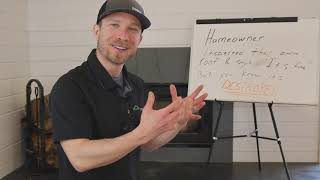
Adam Bensman shows roofing salespeople how to handle homeowners who deny obvious roof damage. He teaches the A-R-O framework (Acknowledge, Reassure, Overcome) with specific lines like "You be the judge," explains why the 12-month insurance claim window matters, and warns what happens when you try to hide damage before selling.
Questions this video answers
January 21, 2021.
Generally 12 months (may vary by loss type and insurer).
Chapters
It gets worse. The homeowner inspected their own roof and says, it's fine, but in your heart of hearts, you know it's destroyed. There's broken shingles, there's missing shingles, there's curling shingles, or there's areas you see that are problematic from the ground, or you've replaced three roofs or bent on roofs that are absolutely obliterated by hail. For storm and retail, it doesn't matter. We've all faced this one. And I have Jeff to thank for this video because this is a continuation. Fun fact. It is Monday as I film this about four hours after the video published on the roofing sales Objection. My roof is fine. I'm not having any problems with it. And comments and emails have come flooding in and everything I do here on this channel. Again, if you're new here, my name is Adam Bensman. The roof strategist is designed to help you develop personal sales strategies to smash your income goals. And I read in reply to every comment, so comment away on this video or any others, because it was because of Jeff, literally three hours ago that prompted this video. And he says, hey, what do you do when someone says, oh, I checked it myself, it's fine. Is there a nice way of saying it's not interesting? I got an Instagram message from a guy who happens to be local in Colorado saying, hey, I just faced this the other day. Homeowner comes down, says the roof's fine. And then I've got Luke, who commented an hour ago, and he says, I've handed them broken shingles and they still see no problem with it. Or as Teco Train says, some people really think, because if it's not raining inside, the roof's fine, even when. When pieces of broken stuff are on the ground from their roof. So how do we face this issue? We either combat it and lose or we win them over and they become raving fans and the choice is yours, but it really isn't. It's theirs. But I want to give you tools to take this one because we want to win the business. And truly it is our moral obligation, in my opinion, to provide the best service we can, as if we were the homeowner. And. And if it was my house and I had a roof that was absolutely destroyed, I would want someone to take the time to push on me a little bit so I could avoid some of these mistakes that happen later, which is what Caleb is facing right now. Another email comes in this morning from the video. By the way, if you're not receiving my emails. Click the link in the video description or the podcast description and you can either download a free copy of my pitch like a pro roofing sales training video library or get the far snapshot. I send an email out with each video along with the far snapshot fast action result snapshot with the key takeaways and writing some keynotes of one liners or scripts that I use which those two coming for this video along with some recommended resources but most importantly a fast action results assignment to help you implement what you are learning. So Caleb sees this and he responds with an issue that he's facing. He says, hey, and by the way, I'm going to leave out the city he's working in just for privacy sake. But he says I'm struggling with one thing and I'd love your take on it. He's canvassed, mailed letters, mailed a follow up letter and he's gotten a few responses, installed the roof with two in the works and then just got this lead from a follow up letter, signs the deal. They're selling their house in three weeks and needed an inspection because the roof was brought up in the inspection objection for the new owners. So he's facing one of the biggest consequences that you will face or your homeowners will face by not taking action on a roof that you know is destroyed and coming up in a sale can be one of them. And I'll be sharing more on this. By the way. Caleb is using the letters that are included in the battle pack, my marketing battle pack and the complete sales strategy, the same letters that helped him get responses, get a deal, have two more in the works and then line this one up and I'm going to be bringing this back up here at the end of the video. Now if you didn't watch the first video I did on overcoming the objection of my roof is fine, I don't have any problems with it. That one covers the blanket response when people say this. These are usually not the DIYers, the do it yourselfers who are going to be hopping up on the roof. And I taught you in that video which go watch first so I don't have to repeat myself. We're going to get them on board by seeing their roof in a new light in the situation they're facing, by eliciting an emotional response. Because each one of us humans make every single choice based on emotion. First we decide who we date, who we hang out with, what car we buy, what clothes we buy and wear, where we spend our time, what posts we click on, on Facebook and Instagram. Everything that we do is driven by our emotions. Then and only then does our little thinking brain or our logical analytical brain come in and validate them, saying, yep, you were right there, go ahead. Or no, you weren't right there. Right. Like, I'll give you an example. Someone you know goes, ah, jumps out of you. Like, whoa. Like, your emotional response is to get out of the way and jump. No matter what, we're all jump. Have you had someone do this to you? Yeah. And then your logical brain assesses the situation and says, oh, it was just my wife playing a prank on me. Which, true story, she did this the other day. So then I'm fine. But it's going to validate. But if I'm witnessing someone get mugged, I'm still in that mode and I'm going to be able to respond. So fear drives instant action. Logic guides us to say, do this or don't do this. And we need to take the same approach. When a homeowner has inspected their own roof and they believe that it's fine, it is very challenging to challenge someone's beliefs. Beliefs are. It's who we are. It's true to our soul. Who am I to show up at someone's house? Basically, if I challenge them the wrong way, I'm saying, you're dumb, you're stupid, you're wrong. No one wants to hear that. So I use a approach, the approach I'll be teaching you to put the ball in their court by using this language. Okay? And there's going to be a one liner that you'll see. Write it down. And if you are getting the far snapshot or you want it, it'll be on. There it is. You be the judge. Here's how it comes together. Hey, Mr. Homeowner, totally understand that you've been up on the roof. You're going to see it coming. Aro, acknowledge, reassure, overcome my objection handling formula. I am acknowledging. I understand that you've inspected your roof and you've been up there and you believe that it's fine. Reassure. I've worked with a lot of homeowners over the years and I understand that many people think that their roof is fine. And unfortunately, there's times when where it's not overcome. Now, when I was new in this roofing world, I remember this true story, by the way, getting up on a roof that was needing to get replaced. And it looked fine to me to an untrained eye, but as soon as I had training, it was almost like Someone put on a fresh pair of glasses and I was like, whoa, there's some problems. And with my new untrained eye, I started to identify what those real issues were. And it made a lot of sense to me. And I'm not implying that you don't know what you're looking for or at. I'm just sharing my own experience. So if it's okay with you. Now, my one liner that Jeff predicted is coming is give me objection while I'm here to hop up on your roof, take some photos and videos with a new perspective and explain what's going on and then let you be the judge. So I'm linking these two and I just want to take a minute to explain. You can use this line a lot. Do you have any objection if I hop up for a complimentary inspection and show you what I find? The reason we ask that is it elicits a negative agreement, meaning when someone says no, it means yes. And most people are more inclined to say no to a door to door person or in an uncomfortable situation than they are to say yes. So I want to use that to my advantage. Do you have any objection? It's a soft way to ask and they'll say no. It's okay. No objection. No one likes to object. It's conflict. So then you get up there. So that's first thing. Second line, you be the judge. No one likes to be told what to do ever. No one does. You need to go to the gym more. No, no, no, no, no, no. Hey, you want to join me in a, in a push up challenge, right? That's different. It's inviting. Instead of saying you should join me for the push up challenge, do you want to join me? Right. All of a sudden that freedom of choice changes everything. So when I tell people to be the judge, I am not implying they're wrong. I'm not pushing. I'm giving them freedom of choice. And you see this come through, by the way, in my approach in the complete closing strategy, there's a link in the description where the opening of my sales presentation get started. I just want you to know you can choose anyone you want and here's why. And then explain the differences for storm and retail while also overcoming the biggest objections around prices or deductible. So the reason I like to give choice to people is when I'm educating them and giving them the right choice and I'm there, I am naturally put on the pedestal as the right choice. So I use this. Be the judge. Okay, now, true story. On how I use this once. And then I wanted to show how we're going to validate it with the issues that could come up. So I say, can I be, you know, let me show you what I find. You be the judge. I'm buying some emotional response, so to speak. I've explained that it's not them. It could be an untrained eye. Let's take a look. I've broken down some barriers of tension and I've made them receptive to this idea. I get up there. If the homeowner has inspected it and they want to go up with you, that's okay. Don't invite them up for safety reasons. But quick disclaimer, should anything ever happen, make sure they use their ladder, you use yours. Anything were to happen on yours, you have it not only on your conscience, but you also have the liability of something bad happening. We don't want that. So if a homeowner does want to go up with you, that's okay. Just make sure they're on their ladder, you're on yours. So you get up on the roof, you start pointing things out, and then, and then this is what we do because we want. You said, you be the judge, say, hey, now that I've given you the lens to see this stuff and you're pointing it out either in your photos, you show them or physically on the roof. You know, you know the look, the roof inspection stance. So you're pointing it out and then you're like, okay, with this new lens, are you seeing what I'm seeing? It's a close ended question meaning yes or no. And they say, yes, say, great. So now you're on the same page. You have won them over without saying you're wrong. They have had the freedom of choice. You be the judge now that you've seen it, yes or no when you get to yes, now we have them on board. We need to secure their mindset by validating what can happen. So we've proven that there is damage and then we validate before we get to validation, I just want to share one story with you. I was working a storm that landed in a rural market. Okay. And you had to drive between homes because the lots were huge. And it was more of like a rural farm type community. Big pole buildings, big houses, stuff like that. So I sign up this one neighbor. Hail fell like two hours ago, blew out the windows of the car. It was huge. So then I get in my truck, I'm cruising through, I pull on this driveway and I see this Homeowner, he's getting off the last rung of his ladder, putting it up on his shoulder and starting to walk away. And here I pull in, I'm like, oh, perfect timing. This is going to be a lay down deal is what's going on in my head. First thing he says, no, I don't need you. I just got up there myself. My roof is fine. This was baseball sized hail that blew out windows. His car windows were shattered and he thought his roof was fine. It is my moral obligation when I knew it was destroyed. So I used this. Hey, I. No disrespect, I totally understand that. You were up there, you thought it was fine. I thought my first roofs I was up on were fine. I'm working with your neighbor. I just got off his roof. It is destroyed. May I show you what to look for? And tell you what, I'll grab my ladder. Do you have any objection if we hop up there again together? I'll show you what I find, you'll be the judge. Went, just like that. We hop up there together. And you know what, as soon as I showed him what's going on, I explained what hail damage is. I explained granule loss and how all of this reduces the lifespan of the shingles and bruising and all that stuff. He turns to me and he goes, holy smokes, this thing's totaled. Yeah, yeah, it is. So I won him over. Now we need to turn our attention to the logical side to reinforce this new perspective, the emotions that he or she has experienced. Okay? We do this by educating them on the risks that they run if they don't take action. Now, if you didn't already watch part one of this series, which by the way, this wasn't even supposed to be a series, but thanks to you for commenting, it became one. We need to validate this response. Okay. And check out that video because I share how to validate it on prices going up for retail, on storm implications on the time window of when you file the claim, all that is in that video. So I'm going to breeze that over assuming that we're on the same page. Okay? So I want to validate just for this scenario when they think it's fine, when it's destroyed. This is what Caleb is facing, by the way. And again, this is today. Literally came in at 9:16 this morning. Okay. So Caleb again, just as a reminder, gets a call off his direct mail letters for a house that they need work done now because the roof is for sale, the home's for sale, the Roof's damaged. The home inspector found it. So I bring up to a homeowner, Listen, Mr. Homeowner, I just want to give you a few insights as to the reality of having this, the roof and the condition it is down the road. Number one, should you ever decide to sell the home, this can become a major obstacle, as it has with Caleb, as I have seen numerous times myself. And what happens is the home inspector, who's hired for the sole purpose of finding things that are wrong with the house, which opens up then a deeper level of negotiation between the seller and the buyers. Now, there's issues. We have the sellers, people who have the home for sale, they want this thing sold. We have their agent who wants this thing sold so he or she can get paid. Then we got the buyers. They want to buy this house because they're excited. And we have the buyer's agent who wants this thing bought because they want to make money. Now we're at the standstill because the roof. So what happens? We're back to the drawing board. The homeowner is freaking out, saying, I either need to get the roof done ASAP or I need to provide a cash credit at closing to get the roof done. Here's the buyers. The buyers are saying, I don't want to buy a house with a damaged roof, so it either needs to get done or need a cash credit. Then we open up it even deeper. And then there can be issues with the mortgage lender, the buyer's insurance company, because they don't want to be responsible for a home that has existing damage to it from a storm. So they want these things done. And it's a big monkey wrench. So it's important to educate to homeowners what can happen should they decide to not take action. And I know what you're thinking right now. You're saying, but, Adam, what if the homeowner isn't going to sell? What about the old guy or the older woman I'm working with and says, or staying here forever? It's a good question. And here's how I handle that one. Now, there are some people who push into saying, well, what about your estate? I don't like to go down that road because then it's like, what about when you die? So use that one with a sparing discretion. But I generally try to avoid it. And I know a lot of people really push that way, but I stay away from it. And I really want to focus on them because that's who they care about most, is themselves. So just how people are. So I explained, listen, with damage, should this be insurance related, by the way, you have a limited time window to take action on this. And that time window is generally 12 months. I know it can vary based on type of loss and the insurance company, but generally 12 months. So if you don't have any issues now because your roof is fine, but then at 14 months, 16 months or three years, there's issues and it is linked to what's going on now or that was caused from this storm or this issue, the insurance company could deny it. This is fact. They could, they could say, listen, you had this problem and you didn't tell us about it then, because the homeowner has the legal, contractually legal obligation to mitigate future loss. Which means if I have a pipe burst in my house, for example, it's my job to stop the water from causing more damage. I can't let the pipe, the water run and just call up, be like, oh. Because it's my job to mitigate the loss, meaning reduce the damage and expenses to both me, the homeowner and the insurance company. So they only have a limited window of time to take action. If they wait and things arise, it could be denied and their life of the roof because they just agreed to the damage. The lifespan of the roof has been compromised and it's the most expensive wear item on the home, the most expensive maintenance item on the home that you should only have to do once every 20 or 30 years. This could shave off 5 years, 10 years, 20 years, we don't know. So would you willingly and knowingly, for example, because you know I love car analogies, would you knowingly buy a vehicle or not take action on something if you knew that that vehicle was only going to last you 50,000 miles instead of 200,000 miles? Of course you do something about it. You should be upset. I bought this thing to last. It's expensive. So this is why we take action now in reference that other video, by the way, if you haven't seen it, to see more about how I handle this real storm and retail. So the key takeaway is this. The very next time that you face a homeowner who's inspected their own roof and tells you it's fine, your job is to aro, acknowledge, reassure, overcome, explain that the damage, whether it's retail related issues or storm damage related issues, is often undetectable by an untrained eye. And with your trained eye, do they have any objection? Okay, write that one down. Do you have any objection if we hop up there together or if I hop up there, take some photos and videos, show you what I find and then write this one down and then let you be the judge. You have everything to gain, nothing to lose. I'm here right now. I'm not going to charge you a thing. I simply want to explain to you the severity of the situation and you be the judge. That's it. If you say it's fine, when it's done, I'm out of here. Okay, you be the judge. Do you have any objection? Great. Alright, so now we get them up there, we show them the findings and then we remember, we say, are you seeing what I'm seeing now? Yes or no? Do you agree? Yes. Great. Now we slide in and we explain. Alright, now a few more things. This is what can happen if you don't take action. Selling the home, limited time, window of opportunity for a claim and then reference my other video for everything I explained on the retail front. And by using this information, sorry, starting right now, the very next time that you face this in the field, I want to see you overcoming this one and at least getting that conversation moved along. Because remember, at the end of the day, it's about doing the best we can for people. That is our job. So even if you don't win the business, which I believe you probably will, it's still your, in my opinion, duty to do the right thing by people. That is the true measure of integrity, is doing the right thing, no matter what, when no one's watching. So you now have everything you need to overcome this objection. Alright, thank you for joining me here. Now, if you're interested in learning more about overcoming objections, then click the link at the end of this video and the playlist will pop up and cover all the big ones that I've seen happen in the field. And if I've missed any comment on those videos. So click here for the objections playlist and click here to get a free copy of my pitch. Like a pro roofing sales training video library. See you in the next one.









