Nearly Died, Dodged Jail, & Hit Rock Bottom to Roofing Hero | Eric O.
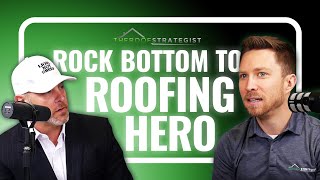
This is a recorded interview (YouTube) between host Adam Bensman and guest Eric O., a roofing company owner and recovery advocate. They share candid personal stories of heavy alcohol and drug use, Eric's near-jail felony DUI incident and 30-day inpatient treatment in November 2009, relapse, then long-term recovery; and Adam's own multi-year struggle that ended in sobriety. They discuss how roofing culture (easy money, partying, stress) contributes to higher rates of substance abuse in construction, leadership's role in shaping company culture, and practical resources: Roofers in Recovery Facebook groups (public and private), regular recovery Zoom meetings (Tues 8pm CT, Thurs 7am CT), suggested reading (12 Steps & 12 Traditions; This Naked Mind by Annie Grace), and urging people to call peers for help.
Questions this video answers
November 2009; 30 days in an inpatient treatment center.
Tuesday nights at 8pm Central and Thursday mornings at 7am Central.
The 12 Steps and 12 Traditions (Alcoholics Anonymous) and This Naked Mind by Annie Grace.
Chapters
Warning. You are about to watch an interview that I conducted with Eric. Oh. And it is an episode unlike anything I've ever done before. You know, writing my book, the Roofing Sales Survival Guide, has challenged me to be even more vulnerable than ever before. And carrying off the tail end of that book, I reached out to Eric. Oh, specifically Eric, to share his story of his battle with alcohol and drug use and his recovery. And in this conversation, which does include profanity. So disclaimer there, you may have noticed seen this from me in the past, but I also share my real story about my battle with alcohol. Now is the time for you to tune out. You say, hey, this isn't for me. Stop this video. Watch a different one. But if you're someone that may be inspired by hearing other people's real, raw, and fully unedited stories, then this episode is for you. Let's get started. Eric, thank you for joining me. Today. We're talking real talk on alcohol and substance abuse in the roofing world. Eric, welcome to the. Welcome to the channel, man. Good to have you here.
Thanks for having me. I appreciate it, brother.
You know, when you and I had our first podcast, I was a guest on your podcast, which, by the way, if you guys don't watch Be Authentic or gtfo, which is right there, as you can see above Eric's head, go check it out. Eric really pushed me. You pushed me, dude. We were talking about my journey with alcohol, which I think was like the first time I actually shared it publicly because I was really embarrassed. I was self conscious about it. I didn't want to be judged. I've had my own kind of self healing and journey on that. We talked about butt flushing colonics, my.
Journey in colonics, which I went and did later.
Oh, nice. Didn't it feel? It's like it's one of the greatest things you can do for yourself.
It was. It was interesting. We'll get into that.
Yeah, yeah, we'll talk about that later. So, Eric, the reason that I wanted to bring you on today is you. You pushed me to be authentic in not when I say be authentic, but share my authentic self. That's what I mean. To share my authentic self. And when I just released my book, the Roofing Sales Survival Guide, how to Beat the Odds, Overcome Yourself and Win Big. I was scared as hell bringing it out. And I've not asked anyone to be on the podcast in a long time, but you were the first person I thought I said, you know, you. You really challenged me. And we had great feedback And I was. I'm just really excited to have you here and to get into. To real talk about substance abuse in the roofing space because. Well, we'll get into those statistics. But before we go, thank you.
Thank you for thinking of me. Most people don't think of me first, so I appreciate you.
You bet, man. Do you want to just give everyone just a snapshot like, who is Eric O and what you. What you do now, both in your roofing business and in your passion project with the authentic guru gtfo?
Yeah, you bet. So, yeah, Eric Obramt. I own a roofing company called DNM Roofing, named after my grandfather, Delton Mares, who started it back in the mid-60s. I started roofing when I was a little kid. I was about 10 years old, and I was up on the roof. Plastic and soil pipes on commercial buildings, plastic cement and running a kettle by the time I was 14 and mopping hot tar by the time I was 16 and running crew. So I actually got up on the roofs and worked for a very long time, probably into my mid to late 20s, actually. And then in my late 20s, I got divorced for a second time. And that was kind of when I fell off a ledge. I was 29, I think it was 28, something like that. 28. And I got to a point in my life where I just didn't fucking care anymore. I didn't really care about anything. I didn't care about anyone and especially myself. And so I. And I. I always drank heavily. Like, I was always a party guy in college and high school and all that. But, like, I was drinking every single night. I started. Started doing cocaine. I started selling cocaine because I'm an entrepreneur and you pay retail for coke once and you're like, fuck, that's expensive. Can I buy a bunch of it and get it cheaper and sell it to my buddies? And I'm like, sure you can. So I. So I started doing that and I started going down a really scary path. Really scary path. And When I was 30, I got pulled over for my fourth offense, felony DUI. And I was looking at one to five years in prison. And I got. I narrowly dodged drug charges because I'd been selling coke all day out of my truck. So I had a bunch of teenagers in my truck. And I had 28 balls in my cargo pocket. Yes, I was wearing cargo shorts because that was cool back then. So fuck you if you don't think that it was. But I had 28 balls in my cargo pocket and somehow I accidentally Sold all that coke that was in my truck. And the cop didn't find it in my truck when he searched it. And when he searched me, he didn't find my personal stash either. And when I was at the precinct, I was actually able to flush it while I took a piss before he booked me. So that alone probably saved me a decade in jail, right? But I was still looking at one to five years in prison for this fourth offense, felony dui, because it was aggravated. I blew way over. I was driving down a one way street. Like, I mean, I was up. And my lawyer at the time, who was a friend of mine, told me, you got to go, you got to go to rehab or this judge is going to throw the book at you. And so I went and did one of those alcohol evaluations. So anybody that's watching, that's been in the system, right, you have to go do an alcohol evaluation where you sit in front of somebody and they tell you you're drunk, right? And they give you. And they give you advice on like whether you could do outpatient or inpatient or whatever. And I'll never forget, I've only told the story a couple of times, but I'll never forget the guy, his name was Mark. And he gave me his card and I brought the card home and he kept telling me, like, you need to go to inpatient. I was like, you. I'm like, I got a mortgage, I got shit to do, I got a job. Like, just give me intensive outpatient. And like, hopefully we can sell that to the judge. And I took his card home, and for two months I used his card as a coke funnel. And it sat on my little table next to my couch and it was folded up. So for those of you that are coke connoisseurs, so you'd fold it up and so you'd use that to like put your coke into your little baggie, right? So the card had residue all over it, like where you couldn't even read his name on the card anymore. And I remember one day I was sitting there and this is 100 true story. I was sitting there and I looked over at my table and I saw his card and I had this overwhelming feeling that I needed to call this guy. But what did I do first? I licked it. I licked it. I got all the coke off of it and I looked at it and I called him and I said, I think I'm ready. And I ended up going to treatment in November of 2009 and spent 30 days in an inpatient treatment center and got sober, had one relapse 15 days later, didn't tell anybody, and waited until I had six months under my belt before I told anybody that I actually relapsed because I was so embarrassed of it. And that put me on the path of kind of where I am now, because I decided that that was the life that I wanted to have. And so fast forward, shit, 10 years or so down the road, I met Paul Reed, and he and I became friends and we connected and found out that both of us were sober, both of us went to a rehab facility, and we were like, hey, how do we. How do we give back? How do we help people in our industry that gave up this industry that gave us so much? How do we give back to other people? And it's like, well, what saved our life? I was like, well, treatment did. And I was like, okay, well, that's what we need to do then. And so we started raising money. We actually first just. Each of us threw 10 grand into a pot, and we're like, hey, we'll send somebody to treatment if they call. And somebody called and we sent somebody to treatment. And all of a sudden the phone didn't stop ringing. And so we're like, shit, we got to make this a real thing. And so we made it a real thing and started raising money. And now we've sent 40, 40, 50 people over the last few years to treatment facility. And we've had some amazing successes, and we've had some not successes. We've had people die that have been sent and they just didn't get it, and they went back out and started using again. And literally we've had people that have come into roofers in recovery and went back out and. And didn't make it. And. And that's the hard part about this, is that people have to understand, like, this is a fucking real thing. This is a. This is like, this is truly life or death. When it gets to a certain point in your life that you can't control it anymore, it's life or death. And that's why you have to have help, and that's why you have to reach out to people that have been through it.
Yeah. So, Eric, you talk about this stuff really, like, with a lot of humor, which I love. Like, it's like a comedian, you know, with. What do they say? As time passes, you can make jokes about certain topics, like some of the most controversial, horrendous things in human history. They're not funny topics, period. But then with time, comedians get Away with making jokes. So you talk about this stuff with. With a. With a. With large undertone of humor, but I know through talking with you that. That it clearly wasn't. So what I want to. I want to get into first is actually before I ask that question, Rivers in recovery is a Facebook group. If you're not on there, if you're someone that thinks you might have a problem, if you're someone that does have a problem, if you're someone that is in recovery, join the group. There's. There's good people. You need to be surrounded with people that are like you and that get it. And the roofing space is. Breeds alcoholism and drug abuse. I mean, it's like a. It's a. It is. It's insane. I want to talk. To ask you, Eric, how did you feel that your career in the roofing industry fueled your substance abuse habits?
So that. That's a great question. My. My path was a little different than others in this just because, like, I. I started, like, working. Working. Like, I'm not the stereotypical sales guy that started off where he was working at McDonald's last week. Because I think that. I think that a lot of the reason that we do have a lot of substance abuse problems in the industry is because guys came from not making any money to being put in an industry that they have the ability to make a lot of money, and then they make it, and then they don't know what the to do with it, right? And so they end up putting it up their nose or spending on women or, you know, whatever it is that they end up doing to their detriment. My path was a little bit different, and it really goes back to, like, who you spend time with, right? And so back then, I'm spending time with laborers that all they do is go out, you know, like, they work hard all day, and then they get a reward, right in their mind to be able to go out and go get fucked up. And so that just made sense, right? And that was just kind of my. That was just kind of my life. Then I started making a little bit of money, and then it made it easier to access the booze and the cocaine. And then if I had a little bit of money, I was able to spend that money to be able to have friends, because the reason that I use was because I felt inadequate around everybody, and I didn't know how to talk to people, and I didn't know how to make friends. I always felt alone. So I'm guessing that people watching this that can relate to this. Had a lot of that same feeling, right, that they were, that they felt very alone. And it's one of the big reasons that a lot of people use because they want to be the life of the party, when in reality they actually want to sit back.
Right.
And watch. But they want to be part of, they want to feel part of something. So if they use and, and, and, and do those things, they can feel part of. But the problem is, is that when that overtakes your life, well, then you're not being part of anymore. Right now. Now it's a problem and it's affecting you.
Yeah, I, it's interesting that you share that about being the life of the party. My, my, my problem was with alcohol. And I, I know for a lot of people it starts there. I'm not the only one because that's the social norm. And it's crazy. You know, we think of this and I'm not demonizing these things. I'm sober. Alcohol is legal, but it's still a drug. Heroin's a drug. It's just not legal. People forget the, forget these things and we start drinking, then we start partying and we get messed up. And then, and then people are like, oh, well, what's the next thing? And alcohol seems to be the start of a lot for people and the start of many relapses from what I've heard from folks that have with narcotics. When you and I opened this up before we were recording, I said, I believe that 75% of the roofing industry is an alcoholic. And then I said, I wouldn't say that, but you challenged me to just share. And I here, here's why I say that. And add to the list if you see any, if you started drinking to celebrate and then you drink when you, you're angry, when you mark the end of the day to drink, when you can't stop drinking once you start. When you start compromising your values, specifically when it comes to driving and risking other people's health and safety because you want to get drunk and go have a good time. When you wake up feeling horrendous or stupid or apologizing to others for your behaviors. When you wake up in the morning at 3 to 4am with a racing mind full of anxiety, telling yourself you'll never drink again, and then drink the next day. When you drink most nights, that turns into every night. And when drinking interferes with your work or your family. And I think if, if you can check one of those boxes, I could have checked all those boxes, by the way, I would have been like, check, check, check, check. Did I miss any of the. The key boxes that you would.
No, I mean, I don't think you missed anything. I think that the. I think the big thing, and I have to say this a lot, is that people have to remember because there's going to be obviously a lot of people watching this that aren't alcoholic, right? And that do part and that do partake in normal social drink or whatever. They're like, fuck you, I have a good time, whatever. Here's the thing that people, I think need to remember is that no one here on this show or in Roofers, in recovery, or in any other organization is trying to be the morality police, right? We're not trying to tell people what they should or shouldn't do, right? What we're trying to impress on people is that when you finally have a realization that your life is being affected by your alcohol or your drug use and your. And you start ticking those boxes that you just went through, and it's affecting your job, it's affecting your family, it's affecting your kids, it's affecting your wife, it's affecting all of these things that you do. And you take an inward look at yourself. You have to ask yourself, is my drinking or drug use serving me? Right? If it's not serving you, then why are you doing it? Even if you're not a stereotypical alcoholic, right? If it's compromising you in any way, like, is it serving you doesn't mean you have to go to a fucking AA meeting. It doesn't mean that. You know what I mean? It doesn't mean you have to do all the things that I have to do to be able to live. Live and. And have the life that I want. But, like, is it serving you? Right? I know a ton of people that are not alcoholics and don't drink anymore because it just doesn't serve them because they had the. They had The. The foresight to, like, to look inward and be like, it just. It. Why, like, why am I doing it? Like, I'm a grown person, and when I do this thing, then this happens, and then I'm not able to do these things that I want to do. Because what I want to do is I want to get up in the morning and I want to work out every day. I want to do this many calls every day. I want to have this many meetings. I want to write a book, I want to have a podcast, I want to start a new business. I want to do this, I want to do that. Well, you can't do that if you're, if that is more important, generally speaking. Right. And so I just always like to remind people that, like, we're not here to judge people. We're not here to judge people for what they do or what they don't do. We're here to judge, to help those people that actually want the help. Because I give zero what anybody does. Zero. None. But what I am here for and what we all should be here for is to help people that want it.
Yeah, agreed. You know, you brought this up. I looked on at my phone to pull this up. I have a, A, A dear friend who was drinking. I don't believe they're an alcoholic. I've saw, I've witnessed their drinking increase. And you know, like, for me, it was. I had these, like, ideas that what's normal to drink, like, socially? There's, like, a certain time of the day that you can do it, which is in the evening, and then it's throughout the, like, beer for breakfast on the vacation. Like, let's do that.
Right.
And I recommended this book called this Naked Mind. The author, I can't remember her name, but I read that that was part of my sobriety literature. And I was on Reddit the other day, and this came up under the Ask Reddit group, and it says, and I'll read this case, the camera doesn't get into focus. It says, what's your reason for not drinking alcohol? That's it. This was posted four days ago. There's 5181 upvotes, 14300 comments from people. And I shared this with, with the friend of mine because it's things like the, the number one most upvoted. It makes me feel like garbage. It doesn't matter what time of day I drink or how many, but when I go to sleep, I'll sleep hard for about three hours and then wake up with a racing heart that lasts for hours. It's just not even worth it. I'm like, you just described every single night's sleep of mine like that, that was, that was part of it. And then realizing it wasn't serving me to other people that say things like, I'm in the middle of trying not to be fat through exercise and diet, and I've been told drinking can stagnate. That, like, that's real talk. Right. I didn't have a healthy relationship with alcohol. I drink to cure my boredom. Yes. To help with social anxiety. Me too. I couldn't handle my alcohol often and drank too much. Correct. I got to the point where I was always somewhat buzzed. Huh. Finally realized back in 2021 that I need to make a change. Two years sober as of July, so. And this, this can. This whole thread continues. But I really appreciate what you said. It's not about preaching and that there's, there's a lot of, a lot of stigma. Like I, my journey. I didn't go into recovery. I've been wanting to quit drinking since I was 19 years old. And I remember sitting in class in college hungover as hell. I think I actually, I fell asleep on the floor. I don't know how my teacher didn't kick me out. I literally crawled up. And given I was in college and a lot of kids made stupid choices.
Yeah.
But. And then a few days like, man, I'm never drinking again. And that was like a Thursday or something, or Tuesday. I don't know. I felt like garbage. And I remember being in one of my psych classes sharing to the group, like, I want to stop drinking. 19 years old. Like, this is not good. This is not good for me. Like, once I start, I'm on it. I was working through my emotions. My parents got divorced. I was really angry. I drank and want to fight a drink and punch stuff. I'd wake up with my hand all bloody. I, I, you know, I was that I was the kid that no one, the kid that people be like, all right, dude, chill, chill out, chill out.
Right?
Right. And it was, I didn't stop TILL I was 30 years old. I think it was five years. I think it was September 18th. So I just passed five years. Here's a couple.
I was also 30. So we have that.
Yeah, look at that. Maybe it's your dirty. 30 is when you realize that in a dummy. But my wife had encouraged, encouraged her. She goes, when was the last time you didn't drink for. I don't remember if she said a week or a month. I think it was a month. And I was like, I don't know.
Who the does that?
I know, right? That's what I thought. So she's like, well, I'm gonna do this. You know, no alcohol in the house. You do whatever you want outside the home. And the next day I was on a mountain biking camping trip, which, when you camp, like, I don't know, camping is beer. Like, that's what you do. So I went out and I remember having a beer.
So goddamn boring. You gotta have something to do.
And, and similar to your story Like, I. Again, Since I was 19, I wanted to stop. Here I am 30. I stopped for eight months telling day that it was just for this like natural medicine school I was in. And I needed a sort of mind. It was like a sober community. And, and that lasted eight months and I started drinking again. And then it got even, even worse. But I, I opened a beer up camping. It was the first time they like voluntarily poured a beer out. Like, I, I only had a few sips and you know, I looked at that can and, and I just dumped it out. And it was the last beer I ever drank. And I never, I never went to meetings or anything. And I'm sharing this from just another perspective for some people that are like, well, you know, what does it mean to be an alcohol until probably a year or two after I stopped drinking that I look back and I, I finally was able to say to myself that I was an alcoholic. Like, it clicked. Like, I was like, I had a drinking problem. I, you know, I had a bad relationship with it. And then I started thinking back to all the, the, the, the things, the behavior patterns where I was someone that was like, you never drink and drive. Why would you ever jeopardize someone else's life? And I was like, oh, it's just a little bit. And I got a breathalyzer because that would keep me good, you know. But then I was like a little over and I was like, well, I'm not that far from home, right? And then I would. I used to. I was a concealed. I still am. Still am, but Concealed carry permit holder. And I used to carry a gun as my, my. I won't drink if I had my gun on me because it's illegal. And I went out. I can't believe I'm sharing this publicly. This is, is the. This is some raw. And I've never cursed on my YouTube channel, so there's two.
I bring it out in people, so.
Yeah, you did. So I went out with my wife. We went out to go watch packers game and I wanted a beer, so I left my gun in the car. And I was only going to have like two beers, but you know how that goes. I had a lot more than two. And I got in the truck afterwards. I didn't put the gun on me, but I had it in the truck. And 20 minutes in, I get pulled over. I'm drunk. I have a loaded gun handgun, by the way. Mind you, I'm a concealed carry instructor at this point in my life. And I know the wiser my Heart jumped out of my chest. I'm like, I'm going to prison.
I'm.
I'm going. Like I am. I'm gonna get a dui. And I'm carrying a loaded gun. And the officer came up. I put my hands on the dash. I trained alongside law enforcement. I turned all the lights on, rolled all the. Because I had tent. So I rolled all the windows down, all the lights on, put my hands on the dash, and I said, hey, you know, before we get started, officer, I just want you to know I'm a concealed carry permit holder. I do have a loaded weapon with me. It's to the left right here. And he must have been off guard to my politeness. Asked about the weapon, what it was. I told him I was doing 36 or 37 or something in a construction zone that was like 25. So I was doing like 12, 13 over speeding in a construction zone. And he said, hey, thanks for being honest with me. You know, slow it down. And I'm like, how did he not know that I was drunk? I had a lot. Like, I left. I drove home. And by the way, I kept drinking after. This is when, you know, you have a problem. Um, and I. I. Looking back, I'm like, I. If you would have told me, I would have done that even three years before, Even a year before. It'd be like, no way. Like, are you. No way. That was my rule. Carry a gun and won't drink. Never did until I want it. And I couldn't turn it off because I just wanted to have fun. And I know that there are people out there. I wanted to share that for those folks that are like, you know, I'm not an alcoholic. I'm like, yeah, I didn't. Maybe you're not. And who cares? You can call it whatever you want call it, but. Yeah, but everyone's got their own journey. And I want to turn it back to you. Do you see. Do you see the roofing industry different than any other career when it comes to substance abuse problems or the desire to party?
Well, I mean, I know that the numbers are higher, right? So we did some research, and we found that, like, I think it's 8% of the world's population has a substance abuse problem documented. Right. And in the construction industry, it is almost 20%.
Oh, I think I remember seeing that.
Yeah. So, like, that alone tells you something, right?
And then it.
And then it obviously goes back to the same thing where you're putting people in a position where they have money, where they didn't before, and they don't know what to do with it. And I think. And that's one of the reasons that, like, I bring in financial advisors into my company to teach my sales reps and people like, hey, you start making money, this is what you need to do with it, right? You need to start saving it, you need to start putting it into these funds. You need to start getting life insurance. You need to start doing all these other things. Because if we don't have the education, then we are like, if. If we just got money and we didn't know what to do with it before, you know, you're either going to be a rapper and you're going to go buy cars and gold chains and other dumb that like, serves no purpose in your life, or you're going to go party, right? Because that's fun. I did want to tell real quick just. Just to piggyback on your story. I love. I loved your story. I. I remember when I was 22 or 23, I had gotten my first or second DUI. And I remember, you know, when you get a DUI, they make you go to AA meetings, right? And you have to get your little card signed to show that you were there so you can give it to a probation officer and all that kind of shit for the terms of your probation. And I remember going to an AA meeting, and I would literally go to the AA meeting, and six blocks down the street there was a bar. It was called Opperman's, and me and A buddy got DUIs at the same time. So we would go to these meetings together, and then we would leave the meeting and go directly to the bar and laugh about going to the fucking meeting and then going to the bar, right? But I remember during that time, no joke, I remember sitting in the back row so I can get my card signed. And I remember sitting in the back of that meeting when I was 21, 22, whatever it was. And I remember sitting there and thinking and going, I'm supposed to be here. I'm not ready yet, but I'll be back. Absolutely, 100% true statement. I knew that I was supposed to fucking be there, but I knew I wasn't supposed to be there yet. And there's a lot of people that are in that position. They're like, right? And if I would have. If I would have gotten that head start. If I would have gotten that head start at 22 and missed those eight years of fucking shit, like, where I would be today would be amazing, right? But I needed that eight years of hell because I'm the asshole that has to pound their head against the fucking wall before I get it right. I just. I am that human. But I knew. I even knew then, just like you said when you were 19, you know what I mean? Like, you'd been trying to quit since you were 19. I knew that I couldn't drink like a normal person even then, but I knew I wasn't done. I knew I wasn't done. And that was really powerful. And that moment has stuck with me for years. For years.
Not wild. I remember similar not only in when I was 19, but during my heavier drinking years, because for most people, it only gets worse. Most people don't drink less. It is almost everyone. Like, your weekend drinks turn into weekday drinks, your night drinks turn into afternoon drinks. Your afternoon drinks turn into morning drinks. But I remember being like, I know, I know that I'm not going to be drinking at some point in my life. This is not. This is not.
But. But it's not going to be today.
Yeah, yeah, but today's not the day.
Today's not the day. But eventually something's going to happen that's going to get me there.
Yeah. Because I got a bottle of Glenn Levitt right there that is calling. Yeah. My name.
And it'd be rude if I dumped it out.
Right?
It's. Yeah, yeah, just rude. It'd be irresponsible, really. I mean, for the price that it cost me to buy that bottle for sure.
Speaking of which, when you have the money to do it, I want to bring this into the roofing space for a minute and I'm curious if you agree. Sorry. No, no, dude, you're good. I've found that one. The culture of roofing is one of parting. You get. You know, there's some companies that I've trained in the past where we're out till 4 in the morning. This was. This was way, way, way back when, obviously. One, being sober, not an option. And two, different time of my life. And we'd train, then we go out and party. And then I remember being out till, you know, three, four in the morning, waking up, I was like, man, I'm still drunk. And we're like, we got to go knock doors now. Like, what is going on?
Yeah.
And anyway, that's a lot of the culture is like, hey, we work really hard. Let's, let's let loose. I'd be out speaking at events and companies. They're like, oh, we got one guy still in the hotel room. Like, dude, you're, you're like, this is your bit, this is your livelihood, your investing, your education. You want to go get smashed the night before. But anyway, it's the culture number two. The stress that we have is so monumental that there's, it's a very easy escape to like. That's how I mark the end of the day every day. When, when work was done, I was opening it. I love beer. And I loved scotch and bourbon. Well, also tequila too, occasionally vodka. But mostly.
I liked everything, just some things more than others. But.
Yeah, but like in the, in the house, I would drink beer and I would feel self conscious having six beers, seven beers or eight beers because I'd have to, you know, like my wife's there and I'm like, is she looking at me like I'm a loser? You know, like going to the fridge eight times. So then I would just pour really tall glasses of bourbon because I could easily. It's like, oh, I've just had my second glass and my wife too, and she's like, yeah, you're that the glass glass, not drink glass. But that was the mark of the day for me. It was like, work is done, crack the beer open, pop a bottle of beer open, or pour a glass of scotch or bourbon. And that was like the mark of the day. And once I started, it was like, I gotta get drunk or I'm not falling asleep, right? And then it was like, well, I'm gonna sleep better if I'm really drunk then just kind of drunk. Because if I'm just kind of drunk, I'll wake up in four hours and feel like garbage. So let's get real good drunk. And then, and then I totally convinced myself it was like self medic medication is like part of my sleep therapy, you know. But anyway, the stress, the money, the culture, it's just to me, it's so normal for people to do and it's so weird to stop. And the more that I've like, I still like the taste of beer. So I drink non alcoholic beers. I get ID by the way, buying Heineken.00, which cracks me up because it's like carbonated water. Like there's literally no alcohol. Like maybe 0.5. Sir, can I get your ID? I'm like, I'm 36, man, and it's carbonated water. But, but anyway, the more that I speak about this stuff publicly, which is like, was really uncomfortable for me, it's still mildly uncomfortable for me because I still haven't figured it out. Always like, you did Your self awareness. You're like, yeah, I drank because I don't want to be alone. When did that come to you?
Later on in life, as I did the steps of AA. Because doing the steps of alcoholics and at the 12 steps, it makes you look at yourself. It makes you look at all the things that you did, and then you have these realizations of why you did them. And you have to do a lot of hard work of figuring out all these people that you resented and then finding out that you're part of the fucking reason that you resented them and that you always played a little bit of a role in every bad thing that happened. Right? Everything didn't happen to me. Right. A lot of, you know, everything that I was a part of, I played a role in that. And so literally, by going through the steps and learning a new path to live, per se, yeah, it gave me the opportunity to. To see those things in myself. Right? But I mean, like, I do so many other things. I mean, I've got a life coach that I work with every single week. And, like, I've been hypnotized and, like, went back to when I was 13 and, like, you know what I mean? Like, done all kinds of wild crazy. And I. And I don't know. I mean, I've been sober almost 15 years now, and, I mean, probably seven, eight years ago, I started really understanding the. The crux of. Of why I am or was the way that I am, Right? And I think that so 100 transparency, right? I think that it's also the reason that I love being on stage. I think it's the reason that I love doing the podcast. Right. Part of that is. Part of that is wanting to feel part of something, right? And I don't have to. I've talked about this a lot this past two weeks, so it's funny that it came up. I. I love being on stage. I love doing the podcast. I love speaking. I love helping people. I love doing all those things. But you know what I hate? I hate being in a room with people that I don't know and being expected to walk around and introduce myself. Fucking hate it. When we sat at that dinner and we met each other that first night up in Indianapolis, and I didn't really know anybody sit at that table. That was a. That was a fucking nightmare. That was, like, the things that I dream of when I'm sleeping that I don't want to happen because, like, I don't. Like, I'm terrible at that now. Like, once I make friends with people, like, it's fantastic, right? And I will have in depth, dark everything, deep conversations with people because I love connecting. And what I realized during one of these crazy hypnosis things that I did with my coach was that the reason that I do everything in my life is because I'm looking for connection. And I was missing that for so long that all I wanted was connection. So I thought that if I drank, it would allow me to talk to people, it would allow me to connect with them and it would allow me to be part of something bigger. But it wasn't. And so that took a while. But to go back to your roofing question, what I would really like to impress on people is, is that, yes, it is the overarching culture that is seen as roofing, right? And our industry as a whole, that it is, you know, that it is drinking and partying and whatever it is. But at the end of the day, that culture that you're a part of is top down. And if you're fucking leadership at the place that you are employed, has that culture, then you're going to continue down that path. You are not going to be able to do it on your own and you're not going to be the person that changes everybody, you know, for the better in your organization. You have to align with leadership that appreciates personal growth and development and not going out and partying, getting up every night, because that isn't serving you to reach your goals. And I think that that's why I've had a decent amount of success attracting good people to my company is because they understand that I don't tolerate it, right? I don't care if you drink. You don't have to be sober to work for me, right? But you do have to be responsible, right? And if you go out and get up all the time, you're not going to work here because that is going to infiltrate everybody else in the company and they're going to be like, oh, well, Billy does it. I guess I can do that too and get away with it, right? And so all the culture stuff is, I don't worry about the macro so much is I want to focus on the micro in each company, right? I've launched my culture movement leadership group. And like, the point of that is that I want to micro focus on individuals that are leading teams so that they can lead them in the way that they want to see everything trickle down. And I don't align with people that do the other. I'm not going to let those people into My, into my group, into my organization. Right. Unless they call me and say, I really want to change. This is who I am now, but I don't want to be that person anymore. Then come. Right. And so at the end of the day, it's top down leadership. And who are you associating yourself with? Because if you want to be a drunk and you want to do drugs in the office, plenty of companies out there, I can give you 10 of them right now off the top of my head.
Right.
But if you want to align with really good people and have personal growth and development in your life and be given all the tools and everything that you need to succeed, I can also give you 10 companies that have that culture in it. And that's what we should be talking more about are the companies and the groups that have that culture and are still in that culture to buck that trend and to buck that stigma.
Yeah, man, I love that you hit on that from the top down because it is true. And at the same time, what's interesting is the company that I was with, the owner didn't drink. All leadership did. I'd go out. I mean every single one of the.
People, he tolerated it.
He correct? Yes, I guess so. And it's one of the reasons why we had to let go of our office manager is she would come in and I used to go, I'd hang out at her house. We'd, you know, like after, after work we go out management team, we get bombed and bombed. Bond, you know those. Bonding. Yeah. I have guys over at my house. We'd sit at my bar in the basement and get bombed and Bond And I share the story in the book. The. Our production manager at the time sharing a hotel room with him. We were out. And it was, it was the first time that like I literally couldn't function in the morning and my whole team was relying on me and I was a piece of shit and, and was not a proud moment. Probably one of the most embarrassing moments in my professional career. But it was, you're right, he did tolerate it, which I'm glad you pushed back on. But yeah, that was the, that was the culture in management and then, and even, yeah. Even my, the, the company bachelor party they flew, they, they threw for me. We were, we were, we were. It was pretty, pretty heavy on that front. As to be expected. Expected. Listen, I want to leave everyone with just a place to go in some resources for, for folks if, if they're interested and my guess is if, if they're listening up until this Point they're interested if they got this far. Yeah, if you got this far. By the way, congratulations. And I really mean that because the shit's scary. I still now, you know, I'm five years in. I didn't go through, through traditional recovery. My work right now, and I've been talking to my wife about it, is like, why did I want to get so messed up all the time? Why did I not want to feel? And all I've uncovered so far is that, that I, I didn't have the coping skills to deal with myself. And I was dealing with anger at my parents, and I would drink, and I enjoyed being able to let the anger out, and it was cathartic. And I like to tap into it because I didn't know how to access the emotions. And then I would drink to celebrate because it was fun, and it would amplify those. And then I drink to end the day because I didn't know how to deal with stress or cope or have a healthy outlet. To me, that was the only way to deal with it was to drown it and then just get numb and, and I literally just, I didn't know how to deal with myself. And the hardest part for me from getting sober was learning new skills to deal with myself and to deal with stress, to deal with conflict, to deal with social environments. Man. Yeah, the social anxiety stuff. Like, I didn't think I had social anxiety. I was like, well, great. I was bombed all the time. I got to be right. Yeah, you take, you take the beer bottle out of the hand. Even now I'll go to parties. I'm like, you got to give me something to hold in my hand. Because it was weird.
The first year, the first year I was sober, I always had to have a rocks glass with pop with, like, soda and, and ice so that I could shake it. And it had to be a rocks glass. It couldn't be, like a full glass. I had to have a rocks glass, and I had to do it for a full year because it was such a habit.
Yeah, I, I, I, I totally agree. I don't remember the timeline, but it was the first, at least year I had to have something in my hands. Now I don't think about it. And now it's funny because I'm so outspoken at this. Like, if you see me in an event, you'll, you might see a Heineken zero in my hand. I'm like, no, it's, it's not alcoholic beer. I just, like, want to get that crystal clear. Yeah, but, but yeah, it's bizarre. So for folks that are in different places in your. In your journey.
Yep.
Whether or not you have problem doesn't really matter right now. The fact that you're doing the inner work and questioning things or curious about learning about what a sober life might look like. I want to recommend Roofers in Recovery as a group, by the way. I'm part of the group. I'm a lurker. I still haven't even come to come to a meeting yet. One of these days I will. I've never been to a meeting in my life. I think I'm maybe just getting it in my own way. And also my schedule is nuts.
Well, here's my. Here's my challenge to you. This is what I wanted to bring up. Right. Because you said that you were kind of doing this intro perspective thing and like figuring out why you did the things that you did and blah, blah, blah. Right. And if you remember what I said a little bit earlier of how I kind of figured that out, Take the time. Take the time. Go buy a book called the 12 Steps and the 12 Traditions of Alcoholics Anonymous. Okay. I'm not telling you or anybody that's watching that they need to go to a meeting or they need to be a member of AA or anything like that. But what I've always said since I've been sober is that everybody, alcoholic and non alcoholic, should do the fucking 12 steps of AA. Right. And I would challenge you to go read that book and read through the steps and all the things that we are asked to do in our program. And if you read steps three, four, five, eight, and nine and go, oh, I don't want to do that, then guess what? You probably need to do that.
Yeah.
And you're not gonna like it.
Dude, that's. This is the interesting thing, and this is probably a really powerful thing to add on, by the way. I just literally wrote it down and I'm going to be getting that. I'm actually leaving for a retreat with my wife tomorrow morning. And what. We're going to a place like. I'm totally disconnected. And I will be reading this book because this has been. I've been. I've been searching for help on this front. Thank you. When you said you don't want to do the work I just filmed, it hasn't even been published yet. YouTube short that a sober life is a courageous life. A sober life is a harder life, my friends. It does not take any skill sets to open a beer and drown your sorrows. It doesn't take any skill sets to bond over getting shit faced with strangers that you just met. It doesn't take any skill whatsoever or challenge to deal with a loss of a loved one or a breakup or getting. Dealing with customer issues like that's not skill. Courage is dealing with this with a naked mind. And being sober has made me a better person and a stronger human being. And I realized that there's a direct correlation to roofing sales because roofing sales is stupid. Simple but easy. Far from it. 2 out of 3 sales reps quit or get fired in their first year because they cannot overcome themselves. That's why I wrote that book, the Roofing Sales Survival Guide. People are not willing to do the work and that's why they don't succeed. And when you're willing to do the work on yourself. And by the way, everyone comes to this. You said you it from age. Was it 26. So four years when you had that moment in an age.
No, I was like 21.
21. So nine years later. And for me I was 19, 11 years later. So everyone's on it in a different way. But my, my point is that that courage, That's the unpleasant things is where growth is. So thanks for pushing me, dude. You did. I'm going to fill you in on something we have after we're done here on conversation you and I had in Indy because I've made personal changes since then and that, that, that had challenged me. So 12 steps in the 12 traditions. Get that book. Another one for those with that are questioning alcohol. Doesn't matter if you believe that you have a problem or just that you are question relationship. It's called this Naked Mind.
I need to read that.
That one is phenomenal. And there's a podcast as well. It is by Annie Grace. This Naked Mind by Annie Grace. And then of course join roofers in recovery. Like I said, I'm a lurker and I think I've been dealing with my own shit. I needed to show up for a meeting as I've never been at one in my life and I need to just be there. What's funny, I've been to an NA meeting but I was there to support a friend of mine. But not, not an AA meeting. So now.
So yeah, as far as far as. As far as resources go that you're asking about, obviously. So there's there. We've got, we've got numerous resources, right? One is phones, right? Pick up a fucking phone and call somebody. Right? Everybody knows who. Who Paul is. Who I Am who some of the other members of Rivers and Recovery are. You can always pick up Facebook messenger and hit the fucking little phone sign on it and it will actually call our phones and we will actually pick it up and talk to you. That's the first thing. Second thing is the Roofers in Recovery Facebook group. There's two of them. There's a private group and a public group. And so with the fucking balloons, the private group is the one that's got the goofy face that looks like a drunk guy. So if you fill out the information on that, I'm actually the one that lets people into that group. Because we don't let people in that don't want to be part of the program. We don't want marketers, spammers, anybody like that in there. Because the group is solely for us to communicate with each other, to communicate. When we're having our meetings, then we have recovery meetings. They're not technically AA meetings because we cannot be affiliated with AA or NA or any other organization because we don't follow the traditions of AA in roofers and recovery. But we do have recovery meetings that are structured just like an AA meeting. We have those on Tuesday nights at 8pm Central and on Thursday mornings at 7am Central. So those meetings are open to anybody that wants to learn more, be part of the group, whatever it is. We post the zoom link in the Roofers and Recovery Facebook group every week. So it's always there. So you can, you can join those meetings as well if you want to be more of a lurker like Adam is too. My podcast, if you haven't watched any of them, probably over 50% of my content is recovery based. I talk a lot about my recovery, other people's recovery, other people's struggles. And if you just need to get, you know, comfortable having a conversation about it, I, I have definitely used my platform to make sure that people understand that it is okay that it is okay that you're going through this. It is. It is okay that, you know, that you feel like shit. It's okay that you don't want to be this way anymore. And there's a lot of us that have went through that and have figured out a way to get through it. We've done it. We're not the experts in it, other than the fact that we did it. So I'm not going to say that I know more than a doctor, but I know how I got sober. And so when people ask me how to do it, I'm like, all I can do Is teach you how I did it. And that's what we do. So, I mean, those are all resources that are available. And guess what? They're free. They don't cost anything. Right. It does not cost money to pick up a phone. It does not cost money to have a conversation with somebody. It does not cost money to join a group and do the steps. Here's what it is, though. Like you said, it's simple, but it's not easy. It is really hard to pick up that phone. That phone weighs 10,000 pounds. It sits on the table, and you're like, I gotta call somebody. And then, like, actually talk to them about something. Yeah, man, it sucks. But when you get done, you're like, that's the best thing I ever did. Yeah, right. And if you're going through something like that, you have to pick up the phone and call somebody. That's the. That's the biggest thing. And even if you call Adam, and Adam's like, hey, you need to connect with Eric or Paul or whoever it is, and you get a phone number, you just pick up the phone and reach out, because this is a we program. That's what we all tell it. That's what we tell everybody. This is not an I program. We cannot do it by ourselves. This is a we program. If I don't have those men in that group to support me, I'm going to have a much harder time staying successful in my sobriety and in my life.
Yeah, Eric, I want to end on that. Thank you so much for being here, and thank you for pushing me. I'm going to be jumping into a meeting here and getting that book myself. And thanks for encouraging my journey and for encouraging others. I appreciate it. We're going to have all these links here in the show notes. And Eric, be well, my friend. Really appreciate you being here.
Thanks, brother. Appreciate you.









