[NEW LAW] How We Can NOT & CAN Pitch and Sell | Florida Senate Bill 76 w/ Taitt Law & Patrick Carr
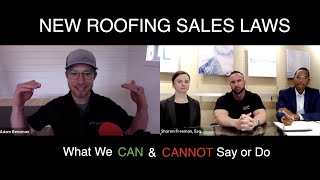
Florida's SB 76 prohibits contractors from pushing homeowners to file insurance claims but allows recommending they contact their insurer after damage inspection. Contractors must provide itemized estimates before any work authorization, include a statutory notice in contracts, and avoid language like 'insurance' or 'claim' in sales pitches.
Chapters
All right, welcome to today's episode. Joined with Patrick Carr, Tate Law Firm. We've got Sharon and Winston here to help us navigate the complex, misleading, frustrating, but new wave of reality for all Florida contractors with Senate Bill 76 and likely a representation of what will sweep through the US So whether you're in Florida or not, there's much to learn so you can have a competitive edge and know what to happen if or when it happens to us. So, Sharon, Winston, Patrick, thank you. Thank you all for being here.
I appreciate it.
Thanks for having us.
Thank you for having us.
Yeah, my pleasure. Hey, before we get going and folks start learning from your panel of expertise, how about some quick introductions from Sharon Winson, the Tate Law Firm, who you guys are and why, why you're here today to help guide us through this.
Sure. My name is Winston Tate. I've been practicing in Florida for about 14 years. For the last 10 years of exclusively done property damage were all on the consumer side. So I've represented homeowners, roofers, contractors, and all claims against insurance carriers. Our firm is located in downtown Orlando and we represent consumers on both the assignment benefit and direct rep side across the entire state. Obviously, Senate Bill 76 is something that has gone through several iterations and now we have the final iteration which was signed. And so we're kind of prepared to kind of lay the roadmap for people to actually follow the law. It is a new law, and so it's, you know, some parts are ambiguous and some things are kind of difficult to give answers on, but at least we can give you the roadmap to navigate the new law.
Excellent.
My name is Sharon Freeman. I'm a partner over here at Table. I come from a construction litigation background, so I represented everyone from architects, engineers, roofing contractors, general contractors, basically anyone that could be involved in a construction litigation claim. I now specialize both in construction litigation as well as first party property. So I'm still bringing my experience with roofing and other trades to Tate Law as well.
Gotcha.
And Patrick, I know you've been on the channel.
For those that are turning in, tuning.
In new introduce Patrick Carr, Blue Collar Media Group. Surrounding myself with smarter people than myself. You don't want to hear my opinion. You want to hear those. Let's get started there, Adam.
How about that?
Awesome. Sounds good. And for those that haven't seen it, Patrick and I did around one video of the Senate bill and podcast episode. And there were some things because this is, this is almost a moving target. We're all learning there's no case law. We're all trying to figure out what to do. So there's some things as I reviewed that I think we can kind of straighten up and give a clear path forward. The one thing I do want to say is we will get through this.
And it is very doable and it is not nearly as scary as it sounds. So let's demystify some of the nonsense that's been out there and talk the truth, high level changes from either Sharon or Winston. And by the way, I'm actively taking notes as you prompt good questions. So if I'm looking down, I'm not distracted. What are the key things that a roofing sales person or owner needs to be aware of in terms of the language they can say and not say, as well as what can be in writing or not? The main myth I'd like to demystify is the prohibited advertisements. Hold on, let me pull up the language here. We had. I just pasted this. Where was it? Here we go. Folks are thinking that there's no solicitation or prohibited solicitation. It's misleading and makes you think you can't solicit or market. But that's not the truth. It's prohibited forms of solicitation, specifically language within certain mediums. Am I interpreting this correctly? Yeah.
So luckily, as you were saying, SB 76 doesn't get rid of solicitation. It simply limits what contractors and PAs can advertise and how. So we think of it more as a timing limitation than an actual content limitation. You can still talk about insurance and claims, but SB 76 limits the advertising of claims on the front end. So you can't induce the consumer to file a claim. You can't talk about claims in the early stages of selling, but it provides a pathway so that once you've talked to the homeowner, once you've gotten up on their roof, once you've told them about their damages, it lays a foundation for then opening the door to discuss contacting the insurer to see whether or not those claims are covered. So the prohibited advertisement really just talks about encouraging, instructing, or inducing a consumer to file a claim that's prohibited, and whether that is door knocking for that purpose, whether that's flyers for that purpose, whether that's what you have on your website for that purpose. We've seen car wraps. Any form of advertising really just cannot be for the purpose of filing a claim.
Yeah, and I think that's 100% accurate. And I think it's good that you start with demystifying the truth from fiction. And in fact, one of the few points of SB 76 where they actually tell you what you can do is that there's specific language that says if you find damage or if their roof is in need of repair, then they can recommend to the homeowner, the homeowner contact their insurance carrier to determine whether or not the repairs are covered under their policy. So this is, I think a very, very, very important point is that you're explicitly told in the, in the new law that after, you know, you've gone through certain steps without talking about insurance, when you can begin talking about insurance.
Gotcha. Excellent. Go ahead, Patrick.
If it's okay, I'd like to kind of a realistic scenario for your listeners and your viewers out there. Okay. Because here's where I think your sales reps are going to get kind of screwed up. You get up there and you're good enough to get the inspection. Great. You gained their trust and you got up on the roof. All right, now you're coming down off the roof, Adam. And we all know what happens at that point. They're going to ask you that question. What do you see? What kind of damage? What should I do? The trip up question, as I'm saying with SB 76, and I think you have a lot of viewers that might be wondering, well, what can I say? Can I tell them there's damage? Should I tell them to file an insurance claim? All the normal stuff that I feel like is in my pitch right now. I feel like I might not be able to do so. I was hoping that maybe the two of them could speak about that question. When that sales rep is coming off the roof and feels like they may have had a part of their pitch.
Taken away from them, I'd love to address that.
Let's do it.
Adam, do you want any follow up on that or do you want me to address that?
Yeah, you know what? Why don't you address it? I've got my notes because I'm updating all of my material for Florida, my print material from the Marketing battle pack. I've got them pulled up to reference some of the language I've adapted. I'd love your input on it. I realize that this cannot for anyone, and probably speaking on behalf of you, this can't be considered legal advice because we're not sitting through there. So this is general recommendation. Through this, you guys got to seek an attorney and be comfortable using whatever it is you use. But, yes, I'd love to hear your input on what we can say and can't say, and then I'll share mine.
Yeah.
So I think part of it is, you know, think about what you would do in a non insurance scenario. So what would you do in a retail scenario? So you talk about the experience of your company. You talk about the damage you found. You talk about the way in which a full, complete new roofing system could protect their investment. You can talk about the way that you're licensed and bonded. You can talk about, you know, all of the people have said that you've done a good job in the past. So part of this is, yes, you can't lean on insurance.
Right.
So part of it is that on the front end you can't lean on insurance, but what can you lean on is how good of a company you are, how good of a job you're going to do, and just the breadth of your experience and how you're going to protect their investment. And I think a lot of times that's what homeowners want to hear. You know, I look back to one of your recent podcasts which say, don't leave with a pre inspection. Talk about literally what the people need and what they want and how you add value. And of course, insurance is one of the ways, through their policy that they themselves could potentially get compensation for their roof. But talk about all the amazing things you can do to help protect their investment. And I think that would go a long way. And none of that is prohibited under the contract. Of course you can talk about how you're licensed and bonded. Of course you could talk about all the homes that you put on in the, in the area. Of course you can talk about shingle type quality and how you're going to help. You know, you're not going to leave any nails behind and you're going to be better than every other contractor. So I think there's a, there's a wealth of things that you can discuss without leaning on the crutch of insurance on the front end that can help you actually endear yourself more potentially to a homeowner.
Excellent. Excellent. Sharon, did you have anything to add before I jump in here?
Yeah. So actually the language in the statute almost lends itself to that flow. You get up on the roof, you notate what damages, you come down with a report with photographs with the chalk, indicators of where the damage is. And at that point you let the homeowner know, these are the repairs, this is the replacement that you need, this is how we protect your home. And at that point the statute Specifically allows you to then say, my company strongly recommends that you contact your insurer to see if these repairs that we're proposing are covered. And so it does lend itself to a flow. And so as long as your sales staff is comfortable with that, I don't. I don't see that as a detriment at all.
And I'd like to follow up just a little bit on one way of kind of thinking about this. Right? So when you see, you know, one way of thinking about is you've heard of, and everyone in Florida knows about the 25% rule, right? That comes from the building code. So there's two ways you could present that. One way you could present that is, hey, under your insurance policy, there's something called law and ordinance. And that law and ordinance would be triggered, you know, in certain events. So that's the insurance route. Right. But how about this straight building code? Hey, I'm a license in the state of Florida. I have to perform these repairs according to the building code, and the building code mandates this. So that's a perfect way of literally saying the exact same thing. And one is in an insurance manner, and one is in a manner based on the building code, which of course, you can talk about. You have to, in fact, follow. So this is the perfect example of saying the same thing, just in a different way and in a way that's not prohibited under the statute. So law and ordinance only comes into effect when you're dealing with an insurance policy. Building code. That's something that the homeowner wants to hear, is that you're complying with the building.
Gotcha.
And it is a gray area, isn't it?
Because what I'm understanding on this is we cannot advise a homeowner based on policy coverage or policy details. So with that 25%, would that be something we'd almost need to zip it just a little bit and tone that down?
Yeah, no, that's interesting. And that's part of the differentiation. 25% comes from the building code. Of course, you can talk about the mandates in Florida law under the building code law and ordinance under insurance policy is what, you know, the building code triggers law and ordinance. So, yes, I'm saying that you can say, we're going to do this job in compliance with the building code. You can say that all day. And that's where 25% comes from. What you probably want to avoid is law and ordinance and talking about coverages. And as I like to point out, that's not only prohibited under SB 76, that's also prohibited under the new bill, SB 1598, and it's also prohibited under current Florida unlicensed public adjusting statute. So even though it's repeated and it's duplicative in SB76, it already exists in Florida law that you can't, you know, you can essentially act as a public adjuster anyway.
And just to add, you can, you can use that. Contractors are expressly allowed to talk about their bids and why their. Their estim are the way that they are and why you're including that work. And so where you have a full roof replacement versus just a repair, you can then explain that the building code is the reason for requiring the full replacement versus just a repair.
Huge.
This is a big deal for everybody listening. I'm going to just wrap this up in roofer talk. You can communicate your bid. You can't negotiate with the insurance. You can't tell the homeowner you're going to represent them. This flies just fine. In many other states, there hasn't been an issue. Florida is different. So if you need to communicate your estimate, you get partial payment or something, you can still submit your bid to the insurance company and you can communicate to the homeowner that you will submit your bid and reasoning for that bid to the insurance company on the homeowner's behalf specific to the construction process. So we want to leave out the language of the claim, the coverage details, any of the ins and outs that we may know of the insurance process. Don't say the word insurance. Don't say the word claim to be conservative. And if I understand that right, we should be a.
Okay, that's right. The only thing I would add to.
That, Adam, is when someone comes off the roof and they're talking to that homeowner, I think it's important to sell yourself, sell your company, and then sell your product. All right, so what I mean by that is you're going to come off that roof and you're going to tell them what that damage is, and then they've got options about every company is going to offer three different options. Financing, cash, or insurance. Once you've sold your product, then they have the option to make of how they're going to pay for it. Now, if they choose insurance, the next question is going to be, is it going to be covered? And then I think Sharon's statement is where you roll off of that. I highly recommend that you contact your insurance carrier for determination of coverage. Well, is there damage? They're going to make that choice for you. However, though, I'm a great contractor and I'm going to be here every step of the way to show them what I see up there. So if you go that route, don't worry, I've got your back. If you decide that you're going to go financing or you to pay cash jobs, I'm the best man in town. The reason I know that is because I did so and so's roof and so and so's roof, like I told you earlier. So what do you say? What's the best option for you, Mr. Ms. Homeowner, why would like to file an insurance claim? Great. Let's get that started right now.
Excellent. To follow up questions, and I agree with everything you just said. Patrick, follow up question number one. Can we file the claim with the homeowner? Many roofers teach to dial the claims hotline with the homeowner. I'm going to make an assumption that that would not be advisable. But I'd love your input, Sharon or Winston, on whether or not.
Adam, I agree with you. Right. I agree with you that on a new law with no case law, you know, risk aversion is the. Is the best path someone can argue. Well, there's no explicit prohibition on that. Right. So that's the other side of the argument. There's no, there's nothing. If you look through the entire bill, there's nothing that says, hey, we can't sit there. But I think it's just a too narrow of a reading to say it's not in there, therefore I can do it. I think it's a little bit too close, particularly on an unproven law. And I want to remind people about 2011 of a case that, you know, that I worked on. So in the beginning in 2011, assignment of benefits were early in the state of Florida. So there was no case law development in the state of Florida on assignment of benefits in the property damage context. That came for the first time in 2013. And then it really opened up in 2015. There was a contractor down in South Florida who was arrested for taking an assignment of benefits and negotiating a claim. Right. And so here's why that's so important is ultimately, I was fortunate enough to represent them, and we were able to get the charges dismissed and kind of clear his name. But then ultimately, four years later, there was case law that said that. So there's a gap when you look at behavior versus case law. So he was arrested, he was charged with a felony. He had to hire a firm. He had to go through the entire process and ultimately, four years later, the case law supported him and said if you take an assignment of benefits, you can't, you know, you're not acting as a public adjuster because you're a first party claimant. But now this is where the risk aversion comes in. Do you want to be the person who's blazing that path? And you know what we're going to. Our legal advice at our firm is we're going to give you a roadmap to the law. You make business decisions based on the law and go from there. But I do believe that until the dust settles, risk aversion is a strong way of moving forward.
Yeah, great, great point there. Thank you for that, Winston. It's very, very helpful for everyone to just know, be conservative and don't be the one that's, that's getting the laws, the case law behind you because it'll be an expensive proposition that we don't want to experience. Follow up question number two, can we still meet with adjusters?
There's nothing that prohibits you from meeting with an adjuster. Really what sb76 focuses on is protecting the consumer and making sure that these roofing contractors are not pushing claims. So really, at the end of the day, you just want to make sure that you're selling roofs, you're not selling insurance claims.
Easy enough.
Yeah. And so once, once the homeowner's already started that process, as the contractor who's proposed to perform the repairs, there's nothing stopping you from educating the adjuster on why these are necessary, what damages you found.
Let me. I've been out with a couple of roofing contractors across the state this week. Prepare your listeners for two things that is going to happen with the adjuster. They're going to begin asking two questions to your homeowner and various ways of asking it. The first question is going to be, Mr. And Ms. Homeowner, where is your good faith estimate? They're going to ask them because it is required by the contractor to provide that to the homeowner at the time of signing that contingency agreement or whatever they sign right there at the dining room table. The secondary question to that is going to be something along the lines of this. Where did you hear about this contractor? Hmm. It's not going to be, did they give you a reward or inducement or enticement to file this claim? It's not going to be straightforward like that. These adjusters are going to go back door to try to find the answer to that. From that homeowner that possibly leads to that they were enticed to file that claim. So it's very important that you're clear with your individuals that you've got the correct language on your contract. If you haven't talked with your attorney to work with good people like the ones on my side right here to.
Ensure that you're protected.
So just want to give an idea of what you might come to expect after July 1st in the adjuster meeting.
Gotcha.
And if I remember right from reading.
The, there's a couple things I'd love to correct from our first interview. Patrick, there's two main things. One, let me make a note because I'll forget this. This is going to be the 10 day cancellation. Let's hit that first. So we talked about that. There's a 10 day cancellation. There is not, as far as I know. And I'm pulling the language up.
What it says is a contractor may not execute a contract with a residential property owner to repair or replace a roof without including a notice that the contractor may not engage in the practices set forth in paragraph 2B. If the contractor fails to include such notice, the residential property owner may void the contract within 10 days. So so long as the language is on there, which if my memory serves as lines 136 to 142, which basically says I didn't offer you a rebate, I didn't tell you to file a claim. So if the homeowner has that in writing and is signed, there will be. I'm making a strong claim here. I'm guessing there will be adjusters that get a little aggressive and say they knocked your door. It's illegal. They're not interpreting it right. So by having that language on there and having your, your customers autograph that and is your protection against the he said, she said, read it out loud. Have them initial. I showed up today to do a free damage inspection on your roof not to encourage you to file a claim. I did not pay for it. I did not guarantee any outcome. This. We're clear on this, right?
Yes. Super.
You're. You're choosing to file this claim on your own free will? Yes.
All right, cool.
Then that's. My hands are clean. So correction that. The 10 day is if you do not have that language. Is that correct, by the way?
So that's absolutely right. I think there is. One point of clarification is that I don't believe that the language alone absolves you from any potential liability under the bill. Unfortunately, there is no, one magic thing that can be signed. What the bill says is if you put in the language from 2B, then that 10 day rescission doesn't happen. Now, if that language for is forever, you know, absolves you from any liability, I think that's, that's a false way of looking at.
Right.
It's very much like, let's talk about it in roofing terms, right. We're here talking about roofs. If a homeowner signs a certificate of satisfaction, right? So they're happy with the roof at the end of it, and a week later it the roof, there's workmanship issues, right. And it's leaking. Does that mean that certificate of satisfaction means that you absolutely put on the best possible roof? Not at all. It's just evidence that they were happy with the job when you finished it. So when you're getting that sign and saying, hey, we didn't violate any provisions of the statute, it's just evidence that at that time, you know, they're making that assertion, that assertion can change that evidence. The weight of that evidence may vary. But I just want to be clear about that. It's not, hey, sign here. And I can never be, you know, penalized under the statute.
Thank you for that clarification. That's a very important point. That is a very important point. I got to sit in arbitration on one of those exact processes with someone that had some complaints. So thank you for that. So that's clarification one on the ten day clarification two. Patrick, you and I talked about not being able to use the word free or guaranteed. We can use the word free in the right context.
Please correct me if I'm wrong. My understanding is we can offer free inspections or free property damage assessments. We cannot offer a free roof, a guaranteed free roof, guaranteed roof replacement, zero out of pocket, anything like that. But from my understanding, the big differentiation is applying this word free, meaning you're going to get a free roof, we'll eat your deductible, file a claim, get a free roof. But what we can offer from a marketing standpoint is the opportunity, at no cost, to conduct a assessment or inspection of the property without implying any particular outcome or guarantees thereafter as a result of the inspection. Is this an accurate interpretation of that?
Yeah. And again, if you treat the sale as though it's a cash job, that's going to be a really good, at least initial indicator of whether or not you can use certain language. So talking about a free inspection, you would use that for a cash job, whether, whether A claim was being filed or not. And so that's fine. But when you start to tie the word free into an insurance context, that's when it starts to creep over into inducement or encouragement of filing a claim.
And that's what I think item is important to look at these three languages.
These three words are simple enough.
Did you induce, encourage, or entice someone to contact you to file an insurance claim?
Right.
So it's straightforward. Like, does that kind of look. Now, how does that apply? You can say free roof inspection, and someone may take that as an enticement for insurance claim.
Right.
Even though your purpose in no way was enticement to contact you for an insurance claim. So here's one of those areas where really our advice has to be what the law says. The law says you cannot induce, encourage, or entice someone to contact you for an insurance claim for the purpose of insurance claims. That's really, you know, where we are now. If someone interprets your materials to be an enticement for an insurance claim, that's a really tough situation to put contractors in. Particularly these are guys who are going out, working hard, getting our roofs when it's 110 degrees out. Do you know what I mean? They're not marketing experts. They're not, you know, their expertise is restoring homes. So I think it's somewhat of a tough situation to put someone in. But at the same time, this is the law that we have, particularly with printed materials.
Right.
So here are the two issues with printed materials is one, they're there and they can't go away once someone has them. It's not a he said, she said. It's an objective thing that we can look at. And two, typically they're printed, you know, by the thousands. So when you start looking at each violation of this is a cumulative type of situation. Now that you know, I don't want to scare anyone just saying, hey, I'm going to multiply 10,000 times everything I print. But I just want you to be judicious, particularly in this context, and really look at it or ask advice from some of the enforcement agencies.
Excellent. Which I will be doing, thanks to what we chatted about before the interview. The language that I have, I'd love your input on this. Let me pull up one of these letters I recently edited. From my understanding, a big differentiator is that historically our industry has positioned themselves as insurance restoration experts. Insurance claims experts. We have a claims division. Anything with the word insurance or claim taboo. No, no, that needs to leave our vocabulary from my understanding, we can still position ourselves as a storm damage expert because that doesn't imply claims.
That says you have a storm, we're.
Good at repairing your home, period. There's no, you know, some people will pay out of pocket, some people are self insured if it's an ACV policy, whatever it is. So the language that I have run with that I'll have reviewed is certain language acknowledging, hey, it doesn't look like your roof's been repaired or replaced after the storm, which is a statement of fact, it doesn't mean you should file a claim. And stating that we help homeowners repair replace their roof after damage.
No mention of claim. The open ended question, I know that you guys may be newer to my sales philosophy is to engage customers in a conversation. Open ended question is where are you in the process? Well, what process of getting your roof addressed after the storm doesn't imply that it will be a claim is where are you at? And those questions are if you don't know if you have roof damage or how bad it is, wondering what you should do next and if you're searching for a contractor to give you an estimate. So with that language, I don't see any interpretation. Again, I could be wrong. As you mentioned, Winston, it's in writing and someone could interpret it. Well, there's a lot of choices, as Patrick said, what to do next, Cash bid, financing or recommending that you contact your insurance company and then advising throughout there. I've even said, hey, we can discuss cost effective options. That can be financing that can be delaying doing the repairs. It can be a temporary repair and it could be a recommendation. So this is very overarching approach of loose language that speaks to the entire process but allows us those different avenues. So I'm just curious, I know we haven't reviewed this until right now on the spot, but after hearing that, is there any red flags that come up on your end?
Can you just go over the specific language?
Yeah, first language. No matter where you are in the process, I can help. Don't know if you have roof damage or how bad it truly is, wondering what to do next or searching for a contractor to give you an estimate.
Yeah, so sure.
No, that's excellent. It's a creative way to market yourself and again, focus on selling the roof rather than the plan. So it sounds to me that that would be the same language that you'd use whether you were expecting someone to pay cash to their group or not. And so to me that doesn't seem like any of the language that you just provided induces, encourages, or instructs someone to file a claim.
Yeah, yeah. And I agree for the most part. And again, I'm always going to reiterate, our legal advice at Tate Law is providing the roadmap to look at the actual law itself, because it's new. 2, 3, and 4. Those sections are clear. Not, you know, process. You know, we process sometimes is, you know, the claim process. You know, if we were to talk about gray areas or stronger areas, I think 2, 3, and 4 are clearly not prohibited in. In any way or could not be, you know, conceived as an inducement, you know, objectively or reasonably. You know, anyone can subjectively say, hey, I feel this is an inducement, but I think objectively that language is the language you need to provide for your family, is the language you need to provide for your business and provide for your employees. The only thing, you know that, that idea of a process.
Right.
A lot of times that process is. Is, you know, is kind of thought of as part of a claims process. That's the only area of all four of those sentences that you went with that I think may be even closer. I'm not even saying that that's prohibited. I'm just saying if I'm looking at this and I take a step back, that that would be my assessment of those four statements.
Gotcha. Gotcha. And if you had me on the stand, I would say in the process of replacing your roof, because the truth is, I don't care who pays me, if it's green, it clears.
Yes, yes, yes. And I agree with that. Yeah, perfect.
And then in summary, I say I will walk you through the process and explain your options. Yeah, here's an option. Don't do anything. Get financing. We recommend contacting, it might be covered. We recommend doing nothing. Those are all options on the table. Well, super. I have gone through and edited that and I appreciate the input. I will be reaching out to the Department of Financial Services, which leads me to that question, who's enforcing this, if anybody.
Yeah, yeah, it's a great question.
Yeah.
So this is going to be primarily driven through the administrative courts. So disciplinary proceedings for violations of the new law are outlined in Florida statute section 489129. For those contractors that are interested in taking a closer look at that, they're controlled by the Construction Industry Licensing Board and the Department of Assistant Professional Regulation. And so just from a high level perspective, what would happen in theory would be that someone, whether that's a homeowner, an insurance adjuster a neighbor who knows a fellow roofer, that's a great point. Files a complaint with the department. And at that point, if the complaint is legally sufficient, which would just, which just has an allegation of sufficient facts, it doesn't have to be factually true, it just has to allege ultimate facts that the contractor in question did violate the sections. Then that file is then assigned to an investigator and notification is served on the subject. Who would be the contractor of the investigation. A copy of that complaint would be then provided and the contractor would have 20 days to respond to it. At that point, just very high level, it goes to a probable cause panel who would then determine whether or not that complaint, the subsequent investigation and the response warrant a formal hearing in the administrative court. Now that's for a standard violation. It really depends. Again, because this is a new law, we don't know the that will be taken. This is from existing law under section 489129. But I know that several sections of the statute do go into unlicensed public adjusting being a felony. And so at that point, you know, depending on the specific allegations, this could be a criminal matter, it could be a civil matter, or it could be an administrative matter. And so really, at the end of the day, we want to just have all of our contractors lay low, follow the rule as closely as possible and just stay under the radar. Because you know that the proponents of this bill, they're looking, they're looking to make examples of someone.
Yeah, they call it a perp walk, don't they? Trying to get someone down and get the media involved and scare people into acting the way that we want. Because that's what, that's a tangent for another day.
Outlines the disciplinary hearings and the disciplinary procedures so it self tells you what the potential ramifications are. But I think it would be short sighted to say if I do anything in this statute, it's only going to be administrative because depending on the nature of what you're doing, it could potentially there could be other civil or criminal penalties. And so if we were to advise someone, we would say, hey, if it's a violation of solicitation, the statute already has its prescription for the discipline proceedings. But if you're starting to look at things like unlicensed public adjusting or if you're starting to look at other potential acts, I don't, I think it's short sighted to say, hey, the only thing I violated was that, you know, the new, you know, 489147, which is the new, the new section that was created under SB 76. There may be potential for greater liability depending on your conduct.
Gotcha. Very helpful. And this is a great reminder for all of us to remember that we are always on camera. As homeowners have ring cameras. If there's a complaint and they have you talking to a homeowner and saying certain thing, remember that you are on camera and people keep these things and will share these things. So it's important for leadership from the top down for all Florida companies. Crystal clear. The no, no words and what to say, what not to say and making sure there's consistency because this isn't a time where you can get into a he said, she said. If you're literally on camera saying this and then five neighbors are like, man, that guy really upset me because he knocked on my door Saturday morning too early and I was sleeping in or whatever it is. And now you've got five recordings of you offering, you know, free insurance claim help or something like that. That's going to get you a little bit more than a slap on the wrist. So be sure to be diligent and err on the side of caution. Sharon, I think the advice you gave was excellent. Focus on pretending it's a retail opportunity to assess the roof in its condition, in advising the homeowner on the appropriate next steps, focused on the repair the not, I'll get you a free roof. This is what's going on. This is what we recommend. And we may recommend that you contact your insurance to see if these damages are covered under your homeowner's insurance policy. And if you go that route, I'd be happy to meet with the insurance adjuster to point out what I have found is damaged and explain my bid or my estimate on this roof. And following the language the right way will keep everybody above board and out of jail and the money in their pocket and not being paid in fines.
You know, Adam, one of the things.
That I've advised, and I know that I've been at presentations with both of these two and said the same thing, is, you know, for those of you like myself that have made a few mistakes in life, you probably had your Miranda rights read to you. And, you know, a police officer knows those Miranda rights, but you'll notice they still read them off of a card. And, you know, they do that for a reason, to ensure they don't make mistakes. And as I look at the pitch in the initial part of July, I would advise that if you are a sales manager to work with your crew to look at it sort of like Miranda rights and to work with the things that you're saying, the people that work with you to say the right things over and over again. Because there's going to be a tendency as a sales rep to open our mouth to say a lot, to try to word vomit, because that's what we're used to doing. We're used to not having those restrictions on what we say, but making that a Miranda rights type of deal. To where this is the language and this is what I have to say right now, it kind of reels people back in on your team to ensure if you are a contractor, you're not fined for an individual taking it upon themselves out there in the field. So that's kind of the way that I've looked at this, as just, you know, kind of working out there and meeting some of the people.
Yeah.
And to follow up on Patrick's point, the statute itself allows you to do that.
Right.
It says that you can suggest or otherwise recommend to the consumer that they contact his or her insurer to determine if the proposed repairs are covered under their insurance policy. So this is a very, I mean, if you. As much difficulty as people want to say that this may cause them, you have an hour. Right. You have language that the statute itself and the section, the new section says that you can tell the consumer and the closer you stay to that and the closer you stay to selling your services, I think is as safe as you can possibly be.
That's very, very helpful information. The two key things that I will be advising my people is to, and I never teach to pitch anything right out of the gate. You're there to start a conversation and ask the open ended question, where are you at in the process? Or when was the last time you had your roof inspected and routine maintenance conducted? That language leading at the door, I don't see any way that that could get you in trouble. When you're up on the roof and you offer a free inspection and property damage assessment, if you show photos and you say, you know, here's your options, and I'm curious what, Sharon and Winston, you think about this. But I did. I watched a few other folks online who've had attorneys or public adjusters there that recommended using the language that they say, which is to say, I recommend contacting your insurance company to see if this damage will be covered, but leaving it kind of at that and saying, hey, you know, you can't even say, actually, I shouldn't say this, I want your opinion on this. Can I say I have seen damage similar to this get covered, but I can't tell you whether or not your insurance will. So therefore I would recommend.
All right, great.
So don't do anything. I just said, that's great that we brought that up.
There's a specific prohibition on discovery discussion whether or not it's covered.
I think Sharon's got the best line, though, for highly. What does Sharon's got the best line for that?
I said we highly recommend that you contact your insurer to see if the proposed repairs are covered, because that way you've already gone up on the roof, you've already told them the cause of their damage, the extent of their damage, how you are going to fix that for them, and then the last step is easy. We recommend that you contact your insurer to see if this is covered.
Got it. So no mention of previous history dealing with this stuff. Just pretend like is that.
I think that can be clearly construed as a statement regarding a coverage determination.
Yeah.
Prohibition in 1598, which was passed by the governor June 16. It's a specific prohibition on 76, and it could be conceived as a violation of 626854, which is unlicensed public adjustment.
So.
Gotcha. You know, depending on how much you get into that.
So.
And that's a lot heavier. That starts to get back into the criminal realm of the administrative realm. It's not worth it. It's not worth it.
And maybe you can think of, hey, let them do their job and we'll do our job.
Right?
And then, you know, they may or may not, you know, let them do their job and we'll be here for you, to support you every step of the way to restore your home, to, you know, restore your roofing system and protect your investment. Some of that language to me, and of course, you know, I'm in court or I'm in mediations, but some of that language I think would get me, if I'm a homeowner, you know, talking about restoring my investment to pre loss condition and how you can help me do that. You know, let's use insurance a little bit less as a crutch. And you guys do great work. I mean, all the roofers that I work for, I'm astonished by how incredible, how incredibly diligent they are, how much they have to go through in getting jobs. So you can talk and you can go all the way into how much you can be a benefit to them protecting their property without talking about insurance.
Hey, Adam, I know this is your show But I got a question for both of them that I've gotten out there in the field. You know, inevitably, when an individual files a claim, one of the things they worry about is a denial. What happens if the insurance company doesn't cover my claim? I think that could put a sales rep in a very precarious situation of. Now, are you talking about what you're going to do in a denial? Because if you're saying that I'm going to cover you for a denial, we're going to help you through this process. I couldn't construe that, I think, as enticing a homeowner to file a claim because you're telling them, don't worry about the denial. We'll fight it for you. We have a legal team to back you up. Because I've gotten that question. I'd like to know. I'd like to know the answer myself. I don't know.
Yeah, I think it's really just taking it one step at a time. You know, I feel like a lot of times people get ahead of themselves and start to think, well, what about step three? What about step four? When really step one is just talk to your insurance carrier, see what they have to say, and at that point, we can take it from there.
And then the other thing is drawing straight lines with the services you can do.
Right.
So you can put on a roof.
Right.
The insurance company's job is to investigate and find coverage so they can do their job. If you have a question about whether or not the carrier has done their job appropriately, that may be the time for a straight line for a legal team. And in no way is this saying, hey, you know, we want to be at the center of this. But if you think about what can you bond yourself to, you as a roofer, can bind yourself to the quality of the work you do, the fact that it's going to pass inspection, you as it. As an insurance company, their obligation is to find insurance and pay claims. Right. So let's say there's a breakdown in the straight lines. It's probably best to bring in someone who has and has the ability. There are no lawful restrictions on me discussing, you know, what goes through, you know, on a denial. And again, I just want to be very, very clear because there's a lot of, you know, attorneys going out there selling their services. This is not that. What we provide is a roadmap to the law so that you can run your business. Right. That's been our model since we opened. But this is the point where it may be appropriate to say, hey, there's 100,000 attorneys in the state of Florida. There's referral sources that can help you. Here's potentially someone else who can help you. Maybe you're going into that realm. They can guide you through that process. I think that drawing straight lines may be the easiest way you can say, I can sit here all day and talk to you about underlayment and how we're going to protect your home, and I can talk to you about decking, and I can talk to you about ridgecaps, and I can talk to you about all the things we're going to do.
Great.
But when it comes to interpreting policies and what carriers do, maybe we're going into a realm that professional help can assist you with.
Gotcha. And that's why you guys exist, is to help us through these things. One thing, just to air out some things I've been hearing is a lot of guys have reached out to me and say, hey, I'm hearing all these attorneys coming on, and it seems opportunistic. And they're just like, don't do anything. Send us everything. And I love what you just said, Winston, to kind of just cut through that noise of like, we're going to help you through there. There's situations, if there's a gray area, reach out for help. And if there's people on your team and you need to connect with a great law firm, do that. Connect with Tate Law Firm, talk to them, get advice, and always err on the side of caution. So I really appreciate your candor of saying we're here to help, but this isn't the time for us to say, stop doing everything you're doing. The world's gonna freeze over. You need to call us for every single claim that ever comes through. So thank you. 100%. 100%.
And there's a lot more that we have to make through on this bill. We have to talk about providing good faith, detailed estimates contemporaneously with contracts. There's a lot more that we can talk about, because ultimately, what you want to do is control your own destiny. And so you want to look at this bill and you want to look at how it's going to shape your business, and you want to take control of those things you can take control over. So we can go more and more without talking about lawyer services. I think one of the things we talked about, Patrick and I talked about, and I'm sure it'll be interested, is what constitutes a good faith, detailed itemized estimate. When does it have to be provided? What's the manner that we can demonstrate that this was provided contemporaneously? So there's a lot of areas that, you know, we can still interpret and provide that roadmap on that. You don't really need our service. You don't need to call me to ask me once I tell you what a detailed itemized estimate is. You know, the homeowner doesn't need me involved, you know, at that point. The roofer doesn't need me involved at that point. But they need to control their own destiny and make sure that they're providing that with any agreement authorizing repairs. And that's a big one. And I'm not sure if you had that teed up for us to discuss, but I think that's an important aspect of this bill that we haven't discussed yet.
Yeah, let's hit it.
Share that.
I mean, it wasn't on my list. I am aware of that. I try to avoid what should be on a contract from my side of the world because I am focused on the sales and marketing. That being said, this is directly tied to sales and marketing because if you're getting ink on paper, it's good to make sure you have these details. Patrick and I did discuss the itemized estimate, but share away, Winston. What?
Yeah. My point is that everyone needs to know that if you're submitting to a homeowner an agreement authorizing repairs, you have to contemporaneously provide a good faith, detailed itemized estimate of labor and services.
Right.
This comes straight from the statute. And a lot of people don't do this. A lot of people say, hey, we'll do what the insurance company says and we'll supplement after. Let's put aside that whole language and let's just think about what is it? What program are you going to run? Are you going to have carbon copies with the 15 highest item, you know, items you use most frequently and leave that with them? Are you going to email something contemporaneously so you've protected yourself and you have proof that you left them an estimate because you emailed it, texted them, sent them electronically, sent them a copy that they initial? Those are things that I think are important is establishing that you left that estimate as you, you know, got that authorization signed. And that's a big one for me. Yeah, you know, that's a huge one.
We spoke about this in our, in our last podcast, the detailed good faith estimate. And you know, one of the things that I fall Back on is the, is the bill itself. Because inevitably a homeowner may ask you, why are you providing this to me? I thought my insurance company would cover this. I thought that's how insurance worked. When you don't know the answer, just revert back to the bill itself. Well, Mr. Ms. Homeowner, according to Senate Bill 70, I have to provide this to you by law. If you don't know what to say. Sometimes just reverting back, especially in the beginning to the bill itself is helpful in a scenario like that.
Yeah, great point. I just had a conversation with two teams.
Yeah. And it differentiates your company as well. So when you say we're following the law, if you haven't gotten this from anyone else because that you've gotten estimates from, that's a problem. So it's, again, it's just an opportunity for you to shine for your company.
And I kind of think of the estimate kind of like the printed material. It's one of those areas that are extremely objective. Right. Did you give them the contract? Did you give them the estimate or not? You know, does your printed material say this or not? So I tend to really, really harp on those things that roofers can control. So much is out of their control. What that homeowner says to an adjuster once they leave, you can't control you providing an estimate at the same time that you provide your agreement 100%. You can control it until you have to. Otherwise, you violated the statute. And, you know, you just need to develop a system or roofers need to develop a system to be able to do that efficiently.
Yep, I like that. And I think that's going to be something that we're going to learn from the roofing community as they innovate, test, try different methods to create those itemized estimates. But it is important. This is one aspect of the bill that I really appreciate, the level of transparency that is passed on to homeowners. Because the biggest roofing scam is, well, do it for $5,000 less than the estimate says, remove and replace roof X dollars. So there's no accountability for components install practices, what's being reused. So just preparing your estimate like you would a scope that way. And again, correct me if I'm wrong here, having a note on there, you know, subject, this is a preliminary estimate subject to change. And then that way your change order can reflect anything off the scope that you're speaking with the insurance company regarding your bid for repairs.
And not only are you correct, the statute itself allows for that. Right. So the Statute says it has to be good faith, but it doesn't prohibit. It doesn't say that the number can never change. And so that's a very, very important point. Yeah.
Two final questions for you.
Number one, we're having so much fun here. Adam, only two more.
Yeah. Are we good? I know we're right up on our time.
Do you guys.
Super. This was a.
This.
Patrick, you brought this up. What about denied claims? Now, I had a direct mail letter that I've used into neighborhoods that are underpaid or denied claims. Small damage where there's stuff that is still getting approved. I repositioned this language that says, are you not happy and need a second opinion? Doesn't say about a claim, doesn't say an insurance company. It says, the example is, if your doctor told you to get major spinal surgery, are you going to do it?
No.
By the way, I had major spinal surgery. Like majors kept me out of a wheelchair. I saw 14 doctors before I underwent the knife because it was a massive surgery. So will you get a second opinion?
Yes.
So then it says that for any reason you aren't happy with the estimate for your roof. I can help. And it just says, I've been in the neighborhood helping homeowners get a second opinion on their roof. If you don't know if you have damage, if you don't know what to do, if you're looking for an estimate, I'm offering a no obligation inspection so you can find out for yourself what it is, and then I can prepare an estimate if you're interested. Is this toeing the line too much? If we are not talking insurance claims? Because there could be a roofer that went out and said, you need an entire new roof, new siding, new windows, new gutters, it's going to cost you $47,000 and whatever else. Or is this an area of language that we need to kind of pump the brakes on?
Yeah, I think, unfortunately, there's going to have to be some pullback. And I'll tell you the rationale behind and that is you can't offer anything of value to induce someone to do an inspection. Right. And so the question then becomes, is preparing an estimate, is, you know, kind of taking that time to prepare an estimate something of value? And this is a question. I'm not giving the answer to the question again. I'm providing the roadmap to say, you know, obviously we know you can't give a $25 gift card to Starbucks to get on the roof, but is an exactimate which you pay for which takes man hours to get done. Which takes it. Which takes effort, which people get paid to draft. Exactness. Is that something. Is that an exchange of value to.
Get on the roof?
And so I'm posing it as a question. I'm not, you know, I'm not putting forward the answer there. I'm just letting people know that some of that language may have to be tempered because it can be construed as a thing of value. Certainly all the roofers I know who pay their estimators really, really well will say my xactimate is a thing of value. Right. So that argument can be made.
Gotcha. Okay, I'm just taking some notes here.
This is perfect. All right, well, thank you for that final question. Until there's more from.
Great answers.
Referrals. Referrals are a massive avenue for contractors to generate business. I do teach a referral incentive. Mine is very different than others, but I know it is not legal under Florida law. So what I have put together, and I'm very curious what you think on this, is there's nothing that says you can't ask for referrals. There's only language that says you cannot pay for referrals. So I have invited people to. To pass along referrals with language that states directly on there, due to Florida law, we cannot incentivize or pay any. Any referral fee, gift, or anything of value. We will express our gratitude by saying thank you very much for the opportunity to serve people that, you know, that we might be able to help. Again, that wasn't word for word. I can pull it up here. Is there any risk in asking for referral if we explicitly state that we will not be giving them anything of value?
Right. And that's a great question. So I really like the way that you phrased that and that you're offering gratitude, but no, I mean, the SB 76 prohibits receipt of anything of value that would be paid out from any insurance claims. And so if you're not offering actual cash or gift cards or anything of actual value, there's nothing in SB 76 that prohibits someone from referring business to you.
Yeah, and here's another example. Sometimes, just like we may lean on insurance claims, we may lean on attorneys to try to get answers that we either may know the answer to or want a separate answer. And so what I would point out is to say most of the roofing companies I work with are sophisticated businesses. Right. Even though we're out. Even though they're out there doing manual labor at the end of the day they're sophisticated businesses with administrative teams, marketing teams. You know, I work with some different companies who, CFOs, they have multiple executives who are attorneys. So I don't want to make it seem like, hey, we're the only people have knowledge. What I would say regarding referrals to these sophisticated companies that are 5, 10, 15, $2 million, $65 million businesses is look at lives 143 to 145, right? It's only three lines we're not dealing with. Do you know what I mean? Like, it almost, you know, and it's not a cop out in any way. It's just saying, why would you put your business in the hands of someone else's opinion on a new law when what you're talking about is three sentences, right? You can look at those three sentences and form your own opinion. And, and I only say that. It's just like when people ask me about the deductibles also, you go to the, you go to the section in the statute, it's three sentences also, right? So when you're dealing with these things that can really impact your business, we're going to give you this awesome roadmap. We're going to give you the structure to break down this bill. But when you're talking about a vital aspect of your business and you're talking about it being three sentences in a law, protect yourself, control what you can control. Because we can't give any advice outside of, hey, go take a look at three sentences and then make decision. I mean, we're going to be fair with each other and we're going to be straightforward. And I think that's the fairest and best advice that someone can possibly give you on how you want to shape your business.
Gotcha.
So I guess all in if we.
Ask for referral and explicitly state that we. Here's a language I wrote. Disclaimer. Florida law prohibits us from providing any referrals, fees, gift cards, of anything of monetary value for services in which insurance proceeds were used. We must stay compliant with the law by simply expressing our gratitude for your help. Thank you for your help and understanding.
Yeah, I mean, based on my hearing of it, not only was it somewhat poetic, it seemed to be compliant with the law. So that sounds actually really, in my, in my estimation, just based on hearing, it sounds solid, excellent.
And I did copy paste the exact language of what's prohibited, so I put it in there. So it's literally word for word. We've told our homeowners we're not paying them. But there's nothing wrong with saying, hey, Patrick was awesome to work with. You should work with Patrick. And as we know, in sales, you don't get. We don't ask for. So we got to make sure that we're not going to. I always joke when we talk about compliance with certain marketing things of neutering the language, and we don't want to neuter it too much where we're losing our effectiveness, but we also don't want to. We don't want to push the boundaries and end up in a predicament that's going to jeopardize not only the livelihood of the owner, but the livelihood of every single person that he or she supports on their team and their families. And from. I know you guys have worked with tremendous amount of roofers. There's an entire web of family support and lives that are influenced by this industry. And it's very important for us to consciously carry that weight on our shoulders that everything we do and everything our team's doing in the field, it can potentially put that at risk. And we need to err on the side of keeping everybody fed, happy and employed.
Yes, absolutely.
Excellent. Anything so that actually let me look. So we hit the enforcement, we hit referrals, we hit what we can say, yes, we can meet adjusters. We talked about the language we can use and can't use. Focusing on this is cash jobs and using the right language. We also talked about itemizing the estimates up front outside of this scope. And I know there's many more aspects of the bill that owners should be aware of. I think it'd be great for them to reach out to you to discuss those details and potentially have their new contracts reviewed. I always recommend anything you put out that someone is signing needs to be reviewed by an attorney. And you need to be able to make educated decisions that you're comfortable with in terms of your own risk tolerance. So I didn't want to get too heavy into that, but is there anything else any of you, Patrick, Sharon, Winston, think that we should discuss about the bill and its implications from a sales vantage standpoint? And then we can close with some ways to get in touch with you if anyone has any questions.
Sure. I think you did a tremendous job of going up. You have a specific audience and you have people who rely on you as a resource for particular things. So this bill is 14 sections. It's 44 pages. But I think we went over the most important things that pertain to what your audience would be, would be Most relevant to your audience. There's things about attorney fees, there's things about pre suit notice, there's things about annual reporting. And I don't know how important all of that is to your particular group, but I think it's best. What you said is that, hey, if people want to circle back and have a one on one and ask more specific questions regarding the bill, of course we'll make ourselves available for that.
And what's the best way for folks to get in touch with you or your team to initiate that discussion? Sure.
And this sounds like a risky proposition because I know Patrick's last video got three over 3,000 views together, but I'll go ahead and give my personal cell, which is 352-408-4250. I would just prefer text. No, I think it makes sense. Right. It's the easiest thing I get. I get 700 emails a day, so it's easy. It's a little bit easier to just text me. Hey, Winston, I have a question. Can you and Sherry meet us? We want to go one on one. So I think text is, is the best possible way at this point. I think obviously email wtateatelaw.com you can also call the mainline 407-900-9254. But if there's someone out there in Florida and we've talked to everyone, you know, I don't, I don't imagine there's going to be tons of people if someone just texted me and said, hey Winston, we want to kind of link up and learn a little bit more about SB76. Of course I'm open to doing that. Text is preferred because we get a lot of calls and emails. And the reason why I led with that is I get so many emails and this is so important. And this law is going into effect a week from today. Yeah. So this is not, you know, that's another thing you don't have time to necessarily say, all right, email, go through my head, paralegal. We'll get it set up. And that's the only reason why I give my personal.
Well, thank you for putting yourself in that position. Sharon, is there anything you'd like to add?
Yeah, absolutely. So if you go to the website, www.tatew.com, you can actually schedule calls with anybody on our staff, whether that's a partner, whether it's associates staff. You can, you can coordinate and set up a telephone call directly on our calendar.
Excellent.
We have our full availability open. You just select a time slot that works for you. Put in your phone number, and it blocks out 30 minutes on our calendar. So we'd be happy to answer any questions that you guys have.
Perfect.
I appreciate that.
And I don't blame her. I don't blame her. What I'll do. Anyone who's driving and listening, we do have a podcast audience. There will be links and all of this contact information can be found in the description of the podcast as well as the YouTube description. If you're on mobile, that's the little black triangle on the lower right. And you'll be able to click into there and reach out to Sharon or Winston with Tate Law Firm. And I have to say a huge thank you to each of you for being here and an extra special thank you for Patrick for coordinating this, bringing the Tate Law Firm in. This was originally me reaching out to Patrick of Let's do round two and talk through some things. Correct. Some things that, you know, this is a kind of a moving target almost, and it's confusing by design. So, Patrick with Blue Collar Media Group, Patrick, if anyone wants to reach out to you, you want to share a little bit again, what you do and how you can help roofers and how to get in touch with you?
No, I appreciate it, man.
Yeah.
On any of the social media, whether it be LinkedIn, Facebook, Instagram, it's TheBlueCollarMediaGroup.com that's TheBlueCollarMediaGroup dot com and honestly, Adam, what I'm really doing out here is working against myself when it comes to, you know, for SB 76. Because, frankly, I mean, I'll be very frank, I could come out here and say, you know what, door to door is dead. And it could be the best thing in the world for my, for my business. Because what I do is I generate content for people online. I go out there rooftop. I help people express their story and who they are through video. And so what I look at, though, is it's not the right thing. Door to door is not dead, and it's alive and well. And what I would leave your viewers with when it comes to my opinion is that I have been fighting a battle lately against insurance companies that are sending out letters to their homeowners and expressively stating that door to door is not allowed by contractors. You know, it's not right. It's fraudulent in my opinion. And for me, it's just hypocrisy at its greatest scale. However, though, I think it's an immense opportunity for door to door reps, because immediately you may be able to interact with that homeowner who says you're not allowed to be here door to door and they're telling you you can't. It gives you an immense opportunity to educate and to bring that homeowner into your sales presentation. So while you know what, they don't want to do things the right way from the big insurance side, I think it gives an immense opportunity to our reps and to our contractors to just use that bad information against them. And that's what I would tell people to do out there.
I love that. Educate homeowners on the truth. Just before this, I interviewed a first year sales rep, age 60 years old, sold 2.2 million. And he said to me, you know how I win business? I educate homeowners on their options and how I can help. And it's that simple. So I imagine we're going to be facing a new wave of objections and resistance at the door due to this misinformation emails that are going out by insurance companies. And this is an opportunity for us to shine. And it might not be the worst idea to have some of this language with you. So for the folks who do push back, you can say, listen, we have read through this. I've invested time with attorneys, our company, revising things to be compliant in order to continue to serve our community and serve our customers. Because at the end of the day, no matter what laws are there, these needs don't change and we're here to fulfill those needs for the people who need it most. So excellent. Well, Patrick, thank you again for organizing this. Winston, Sharon, I can't express enough gratitude for doing this and helping support our community of contractors through navigating pretty much in the dark with a blindfold on after spinning in circles around a bat and trying to say, hey, I'm just going to throw my livelihood out there and hope I can navigate this bill that no one really fully understands. And there's no case law, but let's see what happens.
And I think you've done a great service. Thank you.
I think you've done an incredible service to your audience. Awesome.
Yeah. Well, thank you all. We'll call it a wrap. There will be links in the video description and podcast to get in touch with all three of these incredible people here. Sharon, Winston, Patrick, thank you again and we'll call it a wrap today.
Thanks, guys.
Thank you.
Thank you.









