No Matter What - You HAVE to Drive Forward! Champion Muay Thai Fighter & Roofing Owner Eddie Walker
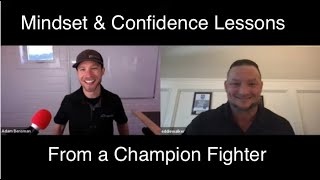
A recorded interview between host Adam Bensman and guest Eddie Walker (Muay Thai champion and owner of Champion Roofing LLC). Eddie emphasizes a "drive forward" mindset: personal development matters more than trophies, leaders must develop themselves and team members, and coaching should be tailored to individuals' physical/psychological differences. He warns about people who "ride coattails," explains rebuilding/"rebirthing" after setbacks, and translates fight-coaching principles (teach movements, respect individual limitations) into sales leadership advice. Practical guidance includes establish clear processes/expectations, diagnose salesperson weaknesses, give targeted coaching, and for reps: put ego aside and ask questions. Closing provides contact information for Champion Roofing (Atlanta).
Questions this video answers
Champion Roofing LLC — www.theroofchamp.com
Atlanta, Georgia
Facebook under 'Eddie Walker'
Chapters
All right, today, welcome back to the Roof strategist podcast and YouTube channel. I'm joined by Eddie Walker. I'm going to turn this right over. Eddie, what are we talking about today?
Well, today we're going to talk a little bit about, you know, having a mindset of understanding that no matter what happens to you in your life, you have to put your foot down and drive forward, and that there's always going to be people that's going through the same issues as you and to always have an open ear and understanding that there's never going to be a problem that's going to be more difficult that you can't ever handle.
Yeah, I love that. Because roofing sales is personal development in disguise. It's the hardest thing to teach and give you the tools, but this thing in here. So real fast, before we jump in, Eddie, I want to share for everyone joining in today how we. How we met. So we were at Roofcon. I had seen you because I was glued to my booth, like, five times. So you're walking through the lobby, and I'm just like, you. I've seen you. Why have I seen you five times? And then we end up talking. You tell me about your Muay Thai background. We end up seeing each other again, going to the airport at the same time and sharing an Uber or Lyft, whatever it was. And that's what led to this. So funny. Times of serendipity. And I just want to say thank you for being so willing to share, because the stuff you shared with me, just on our brief conversation, I was like, I need to have you on because people need to hear this message. And I know that people raved about what you shared at Roofcon and have had phone calls and feedback ever since. So I'm going to zip my lips. I'm going to turn it over to you to share the magic, to inspire people who need that confidence, that mindset shift from a new perspective to help you grow. So it's all you, Eddie. Take it from here.
All right, so the first thing that you have to understand is you know you. Most people don't know you. Even the closest people in your family, your friendships, and all of that, nobody knows you like you know you. And if you understand what it is that you want out of life, then you're the one that's going to have to put forth the effort to be able to make that happen. Nobody's going to do that effort for you. Nobody's going to come in and say, hey, I'm handing This to you, this is what you wanted. There you go. For one, you wasn't developed as a person to be able to get that reward that you wanted so bad. And I tell everybody, you know, yes, I have championship belts, yes I have, you know, all these awards saying that I was the best of this, best of that. But it's not necessarily about those awards because those awards literally just sit in the closet. They collect dust or they're sitting on the wall like behind me. You know, I've got a couple for my business. But that doesn't really mean anything. All it does is signifies who I became as a person to be able to reach that status. And a lot of people, they want the end reward instead of going through the actual processes, developing themselves and developing relationships with other individuals to be able to reach that peak performance. And so when you have that mindset of it's not necessarily the reward that you want, but who you're going to become at the end of it, like, it changes your whole perception of thing that you need to do as far as just moving forward.
I love that. Personal development in disguise. Who we are today is not who we need to become to achieve the level of results that we wish to hit. And if we're chasing growth, that means who you are today is not who you're going to be by the time you win that title, win that belt, hit the income goal, achieve the level of growth in your business. So back to you, Eddie, and you.
Know, to go along with that is as you begin to develop, you're going to have a lot of people come into your life. You're going to have a lot of situations and variables that's going to happen because, you know, people want to rise on your coattails whenever they see you become successful. But all they see is what happens in the light. They don't see what happens in the dark. You know, they don't see the 4 o' clock in the morning runs. They don't see the, you know, constant pad work, or they don't see the constant study and the constant looking up on YouTube trying to figure out what the best roofing systems are. They don't know what it's like to reach out to guys like you and really want to get in depth and learn. All they see is the success from on social media, or they see, you know, you driving a nice car. They see, you know, the people that you're hanging around and then they want that. So they hang around you thinking that because they hang around you, they're going to get that too. But in reality, if you allow that to happen and you don't have genuine, good quality people, they're going to drain you. So everything that you work for and everything that you become as a person, you think you're doing the right thing by trying to give back, but all you're really doing is giving everything that you work so hard for away. And then that depletes you. And now you can get to the point where you have to start all over again because you believe that you were doing the right thing. When in reality they didn't want nothing better for themselves, they just wanted a part of your success instead of them trying to, you know, create their own.
So they're hitching the wagon, so to speak, as opposed to paving the path to where they want to go a hundred percent.
And you see it all the time when it comes to business. It comes to, you know, look at these athletes that, you know, spend their entire lives to make it into the NFL or to make it to the major league baseball. And then you take an 18, 19 year old kid and you give him 20, 30 million dollars. Now all of a sudden he's got brand new best friends, he's got cousins he's never met, he's got, you know, family members that he's had issues with his entire life. He's got friends he's had issues with his entire life. All of a sudden they come back around. So he's trying to create, you know, relationships that wasn't really there in the first place. But he gets injured and now his career is completely done and he's over with. And then all those people that came into his life, they're all gone. And so now he's sitting there at the bottom barrel of his entire life. He has nothing. He's lost everything he's ever worked for and then he has nobody there. So now this person has to fill out how to regain himself and rebuild himself to the champion that he once was by himself. You know, and that's about as low as you can go. And most people don't realize that, but that happens in everything. You know, mostly in like business, you got somebody that's really busted their tail, they've made it, they got everything. And then something happens in life to where they lose it all. And then they've got to turn around and dig deep to figure out how they're going to be able to do that again. But all they got to do is remember who they are and the drive that it took to get them there. To be able to do that.
Yeah. You know, one thing, that very, very valid point. I know I've. I've done the roller coaster a few times. Build, start over, build, start over. And it's always hard and it's humbling. It's very humbling. And we have to remember where we came from. You said something that really hit home to me, and this was the pivot moment that made me say, Eddie, I needed. I need to have you on the channel to share your story. You talked with me about being. And please correct me if I butcher the pronunciation. Muay Thai fighter. Correct.
Muay Thai.
Muay Thai. Gosh. One day I'll get it. So you're a Muay Thai fighter and you talked about training other fighters and how each person you trained had a different approach because everyone is different. What I'd love is to. Is to share some nuggets for everybody watching because everyone's in different places. How do you approach coaching and facilitating? Because now you're the. The owner of Champion Roofing, right? You're leading a team forward. You're. You're in a new growth to. To kind of rebuild. If I remember right from our conversations. And by the way, rebuild, meaning not like you lost everything, meaning rebuilding in a new vision. That's what I mean by rebuilding. A better vision, a stronger vision, a clear vision. So for everybody.
Loser. It's fine. Sorry. No, I'm scared.
No, we, we. And I hear it all the time. I'm in the middle of kind of renewing re. We'll call it rebirthing instead of re rebuilding, because you have a hell of a foundation you don't need to build. It's rebirthing. So everyone watching. Can you share just some golden nuggets, some tips for them? When we. Along the lines of when you coached individual fighters to break through to the next level, I think that would really hit home and help a lot of people out.
Yeah. So as a leader, if you have people that are looking up to you and they're wanting to be built by you, you have to understand their movements. Especially when it comes to, you know, you know, fighting in general. Nobody moves the same. Nobody is the same size as you. Nobody has the same mentality as you. Everybody has different strengths. Everybody has different weaknesses. So you have to help them understand their movements. They're going to move differently than the way I move. So by being able to recognize that and focusing on teaching them the drills and teaching them, you know, the concepts of how they move, they're going to become a better version of themselves instead of them trying to become you, because they can't do what I do, you know, And I see a lot of guys, especially in the fight industry, they're. They're not as, you know, as qualified as coaches as you would like them to be. But in there, they're trying to teach everybody the same thing. They're trying to teach everybody the same techniques. And you can't. Nobody throws a leg kick the same way. Nobody throws a right hand the same way. Nobody throws a left hook the same way because their body doesn't move the same. So you have to learn how their body moves and then how to be able to make that happen. So if you're trying to throw a combination, but yet somebody doesn't have the flexibility or they don't have, you know, the. The hip movement or anything, you have to teach them a certain way, and then they just become a better version of themselves to where then they can now become successful instead of trying to be like you, and then you, as a leader, constantly getting frustrated that they're not quite picking up what you're trying to teach. It's not that they're not trying. It's that they physically cannot do it. And so if they physically can't do it, it's going to affect emotionally. Then once it starts beginning to affect them emotionally, then they just want to quit. So you got to keep. You got to keep them moving in the forward motion to where they want to keep trying to get to that next level. Same thing in business. Everybody has a different personality. Not everybody is social. Not everybody can. Can have a conversation and within that conversation be able to take criticism the same way. You know, some people like to be yelled at and some people don't. Some people like to be educated, and some people think they know everything. So you have to understand how to navigate through those personalities to be able to guide them to that next level and without having any sort of animosity, because once that animosity kicks in, now you got a whole different realm of, you know, negativity that's not going to be good for anybody.
Yeah, I absolutely love that. And how do you apply that to a roofing salesperson on your team? Because I know you've got. You've got a team. It ain't your first rodeo running salespeople, leading salespeople. So how do you apply the philosophy that we just shared into a salesperson when you've got five different personality types, five different. 10 different. 20 different. To help each one and coach each person through in a way that anyone listening might be. I mean, speak to them, speak to the listener here who needs the coaching that you have to provide. How do we apply this in the world of roofing sales?
So, first of all, you have to have your process and you have to have your expectations put in place. From then, you begin to learn their weaknesses. You begin to learn what they actually need help with. And once you identify what those weaknesses are, then as the leader, you can then try to help them with those weaknesses and help navigate them through your expectations. Because at the end of the day, as an owner, you still have expectations, you still have goals and a vision that you're trying to get to. So if you've got sales guys that aren't quite up to par, then you've got to figure it out what it is that they want, what it is that they need, and how you can actually help. If you are not willing to do that, then all you're going to do is just have a circle of just, you know, sales guys just running around, you know, not doing anything. And then now you've got a whole nother realm of issues that you've got to deal with. So I always say, find out what they're having, what they're struggling with, and then try to help them adapt to moving forward with the same vision that you do by, you know, giving them that little bit of extra attention if needed. But, you know, sometimes even by doing that, they're still not going to cut it. But then that's where you got to make the decision that maybe this isn't the right fit for you.
Yeah. Or even them.
Or even this.
That's fantastic. So if we were to close, I'd love to ask you two questions. One focused on. On the sales leaders who are listening, and one focused on the sales people. So if you were to give, like, the best advice you can to a sales leader saying, hey, let's say. And I work with a lot of newer sales managers who evolve. They started in sales, they're succeeding. Now they're in charge of running a team. One of them, I'm going to call him out, his name is Caleb. He's 21 years old. He was first six figures three months after turning 21. When I first was with him, he had a team of five. So he was a sales rep among five people. Now he's grown. His success has become the mirror of the company. He's leading a team of 25 sales reps at age 21. These are. These are new leaders who have who have succeeded and grown. And I, and I hear this a lot. A lot of my clients have this happen. They reach out. Any tips for a new sales manager? So the reason I wanted to share that story is for everyone listening. We all evolve in our role, and this industry gives us a fast track to growth. So for that new sales leader or maybe a new owner, growing a team, what's your best advice on helping motivate the mindset of the people that they're leading forward?
You have to understand what product you're actually selling, and that product is yourself. We are in the people business. It doesn't matter what material you sell. It doesn't matter what your background is. It doesn't matter where you come from. Like anything, we are in the people business. You have to develop yourself and you have to develop the people around you. You all have to have the same vision. If you cannot treat people with respect and treat people the way that you want to be treated, you're never going to make it in sales. Yes, we want to make money. Yes, we want to, you know, be successful. But at the end of the day, our goal is to build relationships with our clients, not just use them as a pocketbook to, you know, go on a new vacation. You have to develop yourself to the point to where you know for a fact that it doesn't matter how much money you have in the bank, any person that wants to sign a contract with you, you are devoting yourself to them as a new relationship partner. So that way you can move forward and they trust you enough to want to continue to do business with you. If you cannot understand that that segment of your life, you're never going to be successful because people are going to recognize that you're only in it for yourself. And most selfish people will end up by themselves and they'll wonder why they don't have, you know, anybody else there to help them. When you work as a team and you understand that you're going to be nothing without other people, then your whole vision and you're moving forward in life is going to be a lot easier.
I love that I couldn't have said it better. It reminds me of that Simon Sinek quote. Money is a result, not a purpose.
That's it. We want to have it. But, you know, you got to treat people the right way.
Exactly. And that's where the focus needs. That was absolutely awesome. Let's turn our attention to the salespeople. What would be your best advice? If you brought on a new salesperson today and they come into your office and you want to help prepare them for success and knowing that there's going to be obstacles, knowing that the first week of their job they're probably not going to love so much because it's going to challenge. What advice would you give a new sales rep?
Put your ego and your pride aside. Ask questions. Always ask questions. If you don't know, ask. The worst thing that you can do is show up at a door and be unprepared. Me, the last thing I want to do is sit here, you know, have a conversation with you and you asked me a bunch of questions and I look like an idiot because I don't know what I'm talking about. So any salesperson out there, whatever the product is besides yourself, that you were trying to provide for this client, know as much about that product as possible. If you do not know, ask questions. Don't act like you know everything because you don't. I still don't know everything. I'm still asking people. I'll get on the phone and call people right now about any roofless system that I have issues with. Ask questions. Put your pride and your ego aside. Work as a team. Don't be greedy. And I'm telling you, when you do those things and you're looking to better educate yourself and help better educate your team, these mastermind conversations that you have in your team meetings are going to be phenomenal and then you're going to grow a lot faster than you think you would and that belief that you did not have in yourself is going to kick in and you're going to just shoot to the moon.
Eddie, thank you for sharing all this. I'm fired up now and I just want to say thank you for everyone listening. This is absolute golden nuggets on leadership, personal development and mindset. Eddie, as we close, you run a roofing company. Share just a brief bit if anyone is interested in reaching out. If anyone is looking for a new place to call home or unfortunately in one of those places where they need to, if they're not getting paid, not getting treated right, what's a good way to connect with you?
You can contact me at www.theroofchamp.com. you can find me on Facebook under Eddie Walker. Our company page is Champion Roofing llc. We are in Atlanta, Georgia. Not very hard to get a hold of, not very hard to find them all over the place. We are even partners with the Atlanta Braves Triple A team that went at stripers down here. We're very heavily involved in the community. We donate a lot of money, more money than I probably should. Could probably have a boat or something, you know, like everybody else, but I don't want one because I give it all back to the kids. But, yeah, we are a phenomenal company that is looking out for the best interest of everybody, not only ourselves. And we look to need to grow and do right things by, you know, people within the community and people within the industry.
Awesome. Eddie, thank you for being here with me today. And I hope everyone walks away with this feeling inspired and with the. With some new insights to help better themselves and better the people around them. So thanks a ton, my friend.
All right, bro. Thank you.









