OBJECTION: "I'll Call You If We're Interested"
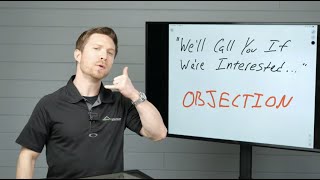
Adam Bensman explains why prospects say "we'll call you if we're interested" and how to respond. The objection usually means they want you to leave, not that they're uninterested. Ask open questions to find what matters to them, then schedule a specific follow-up visit before you go, using casual language like "friendly follow up" instead of high-pressure closes.
Chapters
The dreadful objection to hear, hey, we'll call you in a few days if we're interested, or hey, we'll call you in a few days after we've had time to think about it, or we'll call you in a few days after whatever it is. This whole I'm going to call you if later really means what? We're going to get to that in a second. But I want to ask you this. How often do you get that phone call? Be honest with yourself. How often does someone actually call you? See, I know what you're thinking. You say slim to none to never, unless there's that one in a million. But we don't want to highlight that as the yes, it can happen, because that's hopeful dreaming. The truth is that you and I both know is when you get this objection, you're going to get ghosted. You're never going to hear from them again, and you're going to get stuck in the voicemail loop, which means they're kicking you out of the house politely, which means you're not going to close the deal. Which also means that you have absolutely nothing to lose. Which is why the two tips I'm going to be teaching you in this video can help you convert this absolutely deal losing objection into a legitimate sales opportunity to either close on the spot or at the very least, get back in the house. And I cannot wait to share it with you. This video is in direct response to the comments and questions I'm getting here in these videos or along with social media, on oofStrategist, on Instagram, or you can follow me personally, Adam Bensman, on Facebook and LinkedIn and all of the videos that I do are in response to what you need right now. Because my mission, if you're new here, and by the way, my name is Adam Bensman, the roof strategist, is to help you and your team smash your income goal and give every customer an amazing experience. And in order to do that, we have to lean into these uncomfortable situations when someone says, we'll call you if we're interested and the cat got you pumped and you don't know what to say, you don't know what to do. But we also know the reality. We're probably not going to get the deal. So I can't wait to share this with you. Hey, before we get started, I do have a free offer for you. If you haven't yet done it, head over to theroofstrategist.com right now. There's a link in the description to get a free copy of my pitch like a pro roofing sales training video library. And once you enter your name and email, it's going to bring you to page. Bookmark that page because we update it every couple weeks and you'll see what some folks are saying. But here's the cool part. Inside, if you like this video, there's an entire section that you're going to love. Love on objections. So you can binge to your heart's content. And I cover all of the big ones now. That's available now@theroofstrategist.com 100% free. Enjoy. All right, now let's get into the meat and potatoes. So when someone says we'll call you if we're interested, you don't hear from them, what does it actually mean when they say this? Right. This is a perfect example to showcase the fact that in my opinion, which may not be popular belief flashcard objection handling is garbage. Alright, that's a bit extreme. Is it garbage? Not necessarily. Is it the best way to start? The answer is no. Why? Because we get fixated on the words people use. But this is a perfect example I just had. We just walked through this together. For yourself, you realize that this doesn't mean that they're going to call you if they're interested. It means get out of my house. And they're probably not going to call you. And that's why in my ARO objection handling formula, which by the way, I teach in the objection strategy, I cover that. All objections fall into one of three categories. They don't trust you, yet they don't think they need you. Or it's a money issue. Trust, need money. I'll call you if we're interested is usually a trust thing. They want you out of the house. They don't want to hear from you. That's why they ghost you. If there was any semblance of need, you have a chance of getting back in touch with them to talk about it further. But the truth is they want you gone. Now, this doesn't mean you're a bad person. What it means is that something that you've done has all of a sudden halted the trust that you were developing through the initial process. You said something, you did something subconscious or unintentionally that pumped the brakes and killed the trust. And that's what leads people to saying, hey, thanks, we'll call you if you're interested. By the way, I do this too. I'm nice to salespeople and when I'M out with my wife and we have some encounter with a salesperson. Give me your call card if you're interested. It's a nice way of saying I don't want to talk to you anymore. We're done now. Alright. Now. At the same time we, the last vehicle we purchased had a horrible experience at the dealership. My wife, I've never seen steam coming out of her ears before. She was irate at how they treated us and we literally stormed around the building. We didn't even walk through the building and we're storming our way through and the outside and I realized I'd left something on the sales reps desk and I was about to turn in, he came out and I for the first like I laid it out there, I was as irate and I wanted to stand up for my wife who we just were not treated well. And what's crazy is this sales rep, his name was Paul by the way. Paul shifted. He took ownership of everything. All of the trust, by the way. It was the same issue. We did not trust the car dealership. Paul leaned into the trust, Paul acknowledged what was going on and Paul made a sale the very next day. We came back to buy that vehicle because he had the foresight and the guts to lean into that situation, knowing he had nothing to lose, took ownership, developed our trust. And I've actually been back to speak with Paul because of how it was handled and that's what I want to teach you today is that just because that trust was killed doesn't mean you can't regain it. And that's what we're going to get into. So again this entire philosophy of the trust need money is covered in my objection strategy which is included. The only way to get it is included in my all in one sales training, sales strategy, sales system. There's one thing I have literally in my back pocket which is my phone to share this with you. This is from last week by the way. Gentleman went through it. He's in a market where there's winter right now because it's February. And he says Trust, need money. 12 roof sales this week in a market that's dead in February. This is killer, dude, exclamation point. So John, thanks man. He is loving it with his team. And this is a very common response I get is when you are now empowered to truly understand what is being said, we can lean into it and overcome as opposed trying to find the bestest. I just said it. The bestest. The best rebuttal. All right, so let's glean into this and go through number one. Since we have nothing to lose, our job is to lean in and uncover what the real issue is. So in the aro, acknowledge, reassure, overcome formula, which I'm going to kind of piece together here, I'm going to say, hey, I understand that you guys have to think about this. It's a big decision and I'm sure you want to be on the same page, which by the way, you're just repeating back to them that you hear them. Then we want to move into do you mind me asking, what is it that is most important to you when selecting a contractor for your home or selecting a roofer for your home? Now, when they say we're calling you if we're interested, we're asking directly what they're interested in, what's most important to you? Or hey, do you mind me asking what's factoring into your decision? What is it that you guys want to think about? What is it that you and your wife are wanting to discuss between all of this? The reason I'm asking is simply so I can leave you with a information to make that decision, even if it's not with me. So you see how what we did is we leaned into this by trying to uncover deeper. May I ask, what is it you'd like to think about between yourself? What is it you'd like to discuss with your husband and wife? The reason I ask is not to be intrusive. It's so I can leave you with enough information to make the decision that's best for you, even if it's not with me. So what we're doing is removing that pressure and we're removing that forcefulness, saying, so I can help you make the best decision. And then again, the illusion of control, you, even if it's not with me, which by the way, it's fact, you can't force their hand. So what this does is it builds trust. So that core issue of trust, we lean into the objection. We try to uncover and peel back the layers, keep them talking. And also strengthen the trust by saying, even if it's not with me, by removing the sales pressure. Okay, so keep them talking. So may I ask you a question again using the arrow formula? What is it? And then I'm just going to leave it that. Okay, it's our open end question. What is it that you like to talk about? What is it that you think about? What is it that's most important to you? Got it. I know I talk fast. That's first Part, second part, this may happen. This is our fallback. So generally speaking, we keep them talking. We can either overcome that on the spot or we have a backup plan. What's the backup plan? They said what? We'll call you if we're interested. And you said to yourself and to me through the intergalactic space that do you ever get that call? No. So how do we strengthen the ability to actually connect? We set the appointment in the house. Okay. Now I teach this by the way in my closing strategy. It's part of that all in one training strategy system that I talked about before. There's a link in the description. By the way, if you're interested, I have programs available for individual reps as well as companies at large. And there's our phone number, 303-222-7133. You can call or text, but we want to set the appointment. Again, I teach this in the closing strategy. If you don't close a deal, you do not leave that house with the appointment set. We want to use the assumptive close, Say, hey, I understand you want to call if you're interested. Maybe they shared with you. Hey. Well, the reason we want to wait is we want to review the estimates. We want to see what the insurance company says, we want to see what the other contractor says, we want to see about the financing plans, whatever they're trying to talk about, say, hey, totally understand, pull our pen out from our shirt, we blade our stance, take a step closer so they can see the paper and say and when would be a good time then for a friendly follow up call so we can, or so I can, and then address what they share with you, answer your questions about the other estimates, compare our estimates side by side. Okay? See what happened after the insurance company came out. So once we uncover the truth, or at least shed a little bit of truth beneath what they're, what's being said and developing trust, keep them talking and then we're going to set that follow up point. When is a good time for a friendly follow up? Okay, by the way, when the reason I phrase friendly follow up is it's not saying when's a good time for me to call you and see if you're ready to give me, you know, write a check and give me your business. A friendly follow up is a check in. So it removes that pressure. By the way, this is what's also kind of like the style into my follow up scripts and templates that are part of the battle pack also included in that package. So again that technique has worked wonders for me. When's a good time for a friendly follow up? So I'd be happy to assist as you review those estimates to see what the insurance company says, blah, blah, blah. And then they're going to. And then give them two times, Wednesday or Friday. Okay. And then whatever the dates are, they say off Wednesday. Excellent. Wednesday at 3pm Perfect. And then we confirm. Now when we get that follow up set, ideally it's in the house. If it's not, and I know I said follow up call, if there's a lot of resistance, I don't want to try to force my way in. I'm okay with a call. Ideally, by the way, if we had a good sales presentation, I want to be back in the house. The call is our backup plan in this scenario. I know that tension again, that trust that's there. If you needed to go with the phone call, that's fine. But the point is you have a set appointment that both parties have committed to. So I want to ask you, will your chances of connecting with that prospect increase or decrease? They're going to increase because you have a commitment to be on the phone to support them. Now I want to ask you another question. Would this help you regain trust or will it help you kill the trust? No, of course it's going to help you regain the trust. Which is going to help you do what? Develop the need, overcome the mini issue and then close the sale. And if nothing else, it will help you become more comfortable in being uncomfortable leaning into this. Because again, you said it yourself, do you have anything to lose right now? No. Your chances are not high of getting that deal. So by following these two very simple steps, you can lean into that objection. Ask the questions, keep them talking to try to get to a shred of the truth. And then if you don't close the sale, set the fall appointment. When will be a good time for a friendly follow up visit? Ideally, which I misspoke before should be a visit in the house to discuss and then acknowledge the objections they share with you, what they need to think about and if they want to do that, say hey, it's totally fine, we'll stick with a phone call. Then when's a good time for a friendly phone call? And boom, we've got the time and date set, higher likelihood of making contact and keeping the sale going. If you want more of this, I think you're really, if you like this video by the way, you're going to really dig what's inside. This is just kind of a snippet of some of the pieces that I include in our all in one sales training, sales strategy and sales system. And know I get this a lot. Adam, is your stuff the same as YouTube? No, there's nothing in there. That is a video that you're going to see here versus in there. It's all exclusive. It's an all in one complete system. The roofing sales success room will cover everything from knock to close. All right, so that's all in there. The two kind of pieces that I've pulled bits and pieces from here is part of the the objection strategy and the closing strategy. And again, if you have questions, there's a link in the description that'll bring you to the website. You can get it some access and you can call text our phone number 303-222-7133. Should you have any questions, our team can help you out. Now, just because our time here is about to wrap up doesn't mean your in my time has to. So I recently did a video that if you didn't watch yet, will be a really great continuation on this. When we talked about the trust and things and that's the three dominoes that you need to knock down in order to close the sale. And that video is right here. And if you haven't done it yet, I want you to head on over and click here to get a free copy of my pitch like a pro roofing sales training video library sent right to your inbox. There's an entire playlist in there on objections. We'll see you soon.









