Roofing Recession' of 2026 and The Moves to Make Right Now
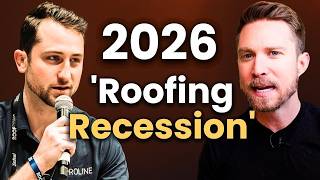
In a recorded interview at the International Roofing Expo (Feb 3 2026), Adam Bensman – the Roof Strategist and founder of the Roofing & Solar Reform Alliance (RSRA) – walks host Speaker A through his background, the purpose and membership model of RSRA, and the key insights from his 2025‑2028 Roofing Market Report. Bensman explains that the industry is entering a “roofing recession” driven by rising ad costs, declining lead volume, and shifting consumer expectations toward premium, long‑lasting roofs. He distills his research into three strategic buckets – culture, convenience, and cost‑effectiveness – and outlines how technology, AI, and a strong professional culture can give contractors a recruiting edge, lower overhead, and higher margins. He describes the split in the market between early adopters (younger, agile firms) and “old‑timers” resistant to change, emphasizing the need for agility, answer‑engine optimization (AEO), and organic branding. Bensman also shares how RSRA’s collaborative community reduces the “dumb tax” of costly trial‑and‑error, and he details a methodology for mining customer reviews to surface the language of professionalism (the 4 C’s: cadence, care, clarity, consistency). Finally, he lists the top three priorities for roofing contractors today: building a genuine culture, mastering marketing as the company’s fuel, and implementing a repeatable, ROI‑focused sales system with premium product offerings and financing. The interview is conversational, enthusiastic, and aimed at actionable guidance for roofing business owners.
Chapters
We are here at the International Roofing Expo and I am joined by Adam Bensman with RSRA. Thank you for joining me.
Yeah, thanks for being here.
Absolutely. I think your, your, your name precedes you. However, there might potentially be someone watching that doesn't know what you do and what RSRA stands for. Why don't you give your elevator pitch?
I mean, I would hope for that to be the case. That means you have room to continue to grow. So my name is Adam Bensman, also known as the Roof Strategist. And I started— how people usually know me is from my YouTube channel, and which you can find on searching Adam Bensman or The Roof Strategist. I started back in 2015 with a desire to provide resources for sales reps that were in the same shoes that I was, which is I came into the business. No one really wants to be in roofing. Everyone just falls into roofing. No one like grows up being like, I'm going to be in roofing sales. So I was one of those that discovered the opportunity And, uh, it changed my life. And at the time there was no, like, it was a very cutthroat world. There, there was no resources to turn to. There was like one or two training modules, but everything was like, you gotta pay to play. And, uh, I started making videos just to help other sales reps out that didn't have maybe the support or training from their company, or maybe they started their own company or on their own. And that took off and, and, uh, been doing that for 10 years and then One thing led to the next and now led to, uh, forming the Roofing and Solar Reform Alliance, which Proline's a partner of, and I'm super proud to have as a partner. And, uh, we're a community. I call it the training and growth alliance where our companies challenge the status quo. We solve our daily problems together through collaboration, and then we find better ways to grow. We share that with each other. So think of it as like the most powerful, intimate, vulnerable, real connected community of contractors. From coast to coast, whether it's retail, storm, or hybrid models who train hard in the trenches to build the roofing company of tomorrow today.
That's phenomenal. And what is it— what does it take to be in the Roofing and Solar Storm Alliance? Like, what's— what's the—
what's your—
what's the standard?
Standard? We have an application process. There's a couple of hard things we look for and then some soft skills that we look for. And first and foremost, every company that applies, we, we have thresholds to make sure people are established enough in business, generally starts at about 2 years. We do make some exceptions to the rule when we see a little bit more sophisticated or advanced entrepreneurs, folks that maybe run businesses in the past, but the, the folks that aren't quite ready yet are the ones that maybe like just started tomorrow. So we're looking for a growth-focused, collaboration-minded roofing company owner. Generally with a track record of success, at least been in business for a couple of years, at least a couple million in sales. Um, again, there's been a few people who are an exception to that, but we, we kind of take that case by case. Uh, we look up the company, we look at reviews, we, we do a lookup of the, uh, the owner. Um, and then we run an application and we jump on and we don't do any hard sell stuff. We just have a conversation with folks. Uh, we learn more about where they're at in their business, what they're looking to accomplish. If RSRA and the community can help, we further the conversation. If not, we part ways. We don't let anyone in who's just like, I want this one thing and that's it. If you're a that's it person, you're not for us. It's a community of collaborators. We're looking for highly engaged, value-aligned folks who are doing great stuff together. And, uh, anyway, so it's, it's a, it's a very beautiful, rich community of folks that like to grow together. And if it's not for the lone wolf, so if you're like the lone wolf that wants to like learn what's going to work for you and you never want to share your secrets with anybody because you feel like you just got to, like, put your head down and do your thing, we are not the community for you. But if you're the one that's like, I don't want to reinvent the wheel, why would I come up with this if other people have done it and I can learn from others? That's the kind of people that we are, that we, that we love for.
I love that, that collaboration and the support.
That's phenomenal.
That's phenomenal. You have so much knowledge to share and I want to dig into some of this. Recently, I think this past year, you put out a report on the roofing industry, 2025 to 2028. Can you tell us a little about that and what the, like, the big findings were in that report?
So that report, and if you go to roofmarketreport.com, you get a free copy. There's no catch. I got very obsessed with the changes that are happening in this industry and they're, they're coming really fast. And there's, there's folks that are excited about it and they're moving with it. And then there are people that either resist it or deny it. They're like, ah, you know, things are going to just keep going the way they are. So I looked, I studied 9 market conditions and I began to dissect what I, everything, consuming everything I could find. Luckily, I've had relationships with manufacturers and distributors, presidents of private equity platforms, folks that are sitting with insurance carriers at the table as they talk through policy changes. So I've had like an inside look into resources that aren't available publicly along with public information like the Harvard Joint Housing Studies, the, uh, uh, uh, Heery data. And I started to analyze them from cross-industries and I realized like we have, there's so much to track, whether it's insurance changes, whether it's consumer buying patterns, whether it's the roofing industry at large or private equity, um, whether it's AI, workforce, all these different buckets, marketing, sales, and it becomes overwhelming. The, the report is 17 pages and that's, by the way, synthesized. Like I'm talking like headline, key bullets, no fluff. Like this is what you need to know. And I sat back and I looked and I said, okay, if I were to synthesize my findings and say, to any roofing company, here's how to build a profitable, future-proof roofing company to be ahead. You know, build the company of tomorrow that people want. People meaning the homeowners who are going to be making buying decisions and people meaning the, the team that you hire. Everything fell into these 3 buckets and I'll explain it, but I want you to visualize like there's an internal-facing bucket, meaning like for the team and an external, which is facing your prospects and customers or homeowners. And those 3 buckets are culture, convenience, and cost effective. And if we look through all of the changes that are happening, a roofing company owner who focuses on culture will simultaneously create a recruiting advantage, which solves for all the recruiting troubles that will begin to get worse as 1099 or commission-only phases out, as technology and tech enablement changes sales. Where sales reps will begin selling more per rep, which will reduce overhead because tech enablement will shorten sales cycles, shorten timelines, shorten requirements for them to jump on roofs, do inspections, put together proposals, et cetera. So all of these changes, which I'm just giving you like the concept, the amalgamation of all these, uh, culture becomes a backbone for recruiting and retention, but also for the customer experience. Because if you don't have a great culture, you have a terrible customer experience. You can't have terrible culture and a great customer experience. They're one and one, right? And, and folks often don't focus a whole lot on, on that. Um, in addition to that, culture is what leads companies to have strong accountability. And I know there are many roofing company owners who are probably listening to this. Maybe that's you that'll say, I can't get my team to do this. I tell them to do that and they don't do it. And it, it ultimately boils down to a culture problem, right? The next is convenience. And if we look at all of the ways that technology and tech enablement, just like with Prolym and your AI agents to help with, with call booking and appointment conversion and lead nurturing, all of that tech enablement through tools like Prolym change and will continue to change as they develop. So I, I would be an idiot to be like, you need this, this, and this. It's like, Yes, now, but then what happens when it changes? Like, text agents seem to be more proficient at appointment booking now than voice agents. Now, voice agents are still good, but they're not amazing yet. I think we'd all agree they're good, right? But they're not like— Lots of room for improvement. Yeah, there's room for improvement, but at least you'd still use them. So then what happens once those are amazing and the game changes? So that's convenience. So we're going to have convenience in terms of organizing our docs for our company. I'll give you an example, like I just ran an AI roundtable in the, uh, RSRA where we shared our AI tech stack. And I was even sharing this, the simple tip that surprisingly most people overlook, that if your company is run on Google Docs or Google Drive, and you also have a ChatGPT Business account, you can click a button and enable company knowledge. So now what that means for those that don't know, all of your SOP library is there. You bring on someone new, they don't have to know where to find the SOP. They could just turn on and be like, how do I do this? How do I update my CRM? How do I do this? How do I create a photo report? How do I update my Contracting Pro line? How do I fix this? And it will synthesize that information for you and provide citation. So that's the convenience bucket, internal and external. The final piece is cost-effective. In this bucket, roofing companies need to run them— run in a cost-effective manner. And I know it's funny because people are like, oh, tech. Creep and my overhead's increasing. I'm going to guess that your overhead has gone nothing but up. No, like, I don't see everyone like, ah, all this software, it goes down. It doesn't, but it's okay when you start to run a lean company because usually that tech enablement should reduce your staffing needs.
Yeah.
And depending on how much, how you're leveraging technology and AI. So you're running cost-effective internally, but externally. When you look at all the consumer trends, homeowners are staying in their house longer than ever before. They— why? Well, everyone that bought houses during COVID and they financed them, you got to move and you buy the same house. Your mortgage doubled. Plus the real estate market's depressed. There's low inventory. Interest rates are high. People are staying put. You pair that with the insurance carriers reducing coverage, increasing out-of-pocket expense. Changing policy language that after 15 years we're no longer going to renew your policy. All of this is leading consumers to value something they haven't before— longevity and ROI. When you pair that with the data that, that this was ARMA data, we're down about 100, depending on who you ask, 140, 150 million squares from 170 million squares. So the market's depressed, yet the actual value of the roofing market is increasing. So think of this. The, uh, the quantity of roofs is going down, but the value is going up, which tells you one thing. The average price of a roof is increasing. Transaction prices are high, which is a, which proves the concept that people are prioritizing longer lasting roof systems, premium products and warranties in ways they didn't before. And that's where, when you talk about cost effective, salespeople now need to learn how to sell. They need to know how to present ROI. We, in my opinion, every company should be offering some sort of ultra-premium product for your market. Metal of some sort or impact-resistant shingle, whatever it is for your, for your market or region, and then offering financing so your team knows how to present affordable solutions that meet someone's budget because no one wants to buy a $20,000 or $30,000 roof, you know, $15,000 roof, but they could make a calculated decision based on their budget for their monthly expenses. So that's the kind of the synthesis of that report. Yeah.
Wow.
That's—
that was comprehensive. That's phenomenal. I mean, it seems like— and where do you think that split is for the industry? You said some people are excited about this and they're going with it. Some people aren't. Do you feel like that's 50/50, half and half, or like, where's the split on the industry?
It's a good question. I think that there are— I think the— I'll call them old timers, and this has nothing to do with age. These are the people that have been in business and they're like, what I've done has been working and they've resisted these changes and they'll say things like, I'm never going to do an instant online estimate. It's not how we sell. I'm afraid to give out price. Homeowners don't want it. Well, they do. And in fact, when you look at Google search now, if you type in roofer near me, there's a bubble up top that says online estimates. And we did— I did a video with Mike from Roofle, Mike Goldenstein. All it did is act as a filter to say, hey, do you have an Are you, do you talk about online estimates anywhere on your website? You'll show up. Literally like a week or two later, Google updated and now they have a tool where you can put in your home address and they're farming out leads. They're, they're like basically, it's like Angie's or HomeAdvisor, aren't they?
Yeah.
Homeowners want this.
They want it to be as easy as possible.
Correct. So I think those folks are starting to see, I have no choice but to list. But the old, the way that I start, I'm starting to see people listening is when you look, it was about November of '24, lead costs on Facebook and, um, Google, Meta and Google went about 38%. So for an average company, and I know this is going to be above average when I say this, but let's say a company doing between $5 to $10 million a year. When you shake out what those companies are spending on ads every month, they can account for about $1 million of less revenue with the same ad spend. Now, that's a lot. A million in revenue less with the same spend because ads, ad costs are going up, lead volume is going down. It's a pretty not so pleasant formula. I just did a video on this that actually just published today. Um, but anywho, the, the panic is this is how it is. Roofing is no longer a good industry. That's not the answer. Roofing is not going anywhere. Roofs need to get replaced. What's, what's happening is we need to adapt how we operate to both meet homeowners where they are and then adapt the business model. Objectively, if leads go down and costs go up, it means that you have to either be comfortable having a higher customer acquisition cost or increase your close rate. That's your choices. The other ways to defend against this is offering premium products. So you have higher margin, uh, or at least maybe the margin is the same, but higher profit per job to offset that, which also means I should relook at how I'm running my company. Can I run with a leaner team or a more efficient system? So I don't think I can give you a direct answer of like half the market says this and half don't. I see a lot of the, the owner operators that, that haven't really thought they needed to change. Are more resistant to it. And some of the, uh, companies that have just been around a while, it's, you know, it's like trying to move the direction of Titanic versus, I think there's a really big competitive advantage for younger companies who are still like, that's every young company's, when you started Prolixe, when you guys got going, agility.
Agility. It's amazing. Like, and it's addictive.
Yeah.
It's awesome.
Yeah.
And it gives you the edge. Yeah. Correct.
So tell me, like, what was that like for you having that agility versus where you are now?
Well, I mean, you can move so quickly. And I think we're— this is a conversation we have every day is how do we keep that agility going? Because that's one of the— for software specifically, this is all businesses, but for software, what we're seeing is that the longer you can push off the calcification that comes with age, and especially in technology, how fast it's moving, the longer the lifespan of the business. Like you're maximizing the— because you see some of these other CRM providers and like they didn't set out to build bad products. They just slowed down.
Yeah.
And they weren't— they stopped keeping up with the technology. And, and so that's, that's something that we talk about all the time is like, how do we, how do we avoid that? But it's easy when you're off.
Way easy.
Really easy.
Yeah. You all— the gap is a whisper from, from an idea to execution. Yeah. But once you've got full systems in place, like I know with my team, we're changing our CRM to Lift. You know this, you're in the CRM business.
Massive lift.
Yeah, it's a massive lift. Like agility is really important. And I do think that agility in my opinion is going to be like the new strategy moving forward. Okay.
On the roofing side as well, like be highly agile. Yeah.
Yeah.
And so like as these new technologies come out, as the market shifts, like being able to adjust quickly with that.
What you sell, how you sell, how you run your company, all of it. And, and I think we are going to reward fast movers. We meaning the successive companies, you know, like I'm looking at, which I'm sure you saw, ChatGPT announced that they're releasing paid ads. I just did a whole video of that. That's going to be airing on Thursday, 2 days from now, whatever day is today, Tuesday, whatever, 2 days, a couple of days from Tuesday. When AI, when ChatGPT announces paid ads, roofers are going to glom onto that so fast. Yeah. But roofing companies historically, and I'm speaking to the industry at large, which I know is a gross overgeneralization that I'm going to make, disclaimers made. They're very transaction-minded. Yeah. What's the true, what's the shortcut? Who's the best provider to get leads, right? Where's the easy button? What can I just hand money to and immediately get money back? That's how ROI is calculated because they're so used to this guy knocked the door. I didn't have any costs on him until he landed the sale. We got paid. It's very direct attribution. Things are job costed, but they're not anymore. And for you to play this new landscape, you got to be making moves right now. The first mover advantage is now. Your AEO game, that's answer engine optimization. I had Marcus Sheridan come on my channel and share a whole training on that. We're doing deep dives in RSRA. But if you're not showing up organically, but then your paid ads there, what does that say to a homeowner? Right? You're cheating. The internet doesn't say what you say. You search for a local company who's got great reviews, who offers financing, instant online estimates, and you don't show up, but your ad does. Do you think you're going to get clicked? No. But if you're up top and here, now that's an— that you're getting double the impressions, right? But the way that they're placing this, at least in the text previews, because I know they're rolling out this out in beta in the coming weeks, there's one ad at the bottom and you see a sliver of the next one. So they're taking a page out of the old TikTok playlet. Look at this, that's your only choice unless you physically move. Whereas if you're on Google, sorry, I put my hand here.
Yeah, no, you're good.
When you're on Google, if you do a paid search, you're competing against 2, 3, 4 other people and then a Google Map pack and then And then whatever else. So I, I see like there's so many windows of opportunity right now opening up in answer engine optimization, in, uh, I'll call it ro— local relationship building, which you'll notice I didn't use the word branding because most people think you can just buy branding, which I think is completely misleading because there's plenty of people that will take your money to go give you a new logo and whatever else, but I'm talking like being branded as a company is different. And then organic content, which is becoming more and more important because costs go up. So every time you're paying money to get in front of someone, you're paying money to get in front of someone. And if it takes them 10, 12, 20 impressions, you got to pay for all those. But if you supplement all that with organic content, you become known and associated with providing value and insight and not entertainment, value and insight that when, when a paid ad does show up, people are more receptive to click it. So Sound branding and a strong presence and reputation online will drive your lead cost down. But a lot of people are sleeping on this opportunity because it's delayed gratification. You got to put in the work now and you're not going to know for another 6 months, right? Or a year. So we're sitting in this like golden era of people are panicking. A lot of people won't change. A lot of people are going to be going out of business.
Mark my words.
And at the same time, these amazing companies are going to say, hey, we're going to weather this storm, we're going to spot the opportunities, we're going to build this foundation. And then in '27, when they're projecting this uptick to start, like they're going to just crush it. But I don't know. So that's my $0.02 on where I see things going.
I love that. I think so. I did a breakout at RoofCon and I— it somewhat mirrored a lot of the things you're saying. And I talked about the compounding effects of getting ahead on some of this technology. And if you can create that amazing customer experience, you would create that good culture in the short run then. And I put it out to 2 years. I was like, in the short run, it gives you an advantage on close rate and booking rate and all those things and leads. But, you know, by year 2 or year 3, you start to create a reputational gap between yourself and the companies that are, you know, resisting these changes. And then that's harder if you're talking about being branded, like if you're known in the community as the company that is providing that experience that people want, that's, that's becomes harder is then it's not about your competitors just adopting the tech. That's like a barrier for them and they'll have to overcome. So yeah.
Yeah. And that's scary because so many roofing companies in their first 2 years, 80 to 85% of roofing companies go out of business. So how do you focus on keeping the lights on while making investments.
That's where you're—
yes.
Yeah.
When you're treading water and gasping for air, and also someone's like, by the way, you should work on your breathing and your breaststroke, you're like, I can't work on my breaststroke. I'm trying to doggy paddle, right? Right.
I don't know.
It is a terrible analogy, but you get the idea. It's— it is hard.
It's daunting to juggle both, which is, I'm sure, why it's so good for, uh, for the members of RSRA to have that community, that collaboration, right? Because they're like, at least they had, at least they're grinding to somebody else, but they have, they can, it helps.
We compress time. And what I mean by that, one of the most common phrases that's used when people join is, I don't want to reinvent the wheels. And if you think of, gosh, what's the author's name? Uh, Keith Cunningham. He wrote the book, The Road Less Stupid. Great book, by the way, recommend it to everybody.
The Road Less Stupid.
The Road Less Stupid by Keith Cunningham. And he says, all of us pay the dumb tax. And as an entrepreneur or a salesperson, the dumb tax is the very expensive mistakes that you make along your way that either cost you hard money or opportunity. That's the dumb tax.
Yeah.
So if you are, let's, this is actually a very real example. I'm gonna plug Proline here openly. Okay. One of the most common questions that comes up in RSRA, what's the best CRM? And, and I'll tell you, Proline's amazing. And I don't think one size fits everybody. I don't. I think I'd be doing everybody a disservice that would say that because there are folks that are more ops oriented. There are folks that are marketing oriented and there are folks who want to like build their own thing and they're just tech people. So you can't just say we are the best at everything. Anyone that says that, run for the hills because you know that they're not the right company. They don't know who their customer is. But Proline comes up a lot, a real lot. We have brand ambassadors in there that love Proline. So for people to be able to tap into and say, all right, I'm going to be able to, with a post, quickly connect with the people that are using the CRMs I'm looking at, hear their direct feedback in a private setting, because every, all of our members sign a mutual confidentiality agreement. It just says we got a safe space to share. There's a lot of magic that happens. We'd even had folks that were about to hire another vendor, not, this is not CRM, marketers, uh, something not so great happened to them and they spent a lot of money. They're like, hey, I'm about to sign this, write this check. And, uh, and they're like, don't, I wouldn't work with that company. This is what happened. So when you search in our app, as of today, there's about 400, I shouldn't say about when I give you a specific number. Last I looked, there were 457 comments saying the word call me. Call me. Call me. Meaning you have a question, you turn to our community, post it, and you have to get on the phone with someone.
Yeah.
So where else are you going to be able to get real-time answers and not pay the dumb tax of I did my best, I vetted it without having like a board of peers. I made the decision. It wasn't the right fit. Now I'm fixing it, which we have happened for hiring lead providers. For figuring out pay plans, for hiring sales managers, for opening offices, for signing up with certain vendors. So that's the, that's what, what I see is the, uh, the beauty of community is it is in vet— it is, you are prepaying a substantially less dumb tax than doing it on your own. If that makes sense.
You get massive dumb tax savings.
Exactly. Exactly.
That's phenomenal. I love it. So I actually quoted you the other day. I quoted you regarding your, your research that you did into customer reviews, which is fascinating because it's like a question comes up a lot, I think, with contractors of like, well, what does it mean to provide a good customer experience? And it's like, well, why don't you look at what your prospects and customers are saying on their reviews? So can you tell a little bit about that study? Because I found it fascinating.
Absolutely. It's so funny you bring this up today, because this morning before coming to IRE, one of our members shares, because I do, I'll do audits on people's marketing websites. One of our members shares his website and he's like, can I get some feedback? So I jump in, I give him some feedback. I'm like, hey, the headline on your website could be so much more powerful. Like it, it, a lot of roofers follow, they like the generic, like it's a formula. It's either number one roofer in location or Locations, trusted roofing contractor. Like, it's like the same very generic terms. So I'm like, man, let's, let's look at your reviews. And he had his reviews embedded on the website. And I'm going to read this quote. Okay. The first review I read, which is a real Google review being pulled in, it says the roof work was so good. I added a gratuity to the bill. And I was like, that's your freaking headline, dude. Throw quotes on it. And say, roof works so good, I added gratuity to the bill. And then the, the, the call to action could be simple. They call it a roof report card, right? So like, get your free roof report card. And I'm, I'm ad-libbing now because I don't remember the exact language, but like, uh, experience so-and-so areas, right? Wherever geographical areas, 5-star customer experience for yourself. Like something like that brings character, personality, and connection to somebody. And, uh, so back to what you asked. I did a video saying, if you want the most powerful sales and marketing, analyze your customer reviews. You can go to, to your favorite LLM, ChatGPT, AI Perplexity, Grok, Gemini, whatever. I use Genspark, G-E-N-S-P-A-R-K, Genspark. It's my favorite. And I think it's doing better writing than all of them, even Clog, which used to be better. And if you paste all of them and you prompt it, you say, analyze these reviews and highlight the most common emotional words and phrases used throughout these reviews. Rank them in order from most views to least views, the top 10, and then give me direct, uh, quotes and citations as examples. And if you just do that, all of your ad copy is written, all of your marketing material is written, your website is written, your sales deck is enhanced, your sales training is presented, like, it's gold. And no one looks, like, no one will sell you better than your customers. No one. And you have a goldmine in your reviews. So that's where I said to tap in. Yeah. The, I love that.
I love that. And then, um, because it is going to differ between different companies, like what's going to come up in the reviews is going to be different depending on the market, depending on their personality, their, their, uh, you, you did though, you found, because I think you looked at a bunch of different companies, you did find that there was some consistency though. Yes. And what came up for most companies?
The word professionalism. Yeah. Was in the top for things that people like. You can also learn a lot because I did two of these videos. One, I analyzed, I taught you how to analyze the reviews for the emotional words and phrases. But then I analyzed about 6, I think it was 66 companies if my memory is right. It was a long time I was diving into this stuff. I lost. 66, I think it was 66. It says it on the video. Maybe it was 40 something.
It's a lot.
But, uh, I, I, and you can correct me in the comments on it. Once you go find a video, you'll be like, no dude, it was 37th. Either way, I analyzed them coast to coast, the retail-only companies, storm-only companies, and I wanted to look at trends on 5-star reviews and on 1-star reviews. 1-star reviews, there were, there were comments on workmanship, but it was mostly around communication. In 5-star reviews, workmanship is mentioned the least. It's like you're a cleaning company. Your work should go unnoticed.
Yeah.
Professionalism, communication, transparency. But here's the thing, like, you can't advertise professionalism. You can't say, we are professional. I mean, you can, but that's like saying we're the best. And I have opinions of things, strong opinions, because I love what I do. But I don't believe anyone is entitled to refer to themselves as the best. Sure, if I said to you, I have the best, I have the best network in the roofing industry.
I'm not going to believe you.
Correct.
Because of course you're going to say it.
Yeah. But if one of my members comes up and is like, dude, I have, and I'll give you a direct quote one of them said, Justin said this, he goes, he goes, finally I get a place to ask questions where I don't get ridiculed. Direct quote. I never would have thought of that as marketing. And if he says, hey Adam, or hey AJ, which is my initials too, by the way. I wanted to change my name to AJ when I was younger. So I'm interested.
I did it for you, yeah.
I grabbed it. And if I said, hey AJ, listen, I've joined all these different organizations, I've done these trainings. Nothing is quite like RSRA. It's got the intimacy, the collaboration, the team gets plugged in, the people are awesome, their events are fantastic. I really think they're the best. You should check them out. Like, that is so much more authentic if it was coming from a member versus me, right? So if I were to say the professional roofer, it will fall flat. So you need to show professionalism in your marketing, in your copy. In, by the way, copy is your text. For those that are, um, not marketers. Yeah. Not marketers. Uh, and then also giving a professional experience. So if you, what is not professional in my opinion is where someone fills out a lead form and they never get contacted. There's not even an automatic, even if it's an automatic email or text. If you don't have that, that's not professional. If someone answers the phone and it sounds like they're half asleep, that's not professional. If the phone is forwarded to the field guy and he answers it and says, I'm driving, I can't write this down. Can you call me back? Which believe it or not happens, that's not professional. So creating a professional experience and a professional appearance, that's how you create professionalism.
Professionalism.
Yeah.
Can you just give it, give me a definition for professionalism? Just sum up professionalism, right?
Yeah.
Like in, in like one sentence.
One sentence of professionalism. Or two. An experience so good someone would pay for.
Ooh, I like that.
Because that's what's a pro. Like, if you're a pro marketer, that means people pay you to do marketing.
So good.
Yeah. If you're a professional surgeon, yeah, you earn the right to be a surgeon versus, I guess there's not really backyard surgeons, right? Um, if you're, 'cause there's other people that are like, I'm a speaker. If you've never been paid to speak, you are not a professional speaker. If you are, it is. So if you create an experience so good that someone would pay for it, that's professional.
Yeah.
And I look at when people pay you, and roofers should think of this, specifically salespeople, my sales friends, this is for you. When you get paid, that's a thank you note.
Yes.
When someone, only when someone hands it to you and says, AJ, thank you so much, dude. That was just such an incredible experience. I love the team. I couldn't believe the attention to detail. And it's usually them thanking you when things didn't go right. Right? The screen got torn and before they noticed it, you noticed it, you got it taken care of. They will thank you for an experience that even wasn't perfect. That's what being professional is. It's, it's wow work. Yeah.
Yeah, I like that. That's, that is, that's really good. That is really good. I have a, um, I'm, I'm gonna run this past you. Uh, I may have to refine it now based on, on your, your definition there. I have talked about, or I talked about in a presentation I've done about breaking down professionalism and defining it and then mapping that. And it was for, it was for filtering what tech do you want to implement in your business. But the way that I broke it down, it was what I call the 4 C's. So the 4 C's of professionalism. And if you hit these things, then you're going to be considered professional. First one is cadence, which has to do with timeliness. Sometimes that's about being the fastest, like if speed's a lead, but sometimes it's just about doing stuff at the right time. Yeah, like sales follow-up or showing up on time. Uh, so cadence. Uh, care. So like how much you communicate that you truly care about the customer and them getting what they need.
Yeah.
Uh, clarity. So that eliminating confusion from the experience, them always knowing what's going on and what's, what comes next. And then consistency, doing it again and again and again.
Yeah.
Every single time. And so that's, that's where I've been. And so I'm really curious your perspective on it. I think you like the good breakdown.
I think it's beautiful. I don't know, blowing smoke, because I don't just agree with people for the sake of the green people. I think that's brilliant. I think the, the, uh, hit me with the, the, so, uh, cadence. Cadence. So timing. Yes, absolutely. Care.
Oh, you want to ask?
Care. If people don't feel that you care, it's BS. And if you look, like, I've, I've worked with a lot of salespeople, a lot of companies. The ones that are the most successful care deeply. And in fact, I just had the CEO of a private equity platform, and the only reason I'm not going to quote them is I, I, I'm going to paraphrase a statistic they shared. I don't want to share the wrong one, but, uh, very well known in, in, uh, private equity platform that I deeply respect how they're doing, folks. Like, Not all of them. I do, by the way, these guys are doing an awesome job. WingTegrity. They, they're one of the largest platforms out there. 46%. 42, or is it 64?
This is why I'm not quoting.
Is that— I don't remember if it was 46 or 64. I struggle with numbers. Either way, when you're doing hundreds of millions of dollars a year and 46, 64% of your business is by word of mouth or repeat business, you're doing something really well. How do you get that? Most companies will get to like $5 million and they're not doing 46%. They're able to do that because they care. So that was, that was the other one. Uh, hit me with the third one again.
Uh, clarity.
Clarity. Yes. Communication. If people don't know what's going on, that is not professional. They need to know not only what happens here, but reminding them of the next step. Absolutely.
And the fourth one?
Consistency. Yeah. Doing it over and over again and having systems that don't break. And people do.
Yeah.
You know, it's one of the things I know you guys have really cool tech or AI agents. And we've talked, because a lot of you guys have come up. I remember you were asking about, you came up in the AI tech stack roundtable as well of who people are using for AI agents, texting, call booking, et cetera. Even if, even if it's not perfect, I would rather have consistent and something I can count on. Because a robot can be trained to be consistent. Humans, it's tough. It's tough. And anyone who's ever hired a call center knows that. Like, if a call center does great and they go off script or they do their thing or they hire someone that leaves training, so yeah, I think those 4 C's are a beautiful example of what professionalism is, which if you just tie the 2 together, that creates an experience so wow-worthy someone would want to pay for it.
Yeah, no, I love that. Yeah, that's a good marrying or a good combination of the two. It's phenomenal. Well, thank you for your stamp of approval on that.
Yeah.
I've been bouncing that around and it seemed to be received well when I presented at RE:CON. So how about we wrap up with this? What is the top 3 things? We went through a lot looking at the report 2025. 2025 to 2028. What do you think today the top 3 things that roofing contractors should be thinking about and examining in their business— and this may not be across the board, but on average— need to be paying attention to today?
3 things jump to the top of my mind right now, and this could change, but right now the 3 things are culture, which I know, by the way, I need it. I'm going to just give my definition of culture because Culture is tossed around a lot as a very, like, loosey-goosey term. Like, culture doesn't mean parties and celebrations and awards. That's part of culture. The way I define culture is how your— how someone feels about working for or with you. That's it. Culture. How does someone feel about working for or with you? And that can be defined if they're like, I feel lifted up. I feel heard. I feel understood. That's your culture. And if they feel, again, there's another one. There's like companies that, which I love this by the way, when they're like, we're a personal development company, it just so happens that you're roofing. Well, what does a personal development company do? It pushes you to be uncomfortable, right? It, it challenges you. There's high accountability. So if people feel that, that's your culture. That culture is needed for accountability. It's needed for a great customer experience. It's needed for recruiting. It's needed for retention. And it's, it will, it will become even more cutthroat to grow teams. So culture is number one. Number two is marketing. And most roofers approach their marketing like this. AJ, you do marketing? Here's a check. Go do it. You see, I gotta go. I gotta go run my business.
Yeah.
Marketing is the single most important thing of the company. And I know I'm going to get pushback by my folks. They're like, no, quality is. Wrong.
Why?
Because you could have the highest quality in the entire world, but if you miss one thing, you don't have it. Marketing is the fuel to a company. So if they, if they do not, I teach people to become what I call the GC or the general contractor of your marketing. You don't need to know how to do it all yourself, but you need to know enough about marketing to call the shots, call in who you need to, spot things that are broken, keep things on budget, all the things that break with marketing. And then number 3, if it were me, having a sound, repeatable sales system that emphasizes ROI, is backed with financing, and offers an ultra-premium roof system to every single customer no matter what. Those would be the three. Culture, uh, marketing, sales system, high ROI focused with upsells, uh, premium options with finance.
That's what we think. It's about— well, it's fantastic.
Yeah.
Adam, thank you so much. I appreciate the time.
Yeah.
Thanks for having me. Absolutely.









