Roofing Sales Job? How to Choose The Right Roofing Company to Sell and Work For
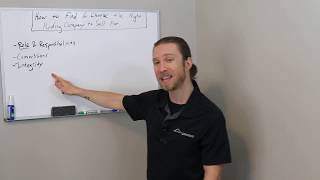
A short instructional YouTube video by Adam Bensman (the Roof Strategist) advising job-seekers and salespeople how to choose the right roofing company to sell for. He emphasizes three primary research areas—role & responsibilities, commission structures (percentage of sales vs percentage of profit, with example math), and company integrity/reputation—and also recommends checking earnings potential, growth opportunities, and training/support before accepting an offer.
Chapters
Hey guys, Adam here, the roof strategist. This has been a hot topic requested on the channel from feedback from viewers like you, whether that's in the comments or in email. Now, for future videos, email me your suggestions adamroofstrategist.com or drop in the comments. So let's jump in to how to find and choose the right roofing company to sell for. So whether you're brand new to the industry or whether maybe you're kicking the tires wanting to get into the industry because you want to increase your earning potential in a field that requires very little training, very little experience and really high commissions, or you've been in the industry and you're looking for that new company to work for. So before we go into the top questions and the research that you need to do, you need to realize one thing that is you will have more offers for people who want to hire you for roofing companies who want to hire you, then you can choose from. And the reason for that is all roofing companies are always hiring talented salespeople and hungry people like you to sell for them. So you are in the place of, of power. You have a position of authority to get choosy. And here's the top areas that I think you need to research to find that right roofing company. Because what you will find out is there are people who are in this industry and they end up with a company who's not so great, maybe doesn't pay them, doesn't fulfill on their promises, doesn't provide training, and I'm going to help you avoid all those mistakes and find the right company to call home for a long time. Here's where you need to start. Number one is your role. Okay, now you're going to say, hey, Adam, why in the world are we talking about my role in the company? Because I, I'm in sales. Well, guess what? There's a wide variety of differences on what that role can mean. Now, I've worked and consulted with companies all across the US and everyone has a slightly different way of approaching things. Some companies are going to require the salesperson, which is you, to handle generating their leads. That means going door to door and door knocking, maybe using direct mail, networking, getting referrals. You are required to generate your own leads and your own business. Other companies are going to provide those leads for you and keep you in a position where you're showing up to set appointments and all you're doing is, is selling and you're not worrying about the lead gen. So that's two Very different roles. Okay, so that's the front end. Now what happens after the sale? Some companies are going to require you, the salesperson to do the paperwork to meet with the insurance company to put together the build order that goes to the suppliers. Material shows up on site to the labor order that's going to the crew. So they show up all the way down to the insurance paperwork and supplementing the job for maximum profitability. That's the negotiating with the insurance company on how that roof should be paid out based on the damage that's there and how the install needs to take place. So here's the key things broken down into simple package Number one, are you handling self generated leads or are leads provided to you? Okay. Number two, are you in charge of processing the job and production the order form, handling production, showing up on site or is there a production team on site? So getting a clear picture on this will help you decide what you're comfortable with. Now most companies will have the salesperson self generate leads. They're going to be handling the adjuster appointment and then some portion of production putting together the build orders. But depending on what your role is, will impact your commission, which is the next piece. So first identify your key role and what your responsibilities are. I'm going to write that down. Role and responsibilities because these differ and again I can't. Responsibilities. Yeah, close enough, right? Trying to write and talk at the same time. So if you are only going there and settings with set appointments and selling, your day is going to be very different than if you're handling the whole thing. So it's really important for you to clear grasp on this out of the gate. All right. Next thing is the most fun part and that's commissions. Every company pays differently. I'm going to give you a high level on what this looks like. Some companies are going to do commission only. Okay. Others are going to do a little base pay plus commission. What's most important is for you to identify your top end earning potential. And I'm going to show you the two different commission structures that are in place. We have Commission Structure 1, which is a percentage percentage of sales. Okay. Now I'll give you an example. $10,000 sale, 10k with a 10% commission. It's going to be a thousand dollar commission, 1k per sale. Okay. So that's a percentage off the top. So if you sell a million dollars in a year, you're going to make $100,000. Very plain and simple. You're just in charge of generating new business. You get Paid off the top line. Okay. The second channel for this is a percentage of profit. Okay? So if you are in charge of selling the job, supplementing the job, showing up on site upsells all the fun stuff on the back end of the sale to maximize profitability, you, you get paid a percentage of profit. So the way most companies do it is they'll have the top sale which is $10,000 and they're going to subtract all the costs associated with that sale. So for this conversation, these numbers, every market is different. Labor cost, material costs are different. I'm going to go on just an easy number to work with for the math sake. So disclaimer there. So let's say the job costs $7,000 to produce. So that's material, labor, everything. Okay? 7,000 to produce. That leaves the company with $3,000 profit. So most companies will pay anywhere between 35 or 30% and 50% of profit depending on the sales reps production volume. So if you're getting a 40% for example profit sharing commission, your average commission on this sale is $1,200. So you have 1,200 on this model and 1,000 on this model. Well naturally you're saying well I'd rather have the 200 extra bucks. But here's the thing, depending on your role and responsibility, you're going to either have to do a lot more work by putting together material order form showing up the day that the roof is installed. Which by the way is a great sales opportunity to knock doors. Use the information in my roofing sales accelerator marketing pack and the scripts to canvas the area. I call it my 12 pack generator. It's in the marketing pack link is in the description. Check it out. So this is a great chance again to make more sales, but it takes more time. So you're going to be earning more per job, but it will take less longer. So it's important for you to understand your role and responsibility and how that might play into your commissions. Now it's always great to ask what is your top sales reps earning and what can I expect to earn? You want an average in your first year, second year and third year. For me, my first year I sold 1.4 million. I was hungry, I hustled, I networked, I landed a couple of commercial jobs and that really helped me do well. Now other folks might only do half million dollars a year. So it's important for you to have a crystal clear idea of what your earnings can be. Alright, so I'm going to erase this so we have room and we are going to talk about, oops, we are going to talk about the actual company's integrity. Now this is something that most people don't really talk much about and that is the actual company itself. It is up to you to do research. Look at Better Business Bureau for complaints. Look at Google reviews for Facebook reviews. Ask to see what customers they've served and how happy their customers are with them. If they have a whole lot of unhappy customers, it's going to raise a red flag because there's nothing worse. When you're in a sales role and you sell that roof and you say Mr. And Mrs. Homeowner, we are going to do a bang up job for you, you're going to love it. And then the crew shows up and they do a horrible job. The next job you go to sell, you're not going to have that confidence in your, in your actual company fulfilling on what they need to do. So questions on integrity, do your research. Better Business Bureau, Google, Facebook. See if they have any testimonials that you can read or take a look at. Look into how long they've been in business and just chat with them. Trust your gut on this one. You'll see and get a feel for how people respond. But these three areas are the three key areas that you need to do your research on. Role responsibilities, commissions and integrity. Now the other points, because this is again the three key areas, I'm going to write that down. Three key areas. The other questions that you'll want to ask is this earning potential. Some companies will offer bonuses. Some will say, hey, if you do a million a year for us, if someone hit a million a year, they got a $10,000 check at the end of the year. We gave away at a Christmas party. It was really cool. So, so you want to talk about earning potential and bonuses. Maybe one day you want to become a sales manager. So growth within the company is an important piece. Growth and roles. So if you're doing well, maybe you'll become a team lead. Some companies have team leaders. So that's another key thing if you want a place to call home for a long time. And most importantly is training and support. Some companies are going to do things like this and this is how I got trained by the way, where you sit down in the back office like here's a shingle board and here's a three tab, here's a dimensional, go sell. That was my training and I figured it out on my own. Other companies have a very structured training to bring you up to speed to teach you the lingo, to teach you about the roofing systems, to teach you what to look for. And sometimes you're going to have maybe a sales leader or your sales manager ride along with you or you do some shadowing. So you really want to talk about training and support to get up to speed speed on their systems so you're not left high and dry. And most importantly, and I'm going to write this one in blue, is trust your gut. Okay? Now everyone knows what that means. Trust your gut, trust your intuition, listen to your heart. Listen to those signals that are coming up to your brain that you're not quite thinking about cognitively. If you have a weird feeling about someone or they're doing things unethically, if they're giving away deductibles, if they mention any slimy business. Now I sat down in an interview and the guy who was interviewing me in the interview told me that when an adjuster isn't looking, he'll add an extra foot or two per measurement on the sketch that he hands the adjuster to try to increase the square footage to get paid more. I hear stealing and unethical lack of integrity. I did not work for them. I saw their signs up. I wanted nothing to do with a company that operated that way. So trust your gut. Find out your roles and responsibilities, understand your commissions and incentive structures and make sure that company has integrity. And again, find out your earning potential and bonuses on the past. Look at the growth and roles in the organization and find out if you have training and support. And most importantly, trust your gut. So here's what you're going to do next. Click like drop those comments about finding the questions that you need to ask. If there's anything I missed, put it in the comments. And if you are new to the industry, I encourage you to check out my roofing sales experience. Accelerator marketing pack. There's a description, a link in the description below. You click download. You're going to get all my material. Marketing material. You just plug in your name and information, click print and you'll be using my stuff right away. It's incredibly affordable. I have a no BS money back guarantee. You have issues. You email, I respond personally. I'll take care of you. That's all for this video. We'll see you on the next one. Thanks.









