Sell That HOA! How to Approach Home Owners Associations & Land HUGE Roof Deals
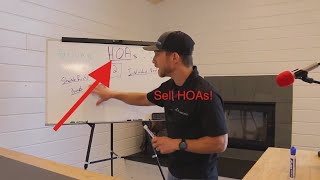
Adam Bensman breaks down HOA roofing sales, which involve multiple decision-makers and multi-day installs unlike residential jobs. Find board members through door-knocking and referrals, use open questions to uncover insurance claims, and position yourself as the coordinator who handles communication between the insurance company and homeowners.
Chapters
So you drove by that HOA, you counted them. Five, six. No, wait, there's three more. Nine, 10 in a pool building, 11 buildings on that HOA. And you want to land that deal. But the problem is you don't know the best way to approach the hoa. You don't know who to talk to, how to pitch. Is there a key decision maker, multiple decision makers? What makes it different than residential? Well, guess what? In this video, I'm going to be teaching you all that and more to help you land the next HOA deal that you're working on. Let's jump right in. Hey, my name is Adam, the roof strategist, and I help salespeople and sales teams just like you reach peak performance. Have fun doing it. But most importantly, to smash your income goals. And landing an HOA will help you get there a heck of a lot faster. Listen, I remember exactly what it's like to be sitting where you are right now, wondering how to approach an hoa. What's the best way to make that sale? And I've made the mistake of approaching it the same way that you would a residential deal. But it is not the same sale. It is a very different sale. Of course, the fundamentals, how the claim works, the four stages of the claims process, using the slap formula that I teach and that's included in the battle pack, and your complete sales strategy, all that is the same. But the difference is what the HOA wants and how you fulfill it. And here's the deal. Buying synergy. How to sell without feeling salesy is by asking questions and presenting a solution to someone's problem, problem. And when you present the right solution to their problem or what they want and what they need in the right way, there's synergy there. And I like to use this example. Imagine for a minute that you don't know how to change a spare tire. Okay, it's a little old lady. She's driving down the highway. She gets a flat. She pulls over. Who does she call? She could jump on her phone, pull out Google and search tire repair shop near me, but she's not going to call. Find a repair shop that she has to drive to because she has a flat. So she might search roadside assistance, even though they might either come out there and do it or let's say it's more than a tire and it needs some work. They're going to tow her in, but she wants to find the person that can come help her on the side of the road. So even though that the positioning of all These tire shops could solve their problem. What she wants and what she needs is someone to fix it right there. So who does she call? The tow truck. Whoever advertises the fact they have a tow truck can do roadside service. Well, every shop might even have a tow truck. But not all of them are putting that solution in front of the right people. So let's use this example as it relates to you. In roofing sales, you have everything that it takes to solve the problems of the hoa. You just need to know clearly what their problems are so you can position your solution to them. It's the same fundamentals behind the SLAP formula. When you ask the open ended question, the A of slap, what you're doing is finding out what problems and needs and desires your homeowner or commercial property owner has. So you can say, alright, they have this problem, this problem, which means I'm going to grab this part of my pitch boom and plug it in. And that's what you're going to be teaching learning right here so you can land those HOA deals. So first and foremost, what's the difference? I want to write this down. So we have residential sales. I want to show you the difference here versus an hoa. Okay, here's our little verses. Okay? Residential is going to have usually one or two decision makers. Husband, wife. Sometimes you need to win just one of them over, sometimes you need to win them both over. An HOA is going to have multiple, okay, typically if it's a board, it will be three to five members of the board. That's the president, the vice president, a treasurer, maybe a trustee, things like this. These are people that collectively have decided to make the handle the affairs of the homeowners association. That's what HOA stands for. Homeowners Homeowners Homeowners Association. All right, so there's multiple decision makers. Now this is a, usually a one day install right now, maybe two, maybe three, depending on how crazy of a roof it is. But generally speaking, nine out of 10 residential jobs are a one day deal, in and out. Right now, HOA, this is going to be multiple day install. There's a lot at risk. And if you saw my video on the lessons to learn from the church project that I drove by, you'll see that there's so many moving pieces, there's safety concerns, there's handling all the issues on behalf of the hoa, which I'm going to touch on because it is probably the most important part of the sale. So stick around for that part. Okay, now the difference Here is pretty obvious process. The same how to approach it, very different. Instead of getting one or two people on board, we have to get three to five people on board. And believe me, no matter what you do, there's going to be the one or two people who don't like you, who want to use their brother, their uncle, their friend, the last roofer, whatever it is. So you have to win the whole team over. All right? Then there's the issue, like you get the appointment with just the husband or just the wife. It's not tough to coordinate to come back when they're home. But try getting five people in the room, it's a lot more difficult. And I'll teach you some tricks here in a minute. So that's the difference between residential and hoa. And it's important for you to wrap your mind around this before we take the next step. Now, the last piece of groundwork we're going to lay is the different type of HOAs. Because there are two types of HOAs. Now, maybe there's more, but for this discussion and for my direct experience, I categorize them into these two camps. One are shared roofs. This might be townhomes or condo buildings, things like that, where that roof is going to span across multiple people so they don't make their own decisions. It's the entire board they're voting collectively on. Maybe this building is one color and that building is a different color, and this roof and that roof. Or maybe they're like Those cookie cutter HOAs where all the roofs are exactly the same. There's no decision to be made by one individual. It is a group that is a shared roof installation. Silly camera. Then we have the individual roofs. Okay, now let me give you an example. Individual roofs. This might be a gated community, upscale community that might have a security garden front. Everyone's got the manicured lawns and the pools and all that fancy stuff. Those HOAs are run in a different way. Every homeowner may have the choice of who to use as a contractor. The difference is there might be some regulations on color selection and things of that nature. They call them covenants inside the hoa. And it's important for you to understand what that means. A covenant is a regulation for a neighborhood association that says you can do this or you can't do that. And I'll never forget, I lived in a townhome once, and I almost got fined $50 for leaving my trash can at the front of my carport and not the back. These things are run in A pretty ridiculous fashion. Maybe you live in one, maybe you've dealt with it. I have. And they can be a bit of a pain in the butt. But that individual roof means that homeowner can choose whoever the heck they want, which works in your favor. So how do we approach these different sales? They are very different. And I'm going to start here first and then we're going to talk about individual roofs. So on a shared roof, you might be working a townhouse or an apartment style building. Again, shared structures, duplexes, triplexes, things like that. So how do you get to the decision maker? Because ultimately it doesn't matter if you present to every member of the hoa. All that matters is you getting in front of the right person, which is a member of the board. Okay. Or an HOA board. And again, that's the president, vice president, treasurer, treasurer, a trustee, any of those. Everyone's got different designations and different roles, but typically it's around three to five people. Your job is to find out who those people are. And the best way to do it is boots to the ground, knocking doors, go into that HOA and start talking with folks, say, hey, listen, I couldn't help but notice as I was driving by that the roof of this HOA is in pretty serious need of some help. Now, my name's Adam. I'm the roof strategist. I'm not here to bother you. I know you don't make the decisions with the hoa, but I'd like to help you get this taken care of before it becomes a problem. So to do that, may I ask you a question? Who do you know that's on the board? Okay. Who do you know that's on the board? Easy, easy, easy. You see how it's open ended? It's open ended, not, do you know someone on the board? Who do you know that's on the board? They have to think about it. And if they say, hey, I don't really totally understand. Do you know if any of the neighbors might know who the president, vice president, any of the treasurers are? Because I'd like to be able to bring this to their attention before it becomes an issue. So now what you're doing is you're rallying the. So you're to get to the board, you're going to rally through the happy residents of the area and you're going to ask them individually to get that introduction. Once you get that introduction, everything's the same. You show up, get the address, you see if someone knows where they live. Or at least their name. You can do a reverse lookup on LinkedIn, you can look them up on Facebook, you can look them up on Whitepages.com to get their address. Or you can just ask these folks, hey, do you know which unit number they're in, what address they live at? Many people do. These are small, tight knit communities. So once you have a member of the board, your job is to use the slap formula. Say hi, break the ice, let them know why you're there and make it familiar. Ask open ended question and p present to their answer example, like this. So let's just say this is someone made fun of me the other day. I'm going to do it again. Peggy, this is Peggy, the president. It's got a good ring to it. Okay, Peggy the president and you talked to John. Okay. And our fictitious John is the resident. So we have John the resident and Peggy the president. So we're going to show up at Peggy's house after we talk to John, got Peggy's name and we're going to say, hey, I, Peggy, my name's A.D. i'm the roof strategist. I know. You don't know me. Okay, that's the icebreaker. Let them know why you're there and make it familiar. I just spoke with John over at unit 264 over there. Okay, that's letting him know, making it familiar. Now I'm going to ask my open ended question. I'm going to transition to it by saying, hey, I couldn't help but notice as I was driving by leaving a customer's that your roof looks like it sustained some pretty serious hail, wind, whatever it is, damage from that recent storm. And I wanted to ask, where's the HOA in the process. In the insurance process or how is the insurance process going for you guys? Let them talk. Once they answer, you're going to know what stage of the claims process they're in. No claim, partial payment denial or the adjuster's been out and they're going through it right now or check in hand, that's the four. And you'll be able to again present your answer to each of those. But it's not as simple as a one call close because you're only talking to Peggy and there's other decision makers that are important parts of this process. So it's important for you to say Peggy. Now listen, I realize you're not going to be making a unilateral decision. It's not fair for me to put that all on you anyway. What I can do is share with you how I can help your HOA and name it. Right. Briarwood Community, whatever it is, get this roof project behind you. Now, a few things to share to help you make this process easier. I've been through it hundreds of times, or your company has, if you're new. And I can help make it a whole lot easier than it will be for you and the board. Okay, I'm going to pause my role play for a minute and a transition into sharing some details about what this means, because now we're going to be talking about the pitch. So we talked before. Residential versus hoa. What's the difference? When you're dealing with a single roof, it's easy. You show up, you prep the house, you make sure nothing's going to get damaged. You do the install, good to go. But on an hoa, you've got multiple buildings. Now, whose responsibility does this fall onto to coordinate everything? A member of the board. And believe me, dealing with an entire HOA of maybe even hundreds of people can be a bit of a nightmare. And it means that that HOA has to draft emails and let them know what's going on and what colors are going to be selected, which buildings are going to be installed when. And then it's going to rain and they're going to have to shift it and then they have to send notices. Well, guess what? You do it. It's not that hard. It takes a huge load off the hoa. And I'll tell you, that is a tremendously huge selling point, because halfway through the process, the president's going to say, this is a nightmare. I'm sick of the adjusters coming up, the reinspections, the supplements, all of these things that they try to handle on their own. To do what? Save some money. But it's a fixed game because they're paying their deductible. So all you need to do is educate them on what's to come. Listen, I've been down this road. I've been down it a few times, and I know what's coming to you. You're going to be dealing with the insurance company because this is a large loss. They are not going to make it easy. They're not. I have never seen an HOA be like, yep, everything's done. Here's a check. Go do it. Every single time we've done a large project there, it's a can of worms. It is supplement galore. It is re inspection and engineers get involved, and then you're going between them and then communicating to the, to the hoa, it's a nightmare for them. But when you just handle it and you're like, hey, it's like doing 20 homes at once, boom, it's a piece of cake for you because you know what's going on. So your big selling proposition is to tell them that you can handle all of the key coordination and communication to the board, either by sending those emails through their internal communication system, which would usually be an email list. They may give you those emails. But your key way to win this, and no one talks about this stuff, no one talks about this, is to position yourself as an expert in handling these multi home, multiple, multifamily projects by staging them, coordinating, saying, hey, I'm going to let those homeowners know because trust me, these HOA folks, they're going to be whining that you started too early or you started too late or, you know, I had a homeowner that blamed us for having me. It was a TV rattle off the wall and I went there to go address it. Homeowner answers the door. This is a true story. She answers the door with her hand behind her back like this. And I walk up the stairs. And right as I get up the stairs, because it was a second level, she sets an 8 inch knife on the table. She didn't trust me. And I look over the TVs hanging on the wall. She made it stink about nothing. She goes, oh, it rattled down. But I already put it up again. Total bs. She was just an angry, grumpy lady and she just so happened to have a knife in her hand as she answered the door. This is what happens in real life, people. Now, is that common? No, of course it's not common, but it is a memorable story and it's a story I want to share with you because it's real. Another time I had a war veteran. We communicated. The day got pushed because the rain. He was at home when the nail gun started going. Unfortunately, he was struggling with ptsd. It was a really traumatic time for him and that was a huge learning lesson for me. So we put him up in a hotel. It's a couple hundred bucks. Who cares? In the grand scheme of things, it's about taking care of people. And I'll tell you, I'll take that money right out of my own commission to keep a veteran that served our country comfortable and safe through a process that I'm going to be earning a very, very healthy income from. So you got to take care of people when you can Communicate that to the president. Say, listen, I know that there's quirky folks in here. I know people have special. I'm going to do my best to coordinate the installs, communicate clearly what's happening when and I will act as the bridge between the board, the members, the insurance company and get it all done for you. Basically, I'm your point person to keep your hands free of this because this will turn into darn near a full time job. And when they hear that, they will say, where do I sign? All right. Now you may not get in bed with them right away, so what do you do? Offer to show up to their next board meeting. The sooner the better. And sometimes it's the three to five folks on the board, sometimes it's with the entire hoa. But either way you want to go there to present, you want to go there to share with the community how you can help and why they should be choosing you. And when you know their needs and their desires and you know what's going to come because maybe they haven't gone through it. Believe me, you will be a hero. Now door knock. To get to this person, you can send letters. To get to this person, you can send emails. You could spend a half a day in there knocking doors until you get this information. Believe me, it won't take half a day. It won't. You'll get get it in a few doors, trust me. Because those people want someone in their corner to make sure their home is done properly and they're not going to have any issues, alright? And they don't even control the money of the hoa. That's the best part. So that's how we do this. Got it? Got it. Now what happens for individual roofs? You could go in there, you could start knocking doors. You want to become that neighborhood roofer, you get in that hoa, you start knocking doors, you do the same thing. Now I'm talking individual roofs right now. Meaning there's 100 homes, 200 homes in this gated community, whatever the number is, 50 of them. Even though they're individual roofs, every person can choose who they use as a contractor, can choose their roof color, everything. Your job is again to get in touch with the president and you want their endorsement. Think of it like Nike and Michael Jordan, alright? Michael Jordan was like the quintessential celebrity endorsement for any brand. Oh, it's good enough for Michael Jordan, it's good enough for me in a neighborhood. I know it's a bit of an over exaggeration, but that president's like Michael Jordan. They are the ones that you want in your back pocket. You get in with them. If you can land someone on the board's roof, all of a sudden when you knock doors, that slap formula. Hey, my name is Adam, the roof strategist. The reason I'm stopping by, I just talked with Peggy, the president of the hoa. We're actually doing her roof and we just helped her get her roof approved by the insurance. We're doing the install next week. The reason I'm stopping by is to ask you how your insurance process is going and how I might be able to help. Boom. There's your open ended question and you have name dropped. Boom. The president of the HoA's name and you will get in to these individual homes. Okay? These are basically the same approach as selling a traditional residential home. However, getting in the board approval is huge and you can edit the letters inside the marketing battle pack or that are included in your complete sales strategy. They work. They work by saying, hey, the reason I'm mailing you is because I spoke with Peggy, the president of the hoa. We're doing her roof and I wanted to reach out, blah blah, blah, blah blah. The rest of the information is in there. You can check out those links in the description. If you're on mobile, click that little black triangle in the lower right. And by the way, I'm extending the if you didn't see or didn't get the email, the price increase that was occurring back in September 20, I have cancelled due to Covid being a nightmare. 2020 is the year of you fill in the blank and I want to help out and keep my programs affordable, which is why I've also extended my 0% financing for 6 months offer through PayPal. By the way, anyone that might be having credit trouble or if you, you know, maybe aren't, don't have a Social Security number and you can't go through PayPal credit, email me, I'll set up a payment plan for you. Personally, I take care of my people. I'm happy to do it. So back to this. These individual roofs are very similar to residential roofs, but getting that board on your side is clutch. So now, knowing the information that you just learned, you have what it takes to get in front of the decision makers. Remember, the board is where you need to go. You need to show up at their appointments. If they're meeting, make it easy for them, offer to bring breakfast, pick up coffee and donuts and show up. Okay? And when you make yourself available, expect to get grilled by a few people. You're going to need to be good and quick on your feet because it's going to happen. A few of the people on the board are going to cold shoulder you and that's okay. You need to win them over on a popular vote. It's kind of a democratic process. When you find who's in your corner, you need to buddy up with them and do what it takes. And I'll tell you this, this is the time when it takes getting creative. I'm not talking throwing money at people, I'm talking you need to learn what's going to motivate the board. If it's handling these meetings. They might even have you come in to do more than one meeting and present do it. You need to step up to do what it takes to provide top notch service and to make these people's lives better because these are your decision makers. Alright? Now if you want more information on how to approach these commercial deals, or maybe you say HOA is great, but what about commercial deals or churches? Check out this video I'm going to put right here on how to approach commercial projects. I did it in a lockdown live and it's going to help you get more information. And the last thing I'm going to say is if you click right here, you can download a free copy of my pitch Like a pro roofing sales training video library. I update it weekly and it gets you access to all my videos organized by category. Super simple. So click here to learn how to approach commercial roofs. Click here to get a free copy of my pitch like a Pro Roofing Sales Training video library and I will see you on the next one. Now go land yourself some HOAs. We'll see you soon.









