Start a Roofing Company? Why Most Sales Reps Should NOT w/ Dmitry Lipinskiy of Roofing Insights
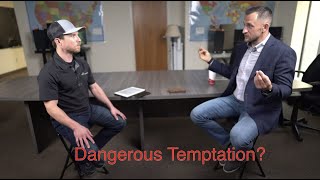
Adam Bensman talks with Dmitry Lipinskiy about why most roofing sales reps shouldn't start their own company. They cover the financial management, business planning, and hard realities of entrepreneurship that trip up people who only know how to sell.
Chapters
Demetri, thank you. We're gonna roll into part two the controversial topics that I've tippy toed around and what a better person to bring out the controversy. And I really, I know you told me before you interviewed that you don't like people poofing each other up, but I'm just gonna do one. I appreciate that you're willing to bring this level playing field to our industry and speak the things that many people have thought or wondered and given the folks that have been taken advantage of a voice. So thank you for that. In today's video in part two, I'd love to chat about the controversial question that I know many owners are not going to like me for bringing up when and why a sales rep should go out on their own. So let's get going. By the way, first, thank you for being back.
No problem. Sales rep like start their own business.
Thank you. My wife even told me this morning she goes that video topic, make sure you clarify what go out on your own means. So yes, going out on their own meaning starting your own business. I get this a lot and we're going to go through it step by step. But let's start with the basics. Who should be starting their own business? I'm talking salespeople been in the industry, they've sold. Why should you go out on your own? Who is that person that should.
I would say if you're excellent sales rep, I would not recommend you to go on your own if you do have a good company. So I would say if you make an north of 150,000 a year, you have good lifestyle, good work life balance. Maybe you don't have to door knock as much. Maybe almost became like an order taker and I meet a lot of those guys. You have solid brand, you don't have bad energy with the culture. You just stay there. I promise you you will probably not find a better place even if you go on your own to to make 150k in being owner operator, your world will be absolutely different. Stress level, work, life balance, everything will be disturbed and most likely you will even regret it. So stay. If you have good work life balance, if you're making 150 a year, if company understands you and if it's also repeatable like if you've done it for three years straight, there's no reason to move now. I would go on my own. If I know my numbers, I'm mature enough to run a business. If you have good, if you consider yourself a good leader, business is nothing by Being a good leader, just because you're good in sales does not make a good leader. Just because you can sell does not make you good at numbers you like. I'll give you example. If you don't know how much you spend per month on gas or food, it's red flag for me. You should know in business, every penny matters. You should know your numbers. You know, sales guys usually like to spend where spenders they spend, they sell, they spend, they sell. And that makes the worst business owner. Business is tough. You have to stack up your cash. Many people don't like it. If you're a spender, most likely you will be paying people too much as well. You will be paying for stuff that you shouldn't be paying, but you also will not be paying for important stuff because it's not important to you. So for business owners, for sales guys, who wants to become a business owner, you need to be business ownership. It's not being a sales rep, people, just because. Listen, I'll elaborate a little bit more. Just because you run 10, you've been 1099 and you think you're a business owner does not make you business. I think it's the biggest trick in the industry. Not only between sales guys and owners, but also between subs. So many subs think they run a business when they are a tenant. No, you're glorified employee. As a sales rep, you're a glorified employee.
They're a service provider.
Exactly. So you're not a business owner yet. There's too many things. And if you hate that, if you hate paperwork, if you hate taxes, if you hate doing all the business stuff, then I'm telling you, it's gonna destroy you. It's absolutely gonna destroy you.
What are the top three things that most people, most sales reps that start a business don't realize that you and I hear from them both, they start the business and. And then it's like, what did I get myself into? What are the three biggest things that they learned the hard way and didn't realize the blind spot? I didn't know. What are those top three things?
Number one is overhead. They don't understand what it really takes to run a business? Because when you're in sales, it just. It's commission, it's check. It's your weekly revenue. When you run a business, you might be bringing 100,000amonth and you might be losing 20,000amonth.
Seen it time and time again.
Exactly. Overhead to calculate overhead. Profitability has nothing to do with the Single jobs. Each one of your jobs in your sales guys jobs might be profitable, but as a business you still might be losing. So that's number one. Number two, dealing with the people and complaints. Unreasonable people on all levels. I'm talking about employees, I'm talking about crazy homeowners. So now when, when you're a sales rep, it's much easier to place. You will probably get one or two crazy customers for every hundred clients. You might have like three bad ones. Now numbers vary.
I'm only laughing at the amount of time. I spent probably 20% of my time as COO dealing with those three.
Sorry to interrupt you, but that's the thing. So now you're a firefighter. Imagine your life where when your life consists only dealing with fires, now you don't have a good clients because your time will be in legal department, people who don't pay your bills. And it's also different lifestyle. Now business owners are firefighters. As a sales rep you used to go picking up checks. As a business owner, now you're chasing people who are not paying you on time or not paying you at all. On top of that there's insurance companies. On top of them, there's salespeople just like you used to be who has disputes with you. On top of that there is unreasonable workers, crews. I mean there's so many issues. Dealing with people is hard. And that's what salespeople don't understand. How many people business owners actually touching in this business. I mean you're talking about accountants, legal, you're talking about government, osha. I mean there's circle after circle after circle. I mean when OSHA adjuster or Citi adjuster calls you, listen, they're not going to talk to your manager. They always want to talk to the owner. There's only so many gatekeepers you can put on, but sooner or later they'll get to you and they'll start affecting you.
Let's talk cash flow then. Most folks don't realize how much cash is going to go out before you start collecting. So how does that work for someone who doesn't really quite know? Because what happens? Again, just to frame this question, this is the big appeal. A rep sees a profit sharing commission and they believe that company's making all this money. The owner, they think that that's like the owner's commission that's not going in his or her pocket. It is unrealistic to think all of that money, even if overhead's taken out, is going in that pocket. So what does that look like cash flow for a company, a young company getting started.
I mean I'll put it this way, if you're doing million a year, that's one man company. If you have three people working for one million dollar operation, I'm telling you right now, the business is check to check basis. Like at best, if they're not losing money. Now if you charge them 275A square, you lose the money. If you charge them 450A square and you do a million a year, you breaking even. So when people tell me they run $5 million company and they have 25 employees, I'm like what? I mean think about all the artists. You have to put cash in reserve. So you're the business owner, you have to pay yourself as little as possible. Like I'm talking about bare minimum wage. Like my first year in business we did 950,000. Paid myself 60 grand and I could have paid, I paid myself 140, but I reinvested in business about 50k. So you have to be very, very smart. What you do with extra cash that you think you have. But also the biggest thing with the cash flow is never ever look at a bank account. It's not how much actual lane in your bank. You have to have QuickBooks and you have to have receivables and payables and they have to be reconciled on a daily basis. I remember days when we would have quarter million dollars in the bank that I would call my accountant and say what's our QuickBooks balances? And she's like Dimitri, you're negative 20 grand. I'm like, how does it make sense? Because you need to understand just because you sold hundred jobs and you have all those down payments, think about what will happen if everybody canceled their jobs immediately. Commissions are still owned materials order, I mean it'll be mass. But I've met owners of 40 million dollar Ponzi schemes like and actually talk to few of my mentors who will tell you like those few companies in Texas who waive deductibles and stuff like that. If you take their, if you stop their sales, if the business would stop today and they have to return and pay everybody, they're broke, they're running Ponzi scheme. The only way to operate is because just more cash coming in, going out. But on paper, as a matter of fact, I'm getting emails from one of the people on the stage today, he just shared, not even mention the name, but he just shared in the email that in 2017 or 18 he was doing 10 million a year. Think 10 million a year. And he owed a million dollars to ABC Supply and he not have it. And I'm reading like in one email, that's information like, oh, like I had a hard year, I did 10 million. Like dude, if you're doing 10 million a year and you cannot pay 1 million to your supplier, something is terribly wrong in that business. You either taking too much out, you're not selling enough. So I have a video called break even point. It's the most important metric that you can. It's actually, if you ask me, my best video of all times and I've done over 500 of them. That's the break even point.
Break even point. Okay, we'll put a link in the description below.
Yep. So break even point. What it teaches you, like every business owner have to know it. If you don't know what your break even point is, it's a red flag. So pretty much it goes like this. So how much, how many jobs do you have to sell per day to be profitable? Think about McDonald's. You go to McDonald's, they sell burger for how much? Like eight bucks.
Right.
So is it profitable? It cost them like a dollar to make it. So each burger is profitable, correct?
Not necessarily. I mean from the hard cost. Exactly.
Yes. So but there's other number is how many do they have to sell per day of the burger. So if they sell 500 burgers in a day, they're probably going to lose money. If they sell 3,000, they're probably going to be break even. If they sell 4,000, they can be really profitable. So like just because you, let's say you break even point to cover all your expenses, $300,000. But you all of a sudden sold 250,000 this month. So now you think, okay, with $50,000 under our goal. Well, no, you have $50,000 in red. While each job is profitable, each burger is profitable as a business. You're in red. Yeah, it's okay to be in red. You know, winter months, slow season, stuff like that. But that number is just. If you don't know. I was in Michigan and I asked them this question. 15 million dollar company, JF Master Elite. 778,000. Break even point. So they know if they sold 700,000, boom. But many business owners don't know. So many people just focus on price per square or commissions right there. It's more complicated than that. You have to end, you need a good account and to figure it out. So what you do is you calculate all your expenses, your gas, your food, your like, your oil changes, your insurance, absolutely all expenses. And let's say it's 30,000amonth. Well, if it's 30,000 at 10% net, it gives me right there. So you have to sell 300,000 just to take 30,000 for your overhead. And if you're selling 200,000 on average, you have to cut cost or increase sales.
Yeah. And these are numbers that so many people, they fall into the lure and excitement of misreading a profit sharing commission and they jump to these conclusions. And I have a newer client who's a young guy, super hungry. He had over a half million in cash saved up in his 20s and I don't remember how much more beyond that, but I know that that half million, which sounds like a lot of money, he had a big team. He brought 10 guys in with them. They have explosive growth. Almost every penny he had to liquidate from his investments in the stock market to pay because your labor bills and material bills are getting paid. And it's hard to get a line of credit when you're brand new as a company and all that cash is going out at a disproportionate rate from what you're bringing in. And those outbound cash collections start piling up as you get going. So let's wrap up with this. When do you know you're ready to start a business?
I think I start many businesses. When you either desperate enough that no matter what life will bring, you know you're going to make it. Like for, for me starting a business, it's a mental shift. You mentally have to be ready. I always tell people, if you have plan B, plan A is not going to happen. You're not ready if you have plan B, you're not ready. Like I see guys going like, well, I'll do subs and I'll do this or I'll sell. And I said no, if you think that you need a backup plan, don't even start. I'm okay with the backup plan. A full time job, like on a Saturday or Sunday. I started my business. I have chose cutting grass on Saturdays. Like it's okay to have a gig, but you cannot have a job. And if you have a gig, it has to be a gig. You know, it's temporarily. You tell people like, okay, I'll be a bartender at night just for the time. So you're not ready if you're not all in. And you're also not ready if you don't have a business plan. I Know, like, I don't believe in the business plan plans in the roofing industry, but I believe in the plan. Like you have to go in with some kind of execution. I'm gonna do this, this and this for me roofing. Like, I actually tell people in the first year it's impossible. You go in and you capture as much as you can. It can be million dollars, 2 million or 3 million. You cannot have business plan for the second year in business. You have to have a business plan. You look at the previous numbers and you see what you can invert. But when I say business, business plan is what market you're gonna do, what products you're gonna install, who you're gonna buy from, who's gonna do the work. Like basic answers if you don't have that. Like, I'm not talking about business plans like goal oriented sales. I'm talking about who, when, how, like basic stuff. Where are you gonna be? Like, when people tell me I want to start a business, I'm like, okay, what are you gonna do? What are you gonna sell? Everything. And all the painting, all the fences, like, no, you're not ready yet. I'm going to be Malarkey, GF or Atlas. I want to be there. I'm going to be covering 25 miles radius. I'm going to be storm restoration or retail. Those are questions you have to answer. Are you going to do siding or not? Are you going to do windows or not? That's a business plan questions. What's your business going to look like? Are you going to have a good name? Are you going to have a good brand and then go all in? And if, like I would say this in a nutshell. If you're not ready to wrap your vehicle from the first day in business and tell all your friends, family, hey, this is my brand, I wrapped it. It's going to be franchise. Like, this is what I do now. I'm going to be number one roofer in town. If you're not ready to do it, you're not ready to be in business.
Yeah. So should the average roofing salesperson. And when I say average, this isn't to take away from, from the human. But I mean, let's say there's 10,000 roofing salespeople, which I know there's way more than that. Should the average person start their own roofing business or should they continue selling?
In my personal experience, 90, 95% of sales guys out there will be better off selling for other people and staying in their lane. If you're good at sales and that's all you do. And it's something satisfies you find a good home for yourself that treats you right and keeps selling. Because to be a business owner you have to be good at branding. You have to be good because what's going to happen is you're going to start the business and you're going to be mediocre, average and everything. You have to be superior, you have to be excellent, great administrator, great marketer, is very competitive. To start and grow a roofing business, you have to be workaholic, you have to be workhorse. 14 hour days, commitment, the whole thing. Good at branding, good at marketing, good at people, good at accounting. Only 5% of sales people are good at all of those. Now you can start a business because it's easy. A couple hundred bucks, get an LLC just because don't call yourself market leader or don't call yourself like legit, you know.
Yeah, it's true. And it's amazing how many owners I've talked with. I'm not going to share names because they've shared this in confidence that have told me I feel like I built my prison cell because I am stuck. These people rely on me and they've said to me I would be happier even if they earned less selling for someone else and having no liability because all it takes is the one oopsie. I remember one year we had two $70,000 mistake stakes like that. And for a lot of people $140,000 in oopsies could be crippling. That has to be paid for. And feeling that level of trapped is different than the freedom of being a salesperson. And you can check that ego and just be like I'm out there. I think that salespeople should be proud of what they're doing. You know what you're good at. I'm not the operations guy. I didn't like that side. Right. I like the structures and systems, but the deep.
But they start because of bad treatment. They start for their own reason. Just because someone mistreated you, it's not good reason to start a business.
You just find the right fit. So best advice for someone in their very first year of business, what would.
You say best advice? Pay yourself as last as possible. Invest in your business as much as possible and build a brand. That all about branding, branding, branding bag for reviews like first year is easy to build a brand. You have that effect of the small child. When small child goes in the chair and reads a poem to you, it doesn't have to be perfect. People will forgive you mistakes. People will forgive you. They will cheer for you. So if your first year in business take advantage of it, your friends, family, like your community, they will raise you up. You're not going to get that credit like later in life. That's the only time you get it. I feel like build brand building, first year, it's just like that's where every, like you're a rookie of the year, like become that rookie of the year. You will get better later, but build that brand and then let the build brand work for you later. Like first you work on your reviews and then your reviews work. And if you listen, if you build, if you create 100 reviews, legit reviews in the first year in business, it'll be so much easier second year in business. Yeah, it's almost, it's unfair. You will get started, noticed right away by everyone.
All right, I'm closing on one tough question for a first year business person. If you had to pick one book that you were like, this is a must read book for a new business owner. What book would you recommend that they read?
I really like Elle and Laura Rees War in the Boardroom. That book changed my life. It's a marketing branding book. But every organization has this war within a company where production always wants to do more and branding always wants to do less. There's a war. So you will, as a business owner, you will have all always dilemma like, should we do more services? I believe that doing less is doing more. And Alan Lower Reese, they work with companies like Hondas and Force like big manufacturers. You know, if you look at Steve Jobs, what Steve Jobs did when he came back, you know, he got fired from Apple and came back. Best companies out there, they don't have a lot of services. You know, like Tesla, they have one in each model. Like the less services you do, the better. But you always will have temptation to do more. If you look at the best companies in the roofing, like which is I just did the interview with a company who about to do 30, 40 million this year. They've been in business for five years. They would not touch nothing by the roofs. They don't go inside. They say, no, you have but you have to mentally be ready. Like I was that guy in the beginning. I was doing basement finishing. I was doing other. And my success started when I started telling people no. Like, no, I'm not a basement finishing business. Not going to do painting, not going to be drywall. But that book will help you understand that war and how to win that war.
Yeah. Beautiful advice. Demetri, thank you very much for being here for another interview.
Thank you. I mean, for having me.
Yeah. Have you heard the quote, an entrepreneur has a higher likelihood of dying of indigestion than they will of starvation?
Yes.
Yeah. I forget who said that, but that's a good one.









