STOP Saying YES When You SHOULD Say NO to Homeowners
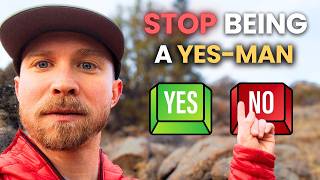
Adam Bensman explains why roofing contractors should refuse difficult customers. Devin Bandison, an NBA mind coach, taught him that a refusal doesn't owe an explanation. Bensman shares a story about a caller named Neil who yelled, then tried to un-cancel, and gives three rules: trust your gut, check if they fit your business box, and decide if you want them.
Questions this video answers
Adam Bensman
STOP Saying YES When You SHOULD Say NO to Homeowners
January 9, 2025
Devin Bandison (described as the go-to mind coach for the NBA).
The Roofing Sales Survival Guide, How to Beat the Odds, Overcome Yourself, and Win Big.
Chapters
Why you need to learn to say no to more of your customers. I know you're in the business of sales, which means our goal is to get to yes. But the most powerful thing that you can learn how to do is literally say no and learn when to walk away from deals when they need to be walked away from. This video is inspired by this recent quote card I put up. If you follow me on social media, you'll see that I share my musings, my thoughts and ideas. This one is the one that came up and people responded to it saying, hey, I really wish I learned that when I was newer in sales. And I did too. So I just want to share a story with you about my learning lesson of when to say no and why. I believe that saying no and walking away from deals is sometimes the most powerful thing you can possibly do will even make you more money. My name is Adam Bensman. Welcome or welcome back. I'm glad to have you here. I will soon not be out of breath once I start hiking down and get started roofing. Sales is personal development in disguise and the reward for growth is life changing. I hope my content helps you create a richer life and bank account. Embrace the power of saying no. A gentleman named Devin Bandison. He is known as the go to mind coach for the NBA. I had a privilege to do a session with him. I'm actually going out to one of his workshops with some members of RSRA as well down in Florida here coming up this winter. But anyway, I talked to Devin and I got to give Devin credit for this because it's really powerful. He said, you don't owe anyone an explanation when you say no. So example, someone says, can you do this for me? Can you throw in this extra thing? Because you know how sometimes customers will just be like, hey, you know, can you throw this in? Can you also do that while you're there? Is it a big deal? And they expect a lot of these things, like for free, for nothing. And many of us new salespeople especially, we fall into the trap being like, well, I gotta say yes. They gotta like me. And like if I don't do everything that they want me to and they're not gonna refer their friends and we have this fearful mindset and we end up saying yes to a lot of stuff and then we get resentful because we feel taken advantage of. So Devin said to me, he goes, adam, your. Your no doesn't owe an explanation. I said, what do you mean? He goes, if someone asked you something, you say yes. They never ask you to explain. But if someone said, hey, can you throw gutters in? And you say, no, we can't. You don't owe them an explanation. It's not in the scope. So if there's a question asked where you have to justify your no, that means it's an obligation, not an invitation. Devin, full credit for that one. An obligation and not an invitation. And I thought that was wicked powerful. And so I want to empower you to say no to your customers and to do so in a polite way. And I'm going to share some details and some examples of when and how to put this to use. Example number one, by the way. Gosh, is that just gorgeous right now? It probably doesn't pick up even remotely right on camera. But anyway, one example is when homeowners want you to throw in everything in the kitchen sink while you're there. Can you do this? Can you include this? If you do this, can you throw in the garage, all this stuff? It's appropriate to say no. And it's appropriate to express boundaries to say, hey, I don't blame you for asking. I'd want as much as I possibly could as well. However, the way that we structure our agreements is no haggle pricing. Why is that? Because we prepare our pricing and our agreements in a way that allow us to operate in a sustainable way, which means we're not only going to be able to install your project, but do it right, not cut corners and stand behind it at all costs. And the minute that we start haggling and negotiating, that means that we're running not a viable business. So rest assured, if your neighbors end up getting a roof done from us, it's going to be at the exact same price as we're doing your roof. So what I can promise is that we'll do an incredible job on everything that we say we're going to do. So again, that's a polite way to say no. And sometimes we need to soften up our nose. And this is best used with customers that you like and customers that you're already kind of deep in the process. But what happens when you deal with those customers that. You know the type? The type that when your phone rings and you look down at caller id, you just want to scream, where's my other dog, Luna? Come on, Luna, come. Those customers that. Let's see if we see her cruising down or if I lost the dog here. The other one is over there. Come on, Luna, come on. If you can see, that's her head, like, peeking out over the rocks, waiting to see where we're at. Anyway, there's times where you just need to say no. And these are generally those customers where you have all the red flags going right out of the gate. And some of you may have heard the story. I share this in my book, the Roofing Sales Survival Guide, how to Beat the Odds, Overcome Yourself, and Win Big. But I had a customer. I'll never forget him. His name's Neil. I'm not gonna share his last name for obvious reasons. But he ended up calling to cancel within the cancellation period. And he, like, accused me of doing all of. He accused me of doing all this stuff, like, unethically and saying that I was, like, a scammer and a con artist and, like, downright insulted me. So what I did is I emailed him, I said, hey, I respect your wish. Let's go, girl. I respect your wish to respect your wish to cancel the agreement. But what I just want to clear the air. Like, all of those. All of those accusations just, quite frankly, aren't true. And I'm saying this to save my integrity and my name. So I responded to each of those points and I said, but I just want you to know, like, I respect your wish. The agreements will be canceled, and I wish you the best of luck moving forward. And I cleared the air of all these misconceptions that he had. Well, he ends up calling me back and, like, within minutes, by the way of me sending this email. And even though he. He. He said he wanted to cancel, the detail I failed to mention was that he literally yelled at me and. And then emailed to cancel because, like, by. By the agreement, you know, it needs to be in writing. And then when I answered the phone after he called, after he got my email, he said, oh, I really appreciate that I cleared things up. Let's move forward. And I was like, no, no, no. You know, Jordan Peterson said, and I'm going to paraphrase this, he's like, the chances of you changing someone's personality are slim to none. And someone's personality is willing to scream at someone and berate them and call them names. Like, if we haven't even started the product, imagine what's going to happen next. So for that reason, you need to be empowered to just say no, like I did and say, no, I respect your wishes. You'll be better served with someone else. Now, you might be still afraid to say no, especially if you're newer. And I've been there. Like, when I got into this business in 2011. I was making $19,000 and change a year and I needed the money and I quit my my job that was keeping me in the below poverty line. By the way, I was a massage therapist at that time and getting going, it was not good. Stories I've shared before, but anywho, sometimes we feel this poverty mindset of like, I can't say no, I need this sale, I need this money. So we're willing to put up with stuff. And I hate to say this, but I want to challenge you. Like, you're kind of pimping yourself out in a way, and that's not a great thing to do. So let me end this by giving you some very clear parameters to help you make decisions so you don't have to think like, oh, should I or shouldn't I? So number one, trust your gut. This is one of the few times I'm going to say trust your gut because a lot of salespeople rely too much on our feelings, and feelings are not facts. So if I said something like, well, what's your close rate? You're like, well, I close, like almost everyone I talk to. It's like, that's not a close rate. That's your feeling. What's the facts? I want to know how many appointments you ran and how many turn into a customer. That's the facts, right? So in some situations, trusting your gut is like a terrible idea. But in other situations like this, it is really a good idea. So trust your gut, and if they're not someone that you want to do business with, don't do business with them. Number two, ask yourself, do they fit in the box that I've defined of how I do business? Because when you're in sales or if you own a roofing company, that's the beauty. Like, you get to write your own rules of how you want to participate in doing business with people. And you should be defining that box and saying, we will do a great job for people if they fit inside our box. But if they don't fit in the box, then you shouldn't be doing business with them. So pretty easy. Ask yourself, they fit in my box. Yes or no? The answer is no. Cut them out. It's not up to you to fit how you do business in their box. So if you have like, special requests or rude people or angry people, like, get them out of your life. Because the amount of energy drain they take from you will totally take the wind out of your sails and your enthusiasm and energy and excitement, motivation and destroy it. It's just not worth it. And then the last thing, just ask yourself, is this the kind of person that you want to do business with? And if so, do it. If not, walk away. Anyway, I hope this video helps empower you to say no to protect your time, serve people you love, have fun doing it, and make a boatload of money along the way. And if you want to learn more about the different the four different types of customers that you'll be dealing with and how to appropriately engage or disengage with them, jump into this video. You're going to love it. I will see you very soon. Bye.









