Success to Broke & Back | Cody's Journey From $0 to 6-Figures in His 1st Year of Roofing Sales
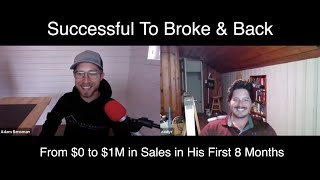
Adam Bensman interviews Cody Rock about his first year in roofing sales, where Cody hit over a million dollars in sales. They discuss how he went from broke to six figures, the sales strategies that worked, and the personal challenges he overcame along the way.
Chapters
All right, welcome back. Adam Bensman here, the roof strategist joined today by Cody Rock. Cody, thanks for joining.
Hey man, thanks for having me.
I'm do a quick intro for you, Cody, and then I would like you to fill in the gap. So Cody shot me an email and said, you know, this industry gets a little isolating, doesn't it? Like people don't care about our wins, they don't know what it means. And Cody shot a victory email. And Cody share the details. What was in the victory email? What did you accomplish?
Yeah, so I was super excited to send over to Adam, I use some of his stuff beforehand, kind of letters and some of his programs and sent him over that. A property manager wanted me to do a roof for a 1500 square multifamily unit here in Mobile and super pumped about it. You know, I was up in the air doing one of these and all those sorts of things and you know, I just wanted to tell someone that I had won essentially. So that's, that's kind of what the deal was about.
Yeah, not only did you win it, but what number and sales.
Oh yeah, I crossed a million dollars in sales my first year. So that was about month seven and a half, eight. So.
So a million in sales will round up to eight months even though it might be seven and a half in your first year. That's awesome by the way. Congratulations. And I know what it's like to just like your family's like, I sold this property. They're like, what does that mean? I don't care. Good for you. You're like, do you have any idea what that means?
You know how good that feels? Do you know who I am?
Yeah. So congratulations, man. It's inspiring to see such big numbers pulled especially by a first, first year person in eight months. So talk us through it. You know, so many people that, that tune in are brand new. So many, many people are have been in a while or experiencing sales slump. I'd love to hear your story. Where were you in life before meeting roofing sales and how did you find it?
Yeah, so I moved to Mobile about two years ago. I was living overseas. I wasn't in the Marine Corps. 2010 to 2015. Got a clearance that allowed me to go do some IT work overseas doing some contracting work for Dyncor International. So I was doing fiber tech stuff there for about two years and I moved here to be closer to my girlfriend's, my long term girlfriend. I didn't have a plan, didn't have a job. I just Knew I had some money in the bank, was blessed enough to be able to have money to buy cash a condo here. So I spent my days, my first couple months here, kind of just working on the condo and taking naps and those sorts of things. Wasn't working or anything, kind of applying for jobs and whatnot, thinking that, you know, I had a commercial construction background with my dad and you know, being able to do, you know, these, these techie things, I didn't think I would have a problem finding a job. But then, you know, four months went by and nobody bit. And yeah, that's when we had, we all the HOA came and set, sat us down and we had this HOA meeting and this developer group said, hey, we're going to buy, you know, the majority of these condos and everyone else who stays has to pay a $20,500 special assessment and it's due in four months. So I'm like, man, almost out of money. Spent all my money because I was just kind of living, couldn't be lended to because I had kind of bad credit at the time because of some, some things that happened in the past. So I had to decide what I wanted to do. So I went to business for myself installing floors and so I did laminate and vinyl flooring. Started my business called the Dutchman Group and kind of did my best using thumbtack to, to do these things. Didn't get it. You know, four months went past and you know, I was stressed out the whole time trying to, trying to save up this money. Didn't realize how much it actually cost to run a business. Did no planning prior to that. So I did that for a little while From November of 2019 until probably May the following. And eventually, you know, this, this past year just borrowed money from my parents as on a loan. But in May, after applying to, I don't know, probably 250 some odd jobs, I counted, I was just checking them off. Finally a recruiter reached out to me and said, hey, take this assessment and see how you do. And I'm like, okay, I'll do it. And apparently I, you know, did pretty well on this assessment or whatever and said, hey, there's somebody in here, here who wants, you know, looking for a sales position. Uh, it's for roofing. Are you interested in roofing? I said, I'm interested in anything but this right now. This is what I'm looking at. And you know, talk, talk to the owner of the guy that I'm working for now and the Rest is history. So, man, that's.
That's such a. It's such a wild story. Go from that financial stability of paying cash for a condo to feeling desperate. I also had to ask my. My mother for money. And. And it's not a good feeling to have to turn to family on that. And it's wild how many people are in this business who started businesses on their own and, you know, or they had to shut them down. You know, it's always unforeseen stuff. And this is. It's like roofing sales is rock bottom. It's like life recovery. You know, I need to.
Some people have nowhere else to go.
We accept everybody in open arms. Come, come. We help change your life. Let's do it. Dude, that's so great. So first company you're with and then growing. So are you commission only?
Do you have.
Do you have a base pay plus? Like, how does that work for you? You don't need to share any of the specifics. I was just curious for folks who might be tuning in.
Yeah, absolutely. I'm commission only. How we're kind of structured is we take everything from our own lead to a lead that's given to us and we bring it all the way to invoicing. So we do everything in between. So project management as well.
Awesome. Cradle to grave, as they say. So your first year, Cody, Million in sales, eight months in. What do you think will close the year out? I'm curious.
Probably 1.5, 1.6.
That's.
That's probably. Probably where I'll be. We had, you know, we've. We've had a good year in roofing terms. Two hurricanes and then a hailstorm in Gulf Shore. So the first day, the hailstorm, I sold about 120 grand worth of work to sell.
You didn't tell me that in an email. 120 on day one.
Yeah, it was just not, you know, like I just knocked some doors and that was it. So you see all these big names like Aspen Contracting or people from out of town and stuff like that. Yeah, they're not. You have to know where there's stuff there. So I loved it. It was great.
So awesome. So speaking of which, when you said being in a competitive market, seeing all these different people here. I've been getting emails a lot lately, people saying, hey, you know, storm hit. Or maybe they've been in the business for a while and like a bigger storm hit and they weren't used to this injection of lots of people. They get intimidated and they're like, is it worth it? Is it not? Where did you find your inspiration or your drive just to go out and just get after it, regardless of who is out there?
I think it goes back to having nothing to lose back then. But, You know, you just have to have confidence. You got to look and say, hey, people want to buy something from me, what is it going to be? And for me, it was roofing and being able to knock on somebody's door. And maybe you want to start off with a joke. That's what I did the first couple times. I started off with, hey, you know, I'm in the neighborhood. I work for such and such roofing company. Want to know if you want to hear a joke. And that icebreaker wasn't for them. It was for me to be able to start this conversation with them. And I can tell you all the jokes if you want.
I would love it.
So the one that I used quite a bit was what happened to the Indian who drank 10 gallons of tea? He drowned in his TV. So. So I would just use that and be like, okay, well, now I got that out. Like, now I can talk to him about roofing and do what I'm here to do. And it worked great, though. That's.
That kind of.
Kind of got over. I wasn't really shy too much. Like, I'm. I'm a pretty good people person. But I think getting me to go and knock on doors just in my free time was like, I had to convince myself that this is what I needed to do.
Yeah. And I do want to get into that. I want to note, when we do these interviews, I really like to kind of find those key things and highlight them in case people missed it. You'd said that starting the conversation at the door was what it was all about. And it's so funny how many people focus on the perfect pitch and word vomiting out the blah.
I'm here, do this, does this.
And it's like, no, you're there to start a conversation. The pitch is later. It's like coming from a sales trainer to be like, what's the first part of your pitch? Don't sell anything. Your first part of your pitch is not pitching. It's starting a conversation. Because now you have their attention, Right? Nearly work for you eight months in and a million sales. So tell me about what you did to find the courage or the motivation to get out and knock doors in your free time. Because it ain't easy. And I'm gonna guess the owner wasn't breathing down your Neck to get out there. It was kind on you.
No, he, he kind of just left us to go kind of do our own thing. So he's very like, if you want to succeed here, you will. If you don't, then we'll find somebody else. Yeah, right, exactly. The door is elsewhere. So, you know, for me I just enjoyed it, you know, having found something finally. Because I went through it. I went through general construction as a superintendent to, you know, doing my own flooring stuff. Like it took me a little while to figure out that roofing is what I want to do. But within a month, like, even if before I found any kind of success, I was like, this is it, like this is what I want to do for the rest of my life. And like, I know like one day I'll, I'll probably delve into entrepreneurship and start my own roofing company. That's not now. But you know, I'm trying to learn as much as I possibly can. So even if I'm, you know, out knocking doors or like I'm, I'm selling, when I come home, I'm reading roof blogs. Like I'm reading, you know, the how, how I learned about Shingle application was reading the Certainty Manual. It's really boring, but like once you see it and then you go sit on a job, you're like, there's nothing to this, you know, And I think that helped a lot as well. Just being passionate about something that you're selling.
I'm glad you did that. It's funny, you read the install manual, people reach out. How do I get the basics? Read the manual. I mean it is boring but like if you actually want to learn, it's easy and it's free. You can get them at, you know, any supplier. They're online. Right. I met with a GAF rep the other day. Her name was Amanda. She was awesome. And I just found out GAF has a free training center as well to teach you all the basics. So I'll be passing that along. What was your biggest obstacle? What was the hardest thing for you when getting into this industry?
I think it was pretty, it was pretty spoon fed initially. I knew that immediately. Like I saw rois on going to property management companies or you know, repeat business essentially. So that's kind of where I was kind of going. I didn't know how I was going to do it, but I knew that that was going to be the ticket to get to greatness. So I started in June, Well, I guess July 1st. Not greatness. That sounds kind of Full of myself. But I started July 1st, and then the first hurricane hit in September, was like September 15th. I think once that hurricane hit, you know, still in kind of in the middle of kind of financial duress. Within, you know, a couple of weeks, my truck went out and I didn't have the money to. To buy otherwise because I was kind of, you know, trying to stay afloat. So, you know, graciously I was able to use a 91 Suburban is what I drove around during the storm. It's fantastic. You know, you put the plywood on the top, the bed, like the back of it, keeps your stuff in there. But it's not what I wanted to be driving. So you could only go about 60 miles an hour before it started to shake and feels like it was about to fall apart. But when that storm hit, that was probably the most difficult few months of my life. Everyone else, you know, you kind of look around. We had a guy who sold. It was almost 4 million this. This past year for it, and, you know, super excited for him. All these guys doing. Doing fantastic. But, you know, I felt I was just chasing fires the entire time, and I didn't like that too much, but I couldn't mentally get over that. I was just like, man, this is how it's going to be. And eventually, you know, you'll. You'll get past it. But I just kind of didn't until it was, you know, time to sell my condo, essentially. So I think probably what I would have done if I could look back is taken a step back, took a. Took a breath and been like, there's tons of work out there. Like, everybody's like, first person on the door, first person.
This.
Like, if you're the first person there, like, that doesn't really matter. Like, yeah, there some. There is a sense of urgency. But, you know, if you get. I mean, we're still dealing with hurricane damage now we're almost a year, you know, I guess like six or six to eight months afterwards. Like, take the time, make a plan. Just get after it that way and stay in one spot. Choose a spot and like, just work that area.
So that's golden advice. Choose one spot and stay there. I just got a text this morning from someone. Last year, it was great. I, you know, found a neighborhood, did 15 jobs. I'm like, that's awesome. And then try to get 30, you know, 40, same spot.
Some of the drives, it'd be like an hour and a half. And so you'd only. So you could do like, hey, man, I Could. I could get in here and, like, talk to 40 homeowners and get 10 of them or whatever it may be, but instead, I went from one side of the bay to the other side of the bay and back, and that was the day.
So. Yeah. Isn't that the windshield time? So when you mentioned chasing fires, what do you mean by chasing fires? Like, you felt like you were running around chasing fires.
It would be like, the repair guy didn't show up. Maybe, you know, a crew was missing one piece of drip edge, which drives you bananas. Or like, the crew's finished. I want all these materials out of my yard. I don't know. You could go on forever.
Whatever.
This person needs an invoice, and they need it right now. So just stuff like that.
So urgent things, a lot of production stuff and feeling pulled in a million directions.
Yes. It's hard to prioritize.
So. It is. It is. I need to get one thing out of the way. This is black coffee. For anyone watching. It's a solo cup. It's ceramic. Every. Every time. It's my favorite coffee cup. Every time. I'm like, they're probably thinking I'm drinking a cocktail on the show. I'm not.
Um, the.
That stuff drove me nuts.
Also.
It's like, Saturday job. Of course, the job you sold an hour and a half away. And it's like, you know, four in the afternoon. They're like, hey, we're one box of nails short. We're, you know, one bundle short. 1. This pipe jack was the wrong size. And you're like, oh, my gosh.
And you're home with your pants off already.
Like, I know exactly.
Like, I'm done for the day, you know?
And one thing in the complete sales strategy, which I know you had access to, it's why I end with productivity things, is most of us don't realize you're gonna get so busy that you can't keep up. You know that? It's like. It's funny. It's like when I'm curious, let me know if this happened to you. You start off, you're like, can I even sell enough? And then fast forward a few months, and you're like, I'm so busy, I barely have time to sell.
Yes.
And then all of a sudden, the pipeline dries up. You're like, I gotta go sell again. And when you stay in the same neighborhood, you get that traction that it becomes level, and you got to prioritize. So what kind of planning and productivity tips would you give to your former self? Looking back on how to stay organized and manage your time.
Yeah. So we're a pen and paper company whenever we first started. So every time, like I forget how many accounted but it's like four touches before you can, you know, for that person signed and you're ready to go. You got to pick the color, you got to pick up your deposit, you got to drop off your estimate, you got to pick up your estimate, you know, whatever, whatever it may be. But I decided, you know, I just made the decision on my own to go digital. So I, I got job nimbus on my own. Like I just went ahead and pulled that out. Company Cam, I'm not trying to advocate for these day. I don't know if I'm allowed to know.
That's totally fine. I mean I don't, I'm not an affiliate anybody and if it's helpful stuff, people should go pursue it.
Company Cam has saved my life is what it feels like just being able to have every, every photo in one spot. I use a lot of sumo quote just because I really liked it. It helped me kind of professionalize the estimates that I was putting there. And then, you know, I'm trying to get into E signature but I have to figure out how I want to do within company guides as far as productivity. Like man, keep a calendar. I use Google Calendar. And you start, you're like, hey, I have, you start with appointments and you're like hey, I've got this appointment at this time. Okay, I've got two hours between here. I don't really want to put another appointment there. I'll just make, make some other productivity time and maybe put. I know this is the time I'm going to write estimates or maybe this is the time I'm going to do all my follow ups or something like that and just block it out. Once you do that, you look at it, you're like, oh, it's time to block or it's time for these follow up calls. It's not time for anything else. It's time for this. And then you kind of prioritize your day like that.
I, I do the same thing on a calendar and then I also do my daily plan on my. It's booting now or it was sleeping but my little tablet, digital tablet and that's huge. That's. That should be for anyone listening. All aspects of your life should be planned. I love that. So we didn't touch on this. Thank you for that by the way. Everyone watching or listening is probably like, well how'd you land the big commercial property. So the big whale that set you over the million mark, it's a $400,000 sale is what you mentioned. Right, Right. And how do you land that one?
Right time, right place. So I saw them and I driven by them like I don't know how many times, just on the way to somewhere, and it's like, you know, I'll stop in and say, hey, because I don't want to call them. And they just be like, I'm just another roofer or something. So I got over that and I finally called them, and she's like, yeah, I'll take your phone, your phone number down, do whatever, you know, I'll pass it along to the community manager. And fortunately, the community manager at that time was. Was there. And so I guess they. What it turned into was actually three apartment complexes. And so when they were like, hey, could you give us a proposal for this? She called me, like, the next day, and I was like, well, yeah, yes, I'll do anything, you know, to get this thing. And so I, you know, canceled all my appointments for that week, kind of looked at everything, and I just spent 40 hours, that was probably closer to 50 hours putting together a proposal to. To give these people that made us look like we are the kings of mobile. And so I used a. I spent time. I went to. Went to each site and I used company cam to take photos and be like, hey, here's where we're going to drop the trailers. This is where we're going to drop the materials. We're going to cover all of the AC units with this, like, every planning detail that I could possibly think of at each.
Each building.
So spent that time, brought it back to them. They wanted specific specs. I'd call the community manager and ask her a couple of questions like, hey, did you want this or did you want it like this? Like, to clarify. Communicating with her daily. And then when I. I built a scope of work report that basically was just like a written report of like, hey, here's the scope of work. Here's our safety plan. Here's, you know, this kind of stuff all by head and me just kind of thinking of it. I'd seen it before in commercial construction. So I kind of had a. Had a leg up. I also met a project manager for a pretty big construction company here, and I asked him what he used for these proposals. So I kind of used it off of that. But I turned it in, and a couple weeks later, she got back with me, and I followed up in between. But she's like, hey, we have a roofer out of Atlanta. And the only reason we wanted your bid was because we were price checking. And we liked your bid so much. It came out to like 1.8 billion. Was. Was what the amount of work that was going to be. It's like. But, hey, we liked your bid so much. We want to work with you. So will you roof this apartment complex? And so I was like, yes, absolutely. And project turned out to be about 400 grand. And we work on it here in June.
That's. Congratulations. And the devil is in the details. So many people reach out wanting, you know, everyone's chasing these whales. And it's so much time invested. 50 hours, you know, and if that doesn't happen, doesn't happen. That's the. That's kind of the thrill of the hunt. Like, if there's not that risk, it's not as exciting. But I love what you mentioned about right place, right time. Half of this stuff is you just got to be out talking to people because you just never know when that right time is. All the commercial properties I sold were all the same thing. There was really no plan. It was right place, right time, every single one of them, or relationship building referrals. And I really love when you talked about the safety plan. I've done so many videos on sharing how we're going to prep the property, how we're going to educate the home, like, or, excuse me, do all the staging, who's getting what, where all the tapes going to go, who should park where, because that liability. You're thinking like an entrepreneur. What's in it for them? All right, I need my property safe. I need the tenant safe. I don't want complaints. And that's just fantastic. Really awesome work, man. Was that retail or an insurance hurricane damage deal?
I think it was an insurance claim, but I bid it as a retail job, so they wanted to deal with their insurance company. And I was like, yeah, I'll just do the work. So that's what we ended up doing.
Yeah. And for anyone listening, on rare occasion, is that the best path? Hurricanes, it's a different animal. And I think, obviously you won the business. And many times it's nice to go in and work with the insurance. And it's. This is just part of that, like, experience and trial and error. Sometimes you could have pushed and been like, listen, really, we're the ones to work with the insurance. We're the experts. But if you know that they're going to keep you at arm's length. And if you know that, you know there's really no way in. That's a. It's a gamble. And I've gambled on some of these and put that time in and got nothing. And the next one you get. So way cool, man. 400. That must. That must have felt pretty victorious.
It was. I've been like king of the world for about 20 minutes, and then somebody called me about their azalea bushes. So.
That'S good. That's so good. So what are you comfortable sharing, what your commission will be on that project?
Yeah, It'll probably about 10%, so about 40 grand.
$40,000. That's going to be a very good feeling when you wake up and you look at your bank and it says direct deposit. $40,000 exactly.
Well, it'll be a check. It'll be in check form. So I'm taking that straight to the bank.
Yeah, that is so cool. I'll never forget the feeling. My first commercial commission like that. It was. It was life changing. It just opens your eyes to what's possible. So congrats, man. So if you were to share with people what it was, your biggest breakthrough in roofing sales, where you could really pour gasoline on a fire, what really clicked for you that allowed you to do a million in sales in eight months in your first year?
I think it was. So I sold a project right after the hurricane and it was. I think it ended up being. It was like 93 squares. So it was like this big executive's house. And it was doing the same thing, just dropping off my card. I think knowing that you're doing the right thing, as in, like, if I put in the time, I put in the efforts, then everything else will follow. But I think for me not looking at it like, hey, this is a monetary goal that I'm approaching this with. I would say it's probably better to walk up and be like, hey, I'm getting ready to make a friend. And if you can make a friend with a person that's there, even if they don't want to sell to you, you can leave your card, you can follow up with them, but they know who you are and you impacted that person's life. And if you get the business out of it, it's that much more satisfying.
What you just shared seems to be the big breakthrough for everybody. And I would grab my phone because I'm looking this one. This is another email, just exactly what you said. This actually came in this morning. I know it's gonna Be tough to read on there. I'm gonna skim through is from the guy named Dustin. He says, most importantly, I've met some amazing people. I figured out that just showing that I care, not making this job all about the money, pays off once I build that personal relationship with my customer and show them that I'm not there to sell them a roof and they will never see me again. I want to be their roofer from now on. And it seems that referrals are pouring in. So basically the same thing of what you said and the same thing that Carl said on the interview that aired today. When you take away the. If I'm interpreting this right, basically that each homeowner doesn't have a bullseye on their back with a commission number. It's. You're simply showing up. Can I can. Can I help? How can I help facilitate the process by product equals commission?
Yes, absolutely. And I will say that you can't lose your hunter mentality. So that target still needs to be on the. On the back of that person. They just need to not know that it's there.
Yeah, agreed. Agreed. And I would thank you for qualifying that. You need that hunter mentality. You need the goal. Of course we're in this for the money, but we need it. The point is it's a greater reason than the money. Right? Right. And like, you get paid more when you care more.
It's true. It's almost like it's part of the job. And I think probably about a month and a half ago, I had a couple jobs back to back to back that just went to crap. And you know, one was like, hey, they dropped wood through the ceiling or something like that. You know, something broke off and went through and, you know, they were pretty angry about it. And then, you know, kind of something similar happened. Literally somebody's a prize winning azalea bushes got crushed by shingles, getting coming off the roof and just stuff like that. But being able to go there and because I built that relationship and talked to them like people to people, rather than contractor to customer, you talk them down and be like, hey, look, I told you at the beginning, this is the expectation. Roofing's messy. You're getting this amount of weight off of your roof coming down onto the ground, something might happen. But I'm here to let you know that I'm going to take care of it for you. And if anything is wrong, you have my direct line. I'll be here as fast as I can and I'll make sure it's Taken care of. And that alone is fantastic.
Everybody write that down. The right expectations. I'm curious because I say, like, the same thing in some of my videos. Did you ever hear me say that? Because if you didn't, you and I think alike, which is.
Well, yeah. Well, that's where I learned it from.
I was curious because I was like, man, that sounds just like what I said. Set right expectations. I remember when I was selling it first, I wanted to promise the world and make it go right. And I realized I can't control what the crew's doing. There's things beyond our control when you just be like, something might happen, but we're gonna take care of it. Don't sweat it. Then all of a sudden, when it does, they're not in emotional reactive mode. So that's. That's too funny. But it sounds like what I say, so. Yeah, go ahead.
I was gonna say I learned it.
A little bit whenever.
Whenever I was doing floors for myself. Like, you kind of set the expectation, and then whenever you mess up, you do the right thing to fix it, and you continue to do that. People notice that.
Yeah. It's crazy. What? You know, one big takeaway on that. Let me know. You know, let me ask you before I share my takeaway, did that customer like you more after you took care of it, or were they really mad about it?
No, they like me more afterwards. All of them. Do you hear that?
People like you more when something goes wrong and you take care of it. It's wild because it shows your integrity. And then they're like, oh, wow. These people actually stand behind it. And most people see this situation. This is a big mind shift shift for me. Something goes wrong, and then you're, like, in panic mode, and you feel like the whole world's gonna freeze over. And then you just do what's right. And then they're like, wow, thank you. And they're, like, telling their friends about you. We flooded an entire house, caused $75,000 of damage, had to relocate people for six weeks. And they said thank you and wrote us a letter of recommendation. Like, that's awesome.
You can actually use that as, like, a sales pitch. Especially when you can. When you can read people and their emotions being like, it's like, hey, they're really worried about these plants, or they're worried about, you know, the dogs because they have these, you know, beautiful greyhounds that are running around. They don't want them to step on a nail because they don't have any muscle on the bottom of Their feet.
I didn't know that.
But you know that you could be like, hey, let me tell you about some things that happened and you can explain that. It's like, here's how we made it right? And they're like, oh, okay. That puts them at ease. It's like reverse psychology. For whatever reason it is, but it's. It works. And you're there to serve them best to their needs.
Yeah, I love it. Serve, serve, serve. It's what it's all about. And on that note, Cody, advice. You're talking down to a. Not down. I shouldn't say down. You are talking directly to a new sales rep who's joining your team. The advice you give them to help them fast track their success. What's the advice you give them?
One is to dream big, but two is to, you know, execute daily. I think, you know, if I had known, like from. From the get go, telling myself to have structured my day and, you know, being able to be like, well, what kind of success do I want to see in my first year? And see now this, this number, whatever it is you kind of work back from that, from. From the end in mind, you're like, okay, do I need to knock doors all day? Do I need to ride around with another sales rep to kind of see how they are? Like, what kind of education do I want to put forward? What kind of reading do I need to be doing? I think if you spend your first week, two weeks or something, you're first there just developing your goals and developing a plan of action that's going to take you for the next six months that'll yield results that you can't even think is possible.
I love that. I got nothing to add. Create a plan, follow the plan, have the structure. And it's hard for some people who don't have, who have never been in that place of self discipline to create it. Because, you know, when you don't have a boss that's watching you clock in and clock out, breathing down your neck and watching your little report, and it's just you out there. You got to have that structure. So super, super great advice, Cody. Thank you for being here and sharing your success and your story. I know it's going to inspire many people and it helps kind of create a little bit more of a bond between us in this industry that we're not alone in this world because it kind of feels like it at times. And you left with some really profound advice. Start conversations with people, have a plan, structure your day, plan ahead, be persistent, bring humor, set realistic expectations. Those are the key points I remembered off the top of my head. Is there anything Cody that you want to share with folks? Anything you want to add before we call it a wrap?
I love what I do and I'm so happy that I was able to find this. I'm happy to answer any questions that anybody else has or I'm constantly learning and if anybody has any other advice they want to give to me, I'd be more than happy to listen to it.
I love that attitude. Always sharpening the axe. Dig it. Cody thank you for being here. Appreciate it man. Thanks. Hey if you're new here and you want to download a copy of the Pitch like a pro roofing sales training video library there'll be a link and if you want to watch more interviews and learn how to be a hundred K earner playlist over here, we'll see you next time. Cody, thanks again.
Thanks.









