The Mainstream LIE That’s Killing Your Roofing Company
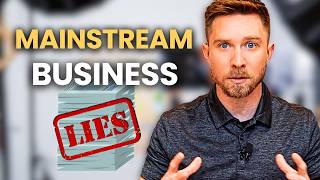
Adam Bensman says the advice to "work on your business, not in it" backfires for roofing and solar companies. Owners who hire without staying involved end up with bad managers and wasted money. Instead, delegate low-value tasks first, define clear KPIs like close rate and average sale price, and hire in order: admin, sales reps, sales manager, then production manager.
Chapters
You're being lied to. People telling you work on your business, not in your business. This will lead you down a dark path. Now I know that this video might be controversial. Maybe this has happened to you. Someone told you to work on your business, not in your business. Or potentially they said, play to your strengths and not your weaknesses. Hire your weaknesses out. So you hire a sales manager because maybe you've never run a sales team before or you're too busy. So they jump in. There's not a lot of oversight because after all, they're the expert, right? They should be the one building their role and doing a great job. So they do a terrible job on training. They destroy your culture. They end up selling jobs that aren't profitable. They leave and start their own business. They take as many of the sales reps as possible with them by brainwashing them and telling them they'll pay them more and they leave you to clean up the mess. Sound familiar? Because I am willing to bet money that if it hasn't happened to you personally, it's happened to people that you know. This is a direct result of working on your business and not in your business. Now before you go all haywire on me in the comments below, we just need to share a little bit of some values here. First is this. We both value the idea of a business that is profitable and financially healthy. We both value the idea of taking great care of our customers so so we can do what we say we're going to do and stand behind our work for the long run. And we both value the idea of having an incredible team that takes pride in showing up to work, loves what they do and sticks around. Now what we may have difference of opinions on is how to get there. So now that we're aligned on the values, we can share different opinions. Now this is an important philosophy. It's something I embrace inside the Roofing and Solar Reform alliance, which I call the community of roofers who don't like Roofers. We share our winning secrets to help each other dominate in today's unpredictable and fast changing times. Within there. We are not like minded but we are value aligned. Just the same as If I surveyed 100 roofers. What's the healthiest diet? Keto carnivore, Paleo, Gluten free, dairy free, vegetarian, vegan? Those aren't like minded, those are different. But if I said who here values your health, everyone's hands going to raise. So now that we have this groundwork laid, let's get into the nitty gritty on why I believe it's a complete lie to work on your business and not in your business and what you can do instead. My name's Adam Bensman. I'm glad to have you here. And let's get started. Roofing sales is personal development in disguise and the reward for growth is life changing. I hope my content helps you create a richer life and bank account. Now, this video was inspired by a gentleman in our community. His name is John. And John has built two roofing companies, one commercial, one residential, doing 30 million plus and 40 million plus. And he's also built and sold many companies in his lifetime. John and I ended up on a phone call and he shared with me that he hated this idea of working on your business or not in your business. He says, man, that has gotten me into trouble every single time. I think it's a total lie. And until this point, because John is the one that actually inspired this video, I thought I was the only one that felt that way. Turns out I'm not, so. So the purpose of making this video is to just give you a different perspective on what it means to build the business of your dreams. Whether that's you working in it, taking over the world, running a small office, making a couple million bucks a year and being happy, or building a business that runs without you so you can golf or sit on the beach and just have a steady income stream. Now, let's first talk about the traps of this idea of working on versus in your business. When many people take this advice at face value, they do what I call wishful investing or wishful hiring. And what I mean by that is I wish that I had a sales manager who knew exactly what to do and trained the team excellent, held everyone accountable and sold profitable jobs and increased our close rate. And then they hire the person and then they turn and they're like, well, I just hired to my weakness, right? So I'm supposed to do because all the consultants told me I should hire away my weakness and work on my strengths. But what ends up happening again without oversight is the story I opened up with where the sales manager runs it to the ground, steals the team, flips contracts, destroys the culture. So what we need to do instead. And by the way, there's a couple other examples of this before I go back to what we need to do. Companies or owners that say, hey, I need a new marketing channel. And then you're like, hey, I should hire this. I don't want to build it in house. You find a marketing agency that promises you the world. And again, I had a member of ours reach out. They had spent over $130,000 with an agency that had all of these grand promises and they did not deliver. Again, this is wishful investing or wishful hiring. Those are two examples. So what do we need to do instead? I want you to think of the analogy that if you were in a 10 foot hole in the ground and it was squared off edges, how would you get out? Think of that. Right now you're in a basically a 10 foot grave, squared off walls, how do you get out? Now this is the analogy of where you are potentially in your business as an owner or manager. You are in that hole in the ground. So the idea of working on your business from up here versus in it is a complete fallacy. It's just not realistic. So think of it this way. If it were me, here's how I'd get out. I would use whatever tools I could because my life is more important than my phone. I'd call for help first. If there is none, this would become my new shovel, or maybe it would be my keys. And what I would do is I get on my hands and knees and I would shovel out my first step. I do all the work and I'd have the vision of putting all of the steps in so I could escape this hole and be on the outside of the hole. And that's how you want to approach exiting your business. Or again, it's actually working in your business to get out of your business, which is the inverse of work on your business instead of in your business. So the first step would be the hardest, but I'd have the whole vision that I'd slowly chisel them out. So how does this apply to you in your role growing your business? There's a few key concepts that we are going to break down in terms of tactical advice for you to take this thought provoking idea and implement it. Number one is to free up your time. Far too many people approach growth by what role do I need to hire? Stop thinking about it that way. Do not think what role do I need to hire? Think of what time can I free up. So an exercise that I've done and I encourage many members of ours to do is to write down is a journal, timestamps, every single thing you do for two weeks, everything. When you check email, when you stop, when you return phone calls, when you do this, when you do that. And I did that and then I said, okay, my biggest time leaks are here, here and here. And as Jordan Peterson said, I just saw him speak when I was out at the Genius Network event. And he said, do spend all your time doing the things that only you can do. And I look, I'm like, okay, responding to email. I don't need to be doing all of that on my own. So that can be offloaded and I'll be doing this and that and, and then that defined the role and those items got delegated via either existing people on the team or a new person. That new person turned out to be my amazing executive assistant named Melissa. So delegating on time first frees up your time to then say, oh, you know what, I do need to hire a sales manager. And then you can give that all of the time and energy you have, which might be the next step. I need a new sales manager. But in order to do this, when we hire to our weakness, you need to have a clear vision. Here's the following. A clear vision of what their role should be to be doing. 2. The goal outcome. 3, the KPIs or key performance indicators that will help you keep a pulse on what they're doing, meaning what's the monthly sales, what's the close rate, what's the set rate, what's the average sale price? These are the key performance indicators, just to name a few that I would keep a pulse on. So I know is the team on target to hit their sales? Is the team performance closing it where they should? Is the average sale price what it is? And then the fourth one, what's the acquisition cost? These are all things that I can just keep an eye on so that person can report to me and I now have a pulse on what's happening and then we have open dialogue back and forth as opposed to again, the wishful hire where you just turn your back and well, they're running and I just trust them to run it. It doesn't work. So again, clear outcome, clear KPIs and a cadence to keep a pulse on what's happening. All right, now the next thing when it comes to working on your business or in your business to work your way out is figuring out what next steps. As if again, we're digging our way out of that hole. Need to be in place for you to be out of the business. It's not just hiring a bunch of roles and throwing money at the wall. We need to look strategically. So this advice is going to vary based on where you are in your business. If you're a one man band, the first thing you need to do is get out of the administrative side. So it's likely going to be offloading your time that role, which again we're offloading time, not role. But my guess is that role would turn into an office assistant, okay, an admin or a personal executive assistant. And then the next thing would be like, hey, I really need a sales team. So you're going to hire salespeople, not a sales manager first, because that's my opinion. Seven salespeople is kind of the minimum to really need a sales manager. Then once that I hire, I can pay attention to those people, I get them going, then I can hire the sales manager, then I can hire the production manager, then. So you see how we stair step out what we need to do. Which again is going to be largely dependent based on your strengths and your team capabilities. But at the end of the day, freeing up your time from lowest value tasks to then highest value tasks is the cadence in which you do it. And the reason that I say working on your business versus in an is a lie is because a lot of people again have wishful investments or wishful hires where instead get clear of the outcome. You need to get in the trenches and do the work to define those KPIs, to define the measurables that will be given back to you so you can then effectively manage it from a higher level. All right, now that's my spiel on why it's a lie to work on your business versus in your business and why you actually need to work in your business to get out of your business the right way. Agree or disagree? Drop a comment below. And if you want to hang with me here, I have another video for you that's really going to help. And if you're wearing all the hats, jump into this next video. I'll help you get out of it and figure out which hats to hire for next. Thanks for joining me. We'll see you soon.









