Traumatic Childhood = Sales "Superpower"
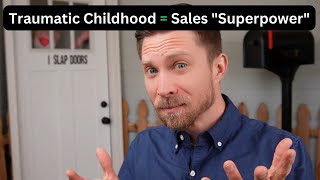
Adam Bensman (the Roof Strategist) argues in a May 25, 2023 YouTube talk that childhood trauma (e.g., alcoholism, drug abuse, physical abuse, severe parental mental illness) can produce interpersonal skills—keen observation, empathy, role-playing (peacekeeper), and control strategies—that later translate into sales strengths. He candidly describes his own peacekeeper role, the anxiety and conflict-avoidance it produced, and how roofing sales functioned as a vehicle for personal development and healing when he learned to channel those survival skills constructively. He invites viewers to journal their own childhood-learned skills, consider therapy or self-study (references the book "The Dare Response"), and discuss disagreements in the comments.
Chapters
Having a screwed up and traumatic childhood could be the reason that you're successful or will be very successful in sales. But before we get to today's video, I have to just put out a big warning. I might dig up some stuff. This video is going to be unlike anything else I've done before. I was actually quite nervous to share this video because I've refilmed it. I've refilmed it. And the reason that I wanted to put this one out is because I believe it's going to tap into the core being of folks that are maybe like me, that had a childhood or childhood experiences or trauma in the home due to things like alcoholism, drug abuse, severe mental illness, physical abuse, and more. And being a child growing up in that environment, you know when you go to school and your kid and you look around and you're kind of at that point that what you've experienced is normalized in your own home environment. It's normal at home. That's just day to day. But then you go to school and you don't want people to know about what's going on at home. And everyone on the outside looks like everything's good and great and they're living this normal life. It's not until you get older that you look back and you're like, that was messed up. Holy crap, that was really screwed up. So, disclaimer. If you don't want to go there, don't watch this video or listen to this podcast episode. This is the time to jump ship. But if you're someone who really believes that roofing sales truly is personal development in disguise, then this video is for you. But I'm not a therapist. I'm not your therapist. I did get an undergraduate degree in psychology, which basically means nothing. So. So there's that. And I would just want to get really personal and talk about the inner landscape of roofing sales and why I believe that screwed up childhood trauma is one of the reasons that makes us very successful in sales later in life. And I recognize that not everybody agrees with this. In fact, I invite an open conversation in the discussions or comment section below. I actually had this. I made this statement at dinner not long ago and this woman that I was with just completely disagreed. I said, I believe that most highly successful salespeople had really traumatic childhood experiences. She says, no, they didn't. And I was like, well, then maybe I live in a bubble. But again, that's the beauty of opinions. We all get to have our own. And I want to share my beliefs because They've empowered me, and I hope they can empower you before we get to it. Welcome. Welcome back. My name is Adam Bensman, the roof strategist. And everything that I do honestly in my life is designed to help you and your team smash your income goal and give every customer amazing experience. And I do what I do because I have found that about 66% of roofing salespeople quit or get fired in their very first year. We have really high turnover, and a lot of that is arming people like you or your team with sales strategies, tactics and skills to succeed and succeed very quickly, like, as quick as your very first day, your very first week, your very first month. But beyond that, I know that the number one roadblock is often, like ourselves, it's us. It's having that motivation, having that drive, learning how to deal with situations that we haven't yet done with. And I wanted to provide some insights into that because I've found roofing sales to be the best therapy in the entire world. And I'm going to share my journey with you here, and hopefully it inspires you to join that journey for yourself as well. So, without further ado, let's jump in. It is my belief that people who have had childhood trauma, growing up in families with drug abuse, alcohol abuse, physical trauma, severe mental illness and more become wildly successful salespeople, often, in my opinion, because of the skills they developed when dealing with that trauma. Let me explain. Oftentimes, children, when they're dealing in traumatic environments, feel unstable, insecure, not safe, and develop high levels of anxiety. Something that I personally have struggled with my entire life, as long as I can remember, until more recently, when reading a book, which I'll share, it's called the Dare Response, and I'll put a link in the description below to the book that I read that has provided a healing platform and a framework to follow that has been phenomenal. But anyway, the children, we learn these skill sets out of fear, anxiety, and feeling unsafe. So in order for us, out of pure survival mechanism, what we do is we find ways to make ourselves feel safe. That can be things like some people binge eat, because that's one thing you can control other people. And I was this person, I binge ate as well. But I also would rearrange my room constantly because I could control that, my own little home environment. I moved my dresser here. Sometimes I'd move my dresser out and I'd sleep behind it in the wall, like that was my palace. So we find these things that we can control. But when it comes into interpersonal skills, what we end up doing is finding that we play a role. I'll give you an example. On my story, I played the role of peacekeeper so I could observe in the house. Oh, okay. That's the behavior right there. That's the behavior that comes right before the explosion. Oh, I don't want to deal with that. So how can I try to keep you at peace? And you. I got to keep. I got to keep you calm and at peace, because if there's no tension, everything's good, and I'm calm and I'm safe. And when I played that role of peacekeeper, I developed these skill sets like an eagle, like having this vision to tune in and read subtle language of body language signals, or how a door was closed in the house. Was it slow, that door was slammed. Something was going to follow. That was the precursor in the indicator. Okay, I got that. All right. Something slammed down on the counter. I heard that. All right, we're getting there. Okay, now my eyes are on the situation. I'm looking at the facial cues. I see the face isn't right. The tonality is off. I'm anticipating things. And learning how to observe people and play this peacekeeper role helped me develop this very powerful skill set to learn how to distill messaging and communication. No, I know what they're thinking and about to do. I know how they're going to react. And if I can do all my best to try to control this environment, I can keep this peace, and then I don't have to deal with this garbage anymore, and I can just be happy. So that skill set right there of learning how to read and observe people helped me in sales because I now have developed a keen understanding of watching people and finding the subtle movements of when they're uncomfortable or when their mood changes or when they disagree or don't agree, or the behavior that they may participate in unconsciously before an outburst or something like that, before getting upset or angry. These skill sets and the role that I played of peacekeeper helped me develop these skills, which then helped me become successful in sales, but only after I learned how to conquer the weakness. So our greatest strength is often our greatest weakness. I want to talk about this peacekeeping thing. I was a peacekeeper, which meant I avoided conflict. I hated conflict. I did everything in my power to avoid conflict. I didn't have thick skin. I wanted to keep everybody happy. Guess what? You go in sales. Is that possible? No, I heard it. No, it's not. It's not Possible. So when I started knocking doors, I was that peacekeeper that just wanted everybody happy. I'd knock on a door, show up at someone's house, got my smiley face on, knock, knock. I'd shoot back and they'd be like, hey, my name's Adam, get the F off my property, you scumbag. Go get a real job. If I needed a roof, I'd call somebody, scream, dad. That stuff crippled me. I didn't have thick skin. I would crumble under that pressure. Getting out to knock doors was incredibly challenging for me because it went against everything that I learned how to do to survive as a child. Skill sets that carried me forward. So I had to conquer what I call my inner demon, that part of me that said, you know what? This no longer serves you. But what you can do is you can take those skill sets you developed about reading people and understanding how people respond and learning how to help this person get along better with this person and say, hey, I know what you're trying to say to them. I know how they need to hear it. So I'm going to distill what you're saying. All right, this is what she's trying to say, my friend. And then back the other way, alright, this is what he's thinking and how he's processing what you're saying. Where I played that intermediary, I could say, alright, I'm going to ditch the stuff about trying to keep the peace, but I'm going to grab these skills. And now in sales, I have developed a very fine tuned skill of empathy. Learning to not only read, but understand and feel what other people are feeling. Because I've been there through direct experience. And that, my friend, is why I believe that roofing sales is personal development in disguise. Our number one roadblock is ourselves having to get past the peacekeeper who's afraid of conflict and using this as a therapeutic approach to say, hey, my childhood I learned these skills, but they don't serve me now, but the skill sets I developed, those do. And now I'm going to practice each and every day, going up into that door, knocking on that door, facing my fear, conquering my fear, leaning into that discomfort and then sharpening those skills that I develop to be even more potent, but still channeling them in a healthy direction to be wildly powerful as a teacher, as a salesperson and as a leader. And this is why I invite you to join me on this journey where roofing sales is personal development in disguise. So I'm not against therapy by any means. In fact, Most of my childhood I was in therapy. Now I participated on my own through self study, reading, in constant experimentation, which is actually one of the reasons I got this watch was a reminder of that journey in where I am today. These symbols that I wear, the tattoos that I have are all a constant reminder of that journey and where I was and where I can be. And instead of. And again, I encourage if you believe that you need therapy, if you want therapy, if you think it'll even be remotely helpful, go do it. Who cares? Drop the ego. But what I think is really fun about roofing sales is you get paid to be in therapy, to be the best version of you, to grow beyond your childhood traumas and harness all the negativity and toxic crap you dealt with into a way that says I am the way I am today because of what I grew out of, what I survived as a kid. And now I'm here to channel. All of that is my gift to the world. To give, to be of service, to be of use to others, and to commit my life to being of use in the highest use possible, which for in Adlerian psychology is the definition of happiness, to be of use to others. So you, my friend, I invite you to join me on the challenge and the journey of embracing your childhood trauma, looking into it, diving into it, finding out why you became who you are in journaling, grabbing a pen and paper and writing down what skill sets you developed through those experiences and how can you apply those skill sets in a positive light to serve others better, to connect more deeply. And that, my friends, is why I believe that roofing sales is personal development in disguise and is one of the largest reasons, the biggest reasons that I've fallen more deeply in love with this industry than ever before. Because it ain't for everybody. It's not for the, for folks who are weak at heart. It's not for people who are afraid of themselves. It's not for people who are afraid of conflict and is certainly not for people who are seeking comfort and security all the time because you won't feel any of that here. But for those of us who enjoy the challenge and the journey of personal growth and leaning into that discomfort and, and then the byproduct, meaning I get to help more people and collect more thank you notes and earn more money, then roofing sales is for you. So there you have it. Agree or disagree? Have a comment to share, maybe your own experience? Drop it in the comments section below. I believe that childhood trauma is one of the most important factors of looking into because it shapes who we are and helps us become a very, very, very strong, powerful and confident salesperson. I hope this video inspired you or your team. Pass it along. Rewatch it. Because at the end of the day, it is us and ourselves that become our number one obstacle. So when we can turn inwards and grow through it, we end up absolutely destroying any potential ceiling that we thought we might even have there. And that, my friend, is how we take what I call moonshots. Thanks for joining me in today's video. I hope to see you on the next one.









