What is a Contingency Agreement for Roofing?
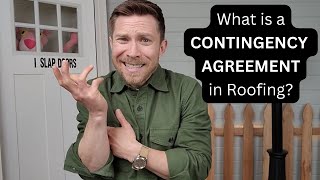
Adam Bensman explains contingency agreements for storm-damage roofing claims. A contractor documents repairs at no upfront cost, the homeowner pays only their deductible if approved, and owes nothing if insurance denies coverage. A price-lock guarantee covers the full scope except elective upgrades, code-required items, and rotted decking.
Questions this video answers
Adam Bensman (the Roof Strategist).
July 3, 2023.
Chapters
What is a contingency agreement? Well, I'm going to be answering that question in this video. So whether you're a roofing salesperson or whether you might be a homeowner or property owner who stumbled upon this video, I'm going to help demystify the wonders of what this contingency agreement is, point out some of the fallacies behind the. The idea behind them, and to help you understand why it is actually in your best interest to both use them and. And to use them with the contractor of choice. Before we go any further, I just want to introduce myself quick. My name is Adam Bensman, the roof strategist, and my mission is to help roofing sales reps like you smash your income goal. But this is the important part and give every customer an amazing experience. So this video, again, I recognize being YouTube, that homeowners may stumble upon this video. And if you are a homeowner that is watching this, I just want you to know that everything I teach is designed about a around creating an amazing experience in the home. My personal mission is to bring joy back to the process of working with a contractor because it's known that roofers in general have a horrible reputation. There's deception used, there's scams that are all over the Internet and all over the news. And what I wish to do is to create a platform for homeowners and contractors to connect, to do business with good people and bring some happiness through. Quite frankly, usually not a happy time to replace your roof. So I hope this video helps. And for the sales folks who are tuning in, this video is for you to understand what this contingency is. How do I communicate it to homeowners? And maybe you even want to share this video with them to help them really understand what's inside. All right, now, let's get to it. Now, a contingency agreement is truly an authorization to work together. And many people wonder, is it binding? Is it legally enforceable? How do I cancel it? So I'm going to address kind of all that and more. And then at the end of this video, I'm going to link to, to a whole bunch more videos I've done, covering those in more depth. So let's first cover just the core concept of what a contingency agreement is, because some roofing companies, quite frankly, use them the wrong way. They make it all about them, like, I need this, you need to sign this. And then it becomes very pushy. It's very aggressive. Many homeowners get buyer's remorse where they like Autograph something and then be like, oh, no, what did I sign? Do I have to buy a roof? What if we don't need a roof? Do I need to give them money? And they panic. And rightly so. So it's very important for both sides, the roofing salesperson and the homeowner, to again, communicate and understand what this whole thing is. So the authorization to work together goes as follows. See a roofing company working with a homeowner through a storm damage process. This often includes an insurance company who may decide to cover the damages that have occurred to a home due to a severe weather event like hail, wind or hurricane, maybe even sometimes like a tree falling on the house, something like that, meaning something severe weather impacted the roof. A roofer who is a storm damage expert and has replaced storm damage roofs in the past is investing a tremendous amount of time, energy and expertise to serve the homeowner through that process. As you can imagine, if I were to buy my roof electively, which in our world is called a retail roof replacement, meaning my roof's 25 years old, I need a roof, I'm going to jump on Google search and call the company up and get an estimate. When we do that, that roofing company shows up and they're like, well, here's my estimate. And they rock and roll, get the project done. But when serving a homeowner who has experienced some significant damage, there is a lot more work and steps that a storm damage expert provides to a homeowner that we do not bill for. But as a business, the operational side, there's a tremendous amount of work and most importantly, the value that is provided to the property owner, which includes a few of the following. Number one, it often includes meeting with the insurance adjuster on site. So there's a whole separate visit to the home and the representative of the roofing company is there to meet with the insurance adjuster to act as another set of eyes and to act as an assistant to help identify everything. Sometimes these insurance adjusters, they are not contractors. They. So there may be some discrepancies regarding the repair process where they say, hey, we are going to do this repair or is this damaged, is it not? Do you need to access this? And these questions require a contractor who's familiar with the process to help through the adjuster appointment. So that's service number one. Okay. Service number two, that the roofing company provides to the homeowner is helping throughout the entire process. Now let me explain a little bit further. When the insurance company is out in the very Beginning, they can sometimes omit, leave out, or not include items of the repair process that need to be in there. And oftentimes this is not ill will. It's not an insurance company trying to work an angle. And I know that if that stuff comes up, that's a legal affair. That's beyond my scope of expertise. Okay, but it often comes up. And in fact, when I was a contractor, about 98%, which I know sounds crazy, but it was true, about 98% of the projects we worked on. If the insurance company came back and said, this is what they call our scope of repairs, meaning line items, what needs to get done, we came back with more because we understood the whole process. We understood the code items, the updated code items that were there and very similar. If you were to replace a vehicle transmission. I'm not a mechanic and I just said, replace Transmission 4000. The mechanic might be like, what? But I need to pull the whole undercarriage out. I need to detach the engine from the transmission, which. Which is going to require a transmission fluid flush. And then I got to pull the transmission out, do the service, put it back together. So in order to get to the transmission, we have all these other points. And the same applies with a roof. So someone might come up there, be like, well, we're going to do this. But they didn't realize the whole scope of what needs to happen to get to that item. So as a storm damage expert, we serve homeowners through that process to say, okay, listen, you may have received X amount or X scope of loss from the insurance company, but we understand the scope of repairs, and we need to submit documentation to the insurance carrier regarding the scope of the repairs, okay? That ensures that you don't have any surprise expenses, because a normal roofing company is going to be like, here's your estimate. And you're going to be like, well, this estimates here and this what? Which, by the way, if you are someone who's searching for more estimates and you think that you need to get three, surprisingly, you actually don't. And hang with me, I'll explain that in this video what to do if your insurance company tells you to get three estimates. And that's for both homeowners and for contractors. Okay? All right. Now, as we go through that process again, that is a tremendous value that is provided to the homeowner, because otherwise, and this happened to me, I had a gentleman call me out for his roof. I gave him an estimate because I didn't know it was storm damage process. I start doing the roof, there were surprises beneath it that no one saw, including the insurance company. At this point, I didn't know that it was insurance damage. I thought it was just a guy that needed a roof. And the roof price literally doubled. We found not one layer, not two layers, three layers of roof. We had to tear it all off. The entire roof needed to get redecked with new plywood. And I had to call him, like, it's going to be an extra $8,000. And this was way back when the price of roofing was, like, half what it is today. And the guy says to me, goes, adam, wait. This is. This is. I'm going through a storm damage process. Does that change anything? And I said, well, yes, it does. So we ended up doing is. I came out and I said, let's just authorize this contingency agreement that allows me to communicate with the insurance company regarding the scope of the repair process. I submitted all the photographic evidence of what needed to get done, and the homeowner ended up only coming out of pocket his deductible, which I think was like 1,000 or 1,500 bucks. So I saved him nearly $8,000, 7,000 and change because of providing this additional service, which, again, I didn't bill for. And if we just look at this, like, objectively, I could have just been like, well, tough luck. Like, I'm going to get paid no matter what. It's in the contract that he signed. But a storm damage company who's an expert understands value, and we're here to serve homeowners through these turbulent times and make sure there's no financial surprises. Okay, so that's. That's value number three. Excuse me. Number two to the homeowner. Now, value number three to the homeowner is what's called what I call our price lock guarantee. Now, that's my language that I use, and I know folks who are using our system often use that language as well. What does that mean? That means that your obligation is your deductible, no more, no less, without. And there is some fine print. I just want to be clear, because the fine print includes if there are code items that your insurance company does not cover, sometimes that might be. Hey, in order to get this to code, we need an ice and water shield, which is like a leak barrier placed here, here, and there. And if there's no code, endorsement policy. We have to follow building code. So that can be a rare exception. So do communicate that with you in your working relationship. It does not include elective upgrades so if you decide that you want to go with a nicer shingle or a premium color or premium premium shingle or an impact resistant shingle, those are outside there. And then the other item that is the disclaimer is any rotted decking. And again, there are some situations where an insurance company could cover that, but sometimes it is not covered and we just want to be sure that's crystal clear. And the billing rates for those are usually detailed on the agreement. Now, that price lock guarantee just ensures that it's our job to document everything so there's no financial surprises. And those are mitigated. Those, those three disclaimers, again, elective upgrades. If you don't want to do those, that's out the window. If you have code coverage, that's out the window. And the third one is routedecking. And generally a prior roof inspection or a quick peek in the attic, we're going to get a really clear pulse on what that might look like. So it's actually quite safe and secure to use the contingency agreement in this fashion. And then in terms of the big question of like, well, what happens if our roof doesn't get approved? Do we still owe you? The answer is no, hence the name. Contingency agreement means that if the insurance company comes out and determines that they're not going to cover any damage or repairs, then that agreement's dust in the wind. You don't owe the contractor anything, so the homeowner does not owe the contractor anything at all to get the roof done. You're not like, required to buy a roof, so there's truly everything to gain and literally nothing to lose. And at the end of the agreement is the important part that everyone needs to be on the same page, that should you sign this contingency agreement and your storm damage expert soldiers serves you throughout the process, they do not bill for the time, energy and expertise to meet with the adjuster, document any additional items that might have been missed to again avoid that falling on you. The only way that the contractor gets compensated is by actually being the contractor of choice to do the work, whether that's repairs or replacements. So the contingency agreement is an authorization that says, hey, I like you, let's work together. I'm going to autograph this and authorize this working relationship. So to let you, Mr. Contractor, meet with my insurance adjuster, navigate this process, help if there's any items that might have been missed to avoid financial surprises landing on me. And I'm not going to, the contractor will not bill the homeowner at all for any of this. And then the only way that we get compensated is by actually doing the work at the end. So it's like a good faith and added value and added service. Because what many people realize is that don't realize is that like a traditional roof replacement and a storm damage claim are completely different animals. Very, very different animals. And much more on that in later sections. So in summary, the contingency agreement says three things. One, it allows the contractor to discuss the details of repair with the insurance company on your behalf. Because I can. You can only imagine that your information is protected, right? It's private. Number two, it states that your contribution is your price lock guarantee. There are no surprises, you're not locked in anything, and it is completely contingent upon approval. So when I say locked in, I mean you will be using the contractor if they get everything set up the way it needs to be for you to get the roof replacement, but you're not required to go buy a roof if they don't need to. And there's no surprises, your contributions, your deductible, no more or less with the exception of those code items, elective upgrades or routedecking. And the third thing states that they will become the contractor of choice to actually do the work should it get approved. So again, there's everything to gain and nothing to lose. And as a homeowner, my best advice is make sure you're comfortable with the contractor and knowing that this actually provides a very valuable working relationship for you as opposed to something that you're locked into. So there you have it. That's what the contingency agreement is. And once that roof gets approved and you begin through the process of getting the replacement done, all the financial transactions, everything will be detailed onto what will become then contract. So you have documentation of all that work, all the financial transactions and all that jazz. So I hope this helps you understand the big question, what is a contingency agreement? Now, if you want more on this topic and if you're in roofing sales, click this playlist right up here. And in that playlist on using the contingency agreement as a closing tool, you're going to learn how to position it and communicate it appropriately. You're going to learn should you use it, yes or no. Because a lot of people still do this handshake deal and I'm just not about it. I'm not willing to do put in that much time, energy and expertise to serve a homeowner if they're not willing to work with me because they often get canceled or we get taken advantage of and questions like are they even enforceable? And again, jump in that playlist. You'll get answers to all those questions. So thanks for joining me. Whether you're a homeowner, welcome. I appreciate you being here, salesperson. I hope this video helped you understand what this contingency is so you can not feel afraid any longer or nervous about bringing it up. And if you are in roofing sales and you want to learn how to present the contingency agreement in a way that that homeowner actually truly want to sign it, and if you want to start closing deals confidently in the house without sounding or feeling sleazy, salesy or pushy, then invite you to learn more about my roofing sales training system. And there's a link in the description or you can text the word DEMO D e m o to 303-222-7133. That's 3032226. Hey, thanks for joining me on this video. And just because our time here is about to wrap up doesn't mean your in my time has to. So if you are new and haven't yet done it, jump into my free training center right here. And if you want to learn more about the contingency agreement, jump right into this playlist and I will see you on the next one.









