Wind vs. Hail Part 2: What to Look For & How to Show Your Customer So They Sign With You NOW
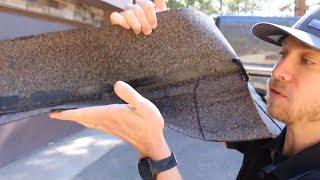
Adam Bensman shows roofers how to spot wind and hail damage so homeowners understand why they need a new roof. Wind tears and folds shingles; hail drives granules into the mat and cracks it, aging a 30-year shingle much faster. Bring spare shingles to let customers feel the damage themselves.
Questions this video answers
September 6, 2020.
He uses a "30 year" (called a lifetime shingle for the example).
"Pitch Like a Pro" Roofing Sales training video library; available from roofstrategist.com (enter your email to receive access).
Chapters
Wind damage, hail damage. How do you spot wind damage? What do you look for? How do you communicate to your homeowners? Same goes for hail damage. In this video, I'll be teaching you it all. And welcome. This is part two, so if you didn't watch part one yet, pop in and check it out. Hey, my name is Adam the roof strategist. I help salespeople just like you and their teams reach peak performance. Have fun doing it, and smash your income goals. Now, it is super important for you to understand what to look for with wind damage, what do to what to look for with hail damage, but most importantly, how to communicate and educate homeowners on what they're looking at. Because let's face it, most folks have not been up on their roof. So it's our job to bring the roof into their home. Which is why I like to carry either spare shingles and or sample boards to not only show homeowners and to demonstrate what things look like. It creates this tactical experience for them where you're literally bringing their roof into. Into their kitchen, so to speak, or maybe their front porch, wherever you're running. Running sails. So let's jump in and talk wind damage, because I get a lot of questions, especially from southern markets, Southeast, specifically people saying, adam, I don't have as much hail. I don't have. It's mostly wind that we're working here, and especially even parts. Colorado, for example, we have beautiful pockets of wind that do damage to homes year round. You just got to find those neighborhoods. So what do you look for and how does a roof get totaled? Those are all great questions. These are obviously brand new shingles. They have not been installed. I have purposefully damaged these for the sake of video demonstration. So on this one, you'll notice wind damage can be as severe as the obvious. Right. If a hurricane comes through and you look up at the roof and there's shingles that are blown off and missing, that's a sign of wind damage. Duh. Right. Now, the other thing you might see is a sheet of shingles, maybe let's say 15 shingles or so, kind of swept out from under the roof. Duh. Obvious wind damage. You can see that from the ground. But what about the stuff that's not so visible, like this shingle here, which this is created. I know, but it's for the sake of a camera and it makes it easy for me to hold this up. So you'll notice here, do you see this crease? Okay. I don't know if you can see See this crease right here? This is obviously had been folded. And what I, the reason I did that is so you can see that sometimes a shingle with enough wind will actually lift, start to fold, you know, the other shingles over the top, and it's going to fold and it's going to lay back down and heck, it might even reseal. But now you've got this area, which again, the reason mindfulness. If you, if you do this in someone's home, make sure if you're rubbing granules off, it doesn't drop on the wood floor. Drops on the wood floor, you step on it, there's a giant scratch. Be very mindful bringing boards into someone's home. I should have done that disclaimer up front. But you'll notice that these granules, I mean, you can even see those starting to shed. You can watch them dropping over my fingers. And that little line of exposure is wind damage, severe wind damage, a fold. You'll notice this on three tab as well. One tab might fold up, fold back down, and an adjuster is going to go ahead and circle that, that line of wind damage. The other thing that might happen is those shingles might be completely torn off. Excuse me, one of the tabs might be completely torn off. You'll also see which is less common. This is shingles just ripping now. And I've already been kind of manipulating it. But the laminate side of the shingle is severe wind. I have seen it happen. It's not super, super common, but these can rip up or lift off or rip off. Okay. The other thing that can happen, shingles can rip. If the shingles are sealed very well on the underside and part of it pulls, they can rip. But the most subtle thing to look for is that fold mark, because it may fold via the wind and then lay back flat. And all you're looking for is this. You might even walk over and do a lift check to see if that seal strip is still activated, so to speak. And it might be. But the fact is it's clear that that shingle has been folded over and resealed and that shingle has been compromised. The other thing to note, when that happens, sometimes the seal strip, here's a fresh unadultered shingle. Sometimes the seal strip, once it lifts, okay. If that fold happens, there can get debris underneath this so it won't seal again. Because, you know, these things may seal and unseal as the roof heats up, cools down, things like that. So if debris gets underneath that seal strip and it doesn't reseal now, the roof's compromised, and that roof will need to get replaced. So what's the difference between wind damage and hill damage? Wind damage can be localized, but you can still get an entire roof replaced due to wind damage. It could be a few shingles, a ton of shingles. The roof might be not repairable. In true story, which I've shared before, I had an adjuster come out. This is for hail, but it applies to wind and the leaf protection. So I'm looking up at this roof here, and there is gutter protection, leaf protection on the gutters that was all smoked with hail. Ding, ding, ding all over the place. Adjuster comes out, says, I'm paying for this, but nothing else. So the homeowners irate. Well, my neighbor's got a new roof. You're only paying for my gutters and my gutters damage. The roof is too. So adjuster comes back out. I say to him, there's nothing up there. The hail was so small. The shingles are fine. Okay. And I was newer at the point, at the time. The adjuster walks over, he slides his fingers underneath the shingle, and you know the gutters are going to go underneath, right? The leaf protection so the water can flow off. And he goes to lift this up so we can get to check, see if the leaf protection could slide out and then get reinstalled. And they were so stiff and so brittle, and the seal strip would not let go. He says, adam, this roof is irreparable. We've already committed to. To replacing this gutter protection. But we cannot access the rest of the roof without the unraveling onion, so to speak, of peeling back layers. It's going to crack or damage. Where is it going to stop? We're going to pay for the whole roof now. Does this happen all the time? Absolutely not. And I'm sure many of you might be dropping names of insurance companies who wouldn't do that. I get it. I know. My point is this. To that homeowner, we call it a working commitment. Because even if they only have a few of these damaged shingles up there, if the shingle is discontinued, an old T lock, a discontinued shingle, like an atlas chalet or something like that, or if it's in an area that's irreparable, deemed irreparable, you can get that whole roof replaced. So next time you're experiencing this wind damage, explain to a homeowner that even if it is minor, even if it doesn't look like much, this Shingle may not look well, now it does because I just ripped it through this demonstration. But if I were just to show you just that crease, many lay people would say, hey, that's fine, that's not that damage. What's the big deal? And especially new salespeople, you know, you can get a brand new shingle, okay, and have minor hail, and they're like, well, why are you replacing the roof? And again, this is a new shingle. Of course, it doesn't have hail damage, but the difference, wind can be localized or it can be widespread where hail is going to be very different. And it doesn't take much on the shingle. What you will notice, though, and this is a great way to keep in your back pocket to educate homeowners, is when you look at these granules here, when you look at this, everything is bedded very nicely right on the shingle. And the asphalt mat obviously has to hold those granules in place when hail strikes it. Even though they may not see much at first, what happens is those granules are driven into the matting. And if it's hard enough, it can either bruise or crack the backside of the matting. Okay. On very large or severe hail, you'll often see this on ridge cap. And if you see that video I did on the roof inspection, that roof was smoked. Thank you to Keith, the subscriber who invited me on the roof, and that had bruised matting. Other times it might not be bruised, but what'll happen is if that hail impact hits here. And I always use the example of my hand, so I'll make my hand a fist and I'll tell a homeowner, you know, how, like, you might check a steak or a burger for doneness. So think of this as hail. And it hits the shingle and see that there's got some give, right? Well, what happens, those granules are going to drive down with that give and they're going to push in. But now they've loosened up. So when the shingle heats up and cools and there's some expansion and contraction, and then, better yet, the there is some moisture, whether it's snow or rain or sleet that comes all of a sudden, there's going to start to be bare spots. So now the mat of the shingle, which is protected by these granules, is exposed to this devastating sunshine and it will begin to rot the shingle out. So therefore, the shingle, the lifespan of the shingle has been compromised. Okay, this is a lifetime shingle. Everyone's got a different gear category to it. For the sake of conversation, we're going to call it a 30 year. Okay, it's a 30 year shingle. But now its protective coating has been compromised and the over time more and more granule loss means more UV exposure means the shingle lifespan is going to be reduced. Okay. That is why roofs are insured against hail damage, even small hail damage. And that's why it's so critical for you to work marginal damage. Which brings me to my final point. Just because you just learned the difference between wind and hail, now you're going to have new questions like how do I work wind damage claims or how do I work marginal damage or end of year smaller damage old storms, as they say. So there are two videos I recommend you watch. One is how to work marginal damage and the other is how to work end of season storms. And you'll find links to those in the cards wherever they decide to pop up up here if you'd like to continue. Now, if you like what you see, give it a thumbs up and subscribe to the channel. New videos coming at you every week. But before we wrap it up, there's a few more things that you need to know in order to position yourself to sell hail and wind. And that is all of the material and the right strategy to hit your income goals. And as you've seen in the previous video, selling hail damage and selling wind damage is virtually identical. It boils down. The only difference is the education to the homeowner and some of the language you might use in the process and how you're going to kind of find those neighborhoods. Which, by the way, you can watch my scouting series playlist in the playlist section for more on that. But again, in order for you to put all of this to work, you need to be comfortable and you need to be confident presenting your findings to the homeowner. And that's the craft of communication in marketing and sales. And to help you with that, I recommend that you download a copy of my pitch Like a Pro Roofing Sales training video Library. It is free, completely free. There's a link in the description. Go to roofstrategist.com Enter your email, you'll get a link sent to you instantly and every single week I update that. So all my videos are organized by category? Yes, even more so than the playlist that you'll find here. So check that out and if you're an owner, get it in the hands of your team. Hey, I hope this video helped you figure out what to look for. With wind damage, how that differs from hail damage, but most importantly, how you're going to be communicating these findings to your homeowners and to help ink the deal so they take action, file that claim, and get their roof replaced before it's too late. That's all for this video. I will see you on the next one.









