Work Life Balance in Roofing Sales? 9 Ways to Get Control Back!
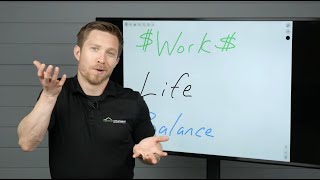
Adam Bensman gives nine ways roofing salespeople can reclaim their time and health. Start with a time audit to see where hours go, disable notifications, keep your phone out of the bedroom, and take one full day off each week. The industry trains you to be always on, but your family and sleep matter more.
Chapters
Work life balance seems like this never ending game of counterbalance. And the reality is this roofing industry somehow takes over our life in many ways. And it can, and it becomes an addiction. And it's tempting. Sometimes we do it by choice. Sometimes it feels like we're reacting. And if this has happened to you, you're in the right place. You wake up in the morning, one of the first things you do is you reach over on your end table, you grab your cell phone and you see notifications, just like my phone is blowing up with notifications right now. And you look into them, you, your eyes are barely open and boom, you are in work mode. You're reacting, you're putting out fires, you try to get out the door, but all of a sudden you are distracted by your email, your notifications that you're behind schedule, you're racing out the door, you don't eat a good breakfast, and then your entire day feels like all you're doing is in reaction mode. This person ran late, this person showed up early. I spaced this. And then all of a sudden the end of the day comes and all you're thinking is, I just wish I had a few more hours to get caught up. That's what happened to me. And I'm sure it's what's happening to you right now. Or maybe if not right now, you can relate because it's happened to you. And we begin to sacrifice the quality of our life by first giving up on the things that are healthy for us. Maybe it's exercise and then it's how we eat. And many of us, like Myself, I gained 30 pounds when I got into the roofing game. 30 pounds on this frame. All right, that was a lot of weight. And after we give up the healthy stuff, the consequences begin to lean on us. On our family relationships, the people we love the most, the people who we want to be spending time with. And it's work and their family, right? So they'll get it. And then we peel back on that, and then all of a sudden it bleeds into our personal lives and our personal relationships. We just don't have time. And before you know it, it feels like everything outside of work is just second to the main thing, which is this whole work thing. So I wanted to do this video to share with you nine different strategies to help you find a true work life balance. Because this industry is addicting. It's addicting because the more we work, the more we earn and the more we can make. And if we worked a cubicle job or a salary job, you're not going to be busting your butt or burning the candle at both ends because you get paid the same amount no matter what. But we essentially write our own paychecks here. So without further ado, let's get into it. Nine different ways for you to develop Work Life Balance. And I got to do a quick disclaimer. I need to work on these myself. I am very. It's important to me and I find myself constantly going from this state of balance to working too much. And I'm no saint. All I'm just saying is I'm not sitting here preaching like I have this mastered, but I want to share with you what's been working for me and the people I work with. So again, welcome or welcome back. My name is Adam Bensman. If you're new here, the roof strategist. Everything I do here on this YouTube channel and my podcast and in my all in one sales training and sales system is designed to help you and your team smash your income goals. And if you like what you see here and you want more, then go ahead and smash that subscribe button to be notified of every new video. All right, let's get to it. So nine different ways to get Work Life Balance dialed first. And by the way, big credit to Sheena, Sheena Bensman on the other side of this camera. Thank you, Sheena, because she helped brainstorm all these things. Because as a couple who is married and business partners, we work together and this is something that we both are trying to do and I probably need more help than she does. She's my rock. Alright, first is you want to audit your time. Now this Sheena started, she goes first you got to just say you got to audit your time, figure out where are your time leaks. A lot of people say, I don't have time for that. But if you had screen time on your phone and it showed Facebook or social media or Instagram showing up with the amount of time you spent on there, or maybe you get, you know, some people say, oh, I don't have time. What do you do at night? Oh, I've been binging through Ozark and I've watched 17 episodes in two days. You just need to give yourself an honest assessment of where you spend your time. And in previous videos, I shared with you my journal, which is right here just off camera, where I've literally documented with a time log what I do when and you can see it, I'd have to thumb through. I've been on the road a lot So I haven't been doing that. So audit your time and give yourself a true and honest assessment of where you're spending it and where it's leaking. Number two is with your cell phone, turn off all notifications. And when I say all, and I'm just going to write notice for short. So the reason when I say all, that includes your email and your text message. What I found is that text messages are seldom urgent. If people need you, they're going to call. So I don't have text message notifications. I don't have email notifications anywhere on my phone. Why? Because they're non stop. And then I get trained like a Pavlovian dog. Ding, whoop there. And then I'm pulled into this. So what I do is I have dedicated times that I'll choose check my inbox and sometimes those are scheduled, sometimes those are just batch throughout project time or working with customers and you need to do the same thing. So get all those notifications off your phone. I've watched people that I've been in meetings who are paying for my time, they have an Apple watch on and it dings and like a dog, we're in the middle of conversation and ding it. And they turn to read it and then they go through this and then they respond, they go, where were we again? And I realize this is a truly dysfunctional way to operate. So get those cell phone notifications all turned off. All right, tip number nine. This is we're going back, we're going old school. Get an alarm clock. Now, the reason I say get an alarm clock. Sheena and I, we say that there's no contraband allowed in the bedroom. Contraband is cell phone. Why? Because they're a distraction. We end up finding that like we're sitting here looking at our phones that are talking to each other. Or you get on your phone, you're scrolling or reading or you're on Reddit, you're on Facebook, you're reading the news and, and the entire night slips away and you're like, how'd it get to be 11:30 or 12:00 clock all the way already? So getting that phone out of your room is going to break the habit of falling asleep to it. You're going to sleep better. And then when you wake up to the alarm clock, you don't first thing grab your phone. So it's a habit. Ours charge in our laundry room on chargers out of the bedroom and we have our emergency list of who would call if anything actually happened so we would be Notified. So there's tip number three. Number four we have is the morning routine. Now, I'll tell you if it's important to you. The only time that's going to get done is in the morning. And it needs to become that daily routine. When it's routine, it becomes daily habits. Very simple to do. And what I found, like working out, to me, I always waited, I wanted to say, hey, I'm going to go work out at the end of the day, blow off some steam. But then I kept finding the same thing. The end of the day was 6, bleeding on 7, bleeding on 8, and I was starving. So then I prioritized cooking a good meal. By the time I'm done, it's like nine o', clock. I don't want to work out, or I got a full belly and trying to squeeze in the important pieces. When you actually think about it, it's kind of funny. We all do it, but it's nuts. It's like, this is the most important thing to me, but I'm going to build this around the rest of my life versus building the rest of my life around this. It's a pretty substantial shift. So to me, that morning routine, every day I meditate first thing. I then go and I do a stretching routine, and then I work out. And I generally do either some reading or some sort of learning, whether that's specific YouTube videos, whether it's podcasts, or whether it's audio books. But I like to stimulate my mind and I journal. So those are, to me, the most important things. And I just build my day around it. So I started to wake up earlier. So I have three hours to myself for this stuff before things get crazy. All right, now. And by the way, I realize three hours might not be possible for everybody. And the truth is, when I was commuting an hour and 45 minutes, one way that has to come from somewhere. And those times got shortened. All right, now, morning routine. Next one is scheduling all of your big commitments. Now, what do I mean by this? I'll give you an example. Sheen and I, we hadn't taken a vacation in two years, and we've just been really busy, and all of a sudden we're getting. I'm booked out, booked out, booked out. And we're like, if we want to get a vacation in, the only way isn't to figure out, like, when's it going to work? We'll just squeeze it in. We needed to just schedule it. So we schedule the vacations, we schedule that time off. So it's on the calendar and we've made that commitment. And now that the decision fatigue is gone, the anxiety about it's gone because it's just decisions made. And now as the things come in, we can say yes or no to the opportunities because we have a schedule already there. And I found when I was roofing, if I was out of town or between offices and I knew it was a big event, I just planned around it. It's like, oh, there's a graduation or a birthday or an anniversary. I have to be there for that. So getting those commitments scheduled early and not just trying to wing it. If you're a non committal person, you just got to commit, you're going to feel a whole lot better doing it. All right, next is giving yourself office hours. And the main reason is so you can have permission to turn off. You can choose to put this on your email auto response, in your email signature and on your voicemail. Hey, this is so and so. I respond to all emails, texts and phone calls between the hours of 8am and 6pm Monday through Friday. Which by the way, it's a lot of hours. And if you set this, what you now know is expectations have been set and you can give yourself permission to actually turn off your mind. Alright, my next piece here is having one day off a week. Now, I know this might sound like for some, if you're maybe like me, you're like, whoa, like a full day. And other people are like, how are you only taking a day? But to me, like that's the day to turn off. If text messages come in, don't respond. It's not. You can absolutely love. I am deeply in love with what I do, more than anything that I've ever done. And at the same time, I find that it's beneficial for me to serve better when I have some grounding time. So having that one day off, for me, that's usually a Sunday, sometimes it's a Saturday. If I got travel, I'm getting ready for on a Sunday because I know I'm usually working at the airport or to me, that travel day is filled with some sort of work, work obligations. So just having that one day to just tune everything out, it's amazing how much just one day can help recharge you. All right, which brings us to number eight. And this one's my favorite one. And this one is the one that has helped me the most and that's having a bedtime. True story. I have a bedtime. I am in bed between 9 and 10am Excuse me? PM that'd be funny if it was 9 or 10am I'd get a lot done overnight. 9am to 10pm and the reason is I wake up at 5:30am I know some people, which I love by the way. Seeing the guys at the gym by 3:30, I wish I could do that. I'm slowly inching it up now. I'm to about 5 naturally before the alarm. And it's funny, I didn't think that I just wake up naturally eager to start the day. But it's through routine I ensure that I sleep enough. I ensure that when Sheena and I, which by the way we also got hooked into Ozark, we're like, ah, one more episode. And I'm like, it's 9:30, I don't want to start an episode at 9:30 because then I'm going to want to finish it and then it's going to be 10:30 and then I'm going to get ready for bed and then it's 11 and then I just lost an hour of sleep and then I wake up groggy and don't do my workout. So to me wind down is usually about 9, 9:30 ish in bed. That way if I want to read a little bit, I'm asleep and, and then I can be up at my time. And again you might laugh at me that I'm sleeping in too much. Some people might say how do you start wake up that early? But my point is not to preach, it's to say you got to find what works for you. And then here's the last one is you need to develop daily routines and these daily routines become habit. There's a couple of really good books on habits. I really like Charles Duhigg's book the Power of Habit. And by the way, if you download a free copy of my pitch like a pro roofing sales training video library, there's a link in the description. It's now in there my recommended reading list. And you'll see all these books on there. But there's Charles Duhigg did a great one. The one thing not quite on habit, but really talked about kind of daily initiatives and plans. And the big idea is that when we remove willpower, these routines become habit. Now it's routine for me to wake up at five before my alarm naturally. Now it's routine that I fall asleep either with no TV on or reading a book. I don't have a cell phone. So in the room, all of these little things, you just, you don't think about and it becomes second nature. We live life on autopilot and we can control those autopilot by either being reactive or taking control. And all we got to do is commit to that for six weeks and boom, before you know it, it takes off autonomously. I absolutely love it. So there you have it. And by the way, I got to say one last thing. What I miss. What keeps you grounded with work life balance? I'd love to hear from you and I know so would other people. So drop a comment in the comment section below and let's hear what keeps you relaxed? What do you find rejuvenating? What's your biggest tip for keeping work life balance? I'd be curious because I'm always working on myself. And by the way, one more thing that I didn't even think to add. I started to write a list. It was actually the other day, flying back from a speaking event, I started to write down as many things as I could think of that relax me. Even things like taking the dog for a walk or reading to just become more consciously aware to build more time in my day for those daily routines. So there you have it. Nine different ways to help improve your work life balance. Appreciate you being here with me. And if you want more, hop into this video and if you haven't done it, you can download a free copy of my Pitch Like a Pro Video training right here. We'll see you soon.









