WORST Part of Roofing Sales? Customer Complaints! How to Handle Them
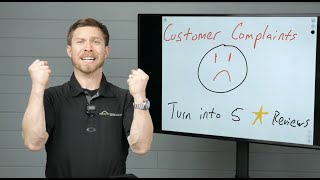
YouTube video (Adam Bensman, "The Roof Strategist") about handling inevitable customer complaints in roofing sales. He explains prevention (setting realistic expectations) and a response framework (ARO: Acknowledge, Reassure, Overcome), illustrated with true stories where proper handling turned disasters into five-star reviews. Also promotes his training resources.
Chapters
Angry customers, customer complaints. They are brutal to deal with. And the worst part is they are completely inevitable, meaning they are going to happen no matter what. And sometimes it's something really small like a shingle as it was falling off the roof, ripped a screen and it's a few dollar fix and it's no big deal, no one's hurt or something horrible happens like you're in the middle of a re deck and the wind comes through, rips a tarp off and it downpours in the house for an hour and ruins everything. True story that I'm going to pick up in a second. And no matter how big or how small, these mistakes come up. And for folks like you and I who truly care about our customers, want to give an amazing experience. We're in this not only to make a good living, but because we believe in what we do. We believe in delivering exceptional service. This stuff sometimes hits home and it's hard to cope with, especially for newer sales reps or growing teams. And they distract us. And we often, especially newer salespeople, like, really freak out. Is the crew going to mess something up? So in this video, I'm going to be teaching you how to deal with it when it comes up so you can turn those into a five star reviews. True story coming very soon. And the other thing I want to teach you is how to prevent this. So welcome or welcome back. We are about to get moving, but first I want to say I'm really glad to have you here. My name is Adam Bensman, the roof strategist. And everything I do here is designed to help you and your team smash your income goal and give every customer an amazing experience. And yeah, customer complaints come up, things don't always go right, but when you handle it the right way, it can create an amazing experience. And funny enough, it's how we handle it that sets us apart. Like the story I told the other day. My wife Sheena and I were shopping for a vehicle. We had a horrible experience at this car dealership. We found the vehicle that we wanted. We went down there, we looked at it. It was a used vehicle. We look inside, it was filthy. Nothing like the pictures. Paul, the sales rep, I'm like, paul, you completely wasted my time. We just drove an hour and a half to get here. This vehicle's in horrendous condition. I'm not interested. Every other vehicle is pristine. This thing looks like a dog had a heyday in here. So we go to leave and they say, wait, wait, give us an hour. Go out to lunch. We're going to get it cleaned up for you, and then you let us know. I said, okay. So we go out to lunch for an hour. We come back, I swear it was like a slap in the face. They didn't care. They burned our time. I said, paul, you just. We came down already. You had us spend more time. This is an insult. And then I shared the experience of the last vehicle we bought at their competing dealership. And Paul felt horrible. Sheena and I stormed around that building. We didn't even walk through the dealership. We're coming out the front door, Paul flies out the salesman, and he starts apologizing. And he took ownership. And I called. And 15 minutes later, he called with a sincere apology. He was committed to making it right. And guess what? He went above and beyond. And the very next day, we went from a complete 180 from not wanting to do business with them at all, wanting to write them off, wanting to write them a horrible review, to not only buying the vehicle, being very happy with the experience of how they handled it and what they did for us. And I even ended up writing them a five star review acknowledging what didn't go right, but how they were committed to making it right. And that's the power of handling things the right way by taking ownership and laying out a clear path forward, which I'll be sharing with you here today. Now, before we get any further and before I share that story with you about that house that got poured in for over an hour, I just want to say that if you haven't yet done it, you need to click the description and. Or go over to theroofstrategist.com right now and download a free copy of my pitch. Like a pro roofing sales training video library, I have tons of playlists for you to binge through. Whether it's, if you're new in roofing sales, a whole starter list for you, whether it's canvassing, pitching, the contingency agreement, retail supplements, marketing stuff for owners. There's a whole bunch in there, even more than what's available on YouTube. And an easier way to digest all that info. So go on over to the roofstrategist.com right now and get your free copy. And if you're on YouTube, which if you're seeing my beautiful shining mug, you are, click the video description. By the way, I'm just kidding there. Click the video description. There's a link right in there. It's the top link and you'll be all set. All right, so Customer complaints first. We've covered the facts. They are inevitable. They're going to happen. Now we're going to cover step one, which is how to prevent them from happening. And then we're going to move into step two, which is how to overcome them. But first, a story. Here's a story. I'm three hours away. One of our reps, his name is Joe, doing this house. It was an old Victorian style home, Two stories, multiple layers, shingles on top of shake, which required what? A redeck. So we're in the middle of redecking. There's no weird weather in the news, by the way. So crew is got everything torn off, no decking whatsoever. All of a sudden, they see rain clouds coming in. So they tarp everything. Okay. Wind kicks up, they're like, oh, no, this ain't good. So they're on ladders two stories up, trying to get this tarp to stay down. Boom. Crack lightning strikes. They can't be on ladders in a lightning storm. They scramble down, go to their truck in the skies, open up with a fury of rain for about an hour. Straight to a home with no tarp on it and no decking. And to add insult to injury, not only was the main floor a wood floor, so is the second floor. I get a phone call. My phone rings. It was the hardest phone call I've got in business, actually second hardest. And I hear this homeowner and I'm like, I'm hearing all this noise in the background. I'm hearing smoke detectors. And he says, adam, I think you need to get out here. And I said, yeah. What's going on? He says, well, we've got water pouring through the house absolutely everywhere. The roof's torn off and it's downpouring rain and everything is drenched. And I am freaking out. This is how the story starts. Fast forward into what happened. I just told you. But the part that's the real challenge was the fact that those hardwood floors on the second floor, along with the hardwood floors on the first floor were warped. Every single surface of that home was wet. We had to move these homeowners out of their house for six to eight weeks. I can't recall if it was six or eight weeks. We had to bring in dehumidifiers. We had to hire a restoration company. We had to do the dry out. We had to repaint. We had to refinish the floors. Guess what? There was not one legal threat. I had received a letter of recommendation from this homeowner because of how we handled the project. And they stated that they would never hesitate to hire us again in the future or refer a friend because of our commitment to standing behind what we do, because they realized it was a freak accident. This is what you're going to learn right now. Now, let's get to step number one on preventing these complaints. This is by setting what I'm going to call realistic expectations. You know, we had a conversation about this in the pitch pro movement, and I said the classic under promise and over deliver. And Marcos was saying, you know, I really don't like that under promise and over deliver, because why should we under promise? We should just give amazing service and deliver promise at a really high level and then deliver above and beyond that. And I got to say, Marcos, I appreciate that, man. You challenged me. And that's the beauty of the movement. We don't always have to disagree, by the way. That's why there's five mentors in there, and that's why we have a discussion board and why we encourage everyone to participate. So the core concept of under promise and over deliver is not to do this. Mr. Homeowner, I'm going to make sure everything goes off perfectly. Nothing is going to go wrong. We're going to start on time, we're going to end on time, and you're going to have zero complaints. Well, let me tell you this, my friend, is a lie. And even though you mean it with your greatest intent, you can't control everything. You can't control the material delivery. You can't control. Excuse me, if the supplier even shows up at the right house. Yep, had that one happen. Ended up tearing off the wrong roof once because the supplier dropped the shingles in the wrong spot. Crew shows up, sees the bundle, didn't check anything, was in a rush up on the roof, tearing it off. Bad things can happen, and there's things beyond your control. So instead, what we want to do is under promise or promise really high, but the main thing is to deliver at an even higher level. And here is what I recommend for you and especially for every single new sales rep. I like to explain to that homeowner that something likely will go wrong. And the reason for that is a bundle of shingles. About 80 pounds, three square to a bundle. Start doing the math. It's about 240A square. Times however many squares the roof are is usually multiple tons of shingles, which doesn't include the hundreds of nails or the felt or anything else. And I explained to the homeowner, hey, Peggy, guess what? We are going to do the absolute, very best we can to protect your home and to take care of you. That being said, there are literally tons of debris going up on the roof and coming off the roof. And there is a chance, despite as careful as we can be in doing thousands of roofs, we might have something that doesn't go right. And I don't want you to panic. And the reason I say that is I am committed and our company is committed to making it right. So if you see anything, you've got my card. I want you to call me right away. Why? So I'm aware of it and I can put together an action plan to get it addressed. Now, this doesn't happen on every job. Many jobs go off without a hitch. But if it does, I just want you to know we have your back. Now, let's pause. This was step one, setting these realistic expectations. This way you've under promised, if the job goes great, they are going to be blown away because you did better than they expected. What's the best review ever? Better than expected. Not. They told me they do this and didn't. That's the number one thing you hear with complaints that I follow through on my word. Yes or no? No. But this way you can. You want to set realistic expectations, tell them something can go wrong and then over deliver. And number two is if or when something occurs, you think that homeowner is going to panic? No. They're like, Adam told me this might happen. I'm upset. I'm pissed that my flowers are ruined. I'm upset that the screen's ripped. But Adam said he'd take care of it. We're going to give him a shot. I don't need to panic. And now when you get that phone call, it's not hysteria and okay, it's people. It could be, but you're going to be in a way better position than if you said nothing at all. So biggest takeaway today so far in this video before we proceed is do what? Set realistic expectations. Which leads us right into point number two, which is how to overcome this. Let's lay the foundation. And then I want to tell you a story and give you a framework. The foundation. Number one, we need to listen. And we need to truly listen. Okay, what do I mean by listen? Pay attention. When homeowners yell at you, you need to let them get it out. They just need to get it out. So just shut up. Let them get it out. Okay? Wait till they run out of breath. I don't care how long it takes. This is how you show, you listen, you don't want to be like, don't worry, don't worry, don't worry. We're going to take care of it. Don't do that. Let them yell, let them call you all the names in the book. Believe me, they're kind of like puppy dogs that have sat in a cage too long. They just got to get it out. I think I just messed my hair up. How's my hair? Well, if I mess my hair up, that's cool. Alright, so first we need to listen. Then you need to care. By the way, if you don't have a heart and you don't truly care, I just got to tell you, now is a really good time for you to exit this business. Why? Because if you don't care about your customers and you're only in this for the money that will come back to bite you. You need to have a heart. At least in my opinion and at least the people like you who are here, this is the kind of people who truly care about the customer experience. They need to feel that. And then the last thing you need to do is to commit to an action plan, alright? Commit to fixing it and how you're gonna do that. Okay, so this is the foundation now. The story I was gonna tell you when I which I teach by the way in my all in one sales training, sales strategy and sales system, which is a complete system from knock to close for both Storm and retail being used by thousands of reps across the US or even in Canada and Australia for both Storm and retail. And this system teaches the ARO objection handling formula which by the way, the last two private trainings I ran the number one rating feedback was the objection handling. And the objection handling formula that I teach in there was founded and I created it by bad customer experiences. It's the Aro, Acknowledge, Reassure, Overcome. And I learned if it can work to diffuse these crazy situations, it'll work really well for simple objection. And that again is Acknowledge, Reassure, Overcome, aro. And I want to show you how to apply this on a customer service level. A stands for acknowledge. So let's give an example. Okay, I want to use the example, the true to life example of this customer, we're going to call her Peggy, whose tarp, ripped off, rained in the house, destroyed the home, caused I think it was almost 80,000, $75,000 of the damage. They had to be relocated and it was a nightmare. And first thing I did was acknowledge. Peggy, oh my gosh, I do not blame you for being mad this is a horrible situation. Your roof is not there, there's water everywhere. And if I were you, I would be irate. Then, by the way, we're going to reassure. I'll break this down in a second. Reassure. Peggy, no matter what it takes, we are going to make this right for you. You will be comfortable, as comfortable as possible. And I hope that you are in as good or better condition when we're done. And then I overcame. Okay, so overcome. Peggy, here's what we're going to do. This is where I made the commitment and then I did the most important thing, which is I followed up on it and I set those expectations for next steps by following this ARO formula. What you want to do first again? I told you I'd break it down first. We want to acknowledge, simply repeat back. Alright, so what I'm hearing is you're really upset because we started late. What I'm hearing is you have a flat tire and the dealership's telling you you need four tires because it's a BMW and they don't want one and it's all wheel drive. So just acknowledge, reassure your commitment to making things right and then we can overcome by making that commitment. Now one other thing that I want to share with you is often ask. So when we overcome, there's a really powerful we can ask homeowners, how can I make this right? Oftentimes their first response to you is going to be a lot less than you think and it might even be more advantageous to you. But it doesn't matter. It's what they want and give them the opportunity to lay that path out. So how can I make this right? They're just going to say I don't care about the money, all I want is this done. The comfort. I don't care about anything. I just want four new tires. I don't care about anything. I just want 60 bucks to go buy a new rose bush, whatever it is. So first ask them how you can make it right. If you can fulfill upon that promise. Say, this is what I'm going to do next. I can't make this decision, but what I'm going to do right now is call up the owner, my manager, whoever it is, and ask if we can get this done and find a solution for you what you can expect from me. Again, this is the follow up is X, Y and Z. Once we call them, he or she's going to come out or I'm going to call you right back. When we follow this framework and we use this negotiation to ask, how can I make this right? First, they speak before you and will give you the answer of, if you can do this, would this solve the problem? We're using sales in a way. So I want to give you an example, a different example. Customer calls up another true story. The rare bush that was in the front of the house was ruined. There was a tarp that ended up getting debris, and then it squished it. And this woman was really upset, by the way. I don't blame her. I love my landscaping, and if I had a really rare bush and I was big into that stuff, I'd be pissed. So when she called, I said, we're gonna call her Peggy, too. No, we'll call her Carla. Carla is a good one for today, by the way. Maybe this will be a new thing. We're gonna have Carla's now. So, Carla, really sorry that we squished your bush. All right, we got to cut that part out now. We're gonna leave it in. We're really sorry that we squished your very rare shrub. Is that better? We're very sorry that we squished your very rare shrub. And I want you to know I'm reassuring now that we will do whatever it takes to make this right for you. This is your property, and this shouldn't have happened. Overcome. How can I make this right for you? And then Carla, whose bushweed squash is gonna call me up and say, all I need is I need to go to this one store where they sell these rare plants, and they're 120 bucks or 60 bucks, whatever it is, and I just want to get a new one and plant it. And I'm like, great, $120 for plant. Whatever we can be done. Things happen. Cost of doing business. So I can say, hey, Carla, if I can approve a credit or either on your account or get you a gift card, would that put you at ease and get this problem solved for you? And then Carla's gonna say, yes, it does. And then I'm gonna make that commitment. Carla. Great. Here's what I'm gonna do next. And I tell her what's gonna happen, and then I follow through upon that commitment. In following this framework, your customers are gonna feel heard, cared for, and know that you have their best interest at heart. And now, my friend, you are armed with a very simple strategy. Two steps. Number one is setting those expectations so when things come up, people don't panic. And then number two is a very simple framework to follow and a key question to ask. Should it come up. So now I want to ask you a question. What other topics do you want me to cover in an upcoming video? Drop a comment right now and ask me. I pay attention to these things and I'd love to hear from you. So thank you for joining me on today's video. If you liked this video, do give it a thumbs up. That helps me out a ton and it's a great way of helping this whole thing grow so you and I can serve even more people together and grow this community. Thank you again for being here. If you haven't yet done it, click right here to get a free copy of my pitch Like a Pro Roofing Sales Training video library and you can continue your journey with me by watching this video. I'll see you on the next one.









