Building a HUGELY Profitable Fitness Coaching Business w/ Toby Lynes
This is a YouTube video titled "Building a HUGELY Profitable Fitness Coaching Business w/ Toby Lynes" created in October 2024. The content is a conversational interview between Adam Hayley and Toby Lynes, discussing Toby's journey in fitness coaching, the evolution of his business from Tobias Lifestyle to 360 Coaching, the importance of habit formation in client success, team building with assistants and coaches, and marketing strategies focused on habits. The conversation highlights practical insights into coaching, business growth, and personal development within the fitness industry.
Dude, thank you so much for flying over to Dubai for the weekend. How was it?
It's been a great weekend. Yeah. Landed on Thursday, obviously now Monday. So, yeah, it's been a great, great couple of days catching up with you. Catching up with all the other coaches. Yeah, it's always very inspirational and, yeah, good fun. Favorite parts of it, definitely catching up with the coaches. Yeah, I think it's. I think it's more of the. It's just those questions that you ask. The, the insights that you don't necessarily think are going to come up. That. And that's the beauty. You know, you can learn all the tactics from a webinar or online, but actually it's the, it's the little moments that you didn't quite realize were going to crop up or those little insights that you hear overhearing someone else's conversation, you're like, oh, well, that worked for me. And then you jot it down. And then on the way home you're like, oh, yeah, that's. That's actually a big, big thing I didn't think about. Yeah, 100% definitely those little moments.
I always say that with the events that, you know, when we put on, like, presentations and talk on stage, that I hope, you know, some value there. But actually there's just something magic, isn't there, about like two, three days of the same people on the same wavelength in a room. So small talks over coffee. It's the dinners. Those are like the magic moments. And just to give context, we've just had our Inner Circle weekend out here in Dubai and Toby's been part of the OT in Inner Circle for four years or so now. A big part of it. So this is now your. How many events have you been to now?
Second Dubai.
Yeah.
And then obviously London. Six, seven. Yeah. Lost lost count, but love it.
Awesome. And of course, we started the weekend separately to the event by playing golf on the Friday and it wasn't great for me. What is the secret to being able to not play golf consistently and turn up on Friday? You know, of course you've never played on and just absolutely hammer the hell out of me.
Start early. Which is such a, such an annoying question. But it's like skiing. It's like if you can pick it up when you're younger, it's. You just. You get the foundations and then, yeah, when you play more, you just get better and better. But those listening, by no means. I'm a, I'm not a pro or an expert, so don't expect to play with me and then think, oh, you're not as good as.
I've been doing lessons, playing on the course, like, you know, relatively consistently. And then I was saying to Sandy the night before, I don't see Toby like play golf that much. Like, you know, see on his stories every so often, like, I think I'll take him. I gave, I gave up like even keeping score.
I think I downplayed myself quite nicely.
Yeah, you did, yeah. 100% future future golf.
I'm going to do that.
Yeah.
Play myself down.
Well played. So obviously we mentioned we've been working together. Sorry. For like four years now. And previously it was Tobias lifestyle. Now it's 360 coaching. Can you run through kind of what the reason for the shift was?
Yeah, so when I first started, yes, literally four years this month and Kovid obviously happened and I went part time at my PC gym. And when you start out, you don't really know what to name. You don't really know what, you know, what's happening. So I just thought, you know, Tobias, quite a unique name, you know, not that popular, so that might stand out a little bit. And yeah, I've always been into, you know, not just training, not just nutrition. So I went for Tobias Lifestyle. It was, you know, decent start, stood out a little bit. But I think the change was when I brought on team, you know, brought on an assistant, Hannah, and then brought on Harrison last January and it, it became not just me and I didn't, you know, especially as Harrison was picking up his own clients and I was giving him clients and, you know, just didn't sit right that they're under a coaching called Tobias Lifestyle, but they're being handed over to Harrison to, you know, to, to guide them. So, yeah, it just didn't sit right. And I wanted, I wanted a name and we were going back and forth, weren't we, between, you know, you, you know, my business, you know, well now so, you know, it's, it's not just training and it's not just nutrition. And so I was trying to come up with some sort of name that encompassed, you know, everything. And I did a little bit of, you know, quote market research, but I was asking clients, you know, we came up with 360 and I was asking a couple of clients, you know, the OGs of going, if I said to you, you know, 360, how, what would that mean? I didn't give any, any context, context. And a couple of them, two of them actually said sort of standing at the top of a You know, a huge building or, or a mountain, and you get in that whole, you know, that whole 360°, you know, overview. And that was when it sort of little light bulb just going perfect, if that for a client, without giving any context of going on rebranding, if they thought, you know, it just encompasses everything, then that really hit home. So I went with 360. Didn't try to over jazz it, but I thought actually it stood really nicely for what. For what we stand for. And obviously, as we'll probably go on to. But the center of that is our core habit formation, which led into our branding quite nicely with the know, with the logo and then the 360 fitted really nicely into it. So, yeah, that was the sort of the transition.
Love it. Let's talk Harrison. Most coaches end up getting to a point where they are at capacity themselves and then they kind of have two options. It's like, you know, become ultra, ultra, ultra premium and just stay just themselves. Work with a limited number of clients or try and I guess spread that message, you know, be able to help more people. With which we'll come to in a minute. The habit, you know, the power of habits, the secrets of it that, you know, you truly believe in. What was the reason for bringing on a coach and going down that route? And do you see yourself as the business continues to grow, eventually you'll take on a second coach, a third coach and so on?
Yeah, I, I've always been someone who just naturally always wanted just to keep progressing. I've never been someone to sort of just be happy, to be where I'm at. So it wasn't even a decision that I sort of sat down going, okay, do I want it to be myself? Do I want it to bring on a team? It just naturally happened. And I, obviously, I knew Harrison from. We used to work together at a gym in, you know, in London. So I knew of him. But I think just my subconscious just wanted to bring on someone. And I've always been, you know, a decent leader. You know, even just with sport. I've been a couple of captains and I just find myself, you know, naturally being pretty good at, you know, leading and teaching people. So it was just a natural progression. You know, it wasn't like a right, this is where I'm going to go. It was just, right, let's bring on another coach. Let's take Harrison through the learnings that I did, the habit learnings, and. And here we are, you know, nearly 18 months later, and he's absolutely smashing it and it's great to have someone to bounce ideas off and, and sort of talk the same language around habits and understand and yeah problem solve. It's good fun. And I think at some point, you know, when we max out Harrison, which for us is always quite low numbers purely because we give so much time of weekly phone calls and monthly habit builders because we've got so much to teach our clients, not just his calories, his training. Let's catch up. Once a month is actually going right. We need to try get our message across and our education around the mechanisms of habit formation to create that long term consistency. So yeah, I definitely feel like we're gonna grow which is exciting.
Love it. Hannah, your assistant, she's been on board almost three.
Three years. Yeah, three is pretty much this month as well.
So bit of a side tangent but obviously you see the inside or you see a lot of other coaching businesses, you know, from, from the program and you'll sometimes speak to coaches that have gone through two, three, four assistants. Whereas my understanding is that Hannah was your first hire here she is still three years later. So you're definitely doing something right when it comes to hiring. What, what do you think you've done differently? Do you feel it's the. Once somebody's in, did you run through like, you know, quite a stringent hiring process and filtered out rather than just rushing go, yes, this person will do. If a coach is listening to this and they're looking at bringing on either a coach or an assistant or so on, what advice have you got?
Yeah, and over the weekends we were in one of the breakout rooms. I think one of the coaches was, everyone here has definitely gone through more than one or one coach or more than one assistant. Everyone put their hand up and I was sort of like I haven't but I sort of just didn't want to, you know, bring that up. But yeah, I definitely think the hiring process was, was pretty extensive even though it was my first hire. But I, you know, I did my. Not research but obviously I listened to you and we, I think back then it was sort of really picking up the, the ea, wasn't it? So you definitely did some trainings. But I also did my own sort of knowledge of going right, you don't want to just hire fast because you then you have to keep doing it. And it's so much time and effort, you know, teaching someone. So went through a real extensive hiring process. And I think the most important thing was actually I got an external opinion. My partner at the time, Vicky you know, because obviously I, I know all the business, you know, the insides of it. But actually we obviously set tasks and messages and we put it all in Excel sheet, you know, candidate 1, 2, 3, 4, all their answers. And actually I got Vicky to overview it and get her insight and what she thought from a, from a third party perspective. Just to go just that the way that person worded that in that paragraph, really clear and concise and I didn't maybe didn't pick that up. So I think definitely one advice would be to get an external. So you know, when you write an essay at uni, you get someone else.
To read a second set of eyes. Don't you just give it a sense check.
Exactly. And those people will pick up things that you never even noticed. So definitely get an external view of. Even if you just go, I think of this, what do you think? That's, that's definitely number one. And then I think I was really from get go really hot on meeting weekly. You know, we have a team meeting every week. Every 14 days, me and Hannah jump on a call. Every seven days, me and Harrison jump on a call because there's always stuff that you can talk about and improve. And you know, I'm even taking Hannah through habit builders. Nice to teach her actually how to improve her water intake and her productivity. So I think the more I can teach her, the more one she'll improve her own health and fitness. But actually she can relate more to the clients as well. So I think the second advice would be to jump on calls early and, and teach and be clear and set the standards, set the values from early on. Because it's very hard to change people once they're in their own way of doing something. So mold them early.
Yeah. And almost like indoctrinate them into loving the business and truly believing in it. Like I feel that a lot of coaches, when they take on assistants sometimes it's almost like that assistant is just like a forgotten about like plugin to the business. Like just convenient at some times and inconvenient at others. Whereas like in my case with Sheena, you know, she's coming into her fourth year with us maybe. And again like she just, she loves the ot, like she lives, breathes it, like understands it, like watches some of the trainings back. I feel when you do that like just there when they're communicating with either prospects or clients, whatever their role may be, there's that level of conviction versus them. Just looking at this as like a little side hustle or something.
Yeah. And it's, it's. And again, if they can understand the business and buy into it of going, oh, what's Toby's taught me in terms of my own water intake, then she can again, she buys into it. She understands, she can see the benefits of what we are teaching and when she is talking to clients because Hannah runs as like our accountability coach as well to, you know, give clients just summaries of, you know, how will that average, you know, if we have set them a step goal, it's just a reminder and going, yeah, you've hit your average. And if she's communicating with clients, she, she can use languages and relate to them rather than just feeling like they're reading off a script, which I think people can pick up on pretty quickly. Subconsciously or consciously.
100 yeah, let's segue into habits. So this is like your USP, you got referred to over the weekend as the habits guy, which is like a really positive sign. So from the outside, listening to habit sounds, let's just call a spade a spade. Like it sounds boring, right? It's like, yeah, we know that we should do things consistently but actually like it really is the secret sauce to everything that you do. So what, how do you go down the rabbit hole of habits? Was it like just a personal thing for yourself? Did you go through it for your own reasons or did you always do it like with clients in mind for their adherence? Run us through it.
So I feel like most people in their lifetime have two or three life sounds so cliche, but life changing light bulb moments where you just sort of get taken back buying. How have I not thought this before? And it was, I will never forget. And it's so clear in my head. I was, I was in lockdown. It must have been maybe six weeks into lockdown, something like that. I was in, I was in my cold garage at home, 18 year old self put together a gym and also I was at home with my mom and dad and I was on the treadmill, just walking, just listening to podcasts. Dr. Chatterjee. And I was just in, I was in that space of just listening to podcast, podcast, podcasts. And I knew, you know, especially social media is now grown. Everyone knows what a calorie deficit is. Everyone knows how to lose weight, you know, move more, eat less, create a calorie deficit. That word is, you know, has been, has been around for a while now. So most people know coaches gem pop, they know, they know the understandings of how to lose body fat or how to lose weight. But I just There was something in me of just going, why can't people actually consistently do this? What is it? You know, you've got these. The spectrum of knowledge people know, but the other end is actually action, taking it and being able to do it consistently. And there was just a huge gray area of there is something missing. And when I was listening to this podcast around habits, and it was just this. This moment where I literally stopped the treadmill and I just stood there and I went straight inside. I ordered the book straight away. It was just one of those moments where I have to jump on this because it just filled that gap. And what. What I started to realize was we all do habits. You know, we all brush our teeth. And there's a. There's a reason behind it, because subconsciously we know there's a benefit of brushing our teeth. You know, our parents have told us early on going, if you brush your teeth, you need to. Because it's good and it's healthy. All right? So hence why. Hopefully, yeah, hopefully, yeah, we. It just becomes a part of us. So I was like, if I can learn that the why. Why is that. And obviously that was a part of it of Is beneficial for us. But there's other reasons of why can some people lose weight and keep it off and why most people can't. What. What is the reason? Rather than people themselves just going, oh, it's my fault. I'm the lazy one. It's because I've got low willpower. You know, I'm the pathetic one. And I'm like, that's. That's not. It's sad to see that, because people are putting themselves down because they can't lose weight. So it just. When I start to learn the mechanism, mechanisms of behind why someone can stick to something and why something can't. If I start, if I can then translate that knowledge to my clients in terms of health and fitness and obviously not make it boring in, like, a science lesson or a school lesson, which.
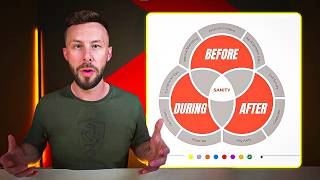
By the way, you can go pretty deep with. Right. I remember at the London event, yeah, you know, there's like, charts and graphs.
So I thought for coaches, I think I could go into that. But obviously for clients, we've got to, you know, we've got to put it across in a way that it's really relatable. And once you learn, you know, the. The three components of a behavior and whether it can stick or not, then it becomes, you know, we've had so much feedback on testimonials of people going, I've lost weight and it's felt easy. It like they come back going, what, is something wrong? Like it doesn't feel hard. I'm like, that's because you've able to introduce these behaviors and tweak these behaviors so that becomes just a part of your routine and you do them every day. And it's that compound effect. You know, we don't get results in six weeks like a bikini. You know, people don't come to us for that. They know, hey, if I can change my habits, those half percent and it doesn't feel like I have to use willpower motivation restriction, then actually over 12 weeks, 16, 20, it just compounds. And that's, that's where we absolutely excel, is teaching people how to unbreak untangled habits, the negative ones for their goal, but also how to introduce positive ones that become habitual part of their routine. Like brushing teeth, pouring a coffee, blowing your nose, going to the toilet. That's where the magic happens.
Nice. So that sounds to me like you've really like struck gold from a client results perspective. How about with the marketing, like having like going in on a niche, Were you nervous to do so? Did you go through the thought process of like, am I going to exclude X amount of people that aren't interested in this? Did you just get that gut feeling that actually like this is going to attract a better type of client for me if I just know exactly who I'm trying to target? How have you found it from a message marketing perspective, being able to laser focus on one, one person?
Yeah, I, I knew what this, this sort of filling the gap of this habit. So I knew it was going to relate to a lot of people if I was able to translate it in a way. And this is the, probably the biggest thing that we struggle with is as we said, talking about habits isn't exciting, especially across Instagram where people just want quick things and fixes, you know, quick fixes. So yeah, it's, it's been a, it took me a while to realize and what, what sort of confused me a little bit was when I was talking about habits, I think the last Dubai event coaches were like, oh, you need to talk. Because obviously I was going into in depth about the mechanisms and to a coach that's interesting because they like education and learning and a lot of coaches, like, you need to talk more about this on Instagram. I was like, oh, okay. So I went away on Instagram. I was talking about all these mechanisms. But I thought after a while, Mary From Sheffield, who's 45, doesn't want to be learning about, you know, the power of you know, prompts or the ability check. I was like they don't want to hear that. So I started to then realize and actually going okay, what's the end product of, of learning about habits? How can habits benefit you in terms of losing weight or building confidence? So that's, it's been a, it's been a journey and a transition of learning actually. What do people want to hear? But obviously put it in a way that makes us different of going, okay, habits are great because of this rather than going, you need to do habits and then just sort of leave it at that. So yeah, it's definitely been a transition of the, the message and you know, putting it, putting across in the right way, attractive way.
And there's always so many parallels that can be sort of bought from, you know, fitness type clients into business. Right. Do you use these habits to allow you to easily produce like most coaches that we speak to? What's the biggest bottleneck? It's typically like producing high level content consistently. You're one of the most consistent people that I know. Do you feel that the habits you know, have played a massive role in that? And if so, what lessons can you give? Like the average coach is watching this and procrastinates on content or maybe tries to produce five pieces a week and ends up with three or goes through a great run of it for two weeks and then what advice can you give there?
So I think that the biggest thing that I've again it hasn't and hasn't necessarily been like a conscious thing I think because every, everything I've just started to learn especially it's more around beginning was just around general health like water intake. You know, I've, I have these setups and habits that I didn't really realize but I was obviously building it as I was reading and learning the habit formation. So definitely around water intake and just general health. But then obviously it transitioned into, into business and I think the biggest thing that, that people get used to or, or that's the biggest obstacle is, is the emotion of overwhelm. And obviously we know if you are able to produce good quality but quantity of, of social proof or, or reels, whatever, that's great. But someone's starting out going from maybe just one and one post every two weeks to then trying to do five. You're going from zero to 100. And it's that people, people focus on the end result of going I need to do five this week. And I'm only used to doing one every two weeks.
That.
That difference is very overwhelming because you're not. You can't see yourself doing that because you're so far away. So the big thing that I do and I say to even Hannah Harrison, all our. All our clients.