HRnetGroup Results Announcement 16th August 2021
The webinar, hosted by HRNetGroup’s Communications Leader Fazlin and featuring CFO Jennifer Kang, Executive Director & Chief Legal Officer Adeline Sim, and Group Business Leaders Jamie Lim (PeopleSearch) and Jace Lin Chua (RecruitFirst), presents the company’s first‑half‑2021 performance and strategic outlook. Financially, HRNetGroup delivered record results: revenue of S$275 million (+30.8% YoY), NPAT of S$38.1 million (+71% YoY), and an efficiency ratio of 59.8%, the highest among global peers. Growth was driven by both flexible staffing (+32% revenue, 47% contractor volume increase) and professional recruitment (+25% revenue, higher‑value senior placements). Geographic performance was strong across Singapore (70% of revenue), North Asia (43.8% revenue growth, especially China), and the rest of Asia (120% growth). Key client sectors – healthcare, government, IT/tech, and retail – contributed the bulk of revenue, with a “happy diamonds” client list highlighting long‑term relationships. Workforce productivity was emphasized, with 81% of staff being sales employees, a PHC (Productive Hard Count) rate of 68%, and GP per sales employee at S$120 k. The balance sheet showed S$297 million cash, zero borrowings, and modest use of IPO proceeds for strategic investments. Digital transformation initiatives, such as the Ease app, Leaders Digital Club, and contactless contractor deployment, were highlighted as differentiators, positioning HRNetGroup as an emerging HR‑tech player. Market trends discussed include the rise of hybrid workforce models, increased demand for niche tech talent, higher salary expectations, and a robust supply of contractors seeking flexibility. The leadership concluded with confidence in the twin‑engine strategy (flexible staffing + professional recruitment) and optimism for continued growth in the second half of 2021.
Chapters
Very good morning everyone who's on the call with us right now. Welcome to HRNetGroup's first half-year results and announcement webinar. My name is Fazlin, Communications Leader for HRNetGroup, and on behalf of everyone in the team, we're happy that you're able to join us today. To share with you the latest numbers and updates, I've got with me our CFO, Jennifer Kang, Hello. Our Executive Director and Chief Legal Officer, Adeline Sim.
Hi.
And as a special treat, we've also got our Group Business Leaders, Jamie Lim from PeopleSearch.
Hi.
And Jacylyn Chua from RecruitFirst.
Hi everyone.
Okay, and so to start things off, Jennifer will take you through our performance for the first half year. Over to you, Jennifer.
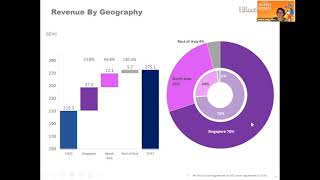
Thanks, Fuzz. Good morning, everyone. There is a beautiful book that was just launched in Singapore recently. It is entitled "Wupian Da Yang Da," which I will translate to Singlish as "No Change, Same Same." The book illustrated that even though there were so many changes that we have made to our daily lives as a result of the pandemic, we can still live well once we adapt to the new norm. And today I am delighted to share with you that at HRNetGroup, the tenacity of the human spirit, which is in our DNA, is also 不变的, yangde, no change, same same. Even as the market has moved, our clients' needs have changed, and the shape and form of recruitment services have shifted, The deep-rooted culture of discipline, diligence, and agility has brought us record results this first half of 2021. This is the season of 7-ups as we delivered 7 aspects of growth. Our revenue, gross profits, net profits, efficiency ratio, and contracted volumes achieved historical highs. And yes, we have exceeded pre-COVID first half 2019 numbers. If you look at the middle column here, you will see NPAT, net profit after tax, at $38.1 million and PATMI at $35.9 million, both approximately 71% above last year and 16 to 17% above 2019. Efficiency ratio, being EBITDA over GP, was at 59.8% against 50.4% last year and 54.7% in 2019. Ours is one of the highest in the global recruitment industry. If you look at the left column, you see revenue at $275 million which is 30.8% above last year and 29.4% above 2019. Gross profit at $81.8 million is 31% above last year and 11.3% above 2019. Finally, the right side. Business volume. The business volume of our flexible staffing business achieved a new high of 17,123 contractors this June compared to 11,639 last June, up 47.1%. Professional recruitment business rose by 215 jobs as we delivered 3,760 placements compared to 3,545 last year. We are covered by 5 stockbroking houses, and 4 of them issued recent reports. All are buy calls with target price ranging from 82.1 cents to $1. We note that market price crossed 83 cents recently. At halftime of 2021, we have already achieved 77% of the full year 2020's PATMI and 58% to 75% of the projections for 2021. It would be interesting to see how the share price pans out as we deliver our full year. Obviously, that will depend on how well our twin engines perform. Let me now go into the details. Net profit after tax (NPAT) at $38.1 million is a new record for us, having jumped 71.4% year on year, and as you can see, up 38% over the last half. Better than last year, better than pre-COVID. The profit margin of 13.8% is higher than the last 3 halves. This 13.8% is higher than most of the global recruitment firms that are listed elsewhere. Revenue by business segments. Our total business revenue grew by $64.8 million from $210 million to $275 million. Flexible staffing. Flexible staffing revenue reflects our margin in our contractors' pay. It increased by $55.5 million or 32%, mainly due to volume growth in the number of contractors from 11,000+ last June to 17,000+ this June. Professional Recruitment revenue reflects our fee on the placement of talents for permanent positions. It rose $8.9 million or 25%, mainly because we placed more candidates in senior and niche positions that commanded higher remuneration, and partly because of the slight uptick of 215 jobs closed compared to a year ago. The outer ring of this chart reflects the first half 2021, and the inner ring reflects that of first half 2020. Our proportion of revenue between flexible staffing and professional recruitment has remained fairly similar at 83% and 16%. Revenue by geography. Our business performed strongly across the 3 regions: Singapore, North Asia, and the rest of Asia for both Twin Engines and flexible staffing. Singapore, this is our home ground that contributed 70% of the revenue, out of which 64.4% relates to flexible staffing. In absolute dollars, revenue grew 23.8% as professional recruitment was up 25% and flexible staffing up 23.9%. North Asia. North Asia saw revenue grow 43.8% to $72.5 million, with flexible staffing growth of 57.3% and professional recruitment 24.7%. Flexible staffing revenue grew very fast at 204%, 204% in mainland China, while Hong Kong and Taiwan continued the growth momentum of 99% and and 36% respectively. Professional recruitment revenue rebounded strongly, especially in mainland China where the growth was 35%, while Hong Kong 33% and Taiwan 21%. The rest of Asia, rest of Asia had revenue grow 120% to Singapore dollars, sorry, 10.4 million Singapore dollars with contractor volume pickup notably strong in our flexible staffing businesses in Malaysia and Indonesia. Here comes our happy diamonds watch. Our business is where economic activity or the growth is, and there is the season and time for different sectors to do very well. Between 12 o'clock to 2 o'clock You see healthcare life science contributing 26%. This is where we serve the pharma companies, the hospitals, the vaccination centers, and research organizations. At 10 o'clock, we have the government sector that contributed 14% as various governments that we work with continue to invest on healthcare, IT and tech, and retail and consumer. I love the fact that this is zero credit risk. At 11 o'clock, IT and tech contributed 13%, driving digitalization and transformation work in the financial, transport, and logistics sectors. With global chip shortage, our teams in Taiwan and mainland China are busy with semiconductor clients and candidates right from IC design to manufacturing. Our top 10 happy clients are the happy diamonds who move according to the economy that is in motion. Here we have 2 medical services providers, one of them has been with us for 16 years, 3 reputable banks been with us for 20 to 21 years, government-owned supermarket client of ours 11 years, fairly well represented across the growth sectors. Our flexible staffing business has been growing very well. The gig economy, as they call it, saw the increase in demand for contingent workforce. We met this need, this need, by stepping up our flexible staffing business, which is represented prominently by our RecruitExpress and recruit-first brands. This rapid growth in flexible staffing trend is likely to continue, as my fellow leader, Jaceleen, will share with you later on. Generally, the professional recruitment business has a GP of about 100%, close to 100%. Flexible staffing business bears an average GP of 16.1%, after we take away the contractor's pay from the revenue. See the line graph at the top of this slide. The average GP margin of the combined business for our twin engines is between 29.7% to 30%, as you can see in the last 3 halves here. This GP margin has held steady, as you saw in the earlier slide, that the professionals recruitment to flexible staffing revenue mix was fairly similar to that of last year. We have analysed the revenue and gross profit in the earlier slides. Here comes the rest of the P&L. The largest item on our P&L in terms of expenses is employee costs, which constitutes about 81% of our operating expenses. The increase by $7.1 million was due to higher payouts in profit-sharing incentives and variable bonuses, in line with significant increases in gross profit and profit of the respective business units. In a later slide, we will share more about our effective staff deployment and improved productivity. Other income. Other income increased by $5.7 million to $14.2 million as we realized $3.9 million gains on disposal of HR-related marketable securities and had $2.9 million revaluation gains compared to a net revaluation loss of $1.2 million last year. Partially offset by lower government subsidies and grants totaling $6.2 million compared to last year's $7.9 million, as the amount of pandemic-related assistance from various governments were scaled down this year. The wage credit under the Singapore Budget will continue into 2022. The largest item on our balance sheet is the cash of $297 million. We have zero borrowings. Amongst the movements in cash balance, we paid out $26.7 million of dividends to our shareholders and co-owners. As sales continuously ramped up month on month towards June, Our trade receivables stood at $113 million, which is an increase of about $47 million compared to last year, most of which is within credit terms. Other financial assets, current portion, increased by $11.3 million due to the net addition of HR-related marketable securities in our investment portfolio while non-current part increased by S$11 million, made up of S$6.8 million of market price movements of our investments in Star Flying and Bambooz, and S$4.1 million investment in an investment-grade quoted bond for better interest yield. Other payables and accruals increased by S$12 million, mainly due to accruals of payroll, profit-sharing incentives and variable bonuses. Deferred considerations increased by $1 million, mainly from the acquisition of shares in 3 subsidiaries from co-owners. Productive workforce. If you look at the bottom of this slide, you will see that 81% of our people are sales employees. This high ratio is a reflection of our efficient deployment of human resources. Very few recruitment firms in the world today operate in such a lean manner. Credit goes to our co-ownership, our co-ownership structure where employees and co-owners operate the business as our own with no indulgence in peripheral functions like drivers and secretaries. What measured gets done. Two ways our salespeople are measured on their productivity. PHC, as you can see here, refers to Productive Hard Count. These are our sales employees whose GP are in excess of 3 times their payroll cost. The percentage of sales employees that are PHC went to a low of 51% in second half of 2019, but recovered gradually over last year and saw a sharp increase to 68% in first half 2021, which is back to the height of second half 2018. This strong recovery is experienced across all regions—79% for Singapore, 62% for North Asia, and 66% rest of Asia. Our gross profit per sales employee is also at a record high, averaging $120,000 for first half. Use of IPO proceeds. This half year, we only used $3.1 million in subscribing for additional shares in Staffline, which did an equity raise to repair their balance sheet. According to the first half trading update, Starpline is now heading for better performance. Further to the utilisation of $127 million, we now have a balance of about $47 million that we are reserving for good investment and acquisition opportunities, which we continue to be on a keen lookout for and to work on. That's all I have to share on our financial update. It has been an excellent first half, and what about the second half? Let me now call upon my fellow leaders, Jamie and Jace, to share with you more colour on the business outlook. Jamie, please.
Thank you, Jennifer. Good morning, this is Jamie Lim from People Search. So I've got great news for all of us. Overall, the demand for professional recruitment services has risen. And it's expected to increase for a number of reasons. So firstly, I guess we all worked in organizations and we realized that our HR department has really been busy since the starting of the pandemic. So they're busy with other critical tasks, for example, augmenting the employee experience, focusing on talent development, because there's been so many changes in travel restrictions, national hiring policies, and all these are posing a lot of challenges for them. In the area of hiring. And therefore, what happens is the companies are now very stretched and they require to acquire these talents very, very swiftly in order to respond to changing market conditions. Now, as such, what happens is that because of our trusted relationship and networks in the marketplace where we have consistently been building over the last 20-odd years, these give us an edge. When they come to us, we're able to very quickly select these talents career consult them and move them very quickly so business can continue for these very busy HR people. Number 2, there's also been an increase for high-performing individuals to plan, execute all the business transformation plans that they have in this new normal. And just, and just when we think that is in the new normal, tomorrow it's another new normal. So this just keeps going on, right? So there is an increase for senior, niche, and very mission-critical positions. Now, what happened again is our professional recruitment team has experienced just these 6 months of this year with the surge of hiring requests coming from all our existing clients and many requests from new and potential ones. Thirdly, it's, it's been really encouraging where in the past all organizations tend to hire for competencies and skills. Today, this is not just it. Hiring for traits is equally important. Now, what that means to us is when such talents are not ready available, companies are now willing to hire for the character, the traits of individual, and then train them for skills. Now, our teams are specialized in various verticals and functions. So companies, again, organizations are coming to us and say that, okay, I need people with such traits, 'And where can I find these transferable skills so that I can quickly hire them for the right rates and then train them for the mission critical that they have in our organisation?' Now, again, we're very comfortable with such a request. Fourth area is niche areas such as technology and even supply chain, for example. Now, we all know the talent shortages are pronounced in the tech jobs across all sectors, whether they're MNCs, local listed Chinese tech companies, as well as our local SMEs. We've seen a spike in demand for roles such as cybersecurity, UI/UX, data analyst and scientists, and software engineers. Now, it is very, very interesting. I mean, in my years of 20 over years in recruitment, I've now seen in a pandemic, and still is, we are still in it, seeing some 20 to 30% of increase in the offered salary of candidates. This is to us a wow, it's incredible and it's new. So we, we all need to be equipped in managing these expectations. The other thing is the ability to identify and talent pipeline for such of these niche areas gives us a lot of success in filling our clients' requests. For instance, our data team was already working the ground since about 5 years ago And there has always been deliberate efforts in our group to constantly build a base of talents for locals and PRs. Now, this is so apt now in this time and space where in recent times the nation and many organizations are driving the Singapore Core. So this pool that we've built has really come in handy for us to successfully place in all the talents. Lastly, I wanted to share that the workforce has changed. And will continue to change. It is what I call a hybrid workforce. In the past, again, many of us will understand that the employment model is such that we calibrate headcounts based on business opportunities and growth. Now, with such a model, you can see a very disruptive rhythm of hiring and retrenchment. And besides, the changes are so rapid these days that the organizations start to realize such mode of rehiring and training is just too costly. So what happens is, among all the clients and organizations, more and more are developing a hybrid model of full-time employees as well as skilled contract professionals. Now, this approach allows firms in various sizes in any industry to upsize or downsize based on dynamic demands. And in light of this, the group has constantly been building our pool of highly skilled contract and part-time professionals across all sectors. I believe no one speaks better of this trend than my colleague Jace Lin, and she will be able to share with you more on the flexi-staffing movement and trends in Singapore. Thank you so much.
Jace Lin, please. Yes, thanks, Jamie. Good morning, everyone. My name is Jace Lin Chua from RecruitFirst. I shall now share some sentiments on behalf of our flexible staffing business in HRNetGroup. Our flexible staffing business, which did very well last year, has continued flourishing. We therefore expect continued volume growth within this segment. Some reasons for this include the fact that number one, COVID-19 pandemic have resulted in the need for many organizations to cope with even more business volatility and ambiguity from day to day. Manpower and operational needs morph on weekly or even daily basis in more fast-paced industries such as the fast-moving consumer goods, product manufacturing, semiconductor, and technology companies. One of the best immediate solutions to fit the demands of current operations and not so long-term business needs is a flexible staff workforce. Such contractors also bring with them fresh skill sets and perspectives from their different experiences which is highly valued. Number 2, the shortage of foreign labour in view of the border restrictions have provided us with greater opportunities in the light industries which previously carried a significant number of foreign manpower. When companies need talent in a hurry, they know we are fast and furious in fulfilling their needs. Now, the third factor, there are also other companies who are rationalising their workforces, especially more so during this time, and outsourcing non-critical roles. Keeping HR teams lean and outsourcing their hiring and payroll to us is definitely trending. So apart from all these 3 factors driving demand, we are also seeing on the other side of the equation with robust supply as millennials, and these days we call them the Zoomers, take deliberate decisions to be contingent contractors. So then what drives their decision not to be tied down to permanent roles? Well, it is none other than better compensation, benefits, flexibility, and interesting experiences. It is no longer shunned or taboo to be called contractors these days. Therefore, we are getting good supply to match the strong demand. In short, Flexi Staffing is definitely here to stay and will only get stronger. We see it becoming the preferred manpower solution for most companies, and becoming increasingly popular as we ride our way through the next 6 to 12 months. Thank you very much.
Over to you, Adeline. Thank you, Jace. I think we've all heard from, you know, Jennifer, Jamie, and then Jacelyn. So obviously, names starting with J are very popular here. And they went into, you know, how we have and will be doing very well against the backdrop of the market becoming vaccinated from the effects of the pandemic. I wanted to take a little time to give you insight into why HRNetGroup is outperforming GDP growth as well as industry performance. So there must be something here, something a bit different. The number one reason, I think, is that we have embraced the new operating environment. So we do not accept safe distancing or lockdowns as reasons why engagements with our clients, candidates, or internally cannot take place or should be delayed. In fact, we have been doubling down on contact time, meeting with stakeholders earlier and more regularly, making use of the fact accepting the fact that dead travel time is a thing of the past, and acknowledging that expectations of response time have intensified. We recognise that this is the new normal, not a temporary normal, and so have evolved our products and services accordingly. In Jakarta, where the pandemic situation is severe, we rolled out vaccinated-only flexible staffing. Our thought leadership platform, Leaders Breakfast Club, has been brought online and levelled up to become the region-wide Leaders Digital Club. With video conferencing the default method of communication, we tap on the great benefits of bringing multi-city teams together at a fraction of the cost. At the same time, in the North, where in-person events are happening, we are jumping in with enthusiasm. So some of our leaders in Singapore were practically jealous when they saw these images of the first National Conference on the Development of Human Resources Services held by the Chinese government that was livestreamed. Another notable fact would be the fact that we have gone digital native. So even before the pandemic, we were building up our digital infrastructure, but the past 15 months have really seen us hard pivot from having our employee contractors physically slip their chopped timesheets under our doors to having the entire employment relationship go digital. So I like to joke that if we were on our IPO roadshow today, we would be valued as an HR tech company. Our Ease app on the App Store and Google Play Store provides for contactless one-touch check-ins on mobile, leave applications, and payslip access. And for our key market Singapore, we are making use of MyInfo to draw in verified SingPass data and make filling out required information a breeze. In short, we can deploy thousands of contractors a day contactlessly and seemingly effortlessly on a data-rich platform which gives our clients great control over their flexible workforce. The ability to grant leave by the hour or pre-approve overtime are all features built into the app. Next, I'm going to borrow two of what I consider are the best taglines ever, and the car lovers amongst you will find this familiar, and describe ourselves as the ultimate talent machine, as well as the fact that we are always in the relentless pursuit of improvement. We are relentless about doing better and go into every detail to do so. Earlier this year, in recognition that no one actually wants to read hundreds of pages of candidate profile reports, we ruthlessly revamped the way we present data to our clients. We obsessed over the number of characters each point should be expressed in and kept focusing on retaining only the essence so that we could deliver the best product for the Millennial or Zoomer hiring manager. As you can expect, there was some apprehension that we would no longer be able to justify our work with thick reports, but we pushed ahead with building software to implement what we knew to be the right thing to do. When the reports got out into the market, our clients were ecstatic sthetic. They love the fact that our reports are high-octane, intelligence-packed, and built to be consumed within 3 minutes. That's just one example of how we keep pushing the frontiers. We could wake up tomorrow and find that, you know, one of our cities is going back into lockdown, but to echo how Jennifer started this presentation, we have many reasons to believe our tenacity, creativity, and agility will help us ride the waves. So thank you once again for joining us today, and more importantly, for joining us on our journey.
Thanks, Adeline. From all of us at HRNetGroup, we hope that information that we've shared with you today was helpful, and we look forward to having you join us again at our next results announcement webinar. So from all of us, once again, thank you so much and have a great year ahead.
Thank you. Thank you.
Goodbye. Thank you.
More from Adeline








Speak It Like You Mean It: How to Navigate Tough Conversations with Tactical Empathy