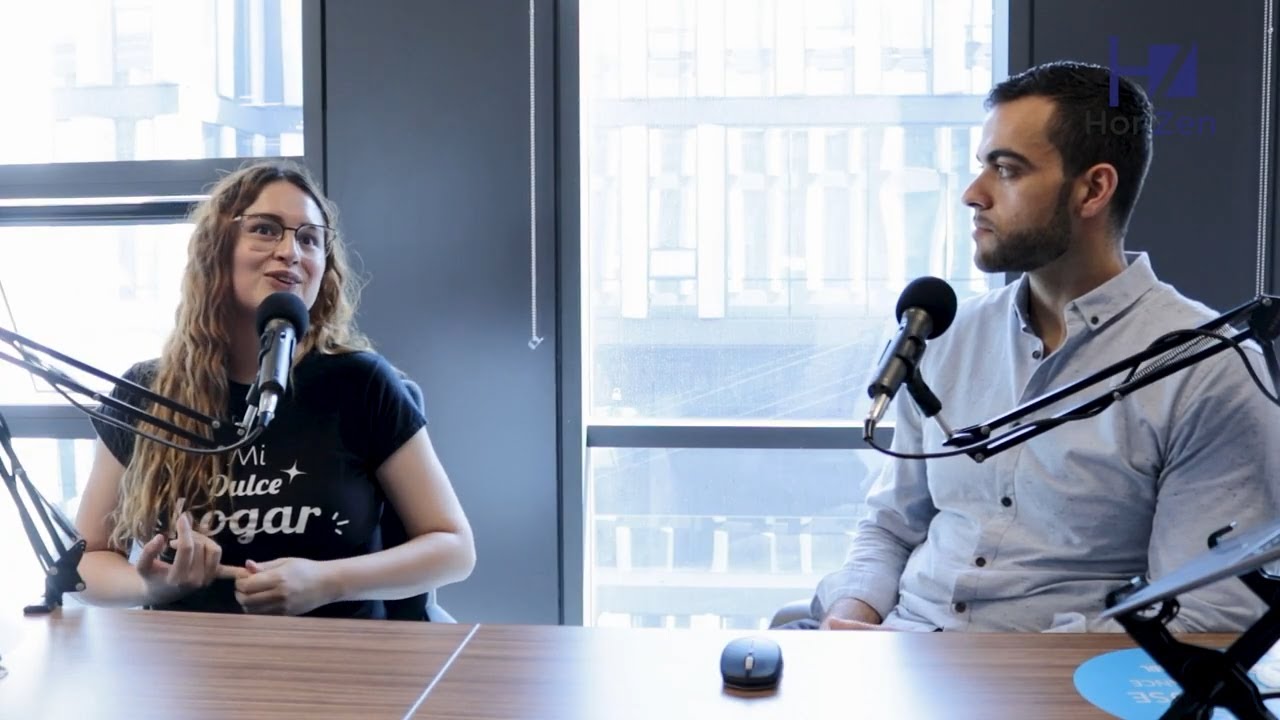
In this interview, Estefanía Hernández explains how her startup has re‑imagined the domestic cleaning market in Mexico by hiring cleaners as direct employees rather than independent contractors. This model leads to higher service prices but enables the company to provide payroll, social security, bonuses, training, and a rewards program, which they argue improves quality, reliability, and worker stability. Hernández discusses the strategic decision to adopt this model from day one, the difficulty it creates in attracting investors, and how the company mitigates cash‑off‑platform payments by offering non‑monetary incentives. She highlights the massive informal labor problem in Mexico—2.3 million domestic workers with only about 1 % receiving benefits—and frames the venture as a social‑impact effort to formalize work, improve workers’ lives, and give families the means to buy homes and cars. Security is addressed through a rigorous vetting process that includes a criminology team, resulting in a reported 0.03 % incident rate across more than 53 000 completed cleanings. The conversation also touches on scaling challenges in Mexico City and Guadalajara, such as balancing worker supply and customer demand, and the company’s cautious approach to expanding into related home‑service categories rather than broadening to entirely new professions. Overall, the interview paints a picture of a higher‑cost, employee‑centric platform that seeks to combine profitability with measurable social impact in the Latin American gig economy.
Chapters
So you've approached this marketplace a little bit differently, actually a lot differently than how many startups have, right? We've had other guests such as Liz Pierce from FreshTalk. We had Diego Gomez from Raw Content. He's the CEO there. It feels like you've disrupted this house cleaning services in the country, right? From the way the law protects the workers and what they offer. So you're offering benefits, you're offering use of technology, you're offering like a clear organization, a rewards program, I think some English courses and actual salaries, right? Whereas— is that correct?
Yeah.
Am I correct? Okay. And the key points on— I think that's a key point of what you guys have and how you guys can attract more workers, right? In contracts. How do you support that financial model? Because that's a huge risk you're taking. There's a lot of challenges around that as well, right?
Yeah, we have more challenges than just a marketplace where you connect people because they are actually your employees. And so our service is more expensive than the competitors, that's a fact, because we have to pay for the extra charges for having workers. But I think that at the end of the day, that's also one of the benefits For hiring a service with us because as they are our workers, we need to put more attention in things like security. The people, it's more probably that they don't fail into your service because they have a responsibility directly with us. And the quality is better because they have extra bonuses, as you say, for the quality of the service that they make. So, I think— But the reality is that our service is more expensive. And that's the way that we can have those benefits or having them as our direct employees.
And was that a decision from day one or is this something that evolved over time?
Yeah, it was a decision from day one. And that's also one thing that makes us a little bit harder to get investment because a lot of investors were like, oh no, that's a big problem. How you are going to directly hire the domestic worker? That's a huge mistake. But at the end of the day, we realized that that was one of our benefits. And because our operations for us is more easier than for competitors because we have full control of their agendas. And that's something that when you hire maybe an Uber, you hire the service and they make a request and someone has to accept it. But we have seen that in the cleaning services, it's more difficult because there's not some so formal market. So maybe you can hire a service, they will send the request and no one will accept it. Or someone will accept it, but they will not show up into your service. So the question is, quality and the perception for the customers, it's really different from one competitor to hire a service like ours. So I think that's kind of the benefit that we have.
Very cool. And I imagine that you guys probably track things like retention rate, how long these staff stay around for length of period or what percentage. Is there any stats you can share around that?
I don't have that number.
Okay, that's fine. Sorry.
Yeah, but it's higher because, for example, they know that in the informality they don't have a Financial stability, that's one thing. Because a lot of customers honestly say like, hey, you know, I'm going for a trip and I will go back in 2 weeks. And those are 2 weeks that she doesn't have a salary. And they come with us and they see that every weekend they will receive the payroll and everything is okay and they are more stability job. And I think that's one of the advantages also.
So one other challenge of being in a marketplace is taking payment. of the services off the platform, right? That's very common in this industry, which will affect your revenue model, right? How do you guys overcome that for users that maybe they hire them for a couple of services and then they take them offline and pay them in cash?
Yeah, that's also another benefit that we have in this new model of hiring them directly because customers that want to offer them more money for the service, it will be a thing that we will always have as a company. But I think I think we need to make stronger our value proposition for the cleaners. Because it's okay, you will give me more money, but you will guarantee me that I will always have this job? No, I cannot do it. Okay, you will give me social benefits? No, I cannot do it. And that's one of the things that make us, that we don't have that problem so much as I know that competitors can have it. And also because they have, for example, we have a program that is called Dulces Recompensas, where every time that you put 5 stars on the app, they will receive the equivalent in money so they can buy, uh, charges, uh, for their phones and tickets for the cinema and a lot of things that they can do with that money.
Very cool. So you're giving them something a little extra. So cash is not everything. You're giving them like security and a bunch of other benefits to make up for it. Yeah, it makes, makes sense. Um, so what inspires you to make the difference into how women are treated towards the inequality in pay? I guess it's probably more apparent here in Mexico, but across the world in general. And what is the difference you're trying to make in the market by providing hope to those people who generally don't have security and stability, right?
Well, right now in Mexico, and I think in general in Latin America, we have this big problem. For example, in Mexico, we have 2.3 million domestic workers, and only the 1% of those have even social security benefits or a contract. We have a really big challenge in front of us. So, we see, okay, we want to create this startup, this platform, this technology company, but we also, we want to make a change in the way that we normally see these platforms operate. And we see a big opportunity to help them and help their families. We have some cleaners that right now they can be able to buy their own homes, their own cars, and improve the life of them and their families. So, I think that at the end of the day, Putting all the fancy technology thing apart, we are making a change in their lives and that's something that make us, that all the people that work for the company, that's why they are here and also the investor because we realize that not all the investor works for us and in the past we were finding investors that they really care about the social impact so they make a really good fit for us and that's all a really big problem that we all as a team we want to solve and that's our mission.
I love it. So, you said 2.3 million people, and then 1% of those are actually paid with benefits. Do you see other industries that are ripe for disruption similar to this outside of cleaning, or is there something you guys will look into expanding into in the future, you think of?
Right now, we don't have it in the map. A lot of people have told me, hey, do you want to put, I don't know, electrician in the platform or gardener? But I think that we want to focus more about what else I can bring you as a customer to solve your life inside your home. As I take you the products also and I give you the cleanings, what else I can do for you to make all your house problems easier? Talking about the cleaning and the supplies. So, we want to explore more in that area and then we will see if another services, it could be something interesting for us.
Makes sense. How do you ensure the security of the customer in case of the worker coming in and stealing something from the house, being late, or even just not showing up to deliver the service? And then on the other side, the security of the worker. The strangers, you don't know who you're going into their house. It could be dangerous. And we've seen that in many cases with companies like Uber across the world, where the driver has affected the user.
Yeah. For example, the first problem is about the security because when something is missing in their homes, unfortunately, we're the first person that everyone looks at.
Okay.
So, we have a really complete process when a new cleaner comes into our platform. For example, we have a criminology team and they make these interviews so they can and tell us that this person that we get into our platform, they didn't commit a crime in the past or their families. So, for example, today we have provided more than 53,000 cleaning services and the probability that we have a situation like this is like 0.03%.
Okay.
So it's really low. That means that we're doing a really good job in the recruiting processes. And also for the cleaner, and the good thing is that we get all the information about the customers, we know where the customer lives, and that helps us to avoid that. Today we didn't have any security problems for the cleaners also.
Okay, so is there anything else that you think, I mean, like how you vet the users who are requesting the cleaning service? Is there something on the vetting on that side or?
We don't have it, but for example, for asking for the address, The credit card information and all that. I think that if a person will be some— will be doing something bad, and they will not give us that information.
Fair enough. Yeah, I mean, it's their own house, right? If you're coming into your house, I mean, it's easier to track someone who's using the car.
Yeah.
Yeah. Um, so now you're growing in 2 of one of the, you know, biggest cities here in Mexico, right? Guadalajara, Mexico City. What are the biggest challenges you currently face to scale and expand across more cities? Is it, you know, the supply of the workers? Or is it the demand of services of this kind?
I think the supply of the worker. Good for us is that we have a lot of demand for the services in a lot of cities so that today it's not a problem. I know that in the time that we were growing, we will need more customers, but today that's not the thing. And the biggest challenge here is the supply of the workers because the profile is really different from Mexico City to Guadalajara. It's easier in Mexico City to recruit a person because the logistics in Mexico City is so much easier. And here in Guadalajara, it's a really big problem. For arrive from point A to point B, it's really difficult. It's expensive. And the people is not get used to those long distances. But in Mexico City, it's like, I'm okay to go to make a service that I will make 2 hours to arrive into the service and 2 hours to come back to my home. They get used to that logistic. And so, I think that was the biggest challenge that we are facing right now.