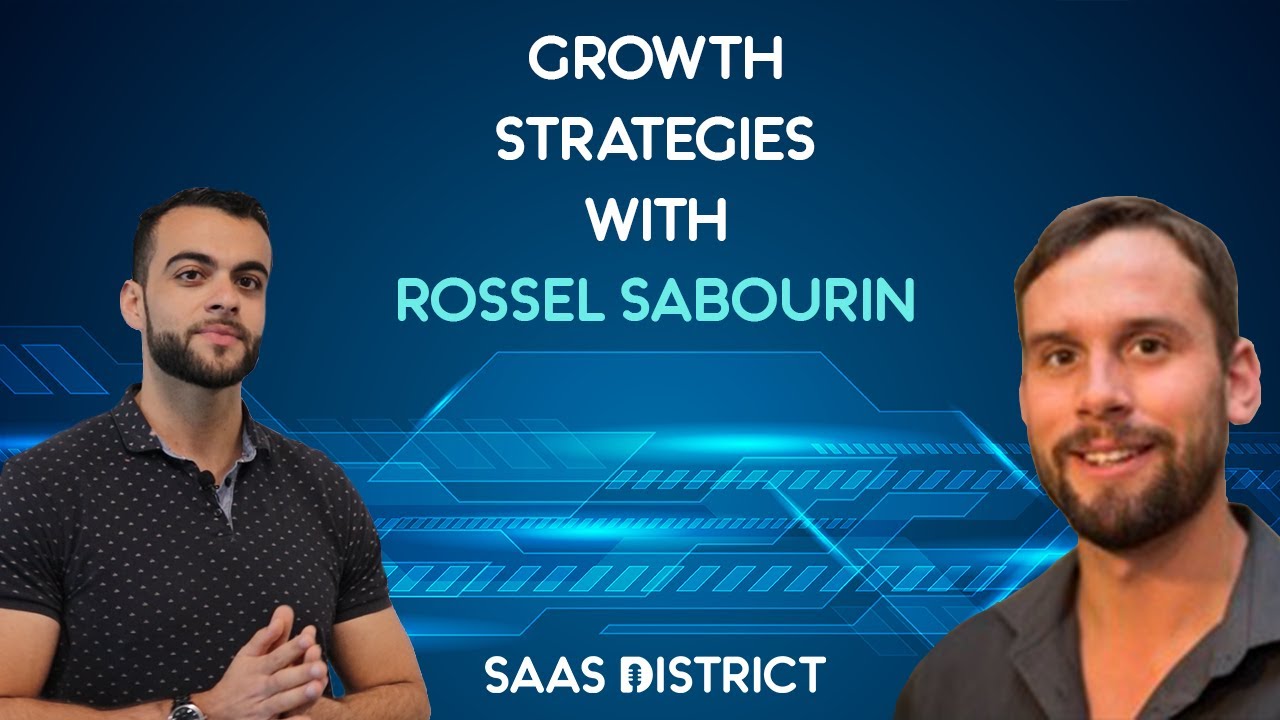
In this interview, the guest (Speaker B), a former SkipTheDishes executive who later joined VidDay, discusses how rapid, iterative product releases and a "fail fast" mindset powered early growth. He explains that in VidDay’s early days the team shipped up to three releases per day, using real‑time data and customer feedback to prune ideas and double‑down on what worked. When facing deep‑pocketed competitors like Uber Eats, DoorDash, and Just Eat, the company leveraged its bootstrapped status to focus on solving core efficiency problems rather than out‑spending rivals, gaining an edge in mid‑market and tertiary markets. First‑mover advantage and a three‑sided marketplace (couriers, restaurants, customers) are highlighted as critical timing factors. After the 2016 acquisition of SkipTheDishes by Just Eat, the guest took a sabbatical traveling across Canada before joining VidDay in 2019. At VidDay, he helped achieve a 100× volume increase within three months, describing the platform as a web‑based, crowdsourced video‑montage service for occasions like birthdays, retirements, and anniversaries. He emphasizes the product’s low friction (no app download), global reach (sales in 150+ countries), and the large, internet‑driven market opportunity. The conversation ends with a request for details on the initial capital outlays required to bring VidDay to product‑market fit.
Chapters
You know, from that growth, you said, you know, you made a lot of iterative changes, fail fast, and, you know, how fast were you making those changes? Like, when you're releasing these features out to your, you know, your users, and you're trying to make a decision whether you should, you know, implement it or not? Like, is this like a weekly thing? Are you doing this monthly? Like, how are you making these decisions here?
Yes, that's certainly going to change as the business itself changes. And I'd say when it comes to tech startups, it's not uncommon for new code to be hitting the production environment multiple times per week, especially in the early days. Here at Vidday, There's days where we're doing up to 3 releases per day into our production environment. So yeah, code is changing all the time. We're taking that data, we're measuring the results, we're getting feedback from customers, and then we're fine-tuning, we're making adjustments. And again, you fail fast. You're going to make a lot of mistakes. Just create that, that safe space with your team where we can try things that are outside the box. We can try novel ideas. Most of them won't work. When you find something that sticks, then you focus on that, you make it better, and you win the winners.
Nice. And can you share any, like, you know, constraints or strategies? So, you know, we have a lot of startups in our audience who are, you know, coming in and they're facing giants in the space, right? So you guys were competing with, you know, guys like Uber Eats and, you know, DoorDash. How did you guys manage and stay competitive? Because I know, like, for example, I know like Just Eat at some point tried to enter the Canadian market and I think they failed. So what would you say was kind of your advantage that kept you guys growing?
Yeah, it was an interesting story with Just Eat as they ultimately acquired us. They did end up launching into the Canadian market. And I suppose the fact that you don't know that they were there a testament to how we were able to kind of fend off them as a competitor. But certainly Uber Eats and DoorDash, very deep pockets, and it really— it ended up being a pretty big opportunity for us, as at that time we were largely bootstrapped, and we didn't have the resources or the runway to kind of throw money at the problem. like some of our competitors were doing. We really had to look at the problems, the issues that we faced in food delivery, bring them down to the actual root of the issue, and actually solve the problems. So we couldn't really ignore them because we couldn't afford to. We actually had to solve the efficiency problems. We had to solve the things that were plaguing the industry. And that kind of gave us an early edge in that we put a lot of focus in our tech in our stack to really make delivery work, especially in the, the mid-market or the tertiary markets. And that really allowed us to thrive. And as the economy and things changed, maybe it was a little bit harder to come by capital. We saw a lot of other competitors that just simply couldn't make a go of it because the underlying business model just relied on solving those problems with With money. So I'd say, as with anything else, whenever you're faced with a challenge, look at how it can be an opportunity and how you can use it to your advantage.
Would you say, like, timing was a major factor? Like, you know, at the time when you guys came in and launched in Canada, or, you know, if you came in a little later, or, you know, Uber Eats had more market share, would have been, you know, a different story?
Yeah, first mover advantage always gives you an edge. It'll be, you easier to make the land grabs, to be the first service that restaurants partner with, get more loyalty from. We had a 3-sided marketplace, that's our couriers, restaurants, and customers. So certainly it was an instrumental part of our success.
Nice, nice. So, you know, 2016, they were acquired by Just Eat. And then, you know, what was your reason for stepping away, you know, while you were around through that entire exit process, and then launching, I think, Vidday in 2019, so 3 years after the exit, which is your new startup now?
So SkipTheDishes, it was an amazing part of my life. I learned so much, made a lot of great friendships, professional relationships, but personally, I thrive in chaotic environments. I like things to change frequently. I like to get involved, get my hands dirty, and it was just time for me to pass on the torch. We had a really great team and they were better suited to kind of take SkipTheDishes to the next level. So after I exited in 2019, I actually bought a truck and a camper And my family and I took a road trip for, for a few months. So we traveled across Canada, we stayed in national parks, we hiked, we biked, we had a great adventure. When we returned home, we had covered, I think, 15,000 kilometers. And that was just a really great experience, kind of a way to unplug, recharge the batteries a little bit. But Once I got back, I quickly realized I like challenges. I like to stay busy and wanted to jump into something else. And so when I joined Vidday, it was already launched. The timing ended up working really great as it was just kind of blossoming from a passion project into a fully fledged business.
Mm-hmm.
And so during my first 3 months at Vidday, we actually grew 100x in volume. So it was a fun ride to jump in into and another rocket ship.
Cool, cool. So you guys are growing pretty quickly now. So for those, I mean, Vidday, can you explain a little bit what do you guys do and what is the solution you're bringing to the market here? Sure.
So the vision was pioneered by Denis Divin. That was the original founder. His goal was to make people smile and he's all about the human connection. So the platform, It's at vidday.com. You go onto our website, whether you have a retirement party, a birthday, an anniversary, or at this time of the year want to make a holiday greeting. And you create an event and it's basically crowdsourced contributions that you can make a video montage for somebody. So actually just made one for my wife for, for her birthday. I sent out the link to our friends and family. And we got submissions from all around the world, people that we had traveled with, families and coworkers. They all made nice videos saying what they loved about Shannon, that's my wife, and all the great things she's done. We basically take all those contributions, make it into one video montage, and then give that as a gift to the recipient.
Nice. Yeah, I mean, I've, I think I've recently created a video So specifically like that, where it was compiled by what— there's usually one main organizer for a mutual friend, and then they reach out to everybody and everybody has to record it, they compile it, and then they, I assume they use some kind of like video editing tool to put it all together. Um, yeah, you know, from your perspective, like the product is so specific with the product and offering, which you guys are putting out there. How do you feel like, how big do you feel this market opportunity is? You feel like there is a big space to be marketed to here?
Yeah, that's a great question. And again, with a startup and when you're trying to solve an issue, you really have to identify what your core competency is and you've got to do it better than anyone else. So part of the beauty about Fitday is how easy it is for the creator. So it's a website, not an app. Nothing that needs to be downloaded onto your phone. You simply create the event, you get that link that you can share to friends and family. Again, the contributors, they visit the website, they can upload video from their telephone, from their computer, there's nothing that needs to be downloaded. And then for the creator, we've got all the editing tools built into, into the website. It's easy to use, the options are tailored and custom-built for our specific themes and videos. And so that's Really why we chose that niche, and we want to be the the best platform for it. But one of the great things about tech is that it's geographically agnostic. So that means we can do videos from anywhere in the world. So already we've sold videos to over 150 countries around the globe. We are best known for for birthdays, but certainly as I mentioned before, with retirements, anniversaries, baby showers, graduations, Mother's Day. There's all sorts of opportunities to use Fitday, and we're really only limited to an internet connection and some discretionary income. So it's a pretty large market. Currently, we're— we only offer our service in English, but in the future, we do hope to expand that as well.
Cool. Can you talk a little bit, you know, you mentioned when you joined, you know, there's a lot of growth, so it seems like you're starting to hit product-market fit. Can you share what were the initial costs to get kind of VidDay off the ground until you hit that point? Where were you guys investing a lot of the capital?
Yeah, so product-market fit, I mean, the first VidDay was made on a laptop and it was after having received all the videos via email. And I mean, it was manually made through a typical video editing software. And I think the results of that first video is what really inspired the project. The recipient cried tears of joy. They said, it's the best present I've ever received in my life. There was just so much great feedback from the contributors who had submitted videos to the event. And that's really what kickstarted the project. So it was a really iterative approach. As multiple events started being created at the same time, the concept of having one general inbox and Receiving videos from multiple contributors—that obviously wasn't working very well. So, okay, let's spin up a website where we can start to have individual events for for the different days. And then, of course, with HD video, the amount of infrastructure that's needed for transcoding, encoding, rendering, etc., etc. required a lot more investment. And so bringing in the other co-founders, Jeff Flaxson and Denis Dubing, and then growing the engineering team, so Greg and Will, to help set up some of the infrastructure to actually make it happen. All that to say, a lot of it was blood, sweat, blood, tears, and sweat equity. Some of the original founders put in some money. We've had some great partners as well. So for example, we're a part of the AWS Activate program. They've given us access to engineering time, help with prototyping, Well-Architected reviews, a large amount of credits to help us with that prototyping and developing of new tech. And then we've had some great help from some provincial and federal programs as well in the form of grants and subsidies.