How To Leverage Podcasting for SaaS Branding | Wit Expert Alex Sanfilippo
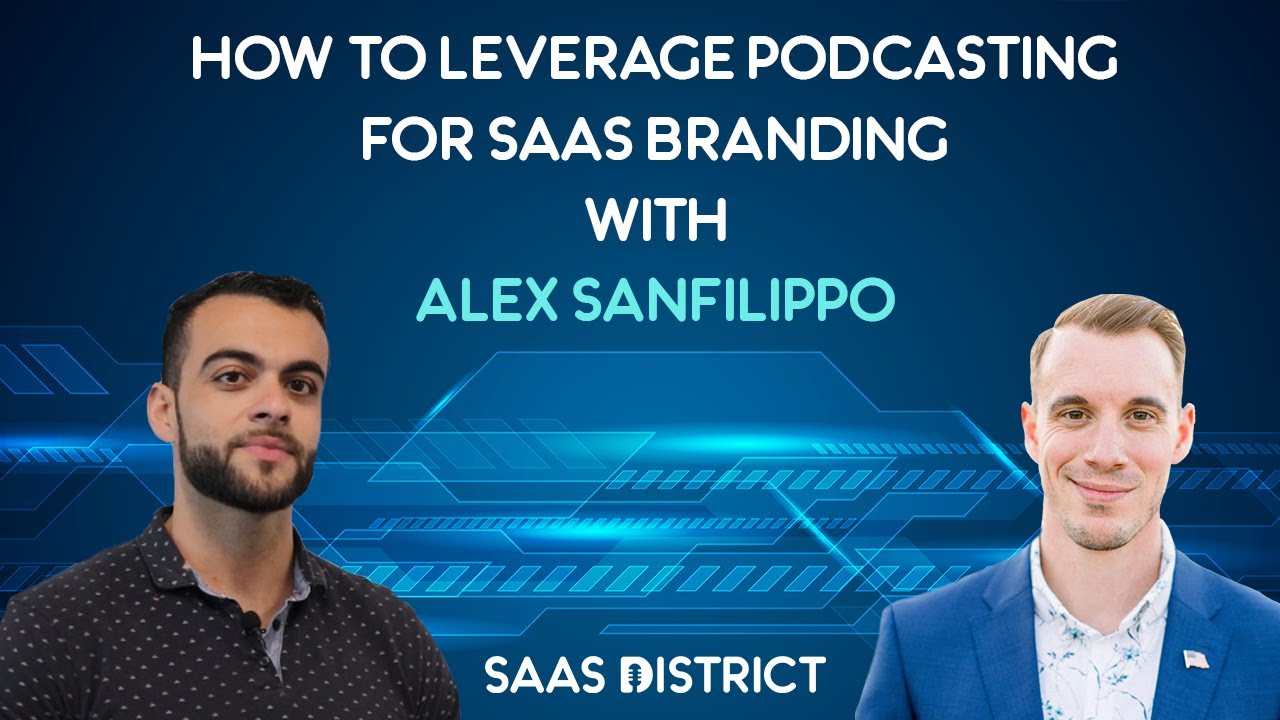
In this interview, host Akeel Jabber talks with podcasting expert Alex Sanfilippo about the role of podcasting in SaaS branding. Alex explains that starting a podcast is a significant commitment and recommends most early‑stage SaaS founders begin by appearing as guests rather than launching their own show. He cites data showing podcast listeners have high household incomes (around $250k) and are likely buyers, making guest spots valuable for lead generation. Consistency is highlighted as the single most important factor for a podcast’s success; while there are 1.9 million podcasts on Apple, fewer than 400 k are active (10+ episodes within 90 days), creating a large opportunity for those who stay consistent. Alex stresses the need for a clear purpose (“why”) before launching a podcast, whether it’s to generate leads, meet industry contacts, or educate an audience. For high‑quality interview podcasts, he argues the host is the linchpin: they must carefully vet guests for value‑orientation, conduct deep research (he reads entire books of his guests), and prepare detailed questions. This preparation translates into engaging conversations that listeners appreciate. The conversation also touches on practical tips for founders ready to invest in equipment and budget: focus on a defined audience, maintain a regular publishing cadence, and treat the podcast as a long‑term brand asset. Throughout, Alex’s tone is conversational yet data‑driven, and he conveys enthusiasm for the medium while warning against under‑estimating the workload.
Chapters
How do you see, um, you know, podcasting fitting in the SaaS space for, for founders and marketers for building their brands? Where do you see the biggest value, uh, for starting your own podcast?
Yeah, so starting your own podcast is a lot of work is the first thing I'm gonna say. And Akeel, you know that, right? I mean, it's like, it's not necessarily easy to start a podcast. So the first thing I always say to people is I don't recommend starting a podcast to most people that ask me, even if they have a business and things like that. Now, if they really want to and they have the capacity, the bandwidth to do it without it stealing focus from their primary objective, fine, then start a podcast, go for it. If you have people that you want to meet in the industry, it's a great way to get really cool introductions. Probably in my mind, the easiest way to get great introductions is through having your own podcast. So there are a lot of benefits to it. However, on the flip side, being a guest on a podcast is exceptionally powerful. And I do recommend that to anybody in the SaaS space, anyone who has a product or service, B2B, B2C, human to human, whatever it is that you're trying to do, right? Get on podcasts because people who listen to podcasts tend to be buyers. And we've learned that to be true. Actually, the, the average household income— I don't know how Forbes figured this out, but somehow they did this study that the average household income of podcast listeners is above a quarter million dollars, just over a quarter million dollars. Those are people with money who are interested in buying, usually also interested in bettering themselves. And that's a really important thing for us to keep in mind. So being a guest on a podcast is very, very powerful. But yes, there's both sides. There's the host, there's the guest. I enjoy both sides of the mic personally. I'm sure you do as well.
Sure.
But I recommend to people that are maybe really early in a SaaS startup to maybe not take off that huge project of starting a podcast, but instead just saying, you know what, I'm going to join as a guest on as many of them as I can to really talk about what I'm doing. And at some point, if you decided to flip the switch and do your own as well, go for it. But that's kind of like where I tell people to start.
I guess it's— I also think it's easier to start a podcast. The hard part is actually continuing to it and staying, sticking to it for a long term, right? Because I think what's the average? I think people fizzle out after 5 or 6 episodes. So if you can stick past that—
Yeah, I think it's actually moved up to 7. Thank you. Thank you to like Anchor, a couple of their websites are making it easier, but still 7. You're absolutely right. I mean, I always tell people like the number one key to success in the podcasting game is consistency. If you're consistent, you will win the game over time because more and more people listen to podcasts. Actually, the rate of people listening to podcasts is growing faster than the number of podcasts that are getting started, which means if you just stay consistent and keep on going, you're going to do a great job. And one more stat I'll throw out there about podcasting. I know we don't want to get into this too deep, but I find it really interesting. We are about to hit 1.9 million podcasts technically on Apple. It's kind of the way that it's driven. However, out of those 1.9 million, If you look at active podcasts, which means an episode in the last 90 days and have more than 10 episodes, it's less than 400,000. So people are always like, there's so many podcasts out there. There really aren't. If you think about people that are actually doing it consistently and have more than 10 episodes, 400,000 isn't that many when you think about now the hundreds of millions of people that are listening to podcasts. Think about that difference in that spread. There's a lot of opportunity in podcasting and I'm passionate about this, as you can tell. I know I went on a little rant there, but we'll bring it back around.
Sure, sure. So I mean, that's a good stat. I mean, 25%, if you can make that cut, then And you're doing well. What other benefits? So you started your podcast with a different vision, right? You came in there to kind of learn some new ideas, which is kind of the topic of this podcast. So can you tell us a little bit more? What are those benefits of starting your own podcast? And should everybody look to start one if they were kind of considering it?
Yeah. So if people weigh the cost and they said, I'm going to be consistent, I'm going to start a podcast, then yes, by all means, go for it. For me, the first thing that was great was introductions, like getting just to meet people. And as soon as I started launching a podcast, I realized how giving the podcasting community is. Like, there was nobody who's like, I'm not gonna tell you my secrets because I don't want you to succeed like I have, you know? Like, that doesn't really exist. And sure, there's the outliers, the few people that are probably actually like that, but the majority of people in this space are super kind, really welcoming, really inviting. And so for me, I was like, instantly when I started launching, like, this is great, there's so many nice people here. I'm gonna actually try to focus in adding some value in the space once I get a little bit of a name and understand what I'm doing. So Obviously, the first few episodes, I don't recommend anyone to go back and listen to those, but some of the later ones started getting pretty good, I like to believe. But when I launched, I just really had the focus of, okay, here's the people I want to meet and now I have the opportunity to because I have a platform to talk to them on. And also now that I want to kind of serve this, this audience, if you will, podcasting, I want to start speaking at the conferences. So I traveled around and spoke at all of them and then I just wanted to identify problems like what can I do to serve people? So when I launched the podcast, it was because I didn't necessarily see people doing one the way that I wanted to. for me, so I launched it with that intent and then I shifted to having like an avatar and things like that and I just did my best to serve that person the best I could while also serving other podcasters as they kind of helped serve me and that's kind of how I got my start in this space and for anyone who's wanting to get into it, really get a big picture of what you want to do before you start. I think that's probably the most important thing is to scale back and say, okay, why am I starting a podcast? If you're starting one just to have one, it's probably going to fizzle out but if you're starting one because you're like, I think it'll bring in leads for the business or I could possibly meet these industry professionals, about 100 people on this list I have, or maybe I want to get into doing some education for people. There's a lot of reasons to do it, but it takes sitting back, reflecting yourself, and figuring out, okay, this is exactly what I want to do and why I want to do it. And that's just a really important thing. There's actually a quote by Viktor Frankl that I like to use, and it's, when you know your why, you can endure any how. Again, the how of podcasting can be a lot, can be daunting, but if you remember why you're doing it and you have that, that business vision for it, You can keep it going long-term, I believe.
Right. Right. Just like Simon Sinek says, right? It all starts with, starts with your why and then everything kind of follows. Yeah. Um, so you have kind of two options, right? Or I guess there's several options when starting a podcast. You have, you know, doing this on your own, recording content, educating people without, uh, you know, uh, interview style. And then you have the interview style, which is kind of what we're doing today. Um, in your opinion, what constitutes a high-quality podcast interview? So for listeners, what have you seen? From the top podcasts that you've seen, what are the traits that are common among them?
Yeah, it really all falls on the host, Akeel. So, no pressure there, right? Like the host is really what drives how good an interview goes and I say that for a couple of reasons. One, they're picking the guest so you have to be really careful when you pick a guest. Like it's— there's a lot of people who want to be on podcasts that are very, very salesy. They get this idea where they don't come from a place of value, they come from a place of I can make profit from this. And it really shows in the way they share with the audience, like they won't give you anything of value but just enough to make you go look at what they're doing and that's just not great and unfortunately, I've had a handful of those where they weren't driven by value, they're driven by profit and that's a scary thing to do. So, as a host, you have to really vet the people really well first but after that, if you know you have a guest that is going to bring value, you can't rely on the fact that they're just a great person, like you also have to do your research. So, for me, Doing the research is super important. I ended up just— this is just kind of how it happened for my podcast. I mostly interview authors on topics that really matter for entrepreneurs that are wanting to take that first or next step in business, so earlier phases of business, and I'm talking to authors that have something that's really helpful for those individuals. What I'll do is if I'm going to talk to them about one of their books specifically, I will actually read the entire book, which most people are like, oh my gosh, are you kidding? So yes, I read 52 books a year and I make sure that I actually go through it and I really know it. And I consistently hear from those guests after we're done recording, like not every time, but very close to like, wow, that was literally one of the best interviews I've ever done. And I've had people from John Lee Dumas, Entrepreneurs on Fire, to Jordan Harbinger, to Seth Godin. Like these people have all been on my show, which is really a cool thing. I say this humbly as I can. I've just really done the time up front. And here's the thing, it reflects to the audience. It's not— it's not uncommon for me here. It's actually almost every day. I had someone even earlier today They ask like, how— they're like, how are you such a good interviewer? And my secret is that I'm actually not a good interviewer. Like, I don't— maybe I've done enough that I'm probably like above average at this point, but I'm not like some natural great at this. I just do a lot of really great work on the prep side of things so that when I'm actually doing the interview, people are like, oh my gosh, he like knows what this guy's gonna say and he's guiding the conversation perfectly. But it's only because I did the time up front. So I think that that's what makes a really great interview, the host being prepared. Making sure they have the right guests and then making sure they really know the content they're going to get into and have a real drive or focus for what that episode is going to be about.
Nice. Nice. That's actually really good tips. And I agree with that completely. I think doing that, taking that extra step to do the research, I think that that's a game changer and shows that. But I've also heard differently, right? Some— I've sent it to some guests, we do a lot of research, we send them the questions and they're like, I don't even look at it. I prefer just to show up and they actually don't like to review it. So I mean, I guess it's—
yeah, I mean, hey, that's why I say it goes back to the host. Some people like—
Sure.
I actually very rarely look at the questions that come in myself. But what I like about getting the questions, sometimes I'll read through them, especially if they're like very specific questions. But what I like about it is it shows that the host, like you're one of these hosts that did the time to know the questions to ask me, to keep it on track and things like that. So for me, I actually feel confident coming on this podcast that you're not going to be like, so did you write a book? You know, like, because you already know that, no, I didn't write a book, right? Or like, do you do this? And sometimes I'll jump on some podcasts where people ask that stuff. I'm like, you don't know anything about me. Like, why? I want to speak to your audience, but you should really understand the value I'm going to add to them before you have me on. And so, you've done the time. So really, again, it all goes back to the host. Just make sure they can kind of direct it knowing who the guest is.
Yeah, that makes perfect sense. And then for those in our audience, maybe they've started to commit to this, they're going to do at least more than 7 episodes, They bought all the equipment, they're ready to go, they've got a budget and time towards it. Can you share any tips to these founders listening right now? You know, how can they get started and improve their chances of starting a successful podcast? And I mean, specifically from an ROI standpoint, have you seen anything there? Yeah.
So I mean, there is a little bit of upfront cost, like you said, with podcasting, you got the gear that you got to, you got to grab, you don't need like all the best gear in the world. So I got started for less than $300. Some people get started for less than $5,000. You know, it just depends what you want. But regardless, when you start, making sure you have a good return on investment is really important. And to me, kind of going back to that whole concept of why you mentioned Simon Sinek, we got to make sure we really understand the purpose for it. It can't just be to have a podcast. It can't just be to have like that. We can, you know, tie the word podcast in the end of our brand, be like, yeah, we got a podcast as well, right? It's got to actually solve a specific problem, especially if you are a SaaS founder. You started something that's actually supposed to help somebody with something specific, right? So you want to make sure that you really focus the conversations on that and making that easier for your ideal customer, whether it be a business or an actual end user. It's really important to make sure that you, that you do a good job solving problems. So the world's obviously changed and that's no surprise to anybody anymore, but consumer buying habits have changed as well in the sense of people buy from people that are willing to help them for free. And so what I mean by that, they'll buy your product, they'll buy your service, but many people, myself included, before I buy something, I want to look at their blog. I want to listen to their podcast and I want to hear what kind of information they're sharing to help me succeed. Like, do they just want me to buy their product and they're like, cool, you're done, I'll find a new customer now, or do they say, okay, you've got the product or you think about the product, here are 5 ways to succeed with this, here's a case study that dives deep into how you can really use this well. When people do that, when companies do that, that's the ones I want to align with because they're not just devoted to getting me as a customer, they're devoted to me succeeding as their customer. And so when you start a podcast, especially when you have a SaaS involved in it, you've got to really think about, okay, what is the ideal problem we're going to be able to help solve for our customer? Yes, they're going to buy our software and it's going to change their life. It's going to be great. But how can we teach them to use it better or to motivate them to use it to its full capacity and different things like that? Right. You've got to really get into that mind of your customer. And I find a great way to do this is to start asking. Just say, hey, you're using our service. What else can we do to make it more helpful? What would have made it easier for you to start using it? What would make it better if we could help you keep, keep you motivated long term, right? These are all questions that we need to be asking. And then when we do this, we make a podcast around that. You've got this great educational piece that's going to help your customers use your product even better than they could without it.
More from Akeel



Get a mentor as soon as possible — and make sure it’s a mentor in your space.




Keith Gillispie: Why Most New Investors Fail & How to Avoid the Common Traps #250 | SaaS District



