Joel Klettke: How to Cash in your SaaS Customer Success Stories
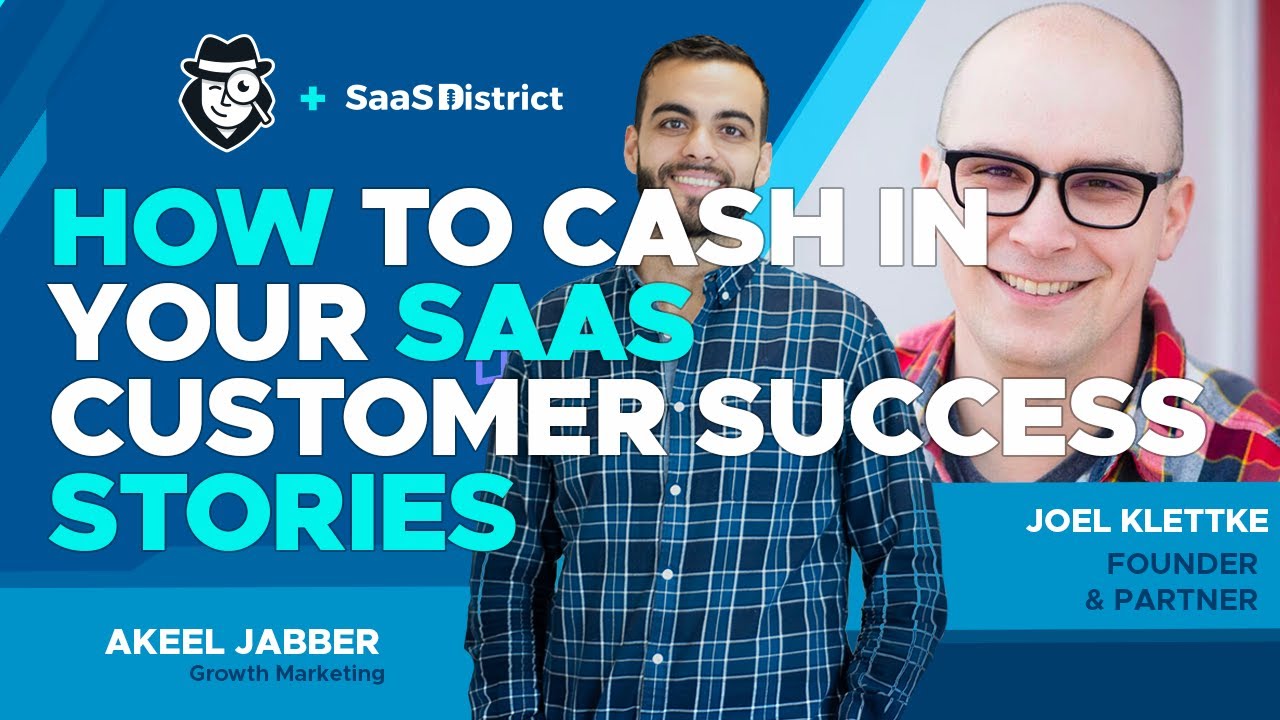
In this SaaS District interview, conversion copywriter and founder of Case Study Buddy, Joel Klettke, shares how SaaS companies can create, format, and deploy customer success stories to drive acquisition, nurture, upsell, retention, and sales effectiveness. He explains his own entrepreneurial journey, the market gap he identified for specialized case study services, and why case studies are valuable across the entire funnel and for multiple stakeholder roles. Joel highlights underserved applications such as upsell/cross‑sell sequences, win‑back emails, and feature education. He discusses format choices—video, written, audio, and how each can be repurposed into audiograms, social snippets, and longer assets. For early‑stage or bootstrapped founders, he stresses systematizing customer communication, gathering feedback early, and building stories incrementally. He outlines a step‑by‑step structure for compelling case studies, emphasizing human quotes, clear challenge‑solution‑outcome narratives, and the impact of results. Measuring ROI is framed around context‑specific metrics like assisted conversions, nurture‑sequence performance, and sales‑team feedback rather than raw traffic alone. Joel also advises on strategic story selection aligned with target markets and shares key mentors and resources (Copyhackers, Val Geisler, Jennifer Hayvice, April Dunford) that shaped his approach. The conversation concludes with practical takeaways for SaaS founders looking to systematize, repurpose, and maximize the impact of customer success stories.
Chapters
Hello, hello everyone. This is your host, Akeel Jabbar, and welcome back to another episode of SaaS District. In today's episode, we'll be talking about how to cash in on your SaaS customer success stories. Today we have our guest Joel Kletke joining us. Joel is a conversion copywriter for B2B and SaaS. At Business Casual Copywriting and the founder of Case Study Buddy, a done-for-you case study service where they help agencies, SaaS companies, and B2B businesses such as Moz, Unbounce, GatherUp, and Hotjar capture and share persuasive customer success stories. Apart from being a conversion-focused copywriter and strategist, Joel holds a Bachelor of Commerce who runs his company like a business and a digital marketer with 5+ years of experience on the agency side. Joel loves deadlines, strategy documents, clear communication, and helping you figure out what content you actually need to reach nurture, and convert your audience. So welcome, Joel. Glad to have you on our show today.
Yeah, thanks so much for having me.
Cool. So, uh, for those in our audience who aren't familiar with your background, can you tell us a little bit about your background, your entrepreneurial ventures, and how you decided to launch Case Study Buddy? I believe it was in 2016. What was the problem you're looking to solve, and how's it been going so far?
Yeah, so I've kind of fallen backwards into every job I've ever had and didn't really know it was a job until it was mine. So I graduated with an entrepreneurship degree. I really didn't know where I wanted to be. I knew more about, you know, the kind of place I wanted to be than what I actually wanted to do. Long story short, I wound up agency side doing SEO, which again, I didn't know was a thing until it was my job. And I'd always loved writing but never saw a career path in it. And that all changed kind of as I got immersed in the agency and digital marketing world, and especially when different algorithm updates hit and I realized, hey, there's actually a pretty huge market for people who can communicate well and and run the strategy side of it. So in 2013, I left the agency side of things to start Business Casual, and originally it was just content, so I was doing a lot of niche blog writing and ebooks and white papers, and then very quickly came across the work of fellow Canadian Joanna Wiebe in the conversion copywriting space, and it was kind of this lightbulb moment where I realized, hey, all this direct response copywriting, all of this persuasive copywriting, it doesn't have to be greasy and gross. There's actually a really cool, ethical way to do it that combines all the analytical stuff I'd learned doing SEO with all the creative stuff that I feel like I grew up loving to do. So I made the switch about a year after starting my company. Then a couple of years later, I was asked to do a case study by someone who sat on the board of a fairly prominent tech company. I really got on well with him, the kind of person who, if they ask if you'd do something, Yeah, for you I do. So he asked if I would do a case study for a company called Pingboard. And so I, in going through the process of doing that case study, there was a whole bunch of realizations that led to starting Case Study Buddy. But the core ones were that this is a very difficult asset if you want to do it right, but everybody needs it. It's a very unique asset in that it can be used across the entire funnel. There was no real competition. There was a smattering of kind of the odd person who said, this is part of what I offer, or agencies who had it as one more thing, but very few specialists. In fact, Casey Hibbard was kind of the only one I came across who was doing this at a high level. I thought, well, why not me? Why not be the person to start the company who whacks all the moles and specializes? That's what Case Study Buddy exists to be. We want to be the category killer for all things social proof and customer stories.
Very nice. And you guys have a team now. You guys are based in Calgary as well, right?
Yeah. So the leadership team is based in Calgary, myself and my partner Jen, but our team is international to a degree. So we have writers and our primary team is North American. So like our lead editor is Canadian. We have a lot of kind of Americans abroad. So some of our writers are Americans living in France or Spain or elsewhere. So we are A bit of an international team at this point, all remote, other than Jen and I sit down across the table from each other, you know, increasingly more and more often. But yeah, based in Canada, we service international clients and our team is pretty international too.
Very cool. So you mentioned that case studies are probably something that you can use across the funnel. You know, I personally always thought of it, looked at it like a more middle of the funnel or bottom of the funnel. I think some founders may struggle when trying to understand the value behind Maybe creating more case studies versus focusing on maybe just creating top-of-the-funnel content. When leveraging their existing, you know, their existing information, why do you think case studies and customer success journeys are valuable information to share with prospects or customers?
So I came at it the same way you did. When I first started doing case studies, my mentality was, okay, this is like middle, bottom-of-funnel stuff, like get them over the finish line. But The deeper that I got into it, especially with this conversion copywriting background that I have now, the more I realized like, actually, no, there's huge utility to use these as top-of-the-funnel assets. Like, the companies who are doing this really well are using them as top-of-the-funnel assets. For example, Carthook, who's a client of ours, they bring leads in with case studies. They identified that there's some key pain points, some really critical desired outcomes that they know know an ideal prospect either is feeling or wants to have. And so they use customer success stories as a key part of their acquisition. I think what makes them so valuable and what blows the doors off of just bottling them into one part of the funnel is that these are stories, when done right, about people like you who have the problems you have, who made the decision you're debating and got the result you want. And there's a lot packed into that story. I think Where a lot of companies fall on their faces with these is that they only know how to tell them one way. They only know how to write them to be bottom-of-the-funnel assets, or they only think to write them as these very generic, canned, unexciting assets that feel pretty boring, ugly, narcissistic. A lot of customer success stories are done poorly. I think what makes these stories so valuable, too— you asked the question or kind of put it out there, well, why keep creating them? How many of these things do you need? Why not just fill the top of the funnel? It's not that you have to do one or the other, but to the question of, well, how many case studies should we even have? My response has always been, well, think about it this way. How many different pain points can somebody have? How many different roles are you selling into, especially in B2B SaaS? How many different roles need to sign off or approve that, right? If we think about IT or security needs to to sign off on, okay, does this pass muster on regulations and that sort of thing? Well, that can be a case study. The CFO might need to pass off on, okay, is this a wise investment? The CTO might need to pass on, does this fit with our existing stack? And so on and so forth. So how many roles do you have? How many pain points do they have? What are the key desired outcomes and how can you express that? And then even thinking through the lens of, okay, what niches or industries or different spaces do you sell into? They all want to see a story that as closely mirrors theirs as possible. So while having just one great story is a good start, it's not the end of the line. Sales teams need— think of it like ammunition. Each story is a different bullet in the chamber that they can pull out and use at any point that they need to.
And so besides telling stories about your brand and then also customer success stories, are there any other underserved aspects or other areas you can use case studies that people may not think about?
Yeah. I mean, these weren't even— again, these weren't even on my radar when we started thinking about for SaaS especially, Let's say you have multiple tiers of plans. You have a premium plan or a high-end plan. Why would you not use a customer success story to upsell or to cross-sell during that nurture sequence when people want to see the efficacy of their choice, when they want to feel like, okay, I've made a wise decision? They've just purchased. They might be feeling that nervousness, that buyer's remorse that we all kind of get no matter how good a purchase is until we realize the outcome. Using stories to bridge that gap or as fuel in your nurture sequences, or even let's say for SaaS, you want to highlight different aspects of the product, overlooked features, things that maybe people don't know how they would use or how to derive the value from. Telling them a story of how someone like them got the value of that feature might make them go, oh, actually, yeah, we should be using that. That is worth investigating. Or, you know what, actually going up to the pro plan or the elite plan or whatever might actually be really worth the investment. So they're really great for nurturing, for upselling. Another sort of use case that gets widely overlooked is win-back emails. So if someone churns out, and if you're a smart software company— unfortunately, it's still— this is still not that common on the conversion copy side. When I come in and do assessments, this isn't happening. So if you're listening and you don't want to do the customer success or anything, here's a tip for you anyway. Every single software company should be asking segmentation types of questions during onboarding. You should be learning who this customer is, what their expectations are, how they expect to use your product, and how they will measure success. How they measure success is your problem. But software companies often don't make it that way. They don't check in. They don't hold themselves accountable for helping that client get over the line. So if you know all that through the onboarding sequence and someone churns out, well, now if you have a story that comes in later on where it's like, hey, this aligns with the profile of that person, what they wanted. It's a very natural way to reach back out and say, hey, we know you tried our platform or software or what have you. You didn't get the result that you want, but I wanted to share this story of someone like you. And maybe it's, you know, would it be worth revisiting? It's a really natural way to reopen the conversation. And then the last one that I want to mention too is just that bringing it right back to where we started, that top of the funnel. If you can especially make your case studies prescriptive, how to do XYZ, and then use a customer as sort of the model for doing that, then that works really well as acquisition material because you're teaching that how-to, that pain alleviation, but you've got this proof baked right in that, hey, you know, this works. Here's a real example to illustrate this concept because a lot of top-of-funnel content is theoretical. It's, here's a process for it. There's not a lot of proof on the other end. So if you can put the two together, now your piece is stronger than your competitors and hopefully you close the deal.
Yeah, that makes perfect sense. And then, you know, if we look at the format, so whether you're creating the top of the funnel how-to or just a full-on case study, what's— what do you say is the best format for these stories or similar elements that you can get so you can get more effectiveness and engaging, you know, case study? Would you suggest going written or video or a combination of both? What do you find to be more effective?
I think you've really touched on an important point, and that is there is no one supreme format. I would say there's a reason video content is so popular, and it's because it can be massively repurposed. Once you have the video, you've got every conceivable asset you can have. You've got audio, you can turn it into written, and that's why Case Study Buddy is increasingly beefing up our video offering and so on and so forth. But a video can fall flat in Mm-hmm. Other situations, right? Like, sometimes written really is the best. It's hard, for example, like if I want to pass on some firm specs or I wanna pass on something to my internal team, a short little study that they can read, you know, in a few— in a minute or 2 minutes might feel more approachable to them, more tangible than a video. Sometimes in some cases, you know, video can be the most expensive asset to do if you wanna do it at a, you know, really high level. Like with COVID and everyone at home now, webcam testimonial videos are kind of taking off and the quality is kind of relaxing a little. You know, people are more comfortable having these a little bit more raw types of assets and those are great too. But video can be cost prohibitive, especially if you're bootstrapping, especially if you're early days. It's a lot more scheduling, a lot more equipment, a lot more know-how that has to go in. So, and not everyone's comfortable on video. So having just the audio, something that we're helping our customers do that nobody else really is, is turning customer success stories into these audiograms. So turning them into a social sharing asset that has this interactive element where you can sort of hear for yourself what the customer had to say and read the words and get the gist of the story, or embed these audio snippets in the written version on your site as this undeniable proof that, yeah, this person actually said that. I mean, as skepticism increases because we see things like GPT-3 rolling out, which if you haven't heard of, you should go Google right now and get both amazed and terrified at what's about to hit us. But it adds this level of credibility. And then even within written, there are moments when a soundbite is all somebody needs on a sales page, you know, a quick testimonial. But then there are other situations low in the funnel where they want, they need all the detail. They want a meaty case study. They're ready for it.
Right.
So they're having a longer format of the same story. is hugely beneficial. So it's not just how many case studies should we have, but it's also how many different formats should we be telling this story in to sort of cater to the awareness level, what the lead is ready for, what their informational needs are, so that it can do its job.
Makes sense. And for those you mentioned about early-stage or bootstrap founders, for SaaS founders in that early stage, they understand the value of using case studies, but they just don't have as many users or they still haven't measured the effectiveness of their product to be able to build a full-on case study. How else can they use or think about creating a case study to generate authority and help them building their brand and credibility continuously?
Yeah. So before we answer that question, and it is an important question, there's one question that you didn't ask that I need to answer because the most important thing I feel like you can be doing as a bootstrap startup, if you're looking for an edge, a way to beat out more established competitors, A way to make social proof a big part of what differentiates you. Because let's be honest, they can steal your features, they can steal your design, they can steal— like, all that stuff can be stolen, but nobody can take the success stories you've created for your clients from you. So, the most important thing I think small companies, bootstrap companies, companies in the early stages can be doing is thinking about how do we systematize communication with our customers? How do we have conversations and make sure we have conversations early? early with customers about expectations, about the segment that they belong in, about what they're hoping to get as a result and how they will measure that, and how do we create a system for checking in with them so that communication with us feels normal? That's the difference between asking for a case study feeling like a stranger swooping in asking for a favor from this faceless, big software company and, hey, oh no, I know my account rep and we've been talking about this for a long time. Of course I'm happy to share our story.
Right.
That's something really critical. But, for these early-stage companies, these startup companies without huge user bases, you don't need to explode out the gate with 5 different studies, 10 different studies. Where the focus is— and you can actually hurt yourself by moving too quickly to try to get a case study because, if you haven't had customers with you long enough to realize any value, you're going to get these very flaky, shallow stories anyways. Set up the systems. Be collecting these bits of feedback and testimonials. Have these check-in points along the way, whether it's NPS scores or customer surveys or conversations with sales reps. Start with, you know, kind of like you're far from in Guadalajara, but like when it snows up here, like a snowball, right? Like start rolling with what you have. It's only going to grow and grow and grow. So for early-stage companies, work on getting those first testimonials from your big advocates, your early adopters, and then Have systems in place so as they realize wins, you can recognize it, you can respond, and then build stories out that way over time. Yes, investment. We all have to be careful with the capital we have. It's not infinite, especially when you're bootstrapping, but I do want you to consider that while you can feed the beast of a blog over and over and over again, one great story can be repurposed all these different ways. It's worth spending the money on getting something that's going to give you that much leverage versus just one more generic blog post drop in the bucket that you hope is going to rank for you.
Right. And if you're in the early stages, you say, okay, I've got these clients, they're ready to— I have some success story. I'm in the early stage. I don't know how to best create it to be as effective as possible. Can you provide any suggestions how you would best structure this case study to get the most results and be effective for users reading it?
So, 2 things. Before you go to tell a story, stop and think, what kind of story is it that we want to be able to tell? What business challenges do we have right now? Are we having trouble penetrating a market? Are we having trouble getting people out of the nurture sequence and into adopting the platform? Are we having trouble convincing a certain role within the organization? So, before you go to tell any story, stop and think. Think, okay, what types of stories, what types of outcomes, what types of roles do we need to tell? That should help you start to think a little more strategically about the asset that you're going to create. From there, think about the use case. Okay, are we trying to use these for acquisition? Well, then we probably need a format that's a little bit either quick and dirty and gives them something really juicy to sink their teeth into and then brings them into the funnel. Or maybe it is something a little more comprehensive like a how-to post that promises an alleviation of pain. So thinking about that. But in terms of structuring the actual story, how do you tell a really great case study regardless of the format? Some things I want to encourage you with is the first is to think about bringing in that human component. A lot of the times these stories are very dry, they're very corporate. It's, okay, X is a company from this niche with this problem, they got this product, This is what they've achieved. But, these are very human stories. There are people in these organizations facing real challenges with real stakes of getting them wrong. You want to capture that. You want to capture not just the ins and outs and the specs and all that, but you want to get your customer's quote. Your customer has to be part of the storytelling process. You can't do this without them. You want to get those quotes that talk about how it felt to finally have a solution. solution for this, what that meant for them. That's the last thing I want to say is when you get into— well, the last 2 things. In the challenge section, don't just talk about— or in the solution section, don't just talk about your features. Talk about how they used those features and then what that enabled for them. Kind of the transition you can make is, here was the old way, then they deployed the feature, this is how it looked when they did that, and here's the outcome they got from that. Do that for the features that they found most valuable. Keep the story focused. You can't talk about everything at that length. But, when you anchor on that sort of big win for them or the features they've really loved, you can tell the story that way. Then, in the results section, there's a big tendency for software just to want to say, oh, well, here's the big, sexy metric, the big percentage, the big whatever. But, don't miss the opportunity to talk about, again, what that meant for them. Okay. You improved efficiency 200%. That's nice, but the specifics of how that changed, the way that they work or change the goals they could set, that's really valuable and important. So you want to be thinking about not just the metric, not just the outcome, but the impact of that outcome on their role, on the business, on the competitive landscape.
Love it. Yeah, it's not something I've thought about in the past about adding that. Usually it's just about, here, this is the results, is X, X, this is what we achieved. Um, and you know, that's what people generally would like to see, but adding that extra factor I think is That's really helpful. And then I look at this, you know, we said it's kind of part of your marketing budget. So as a SaaS founder, you're considering, okay, I can either spend my money on top-of-the-funnel content, or as we spoke about, you know, case study, which can cover a lot of that. But, you know, you also want to consider your ROI on this. How do you measure an ROI when spending, you know, your marketing budget on case studies?
I think that's the tricky part because as we've talked about now, there are a lot of different ways to deploy them, and so you should measure their success based on the circumstances they're deployed in and built for. I think one of the reasons that people feel like, oh, I'm not getting the ROI from my case study, is because they don't really use it. They shove it onto a resources section of the site, forget about it, or they chuck it into a customer section, and it's hard to quantify, okay, well, how much work did this do for me? I think it's about defining the use case where you're deploying it. If you're using it in your nurture sequence, compare it to a sequence where that's not present. Do you get more opt-ins? Great, it did its job. Did you not? Okay, then it wasn't effective in that capacity. If you're using it for lead gen and acquisition, compare it to your other campaigns, not just in terms of volume, but in terms of the quality of leads. Like, hey, when we deploy this, are we getting good quality leads from people who engage with this story, with this ad? For on your site, you want to look at it through the lens of, okay, things like both assisted conversions, which is how many people who ultimately signed up went and looked at that page, but also in terms of, you can look at it through the lens of, is it pulling in traffic? Is it pulling in those types of things? What's difficult about case studies though is, especially with software, especially with B2B, a lot of the punch that they pack Yeah. Happens where there's no obvious data point to point to. It's very difficult to quantify other than anecdotally, okay, the sales team is saying, we sent them some case studies and it closed the deal. You can't measure that with analytics, really. You can only kind of be tracking. But that, I feel, is just as important as listening to your sales team and not just, okay, we closed the deal, but are they able to answer questions that, in the past, took a long time to answer? Are they getting better questions from qualified leads once they've received the studies? Does it change the dynamic of the conversation? When you're looking to measure the ROI of a case study, consider the context you've deployed it in. Feel free to test it against other types of assets. It's a fair fight. If it doesn't do the job that it's meant to do there, then either revisit the format or the way it's presented or go with something else. These don't have to work in all situations, but they can. when they're done well. So consider the context and measure accordingly.
So yeah, you know, for salespeople, you can use it as a tool to go out there and help close the deal. If they come on your website, I guess it's a little bit more tricky. I mean, yes, you can measure the traffic. I guess you can also add in some kind of lead capture or some kind of opt-in on that page directly, and I think that would probably be the better way to measure it on that point, right?
You can. I think the tricky thing is that case studies are part of the self-education process, right?
Yeah.
And in the same way that I think it's a flawed idea for most companies, this is where a lot of companies get frustrated with their blogs. They go, oh, we've got this crazy amount of blog traffic, but it's not all converting. The informational needs, though, are vastly different. If someone's reading a how-to type of post over here, it's not necessarily— they're not necessarily mentally ready to make the decision to purchase. So that's why when you look at direct conversions from case studies, it's That's something you can do. We encourage our customers to have a call to action in the PDF with a button that has the UTM tags. You see how many people came from that. But, you can't write it off if it's not causing that direct conversion. That's why I say assisted conversions. Is this part of the corpus of content that they used on the journey to choosing you? Because they might not click the button on that page, they might not click the button today, But if they read a case study, come back a few weeks later, and sign up, that case study should still get part of the credit for helping them get over the line.
That's true. And some founders, you know, maybe they're using case studies, you know, for spinoff content. Would you recommend doing this, or how would you— what would you recommend for, you know, helping them repurpose that information?
Yeah, I mean, use them every single way you possibly can. You've paid for the asset, you've got the story, why would you not? So some very simple ways to repurpose. Take some of the best quotes out of the case study, turn them into little testimonial blurbs, put them in your sales pages, put them in your outreach emails if you're doing cold outreach. Like, there was a study by a company called HipLead at the time— they've since been acquired— but they saw when you mention a famous customer, positive responses to cold outreach tripled.
Mm-hmm.
So now that's a famous customer. You can imagine just mentioning any customer relevant to the person that you're reaching out to, if it's in their space, their niche, a competitor, that's a much more compelling pitch than just, hey, can we help you with X problem, like the last 5 people who emailed you on this. So testimonial blurbs are really easy. Bake these things into— if you send out a newsletter, share some wins, right? Share the wins other people are having on the platform in a way that maybe inspires someone to go and look at the feature sets and so on that you have.
Mm-hmm.
Use them near the bottom of the funnel. Give them to your sales team in a quick them to make use of them there. Use them on social. Turn them into testimonial blurbs that pull people into the site, get them interested. Repurpose them into how-to types of pieces, or another way that you can repurpose them is have the formal case study, then have a Q&A blog post. So, hey, we interviewed the founder of X company about why they used us, but then you can have other parts of that as well that don't just focus on you. So, I mean, yeah, you'd be— and this is part of what gets me fired up and passionate is like, that's what Case Study Buddy is really all about. That's where we see ourselves differentiating, is helping Helping people unpack the potential of customer stories to be these multipurpose assets instead of these sad little isolated kind of drops in the bucket wherever they get slotted. So spin it off in any and all ways you possibly can. Just make sure you have your customer's permission to use it in the capacity that you want to.
Sure. Yeah, it makes sense. Any other strategies that you can recommend that we haven't already covered? covered to SaaS companies to help them maximize the case study conversions or just the effectiveness, um, so that they can get the most out of it? And what can they expect if they do do that?
I think to recap, there's a couple of things that not enough SaaS companies are doing that I wish more would, that I think will give you a legitimate edge. I think one of them is being intentional about systematizing the way you communicate with customers. Have check-ins, have You know, a documented place where anyone who touches the account can go to see who are they, what did they come in wanting, how has that played out, how do they measure success. It makes for such an easier conversation. So do that. The second I would say is be strategic about the stories you want to tell. Kind of the adage that I tell people is the stories you tell are the stories you attract. If you don't want to work with a particular contingent of client anymore, Mm-hmm. don't have stories about serving them, right?
Mm-hmm.
Like, if all your stories are about small business and you're trying to move into the enterprise, that creates this dissonance between who you are and, and who people want you to be. So, you know, I would say be strategic about the stories you want to tell, who you want to tell them to, and what matters to those people, and look for the intersection of that and your business goals. That's where the best stories come from. Don't just spit these out. Don't just let them be happy accidents. Oh, someone loves us. I guess we should do a story. Have a plan for them and you can make them inevitable. In terms of what becomes possible, I mean, we see all sorts of different things. I mentioned earlier, Carthook uses these in their top of funnel. They don't even have an opt-in. They use them to get people to read and then they capture people with their remarketing campaign. It's done amazingly well for them. We work with agencies who have closed hundreds of thousands of dollars in additional yearly revenue by making customer success stories part of their sales process. We've put together assets for individual consultants who, you know, it's helped them close these RFPs where they're punching way above their weight class and attracting clients that, you know, they otherwise maybe wouldn't have been able to close. So I wish I could point to some hard metric where it's like, it's going to double your conversion. Like, I just can't do that because—
Mm-hmm.
It's not true to life, but I can tell you that the companies who take these seriously, go in with a plan, make them beautiful assets to look at and interact with, and then continually deploy them and don't just give up after the first one, they do see results in terms of traffic lifts and sales, in upgrades, retention, all of it.
Very cool. So you mentioned Joanna Wiebe. So interestingly, I didn't know she's from Edmonton as well. That's pretty cool. Cool. Is there any other favorite resources or mentors that you say that you followed and have been maybe instrumental to your success and achievements today?
Yeah, Joanna Wiebe's Copy Hackers is huge for the conversion copy side of things, which we didn't talk as much about today, but I think definitely worth checking that site out. She has fantastic— I mean, her free newsletters are amazing. Tutorial Tuesdays are fantastic. For software especially, that was and is and has been her world and where she operates. So there's just fantastic content on the site, in her newsletters, in her courses too. If you have small teams and you need them to be stone-cold killers on email marketing, Joanna Wiebe's course— I mean, I've gone through it. It's fantastic. So she's someone that I would certainly point to in that capacity. On the subject of email, Val Geisler. She is the email queen for SaaS and for subscription. She is a fantastic resource. She's done teardowns of different nurture sequences and onboarding, and there's a lot to learn on her site and a lot to pull out there. Jennifer Hayvice, she's from Minnesota. She is sort of the queen bee of customer research. She has a book out that you should go and get. It's a very low-cost investment for something that will shape a lot of the processes that you use. It is like a manual to using customer insight to craft your message. Like, how do I go from, okay, we know we need to talk to customers, how do I practically bridge that with, we also need to turn that into messaging that sells? That's what her book is all about. I would absolutely recommend snapping that up. Then, similarly, another great Canadian, April Dunford, she works on positioning. She's done positioning for Huge software companies, very challenging markets, all kinds of stuff. She has a book called Obviously Awesome. It's a wonderful read. It will change the way you think about positioning. So if you're currently thinking about positioning through the lens of positioning statements, and we do X for Y so that they can Z, get ready to toss that out the window and have a much richer understanding of what positioning really means and what it can do for your software. So I'm I think everyone I mentioned just so happens to be a woman there, but there are tons of just fantastic, brilliant women in this space, which is part of what makes it an exciting place to be. And a lot of the leaders in the space who are publishing stuff like that are women. So, you know, those 4 are definitely people that I would point to.
Very good. Awesome. We'll definitely add those in our show notes. Thank you for that. Last question, Joel. Where can our audience learn more about you and what you're working on?
Yeah, so you can check out on the conversion copy side of things at businesscasual.com— businesscasualcopywriting.com, sorry. At the bottom of the homepage, you can sign up for my newsletter, and I really don't send anything unless I feel like I have something worth saying. But all my work is on conversion copy for software companies. I've done it for some of the giants in the space like HubSpot, and I've worked on projects from startups to enterprise. I've seen a lot, so I share a lot of insight there. You can check out casestudybuddy.com and we publish a lot of content there and resources and things that you can go, you know, do yourself. It's not all about, well, just hire us. It's— there's a lot there that if you're bootstrapping and we're outside of reach, like, hey, like, take the stuff we share and go do it yourself. I just want to see better stories out there at the end of the day. The last one, I always kind of preface it with this. I don't always respond quickly, but I do always respond. But you can reach me on LinkedIn or Twitter @JoelKletke and drop me a note. I love hearing from people. And like I say, I might be slow. I got 2 kids, 2 businesses. It's sometimes too much to handle, but I always try to get back to people and be helpful wherever I can, even if it's not working together, whether it's a referral or a resource. You know, my passion is just seeing better communication happen and people make smarter decisions with the assets they Yeah, that's understandable.
And I appreciate that, Joel. Thanks for jumping on SaaS District today. I really, really enjoyed this. Thank you. Yeah, cheers.
Thank you so much for having me.
Thank you all for watching this episode and joining SaaS District today. Don't forget to like, subscribe, and hit the bell for future episodes where we interview top leaders in the SaaS industry. If you're a SaaS company looking to grow and unlock the true value of your business, Get in touch with us at Horizon Capital and myself or one of our consultants will provide a free assessment to help you get there and hit your goals. If you have any feedback or suggestions for this podcast, please comment down below and help us improve our content for you all. Thanks again and see you on the next one.
More from Akeel



Get a mentor as soon as possible — and make sure it’s a mentor in your space.




Keith Gillispie: Why Most New Investors Fail & How to Avoid the Common Traps #250 | SaaS District



